

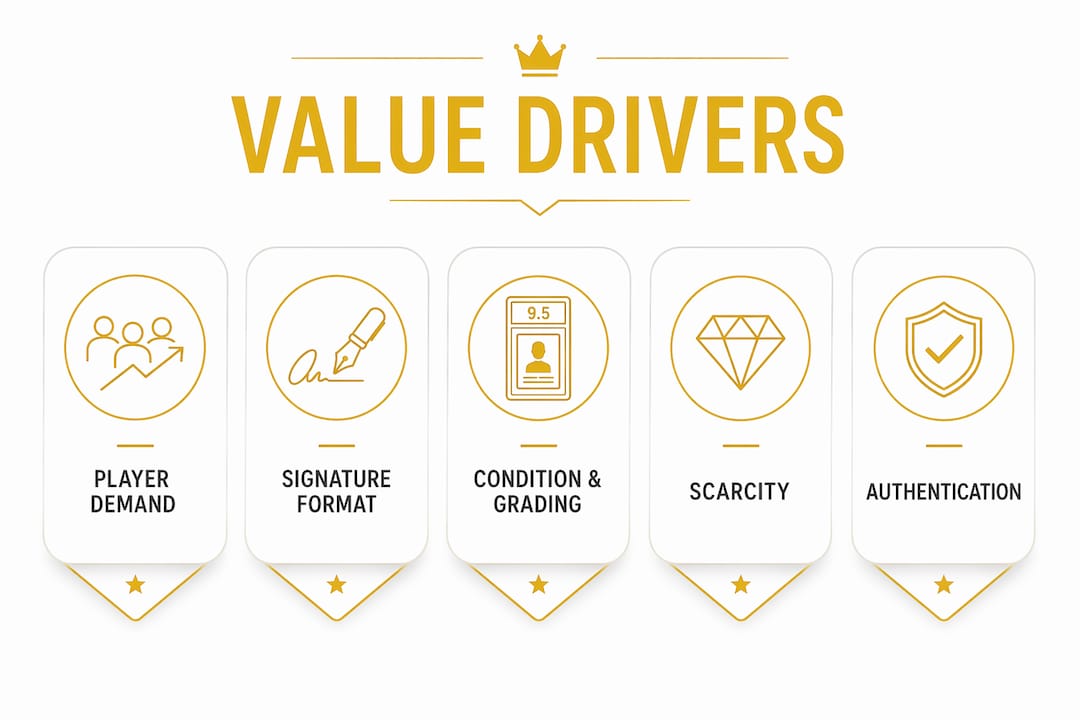
Autograph card value is determined by four core factors: player demand, signature authenticity and format, card condition and grading, and scarcity. These factors explain why autograph cards vary in value so dramatically, with two cards from the same set sometimes trading hundreds of times apart in price. The Hall of Cards valuation framework identifies these as the primary autograph card valuation criteria, and understanding how they interact is what separates informed collectors from buyers who overpay. Manufacturers like Panini and Topps build scarcity and format differences directly into their product structures, making these variables predictable once you know what to look for.
Why autograph cards vary in value: the core drivers
Player demand is the single largest variable in autograph card pricing explained simply. A PSA 10 base card for a mid-tier player might trade at $15, while the same card for a superstar commands $150 or more before any autograph premium is added. The player’s career trajectory, media exposure, and current performance all feed into this demand signal continuously.
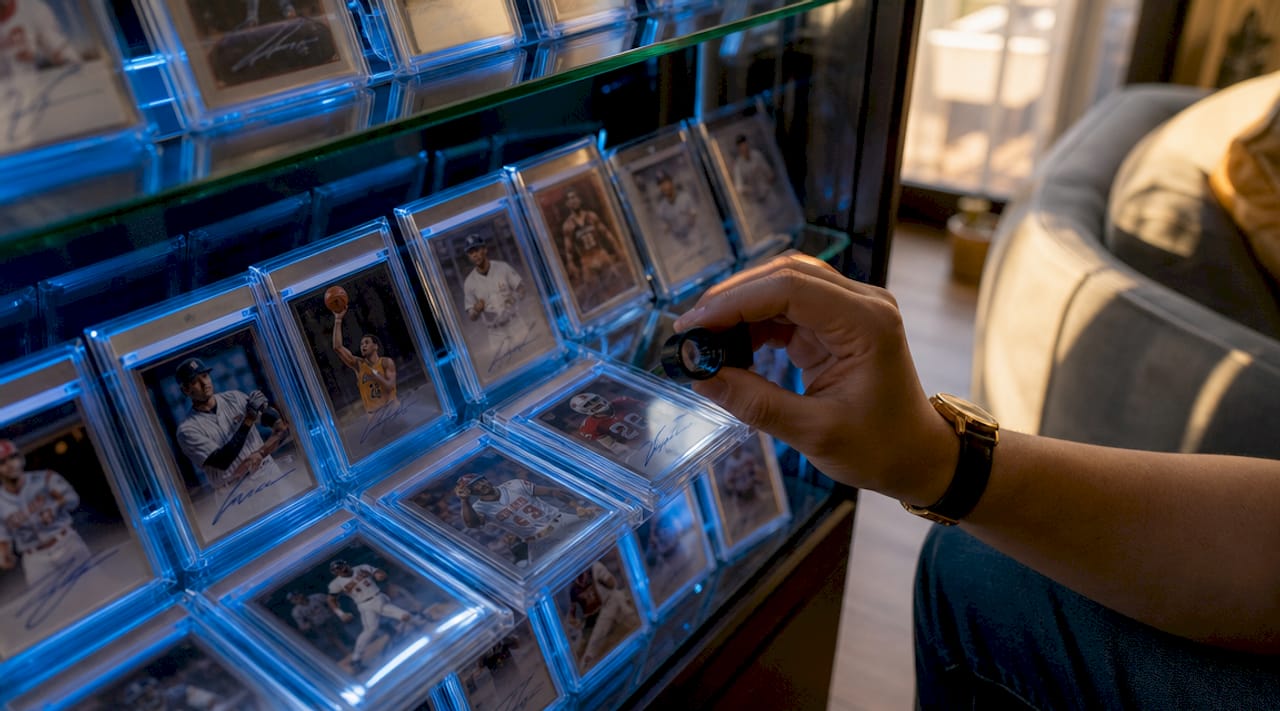
Rookie cards carry a structural premium because they represent a player’s first certified appearance in a major licensed set. Collectors and investors treat rookie autographs as the definitive entry point for a player’s collectible history. When a prospect breaks out, the rookie autograph is the card that moves first and fastest.
Content-driven surges are a real and underappreciated factor in autograph card pricing. A documentary series, a record-breaking season, or a championship run can spike demand for a specific player’s cards within days. Shohei Ohtani’s 2023 MVP season and Aaron Judge’s home run records both triggered measurable price increases across their certified autograph cards.
| Player tier | Typical autograph value multiplier vs. base card |
|---|---|
| Superstar (active, top 5 in sport) | 15x to 30x base card value |
| Established star (All-Star level) | 6x to 12x base card value |
| Emerging prospect (top 100 ranked) | 4x to 8x base card value |
| Mid-tier veteran | 1.5x to 3x base card value |
The multipliers above assume a standard sticker autograph on a base parallel. On-card autographs and lower serial numbers push these figures significantly higher across every tier.
How autograph authenticity and format affect pricing
On-card autographs are signed directly on the card surface during a controlled signing session, while sticker autographs involve the athlete signing a sticker that is later applied to the card. This distinction drives real price differences. On-card autos command 50 to 100% higher premiums than sticker autos because collectors perceive them as more integrated, harder to replicate, and more consistent with the card’s production story.
Authentication is not optional for serious collectors. Uncertified autographs often trade below base card value because forgery risk and buyer distrust eliminate the premium entirely. A raw, unsigned-looking card is worth more to many buyers than a card with an unverified signature from an unknown source.
The grading of the autograph itself is separate from the card grade. PSA, for example, issues both a card grade and an autograph grade on their PSA/DNA service. A card graded PSA 10 with an autograph grade of 10 commands a meaningful premium over the same card with a lower autograph grade, even if the card surface is identical.
Key factors that determine autograph trust and pricing:
- Certification source: PSA/DNA, JSA, and Beckett Authentication Services are the recognized standards.
- Signing context: On-card signings during production are more trusted than post-production sticker applications.
- Autograph placement: Full, bold signatures centered on the designated signing area add value; faded or off-placement signatures reduce it.
- Documentation: Cards with photo-matching evidence or production documentation carry higher provenance value.
Pro Tip: Before purchasing any raw autograph card, cross-reference the signature against verified examples from PSA/DNA or Beckett’s online population reports. Signature inconsistencies are the most common red flag for forgeries.
Why card condition and professional grading affect value
Professional grading through services like PSA, Beckett Grading Services (BGS), and SGC converts a subjective assessment of card condition into a standardized, market-accepted score. This standardization reduces buyer uncertainty and directly improves resale speed and liquidity. A PSA 10 Shohei Ohtani rookie autograph sells faster and at a more predictable price than the same card in raw condition because every buyer agrees on what PSA 10 means.
Grading is a capital allocation decision, not a default step for every card. Smart collectors grade when the expected slab premium exceeds total grading costs and delays. Fees, shipping, insurance, and turnaround time all reduce net proceeds. A card worth $80 raw that grades PSA 10 and sells for $300 justifies the process. A $40 mid-tier veteran auto that might reach $60 graded does not.
Here is a practical framework for evaluating grading ROI:
- Estimate raw market value using recent eBay sold listings for comparable ungraded examples.
- Research the PSA 10 population through PSA’s online population report to understand how scarce a top grade is for that specific card.
- Calculate total grading costs including submission tier fees, shipping both ways, and insurance on the card’s declared value.
- Project the slab premium by comparing PSA 10 recent sales against raw sales for the same card.
- Subtract costs from projected premium to determine net return. If the margin is thin, hold the card raw or sell it ungraded.
Grading a $250 raw star rookie auto can add $200 or more in resale value, making the fees worthwhile. Grading a common or mid-tier card with a $30 raw value rarely produces a positive return after costs.
Pro Tip: Focus grading submissions on star rookie on-card autographs with serial numbers below /100. These cards have the highest probability of generating a slab premium that exceeds total submission costs.
How scarcity and limited editions drive autograph card prices
Serial numbering is the most transparent scarcity signal in the autograph card market. Cards numbered /99 trade notably higher than base parallels, /25 cards trade higher still, and 1/1 cards can reach thousands of times the base card value. The math is straightforward: fewer copies in existence means each copy captures a larger share of total collector demand for that card.
The scarcity hierarchy in Topps and Panini products typically follows this structure:
| Serial number tier | Scarcity level | Approximate value multiplier vs. base auto |
|---|---|---|
| /999 or /499 | Low | 1.5x to 2x |
| /99 | Moderate | 3x to 6x |
| /25 | High | 8x to 15x |
| /10 | Very high | 15x to 30x |
| 1/1 (SuperFractor, Logoman) | Extreme | 50x to 300x+ |
Scarcity alone does not guarantee value. Serial number scarcity combined with provenance and narrative creates the strongest premiums. A Mike Trout 1/1 SuperFractor commands its price because of both the print run and the player’s status. A 1/1 of a fringe prospect with no documented game-use patch and no authentication story trades at a fraction of that price.
Rookie patch autographs (RPAs) represent the intersection of scarcity, autograph format, and provenance. When a card includes a game-worn jersey swatch with photo-matching documentation, a certified on-card signature, and a serial number below /25, every value driver compounds simultaneously. These are the cards that serious collectors and investors prioritize when building high-value collections.
Comparing autograph card types: which format holds the most value?
Understanding value differences in signed cards requires comparing the most common card types side by side. The format, career stage, and certification status of a card each contribute independently to its price.
On-card vs. sticker autograph: On-card signatures are produced during controlled signing sessions where the athlete signs the card directly. Sticker autos are applied post-production. Collectors consistently pay more for on-card autos because the signature is part of the card’s original production story, making it harder to fake and easier to verify.
Rookie vs. veteran autograph: Rookie autographs carry a structural premium because they represent the player’s first certified appearance. Veteran autographs can trade at a premium for Hall of Fame players or legends, but for most active players, the rookie auto remains the benchmark card. A Derek Jeter rookie autograph from his playing days trades at multiples of his later-career signed cards.
Graded vs. raw autograph: Graded cards in PSA or BGS slabs trade at premiums over raw examples for high-demand players because grading certification drives liquidity and buyer confidence. Raw cards can represent value opportunities for buyers who are confident in their own condition assessment.
When each card type is most valuable:
- On-card rookie auto, graded, numbered below /25: Maximum value scenario for active superstars.
- On-card veteran auto, graded, Hall of Fame player: Strong secondary market with stable demand.
- Sticker rookie auto, raw, numbered /99: Moderate value; benefits from grading if the player breaks out.
- Uncertified raw auto, any player: Lowest confidence tier; authentication is required before any meaningful premium applies.
Key takeaways
Autograph card value is driven by the combination of player demand, signature format and authenticity, professional grading, and serial number scarcity, with each factor compounding the others when aligned.
| Point | Details |
|---|---|
| Player demand sets the ceiling | Superstar status multiplies every other value driver; mid-tier players limit upside regardless of format. |
| On-card autos outperform sticker autos | On-card signatures command 50 to 100% higher premiums due to provenance and production integration. |
| Grading requires ROI calculation | Grade only when the expected slab premium clearly exceeds total submission fees and market timing costs. |
| Serial numbers create exponential premiums | Cards numbered /10 or lower can trade at 15x to 30x the value of base autograph parallels. |
| Provenance amplifies scarcity | A 1/1 with documented game use and photo matching outperforms a 1/1 with no supporting narrative. |
What I’ve learned about valuing autograph cards after years in the hobby
The most common mistake I see collectors make is treating scarcity as the only variable that matters. A 1/1 of a prospect who never reaches the majors is worth less than a /99 of a proven superstar. Print run is a multiplier, not a foundation. The foundation is always the player.
Grading economics trip up even experienced collectors. I have watched people submit $60 cards to PSA at express tier fees, wait months, and receive a grade that adds $20 in resale value. That is a losing trade. The grading ROI framework I outlined above is not theoretical. It is the exact calculation I run before every submission.
The cards I prioritize are low-numbered rookie patch autographs from players with clear upward trajectories, certified on-card, from sets produced by Topps or Panini with strong collector recognition. These cards protect liquidity because they are easy to sell, easy to authenticate, and easy to price. When you need to exit a position, liquidity is the only thing that matters.
My honest advice: do not chase hype without provenance. A card that trends on social media for a week and lacks authentication documentation is a liability, not an asset. Buy the card with the story you can verify, from a player whose trajectory you can defend, at a price that leaves you margin if the market cools.
— Richard
Explore rare rookie autographs and relics at Nextgencards
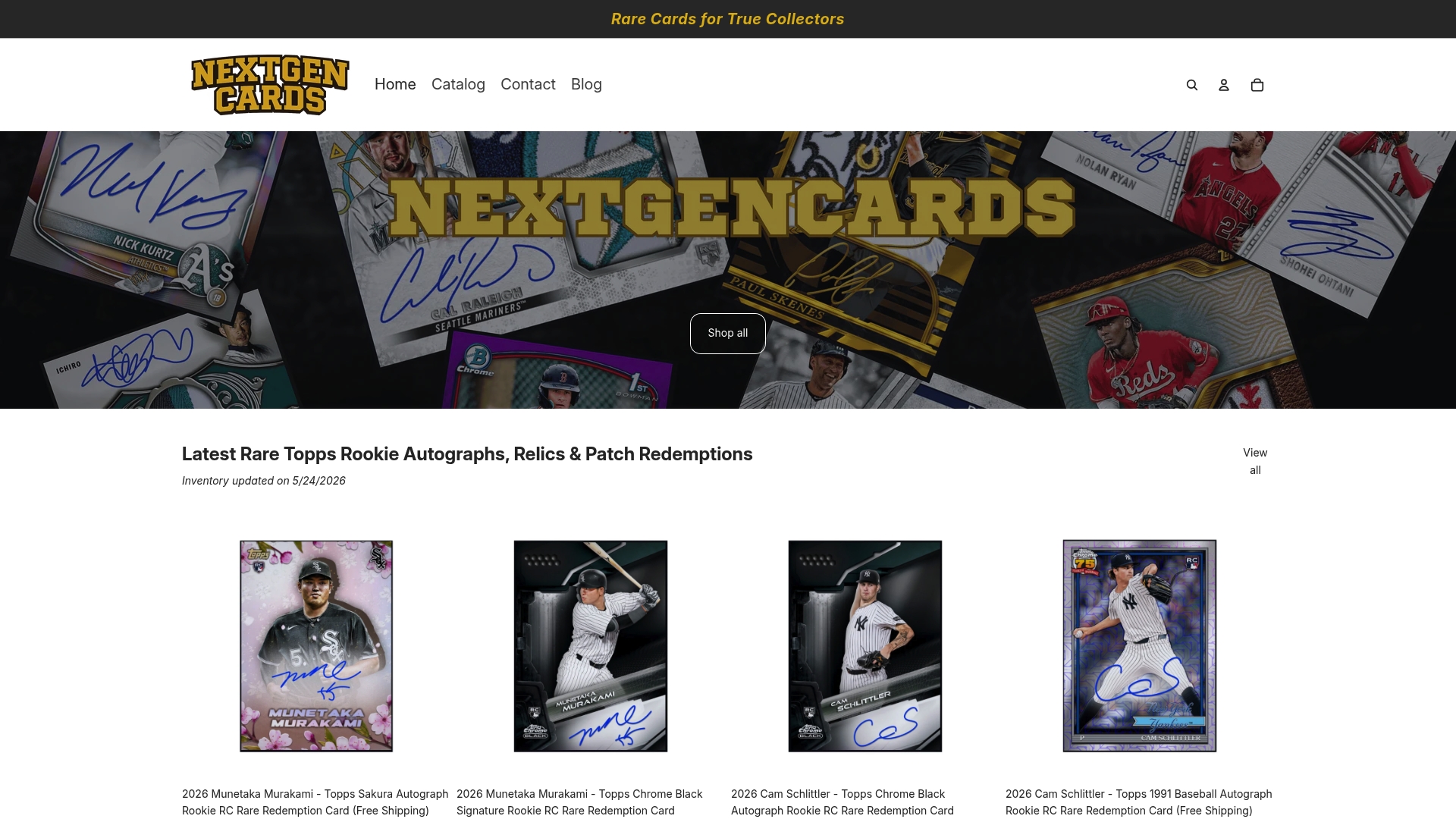
Nextgencards curates a selection of authenticated rookie autographs and relic cards from high-demand athletes, including Shohei Ohtani and Aaron Judge. Every card in the collection is sourced for authenticity and collector appeal, with a focus on the formats that hold value: on-card autos, serial-numbered parallels, and certified rookie patch autographs. If you are building a collection or allocating toward investment-grade cards, browse the rookie autographs and relics collection for current inventory. Select orders qualify for free shipping, and the catalog is updated regularly with scarce, high-demand additions worth tracking.
FAQ
What makes one autograph card worth more than another?
Player demand, signature format, card condition, and serial number scarcity are the four primary factors. A low-numbered, on-card rookie autograph from a superstar in a PSA 10 slab represents the highest value combination of all four drivers.
Are on-card autographs always worth more than sticker autographs?
On-card autographs consistently command higher premiums, typically 50 to 100% more than comparable sticker autographs, because they are harder to replicate and carry stronger provenance. The gap widens further for star players and low-numbered parallels.
Does grading always increase an autograph card’s value?
Grading improves value only when the slab premium exceeds total submission costs including fees, shipping, and insurance. Star rookie on-card autographs with scarce serial numbers benefit most from grading; common or mid-tier cards often do not produce a positive return.
Why are some autograph cards rare and others widely available?
Manufacturers like Topps and Panini control print runs through serial numbering. Cards numbered /10 or /25 are produced in those exact quantities, creating structural scarcity. Base autograph parallels with no serial number are produced in much higher quantities and trade at lower premiums.
Can an autograph card lose value if the signature is not authenticated?
Yes. Uncertified autographs frequently trade below the base card’s raw value because forgery risk eliminates buyer confidence entirely. Authentication from PSA/DNA, JSA, or Beckett is the standard requirement for any autograph card to command a meaningful premium in the secondary market.
Recommended
- What Is a Signed Memorabilia Card? Collector’s Guide – Next Gen Cards LLC
- Most Valuable Sports Card Inserts: Collector’s 2026 Guide – Next Gen Cards LLC
- How to Identify Undervalued Sports Cards in 2026 – Next Gen Cards LLC
- Aaron Judge Autograph Card Hunting: 2026 Collector’s Guide – Next Gen Cards LLC
0 comments