

Aaron Judge autograph card hunting has never been more competitive or more rewarding. With Judge’s 2013 Bowman Chrome Draft Superfractor selling for a modern-day record $5.2 million in 2026, the market for his autographed cards has entered a new tier entirely. Whether you’re chasing a budget-friendly redemption card or targeting a serial-numbered parallel, the challenge is the same: knowing what to look for, where to find it, and how to verify what you have. This guide covers all of it.
Table of Contents
- Key takeaways
- Aaron Judge autograph card hunting: types and variations
- Where to find Aaron Judge autograph cards
- A step-by-step process for hunting effectively
- Verifying authenticity and card condition
- My take on the Aaron Judge autograph market
- Add authenticated Judge cards to your collection
- FAQ
Key takeaways
| Point | Details |
|---|---|
| Autograph type drives value | On-card signatures command significantly higher prices than sticker autos or redemption equivalents. |
| Rarity and provenance matter most | Serial numbering, parallel tier, and documented origins separate mid-range cards from record-breakers. |
| Authentication is non-negotiable | PSA, JSA, or Beckett certification protects your investment and confirms legitimacy before purchase. |
| Multiple sourcing channels exist | Hobby boxes, online marketplaces, and live auctions each carry distinct risk and reward profiles. |
| Redemption cards offer budget access | Value boxes at $29.99 provide a lower-cost entry point for chasing autographed memorabilia. |
Aaron Judge autograph card hunting: types and variations
Not every Aaron Judge autograph is created equal. Understanding the differences between autograph types is the foundation of smart collecting, and it directly determines what you should pay.
On-card autographs are the most desirable format. Judge signs directly on the card surface, and the result is a tactile, visually distinct signature that cannot be replicated or transferred. These cards carry the highest premiums and are the preferred format for serious collectors and investors alike.
Sticker autographs are more common. The player signs a pre-printed sticker that is then applied to the card. They are easier to produce at scale, which means they appear in more products and at lower price points. The trade-off is reduced collector prestige and lower resale values compared to on-card equivalents.
Dual autographs feature two signatures on a single card. The 2025 Topps Chrome Dual Gold MLB Logoman Autograph featuring Shohei Ohtani and Aaron Judge is a prime example. That card included authenticated game-worn patches alongside both signatures, making it a 1/1 premium release that attracted significant attention from high-end buyers.
Redemption cards are chase inserts found in hobby boxes. Instead of a physical autograph, you receive a card that you submit to claim a signed item, such as a baseball or jersey. They are accessible and exciting but require patience and careful documentation to redeem successfully.
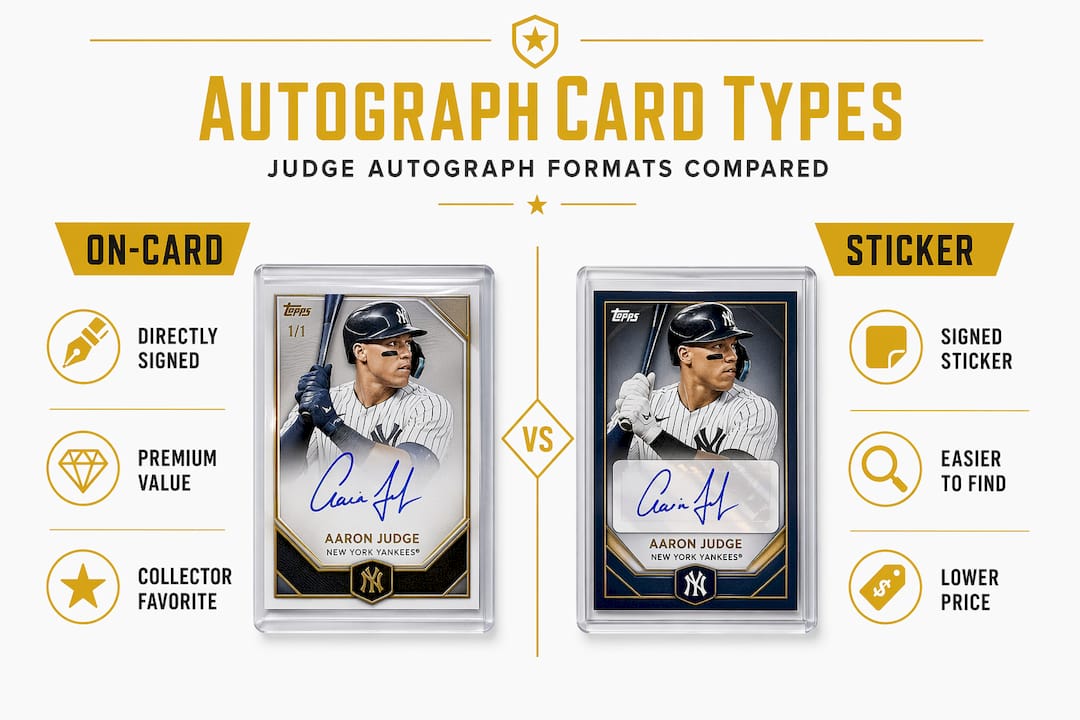
Here is a quick comparison of the main autograph card types:
| Card type | Signature format | Typical rarity | Collector appeal |
|---|---|---|---|
| On-card autograph | Direct on card | Low to very scarce | Very high |
| Sticker autograph | Applied sticker | Moderate | Moderate |
| Dual autograph | Two signatures | Very scarce | High to very high |
| Redemption card | Chase insert | Varies | Moderate to high |
| Superfractor 1/1 | On-card, one of one | Unique | Extreme |
Key factors that drive Aaron Judge autograph card values include:
- Serial numbering: Cards numbered to 10 or fewer copies command exponentially higher prices than those numbered to 100 or 500.
- Parallel tier: Gold, refractor, and prizm parallels each carry their own scarcity hierarchy within a given set.
- Card era: Rookie-year autographs from 2013 and 2017 Bowman releases are historically the most coveted.
- Condition: Surface wear, centering, and edge integrity all affect grade and resale value.
- Provenance: Documented game-use patches or authenticated origins add measurable premium.
The benchmark for all Judge autograph cards remains the 2013 Bowman Chrome Draft Superfractor 1/1, which Fanatics Collect brokered at $5.2 million. That sale placed Judge’s autograph card among the ten highest trading card sales ever recorded.
Where to find Aaron Judge autograph cards
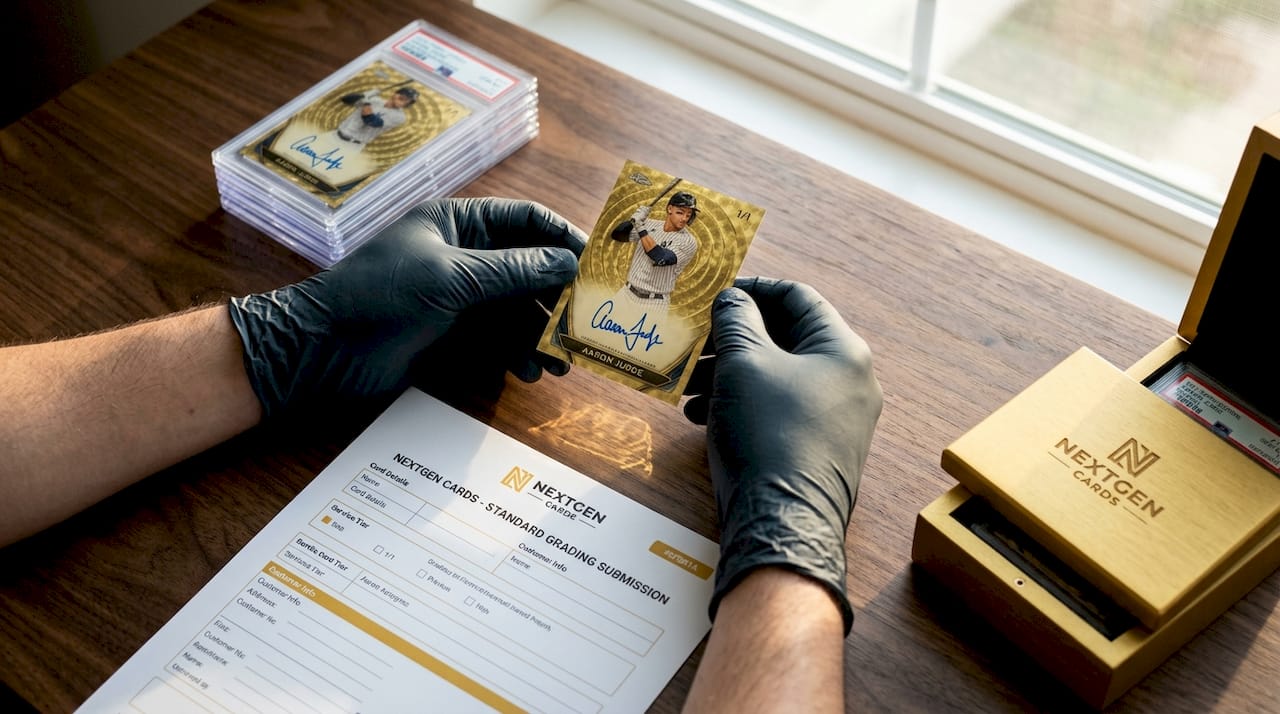
Knowing where to look is half the battle. Each acquisition channel has its own advantages, and smart collectors use more than one.
Hobby boxes and retail releases are the traditional entry point. Breaking a hobby box gives you the chance to pull an autograph insert directly, and the thrill of the hunt is part of the appeal. Fanatics value boxes cost $29.99 and include redemption card chases for autographed merchandise like baseballs or jerseys. These are preorder-only releases, announced approximately one week before availability on the Fanatics website and app.
Online marketplaces offer the widest selection of already-pulled cards. Platforms with authentication standards and buyer protections give you access to everything from common sticker autos to serial-numbered parallels. The key is buying only from sellers who can provide grading certificates or authentication documentation.
Live auctions are where the rarest cards change hands. Heritage Auctions, for example, sold a non-autograph Aaron Judge 1/1 Superfractor for $838,750 in May 2026. For ultra-high-end purchases, live auction houses provide provenance documentation and competitive price discovery that private sales cannot match.
Specialty card shops and curated online retailers like Nextgencards offer authenticated inventory without the unpredictability of breaking boxes. You browse verified listings, pay a set price, and receive a card with documented authenticity. For collectors who prioritize certainty over the box-break experience, this channel is highly practical.
Channels at a glance:
- Hobby boxes: High excitement, variable return, best for the box-break experience
- Online marketplaces: Wide selection, requires careful vetting of seller and card documentation
- Live auctions: Best for rare and high-value cards, competitive bidding, strong provenance
- Curated retailers: Authenticated inventory, fixed pricing, lower risk of fakes
Pro Tip: Set up saved searches on major marketplaces for specific Judge card identifiers, such as the set name, year, and serial number range. You will receive alerts the moment matching listings go live, giving you a first-mover advantage on newly listed cards.
A step-by-step process for hunting effectively
Successful aaron judge autograph card hunting is not random. It follows a repeatable process that experienced collectors refine over time.
-
Define your target before you spend. Decide whether you want a rookie autograph, a parallel insert, a dual signature, or a redemption card. Each category has a different price range and acquisition path. Clarity here prevents impulse purchases you will later regret.
-
Track release calendars. Fanatics hobby releases in 2026 include redemption cards for top names including Aaron Judge and Shohei Ohtani. Monitor the Topps and Fanatics release schedules weekly. Preorder windows for value boxes close fast, and missing them means paying secondary market premiums.
-
Research current market prices. Check recent completed sales, not just active listings. Active listings reflect what sellers want. Completed sales reflect what buyers actually paid. For serial-numbered parallels, even a difference of 10 numbers in the print run can shift value significantly.
-
Verify serial numbers and parallel tiers. Cross-reference the card’s stated serial number against known population reports from grading companies. A card claimed to be numbered to 25 should have a documented population of 25 or fewer graded copies.
-
Navigate the redemption workflow carefully. Redemption chase success requires timely submission, correct account usage, and retaining all documentation. Missing a submission deadline or losing your claim confirmation can cost you the autographed item entirely.
-
Monitor auction activity before bidding. Watch comparable cards sell over several weeks before placing bids. Auction prices fluctuate based on timing, competing lots, and seasonal demand. Patience here can save you hundreds or thousands of dollars.
-
Log every purchase with documentation. Keep records of authentication certificates, purchase receipts, and grading submissions. This protects your investment and simplifies resale when the time comes.
Pro Tip: For redemption cards specifically, photograph the card and save your submission confirmation email immediately. These records are your only protection if a dispute arises with the issuing platform.
Verifying authenticity and card condition
Authentication is not optional for serious collectors. The market for counterfeit autograph cards is real, and the consequences of buying a fake are severe both financially and in terms of collection integrity.
The three most trusted authentication companies in the hobby are:
- PSA (Professional Sports Authenticator): The most recognized grading authority in the hobby, with population reports that help verify scarcity claims.
- JSA (James Spence Authentication): Specializes in autograph authentication and is widely accepted by auction houses and major platforms.
- Beckett Grading Services (BGS): Known for precise subgrade scoring across centering, corners, edges, and surface, making it the preferred choice for condition-sensitive collectors.
Common signs of counterfeit or tampered cards include inconsistent ink flow on the signature, misaligned holographic stickers, serial numbers that do not match known print runs, and card stock that feels different from authentic examples of the same set. Ultra-high-end autograph buyers evaluate cards by the combination of certification, serial numbering, autograph type, and provenance. No single factor is sufficient on its own.
A PSA or BGS slab does not just protect the card physically. It provides a permanent, verifiable record of the card’s authenticity and condition grade that follows it through every future transaction.
Grading affects value in measurable ways. A PSA 10 Aaron Judge rookie autograph can trade at two to three times the price of the same card graded PSA 8. Condition details like surface scratches, print defects, and centering are evaluated under magnification, so what looks clean to the naked eye may grade lower than expected.
For premium cards with game-use patches, verify that the patch documentation matches the card’s stated provenance. Manufactured patches and authentic game-worn swatches look similar but carry very different values. Reputable sellers and auction houses provide certificates of authenticity for game-use components separately from the card grade itself.
Protect your cards with proper storage: penny sleeves inside rigid top loaders for raw cards, and UV-resistant display cases for slabbed pieces. Heat, humidity, and direct light degrade card surfaces and can affect future grading outcomes.
My take on the Aaron Judge autograph market
I’ve watched the Judge autograph market shift dramatically over the past few years, and what strikes me most is how many collectors still underestimate the role of documentation. I’ve seen buyers pay strong prices for unslabbed Judge autos, only to discover later that the card’s provenance was questionable. The $5.2 million Superfractor sale was not just about the card. It was about the complete package: authenticated signature, verified 1/1 serial number, and an unbroken chain of ownership.
In my experience, patience separates the collectors who build real value from those who chase hype. The market for Aaron Judge autograph card variations spikes after milestone moments, like a home run record or a postseason run. Those are the worst times to buy. Prices normalize within weeks. If you wait, you pay less and get more.
I’m also more bullish on redemption cards than most collectors I talk to. Yes, the process requires attention to detail. But value-box redemption approaches genuinely democratize access to autograph hunting for collectors who cannot spend four figures on a single card. The key is treating the redemption workflow like a transaction with real stakes, not an afterthought.
My honest advice: buy what you can authenticate, document everything, and resist the pressure to act fast on anything priced above your research.
— Richard
Add authenticated Judge cards to your collection
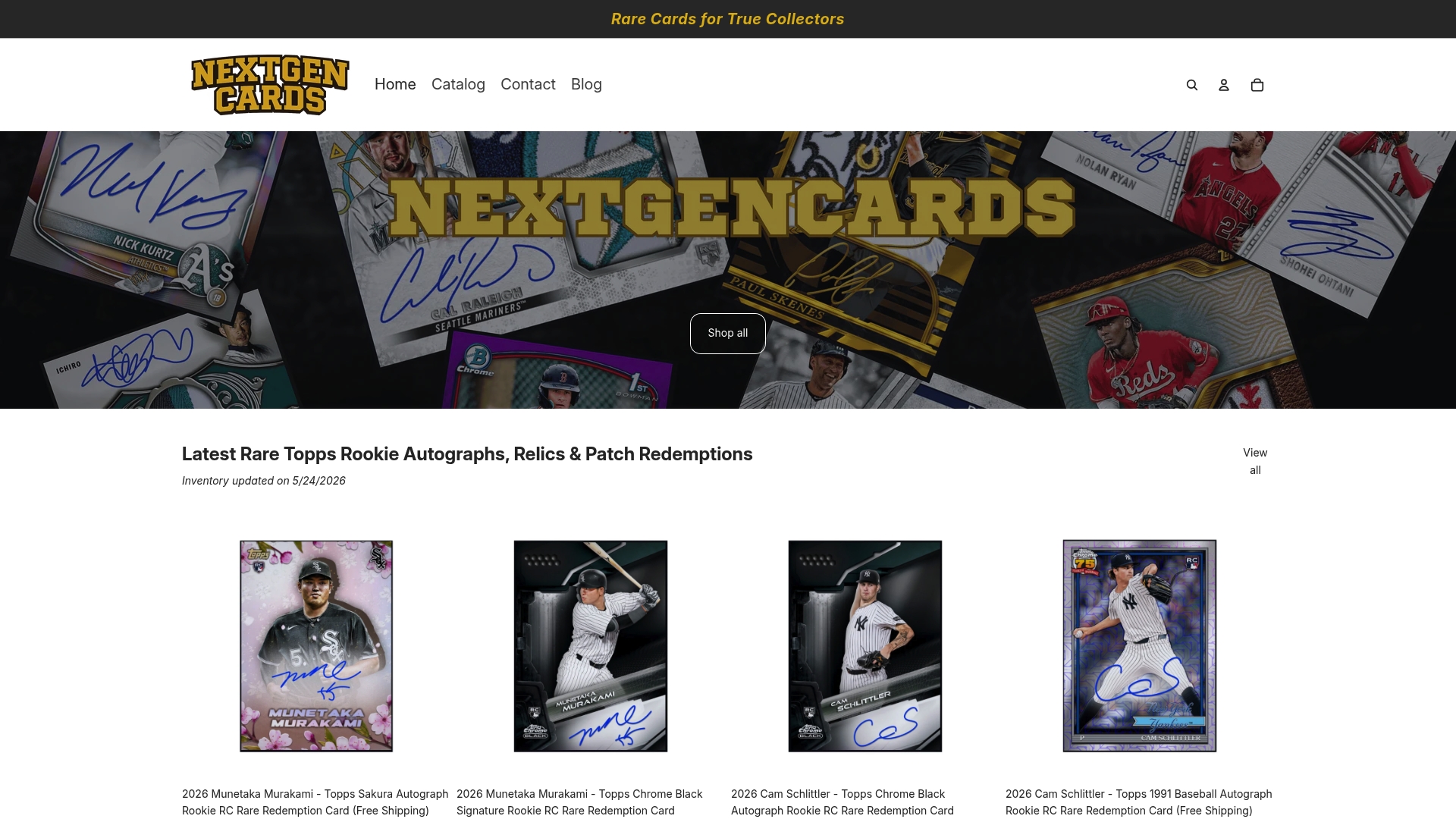
Nextgencards carries a curated selection of rare Aaron Judge autograph cards and rookie releases that serious collectors actively seek. The inventory includes the 2017 Aaron Judge Topps Bowman’s Best rare rookie card and the Judge and Jeter dual autograph from the 2021 Topps Museum Collection. Every listing is authenticated, and select items ship free. If you’re building a collection around Judge’s most significant cards, the Nextgencards shop is worth bookmarking. New arrivals are added regularly, and the inventory reflects what the market’s most discerning collectors are actually pursuing.
FAQ
What makes an Aaron Judge autograph card valuable?
Rarity combined with verified authentication drives autograph prices more than player popularity alone. Serial numbering, parallel tier, autograph type, and documented provenance are the primary value factors.
Where is the best place to buy Aaron Judge autograph cards?
Trusted sources include authenticated specialty retailers like Nextgencards, major auction houses for high-end pieces, and online marketplaces where sellers provide grading certificates. Always confirm authentication before purchasing.
How do I spot a fake Aaron Judge autograph card?
Look for inconsistent ink flow, misaligned holographic stickers, and serial numbers that do not match known population reports. Buying only PSA, JSA, or Beckett-certified cards eliminates most counterfeiting risk.
What is a redemption card in autograph collecting?
A redemption card is a chase insert found in hobby boxes that you submit to claim a signed item, such as a baseball or jersey. Successful claims require timely submission, correct account usage, and retaining all documentation.
What is the most valuable Aaron Judge autograph card ever sold?
The 2013 Bowman Chrome Draft Superfractor Autograph 1/1 sold for $5.2 million in 2026, setting the modern-day baseball card record and placing it among the ten highest trading card sales ever recorded.
Recommended
- 2017 Aaron Judge - Topps Gypsy Queen Autograph Rookie RC Rare Card – Next Gen Cards LLC
- 2021 Aaron Judge Derek Jeter Topps Museum Collection Autograph Card – Next Gen Cards LLC
- 2024 Aaron Judge Juan Soto - Topps Museum Collection Dual Autograph Rare Card – Next Gen Cards LLC
- 2023 Aaron Judge Derek Jeter Topps Tribute Dual Jersey Patch Card – Next Gen Cards LLC
0 comments