

A signed memorabilia card is a trading card that features both an athlete’s genuine autograph and a physical piece of memorabilia, such as a jersey swatch or bat fragment, embedded directly into the card itself. Known in the hobby as a “relic card” or “auto-relic,” this format represents the highest tier of sports card collecting. Brands like Topps and Panini produce these cards, while Beckett Authentication Services provides the certification that separates legitimate cards from counterfeits. For collectors and investors alike, signed memorabilia cards combine emotional connection with measurable market value.
What is a signed memorabilia card and why does it matter?
A signed memorabilia card combines an athlete’s autograph with an embedded memorabilia swatch from the player’s uniform or equipment, all within a single trading card. The industry term for the embedded material component is a “relic,” and when paired with an autograph, the card becomes an “auto-relic.” This dual-feature format is what separates these cards from standard base cards or standalone autograph cards.
The significance for collectors is straightforward. One card delivers two forms of physical connection to an athlete: their handwritten signature and a fragment of something they actually wore or used. That combination drives both emotional and financial value in ways that neither element achieves alone. Collectors treat the embedded memorabilia as central to relic card value, especially when paired with on-card autographs.
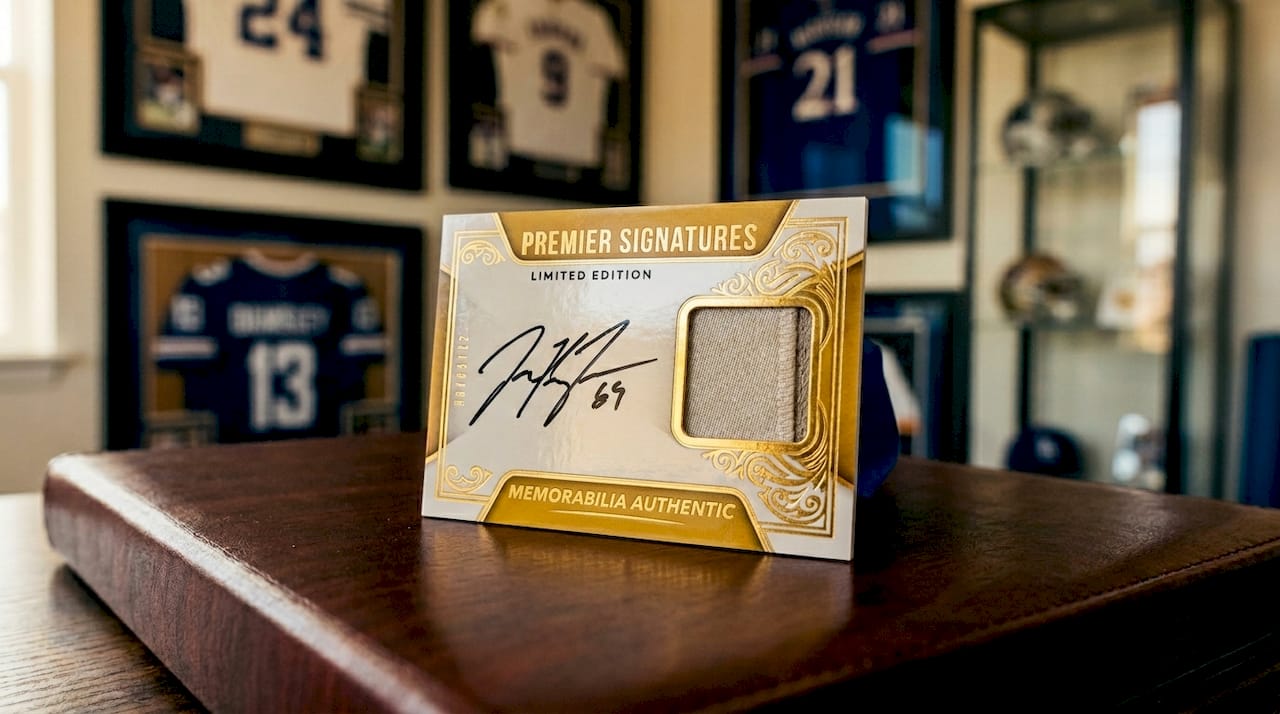
For investors, the appeal is equally clear. Signed memorabilia cards from star athletes in limited print runs have demonstrated serious appreciation over time. A one-of-one Josh Allen autographed Gold NFL Shield patch card sold for $1.35 million in 2026. That sale illustrates the ceiling for this category when rarity, player status, and authentication all align.
What types of memorabilia are embedded in these cards?
Relic cards typically include a jersey, bat, glove, cleat patch, or playing surface fragment, and sometimes feature on-card autographs in higher-end products. The type of embedded material directly affects how collectors perceive and price the card. Here are the most common memorabilia types you will encounter:
- Jersey swatch: A fabric piece cut from a player’s uniform shirt. Single-color swatches are common; multi-color patches from jersey numbers or logos are scarcer and more desirable.
- Bat fragment: A sliver of wood from a player’s game bat, typically found in baseball cards. Knob or barrel pieces command more interest than barrel-only cuts.
- Glove leather: A small piece of leather from a fielding glove, less common than jersey swatches but highly sought after.
- Cleat material: Rubber or leather from a player’s shoe, found in football and baseball products.
- Playing surface: A piece of court floor or field turf, often used in basketball and football cards.
The distinction between “game-worn” and “player-worn” is where collectors pay close attention. Game-worn means the memorabilia was used during an official game, while player-worn refers to items worn off-field such as photoshoots or private signings. Collectors consider game-worn materials more valuable and authentic due to direct competition use. Player-worn materials may show less physical wear and typically carry lower pricing on the secondary market.
Distinguishing between these two categories affects collector trust and pricing strategy significantly. A jersey swatch from a World Series game carries a different weight than one from a spring training photo shoot, even if the fabric looks identical.
Pro Tip: Always flip the card over and read the back text carefully. Card backs from Topps and Panini typically state whether the memorabilia was “used during an official game” or “worn during a promotional event.” That language is your first and most accessible indicator of relic quality.
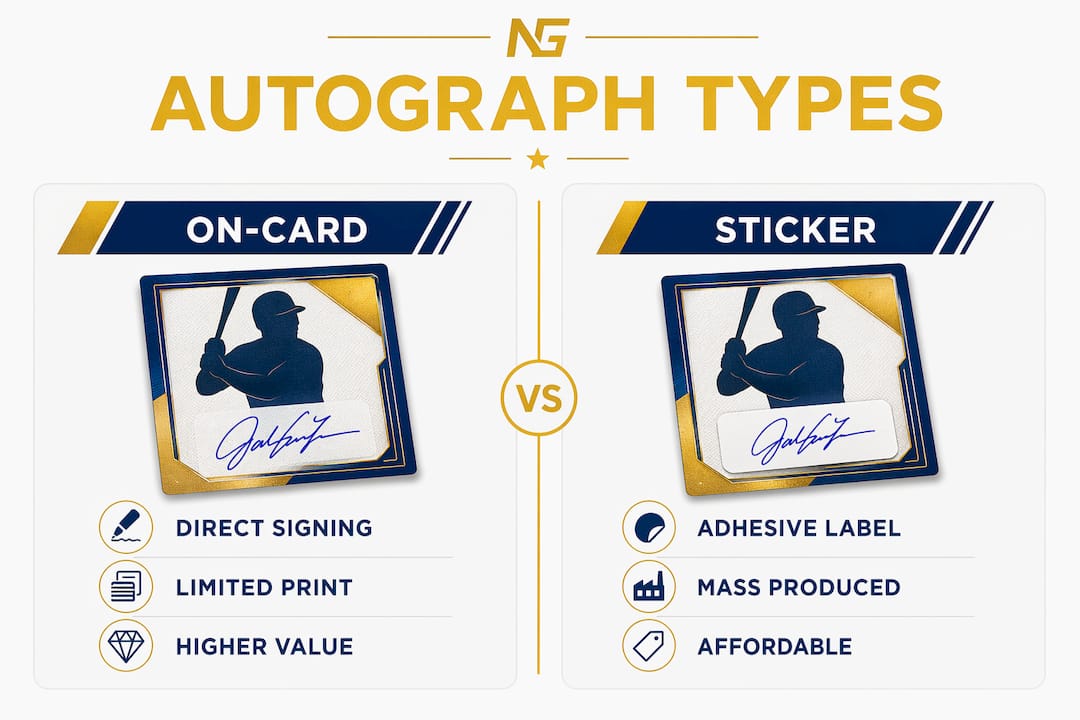
On-card vs. sticker autographs: what’s the real difference?
The autograph format on a signed memorabilia card matters as much as the memorabilia itself. On-card autographs are signed directly on the card surface by the athlete, while sticker autographs are applied to a label that is then placed on the card. This distinction shapes collector perception, card design quality, and resale value.
| Feature | On-card autograph | Sticker autograph |
|---|---|---|
| Signing method | Athlete signs directly on the card | Athlete signs a sticker label applied to the card |
| Visual integration | Signature flows naturally with card design | Sticker can appear misaligned or out of place |
| Collector perception | Considered more personal and premium | Viewed as a production shortcut |
| Typical card tier | High-end and limited products | Mid-range and mass-market products |
| Value impact | Commands higher prices at auction | Generally lower resale value |
On-card autographs require the athlete to be present with the actual card stock, which limits production volume and adds logistical complexity for manufacturers. Sticker autographs allow card companies to collect signatures in bulk at a single signing session, then apply them to cards during production. The result is faster output but a less integrated final product.
Collectors often perceive on-card autographs as more personal and integrated with the design, sometimes commanding higher value. When you are evaluating a signed memorabilia card for purchase, look for on-card signatures in products like Topps Dynasty, Topps Transcendent, or Panini National Treasures. These lines are built around the on-card format and typically feature the most premium relic materials as well.
Pro Tip: If a card listing does not specify “on-card auto,” assume it is a sticker autograph. Reputable sellers and auction houses like PWCC Marketplace and Goldin will always note the autograph format in the item description for high-value cards.
What authentication processes ensure signed cards are genuine?
Authentication is the process that separates a collectible worth thousands of dollars from a worthless fake. Beckett Authentication Services utilizes multi-step processes and online databases to ensure collector confidence in autographed items. Here is how the authentication process works for signed memorabilia cards:
- Expert examination: A trained authenticator compares the signature against a verified reference database of known authentic examples from the same athlete. Pen pressure, letter formation, and signing habits are all analyzed.
- Tamper-evident certification label: Once authenticated, the card receives a holographic sticker with a unique certification number. These labels are single-use and designed to show visible damage if anyone attempts removal.
- Online database verification: The certification number links to an online record that any buyer can check independently. Beckett’s online database, for example, allows you to confirm the card’s authentication status in seconds.
- Letter or certificate of authenticity: Some cards come with a COA or LOA from the manufacturer or a third-party authenticator. These documents should always include the unique certification number tied to the specific card.
- Red flag check: Cards with only generic COAs and no verifiable certification number should raise immediate concerns for buyers. A COA without a traceable number provides no real protection.
For cards produced directly by Topps or Panini, the autograph is authenticated at the point of signing through a witnessed signing program. The manufacturer controls the signing event, which means the chain of custody is documented from the athlete’s hand to the sealed pack. Third-party authentication from Beckett, PSA, or SGC adds an additional layer of confidence for cards purchased on the secondary market.
Knowing how to authenticate signed memorabilia is not optional for serious collectors. It is the skill that protects your investment and builds a collection you can trust.
What factors drive the value of signed memorabilia cards?
The value of signed memorabilia cards depends on a combination of factors that collectors and investors must understand before buying or selling. No single element determines price in isolation. The following factors work together to set market value:
- Player status and demand: Cards featuring active superstars like Shohei Ohtani, Patrick Mahomes, or LeBron James consistently command premium prices. Rookie cards from players who go on to have elite careers see the sharpest appreciation.
- Autograph type: On-card autographs from high-end product lines fetch more than sticker autographs from mass-market releases, even when the player is the same.
- Memorabilia quality: Cards with game-used patches and on-card autographs typically fetch higher prices in the collectibles market. A multi-color patch from a jersey number or team logo is worth significantly more than a plain white jersey swatch.
- Serial numbering and print run: Cards numbered to 10 or fewer copies are considered extremely scarce. A one-of-one card, designated as “1/1,” carries the highest rarity premium in the hobby.
- Card condition: Grading services like PSA and BGS assign numerical grades based on centering, corners, edges, and surface quality. A PSA 10 or BGS 9.5 can multiply a card’s value compared to an ungraded copy.
- Timing and market trends: Player performance, championship wins, and Hall of Fame announcements all create short-term price spikes. Collectors who track these cycles can time purchases and sales more effectively.
Collecting memorabilia cards involves nuanced understanding of terminology, authentication, and market dynamics. Knowing the difference between game-worn and player-worn, plus checking certification authenticity, separates informed buyers from those who overpay for underperforming assets.
Pro Tip: New collectors should start by focusing on one sport and one player tier, such as established veterans or top prospects in a single league. Spreading across multiple sports and player types early on makes it harder to develop the market knowledge needed to spot genuine value.
Key takeaways
Signed memorabilia cards deliver the highest collector value when they combine on-card autographs, game-worn relics, limited serial numbers, and verified third-party authentication.
| Point | Details |
|---|---|
| Definition of the format | A signed memorabilia card includes both an athlete’s autograph and an embedded physical relic from their uniform or equipment. |
| Game-worn vs. player-worn | Game-worn relics carry higher value and collector trust than player-worn materials from non-game events. |
| Autograph type matters | On-card autographs are more desirable and valuable than sticker autographs applied during production. |
| Authentication is non-negotiable | Use Beckett, PSA, or SGC certification with a verifiable certification number before purchasing any signed card. |
| Value drivers are layered | Player status, rarity, memorabilia quality, condition grade, and autograph format all combine to set market price. |
My take on collecting signed memorabilia cards
After years of tracking this market, the single biggest mistake I see collectors make is prioritizing aesthetics over documentation. A card can look stunning and still be worthless if the autograph is unverified or the relic description on the back says “worn during a promotional appearance.” The hobby has matured significantly, and the terminology on card backs now gives buyers more information than ever. Use it.
The autograph format debate is real, but it gets overstated. Yes, on-card signatures are preferable. But a sticker autograph from a player who wins three championships will still outperform an on-card auto from a journeyman. Player trajectory matters more than format in the long run.
What I find genuinely underappreciated is the importance of reading the full card back before any purchase. Manufacturers like Topps and Panini embed critical information there. The wear description, the print run, the certification details. Collectors who skip that step are leaving money on the table or, worse, buying something misrepresented.
For first-time buyers, I recommend starting with collector guidance resources that explain market trends and terminology before committing to high-dollar purchases. The signed memorabilia card market rewards knowledge more than budget.
— Richard
Start your signed memorabilia card collection with Nextgencards
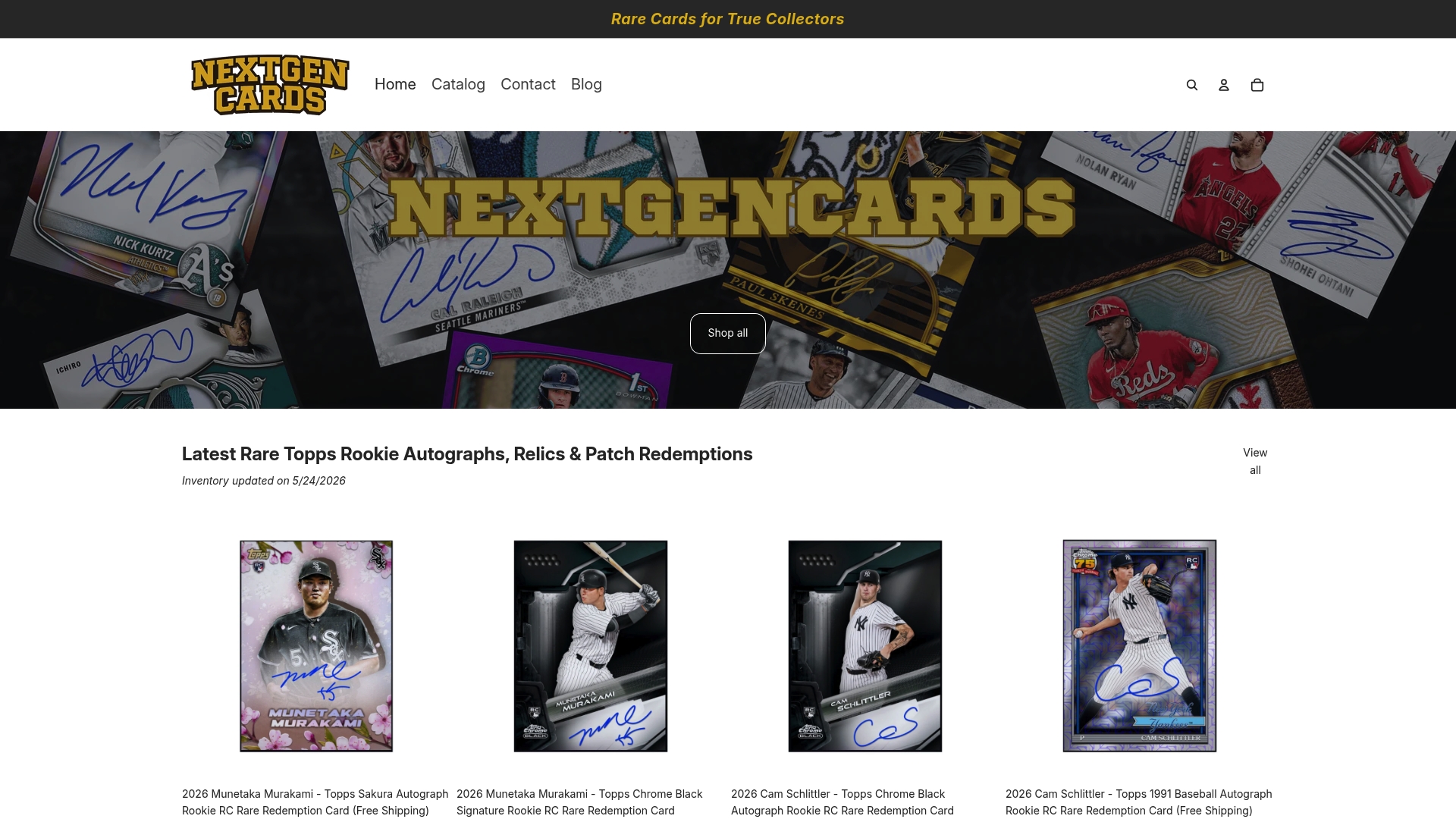
Nextgencards specializes in authenticated rookie autographs and relic cards from the athletes collectors actually want. The inventory at Nextgencards includes rare Topps and Panini products featuring players like Shohei Ohtani and Aaron Judge, with authentication backing every listing. If you are ready to add genuine signed memorabilia to your collection, the curated selection of rookie autographs and relics at Nextgencards is built for collectors who know what they are looking for. Free shipping is available on select items, and the inventory is updated regularly to reflect current market demand. Serious collectors and first-time investors will both find cards worth their attention.
FAQ
What is the difference between a relic card and a signed memorabilia card?
A relic card contains an embedded piece of player memorabilia but no autograph. A signed memorabilia card, also called an auto-relic, includes both the memorabilia swatch and the athlete’s authenticated signature on the same card.
How do I verify that a signed card’s autograph is authentic?
Check for a tamper-evident certification label with a unique number from Beckett, PSA, or SGC, then verify that number through the authenticator’s online database. Cards without a traceable certification number offer no reliable proof of authenticity.
Are game-worn relics always more valuable than player-worn relics?
Game-worn relics consistently command higher prices because the memorabilia was used in official competition, which collectors view as more significant. Player-worn materials from photo shoots or signings carry less prestige and typically sell for less on the secondary market.
What does “1/1” mean on a signed memorabilia card?
“1/1” means the card is a one-of-one, the only copy of that specific card ever produced. These cards carry the highest rarity premium in the hobby and often set record prices at auction when paired with a star player’s autograph and premium relic.
Where is the best place to buy signed memorabilia cards?
Reputable sources include manufacturer-direct products from Topps and Panini, established auction platforms, and specialty retailers like Nextgencards that curate authenticated signed memorabilia cards from top athletes across major sports.
Recommended
- Top Places to Buy Rare Rookie Cards (Collectors Guide) | NextGenCards – Next Gen Cards LLC
- Rare Topps Rookie Autographs & Relics – Authentic Cards – Next Gen Cards LLC
- NextGenCards - Rare Topps Rookie Cards – Next Gen Cards LLC
- 2026 Cam Schlittler Topps Series 1 Baseball Autograph Rookie RC Card – Next Gen Cards LLC
0 comments