

Authenticating rare sports memorabilia is defined as the structured process of verifying an item’s origin, ownership history, physical integrity, and signature legitimacy through multiple independent evidence sources. A single certificate of authenticity is not sufficient. Serious collectors and investors know that provenance documentation, physical security features, third-party expert review, and photographic evidence must all align before an item can be trusted. Services like PSA, Beckett Authentication Services, and MeiGray have established the industry benchmark for what rigorous collectible sports items authentication looks like. This guide walks you through every layer of that process.
How to authenticate rare sports memorabilia: the foundational elements
Authentication is not a single document. Think of it as a passport requiring a full bundle: provenance, origin proof, and checkable identifiers, not just a seller-issued certificate. Every collector should treat “COA present” as “COA verifiable” before committing to a purchase.
Here are the foundational elements every collector must verify before buying:
- Certificate of Authenticity (COA): A valid COA must include the issuer’s contact information, a unique serial number and verifiable registry entry such as a QR code linked to an issuer-controlled database. Missing any of these elements raises the risk profile of the item significantly.
- Provenance documentation: Chain of custody records, original sale invoices, letters from player foundations, or documentation from official club suppliers establish origin proof. Without a clear ownership trail, even a beautifully framed jersey is an unverifiable claim.
- Physical security features: Holograms with unique codes are standard on items authenticated by companies like Fanatics. However, holograms alone are insufficient unless the embedded code is confirmed through the issuer’s brand portal. Always cross-check the code online before accepting the item.
- Tamper-evident seals: These protect the integrity of packaging and framing. A broken or reapplied seal is an immediate red flag.
Red flags that should stop any purchase include COAs with no issuer contact details, sellers who cannot provide provenance documentation, and certificates that cannot be verified through any online registry. If a seller resists your request to verify the COA independently, treat that resistance as disqualifying.
Pro Tip: Before purchasing any signed item, search the issuer’s name alongside “authentication registry” or “certificate lookup” to confirm the registry exists and is actively maintained. A COA from a company with no verifiable online presence is worthless.
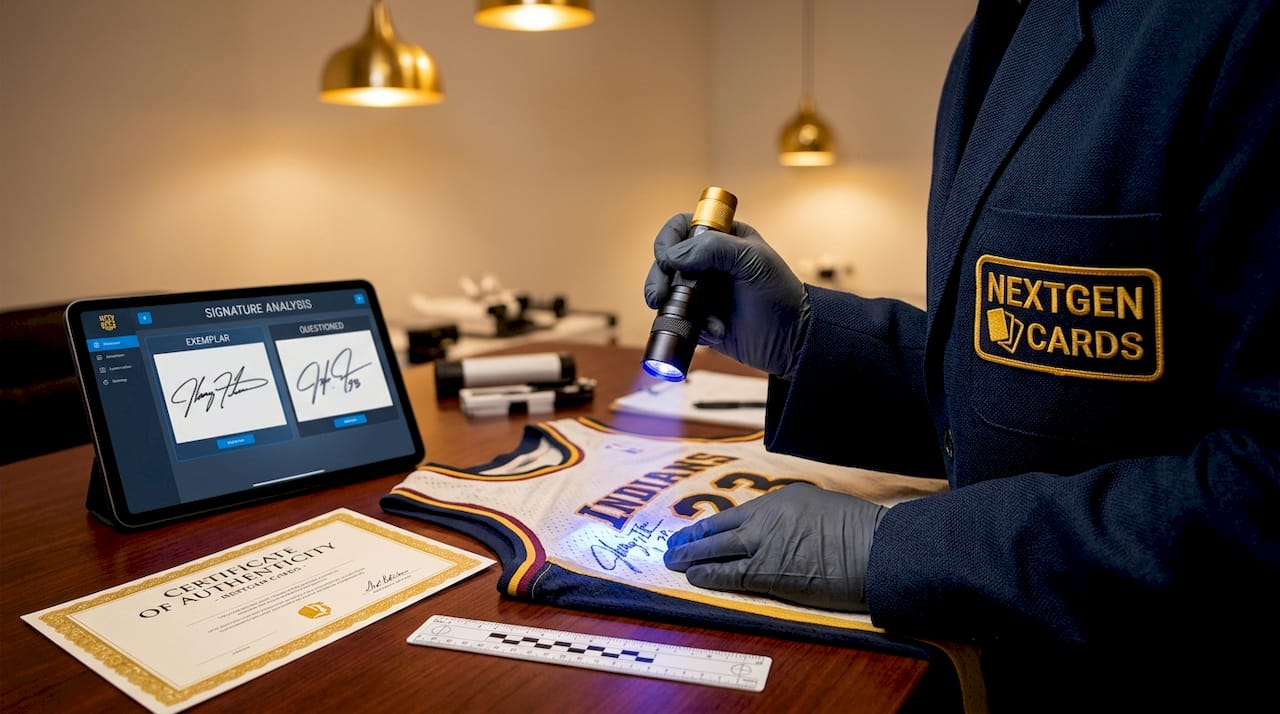
How do expert authenticators and third-party services verify rare memorabilia?
Third-party authentication services operate verification workflows that go well beyond what any individual collector can replicate alone. Beckett Authentication Services offers an online certificate verification portal that allows buyers to confirm authentication records directly, reducing reliance on seller claims entirely. This is the standard you should expect from any service you trust.
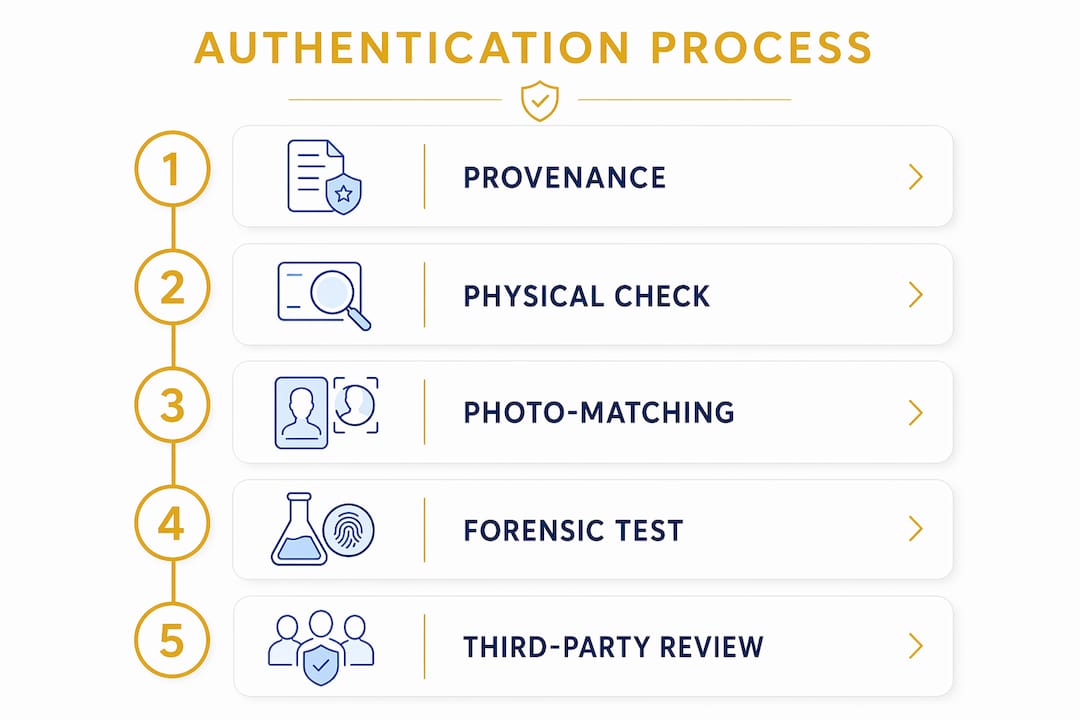
The verification process used by leading authenticators typically follows this sequence:
- Submission and intake: The item is submitted physically or through a documented mail-in process. High-value items often require in-person submission to reduce transit risk.
- Provenance review: Authenticators examine all accompanying documentation, including chain of custody records, original purchase receipts, and any correspondence from the athlete, team, or official supplier.
- Physical inspection: Experts examine stitching, tags, manufacturer labels, hologram placement, and any wear indicators. Inconsistencies in label fonts, patch placement, or stitching patterns are common markers of counterfeit items.
- Photo-matching for game-worn apparel: Authenticators compare high-resolution images of wear patterns against broadcast footage and official game photography. Grass stains, fraying, and sweat marks must correspond precisely to documented game events.
- Forensic signature analysis: For autographed items, forensic handwriting comparison against known exemplars is conducted. This is particularly important for high-value signatures where forgery risk is elevated.
- Certificate issuance and registry entry: Once verified, the item receives a serialized certificate and is entered into the authenticator’s online registry, making future verification possible for any buyer.
The real-world impact of rigorous on-site authentication is measurable. Paige Bueckers’ 2025 WNBA debut jersey sold for a record $64,720 after MeiGray completed photo-matched, on-site authentication. That price reflects the premium the market assigns to items where authentication is airtight and traceable.
“Photo-matching links items directly to the event, increasing collector trust and market value in ways that a certificate alone never can.” — Insight from the art market authentication model
What specific steps authenticate signed jerseys and game-worn apparel?
Signed jerseys and game-worn apparel carry the highest fraud risk in the memorabilia market because they are expensive, emotionally compelling, and difficult to verify without specialized knowledge. The following table outlines the step-by-step verification process collectors should apply to every such item.
| Step | What to check | Why it matters |
|---|---|---|
| Request provenance folder | Chain of ownership, sale invoices, player foundation letters | Establishes legal and historical origin of the item |
| Obtain high-resolution photos | Tags, manufacturer labels, wear patterns, damage | Enables photo-matching against game footage |
| Verify match-wear evidence | Grass stains, mud, fraying, sweat marks | Confirms the item was actually used in play |
| Apply photo-matching technology | Compare images against broadcast and press photography | Provides objective, event-specific confirmation |
| Confirm independent appraisal | Condition report, forensic signature test | Adds a third-party layer that no seller can fabricate |
Photo-matching quality depends entirely on the resolution and detail of the images provided. Close-up photographs of wear patterns and manufacturing labels are what authenticators use for exact match confirmation. If a seller provides only wide-angle or low-resolution images, that is a deliberate limitation, not an oversight.
For signed jerseys specifically, forensic signature testing compares the autograph against a database of known exemplars from the athlete. PSA and Beckett both maintain extensive exemplar libraries. An autograph that deviates significantly in pen pressure, letter formation, or stroke sequence from documented exemplars should be rejected regardless of what the accompanying COA states.
Pro Tip: Request that the seller provide photos taken under UV light. Many forgeries use inks that fluoresce differently from authentic signing instruments, and UV photography can reveal alterations or additions to signatures that are invisible under standard lighting.
How to identify and avoid common counterfeit and misrepresentation risks
Counterfeit memorabilia is a structured industry, not a collection of amateur mistakes. Fraudsters understand authentication workflows and design their products to pass casual inspection. Knowing the specific patterns they exploit is the most reliable protection available.
Watch for these red flags in every transaction:
- Generic COAs with no serial numbers: A certificate that lists the item and athlete name but carries no unique identifier and no issuer registry is a printed document with no evidentiary value.
- Sellers refusing independent appraisal: Any legitimate seller of high-value memorabilia welcomes third-party verification. Resistance to independent review is the single strongest indicator of a problem item.
- Price discrepancies: A Michael Jordan signed jersey offered at 30% of comparable authenticated market prices is not a deal. It is a signal that the authentication is fabricated or the item is misrepresented.
- Labeling and stitching inconsistencies: Counterfeit jerseys frequently use incorrect manufacturer tags for the stated year, wrong font sizes on name plates, or patch placements that do not match official team specifications for that season.
- Unverifiable holograms: A hologram that produces no result when entered into the issuer’s portal is either counterfeit or from a defunct authentication company. Neither outcome is acceptable.
One of the most important and underappreciated risks in this market is that authentication outcomes can change. One documented case shows an autograph that was first rejected then later accepted by a major authenticator, demonstrating that even credentialed services are not infallible. This means relying on a single certificate, even from a reputable source, introduces risk that only multiple corroborating evidence sources can reduce.
“The authentication system has real inconsistencies. Collectors who treat a single certificate as definitive proof are exposed to risks that a multi-layered verification approach would catch.” — Sports Card Radio
Rare sports items appraisal conducted by an independent expert who has no financial stake in the transaction is the most reliable check against all of these risks. Budget for it on any item above your personal risk threshold.
Key takeaways
Authenticating rare sports memorabilia requires provenance, physical security verification, third-party expert review, and photographic evidence working together, not independently.
| Point | Details |
|---|---|
| COA verification is mandatory | Always confirm the certificate through the issuer’s online registry before purchase. |
| Provenance is non-negotiable | Chain of custody documentation from club, player foundation, or official supplier is required. |
| Photo-matching adds measurable value | MeiGray’s on-site photo-match authentication helped a single jersey sell for $64,720. |
| Single certificates carry risk | Authentication outcomes can change; corroborate with multiple independent evidence sources. |
| Physical inspection catches fakes | Stitching, label fonts, and patch placement inconsistencies are reliable counterfeit markers. |
Why I think most collectors underestimate the authentication layer they need most
After years of working in the sports collectibles space, the pattern I see most often is collectors who invest heavily in the item itself and almost nothing in verifying it properly. They accept a COA at face value, skip the independent appraisal, and assume that a recognizable authentication brand on the label means the process was thorough.
The reality is more nuanced. Blockchain-backed registries and AI photo-matching are now available tools that provide tamper-evident provenance and precise image verification. These technologies reduce substitution risk in ways that paper certificates never could. Yet most collectors I encounter have never used either. They are still relying on the same single-certificate approach that the market has already demonstrated is insufficient.
My strong advice is to build a personal digital archive for every authenticated item you own. Scan every document, photograph every physical security feature, and store broadcast footage clips that correspond to game-worn items. This archive protects your investment if you ever need to resell, and it gives you a verification layer that no fraudster can replicate after the fact.
The collectors who will do best in this market over the next decade are those who treat authentication as an ongoing practice rather than a one-time purchase decision. Trusted authenticators like PSA and Beckett are tools in that practice, not the final word on it. Combine their expertise with your own documented evidence, and you hold a position that is genuinely difficult to challenge.
You can also explore authentication best practices from adjacent collectibles markets like luxury watches, where multi-layer verification has been standard for longer and offers transferable lessons for sports memorabilia collectors.
— Richard
Explore authenticated rookie autographs at Nextgencards
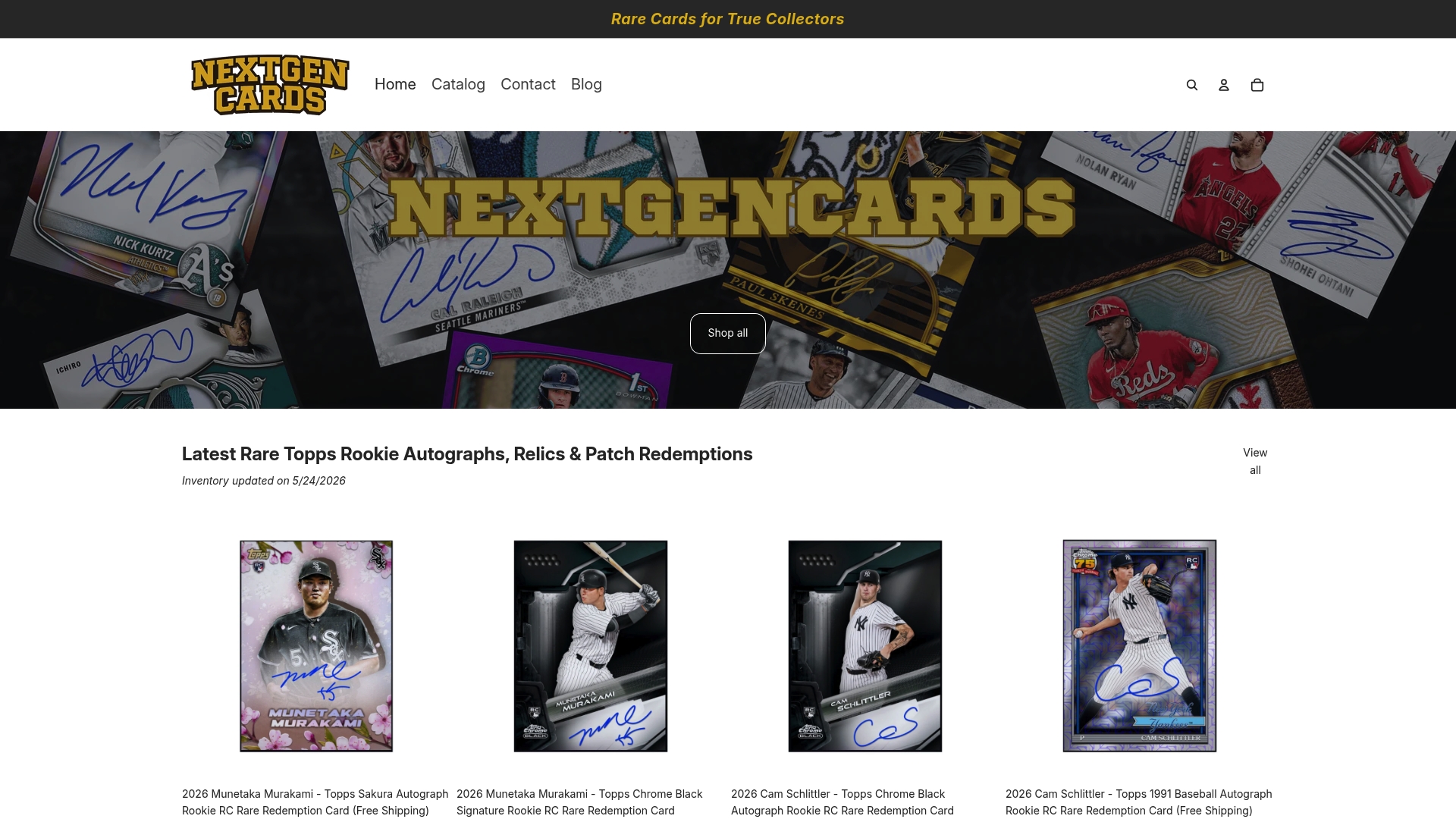
Nextgencards curates a selection of authenticated rookie autographs and relics built for serious collectors who demand transparent provenance. Every product in the rookie autographs and relics collection includes modern security features: serialized holograms, verifiable certificate numbers, and clear chain of custody documentation. The inventory spans sought-after prospects and established stars, with limited edition offerings that reflect genuine scarcity rather than manufactured exclusivity. If you are building a collection where every item can withstand scrutiny, Nextgencards provides the vetted starting point. Free shipping is available on select items, and the catalog is updated regularly with new authenticated additions worth tracking.
FAQ
What does it mean to authenticate rare sports memorabilia?
Authentication is the process of verifying an item’s origin, ownership history, physical integrity, and signature legitimacy through multiple independent evidence sources. A valid COA, provenance documentation, and third-party expert review must all align for an item to be considered authenticated.
Which third-party services are most trusted for sports memorabilia certification?
PSA, Beckett Authentication Services, and MeiGray are the most recognized third-party authenticators in the market. Beckett offers an online certificate verification portal, and MeiGray specializes in photo-matched game-worn apparel authentication.
How do I verify a certificate of authenticity for a signed jersey?
Enter the certificate’s serial number or QR code into the issuer’s online registry. If the registry returns no result or the issuer has no verifiable online presence, the COA cannot be confirmed and the item should not be purchased.
What is photo-matching and why does it matter for game-worn items?
Photo-matching compares high-resolution wear pattern images of an item against broadcast footage and official game photography to confirm the item was actually used in a specific game. It is the most objective verification method available for game-worn apparel and directly increases resale value.
Can a previously authenticated item later be found to be fake?
Yes. Authentication outcomes can change, and at least one documented case shows an autograph rejected after initial acceptance by a major authenticator. Relying on a single certificate is insufficient; multiple corroborating evidence sources reduce this risk significantly.
Recommended
- NextGenCards - Rare Topps Rookie Cards – Next Gen Cards LLC
- Top Places to Buy Rare Rookie Cards (Collectors Guide) | NextGenCards – Next Gen Cards LLC
- Rare Topps Rookie Autographs & Relics – Authentic Cards – Next Gen Cards LLC
- 2026 Sal Stewart Topps Heritage Blue Ink Autograph Rookie RC Rare Card – Next Gen Cards LLC
0 comments