

Sports card inserts are defined as limited-edition cards inserted randomly into packs, distinct from base cards by their rarity, design, and print restrictions. The most valuable sports card inserts combine extreme scarcity, iconic player association, and design innovation to command prices from hundreds to millions of dollars. In 2026, the market reached a new peak when a 2023-24 Panini Prizm Black Victor Wembanyama one-of-one sold for $5.11 million, setting the record for the most expensive non-autographed basketball card ever sold. Grading condition, checklist size, and auction dynamics all amplify or suppress these values. Sets like Panini Kaboom, Topps Chrome Kaiju, and 1993 Topps Finest represent the benchmark examples every serious collector and investor should understand.
1. Most valuable sports card inserts: modern 1/1 parallels
Modern one-of-one parallels represent the top tier of collectible sports card inserts. These cards carry a serial number of 1/1 printed directly on the card, confirming that only a single copy exists in the world. That absolute scarcity, paired with a superstar player, creates the conditions for record-breaking sales.
The clearest proof is the 2023-24 Panini Prizm Black Wembanyama PSA 10, which exceeded its prior record of $860,100 by more than five times when it sold privately for $5.11 million in 2026. That gap between the previous record and the final sale price shows how fast demand can accelerate when a generational talent is paired with a true 1/1 parallel. Collectors and investors tracking this market recognize that Prizm Black is now the most sought after parallel tier in modern basketball.
The key factors that push 1/1 parallels to the top of sports card insert values are:
- Absolute print run: Only one copy exists, eliminating any competition from identical cards
- PSA 10 grade: Gem mint condition on a 1/1 creates a combination that cannot be replicated
- Player trajectory: Rising stars like Wembanyama carry long-term appreciation potential
- Private sale activity: High-value 1/1 cards often trade privately, meaning public auction records understate true market ceilings
Pro Tip: If you are tracking 1/1 parallel values, monitor both public auction results and reported private sales. The most significant transactions frequently happen off-platform, and public records alone will give you an incomplete picture of where the market actually sits.
2. Panini Kaboom inserts and their record-setting prices
Panini Kaboom inserts are among the most visually distinctive and high value sports inserts in the modern hobby. First introduced in Panini NFL products, Kaboom cards feature bold, comic-style artwork that makes them immediately recognizable. The rarest parallels within the Kaboom line carry serial numbers down to 1/1, and those cards have now crossed into seven-figure territory.
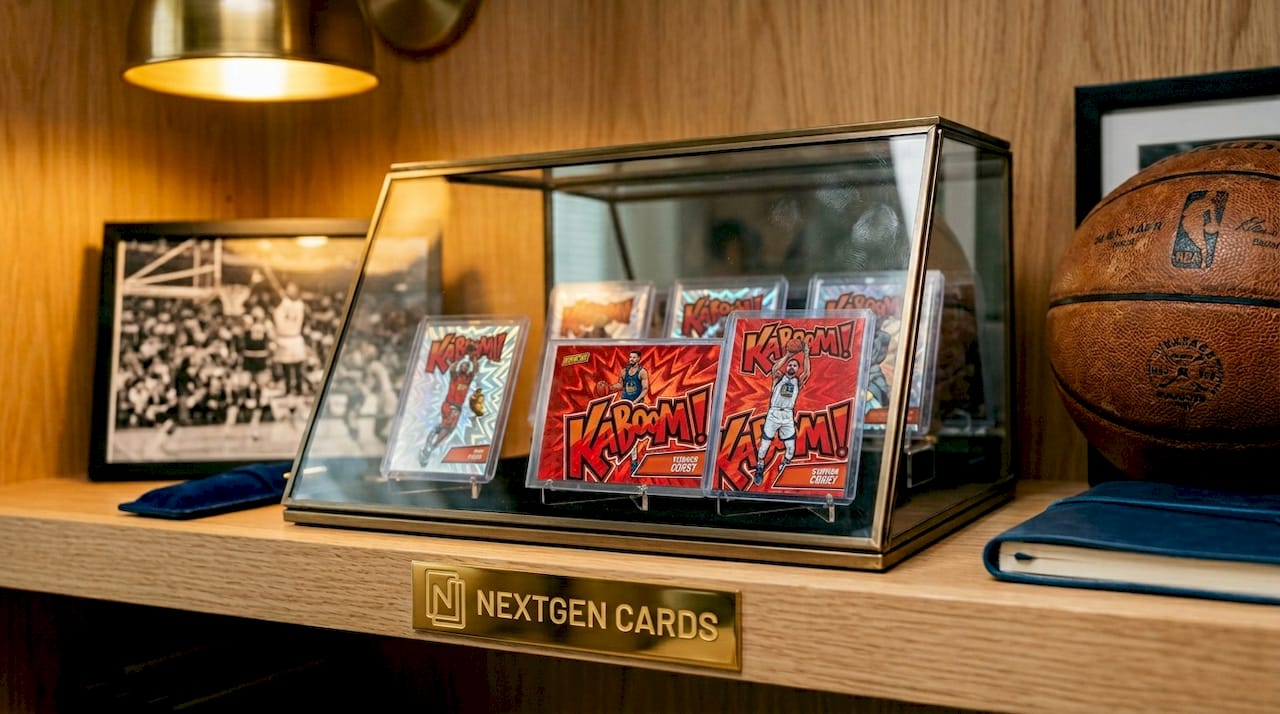
The 2018 Panini Kaboom Green Cristiano Ronaldo 1/1 parallel sold for $1.35 million in May 2026, more than tripling the previous Ronaldo card record of $420,000. This sale is significant for one specific reason: the card carries no autograph and no patch. It is a pure insert parallel, and its value rests entirely on rarity and player status. That result validates the principle that autographs are not required for multi-million dollar valuations when scarcity and star power align.
For collectors building a portfolio around high value sports inserts, Kaboom cards offer a clear lesson. Visual appeal drives bidder interest, and a 1/1 parallel of a global icon will attract buyers from both the sports card hobby and the broader collectibles market.
3. Topps Chrome Kaiju cards: rarity defined by pull odds
Topps Chrome Kaiju cards are the rarest inserts currently produced in football card products. The pull odds reach 1 in 518,770 packs, and the checklist covers only 10 players. That combination of near-impossible odds and a curated player list makes every Kaiju card a significant find.
The 2025 Tom Brady Kaiju PSA 10 sold for $23,300 on eBay after attracting over 80 bids and more than 1,000 watchers. The auction moved from $22,700 to $23,300 in its final hours, driven by competitive bidding from collectors who recognized the card’s scarcity. Brady’s status as the most decorated quarterback in NFL history made this particular Kaiju card a priority target for serious buyers.
The small checklist is a deliberate design choice that shapes market behavior. With only 10 players represented, collectors who want a complete Kaiju set face a focused but extremely difficult hunt. That set-completion mindset increases bid volatility and reduces the number of mid-tier cards available for casual buyers. Every Kaiju card that surfaces draws concentrated attention from a dedicated pool of bidders.
4. 1993 Topps Finest refractors: the vintage benchmark
The 1993 Topps Finest set introduced refractor-style inserts to baseball cards, establishing the design language that defines premium inserts to this day. Each card in the set had an estimated print run of approximately 241 copies, which was extraordinarily limited by the standards of early 1990s production. That historical significance, combined with genuine scarcity, gives these cards enduring value.
The reasons vintage inserts like 1993 Topps Finest maintain strong collector bases come down to four consistent factors:
- Design innovation: The refractor technology was genuinely new in 1993, and the cards still look striking today
- Historical significance: Owning the first of a format carries prestige that newer cards cannot replicate
- Limited production: Print runs of roughly 241 copies per card are scarce by any standard, vintage or modern
- Star player association: Cards featuring Hall of Fame players from that era carry both hobby and mainstream appeal
“1990s iconic insert sets retain strong collector bases due to their role in establishing insert innovations like refractors, creating a long-tail value effect.” — Sports Illustrated Collectibles
The long-tail value effect is real and measurable. Collectors who purchased 1993 Topps Finest refractors at release prices have seen consistent appreciation over three decades. That track record makes vintage inserts a credible portfolio component alongside modern ultra-rare parallels.
5. How rarity tiers and serial numbering drive insert pricing
Serial numbering is the primary mechanism that creates rarity tiers in modern sports card inserts. A card numbered to 10 copies is scarce. A card numbered to 5 is extremely scarce. A true 1/1 is unique. Each step down in print run multiplies collector demand and price premium in a way that is not linear.
Short print parallels, known in the hobby as SSPs, operate differently from numbered cards. SSPs have no printed serial number but are produced in quantities low enough that pulling one from a pack is a rare event. The market treats confirmed SSPs with significant price premiums, though the absence of a printed number makes verification more dependent on community documentation and grading service notes.
Grading condition adds another layer of complexity for high-end inserts. Foil and holographic surfaces are highly susceptible to micro-scratches from pack handling, making PSA 10 grades on reflective inserts genuinely rare. The price gap between a PSA 9 and a PSA 10 on a premium insert can be substantial, sometimes representing a difference of several thousand dollars on a single card.
| Rarity Tier | Print Run | Typical Price Impact |
|---|---|---|
| Standard parallel | 100 to 499 copies | Modest premium over base |
| Low-numbered parallel | 10 to 25 copies | Significant premium, strong demand |
| True SSP | Undisclosed, very low | High premium, verification dependent |
| 1/1 unique | 1 copy | Maximum premium, auction or private sale |
Pro Tip: Before submitting a foil or holographic insert for grading, store it in a rigid top-loader immediately after pulling it from the pack. Even minor sleeve friction can introduce surface marks that drop a potential PSA 10 to a PSA 9, and that grade difference can cost you thousands of dollars on a high-end card.
6. Auction dynamics and how collector demand sets price ceilings
Auction activity does not simply reflect the value of rare sports card inserts. It actively creates that value through competitive bidding, public visibility, and community engagement. The Tom Brady Kaiju sale is the clearest recent example of this dynamic in action.
That card attracted over 1,000 watchers on eBay before the auction closed. Watchers signal intent, and a large watcher count tells active bidders that competition will be fierce. The result was a final price of $23,300 driven by 80-plus bids, with the most aggressive bidding concentrated in the final minutes. That pattern repeats across high-demand inserts: scarcity brings watchers, watchers signal competition, and competition drives the final price above any pre-auction estimate.
Key factors that shape auction outcomes for collectible sports card inserts:
- Watcher count: High watcher numbers signal strong demand before bidding opens
- Listing timing: Auctions closing on weekend evenings consistently attract more active bidders
- Visual presentation: High-resolution scans showing card condition and surface quality directly influence bidder confidence
- Grading label: A PSA 10 slab on a rare insert removes condition uncertainty and justifies aggressive bidding
- Player news cycle: Active playoff runs, award announcements, or contract signings during an auction window can push final prices significantly higher
The market rewards inserts that combine extreme scarcity with visual appeal and small, curated checklists. When those three elements align, focused bidding wars produce prices that exceed comparable cards with larger print runs by a wide margin.
7. Vintage 1990s inserts beyond Topps Finest worth knowing
The 1993 Topps Finest refractors are the most recognized vintage benchmark, but several other 1990s insert sets carry strong collector demand and consistent resale value. Understanding these sets gives collectors a broader view of where vintage insert value concentrates.
The 1996-97 Topps Chrome Refractor set applied the refractor technology to basketball for the first time, with Kobe Bryant and Allen Iverson rookie refractors becoming centerpiece cards for that era’s collectors. The 1998-99 SkyBox Molten Metal Supernatural inserts featured Michael Jordan and combined foil construction with extreme scarcity, making condition sensitivity a defining factor in their current market prices. PSA 10 examples of Jordan’s Molten Metal Supernatural cards command premiums that reflect both the player’s legacy and the difficulty of achieving gem mint grades on that card’s reflective surface.
Collectors who focus on vintage inserts benefit from a buyer base that has been stable for decades. These cards are not subject to the same hype cycles as modern releases. Their value derives from documented scarcity, confirmed player significance, and a collector community that has tracked these cards for thirty-plus years.
Key takeaways
The most valuable sports card inserts are defined by the intersection of verified scarcity, iconic player association, and condition quality, with modern 1/1 parallels and vintage refractor firsts representing the two strongest value categories in the current market.
| Point | Details |
|---|---|
| 1/1 parallels lead all values | The Wembanyama Prizm Black 1/1 PSA 10 set the record at $5.11 million in 2026. |
| Autographs are not required | The Ronaldo Kaboom Green 1/1 sold for $1.35 million with no autograph or patch. |
| Pull odds define modern rarity | Kaiju cards reach 1 in 518,770 packs, making them the scarcest modern football inserts. |
| Grading condition multiplies value | PSA 10 grades on foil inserts are rare due to surface sensitivity, creating large price gaps over PSA 9. |
| Vintage inserts offer stable demand | 1993 Topps Finest refractors maintain value through historical significance and a deep, loyal collector base. |
Why I think most collectors undervalue the non-autograph insert market
Richard here. After years of tracking insert sales and building collections across basketball, football, and soccer cards, the single most consistent mistake I see collectors make is dismissing non-autographed inserts as secondary assets. The Ronaldo Kaboom sale at $1.35 million should have permanently ended that thinking, but it has not.
The hobby has trained collectors to equate value with autographs and patches. That framework made sense when print runs were large and inserts were common. It does not hold when you are looking at a 1/1 parallel of a global icon with a design that commands attention from buyers who have never opened a pack in their lives. The Kaboom and Kaiju markets are attracting crossover buyers from fine art and luxury collectibles, and those buyers do not care whether a card has a signature. They care about uniqueness and visual impact.
My practical advice: prioritize condition above almost everything else when acquiring high-end inserts. A PSA 9 on a Kaiju or a Kaboom parallel is not a consolation prize. It is a fundamentally different asset from a PSA 10, and the price difference reflects that reality. If you are pulling inserts from packs, handle them with gloves and sleeve them immediately. If you are buying raw, factor grading risk into your offer price.
Watch the emerging stars featured in ultra-rare parallels now, before their trajectories are confirmed. The Wembanyama card was valuable the moment it was pulled. The collectors who recognized that early and held through grading captured the full appreciation. That opportunity exists today in other sports with the right players and the right insert sets.
— Richard
Explore rare inserts at Nextgencards
Nextgencards curates a focused inventory of rare sports cards built specifically for collectors and investors who understand what drives real value. The selection includes rookie autographs and rare inserts across baseball, basketball, and football, with authenticated limited-edition cards from sought-after players.
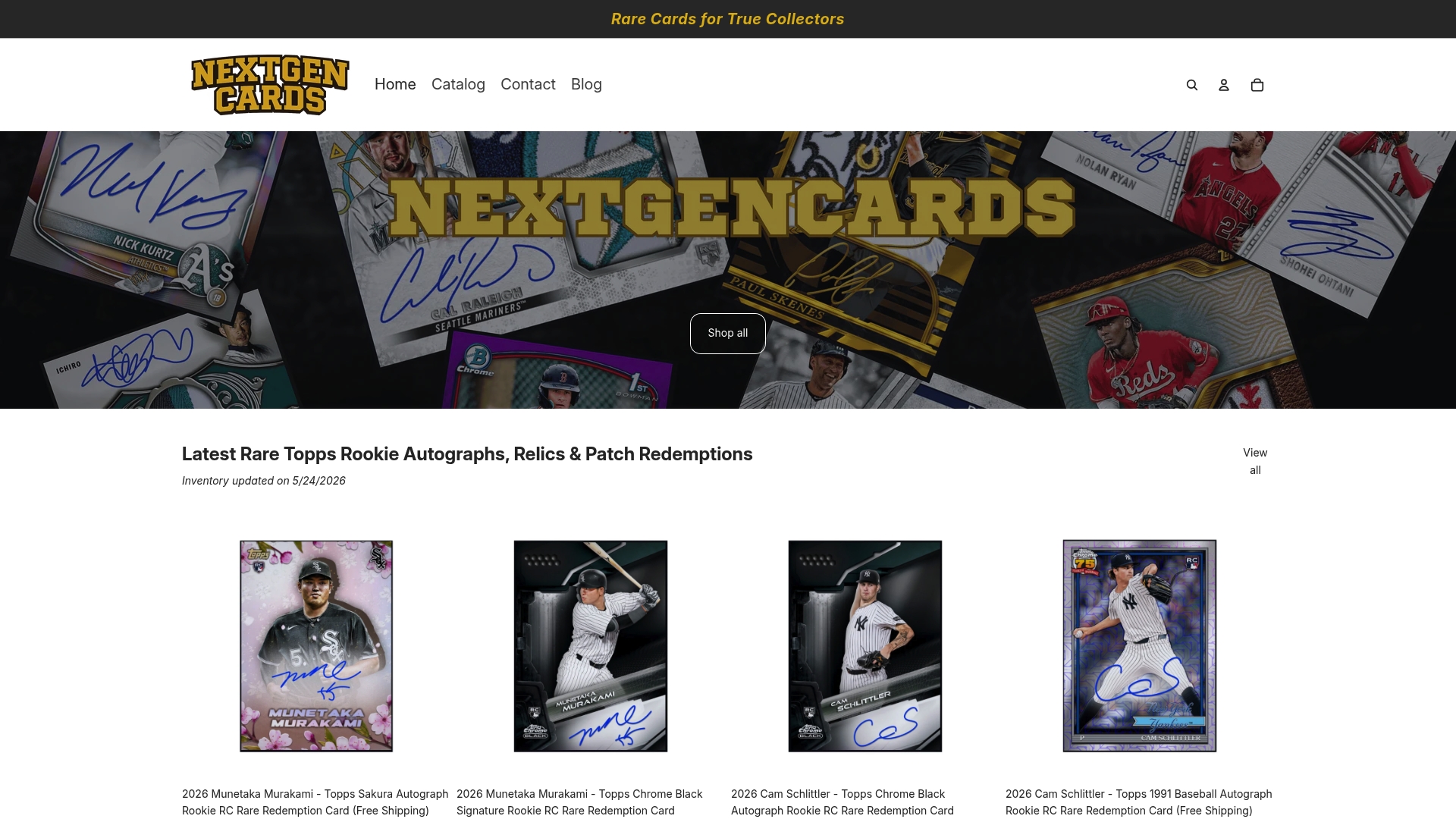
If you are looking to add high-demand cards to your collection, Nextgencards carries options like the 2026 Kon Knueppel Topps Chrome autograph rookie and the 2026 Derik Queen rookie autograph, both representing the kind of scarce, authenticated cards that serious collectors prioritize. Free shipping is available on select items, and every card in the inventory is backed by authenticity standards that matter when you are making a real investment.
FAQ
What makes a sports card insert valuable?
Rarity, player significance, and condition are the three primary drivers of insert value. A 1/1 parallel of a generational player in PSA 10 condition represents the highest value combination in the current market.
Do valuable inserts need to have autographs?
No. The 2018 Panini Kaboom Green Cristiano Ronaldo 1/1 sold for $1.35 million with no autograph or patch, confirming that extreme rarity and star power alone can produce top-tier prices.
What are Kaiju cards and why are they so rare?
Kaiju cards are Topps Chrome Football inserts with pull odds of approximately 1 in 518,770 packs and a checklist of only 10 players. That combination of near-impossible odds and a small player list makes every Kaiju card a significant find.
How does grading affect sports card insert values?
Foil and holographic inserts are highly susceptible to surface scratches, making PSA 10 grades genuinely rare. The price gap between PSA 9 and PSA 10 on premium inserts can represent thousands of dollars on a single card.
Are vintage inserts from the 1990s still worth collecting?
Yes. Sets like 1993 Topps Finest refractors maintain strong collector demand due to their historical significance as the first refractor-style inserts, with estimated print runs of approximately 241 copies per card providing genuine scarcity.
Recommended
- Top Places to Buy Rare Rookie Cards (Collectors Guide) | NextGenCards – Next Gen Cards LLC
- NextGenCards - Rare Topps Rookie Cards – Next Gen Cards LLC
- 2026 Derik Queen - Topps Flagship Rookie Jersey Patch Rare RC Card – Next Gen Cards LLC
- 2026 Derik Queen Topps 1980-81 Basketball Rookie Autograph Rare Card – Next Gen Cards LLC
0 comments