

Buy low numbered or on-card rookie autos from flagship sets, not mass-retail base rookies chasing a hot name. The floor holds even if a prospect stalls when the print run is tight and the set carries weight. Right now that means targeting picks like the Junior Caminero Bowman Chrome Green Signature auto, the Elly De La Cruz Reverence RPA, and the Jacob Misiorowski rookie autographs, then timing the purchase after the initial rookie hype cools.
TL;DR:
- Low-numbered rookie autos from flagship sets, especially those under /50 or /99, retain value even if the player’s performance declines.
- Prospect cards like Junior Caminero Bowman Chrome Green Signature and JJ Wetherholt Bowman Chrome offer long-term floor stability due to fixed print runs and set prestige.
- Buying during the off-season or after a player’s hype spike, with careful verification of serial numbers and recent sales, prevents overpaying on inflated prices.
- On-card autograph set products such as Prizm and Select maintain higher liquidity and demand compared to sticker autos or unnumbered retail cards.
- Scarcity, set reputation, and grading potential are key factors to consider when selecting rookie autos for investment or long-term collection.
Table of Contents
- Curated Shortlist: Rookie Autograph Cards Worth Buying
- Three Rules That Predict If a Rookie Auto Will Hold Value
- Sets and Card Constructions Worth Prioritizing
- When to Buy: Timing Strategy for Rookie Autos
- Grading, Storage, and Planning Your Exit
- How Player Performance Shapes a Rookie Auto’s Ceiling
- What Recent Sales Data Says About Current Demand
- Spotting Fake Autographs and Authentication Red Flags
- Publisher Perspective: Why This Guide Reflects Real Collector Priorities
- The Real Mistake Most Rookie Auto Buyers Make
- Shop the Picks: Where to Find These Rookie Autos
- Sources
- FAQ
Curated Shortlist: Rookie Autograph Cards Worth Buying
Every pick below earns its spot for a specific reason, not because a name is trending on social media. Some fit a long-term floor thesis. Others fit a shorter, hype-driven flip. Knowing which one you’re buying before you bid changes how you should size the purchase.
The 2024 Junior Caminero Topps Bowman Chrome Green Signature Rookie card checks the box for prospect pedigree. First Bowman Chrome autos function as a player’s recognized key rookie card with a fixed print run that can never be reprinted, which is exactly why serious prospectors chase them over later, mass-produced rookie issues. The Green Signature parallel adds scarcity on top of that already-limited base. This one suits a collector building a long-term prospect wall as much as an investor with a two-to-three-year horizon.
The 2024 Elly De La Cruz Topps Reverence Rookie Patch Autograph (RPA) pairs a game-used patch with an on-card signature in a mid-tier premium set. RPAs from Reverence carry real eye appeal for display purposes, and De La Cruz’s power-speed profile gives the card a performance floor that pure autograph-only rookies lack. This is a collector-first buy with investment upside attached, not the other way around.
The 2026 Jacob Misiorowski Topps All Star Game Autograph Rookie and the companion 1991 Topps Baseball Autograph Rookie redemption give buyers two different angles on the same arm. The All Star Game issue leans on event-driven demand, while the 1991 Topps design taps nostalgia-driven collectors who want a retro look on a current rookie. Buying both hedges which aesthetic the market eventually favors.
The 2026 Derik Queen Topps 1980-81 Basketball Rookie Autograph applies the same retro-design logic to basketball, betting that vintage-style set nostalgia keeps demand steady even if Queen’s rookie season is uneven.
The 2026 Jalen Brunson Topps All Star Game Jersey Patch Autograph targets a different buyer entirely: someone who wants an established, proven NBA starter rather than a speculative rookie. Jersey patch combos on a known commodity tend to hold value with less volatility than unproven prospect autos.
The 2026 JJ Wetherholt Topps Bowman Green Chrome Prospect Signature Rookie rounds out the prospecting side of the list, following the same first Bowman Chrome logic as Caminero but at an earlier, cheaper entry point.
The 2024 Skenes Cole Strasburg Topps Baseball Stars Triple Autograph is the outlier: a triple-signed redemption combining a generational rookie arm with two established stars. Multi-player autos like this trade on scarcity of the combination itself, not just one player’s trajectory, and typically hold interest even when one signer’s career cools.
Quick compare on scarcity, prestige, and grading potential:
- Caminero and Wetherholt (Bowman Chrome prospect autos): highest long-term floor thanks to fixed, uncopyable print runs.
- De La Cruz RPA: strongest display value and patch scarcity, moderate grading population risk.
- Misiorowski dual issues: highest short-term volatility, tied directly to 2026 season performance.
- Brunson jersey patch auto: lowest volatility, established-player floor.
- Skenes/Cole/Strasburg triple auto: rarest combination scarcity, smallest buyer pool.
Numbered rookie autos under /50 retain floors even when a player underperforms, which is the single biggest reason to prioritize serial-numbered parallels over unnumbered base rookie autos when two otherwise similar cards are competing for your budget.
Three Rules That Predict If a Rookie Auto Will Hold Value
Every rookie auto you’re weighing against your budget should pass three tests before you commit money to it.
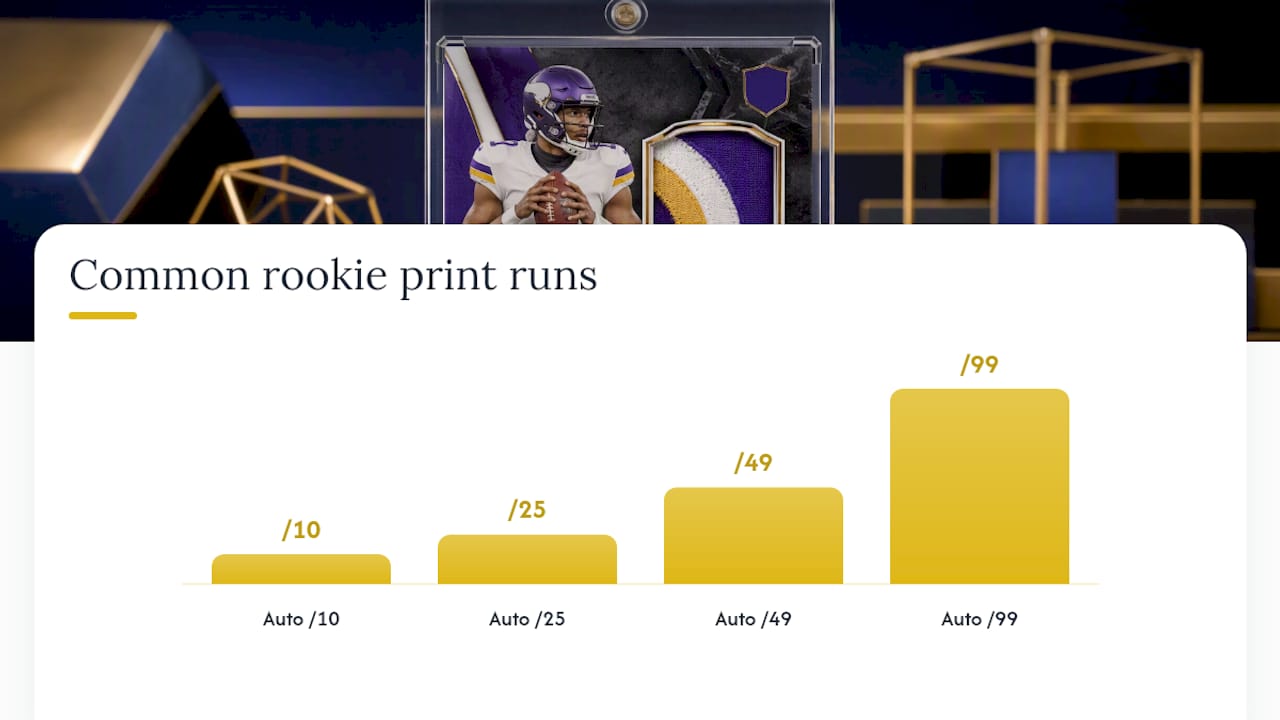
- Print-run scarcity. A card numbered to /49 or lower behaves differently in the market than an unnumbered parallel from the same set, because the supply ceiling is fixed the day it’s printed. National Treasures autos numbered under /10 or in the low /25 range often retain floor value even for role players, simply because so few copies exist to satisfy demand.
- Set prestige. Prizm, Bowman Chrome, Select, and National Treasures carry built-in buyer pools that base retail sets never develop. Flagship products like Prizm and Topps Chrome maintain a steady buyer base that keeps liquidity intact, which is why grade spreads on those base and refractor versions actually function as tradeable markets rather than dead inventory.
- Grading potential and population reports. A card with a realistic shot at a PSA or BGS Gem Mint grade, and a population report that hasn’t already flooded with 9s and 10s, holds more upside than a visually similar card graded in a crowded pool.
Pro Tip: Cross-check a card’s stated serial number against early population reports before you bid. An “AUTO /49” printed on the card means nothing if grading services later reveal duplicate submissions or mislabeled parallels.
Here’s how the three rules play out in practice: a /25 National Treasures rookie patch auto from a bench player can outsell a /99 rookie auto from a star, purely because the print run is smaller and the set carries more collector weight. Scarcity and prestige compound, they don’t just add.
Sets and Card Constructions Worth Prioritizing
Not every rookie auto with a big name on it deserves shelf space in a serious collection. The construction and the set matter as much as the signature itself.
Tier 1, the safest long-term holds:
- National Treasures rookie patch autos, thanks to conservative print runs that rarely exceed a few hundred copies per player.
- First Bowman Chrome prospect autos, which function as the market-recognized key rookie card for any drafted or signed prospect.
- On-card Prizm and Select rookie autos with serial numbers under /99.
Tier 2, solid but more supply-dependent:
- Reverence and Definitive rookie patch autos, where quality is high but print runs run slightly deeper.
- Sticker autos from otherwise strong sets, which trail on-card versions in long-term demand but still hold value when numbered low.
Tier 3, avoid unless the price is near zero:
- Unnumbered base retail rookie autos with no serial number printed anywhere on the card.
- Products marketed with vague “1/1” language that doesn’t match a verifiable serial number on the physical card itself.
- Poorly centered or thin-stock printings from oversaturated retail-only releases.
On-card signatures generally outlast sticker autos in resale demand, since collectors view the ink touching the card surface as the more authentic collecting experience. That said, vintage signed rookies from sets decades old sometimes remain undervalued relative to modern autos purely because fewer buyers know to look for them. If you stumble across a properly authenticated vintage signed rookie at a reasonable price, it can outperform a flashier modern parallel.
When to Buy: Timing Strategy for Rookie Autos
Buying the moment a rookie has a breakout month is usually the worst time to buy. Prices spike on hype and correct once the season cools, so patience is a legitimate strategy, not a missed opportunity.
Prospect card prices tend to spike early in a season, with better entry discounts available between August and November or after the season ends, before the following spring’s hype cycle restarts. That window is where disciplined buyers find the same scarcity at a lower price than the panic-buying crowd paid three months earlier.
Watch sold listings, not asking prices. Sold-list rankings of current rookie classes show which players actually command premiums versus which ones are inflated by listing volume alone. A card with dozens of active listings and few completed sales is a warning sign, not a bargain.
A short checklist before you bid:
- Check the last 10 to 15 completed sales, not current listings, for the exact parallel and serial number.
- Confirm whether the market has cooled since the player’s initial rookie-season hype spike.
- Decide upfront whether you’re buying raw to grade yourself or paying a premium for an already-graded copy.
- Verify the serial number printed on the card matches population data before submitting payment.
Pro Tip: If a player just had a huge month, wait. The same card is almost always available three to six months later at a friendlier price with identical scarcity.
Grading, Storage, and Planning Your Exit
Grading only makes sense when the math works. Batch submissions of 20 to 30 raw cards from the same set bring the per-card grading cost down enough that a modest 2x to 5x resale spread covers fees and shipping. A single card sent alone rarely clears that bar unless it’s already a known blue-chip name with a realistic shot at Gem Mint.
Protect the raw card before it ever reaches a grader. Use penny sleeves inside rigid top loaders, store in a climate-controlled space away from humidity swings, and avoid stacking cards under weight that can bend corners. A primer on rookie auto grading walks through submission tiers and turnaround expectations in more depth.
Exit planning basics:
- Sell true grails through auction formats, where competitive bidding captures upside on scarce, high-demand cards.
- List mid-tier holds at fixed prices for steadier, faster turnover without auction fee uncertainty.
- Keep purchase receipts and grading invoices; cost basis matters if you’re ever reporting collectible sale gains.
How Player Performance Shapes a Rookie Auto’s Ceiling
A tight print run sets the floor. Performance sets the ceiling. The same /49 rookie auto can trade flat for two years and then triple in value the moment a player has a breakout season, an All Star nod, or a deep playoff run.
That’s why the shortlist above leans on players with either proven trajectories already in motion (Brunson, an established NBA starter) or clear developmental signals (Caminero and Wetherholt as high-pedigree prospects, De La Cruz already showing rare power-speed production). Betting purely on name recognition without a performance signal is closer to gambling than collecting.
Career trajectory also determines how a card ages against its own set-mates. A rookie class typically has one or two players who separate from the pack within two to three years, and their autos absorb most of the class’s total demand. The rest settle into commodity pricing, still tradable but without the same upside. Reading early performance signals, not just draft hype, is how you identify which rookie in a class is likely to be that outlier before the market fully prices it in.
Injury history and role security matter here too. A prospect with a clear path to consistent playing time carries less risk than a talented player buried on a crowded roster, regardless of how impressive the signature or patch looks on the card itself.
What Recent Sales Data Says About Current Demand
Sold prices, not listing prices, tell the real story of where rookie auto demand sits today. Sold-list analysis of the current Topps Series 1 rookie class shows a handful of names commanding consistent premiums while the majority of the class trades at commodity pricing, which mirrors the pattern collectors have seen in nearly every recent rookie class.
That concentration effect is worth internalizing. Demand doesn’t spread evenly across a 30-name rookie checklist. It pools around the three or four players generating the most on-field attention that month, then shifts as performance changes. Tracking which names are pulling volume in completed sales, rather than which names have the most active listings, separates buyers who catch value from buyers who chase it.

Established tiering systems that separate blue chips, established stars, and speculative prospects give a useful lens for interpreting sales data. A blue-chip rookie auto holding steady sale prices across months signals durable demand. A speculative prospect auto with wildly swinging sold prices signals a name still being priced by hype rather than performance.
Pro Tip: Set a saved search on completed sales, not active listings, for any card you’re tracking. Price trends only show up in what actually sold.
Spotting Fake Autographs and Authentication Red Flags
Authentication starts with the serial number itself. Checking the manufacturer’s printed indicator, such as “AUTO /49,” against early population reports confirms the scarcity claim is real before you commit to a purchase. A mismatch between the stated print run and the number of copies already showing up in grading submissions is one of the clearest fraud signals in the hobby.
Watch for these common red flags on rookie autos specifically:
- A signature that sits noticeably off-center or extends past the designated autograph panel, which often signals a reprint or an added-on signature rather than a factory-authenticated one.
- Missing or mismatched certification stickers from the manufacturer, especially on sticker-auto cards where the sticker itself can be lifted and reapplied.
- Listings advertising a “1/1” without a matching serial number physically printed on the card.
- Sellers unwilling to provide additional photos of the card’s back, edges, or the signature under different lighting.
Buying through an established, reputable source shrinks this risk considerably, since inventory has already passed through verification before it reaches a buyer. Independent sellers on open marketplaces carry more of this burden onto the buyer, which is where careful photo review and serial-number cross-checking earn their keep.
Publisher Perspective: Why This Guide Reflects Real Collector Priorities
This guide comes from the collector’s guide series written for Nextgencards, where the focus stays on verifiable print runs, set reputation, and grading logic rather than hype cycles. Richard’s collector guides dig deeper into the mechanics behind every recommendation here.
Scarcity and set prestige tell you what a card can be worth. Grading population and sold comps tell you what it’s actually worth right now. Buyers who confuse the two overpay for hype and underpay for the cards that quietly hold value for years.
- Reading serial numbers correctly before you bid on any numbered parallel.
- What separates an investable rookie auto from one that’s just popular.
- Verifying true rookie-year status before assuming a card qualifies as an RC.
The store focuses inventory on physical rookie, autograph, patch, and redemption cards with authenticity and limited-edition sourcing behind every listing, backed by free shipping on select items.
The Real Mistake Most Rookie Auto Buyers Make
Most buying guides for rookie autos are secretly speculation lists dressed up as investment advice. They ask “who’s the next superstar” and hope the reader gets lucky picking a name before the market does. That approach loses more money than it makes, because it ignores print run and set prestige entirely in favor of a guess about a 21-year-old’s career arc.
The framework that actually works flips the question. Ask what the card’s floor looks like if the player never improves, then treat any performance upside as a bonus rather than the entire thesis. A /25 National Treasures RPA on a bench player with real scarcity beats a hyped unnumbered retail auto on a consensus top prospect, because one has a mathematical floor and the other has a hope.
Buyers should prioritize serial number and set first, player trajectory second, and current hype dead last. That ordering feels unglamorous compared to chasing the next big name, but it’s the difference between building a collection with real resale value and one that quietly depreciates the moment the hype cycle moves on to someone else.
— Richard
Shop the Picks: Where to Find These Rookie Autos
The site is built specifically around the picks discussed in this guide, curating rare rookie autographs, patches, and redemption cards instead of burying them in generic retail inventory. That focus means less time hunting across scattered marketplaces and more confidence that what you’re viewing has been sourced with authenticity in mind.
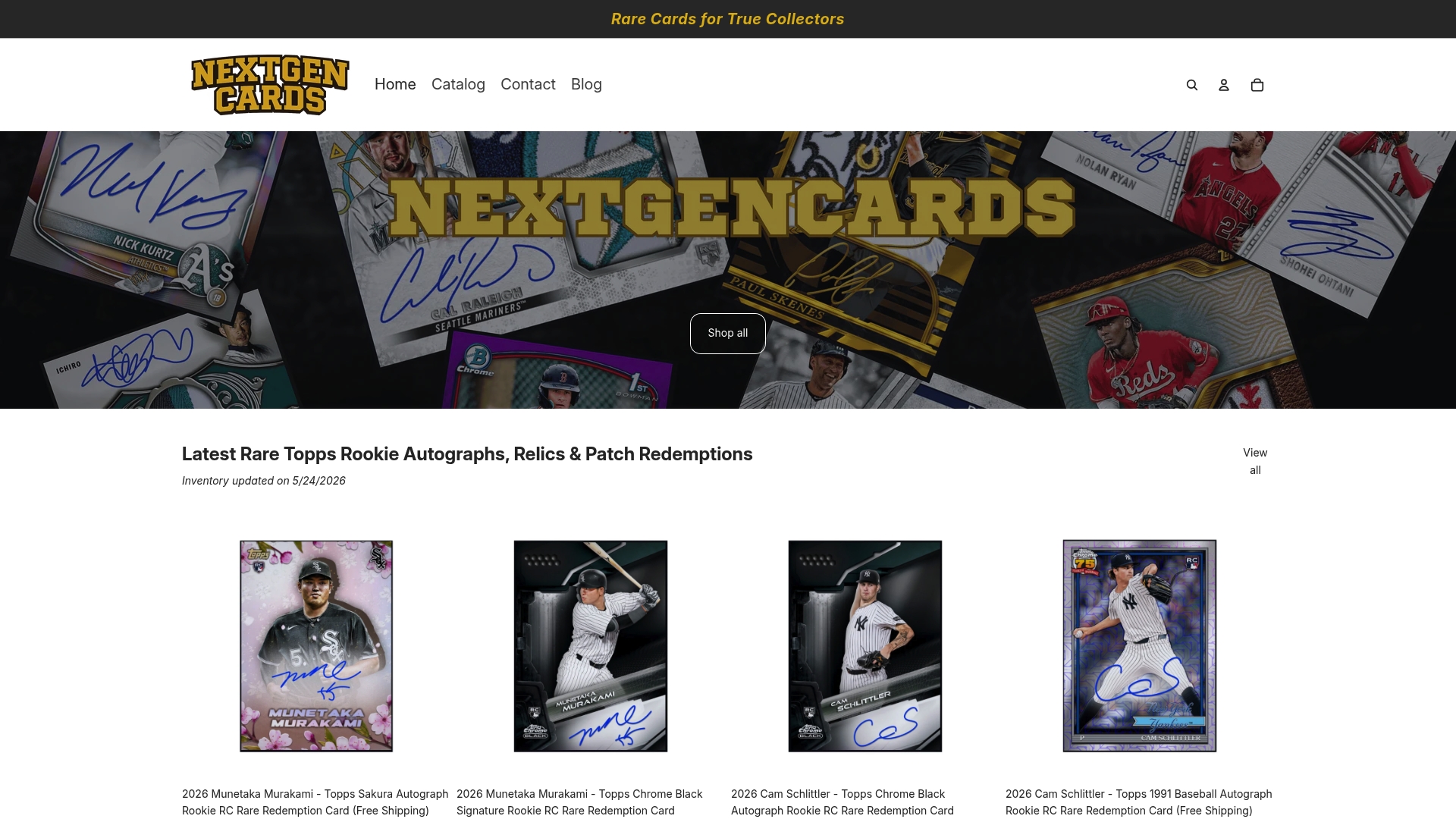
The 2024 Junior Caminero Bowman Chrome Green Signature Rookie fits the first Bowman Chrome prospect thesis outlined above, while the Jacob Misiorowski All Star Game Autograph Rookie and its 1991 Topps design counterpart give you two angles on the same rookie arm. Collectors who want display-grade rarity should look at the Elly De La Cruz Reverence Rookie Patch Autograph, and anyone drawn to the multi-signature angle should check the Skenes, Cole, Strasburg Triple Autograph redemption. The JJ Wetherholt Bowman Green Chrome Prospect Signature rounds out the prospecting side at an earlier entry point.
Before you buy anywhere, verify the serial number printed on the card, request clear photos of the front, back, and autograph panel, and confirm provenance on any redemption card before it ships. Browse the full rookie autographs and relics collection to compare current inventory against the criteria in this guide, and check out with confidence on eligible free-shipping items.
Sources
- Rookie Cards That Actually Hold Value Long Term - Collector Sports World
- Top 5 Undervalued Vintage Rookie Autograph Baseball Cards
- 2026 Topps Series 1 rookie analysis — sold-list ranking
- Best Rookie Cards to Invest In 2026: Sports Cards Worth Buying Now
FAQ
Which rookie cards are worth investing in?
Rookie autos with serial numbers under /99, ideally under /50, from flagship sets like National Treasures, Bowman Chrome, Prizm, and Select tend to hold value best, since the fixed print run protects the floor even if the player’s career stalls.
Are auto cards worth anything?
Signed rookie cards typically carry higher resale value than unsigned base rookies from the same set, especially when the autograph is on-card rather than a sticker and the set carries established buyer demand.
What are the best rookie cards to buy right now?
Right now, low-numbered Bowman Chrome prospect autos like Junior Caminero and JJ Wetherholt, plus established-set rookie patch autos like Elly De La Cruz’s Reverence RPA, offer the strongest combination of scarcity and set prestige.
Which graded rookie cards are worth money?
Graded rookie autos that reach PSA or BGS Gem Mint from flagship sets with tight print runs command the largest premiums, while cards from oversaturated retail sets rarely see meaningful grade-based price jumps even at the top grade.
0 comments