

Rookie autograph grading is the process of authenticating and assigning a quality score to the signature on a rookie trading card, which directly determines its market value and buyer confidence. This process is handled by professional grading companies including PSA (Professional Sports Authenticator), Beckett Grading Services (BGS), and CGC Cards. Understanding rookie autograph grading explained in full means knowing that two separate grades often apply: one for the card’s physical condition and one for the autograph itself. For new collectors, this distinction is the foundation of smart buying and selling decisions. A card with a PSA 10 grade and a strong autograph grade commands a premium that an ungraded raw card simply cannot match.
How do grading scales work for rookie autograph cards?
Grading scales for rookie autograph cards run from 1 to 10, with 10 representing the highest quality. PSA and BGS both use this numeric system, but they apply it differently.
PSA grades the card as a whole using four condition areas: centering, corners, edges, and surface. The final grade is limited by the weakest of these four factors. That means perfect corners and a clean surface cannot save a card with poor centering. PSA requires a 55/45 centering ratio on the front and 75/25 on the back for a PSA 10. One degree off and the grade drops.
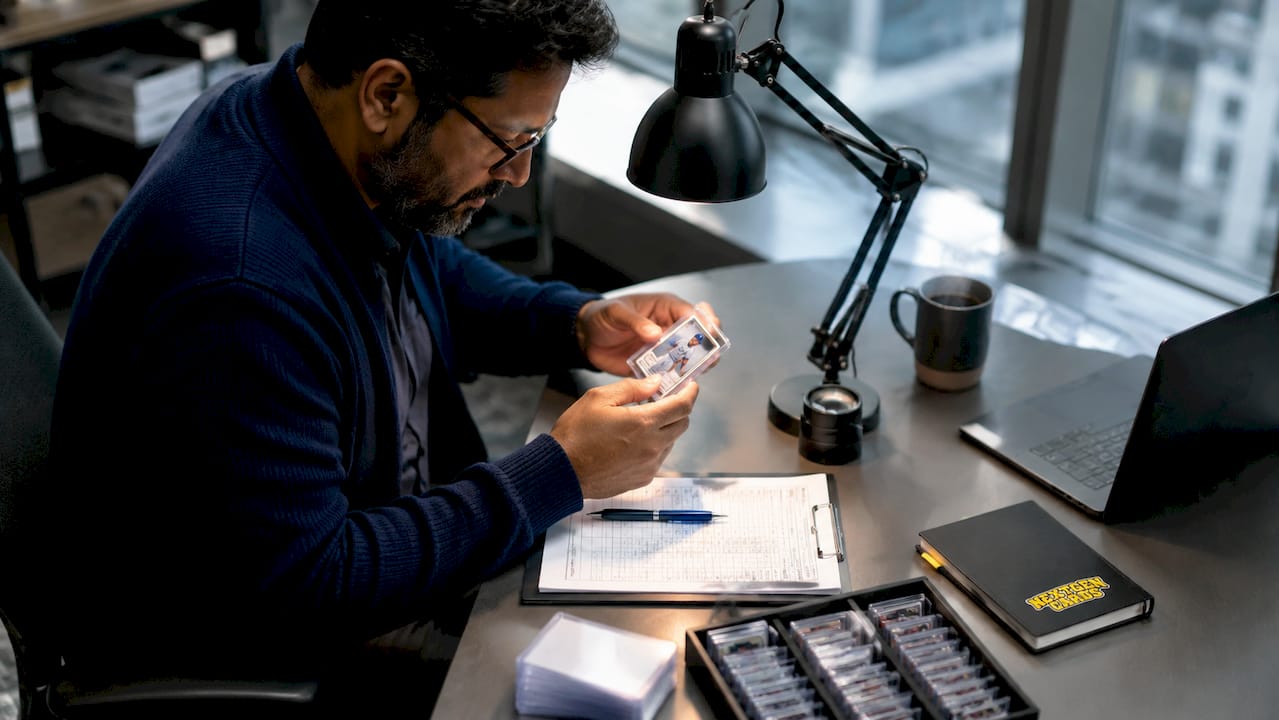
BGS takes a different approach. It assigns subgrades for each condition area and calculates the final grade by rounding down from the lowest subgrade plus one point. To earn the coveted BGS Black Label 10, every single subgrade must be a perfect 10. That rarity is exactly why Black Label slabs sell at significant premiums.
For the autograph itself, graders evaluate four qualities:
- Signature strength: How bold and complete the ink appears
- Clarity: Whether the signature is legible and well-defined
- Eye appeal: The overall visual presentation on the card
- Presentation: Placement, consistency, and absence of smudging or fading
Autograph grading evaluates signature quality entirely separately from card condition. A rookie card can have a PSA 10 card grade and still receive a lower autograph grade if the signature faded or smeared during signing.
Pro Tip: Before submitting any rookie auto for grading, examine the signature under angled light. Fading and smudging that are invisible in normal lighting will be caught by graders and will lower your autograph grade.
Here is a quick reference for common grading terminology:
| Term | Meaning |
|---|---|
| PSA 10 (Gem Mint) | Highest card condition grade; near-perfect in all four areas |
| PSA 9 (Mint) | One minor flaw allowed; still highly desirable |
| Authentic (Auto) | Signature confirmed real but not condition-graded |
| BGS Black Label 10 | All four subgrades are perfect 10s; extremely rare |
| Raw Card | Ungraded card with no third-party authentication |
What are the key differences between autograph grading and card grading?
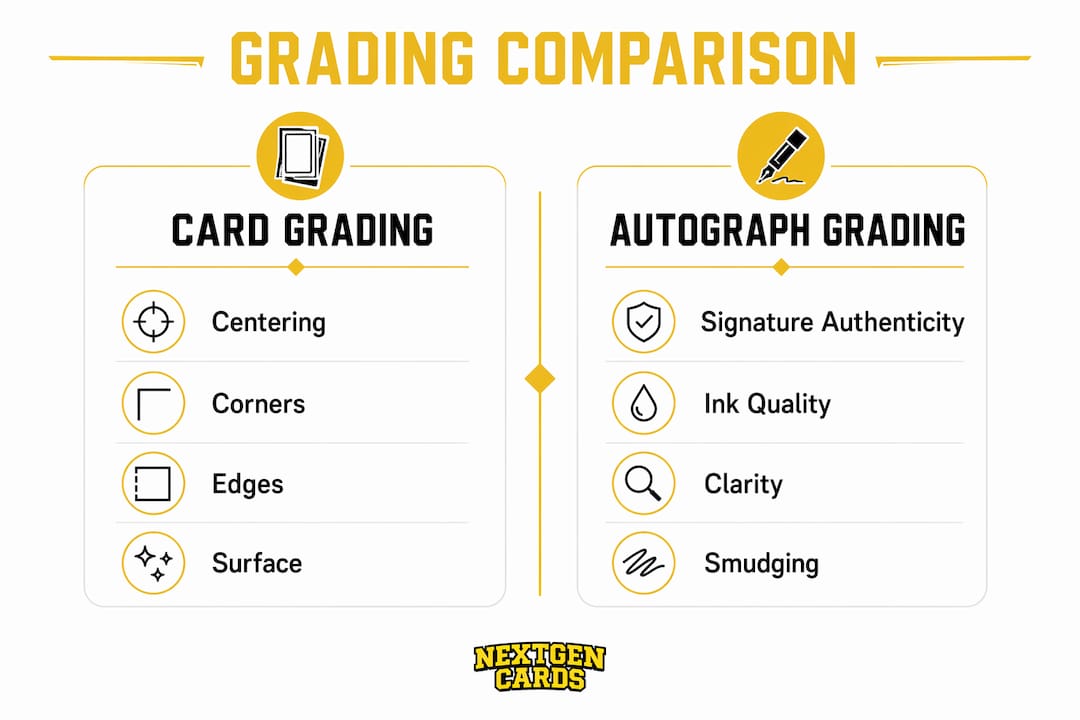
Card grading and autograph grading measure two completely different things. Confusing them is one of the most common mistakes new collectors make.
Card grading assesses the physical condition of the cardboard itself. Graders examine centering, corner sharpness, edge wear, and surface quality. A card that survived storage in perfect condition will score well here regardless of whether it has an autograph at all.
Autograph grading evaluates the quality of the signature independently. Grading separates authentication from condition, which means a rookie auto can be confirmed as genuine but still receive a low autograph grade because the player signed quickly, the ink ran, or the signature faded over time. These are two separate verdicts on the same card.
Some grading services provide dual grading, where both the card condition and the autograph quality receive separate numeric scores. This is the most informative result for buyers and sellers because it shows exactly where the card’s value comes from.
Here is how the two grading types compare:
| Factor | Card Grading | Autograph Grading |
|---|---|---|
| What is evaluated | Centering, corners, edges, surface | Signature strength, clarity, eye appeal, placement |
| Who performs it | PSA, BGS, CGC | PSA, BGS, JSA |
| Output | Numeric grade (1–10) | Numeric grade or “Authentic” designation |
| Impact on value | High for card condition premium | High for signature quality premium |
| Can differ from other grade | Yes | Yes |
Understanding why autograph cards vary in value often comes down to this split. A card graded PSA 8 with a strong autograph grade can outperform a PSA 10 with a weak or faded signature in certain markets. Buyers pay for both components, and the combination determines the final price ceiling.
What should new collectors know about grading rookie cards in 2026?
The rookie auto card grading process involves real costs and real waiting time. New collectors often focus only on the potential upside and overlook the full economics of submission.
PSA offers multiple service tiers with pricing and turnaround times that vary significantly. Value Bulk costs $24.99 with a 95 business day turnaround. Regular service runs around $80 with a 25 business day window. Express costs $150 for 15 business days, and Super Express is $299 for 7 business days. That range matters because a card sitting in a grading queue for 95 days is a card you cannot sell.
Beyond the grading fee itself, total grading costs include shipping, insurance, and the opportunity cost of holding a card off the market. A $25 grading fee on a $60 card that takes three months to return is rarely a profitable decision unless the graded version commands a strong premium.
On-card autographs and sticker autographs carry different risk profiles in the grading process. On-card signed rookie autos are more vulnerable to smudging and handling damage during submission, but they also command higher premiums when they come back with clean grades. Sticker autos carry less risk of damage but are generally valued lower by the collector market.
Here is a practical framework for deciding when to grade a rookie autograph:
- Check recent sold prices for graded versus raw versions of the same card on secondary markets. If the graded premium does not cover your total submission cost, grading does not add value.
- Evaluate the autograph quality honestly. A faded or off-center signature will receive a lower auto grade and may reduce the card’s value below raw market price.
- Assess the card’s condition before submission. Centering and surface defects are the most common grade-cappers. Minor imperfections visible under magnification can drop a PSA 10 to a PSA 8.
- Select the right service tier. Declared card value at submission affects tier pricing. Realistic value estimates prevent unexpected fee upgrades from PSA during processing.
- Protect the card before shipping. Packaging with sleeves and semi-rigid card savers minimizes handling damage that could reduce your grade before the card even reaches a grader.
Pro Tip: Submit cards in batches to reduce per-card shipping and insurance costs. Sending five cards at once on the Value Bulk tier costs far less per card than five individual submissions.
How does rookie autograph grading influence card value and collecting strategy?
Grading directly affects rookie card value in three ways: it confirms authenticity, it establishes a condition benchmark, and it improves liquidity by making the card easier to buy and sell with confidence.
A graded rookie autograph from a high-demand player like Shohei Ohtani or Aaron Judge trades at a consistent premium over raw equivalents. Buyers trust the slab. They do not need to inspect the card themselves or worry about misrepresentation. That trust translates into faster sales and higher prices.
The risks of grading are real, though. A card that comes back with a PSA 7 or BGS 7.5 can be worth less than the same card sold raw. Low grades signal problems to buyers and can be difficult to sell at any price. This is why pre-screening before submission is not optional. It is the most important step in the entire process.
Strategic grading means prioritizing cards where the grade premium is steep and demand is high. Consider these factors when building your collecting strategy:
- Grade premium spread: Research the price difference between PSA 9 and PSA 10 versions of a specific card. High spreads justify the cost and risk of submission.
- Player trajectory: Rookie autographs from prospects with strong performance outlooks appreciate faster when graded.
- Print run and scarcity: Limited edition rookie autos with low print runs benefit most from grading because buyers are paying more and expect verified quality.
- Autograph type: On-card versus sticker autographs affect both grading risk and the premium a clean grade can command.
Grading is not a guarantee of profit. It is a tool for establishing verified value. Use it selectively, not reflexively.
Collectors who study examples of appreciating rookie cards consistently find that the highest returns come from graded cards with strong autograph grades on scarce, on-card signed rookies from players who broke out after the card was produced. Timing the submission to coincide with a player’s rising profile is a legitimate strategy that experienced collectors use to maximize the graded premium.
Key takeaways
Rookie autograph grading adds verified value to a card only when the submission cost, grading risk, and expected grade premium are evaluated together before submission.
| Point | Details |
|---|---|
| Two grades, one card | Card condition and autograph quality are graded separately and both affect final value. |
| Weakest factor rules | PSA and BGS both limit the final grade by the lowest-scoring condition area on the card. |
| Grading has real costs | PSA fees range from $24.99 to $299 per card, plus shipping, insurance, and holding time. |
| Pre-screen before submitting | Examine centering, surface, and autograph quality before paying to submit any rookie auto. |
| Grade selectively | Prioritize cards with high grade premium spreads, scarce print runs, and strong on-card signatures. |
What i have learned after years of watching collectors grade rookie autos
New collectors treat grading like a finishing move. They pull a rookie auto they like, and the next thought is “I should get this graded.” That instinct is understandable, but it is also where most early mistakes happen.
Grading is an investment decision, not a ritual. The question is never “should I grade this?” The question is “does the math work on this specific card at this specific moment?” I have seen collectors spend $80 on a Regular tier submission for a card that came back PSA 8 and sold for less than they paid raw. The grade did not add value. It confirmed a flaw they should have caught before submitting.
The collectors who do this well spend more time pre-screening than submitting. They know what a 55/45 centering ratio looks like. They check autograph strength under a loupe before committing to a submission fee. They research the PSA 9 versus PSA 10 price spread on that exact card before deciding which service tier makes economic sense.
My strongest advice for new collectors: buy a few graded rookie autos before you grade anything yourself. Study the slabs. Read the subgrades on BGS holders. Understand what a clean autograph grade looks like versus a faded one. That education will save you more money than any submission tip I can offer.
— Richard
Explore authenticated rookie autographs at Nextgencards
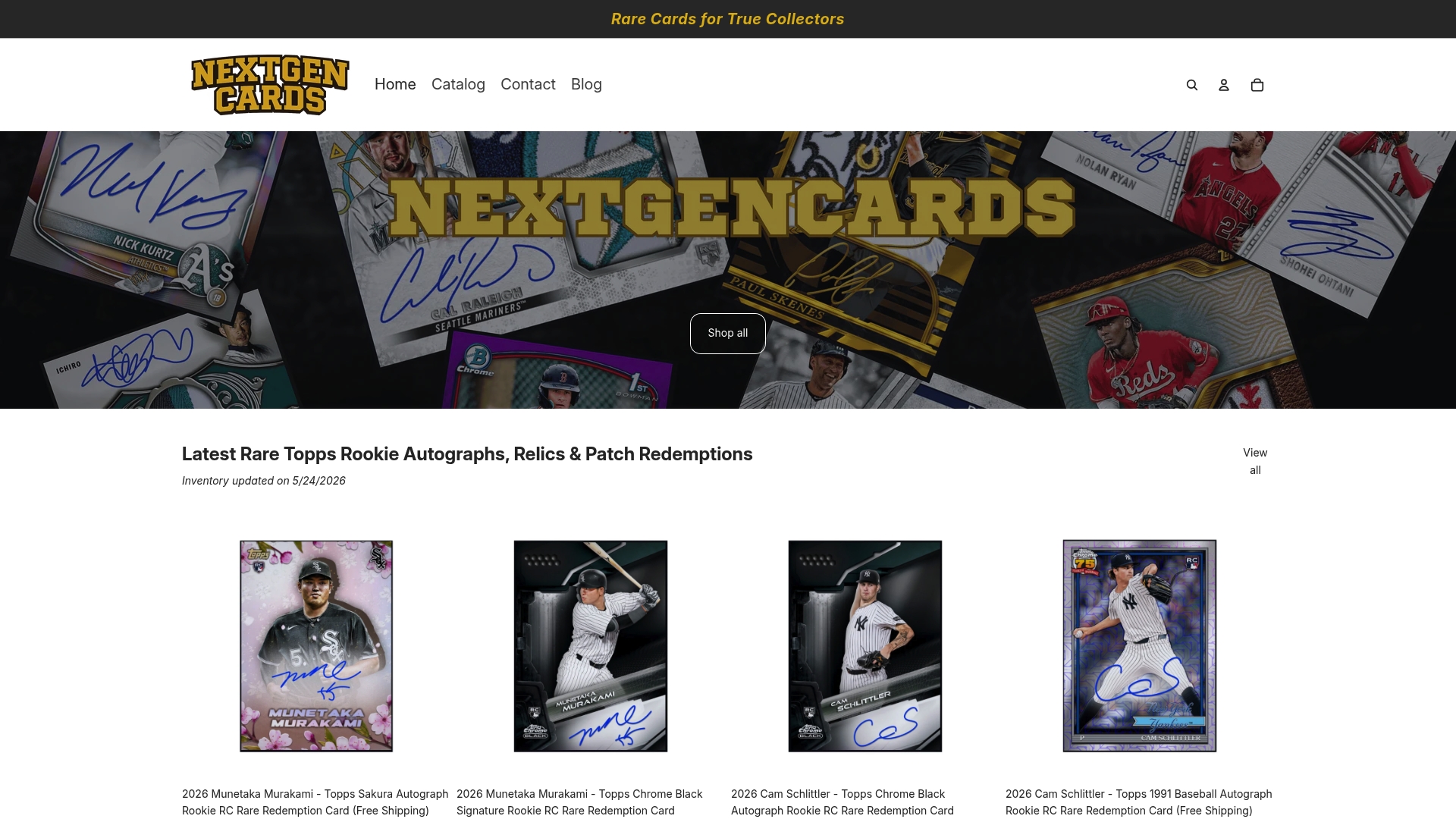
Nextgencards carries a curated selection of certified rookie autographs from top prospects and established stars, including rare Topps rookie autos that are already authenticated and ready to add to your collection. If you are building a portfolio of graded and authenticated cards, browsing the rookie autographs and relics collection is the most direct way to find scarce, high-quality pieces without the grading wait. Current offerings include cards from players like Paul Skenes and Nick Kurtz, with free shipping available on select items. Nextgencards focuses exclusively on rare, limited edition, and authenticated cards, so every piece in the inventory meets the standard serious collectors expect.
FAQ
What is rookie autograph grading?
Rookie autograph grading is the process of authenticating and assigning a numeric quality score to the signature on a rookie trading card. Companies like PSA and BGS perform this service separately from standard card condition grading.
How much does PSA grading cost for a rookie auto?
PSA grading fees range from $24.99 for Value Bulk service (95 business days) to $299 for Super Express service (7 business days). Total cost also includes shipping and insurance.
Can a card have a high card grade but a low autograph grade?
Yes. A rookie card can earn a PSA 10 for card condition and still receive a lower autograph grade if the signature is faded, smudged, or poorly placed. Both grades affect the card’s final market value independently.
What is the difference between an authentic auto and a graded auto?
An authentic designation confirms the signature is genuine but does not evaluate its quality or condition. A graded autograph receives a numeric score based on strength, clarity, eye appeal, and presentation.
Should new collectors grade every rookie autograph they own?
No. Grading makes financial sense only when the expected graded premium exceeds the total submission cost, including fees, shipping, and holding time. Pre-screen each card carefully and research the grade premium spread before submitting.
Recommended
- Examples of Appreciating Rookie Cards: 2026 Collector Guide – Next Gen Cards LLC
- Buy Certified Autograph Rookie Cards: 2026 Collector’s Guide – Next Gen Cards LLC
- Why Autograph Cards Vary in Value: Collector’s Guide – Next Gen Cards LLC
- Why Rookie Year Cards Matter for Serious Collectors – Next Gen Cards LLC
0 comments