

The best undervalued rookie autographs for 2026 sit at the intersection of proven performance upside and shrinking supply, and right now that intersection includes chase autos from 2026 Topps Museum Collection Baseball, a handful of triple-signature relics, and two redemptions that the wider market hasn’t caught up to yet. These are the eight cards worth tracking first.
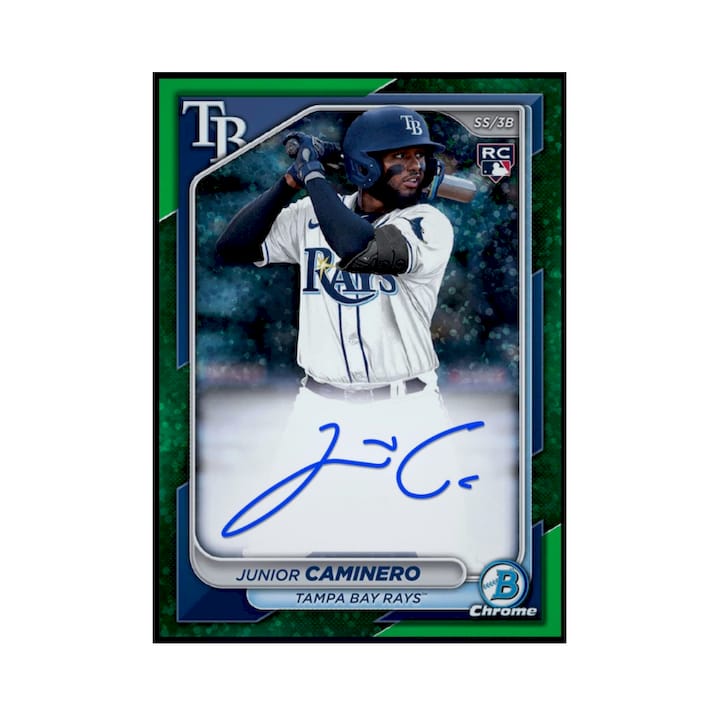
- Junior Caminero Bowman Chrome Green Signature RC (raw: mid-double digits to low triple digits; graded: rises fast on gem copies)
- Jacob Misiorowski All Star Game Autograph rookie RC (redemption, low print signals)
- Jacob Misiorowski 1991 Topps Baseball Autograph rookie RC (retro design, undervalued relative to his strikeout rate)
- Skenes/Cole/Strasburg Topps Baseball Stars triple autograph (multi-player premium, thin liquidity but strong provenance)
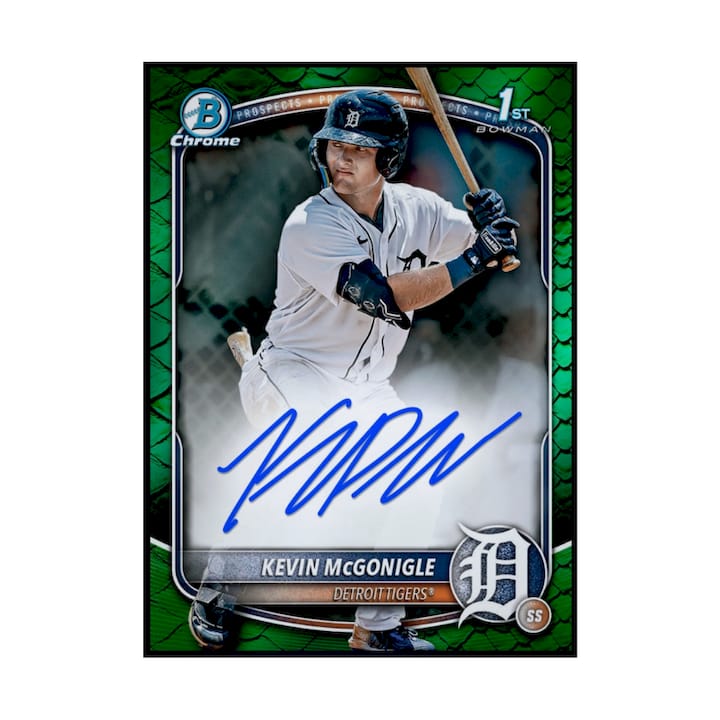
- JJ Wetherholt Bowman Green Chrome Prospect Signature RC (pre-debut prospect pricing)
- Elly De La Cruz Topps Sterling Rookie Patch Autograph RPA (established star, still underpriced against his ceiling)
Quick signal check: cards with graded populations under 30 copies at PSA 10, or serial numbers below /25, tend to hold value better than mass-distributed parallels once early hype settles. Museum Collection chase autos anchor the premium end of this list; the rest are better-value hunt cards for readers working with a tighter budget.
Key Takeaways
Undervalued rookie autographs for 2026 combine documented performance upside, shrinking print runs under /25, and graded populations that haven’t yet flooded past collector demand.
| Point | Details |
|---|---|
| Anchor your list with Museum Collection | Topps Museum Collection Baseball’s limited autograph and patch parallels offer tighter early population data than retail-heavy sets. |
| Use three price sources together | Cross-check PSA population reports, Beckett OPG, and eBay completed sales before buying or grading. |
| Grade only when the math works | Submit when short-prints or auto parallels have PSA 10 comps well above raw price plus grading fees. |
| Buy during Spring Training windows | Performance metrics often move prices right after Opening Day, making pre-season the last calm buy window. |
| Shop curated, provenance-checked inventory | Nextgencards lists redemption and autograph cards from this watchlist with documented sourcing. |
Table of Contents
- Undervalued Rookie Autographs 2026: How We Built This List
- Rookie Autographs Investment Picks: Full Price and Scarcity Profiles
- Grading Sensitivity: On Card vs Sticker Autographs
- Where to Track Rookie Card Prices and Completed Sales
- Smart Buying Tactics and the Red Flags to Avoid
- How Nextgencards Evaluates Undervalued Rookie Autographs
- What the Data Actually Says About This Market
- Find Undervalued Rookie Autographs at Nextgencards
- Sources
- FAQ
Undervalued Rookie Autographs 2026: How We Built This List
A card qualifies as undervalued when its current asking price lags behind at least two of three signals: performance trajectory, print-run scarcity, and graded-population scarcity. That’s the one-line rule behind every pick here.
The selection pillars break down like this:
- Performance upside — role clarity, early strikeout or usage rates, or a documented breakout trigger
- Supply — total print run, parallel tier, and whether the autograph is serial-numbered under /25
- Autograph type — on-card signatures carry more long-term premium than sticker autos
- Distribution behavior — hobby-only versus retail-heavy releases change how fast supply floods the market
- Graded-population dynamics — a PSA 10 population under 30 for a given parallel is a healthier signal than a flooded population past 100
We weighted Topps Museum Collection Baseball picks slightly higher in this list because Topps positions the Museum Collection product line as a premium, lower print-run release built around framed autographs and on-card signatures, which tends to produce tighter early-population data than mass retail sets. Price references throughout come from PSA population reports, Beckett’s OPG figures, and eBay completed sales, none of which move in lockstep, so cross-checking two sources before buying matters more than trusting one number.
Rookie Autographs Investment Picks: Full Price and Scarcity Profiles
Topps Museum Collection Baseball earns the anchor spot on this list because its autograph and patch-autograph parallels are built for scarcity from the start: framed jumbo relics, on-card signatures, and short-printed parallels that rarely see the retail flood other Topps flagship products get. If you only track one release in 2026, this is the one to watch closely, and it should sit at the top of any rookie autograph investment watchlist.
Junior Caminero — Topps Bowman Chrome Green Signature RC. Raw copies have traded at relatively affordable levels, with PSA 9 and 10 comps potentially increasing in value once his power numbers show up in the box score. The green parallel’s tighter print run is the undervaluation argument here: performance is already ahead of price. Buy raw under $150 if you can find it; hold six to twelve months through a full offensive sample.
Jacob Misiorowski — Topps All Star Game Autograph rookie RC. This redemption card ties directly to a showcase event appearance, which tends to cap early print numbers relative to standard base autographs. On-card signature, low redemption volume, and a strikeout-heavy profile make this a strong performance-plus-scarcity combination. This rookie signature is worth grabbing before his role solidifies past midseason.
Jacob Misiorowski — 1991 Topps Baseball Autograph rookie RC. The retro-design redemption gives collectors a second, cheaper entry point into the same player at a different price band than the All Star Game version. Because it’s tied to a design insert rather than the flagship release, distribution runs lighter, which supports the redemption listing as a hidden gem autograph relative to his main rookie autos.
Skenes/Cole/Strasburg — Topps Baseball Stars Triple Autograph. A three-signature card spanning generations of pitching talent carries thin liquidity but strong provenance, since Topps issues these as physical redemptions rather than pack-pulled inserts. Treat this triple autograph card as a concentrated, small-allocation buy rather than a flip. Expect a twelve-month-plus hold given the narrow buyer pool for multi-signature premium pieces.
JJ Wetherholt — Topps Bowman Green Chrome Prospect Signature RC. Pre-debut prospect pricing is where the biggest undervaluation windows open, since the market hasn’t priced in a full season of at-bats yet. The Bowman Green Chrome signature fits collectors comfortable buying ahead of a call-up.
Elly De La Cruz — Topps Sterling Rookie Patch Autograph RPA. Unlike the prospect plays above, De La Cruz is an established performer whose patch autograph still trades below where his ceiling suggests it should. The rookie patch autograph benefits from RPA scarcity and a documented performance track record, a rare combination this far into a player’s career.
Pro Tip: Compare a card’s raw asking price against its most recent PSA 9 sale, not its PSA 10 sale. Sellers routinely anchor raw prices to the best possible outcome, which skews your sense of fair value before you’ve even factored in grading risk.
Grading Sensitivity: On Card vs Sticker Autographs
Not every autograph rookie card benefits equally from grading, and knowing the difference determines whether you submit or sell raw. On-card signatures generally hold a premium over sticker autos because they’re harder to reproduce cleanly and collectors view them as more integrated to the card itself.
Autograph legibility matters almost as much as placement. A faded or rushed signature on an otherwise pristine card can cap its grade or its resale appeal regardless of the surface condition.
A simple decision flow before you submit for grading:
- Check the serial number and confirm the parallel’s total print run.
- Estimate your realistic odds of a PSA 10 based on comparable recent grades for that exact parallel.
- Compare the current PSA 10 population against your target price premium.
- If the math clears grading costs and fees, submit. If not, list raw or hold.
Pro Tip: A useful trigger for exiting a graded position: once the PSA 10 population for a specific numbered parallel crosses roughly 30 copies, gem premiums tend to compress fast. That’s the window to sell into strength rather than wait for a higher price that population growth is actively working against.
Where to Track Rookie Card Prices and Completed Sales
Start with three sources working together rather than any single number: PSA population reports for supply data, Beckett’s OPG for a blended valuation baseline, and eBay completed sales for what buyers are actually paying today.
- Set eBay saved searches separately for “raw,” “PSA 9,” and “PSA 10” so you’re comparing like against like
- Check Beckett OPG updates monthly for shifts in blended valuation
- Pull PSA population reports weekly for hot rookies, since population growth is the single biggest threat to graded premiums
- Use the official Topps Museum Collection product page and checklist for confirmed box configuration and parallel print details before buying into a specific chase card
- Track completed sales, not active listings. Active listings show what sellers hope for, not what buyers pay
Smart Buying Tactics and the Red Flags to Avoid
The single best buying rule: only pull the trigger when confirmed scarcity, a proven performance signal, and favorable graded comps line up together. Missing one of the three usually means you’re paying for hype rather than value.
- Favor sellers who document provenance, especially on redemption cards and multi-signature pieces
- Prioritize graded comps when you need liquidity; buy raw when the grading math clearly doesn’t pencil out
- Lean into low-serial parallels and true on-card rookie autos before a player’s breakout window closes
- Watch for red flags: vague provenance claims, serial numbers that don’t match listing photos, autopen-style signatures marketed as authentic, or “chase” parallels priced suspiciously below comparable recent sales
Timing matters as much as the card itself, especially when you use an AI Football Assistant to track player performance signals that drive autograph demand. The Spring Training and Opening Day window is typically the last practical buy window before performance metrics start moving prices, and post-debut windows for basketball rookies behave the same way once a role solidifies. Watching underlying metrics like contact rate or usage rate ahead of these windows can flag price moves before they show up in completed sales.
How Nextgencards Evaluates Undervalued Rookie Autographs
What separates a reliable pick from a guess is inventory access combined with population tracking over time, not a single snapshot of a checklist. Nextgencards sources and lists cards using a proprietary checklist built on real market observation:
- Verified provenance on redemption and physical cards
- Serial numbers under /25 weighted higher
- Recent PSA population delta, not just current population
- Distribution channel (hobby-exclusive versus retail-heavy)
- On-card versus sticker autograph quality
- Early-season performance metric shifts for active rookies
Pro Tip: If a listing can’t answer where the card came from or show a clear serial number, that’s a pass regardless of how attractive the price looks. Nextgencards lists similar rookie autograph and redemption cards on its own storefront, and these picks reflect both editorial judgment and direct observation of what moves through that inventory.
What the Data Actually Says About This Market
Most guides treat “undervalued” as a synonym for “cheap,” and that’s the mistake that costs collectors money. A card can be cheap because it’s genuinely overlooked, or cheap because the market has already correctly priced in a limited ceiling. Scarcity alone doesn’t guarantee resale, as the valuation research on premium rookie patch cards makes clear. Player performance and provenance have to back the scarcity up.
The conventional advice to “buy low, sell high” skips the harder question: low relative to what? A raw card sitting at $40 isn’t undervalued if its PSA population is already flooded and its player has plateaued. It’s undervalued only when performance trajectory and shrinking supply are both still working in your favor.
If you take one thing from this list, prioritize the 2026 Topps Museum Collection Baseball chase autos and RPA cards before chasing every retail parallel that crosses your feed. Premium releases with documented, limited print runs simply hold their scarcity story better than mass-produced sets, and that story is what ultimately protects your buy price when the hype cycle moves on to the next rookie class.
Find Undervalued Rookie Autographs at Nextgencards
Nextgencards is built for exactly the buying strategy this article just walked through: instead of chasing raw listings across a dozen marketplaces and hoping the seller’s provenance claim holds up, you get curated physical redemption and autograph cards with documented sourcing in one place. That’s a real time and risk savings compared to piecing together comps from scattered listings yourself.
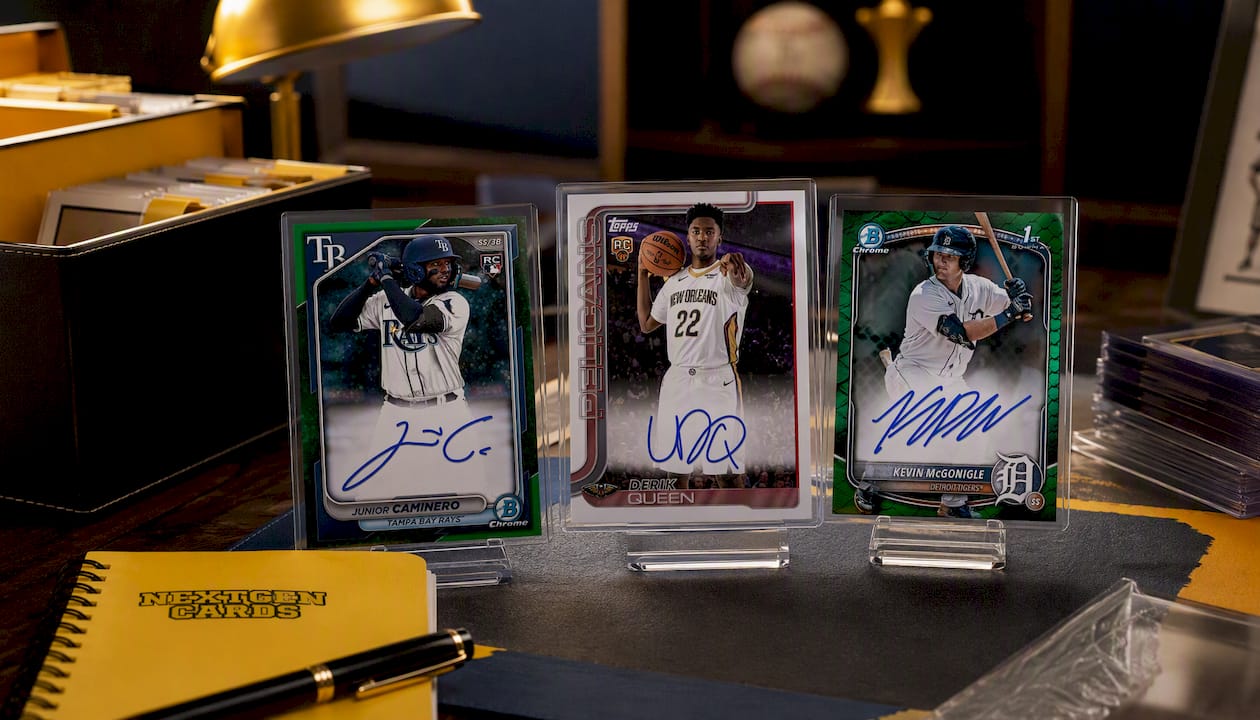
The current inventory includes several picks from this exact list, including the Junior Caminero Bowman Chrome Green Signature RC, the Jacob Misiorowski All Star Game Autograph rookie RC, and premium patch autographs across MLB and NBA rookies. Selection has focused on Topps Museum Collection Baseball and comparable premium releases because their limited print runs and on-card signatures hold up better against grading-population dynamics than mass retail products. Browse the rookie autographs and relics collection to check current stock, or visit the Nextgencards front page for the latest additions with free shipping on select items.
Sources
FAQ
What rookie cards should I look for in 2026?
Prioritize cards with documented performance upside, print runs under /25, and low graded populations, especially autograph and patch parallels from premium releases like Topps Museum Collection Baseball.
Who is the hardest autograph to get?
The hardest autographs to secure are typically on-card signatures from limited hobby-exclusive releases or one-of-one patch cards, since their print runs are capped far below sticker-auto parallels found in retail products.
What are the hottest rookie cards right now?
Rookie autographs tied to breakout performance metrics, like strikeout rate spikes or expanded usage roles, tend to heat up fastest, which is why watching Spring Training and early-season data matters before prices move.
What are the best 2026 Topps rookie cards?
Topps Museum Collection Baseball’s framed autograph and rookie patch autograph parallels stand out for 2026, alongside redemption-based rookie autos like the Misiorowski and Wetherholt cards covered in this list.
Should I invest in rookie autographs?
Rookie autographs can be a reasonable addition to a collecting portfolio when you weight performance signals and print-run scarcity together, but concentrated pieces like triple autographs and one-of-ones carry thinner liquidity and deserve only a small allocation.
0 comments