

Limited-edition NBA rookie cards are officially licensed trading cards from a player’s first NBA season that carry enhanced scarcity through serial numbering, autographs, or game-worn memorabilia patches. These cards sit at the top of the basketball card market, attracting both serious collectors and investors who recognize that rarity drives long-term value. Products from Topps Chrome and Panini Prizm define this space, with grading services like PSA and BGS setting the standard for condition and authenticity. If you want to collect limited-edition NBA rookie cards with purpose, understanding the tiers, the market, and the pitfalls is where you start.
What qualifies as a limited-edition NBA rookie card?
A true NBA rookie card must come from the player’s first fully licensed NBA set during their rookie season. Cards from college sets, international leagues, or pre-licensed releases do not qualify as official NBA rookie cards. They hold different collector value and should not be confused with the real thing.
Within the official rookie card universe, there are several distinct tiers:
- Base cards: Printed in large quantities with no serial numbering. Topps NOW base cards, for example, can carry print runs exceeding 100,000 copies, making them collectibles for enjoyment rather than investment vehicles.
- Numbered parallels: Chrome-stock or foil variants serial-numbered to a set quantity, such as /199, /99, /49, or /25. Scarcity drives value directly, and lower print runs command significantly higher prices.
- Rookie autographs: Cards signed by the player, often serial-numbered. These represent a major step up in both price and desirability.
- RPA (Rookie Patch Auto): The most prized tier. An RPA combines a rookie autograph with a game-worn patch, making it the flagship product for star prospects. RPAs for elite players regularly reach four to six figures.
- 1/1 Superfractors and one-of-ones: The rarest cards in any set, with only one copy in existence. A 2025-26 Topps Chrome 1/1 Superfractor rookie card sold for $396,500 in march 2026, illustrating the ceiling for ultra-rare pieces.
Pro Tip: When researching a card’s rarity, always check the serial number against the total print run. A card numbered /10 from a Topps Chrome set is genuinely scarce. A card numbered /500 from the same set is far more common than it appears.
Understanding these distinctions is the foundation for building a collection with real depth. Collectors who skip this step often overpay for base cards while missing the parallels that actually appreciate.
Where to find limited-edition rookie cards for purchase
Sourcing scarce rookie cards requires knowing which channels are reliable and which carry the most risk. The market spans authorized retailers, secondary marketplaces, and specialty shops, each with its own advantages.
| Source | Best for | Key consideration |
|---|---|---|
| Hobby box breaks (Topps, Panini) | Pulling cards directly from packs | High variance; no guaranteed hits |
| eBay sold listings | Pricing research and buying | Always check sold, not active, listings |
| Specialty online retailers | Curated, authenticated singles | Higher price, lower risk of fakes |
| Local card shops | Hands-on inspection before buying | Limited inventory of ultra-rare cards |
| Auction houses | High-value RPAs and 1/1 cards | Buyer premiums apply |
The single most important habit when buying on any marketplace is checking sold listings for true value. Active listings reflect what sellers hope to get. Sold listings reflect what buyers actually paid. The gap between the two is often significant, especially for hyped prospects.
- Buy from sellers with verified feedback and clear photos of the actual card.
- Avoid listings that show stock images instead of the real item.
- For cards above $100, request additional photos of corners, edges, and the back.
- Check population reports from PSA or BGS before paying a premium for a graded card.
Specialty retailers like Nextgencards offer curated inventories of authenticated rookie autographs and relics, which reduces the research burden for collectors who want confidence in what they are buying. For collectors who want to browse rare rookie cards from trusted sources, dedicated platforms are worth the slight price premium over raw marketplace listings.
How to evaluate value and authenticity
Grading is the single most reliable way to protect your investment in limited edition basketball cards. PSA and BGS assign numeric grades from 1 to 10 based on centering, corners, edges, and surface. A PSA 10 grade can multiply a card’s value several times over its raw equivalent.
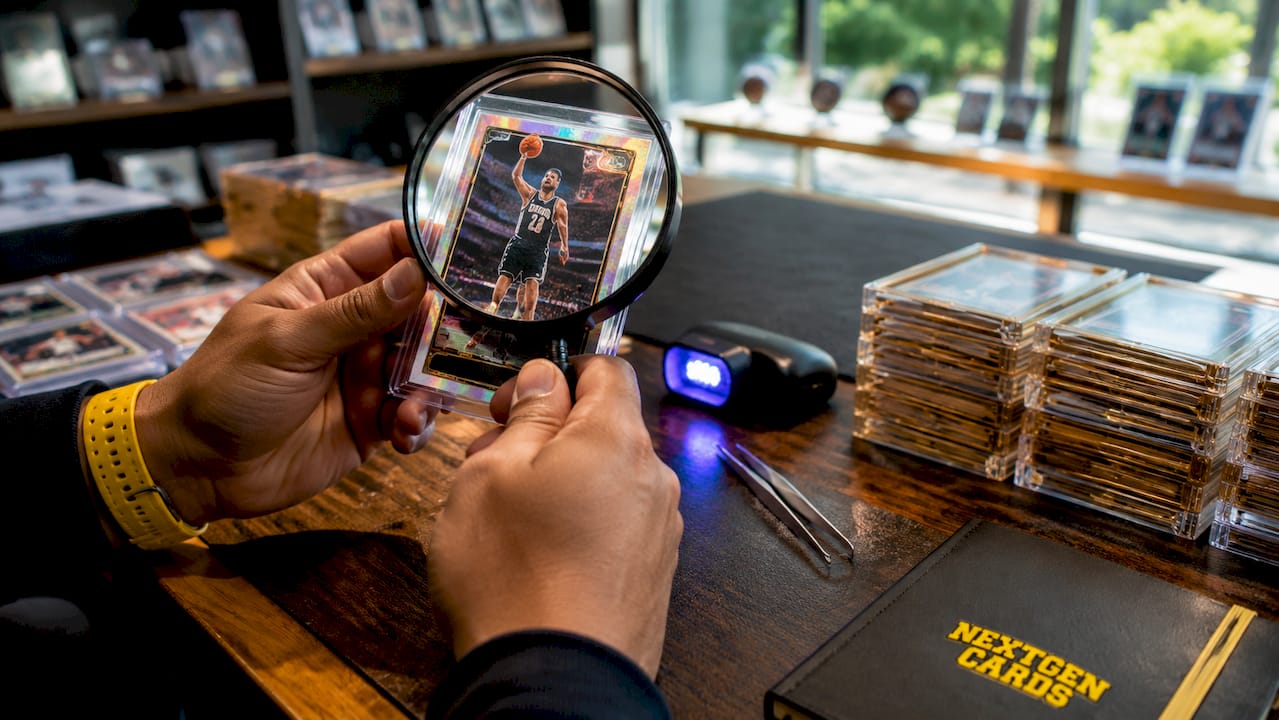
Entry-level rookie cards for top prospects like Cooper Flagg can be acquired raw for $5–$20, while PSA 10 graded versions demand $40–$80 depending on market conditions. That gap reflects the premium collectors place on verified condition. For higher-end parallels and RPAs, the grading premium is even more pronounced.
Here is how to evaluate any limited-edition rookie card before buying:
- Verify the serial number. Every numbered card has a printed serial number on the card face or back. Confirm it matches the set’s known print run.
- Authenticate the autograph. Compare the signature against verified examples from the same set. Panini and Topps both certify autographs at the point of production, so sticker autos and on-card autos carry different collector appeal.
- Check the patch. For RPA cards, understand the difference between game-worn and player-worn memorabilia. Game-worn patches carry more value than event-worn or player-worn swatches.
- Pull population reports. PSA and BGS publish population data showing how many copies of a specific card have been graded and at what grade. A PSA 10 with a low population is worth more than one with hundreds of copies at that grade.
- Cross-reference recent sales. Use eBay’s sold filter or platforms like 130point to find actual transaction prices from the past 30–90 days.
Pro Tip: For rookie autograph grading, the signature quality matters as much as the card’s physical condition. A faint or rushed auto can cost you a full grade point. Learn what a clean, bold example looks like for each player before you buy raw.
Avoiding fakes requires attention to print quality, auto consistency, and seller reputation. Cards above $500 should always be purchased graded or sent for grading immediately after purchase.
How to build and manage your rookie card collection
Building a collection that holds value over time requires a clear plan from the start. Chasing every hot prospect without a budget or focus leads to a scattered collection with no clear strength.
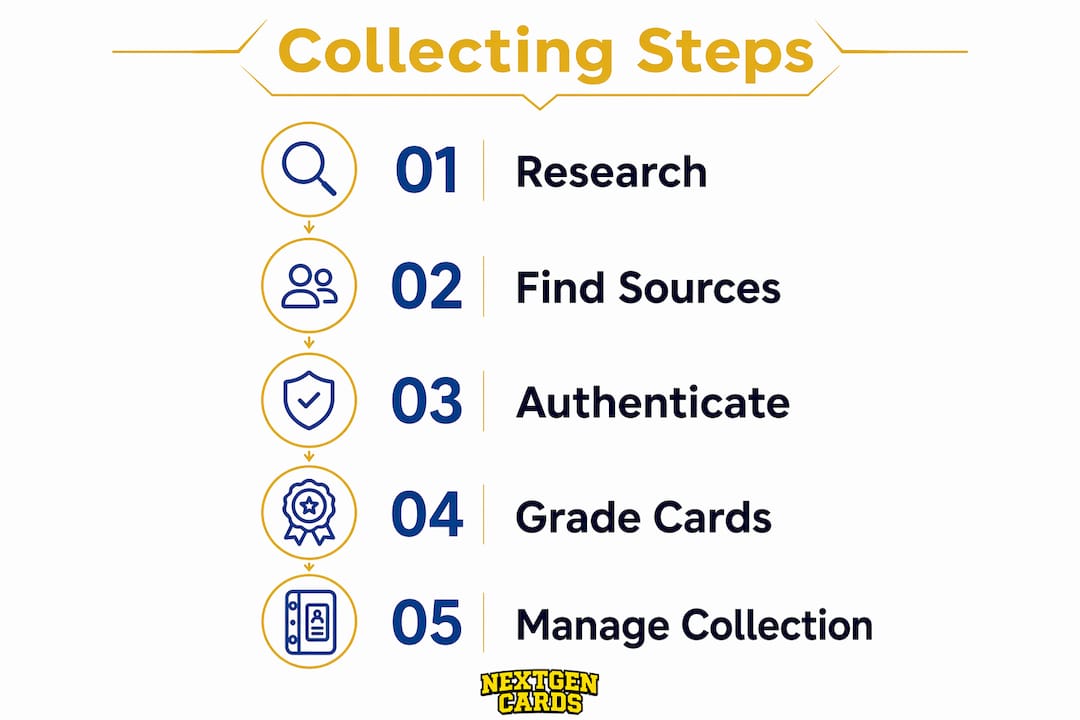
Follow these steps to build with intention:
- Set a firm budget. Decide how much you can spend monthly without financial stress. Collectors with a $1,000 budget should target PSA 10 graded cards or low-numbered /199 parallels rather than high-print base cards.
- Pick a focus. Collecting one player deeply is more rewarding and often more valuable than spreading across many. A complete rainbow of parallels for a star rookie is a serious collection asset.
- Mix tiers intentionally. Pair entry-level base cards with one or two premium parallels or autographs. This gives your collection range without overcommitting to the highest price tier.
- Research player trajectories. A second-year breakout can spike rookie card prices quickly. Follow beat reporters, injury reports, and draft projections for prospects you hold.
- Store cards properly. Use penny sleeves inside top loaders for raw cards. Graded cards in PSA or BGS slabs are already protected, but avoid direct sunlight and humidity.
For collectors interested in cards that appreciate over time, focusing on serial-numbered parallels and autographs from the first year of a player’s licensed set is the most consistent strategy. Base cards serve as entry points, not investment anchors.
- Patience is required. Rookie card values fluctuate with player performance and market sentiment.
- Do not sell during a slump unless you need the funds. Most star players recover.
- Track your collection’s value quarterly using recent sold data, not wishful asking prices.
Common mistakes when collecting NBA rookie cards
The most frequent error collectors make is treating high-print base cards as rare collectibles. A Topps NOW base card with a print run of over 100,000 copies is not scarce by any measure. Buying these at inflated prices because a player is trending is a fast way to lose money.
Other costly mistakes include:
- Chasing hype without data. A player going viral on social media does not mean their rookie cards will hold value. Check actual sales history before buying at peak hype prices.
- Skipping grading on high-value cards. An ungraded RPA worth $500 is a liability. One corner ding can cut its value significantly. Grade cards you plan to hold long-term.
- Ignoring the return of Topps NBA licensing. The return of licensed Topps NBA products in early 2026 shifted the market. Demand for new Chrome and Foilfractor parallels is still stabilizing, meaning prices on some new releases are volatile and may correct downward.
- Falling for inflated asking prices. Active listings on eBay are not market value. Only sold listings reveal what collectors actually paid.
Serious collectors prioritize serial-numbered parallels and autographs over base cards. Scarcity is the primary value driver, and base rookie cards serve as a benchmark, not a destination.
Chasing 1/1 cards or ultra-rare parallels is a legitimate goal, but approach it with realistic expectations. These cards require significant capital and patience. Most collectors build toward them over years, not months. Understanding rarest rookie card variations before spending at that level is a necessary step.
Key Takeaways
Collecting limited-edition NBA rookie cards successfully requires understanding card tiers, verifying authenticity through grading, and buying based on sold data rather than hype.
| Point | Details |
|---|---|
| Official rookie card definition | Only cards from the player’s first licensed NBA set qualify as true rookie cards. |
| Scarcity determines value | Serial-numbered parallels, autographs, and RPAs hold far more value than high-print base cards. |
| Grading protects investment | PSA and BGS grades significantly increase a card’s resale value and buyer confidence. |
| Use sold listings for pricing | Sold transaction data gives accurate market value; active listings often reflect inflated expectations. |
| Budget and focus build better collections | Targeting PSA 10 graded cards or low-numbered parallels with a clear budget produces stronger results. |
What I’ve learned after years of watching this market
The collectors who do best are not the ones chasing every hot name. They are the ones who pick a player or a set, learn it deeply, and buy with patience. I have watched collectors overpay for Topps NOW base cards at 100,000-copy print runs because a player had a big week, then struggle to recoup half their money six months later.
The 2026 market is genuinely interesting because Topps regaining NBA licensing has introduced new Chrome and Foilfractor parallels that the hobby has not fully priced yet. That volatility cuts both ways. You can find undervalued cards from the early 2026 releases if you do your research. You can also overpay badly if you follow the crowd into a new parallel type before the market settles.
My honest advice: treat the collection as something you enjoy first and an investment second. The collectors who hold the most valuable cards are usually the ones who bought what they loved and held through the noise. If you are buying a Cooper Flagg RPA because you believe in the player, that conviction will carry you through a down month. If you are buying because you saw a price spike on Twitter, you are already behind.
New collectors should start with rookie autograph grading basics before spending serious money. The grading system is not complicated, but misunderstanding it costs real dollars.
— Richard
Nextgencards: authenticated rookie autographs and relics for serious collectors
Nextgencards specializes in the cards that actually matter to collectors: rookie autographs, game-worn relics, and serial-numbered parallels from officially licensed sets.
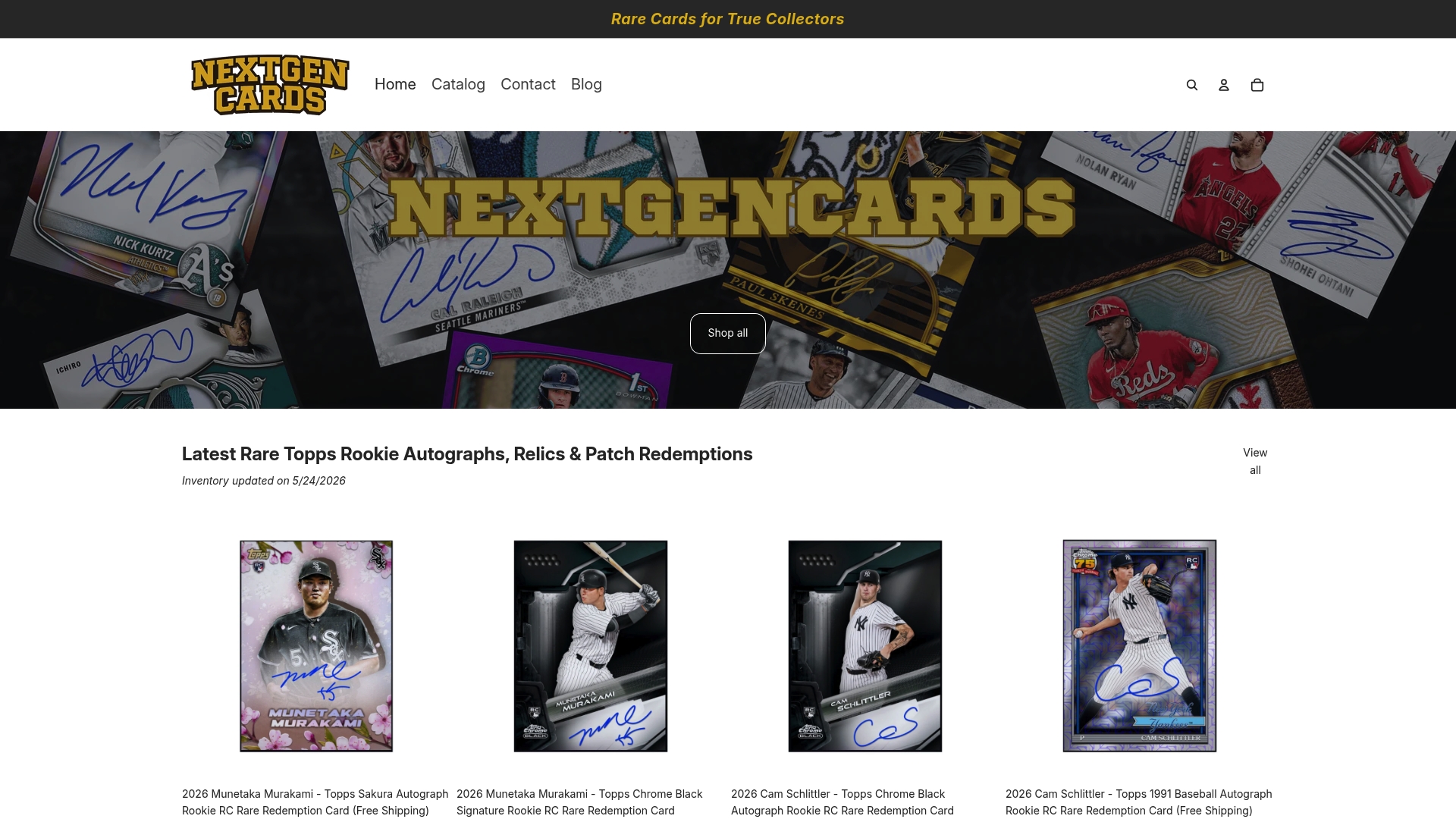
If you are ready to add a verified, limited-edition piece to your collection, Nextgencards offers a curated selection of authentic rookie autographs and relics with free shipping on select items. Every card in the inventory is authenticated, so you skip the research burden and buy with confidence. Whether you are targeting a numbered parallel or a full RPA from the 2025-26 season, the catalog is built for collectors who know what they want. Browse the full selection at Nextgencards and find the card that belongs in your collection.
FAQ
What makes a rookie card “limited edition”?
A limited-edition rookie card carries a serial number that caps the total print run, such as /25 or /99, or includes an autograph or game-worn patch. These features separate scarce cards from open-edition base cards with print runs in the hundreds of thousands.
Are base rookie cards worth buying as investments?
Base rookie cards with high print runs, like Topps NOW cards exceeding 100,000 copies, are best treated as collectibles for enjoyment rather than investment assets. Serial-numbered parallels and autographs carry the real investment potential.
How does PSA grading affect rookie card value?
PSA grading verifies a card’s authenticity and assigns a condition score from 1 to 10. A PSA 10 grade can multiply a raw card’s market value several times over, as seen with top prospects where graded copies sell for double or more than ungraded equivalents.
What is an RPA card?
An RPA, or Rookie Patch Auto, combines a rookie designation, a certified autograph, and a game-worn memorabilia patch in one card. RPAs represent the highest-value segment of the rookie card market and regularly reach four to six figures for star players.
How do I avoid overpaying for a rookie card?
Always check sold listings on eBay or similar platforms rather than active asking prices. Sold data reflects what buyers actually paid and protects you from inflated expectations and market speculation.
0 comments