

The safest way to control humidity for cards is to keep the air around them steady, in the middle of the 40% to 60% relative humidity (RH) band that museums and archives use for paper, and to measure it with a hygrometer instead of guessing. Desiccant packs can help inside a sealed box, but only when you choose the right type and place it correctly. For a rare rookie autograph, a patch card or a redemption card, a few dollars of monitoring protects far more value than any later repair can.
Relative humidity simply means how much moisture the air holds compared with the most it could hold at that temperature. Card stock is paper, and paper takes on and gives off water as that number moves. Below, you get the target range, the tools that work, where each goes wrong, and what to do if damp has already reached your collection.
TL;DR
- Aim for the middle of 40% to 60% RH, and keep it steady. Swings matter as much as the number.
- Put a hygrometer in the same spot as your cards. A reading from another room tells you little.
- Silica gel only works in a well-sealed container and must never touch the cards. Over-drying is a real risk too.
- Keep cards away from exterior walls, basements, attics and garages, where humidity and temperature swing most.
- If cards get wet, act fast: mold can begin within about 48 hours, and stuck or valuable cards need a conservator, not a home fix.
Table of Contents
- What humidity range is safe for sports cards?
- Why steady humidity matters more than a perfect number
- Step 1: Measure before you buy anything
- Step 2: Fix the room first
- Step 3: Use desiccant packs correctly
- Step 4: Protect autographs, patches and graded cards
- A simple routine that works
- What to do if cards have been exposed to moisture
- Where our cards come in
- Our perspective
- FAQ
- Sources
What humidity range is safe for sports cards?
No single official number exists for sports cards, so collectors borrow from the people who protect paper for a living. The Northeast Document Conservation Center (NEDCC), a US preservation nonprofit, recommends 30% to 60% RH for paper collections, and notes that high humidity promotes mold and pests while very low humidity stiffens paper and makes it brittle. The American Museum of Natural History works within 40% to 60% RH and tries to avoid swings of more than 5% inside 24 hours, with more sensitive objects held tighter.
Put those together and the practical target for a card room or cabinet is the middle of the 40% to 60% band. Is 70% too high? Yes. That is well past the top of every range above, and warm, still air at that level is where mold becomes a real concern.
| Reading | What it means for your cards |
|---|---|
| Under 30% | Paper turns stiff and brittle. Handle with extra care. |
| 40% to 60% | Target band. Aim for the middle and keep it steady. |
| Above 60% | Warping and mold risk climbs. Find the source and act. |
| 70% and up | Too humid. Dry the room and inspect every box. |
Temperature belongs in the picture as well. Cool air holds less moisture, so the same water in the air reads as higher RH when the room cools. A closet that feels fine in August can read very differently in a cold January.
Why steady humidity matters more than a perfect number
Paper is hygroscopic, which means it absorbs and releases water as the air changes. NEDCC explains that rapid humidity movement can distort paper, and that items kept near exterior walls feel outdoor temperatures. For a card, that distortion shows up as bowing, curling and wavy surfaces, which is exactly what hurts condition.
The end stage is ugly. A Bard College conservation exhibit on baseball cards documents a damp bin where mold and moisture fused stacks of ten to fifteen cards so they could no longer be separated. Nobody plans for that. It happens when a box sits somewhere nobody checks.
So think in four questions: how high does the humidity get, how low, how fast does it move, and for how long. A room that bounces between 40% and 70% averages 55%, but it is not a stable 55% room, and your cards feel every swing.
Step 1: Measure before you buy anything
A hygrometer is a small meter that shows RH and temperature. It is the one tool that turns this from guessing into a routine.
- Place it where the cards are. Put it in the same cabinet, shelf or room, one per storage location. A reading from the living room says little about a basement closet.
- Check daily at first. Watch for a week or two, and again when seasons change, so you learn how your space behaves, including overnight and when the heating or air conditioning cycles.
- Measure inside sealed storage too. A room reading does not tell you what is happening inside a bin, so for closed containers put a small meter or indicator inside.
- Write down the highs and lows. The range tells you more than any single reading.
Reading a humidity indicator card
A humidity indicator card is a paper strip with spots that change color. ITM’s manual explains that the spots change from blue when dry to pink when humid. You match the spot color to the percentage on the comparison bar. The spots respond within eight hours, the change is reversible, and readings are most accurate at about 73°F. The manual advises against reusing a card that has been exposed to humidity above 60%.
Indicator cards are handy for a quick look inside a sealed box. Treat them as a signal, not a precise instrument, and confirm anything odd with a hygrometer.
Step 2: Fix the room first
Most humidity trouble starts with where the cards live. Attics, basements, garages and closets on exterior walls swing the most with the seasons. Move your collection to an interior room that stays at a normal indoor temperature, and keep boxes off the floor and away from outside walls.
If the hygrometer still shows trouble, handle it at the room level:
- Reading above the target band: run a dehumidifier, improve ventilation, and look for the source, such as a leak, a damp wall or a laundry area.
- Reading below the band: a small humidifier can bring a dry winter room back up. Add moisture gradually, because fast changes cause the very distortion you are trying to avoid.
- Swings between day and night: move the cards to a more stable spot before adding equipment. A stable room you understand beats an exact set point produced by equipment that cycles hard.
Room control does the heavy lifting. Packs and bags are a second layer for sealed boxes, not a substitute for a dry room.
Step 3: Use desiccant packs correctly
A desiccant is a material that pulls moisture out of the air. Silica gel, the clear beads in small packets, is the most common. The National Park Service’s conservation guidance explains that silica gel can hold the humidity steady in a well-sealed enclosure because it absorbs moisture and gives it back as conditions change. It also says the gel must be conditioned to the target RH before use, and that it should never touch objects directly.
Those points explain most mistakes collectors make.
Common mistakes
- Using it in a box that is not sealed. Silica gel only works in a tightly closed space. In an ordinary open cardboard box or on an open shelf, the room’s air simply outweighs it.
- Treating dry as better. Very low humidity makes paper stiff and brittle. More packs do not mean more protection.
- Letting packets touch cards. Keep packets intact, in their own pouch or cartridge, with no loose beads near the surface.
- Forgetting it is finite. Once saturated, a packet stops working until it is reconditioned or replaced. Mark a date on the container and check on a schedule.
- Putting packets inside a graded slab or a fitted case. Do not open a sealed holder to add one.
Plain silica gel versus humidity-regulating packs
Plain silica gel, as sold in most hobby supply listings, mainly removes moisture. Humidity-regulating packs, often called two-way packs, are made to absorb and release moisture so a sealed space holds a set RH. For a closed storage box in a damp climate, a regulating pack matched to the box size is the easier route. In a dry climate, a plain pack can push the air lower than you want, so measure inside the box.
Some museum-grade silica products come as cartridges meant to lie along the bottom of a storage case, which keeps the gel clear of the contents and makes it easy to recondition. The same logic applies to a collector’s box: gel at the bottom, cards on top in sleeves, nothing in contact.

Sizing and placement
Follow the maker’s guidance for the size of the enclosure, and start with less rather than more. Place the pack away from the cards, check the reading inside the box after a day or two, and adjust. Open and inspect sealed storage a couple of times a year, and replace or recondition packs on the schedule the product states.
Step 4: Protect autographs, patches and graded cards
Premium cards react to humidity in their own ways. An autograph on a sticker or directly on the card, a jersey patch window, a foil or metallic layer: each adds a material that can behave differently from plain paper. Our guide on how to protect autographed cards from damage covers the handling side, and the patch-card guide on choosing the right holder thickness helps you avoid pressure on thick relics.
For graded cards, the sealed holder is no guarantee against the environment. Condensation inside a slab after a sudden temperature change is a known worry, so avoid moving slabs from a cold space into a warm room and opening the case right away. Let them adjust slowly.
Light is the other slow threat. Humidity is half the storage picture, and fading is the other half, which our UV protection guide walks through. For box choices, the three tiers of card storage boxes explain what suits long-term storage and what suits carrying cards around. The wider fundamentals are in trading card storage basics.
A simple routine that works
- Pick an interior room or cabinet away from outside walls and floors.
- Put a hygrometer next to the cards and log the range for two weeks.
- Correct the room first with a dehumidifier, ventilation or a small humidifier.
- Add packs only to sealed containers, sized to the container, with nothing touching the cards.
- Check inside the containers, and inspect the cards, every few months and at each change of season.
That is about ten minutes a season. The reason it matters is the point conservation staff make: by the time damage is visible, it is usually done.
What to do if cards have been exposed to moisture
Signs to look for are yellowing or foxing on borders, a musty smell, warped holders, condensation inside a slab, and cards that have begun to cling together. If you see visible water or a new odor, move unaffected items away from the wet area and fix the moisture source first.
The Library of Congress warns that after a collection gets wet, mold can start growing within as little as 48 hours. Personal safety comes first: if the area is flooded or visibly moldy, wear protective gear and make sure it is safe to enter before you touch anything.
Do not pull stuck cards apart, apply heat or pressure, or use cleaners. Valuable, stuck or contaminated cards should go to a paper or photographic-material conservator, and a damaged slab should not be opened by you but handled through the grading company that sealed it. A silica packet will not repair damage that has already happened.

Where our cards come in
Humidity control is the part of collecting nobody sees, and it is what keeps a card the way it was when you bought it. We focus on rare redemption cards, rookie autographs, patch and relic cards and multi-player cards in MLB, NBA and NFL, and our collection pages are where you can see what is available now. If you are building a collection you intend to keep stable for years, start with the cards you care about most and give them the protected storage described above.
Browse the rookie autograph and relic redemption collection, which covers MLB, NBA and NFL redemption cards, rookie autographs, patch and relic cards and multi-player cards.
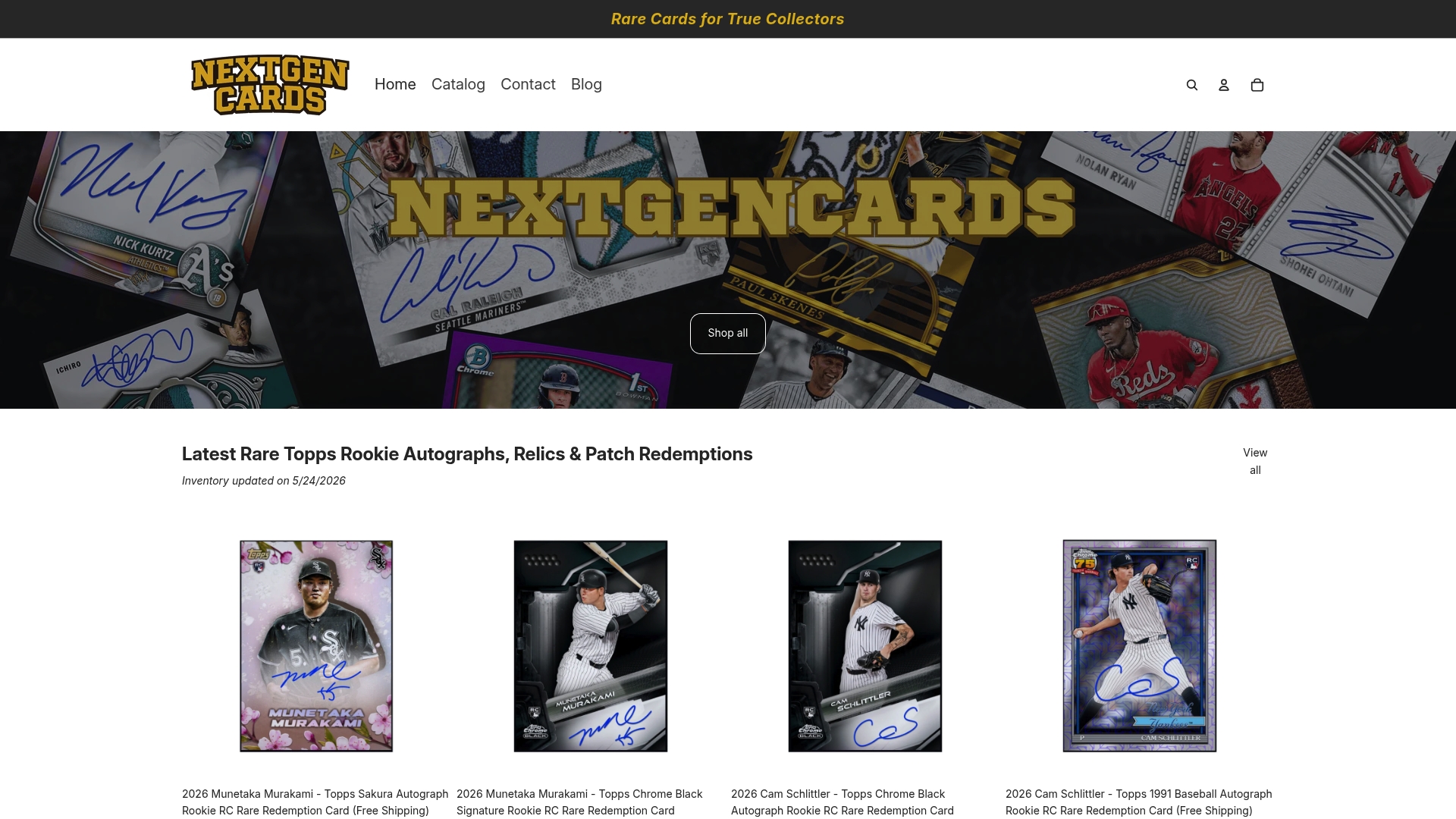
If you are planning a first collection on a budget, our card collecting budget basics guide lays out how to spend before you buy storage, and the guide to organizing a collection shows how a tidy system makes the seasonal checks above easy.
Our perspective
A rare card is only as valuable as its condition on the day you decide to keep, trade or sell it. We see humidity as a preservation habit, not a gadget purchase. Measure first, fix the room, and only then add a pack to a sealed box.
The collectors who hold rookie autographs, patch cards and redemption cards for the long run tend to be the ones who treat storage as part of the purchase. A card you protect from day one needs no rescue later.
That is why we concentrate on rare redemption cards, authentic rookie autographs, patches and multi-player cards: pieces serious collectors intend to keep. Pair a card worth keeping with a stable, measured storage spot, and it will look the way it did when it arrived.
Richard
FAQ
What can I use to control humidity around my cards?
Start with a hygrometer and a stable interior room. Use a dehumidifier if the room reads above the target band and a small humidifier if it runs very dry. Inside sealed boxes, silica gel or a humidity-regulating pack can hold the level steady, as long as nothing touches the cards.
Do desiccant packs for cards really work?
They work in a well-sealed container, where they absorb and release moisture to buffer the air. In an open box or on a shelf they do very little. They also need reconditioning or replacement once saturated, so check them on a schedule.
Is 70% humidity too high for cards?
Yes. That is above the 40% to 60% band used for paper collections, and warm, still air at that level raises the risk of mold and warping. Lower the humidity with a dehumidifier and ventilation, find the source, and inspect your boxes.
Can humidity be too low for cards?
Yes. NEDCC notes that very low humidity stiffens paper and makes it brittle. That is why more desiccant is not better and why you should measure inside any sealed box that holds a pack.
Should I open a graded slab to add a desiccant packet?
No. Never open a sealed holder to insert a packet. Control the room or the outer storage box instead, and let slabs adjust slowly after any move between cold and warm spaces.
Sources
- NEDCC: Temperature, Relative Humidity, Light, and Air Quality
- American Museum of Natural History: Temperature and Relative Humidity
- National Park Service: Using Silica Gel in Microenvironments
- ITM: Humidity Indicator Cards manual
- Bard College: Baseball Card Conservation
- Library of Congress: Salvaging Wet Collections
0 comments