

Trading card storage is defined as a layered protective system that combines physical barriers and climate control to preserve card condition and long-term value. The moment you pull a card from a pack, environmental damage begins. Humidity, heat, UV light, and physical contact all degrade card stock, surface finish, and corners. Getting the trading card storage basics explained correctly from the start is the difference between a collection that holds value and one that deteriorates in a drawer. The core system relies on three layers: penny sleeves, rigid holders like toploaders, and archival containers, all housed in a stable environment of 65–72°F and 45–55% relative humidity.
What protective materials form the layers of card storage?
Layered protection is the foundation of how to store trading cards correctly. Each layer serves a distinct purpose, and skipping any one of them increases the risk of damage significantly.
The first layer is the penny sleeve. These thin polypropylene sleeves slip directly over the card and protect the surface from fingerprints, dust, and minor abrasion. Penny sleeves cost about $10 per 1,000, making them the most affordable protection available. That low cost means there is no reason to leave any card unsleeved, regardless of its value.
The second layer is a rigid holder. Toploaders are the industry standard for this role. They come in multiple thicknesses: 35pt for standard cards and up to 130pt for thick relics and memorabilia cards. Card Savers, a semi-rigid alternative favored by professional grading services like PSA and BGS, offer a slightly more flexible option for cards headed to grading. Cards over $5 in value should always receive a rigid holder in addition to a penny sleeve.
The third layer is archival storage: binders, boxes, or sealed containers that house sleeved and held cards in bulk. This is where material safety becomes critical.
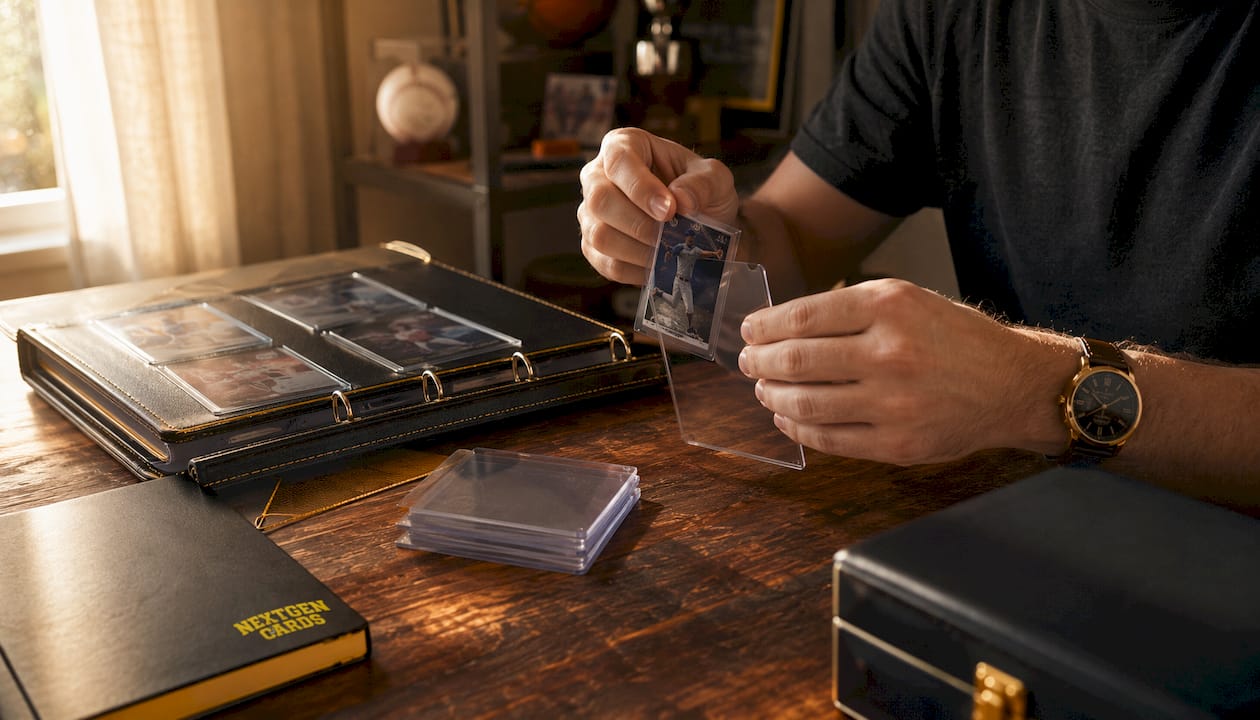
Why PVC sleeves destroy cards over time
PVC sleeves off-gas chemicals that react with card surfaces in heat and humidity. The result is a sticky residue that permanently damages the card’s finish. Archival-safe, acid-free polypropylene is the correct material for every sleeve and binder page. Reputable brands producing compliant products include Ultra Pro, BCW, and Dragon Shield. Avoid any sleeve or page that does not explicitly state it is PVC-free and acid-free.
Pro Tip: Use team bags to seal toploaders shut during storage and transport. Team bags are inexpensive polypropylene bags that close over the open end of a toploader, keeping dust and moisture out without any adhesive contact with the card.
| Storage material | Approximate cost | Primary benefit | Best suited for |
|---|---|---|---|
| Penny sleeves | $10 per 1,000 | Surface protection | All cards |
| Toploaders (35pt) | $15 per 25 | Rigid corner protection | Standard cards |
| Toploaders (130pt) | $20 per 25 | Thick card protection | Relics, memorabilia |
| Card Savers | $18 per 50 | Grading submission | Cards going to PSA/BGS |
| Magnetic one-touch holders | $1–$3 each | UV protection, display | High-value singles |
| Archival binder pages | $10 per 100 | Bulk organization | Sets and commons |
Magnetic one-touch holders provide sealed storage with diamond corners that prevent corner damage and UV-filtered acrylic that blocks light degradation. They are the right choice for prized cards destined for display or eventual grading.
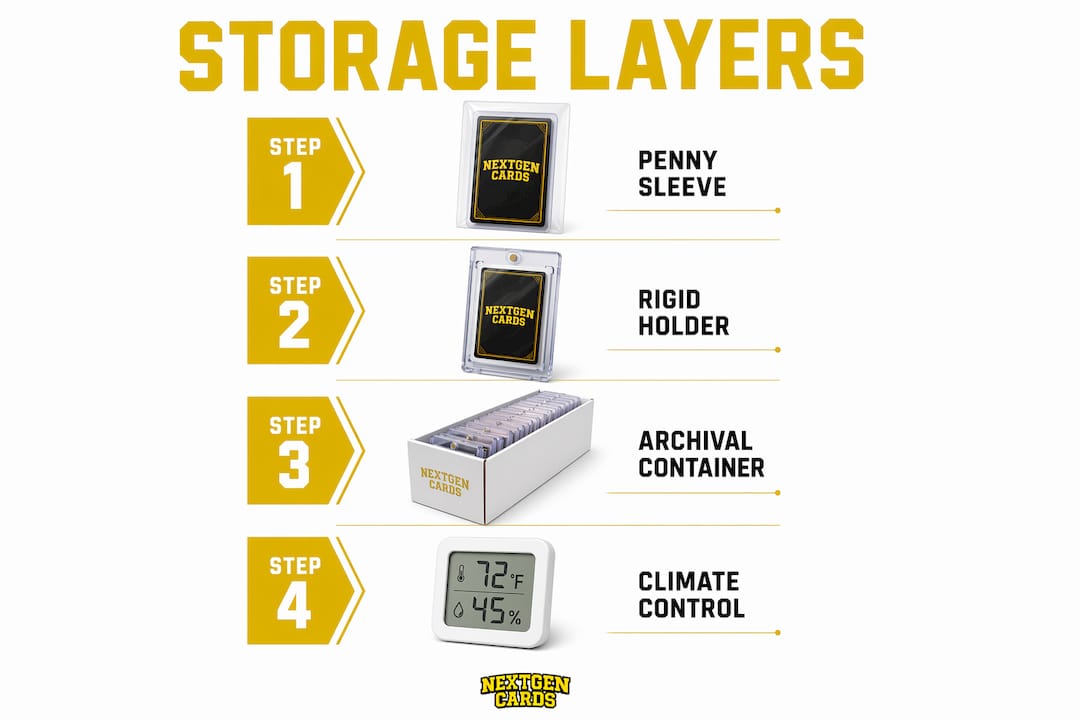
How do humidity, temperature, and light damage stored cards?
Humidity is the number one factor damaging cards over the long term, followed by UV exposure and heat. Understanding each threat lets you address it directly rather than guessing at solutions.
Humidity below 30% makes card stock brittle and prone to cracking along edges and corners. Humidity above 65% creates conditions for mold growth on card surfaces, which is irreversible. The target range is 45–55% relative humidity. Stability within that range matters more than hitting an exact number. A card stored at a consistent 52% humidity will fare better than one swinging between 40% and 60% daily.
Temperature extremes cause warping. Heat softens the adhesive layers in card stock and causes cards to curl. Cold alone is less damaging, but rapid temperature changes create condensation, which introduces moisture directly to card surfaces. The ideal storage temperature is 65–72°F.
UV light causes irreversible fading. Display cases without UV filtering will cause visible color loss in months. Rated acrylic cases with UV-blocking properties are the correct choice for any card on display.
| Environmental factor | Safe range | Risk below range | Risk above range |
|---|---|---|---|
| Relative humidity | 45–55% | Brittleness, cracking | Mold, warping |
| Temperature | 65–72°F | Condensation risk | Warping, adhesive failure |
| UV exposure | Minimal/filtered | N/A | Irreversible fading |
| Air quality | Dust-free, stable | N/A | Surface contamination |
Pro Tip: A digital hygrometer costs about $20 and gives you real-time humidity and temperature readings. Place one inside your storage area and check it weekly. Dehumidifiers handle excess moisture in humid climates; small humidifiers correct dry conditions in winter.
Basements and attics are the worst storage locations for cards. Basements cycle through high humidity, and attics reach extreme heat in summer. A climate-controlled closet on an interior wall is the most practical location for most collectors.
What are the best ways to organize a trading card collection?
Effective organization protects cards and makes your collection accessible. Poor organization causes as much physical damage as poor materials.
For bulk storage, cardboard storage boxes with dividers are the standard solution. Stand cards upright inside the box rather than laying them flat in stacks. Flat stacks create pressure on the bottom cards, which causes bending and surface impressions over time. Use labeled dividers to separate cards by set, year, player, or sport. Avoid overfilling boxes. A tightly packed box forces cards against each other during retrieval, causing edge and corner damage.
For binders, the choice of pocket style is critical. Top-loading binder pockets cause card sliding and edge damage as cards shift during handling. Side-loading, zippered binders with archival-safe pages are the industry standard. The zipper keeps dust out, and side-loading pockets hold cards firmly in place. D-ring and O-ring binders with top-loading pages are a common mistake that damages cards over time.
Storing graded slab cards correctly
Graded slabs require a different approach than raw cards. Stacking slabs horizontally causes warping and puts pressure on the case edges. Store slabs vertically in dedicated slab boxes, which typically hold about 25 slabs each. Use slab sleeves to protect the acrylic case from scratches, since scratched cases reduce resale appeal even when the card inside is unaffected.
For collections valued over $5,000, specialized slab binders and fireproof safes provide an additional layer of security. A fireproof safe rated for media storage protects against both fire and water damage.
- Label every storage box on the outside with the contents and date organized.
- Keep a digital inventory using a spreadsheet or a collector-specific app to track what you own and where it is stored.
- Separate cards by condition tier: raw cards, sleeved singles, graded slabs, and cards pending grading submission.
- Never use rubber bands, binder clips, or tape near cards. Rubber bands and adhesives cause permanent dents, residue, and edge damage.
- Check your collection every three to six months for signs of humidity damage, mold, or shifting inside boxes.
What handling and transport practices protect card condition?
Proper handling starts before you touch a card. Wash your hands thoroughly and dry them completely before picking up any card. Skin oils and moisture transfer directly to card surfaces and cause long-term staining. For high-value cards, nitrile gloves eliminate the risk entirely. Handle cards only with clean, dry hands or nitrile gloves as a firm rule for your collection.
Never clean a card with liquids, cloths, or any cleaning product. Professional graders classify cleaning as alteration, which permanently reduces a card’s grade and market value. If a card has surface debris, a very light puff of air is the only safe option.
For transport, use the full layered system: penny sleeve inside a toploader, toploader sealed in a team bag, and team bags placed inside a rigid outer case or padded box. Loose toploaders sliding against each other inside a bag will scratch corners and edges. A rigid case prevents movement entirely.
- Wash and dry hands before handling any card.
- Sleeve the card in a penny sleeve immediately after removing it from packaging.
- Place the sleeved card into the appropriate toploader or Card Saver.
- Seal the toploader with a team bag.
- Place sealed toploaders into a rigid transport case or padded box for any movement.
- For display, use a UV-filtered magnetic one-touch holder or rated acrylic case.
Pro Tip: Rotate displayed cards every three to six months, even in UV-filtered cases. No filter blocks 100% of light, and rotation prevents uneven fading across the card surface.
Safe display is part of the trading card protection tips every serious collector should follow. A card on display is still a card at risk, and the right case makes the difference between a centerpiece and a faded disappointment.
Key Takeaways
Effective trading card storage requires layered physical protection, stable climate control between 65–72°F and 45–55% humidity, and consistent handling practices to preserve condition and value.
| Point | Details |
|---|---|
| Use three protection layers | Penny sleeve, rigid holder, and archival container protect every card from physical damage. |
| Control humidity first | Humidity is the top long-term threat; keep it at 45–55% with a digital hygrometer and dehumidifier. |
| Avoid PVC and top-loading pages | PVC off-gasses and damages finishes; side-loading archival binders prevent sliding and edge damage. |
| Store slabs vertically | Horizontal stacking warps slab cases and reduces resale value even when the card is undamaged. |
| Never clean cards with liquids | Graders classify cleaning as alteration, which permanently lowers a card’s grade and market value. |
What I’ve learned after years of watching collections deteriorate
The most common mistake I see is collectors who invest in rare cards but store them in whatever is available. A rookie autograph worth hundreds of dollars sitting in a top-loading binder page, in a basement, with no humidity control. The card degrades slowly and invisibly until the damage is obvious and permanent.
Environmental control is the factor collectors underestimate most. Physical protection gets attention because sleeves and toploaders are visible and tangible. Humidity is invisible until mold appears or corners start to curl. A $20 digital hygrometer and a basic dehumidifier cost less than a single mid-tier card. That investment protects everything else in your collection.
My honest advice is to build your storage system incrementally. Start with penny sleeves for every card and toploaders for anything worth more than a few dollars. Add a proper binder with archival side-loading pages for your sets. Then address your storage environment. You do not need a climate-controlled room. You need a stable interior closet and a hygrometer telling you what is happening inside it.
The shortcuts that collectors take, including rubber bands, cheap non-archival sleeves, and top-loading binders, cost far more in damaged cards than the money they save. Good storage is cheap. Damaged cards are expensive. That math is straightforward, and I have seen it play out too many times to ignore.
For collectors building toward grading submissions, the gifting and presentation guide from Nextgencards covers safe handling practices that apply equally well to protecting cards before they reach a grading service.
— Richard
Protecting the cards worth protecting
Serious collectors know that the right storage system is only half the equation. The other half is acquiring cards worth protecting in the first place.
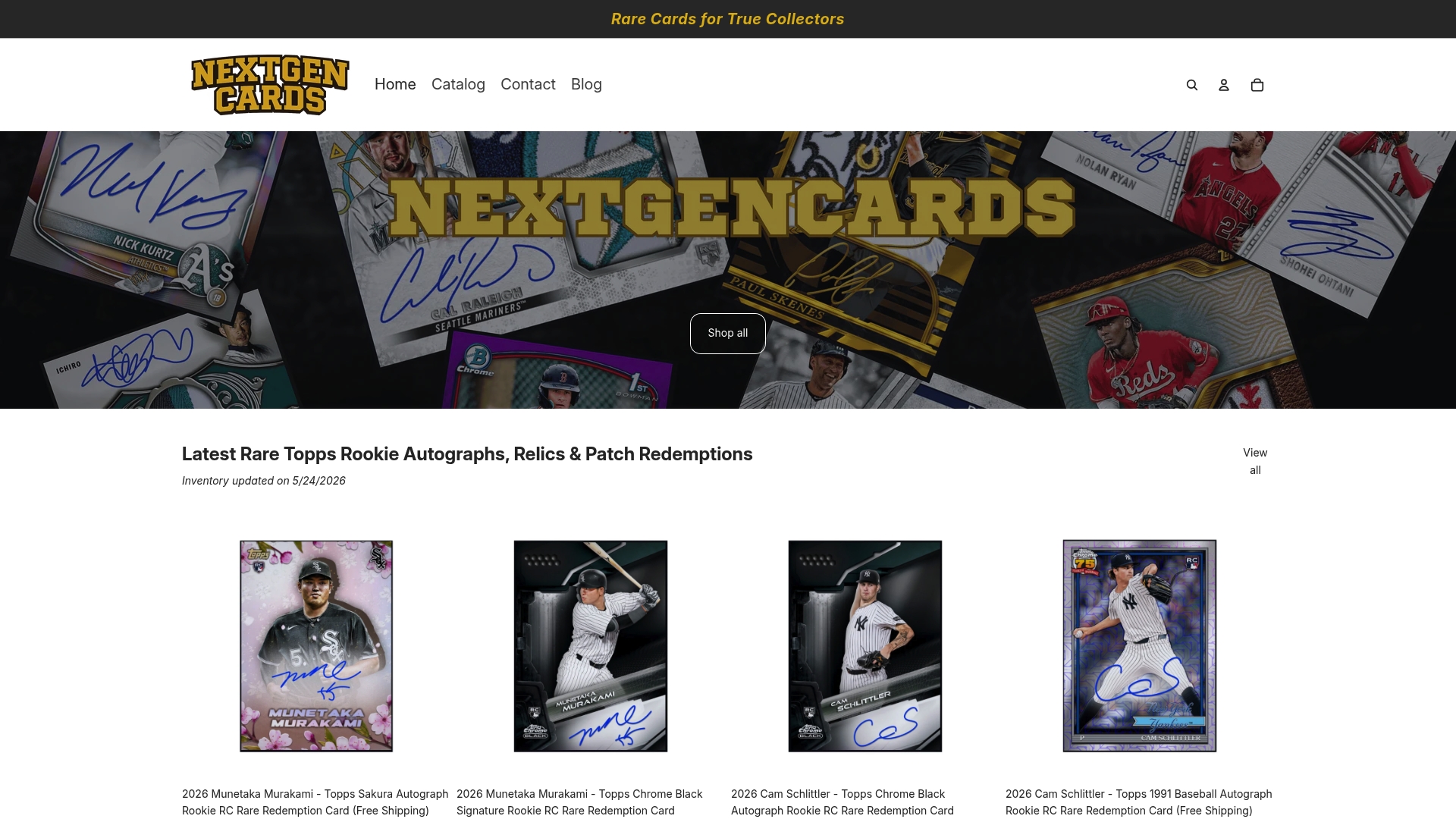
Nextgencards carries a curated selection of rookie autographs and relics from athletes like Shohei Ohtani, Aaron Judge, and Paul Skenes. These are the cards that demand proper penny sleeves, toploaders, and climate-controlled storage from day one. Every card in the Nextgencards inventory is authentic, and many ship free. If you are building a collection that deserves premium protection, the Nextgencards catalog is the right place to find cards that hold and grow in value.
FAQ
What is the ideal humidity for storing trading cards?
The ideal relative humidity for trading card storage is 45–55%. Humidity below 30% makes card stock brittle, and humidity above 65% creates mold risk.
Do I need toploaders for every card?
Penny sleeves are sufficient for low-value commons. Any card worth more than $5 should also receive a rigid holder like a toploader or Card Saver to protect corners and prevent bending.
Are PVC sleeves safe for long-term storage?
PVC sleeves are not safe for long-term storage. They off-gas chemicals that react with card surfaces in heat and humidity, causing permanent residue and finish damage. Use acid-free, PVC-free polypropylene sleeves instead.
How should I store graded slab cards?
Store graded slabs vertically in dedicated slab boxes with slab sleeves to protect the acrylic case. Horizontal stacking causes warping and pressure damage to case edges.
Can I clean a card with a damp cloth?
No. Professional graders classify any cleaning as alteration, which permanently reduces a card’s grade and market value. Handle cards only with clean, dry hands or nitrile gloves.
0 comments