

A well-organized card collection is easier to enjoy, easier to value, and far easier to insure or sell when the time comes. Whether you’re managing a handful of rookie autographs or a five-figure portfolio of graded relics, the way you organize your cards directly affects their condition, their market value, and your ability to act quickly when opportunity strikes. Disorganized collections suffer corner dings, surface scratches, and humidity exposure that quietly erode value over time. Beyond physical damage, poor organization means you can’t answer the questions that matter most: What is my collection worth today? Which cards have appreciated? Do I already own that card?
The benefits of organized cards go well beyond convenience:
- Condition preservation: Proper storage and reduced handling prevent corner dings, surface scratches, and moisture damage that lower grades and resale prices.
- Market value tracking: A cataloged collection lets you monitor which cards are gaining or losing value, so you can make informed decisions about buying, selling, and holding.
- Accessibility: A sorted collection means you can pull any card in seconds, whether for a trade, a sale, or a grading submission.
- Documentation: Detailed records of ownership and condition support insurance claims, appraisals, and estate planning.
- Portfolio clarity: Organization transforms a chaotic pile into a curated archive you can actually manage and enjoy.
Why card organization matters for protecting condition and market value
The most direct cost of poor organization is physical damage. Rummaging through loose stacks introduces fingerprints and edge dings every single time, and repeated handling is one of the fastest ways to drop a card from Mint to Lightly Played. For a rookie autograph or a limited-edition relic card, that grade difference can translate to a meaningful drop in resale price.
Protective materials are the first line of defense. Card sleeves, toploaders, and deck boxes each serve a distinct purpose:
- Card sleeves protect against surface scratches and fingerprints during everyday handling and binder storage.
- Toploaders provide rigid protection for individual cards worth $20 or more, preventing bending and edge damage.
- Deck boxes keep active play sets sleeved and accessible without the repeated binder handling that accelerates edge wear.
Organization also reduces unnecessary handling. When every card has a designated place, you stop digging through stacks to find what you need. That discipline alone preserves condition over months and years. Proper documentation adds another layer of protection: a card with a clear purchase record, condition notes, and photos is far easier to submit for grading and far easier to price accurately at resale. Well-organized collections are consistently reported as easier to insure, appraise, and sell, while collections without documentation risk undervaluation or unrecoverable losses through insurance.
How organization improves accessibility and collection management
A sorted collection saves real money. Collectors frequently lose track of owned cards due to poor sorting and lack of cataloging, leading to unnecessary repurchases, especially painful at higher card values. The fix is a system organized by purpose rather than just by game or set.
Sorting by purpose means separating cards into four clear buckets:
- Active play cards stay sleeved in a deck box, ready to use without repeated binder handling.
- Collection cards (anything you’d be upset to lose) get individual protection in toploaders or magnetic one-touch holders, stored vertically.
- Trade stock gets sorted by rough price range so you can navigate quickly when someone expresses interest.
- Bulk cards go into storage boxes, sorted however makes sense for how you use them.
Digital cataloging complements physical organization by keeping values current. Apps that scan cards and auto-update pricing eliminate tedious manual updates and help with portfolio decisions. A living digital catalog lets you search, filter, and sort your entire collection in seconds, something physical organization alone cannot deliver. Regular engagement with your catalog also reveals concentration risk: if the majority of your collection’s value sits in a single player, you’re carrying more exposure than you may realize.
Pro Tip: Set up a dedicated “landing zone,” one tray or box where all new acquisitions go immediately. Process it regularly by scanning anything worth tracking, sleeving appropriately, and routing each card to its correct storage location. Regular maintenance prevents backlog build-up that can otherwise reach hours of work.

What storage materials actually protect your cards long-term
Choosing the right storage material depends on the card’s value and how often you access it. Environmental factors like humidity, temperature, and light exposure affect every card over time, and archival-grade materials combined with vertical storage are the standard recommendation for preventing warping and long-term damage.
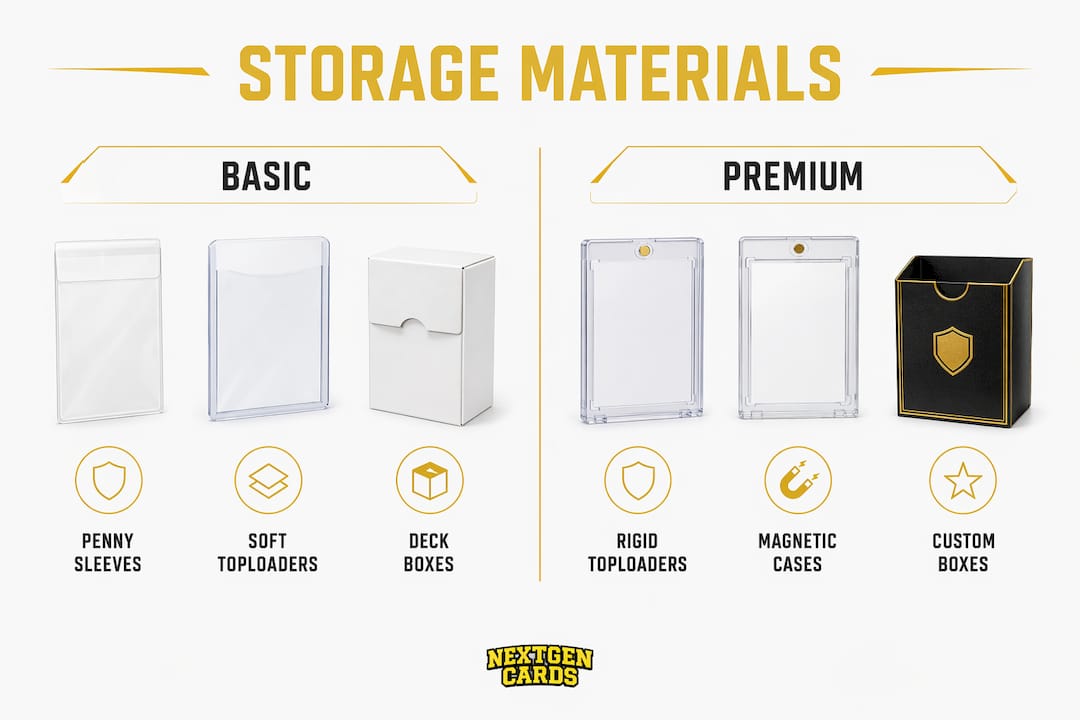
| Storage Option | Best For | Protection Level | Cost Range |
|---|---|---|---|
| Penny sleeves | Commons | Basic surface protection | Very low |
| Card sleeves (standard) | Cards $2–$20 in binders or deck boxes | Surface and edge protection | Low |
| Toploaders | cards in a moderate to high value range | Rigid, individual protection | Low to moderate |
| Magnetic one-touch holders | Higher value cards | Maximum rigid protection | Moderate |
| Archival binders (side-loading) | Sets and mid-value cards | Organized, accessible storage | Moderate |
| BCW storage boxes | Bulk commons | Volume storage, basic protection | Low |
A few environmental considerations every collector should address include maintaining stable temperature and humidity and minimizing light exposure to protect cards from warping, fading, and brittleness over time. Cards should be stored upright rather than flat under weight to avoid damage.
The cost-benefit case for premium storage is straightforward. A toploader costs cents and protects a card worth $50 or more. A magnetic one-touch holder runs a few dollars and is the standard for cards above $100. Over-sleeving bulk commons is unnecessary friction and expense, but under-protecting high-value cards is a far more costly mistake. Matching protection level to card value is the discipline that separates a managed collection from a pile.
Practical tips for keeping your collection organized over time
Sustainable organization depends on simplicity and routine, not complexity. Professional collectors prioritize maintainable systems and immediate logging rather than elaborate setups that collapse under their own weight. The goal is a system you’ll actually use six months from now, not one that looks perfect on day one.
Practical habits that keep collections from sliding back into chaos:
- Sort by value tier first. Many experienced collectors sort first by value, then by sport, then by player or year within each tier, so expensive cards always receive appropriate protection.
- Log acquisitions immediately. The gap between acquiring a card and recording it is where most organizational systems break down.
- Avoid over-sleeving bulk. Applying the same protection level to a bulk common as to a $60 foil creates unnecessary friction and slows down the entire system.
- Use digital tools for market tracking. Apps with live market data update card values automatically, removing the need to manually re-price your catalog every few months.
- Review your collection quarterly. This includes filing new acquisitions, removing sold or traded cards, checking current values, and adjusting protection tiers as card values shift.
Systems that worked at 300 cards often feel strained at 600. The obvious warning signs: you can’t find a card you know you own, you’ve bought duplicates, or pulling a specific card from trade stock takes more than a couple of minutes. When any of those happen, it’s time to re-sort by purpose, upgrade protection on higher-value cards, and reset the intake habit.
Pro Tip: Periodically reset and simplify. Strip the system back to its core buckets, re-sort everything, and rebuild from there. A simpler system maintained consistently outperforms a complex one that gets abandoned.
Expert insights on managing a collectible card portfolio
Professional collectors treat their card collections like investment portfolios, focusing on discipline, immediate logging, and maintainable organization to avoid burnout and maximize control. That framing changes how you approach every decision, from which sleeve to use to how often you update your catalog.
The industry consensus on professional collection management centers on a few consistent principles:
- Catalog every card from day one. Tracking from the start prevents the duplicate purchases and missed trades that cost collectors real money over time.
- Document condition and provenance. Photos, purchase receipts, and condition notes create a defensible record that supports grading submissions, insurance claims, and resale negotiations.
- Treat organization as ongoing, not one-time. Regular rotation and review transform a collection from a disconnected accumulation into an enjoyable, curated archive with value beyond the financial.
- Balance protection with accessibility. Cards stored so securely that accessing them is a chore tend to get neglected. The right system makes retrieval easy without sacrificing protection.
For collectors viewing their cards as assets, understanding auction valuation methods adds another dimension to portfolio management. Knowing how appraisers assess condition and provenance reinforces why detailed records matter so much at the point of sale or claim.
How disorganized collections create problems with insurance and resale
A disorganized collection is a liability when it matters most. Insurance claims require proof of ownership and current value. Without a detailed catalog, photos, and purchase records, collectors face undervaluation or outright denial of claims for lost, stolen, or damaged cards. The same documentation gap creates friction in resale disputes, where a buyer questions a card’s condition or authenticity and the seller has no records to support their position.
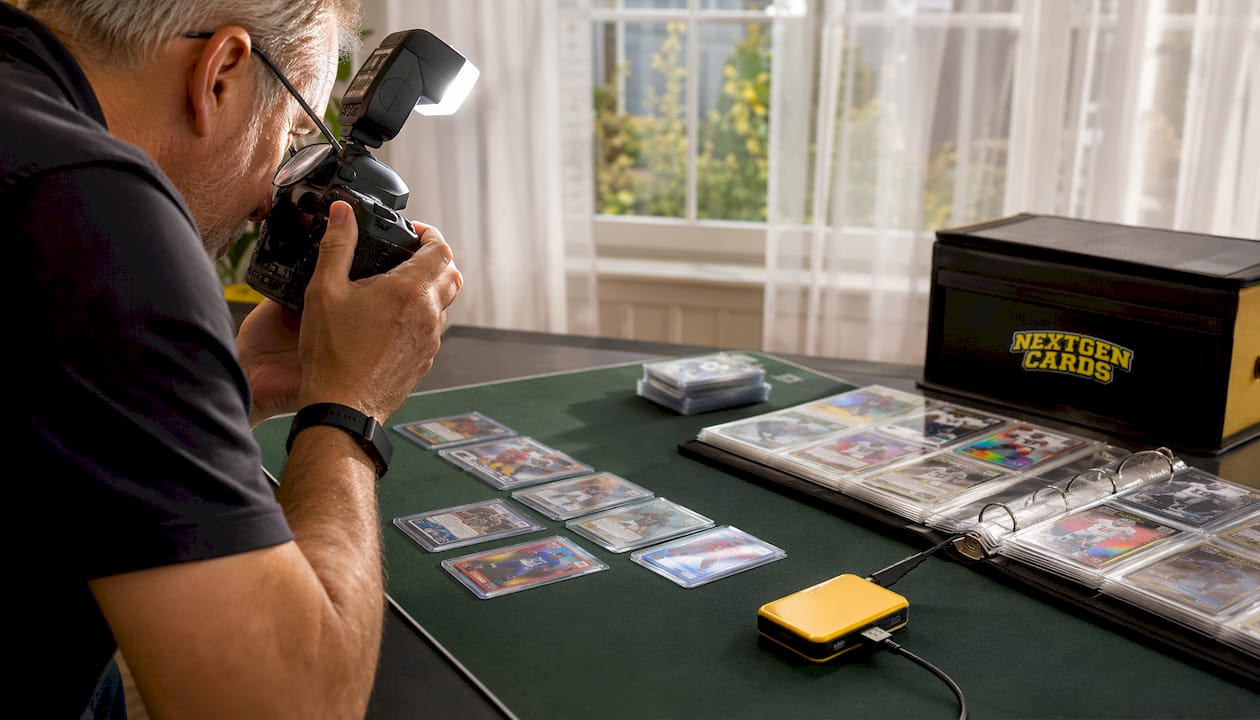
The practical consequences are direct. A collector who loses a high-value rookie autograph to a flood or fire with no documentation has little recourse beyond a general estimate, which insurers will typically discount. A seller who can’t produce a purchase record or condition history for a $500 relic card faces skepticism that drives the price down or kills the deal entirely. Detailed records for each card, including images, descriptions, and provenance, provide the centralized documentation that insurers, advisors, and buyers require.
The connection between organization and hidden card value is also worth noting. Appraisers and auction specialists consistently find that well-documented collections command stronger valuations because the condition history removes uncertainty from the equation. A card with a clear paper trail is simply easier to price confidently, and that confidence shows up in the final number.
Building that documentation doesn’t require a complex system. A digital catalog with photos, purchase dates, and condition notes at acquisition covers the essentials. The key is consistency: log every card when it arrives, update records when condition changes, and keep the catalog current as cards are sold or traded. That habit, maintained over time, is what separates a protected portfolio from a vulnerable pile.
Key Takeaways
Organized collections preserve card condition, support accurate valuation, and provide the documentation needed to protect your investment through insurance, resale, and appraisal.
| Point | Details |
|---|---|
| Protection starts with materials | Card sleeves, toploaders, and deck boxes matched to card value prevent the physical damage that lowers grades and resale prices. |
| Sort by purpose, not just game | Separating active play, collection, trade stock, and bulk cards reduces handling and makes every card easier to find and protect. |
| Log acquisitions immediately | Recording each card at intake prevents duplicate purchases, missed trades, and the backlog that breaks most organizational systems. |
| Review and reset quarterly | Updating protection tiers, filing new cards, and re-sorting prevents the slow slide back into disorganization as collections grow. |
| Documentation protects your investment | Photos, purchase records, and condition notes support insurance claims, grading submissions, and resale negotiations. |
Build a collection worth protecting
An organized collection is a collection you can act on. When a Shohei Ohtani rookie autograph spikes in value, you know exactly where it is, what condition it’s in, and what you paid for it. That clarity is what turns a hobby into a portfolio.
Nextgencards specializes in the cards that deserve that level of care: rookie autographs, relic cards, limited editions, and rare redemption cards from athletes like Aaron Judge and Shohei Ohtani. Every card in the inventory is authentic, curated for serious collectors, and backed by the kind of provenance documentation that makes organization straightforward from day one.
If you’re ready to add cards that anchor a well-managed collection, browse the rookie autographs and relics at Nextgencards. For foundational guidance on protecting what you already own, the trading card storage basics guide covers the essentials in detail.
Recommended
- NextGenCards Collector’s Guide – Next Gen Cards LLC
- Trading Card Storage Basics Explained for Collectors – Next Gen Cards LLC
- Why Collectors Want This 2026 Cooper Flagg Topps Flagship Rookie Jersey Patch Rare RC Redemption Card – Next Gen Cards LLC
- Why Autographed Cards Beat Jerseys as Collector Gifts – Next Gen Cards LLC
0 comments