

A focused, realistic budget is the single most important tool a new collector can have. Before you spend a dollar on cards, understanding the card collecting budget basics explained below will protect your money and help you build a collection worth owning. The core principle is straightforward: spend intentionally on singles, protect what you buy, and stay in one lane until you know the market.
Here is what every beginner needs to know upfront:
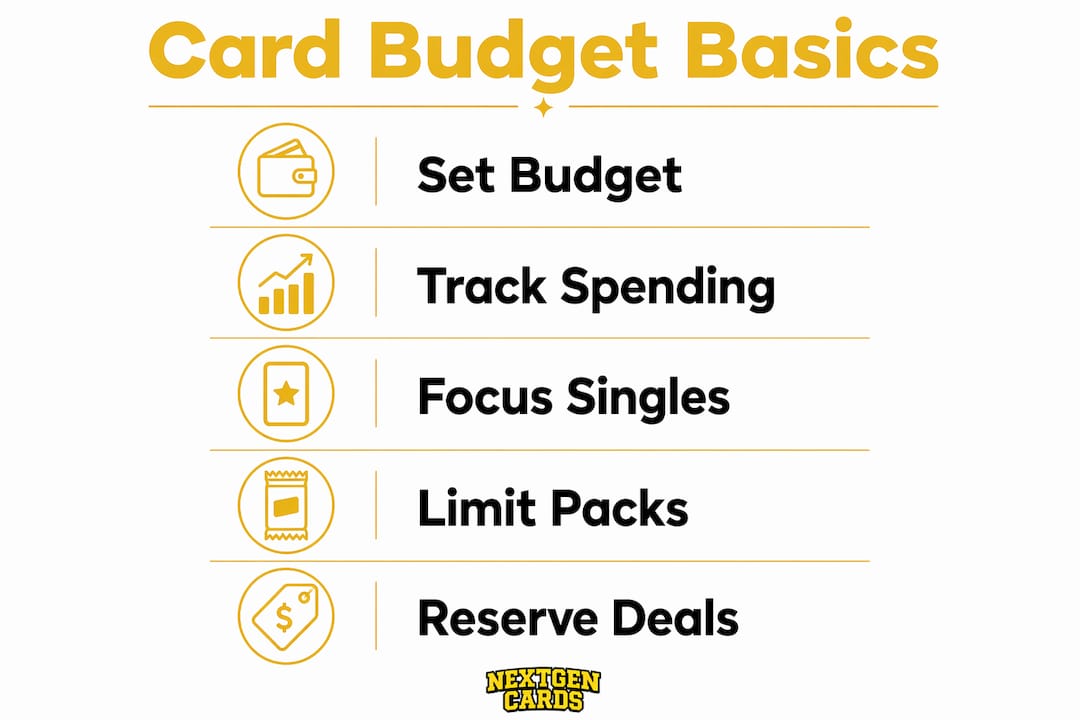
- Set a monthly spending limit before browsing any marketplace. The card market is built around urgency, and a firm number keeps impulse buys in check.
- Prioritize singles over sealed product. Buying sealed packs often costs $30 but yields only $8–$12 worth of cards, while $30 spent on carefully chosen singles delivers far better collection growth.
- Choose one collecting focus — one sport, one player, one era — and commit to it for at least six months before expanding.
- Account for all costs, not just card prices. Shipping fees and protective supplies can consume 10–20% of a modest monthly budget if left untracked.
- Track every purchase with a simple spreadsheet: date, card name, price paid, and condition. Collectors who track can accurately report their collection’s worth after a year; most who don’t lose track entirely.
- Protect cards immediately upon acquisition. Penny sleeves and top loaders are the lowest-cost, highest-return investment in this hobby.
Pro Tip: Allocate the majority of your monthly budget to single card purchases that directly advance your collecting goal. Treat pack openings as entertainment spending, not collecting investment, and budget for them separately.
Table of Contents
- 1. Common beginner budgeting mistakes and how to avoid budget sprawl
- 2. Practical tips for maintaining a card collecting budget over time
- 3. Why card condition and protection are non-negotiable for value
- 4. Expert insights from Nextgencards on budgeting and collection focus
- 5. Nextgencards is where focused collectors find authentic, rare cards
- Key Takeaways
1. Common beginner budgeting mistakes and how to avoid budget sprawl
Budget sprawl is the fastest way to waste money in card collecting. It happens when a new collector tries to chase cards across multiple sports, games, or eras simultaneously, ending up with a scattered pile of low-value cards and no coherent collection. Experts recommend picking one collecting focus and sticking with it for at least six months to build genuine market knowledge and prevent diluted spending.
The other major trap is hype-driven buying. A rookie card spikes on social media, and suddenly it feels like a must-have. Prices during release hype are almost always inflated. Selling into hype and buying during the offseason is a pattern experienced collectors use to their advantage — beginners tend to do the opposite.
Common mistakes that drain a beginner’s budget:
- Buying across too many categories at once. Spreading $50 across baseball, basketball, Pokémon, and Magic leaves you with nothing meaningful in any category.
- Ignoring sold listings. Sticker prices on marketplace listings are noise. Check eBay sold listings before purchasing anywhere to verify what cards actually sell for.
- Not tracking expenditures. Without a log, it’s easy to spend $200 in a month you budgeted $75.
- Overvaluing rarity symbols. A card marked “rare” or “holo” can still be worth pennies if demand doesn’t exist. Rarity measures print frequency, not collector interest.
- Impulse buying discounted sealed product. A sale on a booster box feels like savings, but if the expected value of the cards inside is still below the sale price, it isn’t a deal.
Pro Tip: Before any purchase, check recent eBay sold listings for that exact card in the same condition. This one habit prevents overpaying at local shops and keeps your budget working efficiently.
2. Practical tips for maintaining a card collecting budget over time
Sustaining budget discipline over months and years requires more than good intentions. The most reliable method is dividing your annual hobby funds into specific allocation buckets. A practical framework might look like this: roughly 33% toward sealed products, 22% toward singles, 17% toward grading fees, and 28% held as contingency to handle unexpected opportunities or price spikes without breaking the overall plan.
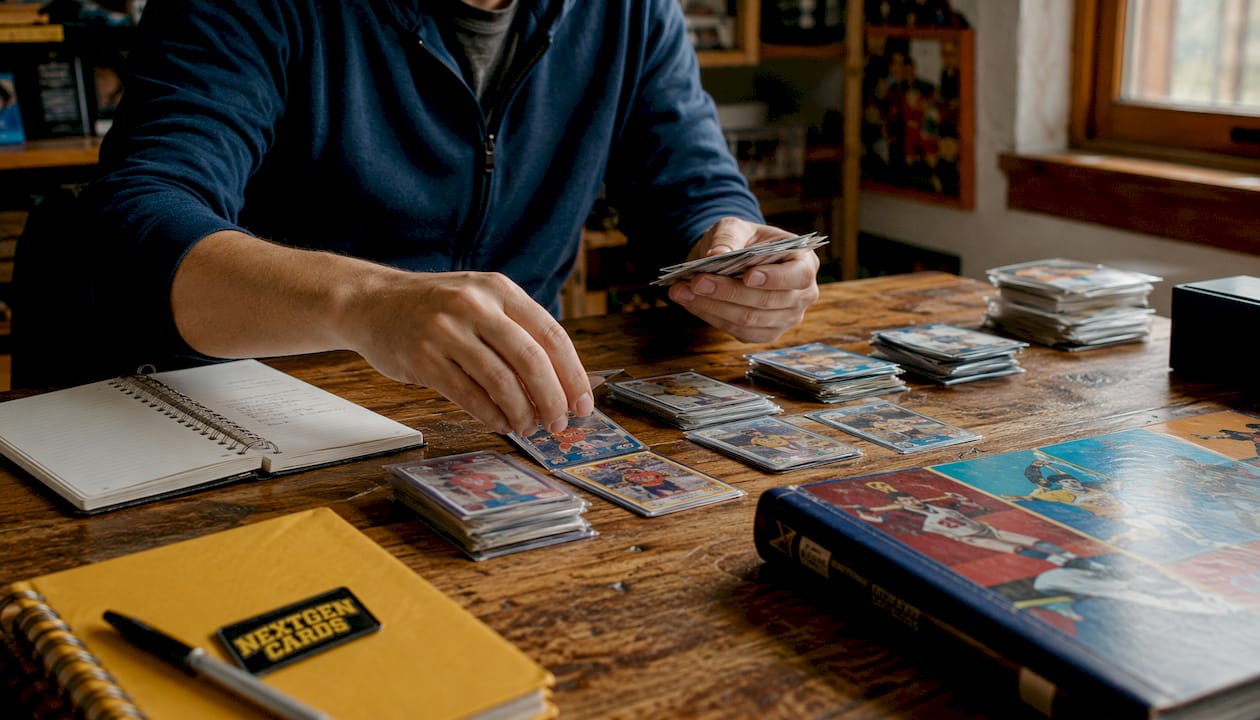
Consistency matters more than the size of the budget. Spending $25 every month builds more collection value than spending $150 once and then nothing for six months.
Practical strategies for long-term budget discipline:
- Use a spreadsheet or dedicated app to log every transaction in real time. Include the date, card name, price paid, platform, and condition. After 12 months, you’ll have a clear picture of your actual spending versus your plan.
- Set separate monthly categories for singles, sealed product, grading, and supplies. When one category runs out, stop spending in it until the next month.
- Watch for hidden recurring costs. Subscription boxes, grading service memberships, and storage supplies add up quietly. Build them into the budget explicitly rather than treating them as incidental.
- Wait for the right price. Patience is a genuine competitive advantage in this hobby. Prices on modern cards cool off after release hype fades, often significantly.
- Review your budget quarterly. Compare what you planned to spend against what you actually spent, and adjust allocations based on how your collection is progressing.
Collectors who limit pack openings to roughly 20% of their budget and direct the remaining 80% toward singles achieve more effective collection value growth over time. That ratio is worth building into your monthly categories from the start.
Pro Tip: Reserve 10–15% of your monthly budget as a “deal fund” — money set aside specifically for unexpected opportunities like a scarce rookie autograph at below-market price. Having that reserve prevents you from either missing the deal or blowing your regular budget to grab it.
3. Why card condition and protection are non-negotiable for value
Card condition is the primary driver of long-term collectible value. A Near Mint card commands full market price; a Moderately Played copy of the same card can be worth substantially less, sometimes a fraction of the Near Mint price depending on the card’s tier. Condition affects value at every level of the hobby, from $2 commons to $2,000 rookie autographs.
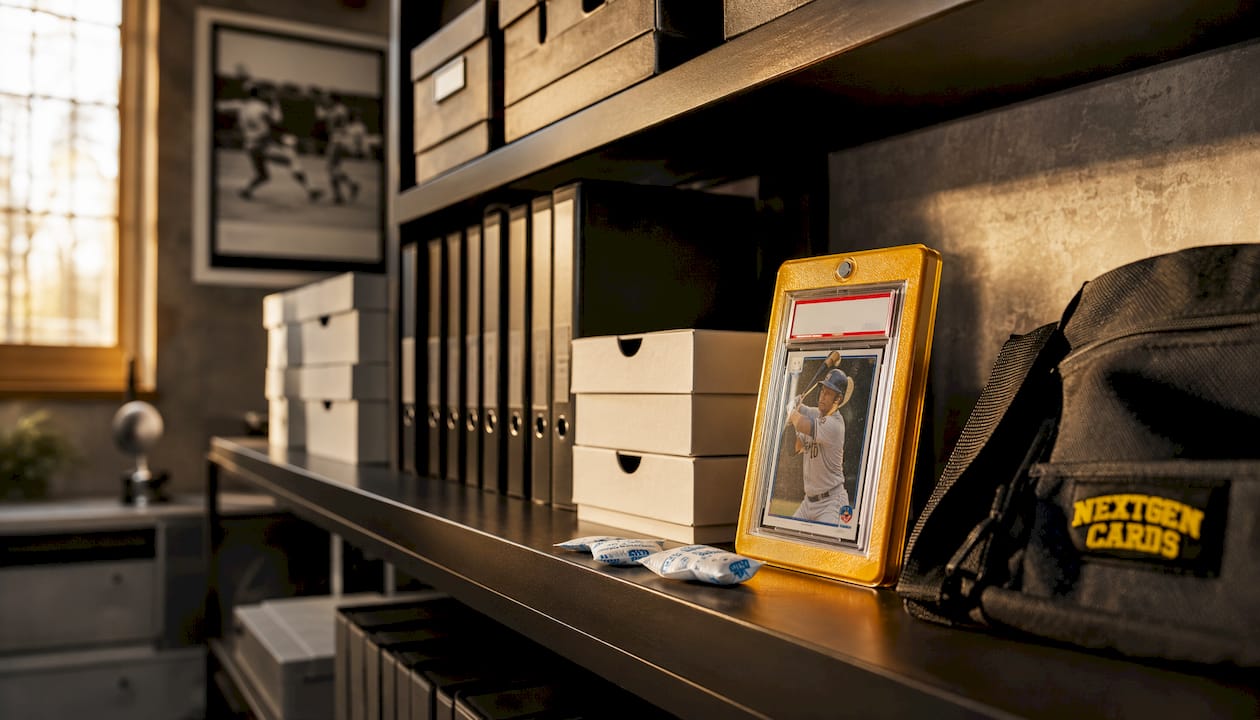
The good news is that basic protection costs almost nothing relative to the value it preserves.
Affordable protection supplies every collector needs:
- Penny sleeves ($0.10–$0.15 each): The first layer of protection for any card. Slide a card into a penny sleeve the moment you take it out of a pack or mailer.
- Top loaders (approximately $0.15–$0.20 each): Rigid plastic holders that protect sleeved cards from bending. Standard for singles worth $5 or more.
- Magnetic holders (one-touch holders): Slightly more expensive but ideal for premium cards. The magnetic closure eliminates the need to force the card in and risk edge damage.
- Binder pages with side-loading pockets: The standard for set collectors. Ringless binders prevent the spine from damaging cards stored near the rings.
Proper storage environment matters just as much as the holder. Cards stored in a cool, dry location away from direct sunlight retain their condition far longer than cards left in a hot car, a humid basement, or near a window. Humidity warps cards; UV exposure fades colors and surfaces.
For deeper guidance on affordable supplies and storage practices, Nextgencards’s storage guide covers the essentials in detail. You can also find practical hobby organization solutions that work well for keeping a growing collection sorted and protected.
4. Expert insights from Nextgencards on budgeting and collection focus
Nextgencards specializes in rare rookie cards, autographs, relics, and redemption cards — the category of cards where condition, authenticity, and focused acquisition matter most. Their perspective on budgeting reflects the realities of collecting at the premium end of the market, where a single well-chosen card can anchor an entire collection.
Their recommended approach centers on intentional acquisition: knowing exactly which card you want, understanding its fair market value, and waiting for the right opportunity rather than reacting to every listing. This is the opposite of the impulse-buying pattern that drains most beginner budgets.
Key principles Nextgencards emphasizes for budget-conscious collectors:
- Stay in a defined lane. Whether you collect Shohei Ohtani rookie autographs or Aaron Judge relic cards, a narrow focus builds deeper market knowledge and prevents scattered spending.
- Prioritize authenticity. Authenticated memorabilia cards hold value more reliably than unverified pieces. Buying from trusted sources eliminates the risk of paying premium prices for cards that won’t hold up to scrutiny.
- Integrate collection management with budget tracking. Knowing what you own, what you paid, and what each card is currently worth gives you the information to make smart upgrade decisions without overspending.
- Use free shipping offers strategically. Shipping costs are a real budget line item. Consolidating purchases to qualify for free shipping, rather than placing multiple small orders, keeps those costs from eroding your monthly allocation.
| Collecting Approach | Budget Impact | Value Outcome |
|---|---|---|
| Singles-focused, narrow lane | Lower monthly spend, predictable costs | Higher per-card value, coherent collection |
| Sealed product-heavy | Higher spend, unpredictable returns | Mostly bulk, few standout cards |
| Multi-sport/multi-game | Diluted budget, scattered inventory | Low average card value, no depth |
| Authenticated rookies/autos | Moderate to high per-card cost | Strong long-term value retention |
Nextgencards also provides educational resources on card organization and storage practices that directly support budget discipline. When you know exactly what you own and where it is, you avoid duplicate purchases and can make informed decisions about upgrades.
Pro Tip: Treat your collection as a living inventory. Update your tracking log every time you add or sell a card. Collectors who maintain accurate records make better buying decisions and rarely overpay for cards they already own.
5. Nextgencards is where focused collectors find authentic, rare cards
Serious collectors building within a budget need a source they can trust for authenticity, rarity, and fair access. Nextgencards offers exactly that: a curated inventory of rookie autographs and relic cards from athletes like Shohei Ohtani and Aaron Judge, authenticated and ready to anchor a premium collection.
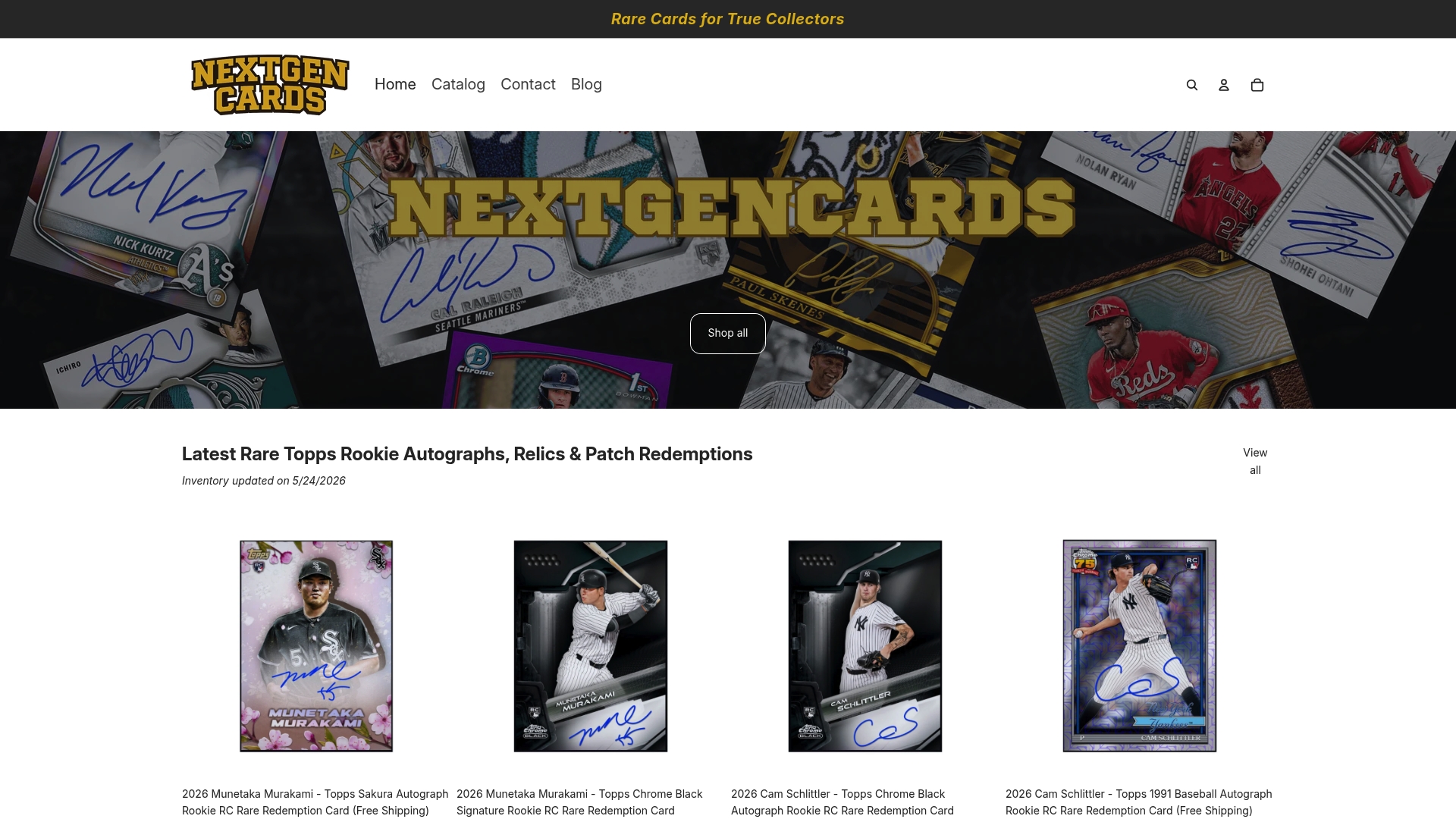
For a collector who has done the work of setting a budget, choosing a lane, and tracking spending, the next step is finding cards worth owning for the long term. Nextgencards’s inventory is built around scarcity and authenticity — limited editions, genuine memorabilia relics, and rookie autographs that hold collector interest well beyond the release window. Free shipping on select items reduces the hidden cost that erodes so many beginner budgets.
If you’re ready to move from planning to purchasing, browse the full collection at Nextgencards and find the card that fits your focus. For beginners still building their first set, the starter bundle guide is a practical starting point for economical entry into the hobby.
Key Takeaways
A disciplined budget built around singles, a narrow collecting focus, and immediate card protection is the most reliable path to a valuable, sustainable trading card collection.
| Point | Details |
|---|---|
| Singles beat sealed product | $30 in targeted singles delivers far more collection value than $30 in packs, which typically yield only $8–$12 in cards. |
| Budget allocation matters | Dividing funds into categories (singles, sealed, grading, contingency) prevents overspending in any one area. |
| Condition drives value | Protecting cards with penny sleeves and top loaders at $0.10–$0.15 each preserves Near Mint condition and long-term worth. |
| Narrow focus prevents sprawl | Committing to one sport or player for at least six months builds market knowledge and prevents diluted, low-value purchases. |
| Nextgencards for premium singles | Nextgencards offers authenticated rookie autographs and relic cards with free shipping on select items, suited for collectors building with intention. |
0 comments