

Autograph authentication is the professional process of verifying that a signature is genuine and not forged, giving collectors confidence in the legitimacy of their signed memorabilia. The industry term is signature authentication, and it covers everything from a rookie card signed by Aaron Judge to a vintage baseball signed by a Hall of Famer. Services like Beckett, PSA/DNA, and JSA have built the standard for this process. Without professional verification, even experienced collectors risk paying premium prices for convincing forgeries. Understanding how the autograph verification process works protects your collection and your investment.
What is autograph authentication and how does it work?
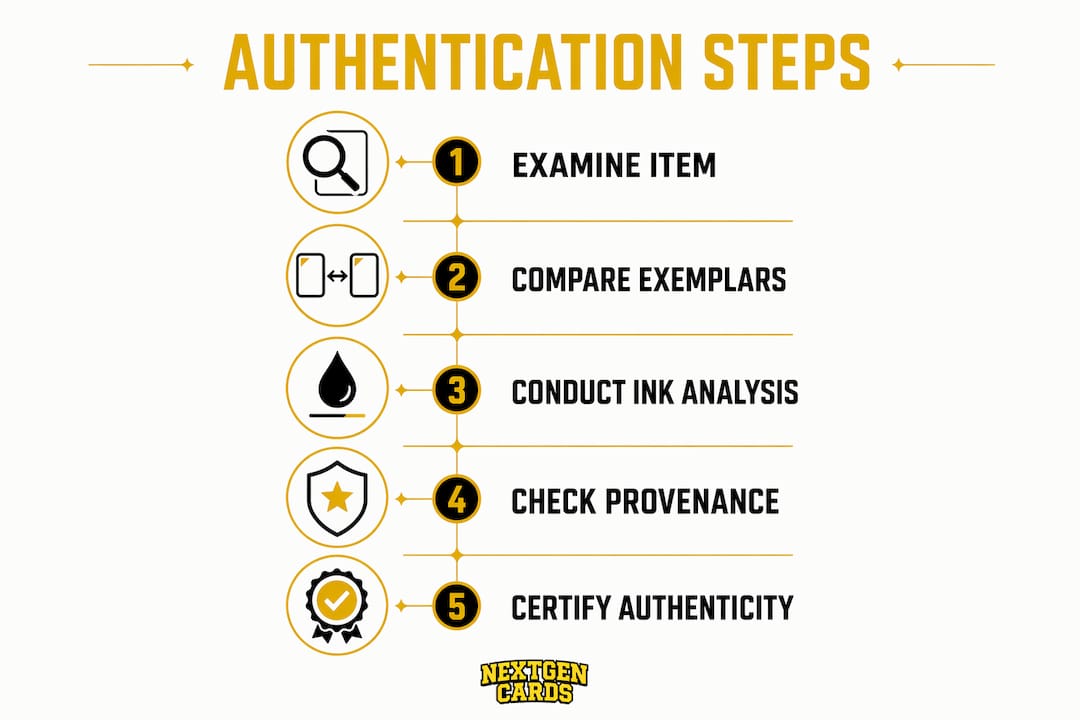
Autograph authentication professionally verifies signatures through expert analysis of ink, signature flow, pressure, and comparison against verified exemplars. The process is not a single test. It is a layered evaluation that combines physical examination, database research, and advanced technology.
Here is how a professional authentication typically unfolds:
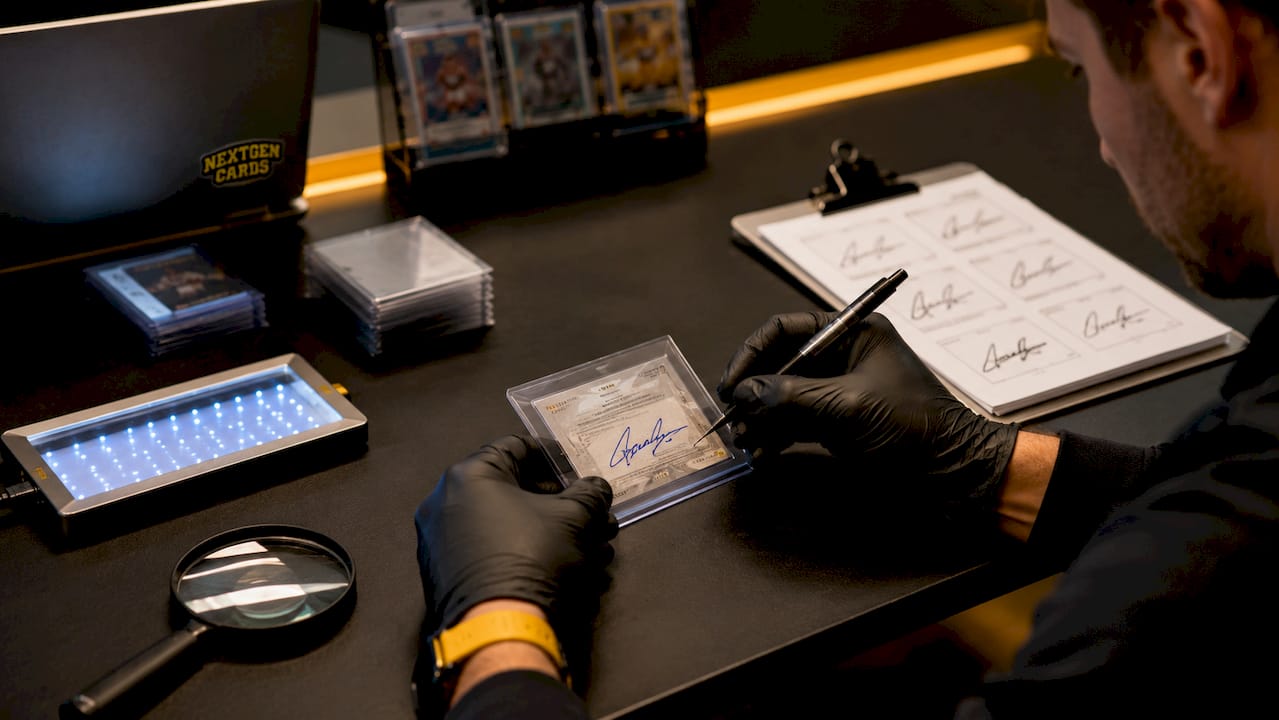
- Initial visual examination. The authenticator studies the signature under magnification, often using a 10x loupe. They look at ink pooling, pen pressure, stroke speed, and hesitation marks. A forged signature often shows trembling lines or unnatural pen lifts that the naked eye misses.
- Exemplar database comparison. The signature is compared against a database of verified genuine examples from the same signer, ideally from the same career era. Beckett, PSA/DNA, and JSA each maintain proprietary exemplar libraries built over decades.
- Advanced forensic tools. High-value items may be examined with a Video Spectral Comparator, which uses infrared and ultraviolet light to reveal ink layering, alterations, and surface tampering invisible under normal light.
- Certification and database registration. Authenticated items receive a tamper-evident holographic label with a unique serial number. That number is registered in an online database collectors can check independently.
Pro Tip: Always request the certification number before purchasing any signed item. Cross-check it against the issuing company’s online database before you complete the transaction.
The entire process can take minutes for straightforward cases or days for disputed high-value pieces. The goal is the same: a defensible, documented opinion backed by physical evidence.
What can collectors check at home before sending to a professional?
Collectors can perform a meaningful preliminary signatures check at home before spending money on professional services. This initial screen takes about 30 seconds and can rule out obvious fakes quickly.
- Magnification check. Use a jeweler’s loupe or a macro lens on your phone. Look for ink pooling at stroke starts, uneven pressure, and hesitation marks mid-stroke. Genuine signatures flow with consistent speed.
- Exemplar comparison. Pull three to five verified examples of the same signer from reputable auction records or official team photos. Compare letter formation, size ratios, and the placement of the signature on the item.
- Material consistency. Check whether the ink type and substrate match the signing era. A ballpoint pen signature on a card from the 1960s is a red flag. Sharpie signatures on modern glossy cards are standard.
- UV light test. A basic UV flashlight can reveal ink inconsistencies, added layers, or tampered surfaces that standard lighting hides. Home UV tests help identify ink irregularities and suspicious labels.
At-home checks are a screening tool, not a verdict. They are best for filtering out obvious fakes before you invest time and money in professional review.
Pro Tip: Never rely on a single comparison exemplar. Signatures shift with age, injury, and context. Use multiple examples from the same time period as the item you are evaluating.
High-value items, anything above a few hundred dollars, should always go to a recognized service. The cost of professional authentication is almost always less than the risk of buying or selling a fake.
How do COAs and LOAs factor into autograph authentication?
A Certificate of Authenticity (COA) is a third-party opinion, not absolute proof. A Letter of Authenticity (LOA) is a more detailed written statement from an authenticator explaining their findings. Both documents are only as credible as the organization that issued them.
Here is how the three main certification types compare:
| Document type | Format | Best use case |
|---|---|---|
| COA | Physical or digital certificate with serial number | Standard signed items, trading cards, photos |
| LOA | Detailed written opinion letter | High-value items, auction consignments |
| Tamper-evident label | Holographic sticker linked to online database | Physical items requiring ongoing verification |
Key facts every collector should know about certification:
- Verify the serial number online. Physical paperwork can be forged or separated from the original item. Always cross-check the number against the issuer’s database before trusting the document.
- PSA/DNA moved to permanent digital COAs in 2026. This shift improves security and makes verification faster for collectors worldwide. Digital COAs are now the standard for PSA-certified items.
- Not all COA issuers are equal. A COA from Beckett, PSA/DNA, or JSA carries real market weight. A COA from an unknown dealer carries almost none.
- Authentication is a cumulative process. Experts advise integrating handwriting analysis, provenance, and item history rather than relying on paperwork alone.
The practical takeaway: treat a COA as one layer of evidence, not the final word. A PSA/DNA holographic label paired with strong provenance is far more reliable than a COA from an unverified source.
Why does provenance matter when verifying autograph legitimacy?
Provenance is the documented history of an item, and it is one of the strongest supporting factors in any autograph legitimacy check. Physical signature analysis tells you what the ink looks like. Provenance tells you where the item has been.
Strong provenance documentation includes:
- Photographs of the signing event with the athlete present
- Ticket stubs or event credentials matching the date and location
- Contemporaneous notes, receipts, or correspondence referencing the item
- Chain of custody records showing every owner from the original signing forward
Authentication combined with provenance significantly strengthens a collectible’s legitimacy and resale value. A signed Shohei Ohtani rookie card with a photo of him signing it at a specific event is worth more than the same card with a COA alone.
Watch for these provenance red flags:
- Vague origin stories like “obtained from a private collection” with no supporting documents
- Provenance that begins with a dealer rather than a direct witness
- Documentation that references the wrong venue, date, or event details
Building strong provenance with photographs, receipts, and matching event details protects collectors against fraud and holds up under insurance and resale scrutiny. Comprehensive provenance documentation can be as valuable as third-party authentication in establishing an autograph’s legitimacy.
What expert tips and common pitfalls should collectors know?
The most common mistake collectors make is treating authentication as a binary pass/fail decision. Authentication is a cumulative process that weighs handwriting habits, provenance, item history, and physical evidence together.
Understand handwriting evolution. A signer’s autograph changes significantly over decades. Signature analysis must account for a celebrity’s handwriting changes over time. Comparing a 2005 Derek Jeter signature to a 1995 exemplar will produce misleading results. Always match the comparison exemplar to the correct career era.
Era-appropriate materials matter more than style alone. Understanding era-appropriate writing instruments and material aging is often more reliable than signature style alone for detecting forgeries. Ink chemistry, paper aging, and substrate type all provide forensic evidence that style comparison cannot.
Treat COAs as opinions, not verdicts. Reputable authenticators like Beckett, PSA/DNA, and JSA add market trust and resale value, but their certifications are expert opinions backed by evidence, not legal guarantees. No authentication service offers a 100% certainty claim.
“Collectors should remain skeptical of absolute claims in listings. Clear, precise authentication statements build greater trust than flashy certificates alone.” — How to Authenticate Autographs Like a Pro
Pro Tip: When evaluating a listing, look for sellers who describe the authentication process specifically rather than simply stating “authenticated.” Vague claims are a warning sign.
Multi-factor authentication is the professional standard. Ink analysis, exemplar comparison, provenance, and certified documentation working together produce the most defensible result.
Key Takeaways
Autograph authentication requires layered evidence, including physical signature analysis, certified documentation, and provenance, to reliably confirm a signature is genuine.
| Point | Details |
|---|---|
| Authentication is multi-layered | Ink analysis, exemplar comparison, and provenance work together to confirm legitimacy. |
| COAs are opinions, not proof | Always verify serial numbers online and check the issuer’s reputation before trusting a certificate. |
| At-home checks have limits | Magnification and UV tests screen obvious fakes but cannot replace professional expert review. |
| Provenance adds real value | Photos, receipts, and event records strengthen authentication and protect resale value. |
| Era context is critical | Match signature exemplars to the correct career period to avoid misleading comparisons. |
Why I think collectors underestimate the power of provenance
Most collectors focus almost entirely on the certificate. I understand why. A PSA/DNA holographic label is visible, tangible, and carries instant market recognition. But after years of watching authenticated items get disputed at auction, I have come to believe that provenance is the underrated half of the equation.
The most bulletproof signed items I have seen combine a strong certification with a clear, documented story. A photo of the signing, a ticket stub, a handwritten note from the original recipient. These details do not just support the authentication. They make the item’s history real and verifiable in a way that a sticker alone cannot.
Technology is improving the picture. PSA/DNA’s shift to permanent digital COAs in 2026 is a meaningful step. Digital records are harder to separate from the item and easier for collectors to verify independently. I expect more services to follow that model. But technology does not replace judgment. The collector who understands how to read a signature, check provenance, and evaluate a COA issuer will always have an edge over the one who just looks for a sticker.
My advice: treat every authentication as a case to build, not a box to check. The more layers of evidence you can assemble, the more confident you can be, and the more your collection will hold its value over time. If you are buying autographed rookie cards, apply the same scrutiny you would to a vintage signed baseball.
— Richard
Nextgencards carries authenticated autograph cards worth adding to your collection
Nextgencards specializes in rare, authenticated sports trading cards, including rookie autographs, relics, and limited edition redemption cards from athletes like Shohei Ohtani and Aaron Judge. Every listing reflects the authentication standards covered in this guide, so you know exactly what you are getting.
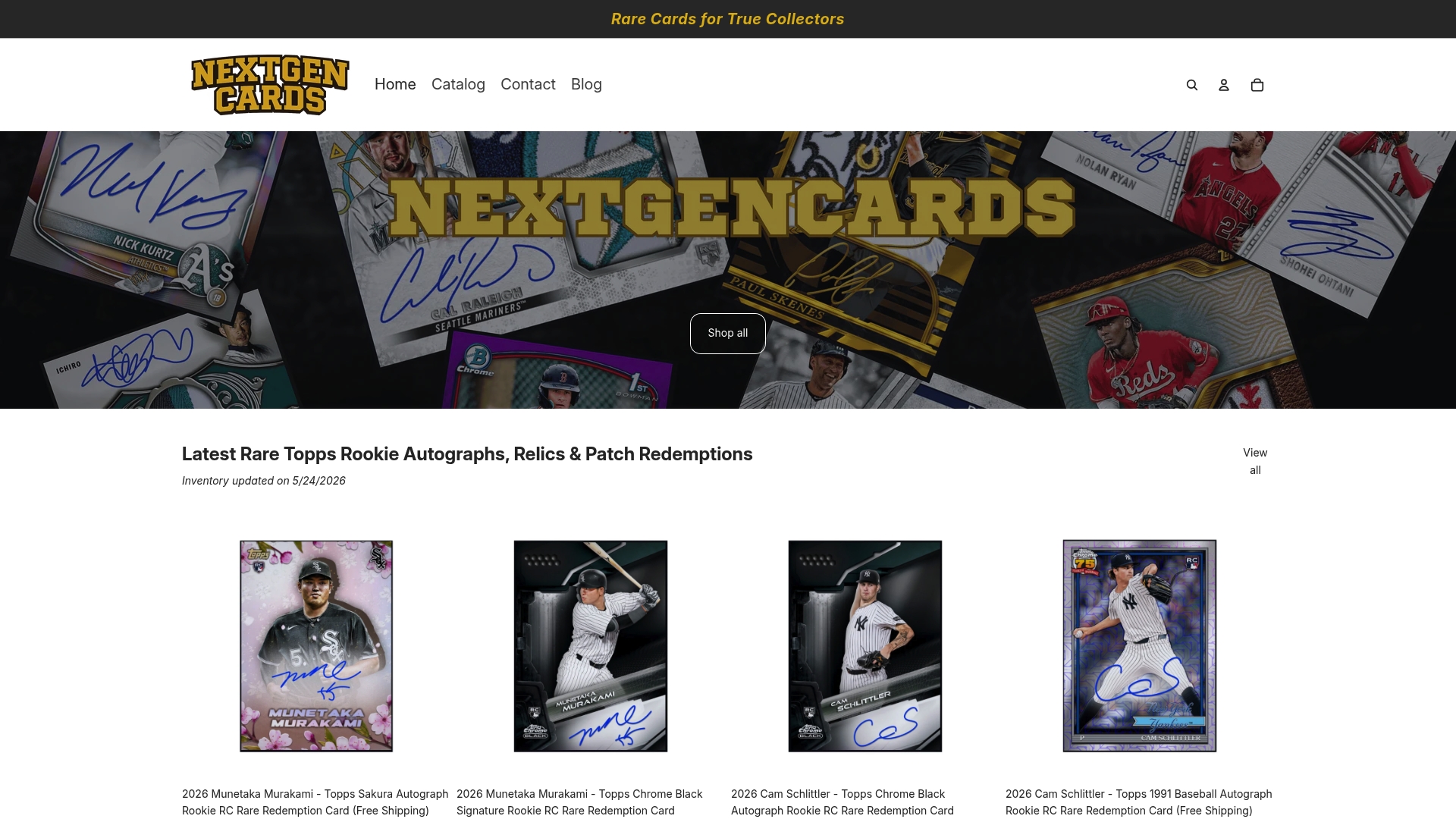
The rookie autographs and relics collection at Nextgencards features cards backed by professional certification, with detailed listing information so you can verify authenticity before you buy. Free shipping is available on select items. Whether you are building a focused collection or adding a single standout piece, Nextgencards offers the kind of curated, verified inventory that serious collectors rely on. Browse the full selection at Nextgencards and find your next authenticated addition with confidence.
FAQ
What is autograph authentication in simple terms?
Autograph authentication is the professional process of confirming a signature is genuine using expert analysis of ink, signature style, and provenance. Services like PSA/DNA, Beckett, and JSA are the most recognized providers.
How do I verify a PSA/DNA autograph certificate?
Check the unique serial number on the holographic label against PSA/DNA’s online database. PSA/DNA moved to permanent digital COAs in 2026, making online verification the primary method.
Can I authenticate an autograph at home?
You can perform a preliminary check using magnification, UV light, and exemplar comparison, but home tests cannot replace professional review for high-value items.
What is the difference between a COA and an LOA?
A COA is a certificate confirming authenticity, while an LOA is a detailed written opinion letter explaining the authenticator’s findings. LOAs are typically used for higher-value or disputed items.
Why does provenance matter for autograph authentication?
Provenance provides documented evidence of an item’s history, such as signing photos, event tickets, and receipts, which strengthens the authentication case and protects resale value.
0 comments