

Trading card collectors are people who acquire, organize, and preserve cards for enjoyment, display, or long-term value, and the hobby now spans everything from wax-pack nostalgia to graded investment slabs. This guide covers the practical side: which tracking tools actually earn a spot on your phone, how hobby boxes differ from retail, when grading with services like PSA or BGS pays off, and where to find a trusted seller like Nextgencards for the rare pull you can’t find on the shelf.
TL;DR:
- Collectors should scan new cards immediately upon arrival to ensure market prices are current before making buying, selling, or grading decisions.
- Tracking tools like scanner apps and portfolio managers are essential for accurately knowing a card’s value and tracking ownership history for insurance and sale purposes.
- Major market signals such as rookie performance, retirement news, record sales, and population reports significantly influence card values and should be monitored weekly.
- Focus on card types aligned with your goals, such as graded rookie cards for investment or rookies and parallels for display, rather than buying blindly.
- When sourcing high-value cards, buy from reputable sellers with verified authenticity, confirm recent sold prices to avoid overpaying, and document your purchase for future protection.
Table of Contents
- What Makes Someone a Trading Card Collector?
- Which Tools Help You Track and Manage a Collection?
- What News and Market Signals Should Collectors Watch?
- What Types of Cards Should You Collect?
- Hobby Boxes vs. Retail Boxes: Which Should You Buy?
- How Should You Store and Protect Card Value?
- How Do You Value and Sell a Card the Right Way?
- Where Do Trading Card Collectors Connect and Trade?
- What Nextgencards Offers Serious Collectors
- How Do You Choose a Trustworthy Card Seller?
- What Should You Do After Buying a Rare or High-Value Card?
- Collecting for the Love of It, Not Just the Ledger
- Ready to Add a Rare Card to Your Collection?
- Sources
- FAQ
What Makes Someone a Trading Card Collector?
A trading card is a small printed card carrying a player image and stats, and collecting them has grown from a childhood pastime into a documented market with pricing history, grading standards, and dedicated marketplaces. What separates a casual buyer from a serious collector isn’t spending. It’s process: tracking what you own, knowing what it’s worth, and protecting it once you have it.
That process starts with tools. Before you buy another pack or bid on another auction, you need a system for knowing what’s already in your binder and what it’s worth today, not what you paid for it three years ago.
Which Tools Help You Track and Manage a Collection?
Collection-tracking apps generally fall into three categories, and most collectors end up using a combination of them rather than picking just one.
Scanner apps use your phone’s camera to identify a card instantly, matching it against a database of set, player, and parallel information. Portfolio managers go further, layering in ownership records, purchase price, and current market value so you can see gains and losses across your whole collection. Public binders are shareable digital displays that let other collectors browse your inventory, which matters if you trade or sell directly.
The feature checklist worth paying attention to:
- Scanning accuracy across different card conditions, lighting, and sleeve glare
- Live price feeds pulled from actual sold listings, not just asking prices
- Grading ROI calculators that estimate whether a $25 grading fee is worth it on a specific card
- Wantlists that alert you when a card you’re hunting shows up for sale
- Insurance-ready export reports for documenting collection value
CardTrove builds its workflow around exactly this sequence: scan a card, pull live market comps, decide whether to submit it for grading, and export the whole thing for insurance purposes if needed. TCGfolio takes a similar approach but leans harder into instant identification and live market feeds, which makes it useful at a card show when you need a price check in seconds, not minutes.
The practical workflow looks like this: scan the card, confirm identification against the set and parallel, check the current market comp, then decide whether it’s a keeper, a grading candidate, or a sale. Skipping the price-check step is how collectors end up holding commons for years thinking they’re valuable, or worse, selling a real hit for pennies because they didn’t know what they had.
Free tools tend to cover basic identification and rough pricing. Paid tiers usually unlock deeper price history, multi-game support if you collect across sports and TCGs, and export features that matter once your collection is large enough to insure.
Pro Tip: Scan new cards the day they arrive, not weeks later. Prices move fast after a rookie breakout or a retirement announcement, and a delayed scan means you’re pricing against stale data.
Good organization habits compound over time, and a structured cataloging system makes every other step in this guide easier, from spotting a card’s value to prepping it for sale.
What News and Market Signals Should Collectors Watch?
Card values move on events, not on vibes, and the collectors who track the right signals consistently make better buy and sell decisions than those who react to headlines after the fact.
A handful of triggers move prices more than anything else:
- Rookie season performance — a strong first year can double or triple a rookie card’s value within months
- Retirement announcements — final-season cards and career-tribute parallels often spike right after
- Major auction results — a record sale on a comparable card resets the market floor for that player’s whole catalog
- Grading population reports — when a grading service reveals how few copies exist at a top grade, scarcity becomes measurable
Specialist outlets like Sports Collectors Daily cover these events as they happen, including major sales and exclusive product announcements that ripple through pricing within days. Combine that news layer with sold-comp data from your tracking app and you get a fuller picture than either source gives alone.
The harder skill is telling short-lived hype from durable demand. A single viral moment, a highlight-reel catch, or a hot streak can spike a card’s price for a week and then it settles right back down. Durable demand shows up differently: it holds across multiple sales over months, survives a cold streak, and often correlates with career milestones rather than single games. If a price jump isn’t backed by a grading population change or a genuine career shift, treat it as noise.
A simple alerting strategy works better than obsessive checking. Set wantlist alerts on the players and sets you actually care about, follow one or two specialist news sources instead of a dozen, and check sold comps weekly rather than daily. Overmonitoring leads to emotional decisions. A steady weekly check leads to better ones.
What Types of Cards Should You Collect?
Every collection starts with a decision about focus, and the main card categories give you the vocabulary to make that choice deliberately instead of by accident.
- Base cards are the standard set issue, the backbone of any product and usually the least expensive way to build a complete set.
- Rookie cards capture a player’s first licensed card year, and they carry outsized value if that player breaks out.
- Autographs are signed on-card or via sticker, with on-card signatures generally commanding a premium.
- Relics and patches include a swatch of game-worn material, often jersey or bat fragments, embedded in the card.
- Parallels are color or numbering variants of a base design, ranging from common to extremely scarce.
- Redemption cards are physical placeholders collectors exchange for a card still being produced, often reserved for the rarest autograph combinations.
- Graded slabs are cards encapsulated and scored by a third-party service, turning subjective condition into a market-recognized number.
Matching card types to your goals keeps you from buying randomly. A collector chasing display value might focus on colorful parallels and iconic rookies framed for a wall. Someone building for long-term value tends to prioritize graded rookies and scarce autographs with documented population counts. A team or player completionist chases base sets and variations regardless of market price.
Before your next purchase, run through a short checklist: does this card fit a set or player focus you already have, is the price close to recent sold comps, and does the card type match why you’re collecting in the first place, enjoyment, display, or investment. A breakdown of rare card types is worth reviewing before you commit to a redemption or high-end autograph purchase, since those categories carry the steepest price tags and the most variables.
Hobby Boxes vs. Retail Boxes: Which Should You Buy?
The difference between hobby and retail product comes down to guarantees, and understanding it before you buy saves both money and disappointment.
Hobby boxes cost more but typically guarantee at least one autograph or relic hit per box, along with exclusive parallels not found in retail versions. Retail boxes, the kind sold at big-box stores, are cheaper, contain more packs on average, but carry no guaranteed hit. You might pull nothing beyond base cards and a few inserts.
A few practical differences to weigh:
- Hobby boxes tend to be more expensive, often costing significantly more than retail boxes, with guaranteed hits built into the price.
- Retail boxes and blaster boxes are generally more affordable and widely available without a hobby shop account.
- Mega boxes split the difference: retail distribution, slightly better odds, still no guarantee.
- Hobby-exclusive parallels and autograph checklists never appear in retail versions of the same product.
Serious collectors chasing a specific hit, an autograph, a rare parallel, generally lean toward hobby boxes because the guaranteed-hit structure makes the math work even when the box price is high. Casual collectors who just want the fun of ripping packs without a big spend do better with retail or blaster products, where the entertainment value doesn’t hinge on pulling something rare.
Sourcing matters as much as the product choice. Buy from an established hobby shop, a licensed distributor, or a specialty seller with a verifiable track record. Skip resealed boxes sold at a discount online, especially on marketplaces where “factory sealed” claims are unverifiable. Scalped and resealed product is one of the most common ways new collectors lose money before they’ve pulled a single card.
Budget-conscious collectors can still play the odds smartly. A $20 blaster box is a reasonable weekend hobby expense with essentially no downside risk. A $300 hobby box is a bigger bet, one that makes more sense once you understand the checklist, the odds, and what a realistic guaranteed hit is worth on the secondary market.
How Should You Store and Protect Card Value?
Condition drives value more than almost any other factor besides player performance, and most damage happens from bad handling habits, not bad luck.
The essential supply list is short: penny sleeves for immediate protection, semi-rigid or magnetic one-touch cases for anything valuable, and top-loaders for transport and short-term display. Cardboard boxes with dividers work fine for bulk storage, but anything you consider a keeper deserves individual protection.
Environment matters more than most new collectors realize. Keep humidity moderate and stable, avoid direct sunlight, which fades ink and causes discoloration within months, and store boxes away from temperature swings like attics, garages, or car trunks. Handle cards by the edges only, and never lick a finger to flip through a stack, a bad habit that transfers oil and moisture straight onto the surface.
Grading is where preservation and value intersect directly. A card in genuinely sharp condition, clean corners, centered image, no surface wear, is worth submitting to a service like PSA or BGS, since a high numeric grade can multiply raw value several times over. A card with visible wear rarely benefits enough to justify the grading fee and turnaround time.
Common mistakes worth avoiding:
- Storing cards loose in a drawer where edges bend and surfaces scratch against each other
- Using cheap sleeves that trap moisture instead of blocking it
- Grading a card with obvious flaws, wasting the submission fee on a low grade
- Skipping a proper storage setup entirely until after a card is already damaged
Pro Tip: Photograph high-value cards under consistent lighting before storing them. If a card is ever lost, stolen, or damaged, that photo becomes your documentation for an insurance claim or resale listing.
How Do You Value and Sell a Card the Right Way?
Pricing a card correctly starts with sold comps, not asking prices, and the gap between those two numbers is where most first-time sellers lose money.
Search recently completed sales for the exact same card, same set, same parallel, same grade if applicable, and use the median of those results as your starting point. Asking prices on marketplaces are aspirational; sold prices are reality. A market floor forms when enough recent sales cluster in a tight range, and that floor is your realistic baseline, not the highest listing you can find.
Grading changes the math significantly. A raw card with strong corners, centering, and surface quality can be worth grading if the price gap between a raw sale and a graded sale covers the fee and wait time. Submit low-value or visibly flawed cards and you’re just paying to confirm what you already knew. Grading turnaround varies by service tier, so timing a submission around a player’s hot streak or an upcoming season rarely works unless you pay for expedited service.
Choosing where to sell depends on the card’s value and how fast you need the money:
- Marketplaces work well for mid-value cards where you want direct control over pricing and buyer communication.
- Auction houses suit high-value or rare cards where competitive bidding can push the price above a fixed listing.
- Consignment shifts the selling work to a specialist in exchange for a commission, useful for six-figure or five-figure pieces you don’t want to manage yourself.
- Private sale through community connections avoids marketplace fees entirely but requires trust on both sides.
Factor in seller fees before setting your price, since marketplace and auction commissions can run from single digits to well over 10% depending on the platform and category. Ship anything valuable in a rigid mailer with tracking and, for high-value cards, insurance and signature confirmation. On the fraud-prevention side, never ship before payment clears, screenshot every listing and message before a sale, and be wary of buyers who push for off-platform payment methods that bypass buyer and seller protections.
Where Do Trading Card Collectors Connect and Trade?
Community accelerates everything else in this guide, from spotting a fair price to learning which grading service fits a given card.
- Online communities — forums, Discord servers, and public binders each serve a different purpose. Forums are best for research and long-form advice, Discord servers move fast and suit real-time trading chatter, and public binders through apps like CardTrove let you showcase your collection for trade offers without exposing your full inventory location.
- Local card shops and shows — a local shop often knows the regional market better than any app, and show calendars posted by shops or hobby associations are the easiest way to find weekend events near you.
- Safe trading practices — verify a trading partner’s history or reputation within a community before agreeing to a high-value swap, and always confirm condition with clear photos before finalizing.
Getting the most out of a show visit means doing homework first: know your wantlist, check recent comps on your phone before you negotiate, and bring your own sleeves for anything you pull or trade for on the spot.
What Nextgencards Offers Serious Collectors
Nextgencards focuses on rare and unique sports trading cards rather than general inventory, with curation built around rookie autographs, relics, and rare redemption cards for MLB, NBA, and NFL players.
That focus shows up in a few concrete ways:
- A curated catalog centered on autographs and redemptions rather than mass retail product
- Straightforward navigation built for collectors who know what they’re hunting, not casual browsers
- Free shipping on select items, which matters when you’re already paying a premium for a rare piece
- Educational resources published for collectors, including storage guidance and breakdowns of rare card categories
For a collector’s workflow, that means Nextgencards fits after you’ve done the research: you’ve used a tracking app to confirm a gap in your collection, checked comps to know a fair price, and now you’re looking for a source that specializes in exactly the type of rare card you’re after instead of sorting through generic retail listings.
How Do You Choose a Trustworthy Card Seller?
Reliable sellers share a few traits regardless of size: clear return policies, verifiable authenticity backing, and transparent sourcing for anything marketed as rare or limited.
Before buying from any seller, new or established, check for a physical or documented business presence rather than just a marketplace username, look for clear photos of the actual item rather than stock images on anything above entry-level pricing, and confirm whether autographs or redemptions carry manufacturer authentication. Redemption cards in particular deserve extra scrutiny, since you’re trusting the seller and the manufacturer’s fulfillment process rather than holding the finished card in hand.
Price is a signal too. A rare autograph priced dramatically below every recent sold comp is either a mistake the seller will cancel, or it’s not what it claims to be. Cross-check any high-value listing against your tracking app’s comp data before committing.
Specialty sellers focused on a narrow category, like rookie autographs and redemptions specifically, tend to bring more expertise to authentication and sourcing than broad marketplaces carrying everything from Pokémon to vintage tobacco cards. That narrower focus is worth factoring in when you’re deciding where to spend on a five-figure or four-figure piece versus a common pack purchase.
What Should You Do After Buying a Rare or High-Value Card?
The purchase is only the first step. What you do in the following weeks determines whether that card holds its value for years.
Photograph and log the card immediately, before it even goes into a sleeve, capturing both sides under good lighting for your records. Add it to your tracking app with the purchase price and date so your portfolio value stays accurate from day one. If the card’s raw condition looks grading-worthy, decide on a submission timeline rather than letting it sit in a drawer for a year.
For anything genuinely high-value, consider standalone insurance rather than relying on a homeowner’s or renter’s policy, which often caps collectible coverage far below what a single rare card can be worth. Store the physical card in a proper case immediately, and keep any certificate of authenticity or redemption paperwork in a separate, safe location from the card itself. Finally, register the purchase with your seller if they offer any authenticity registry or documentation service, since that paper trail matters if you ever sell, insure, or need to prove provenance down the road.
Collecting for the Love of It, Not Just the Ledger
The best collectors I’ve studied treat investment potential as a secondary outcome, not the reason they open a pack. Chase the player, the set, the memory, and let value follow rather than lead. Collectors who buy purely for appreciation tend to make worse decisions, holding too long out of greed or selling too early out of panic, because they never had an enjoyment baseline to fall back on.
Documentation and protection aren’t optional extras. They’re the difference between a collection and a pile of cardboard. Treat grading and selling as deliberate moves tied to comps and condition, not emotional reactions to a hot week.
Community involvement is the fastest way to avoid rookie mistakes. Collectors who trade and talk with others catch bad pricing, spot fakes, and learn grading nuance far faster than solo research ever teaches it.
— Richard
Ready to Add a Rare Card to Your Collection?
Once you’ve got your tracking app set up and your storage supplies ready, the next move is finding a card worth all that preparation. This store specializes in curated rookie autographs, relics, and rare redemption cards rather than mixing them into a general retail catalog. The focus ensures each listing receives authentication scrutiny, whether modest or higher-end.
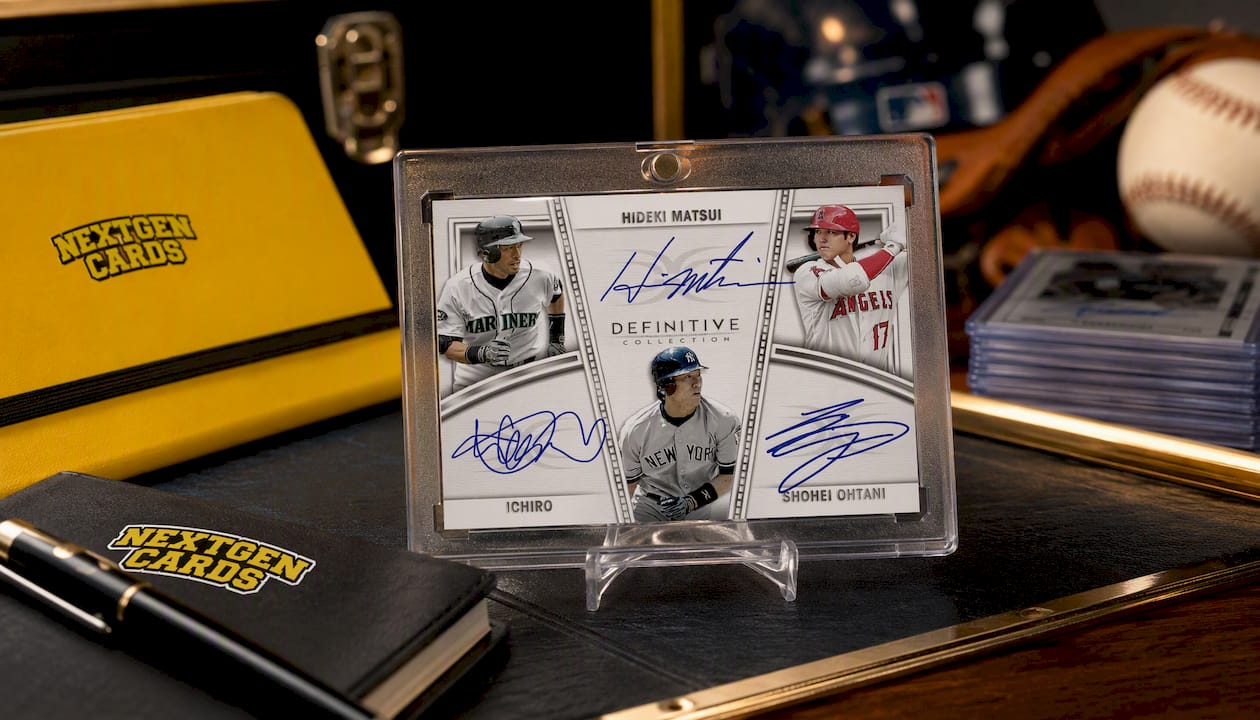
If you’re chasing a genuine centerpiece, the 2023 Shohei Ohtani, Ichiro & Hideki Matsui Topps Definitive Triple Autograph Rare Redemption Card is exactly the kind of scarce, high-signature piece this guide has walked you through evaluating. Check the current listing, compare it against recent comps using your own tracking app, and browse the Collector’s Guide articles on storage and rare card types before you commit. That way, whatever you buy from Nextgencards fits the collection you’re actually building.
Sources
FAQ
How Do I Find Out If My Trading Card Is Worth Money?
Check recently sold listings for the exact same card, set, and condition using a tracking app like CardTrove or TCGfolio, and compare against grading population reports if the card is a candidate for submission.
What Is the Best Way to Sell Trading Cards?
Match the channel to the card’s value: marketplaces for mid-value cards, auction houses for rare high-value pieces, and consignment or private sale for anything worth a significant sum where hands-off expertise or trust matters more than reach.
Which Collector Cards Are Worth Money?
Rookie cards from players who later became stars, on-card autographs, scarce numbered parallels, and rare redemption cards, like triple-autograph inserts, tend to carry the most value, especially in high grades from services like PSA or BGS.
What Baseball Card Is Worth $1,000,000?
Ultra-rare vintage cards, most famously certain high-grade Honus Wagner examples, have sold for well over a million dollars at auction, though prices at that tier depend heavily on condition, grade, and provenance rather than the player alone.
Should I Buy a Hobby Box or a Retail Box First?
Start with retail or blaster boxes if you’re new to a set or just want the enjoyment of ripping packs, and move to hobby boxes once you’re chasing a specific guaranteed hit and understand the checklist and odds.
0 comments