

Vetted specialist dealers, consignment marketplaces, and boutique auction houses beat general marketplaces for rare rookie autographs, patch relics, and redemption cards, because authentication and custody matter more than raw traffic. The deciding factor is whether the platform controls grading verification and secure handling before a card ever changes hands. Before buying or consigning, check the seller’s authentication policy and pull recent sold comps for the exact card and grade.
TL;DR:
- Specialized platforms like consignment marketplaces and boutique auction houses prioritize authentication and custody, making them safer for high-value rookie autographs and relics than general marketplaces.
- Buyers should scrutinize each platform’s grading requirements, fee structure, custody process, buyer pool, and provenance documentation before committing to a sale or purchase.
- A tranche-based buying strategy and setting grading and walk-away thresholds beforehand can significantly reduce the risk of overpaying or falling for hype.
- Nextgencards offers curated inventory and direct purchase options for rare rookie autographs, with transparent shipping and authentication processes tailored for serious collectors.
- Mobile responsiveness and category-focused searches improve the buying experience, especially for high-value, detail-driven cards like redemption autographs and patch relics.
Table of Contents
- What Are the Best Alternatives to StockX for Sports Cards?
- How Do You Choose the Right Marketplace or Dealer?
- Buying and Selling Tactics That Actually Reduce Risk
- Why Nextgencards Is a Recommended Choice for Serious Collectors
- Comparing the Buying Experience Across Channels
- What Range of Cards and Categories Do These Alternatives Carry?
- How Do Buyer and Seller Protections Compare?
- What Payment Methods and Financing Options Are Available?
- Is Customer Service Actually Reliable Across These Platforms?
- Are Return and Refund Policies Fair for High-Value Cards?
- What Actually Matters When You Choose a Marketplace
- Find Rare Rookie Autographs and Relics Direct From Nextgencards
- Sources
- FAQ
What Are the Best Alternatives to StockX for Sports Cards?
StockX built its reputation on sneakers and streetwear, and its authentication process reflects that. Rare rookie autographs, patch relics, and physical redemption cards need a different kind of scrutiny, one built around third-party grading (PSA, BGS, SGC), provenance documentation, and custody chains designed for cardboard, not shoeboxes. That gap is exactly why serious collectors look at StockX competitors built specifically for the hobby.
Five categories fill that role, each suited to a different price tier and risk tolerance.
- Consignment marketplaces hold the card in escrow, verify it, and release funds only after authentication clears. This model fits cards in the $500 to $2,000 range well, where the seller wants buyer confidence without a full auction commitment. The trade-off is a commission that eats into net proceeds, typically layered on top of shipping and insurance costs.
- Boutique auction houses run competitive bidding for headline lots, and provenance drives price more than a fixed listing ever could. Goldin is a recognizable example of this model, where buyer premiums and multi-week timelines are standard for lots north of $2,000, and auction energy can push a card above what a fixed-price comp would suggest.
- Specialist dealer e-commerce sites like Nextgencards curate inventory around rookie autographs, relics, and redemption cards specifically. Buyers get immediate purchase options instead of waiting on an auction clock, and the authentication claims are tied directly to the seller rather than a third-party escrow layer.
- Local card shops and shows let you physically inspect a card before money changes hands, and cash deals close fast. The buyer pool is shallower than an online marketplace, so a six-figure rookie patch auto might not find its ideal buyer in a regional shop.
- Private dealer networks handle one-of-one cards and ultra-rare redemptions that need discreet placement. Fees get negotiated directly, and the deal often never appears on a public sold-comps list.
Matching the card to the right category is the first real decision a collector makes, and it shapes every fee and timeline choice that follows.
How Do You Choose the Right Marketplace or Dealer?
Run any prospective channel through five checks before committing a rare card to it, whether you’re buying or consigning.
- Authentication and grading policy. Confirm who performs the authentication, whether the platform requires PSA, BGS, or SGC grading before listing, and what the appeal process looks like if a grade gets disputed. A platform with no clear third-party grading requirement is a red flag for anything above a few hundred dollars.
- Fee math. Add up listing fees, commissions, and buyer premiums, then back-calculate what a seller actually nets. Fee structures materially change seller proceeds, and a 15% marketplace cut looks very different once shipping and insurance get factored in.
- Custody and shipping control. Know who holds the slab between sale and delivery, what insurance minimums apply, and whether signature or registered mail is available for high-value pieces. This detail is often buried in a shipping policy page, not the listing itself.
- Liquidity and buyer pool. A platform packed with general collectibles buyers won’t necessarily have the deep-pocketed rookie-auto collectors a $5,000 redemption card needs. Ask whether the channel has a track record moving cards in your specific category.
- Provenance and documentation. Original pack photos, serial numbers, and a clean chain of custody reduce risk for both sides. Escrow and third-party authentication justify the fees on premium listings precisely because they remove this guesswork.
Run every candidate marketplace through these five checks in the same order, and the weak options tend to eliminate themselves quickly.
Buying and Selling Tactics That Actually Reduce Risk
Speculating on a rookie autograph or a redemption card carries real uncertainty, since the player’s on-field performance and the card’s condition both move the price. A tranche-based buying approach handles that uncertainty better than betting the full budget on one purchase.
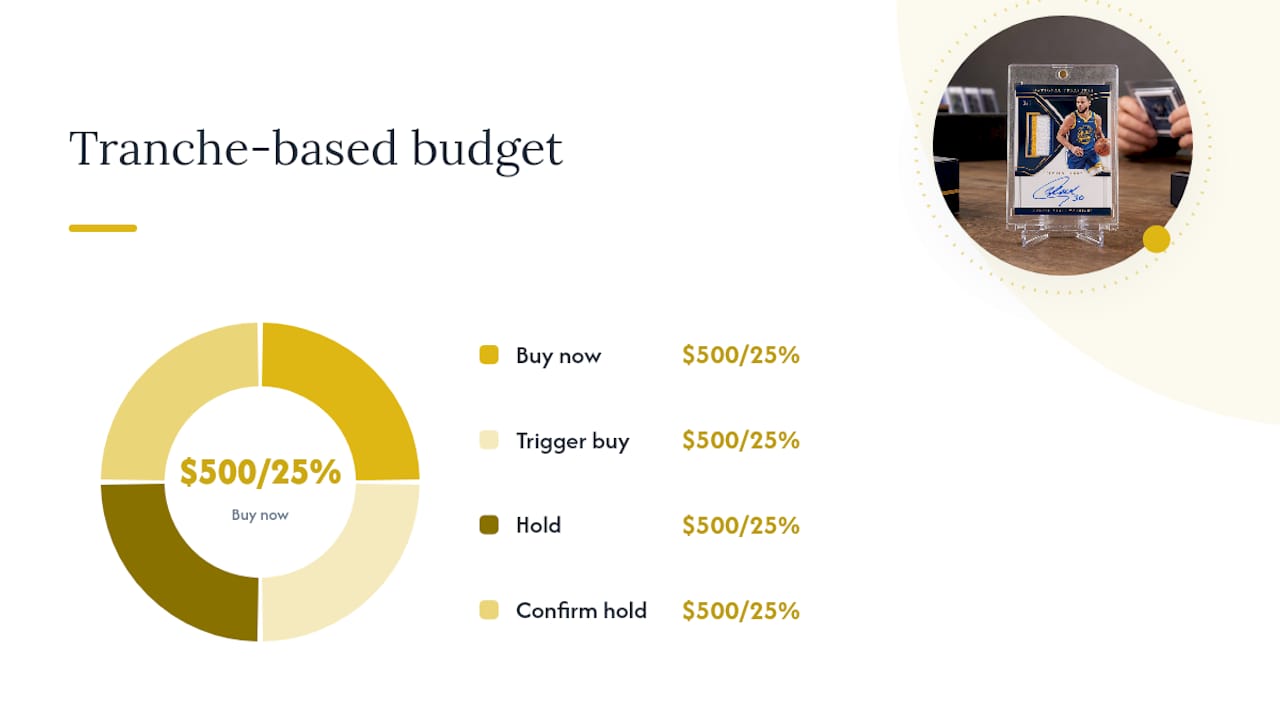
Split a $2,000 rookie-card budget into four $500 tranches. Buy the first tranche now. Set a trigger for the second (a strong month of playing time, a call-up, a milestone game). Hold the third and fourth for confirmation that the player’s trajectory matches the hype. Laddered buying tied to specific triggers reduces exposure compared to a single lump-sum purchase on draft-day hype alone.
Grading thresholds deserve the same discipline. A PSA 10 commands the strongest liquidity and the highest resale ceiling, but PSA 9 often delivers better risk-adjusted value when the price gap between grades is wide and your goal is holding rather than flipping. Set your acceptable grade before you bid, not after.
- Pull sold listings, not asking prices, and weight the most recent 90 days heaviest.
- Discard outlier sales tied to a single hype event (a walk-off home run, a viral highlight) unless the trend holds afterward.
- Price your own listing off the median of the last five genuine comps, not the highest one you can find.
- Use clear, well-lit photos of the autograph, patch, and any serial numbering, since vague photos suppress bids.
- Match your listing format to card tier: a fixed Buy It Now for cards under $1,000, an auction or reserve format for anything provenance-driven above that.
Shipping matches value tier too. A plain white envelope works under $20. A bubble mailer with tracking covers most cards up to $500. Higher-value cards need signature confirmation and insurance matched to their value, and the most valuable pieces require registered mail with full declared value.
Pro Tip: Set your grading threshold and your walk-away price before you start bidding on a redemption card. Auction adrenaline is the single biggest reason collectors overpay for cards they’d have passed on in a calmer moment.
Why Nextgencards Is a Recommended Choice for Serious Collectors
Nextgencards was built specifically around the category this article covers: rare rookie autographs, patch relics, and physical redemption cards, not general collectibles. That specialization runs against every checklist item above. The curated inventory means every listing gets evaluated for the specific criteria rookie-auto collectors care about, not lumped in with bulk lots.
and inform how that inventory gets evaluated day to day.
Free shipping on select items removes one variable from the custody equation, and exclusive rookie autograph offerings from players like Shohei Ohtani and Aaron Judge give collectors direct access to cards that rarely surface on general marketplaces at all. For a buyer weighing authentication claims, curated selection, and direct purchase against a slower consignment cycle, that combination checks most of the boxes serious collectors prioritize.
Comparing the Buying Experience Across Channels
The gap between a clunky listing page and a clean one matters more with rare cards than with everyday collectibles, because a five-figure redemption card deserves photos and details that don’t leave room for guessing. General marketplaces built for high-volume categories often bury card-specific details (autograph placement, redemption expiration dates, patch color) under generic templates meant for sneakers or electronics.
Specialist dealer sites tend to do better here because every listing gets built around the same fields collectors actually search for: player, set, parallel, serial number, and grading status. Auction houses lean toward a more traditional catalog format, with detailed lot descriptions and high-resolution photography that supports higher bids on provenance-heavy pieces.
Mobile access varies more than most collectors expect. Consignment marketplaces and specialist e-commerce sites generally run fully responsive mobile sites or dedicated apps built for quick checkout, which matters when a limited redemption drops and inventory moves fast. Boutique auction houses often lag here, since bidding interfaces historically prioritize desktop users tracking multiple lots at once. Local shops and shows have no app to speak of, which is the entire point of walking the floor in person.
If mobile speed and clean listing data are priorities, specialist e-commerce platforms and consignment marketplaces both outperform general resale apps and traditional auction house sites.
What Range of Cards and Categories Do These Alternatives Carry?
Breadth of inventory separates the channels almost as much as authentication does. General marketplaces carry everything from base rookies to high-end patch autos, which means volume but also a lot of noise to filter through. Local shops carry whatever walked in that week, which makes them great for browsing but unreliable for a specific target card.
Specialist dealer sites narrow the field on purpose. Nextgencards focuses on physical rookie autographs, patch relics, multi-player autograph cards, and redemption cards across MLB, NBA, and NFL, which means a search doesn’t get diluted by unrelated categories. That focus matters for redemption cards especially, since a generic marketplace search often buries redemption listings under thousands of unrelated singles.
Auction houses go the opposite direction: fewer total listings, but each one is vetted for a premium audience willing to bid past fixed-price comps. Consignment marketplaces sit in the middle, carrying a wide spread of price points but leaning toward mid-tier and premium cards where escrow fees make sense.
For a collector chasing a specific redemption card, like a Bowman Chrome Green Signature rookie auto or a Reverence rookie patch autograph, a category-focused specialist site narrows the search dramatically compared to scrolling a general marketplace’s entire sports category.
How Do Buyer and Seller Protections Compare?
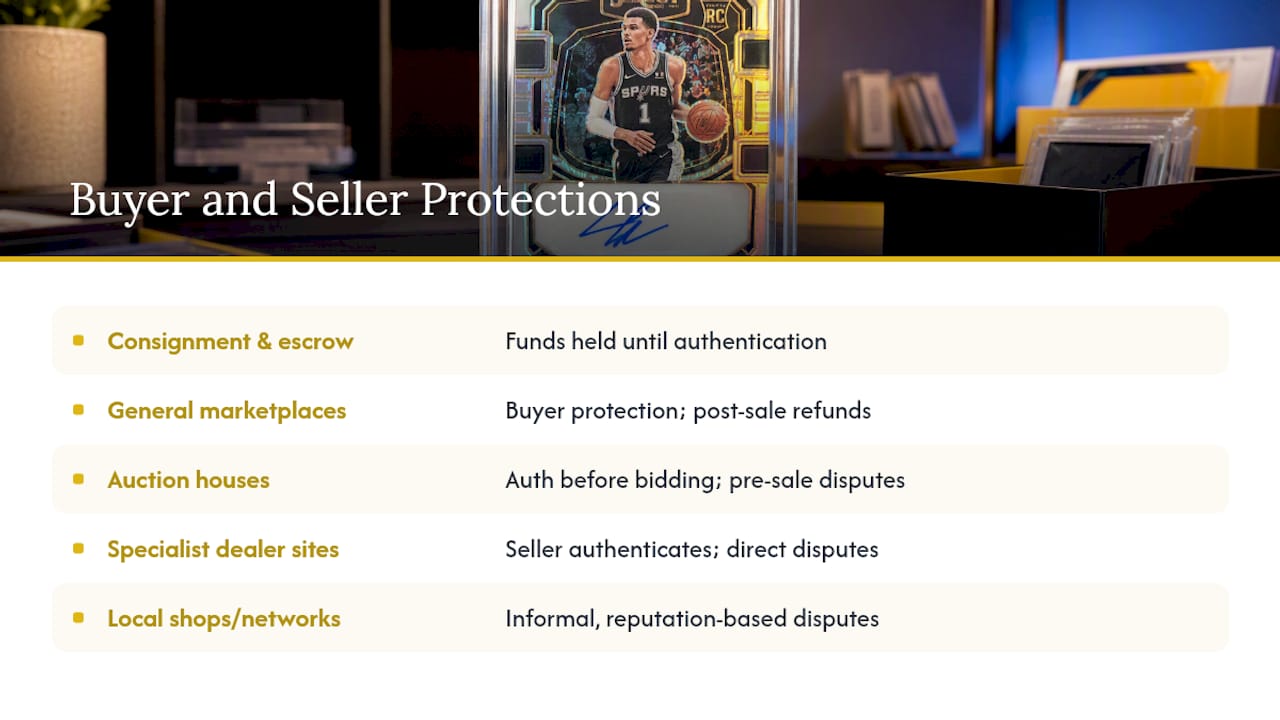
Dispute resolution is where a marketplace’s real value shows up, usually after something has already gone wrong. Consignment and escrow-based platforms hold funds until authentication clears, which protects both sides if a card arrives damaged or the grade doesn’t match the listing. That structure is exactly why escrow-style marketplaces justify their fees on higher-value transactions.
General marketplaces rely more heavily on buyer-protection programs and after-the-fact refunds, which work fine for a low-cost base card but get complicated fast on a five-figure rookie patch auto once a dispute needs manual review. Auction houses typically build authentication into the consignment process itself, checking a card before it ever goes to bid, which shifts most disputes to the pre-sale stage rather than after payment.
Specialist dealer sites that sell direct, including Nextgencards, put the authentication responsibility on the seller upfront. That means the dispute conversation is a direct one, not a multi-party claims process routed through a third-party protection team. For collectors who value a straightforward point of contact over a formal arbitration system, that directness is worth factoring into the decision.
Local shops and private networks handle disputes informally, often through relationship and reputation rather than a written policy. That works well with a shop you’ve bought from for years. It works poorly with a stranger at a card show you’ll likely never see again.
What Payment Methods and Financing Options Are Available?
Standard credit and debit processing covers most transactions across every channel type, but the differences show up once card values climb. Auction houses commonly require wire transfers or certified funds for winning bids above a certain threshold, since credit card processors cap transaction sizes and charge fees that eat into a five-figure sale.
Consignment marketplaces typically support standard card payments plus PayPal or similar processors, with the escrow layer holding funds until authentication clears regardless of how the buyer paid. Specialist e-commerce sites, including Nextgencards, generally support standard checkout methods, which keeps the buying process simple for a rookie autograph or redemption card purchase without requiring a wire transfer for a mid-tier item.
Financing and installment options have become more common industry-wide, letting collectors spread a premium card purchase across several payments instead of paying the full amount upfront. That matters for a $1,500 to $3,000 rookie patch auto that would otherwise sit outside an impulse budget. Not every channel offers this, so checking for installment support before falling for a specific listing saves a collector from discovering the limitation at checkout.
Local shops and shows remain mostly cash-and-card, with financing rarely available outside of an ongoing relationship with a specific dealer.
Is Customer Service Actually Reliable Across These Platforms?
Response time separates a good marketplace from a frustrating one the moment something needs clarification, like a mismatched serial number or a shipping delay on a high-value card. General marketplaces built for massive transaction volume often route support through ticketing queues that take days to resolve, which is a real problem when a redemption card has an expiration window.
Specialist dealer sites tend to run smaller support teams handling a narrower catalog, which usually means faster, more specific answers. A support rep who only handles rookie autographs and relics can speak to grading nuance and redemption timelines in a way a general marketplace’s rotating support staff often can’t.
Auction houses generally offer strong pre-sale support, since their business model depends on collectors trusting the lot description before bidding. Post-sale support quality varies more by house.
Local shops win on immediacy. Walking up to a counter beats any chat window. The trade-off is availability. A shop’s hours and location limit when and how you can get help, while an online specialist dealer’s support channel is reachable whenever a question comes up.
Are Return and Refund Policies Fair for High-Value Cards?
Return policies on rare cards work differently than returns on ordinary retail goods, mostly because a card’s condition and grade are the entire value proposition. A policy that lets buyers return a card for any reason within 30 days sounds generous until you realize it also lets a buyer damage a raw card and send it back.
Specialist dealer sites typically structure returns around authentication disputes rather than open-ended buyer’s remorse, meaning a return is honored if the card doesn’t match its listed grade or description, not simply because a buyer changed their mind after a price dip. That structure protects sellers from bad-faith returns while still covering buyers against a genuine misrepresentation.
Consignment marketplaces route most disputes through their escrow and authentication process before a sale finalizes, which reduces the need for post-sale returns altogether. Auction houses generally sell as-is once the hammer falls, with recourse limited to cases of outright misrepresentation in the lot description.
Read the return policy for the specific card category you’re buying, not the platform’s general policy, since redemption cards especially often carry different terms than raw rookie cards due to expiration dates tied to the physical card production.
What Actually Matters When You Choose a Marketplace
Authentication comes first for me, every time, ahead of price and ahead of convenience. A cheaper platform with a weak grading policy costs more in the long run than a slightly pricier one that gets the authentication right the first time.
Buyer pool depth ranks second. I’d consign a headline rookie patch auto to an auction house specifically because that format pulls in collectors willing to chase provenance past a fixed-price comp. But I’d list a mid-tier redemption card directly on a specialist dealer site, where the buyer already knows the category and doesn’t need convincing.
Fees matter, but they matter last. A collector who chases the lowest commission and ends up on a platform with no real authentication process has made a bad trade, not a smart one.
and shape this ranking, and it’s held up across enough transactions to trust it.
— Richard
Find Rare Rookie Autographs and Relics Direct From Nextgencards
Nextgencards is the direct alternative for collectors who want authenticated rookie autographs and relics without waiting on an auction clock or navigating a consignment queue. Every listing is curated around the exact categories this article covers, rather than buried inside a general marketplace’s sprawling sports section.
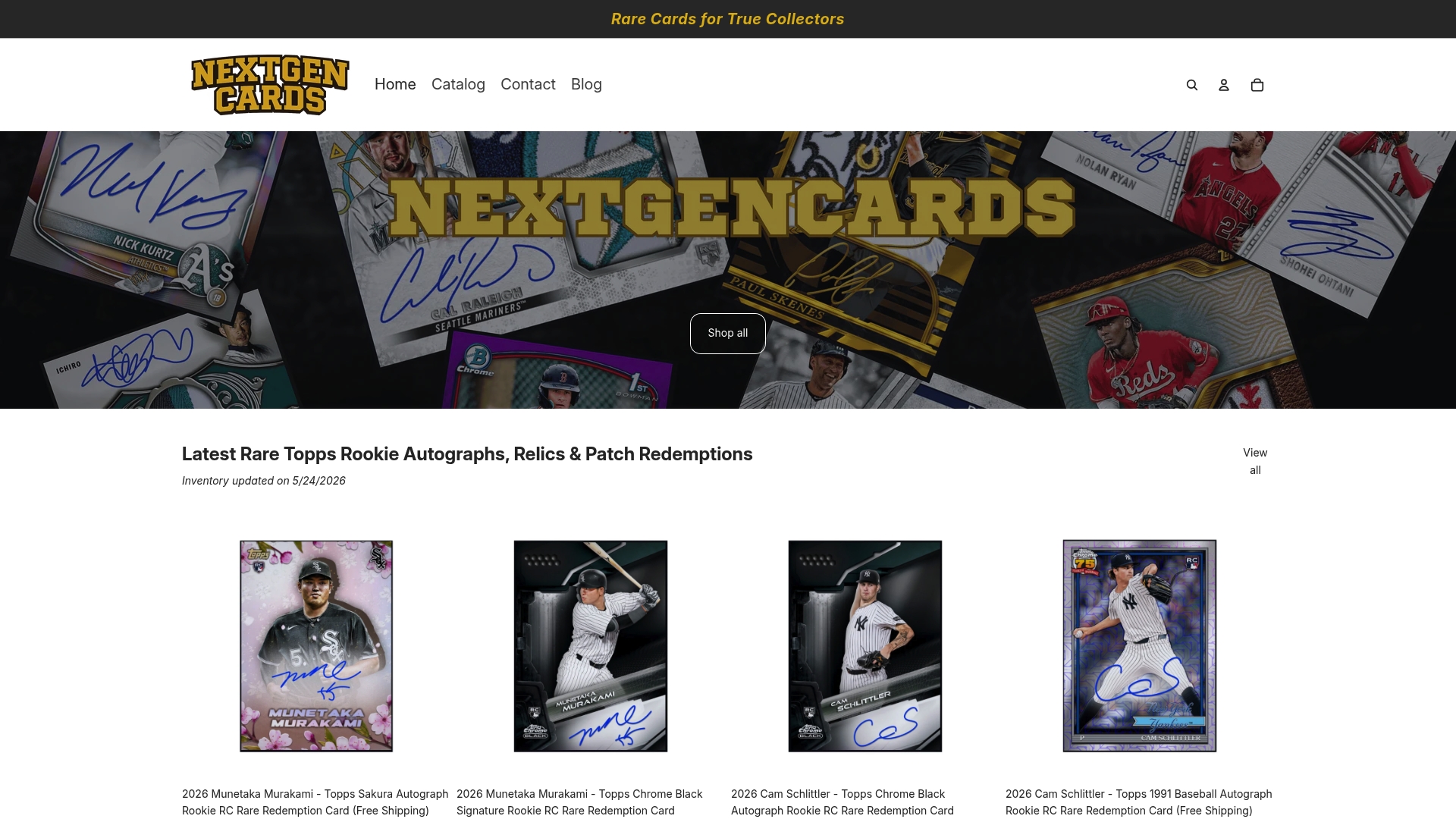
Current standout listings include the 2024 Junior Caminero Bowman Chrome Green Signature rookie redemption card, which ships free, along with the 2024 Elly De La Cruz Reverence Rookie Patch Autograph RPA and the 2026 Jalen Brunson All Star Game Jersey Patch Autograph redemption card. Checkout runs through standard secure processing, select items ship free, and shipping on higher-value cards is handled with tracking and insurance matched to declared value. Browse the full rookie autographs and relics collection to compare current inventory, and check a listing’s authentication notes before adding it to your cart.
Sources
- Sports Card Investing 101 — Complete 2026 Guide | CardMarks | CardMarks
- 2026 Rookie Card Playbook: Risk Controls for Prospects
- How to Buy Sports Cards on eBay — The Ultimate Guide for 2026 | figoca
- Goldin | The Global Go-To For High-End Collectibles
FAQ
What Are the Best StockX Alternatives for Sports Cards?
Consignment marketplaces, boutique auction houses, and specialist dealer e-commerce sites like Nextgencards outperform general resale platforms for rare rookie autographs and relics because they build authentication and custody into the transaction itself.
How Much Does Consignment Cost Compared to Direct Sale?
Consignment commissions vary by platform and card value, but they typically apply on top of shipping and insurance, so back-calculate your net proceeds before committing a card to escrow.
Is PSA 10 Always Worth the Premium Over PSA 9?
Not always. PSA 10 usually commands the highest liquidity, but PSA 9 can deliver better risk-adjusted value when the price gap between grades is wide relative to your holding goal.
Does Nextgencards Offer Free Shipping on Rookie Autograph Cards?
Select items on Nextgencards ship free, including several featured rookie autograph and redemption cards, with shipping details listed on each product page.
What’s the Safest Way to Ship a High-Value Rookie Card?
Match shipping to card value: a bubble mailer with tracking works up to roughly $500, while anything higher needs signature confirmation, insurance, and registered mail for five-figure pieces.
0 comments