

For most sellers, a straightforward marketplace listing gets a fair price with the least hassle, while consignment or escrow-backed services make more sense once a card’s value climbs into the hundreds or thousands. Among the best card selling websites, the right pick depends on volume and value, not brand loyalty.
Here’s the quick breakdown:
- Bulk commons or mid-value singles: low-fee marketplaces
- Time-strapped sellers with large collections: consignment/warehouse services
- Grails, rookie autographs, and rare redemptions: auction consignment, escrow, or a specialist buyer
- Fast cash on common cards: local shows or shops
- Sellers who’d rather buy than list: a direct route like Nextgencards for graded and redemption-grade pieces
Key Takeaways
Selling a card for fair value comes down to matching the channel to the card’s worth and protecting it properly in transit.
| Point | Details |
|---|---|
| Match channel to value | Use low-fee marketplaces for bulk cards and consignment or escrow for grails. |
| Research comps carefully | Filter by exact variant, condition, and a 30 to 60 day sales window before pricing. |
| Calculate net payout | Subtract fees, shipping, and materials before setting your final listing price. |
| Protect cards in transit | Sleeve, top-load, and insure anything valued at $100 or more. |
| Consider a direct buyer | Nextgencards offers a curated route for rare autographs and redemption cards, with free shipping on select listings. |
Table of Contents
- What Are the Main Card Selling Websites and Routes?
- How Do You Research a Card’s Value Before Listing?
- What Makes a Card Listing Convert Faster?
- How Should You Ship and Insure a Valuable Card?
- Should You Grade a Card Before Selling It?
- What Does a Reliable Selling Workflow Look Like?
- Where Nextgencards Fits Into Your Selling Plan
- Sources
What Are the Main Card Selling Websites and Routes?
Five channels cover almost every sale a collector will ever make, and each one balances convenience and margin differently.
- Peer-to-peer marketplaces. Sites built for direct listing, where you photograph, price, and ship the card yourself. Fees usually run as a percentage of the final sale plus a payment processing cut. SportsCardsPro markets itself as a free-to-list option for sellers in the USA and Canada, with no listing or sales fees beyond payment processing, which makes it a strong fit for sellers moving a lot of mid-value inventory who don’t want fees eating into thin margins.
- Consignment and warehouse services. You ship your cards to the platform, and it handles scanning, storage, insurance, listing, and fulfillment. COMC runs this model at scale, scanning every card and listing it across channels so sellers skip individual shipping. The tradeoff is a cut of each sale and a slower payout timeline, but for someone offloading a shoebox of many cards, that tradeoff is worth it.
- Auction houses and high-end consignment. Best reserved for genuine grails, since most auction houses charge higher commissions in exchange for reaching serious bidders who chase specific rookies and redemptions.
- Live and app-based sales. Streaming breaks or short-form video sales move inventory fast, especially for lower-value singles, but they demand real-time engagement and don’t suit sellers who want a passive listing.
- Local shops and card shows. Instant cash, no shipping risk, and no waiting. Expect lower offers than online buyers because the shop needs margin to resell.
Pro Tip: If you’re unsure which channel fits, sort your collection into three piles first: bulk commons, solid mid-value singles, and true grails. Each pile usually points you to a different channel before you list a single card.
How Do You Research a Card’s Value Before Listing?
Pricing a card correctly starts with real comparables, not a gut guess or the highest number you’ve seen on a forum.
Step 1: Pull recent comps. Filter completed sales by the exact variant, parallel, and serial number range, and stick to a tight time window, ideally the last 30 to 60 days. A raw card and a PSA 10 of the same print run can differ by hundreds of dollars, so never mix condition tiers when building your comp set.

Step 2: Adjust for condition and momentum. Subgrades matter more than most sellers expect. Corner wear or a slightly off-center print can knock a raw card down a full price tier. Momentum matters too. A rookie who just had a breakout month or a player involved in trade rumors can spike short-term demand, so check for recent news before locking in a number.
Step 3: Calculate your net payout. Fee shapes vary by channel: some marketplaces charge a percentage of final sale plus payment processing, while consignment services fold storage and fulfillment costs into the payout at sale completion. Subtract shipping and packaging materials from your expected sale price before you decide on a floor.
Quick pricing checklist:
- Confirm the exact card variant and serial number match
- Compare only same-condition sales from the past 30 to 60 days
- Check for player news that could move demand
- Subtract fees, shipping, and materials to find your real net
- Set a reserve price you’re comfortable walking away from
Fee structures differ enough between platforms that the same card can net you noticeably different amounts depending on where you list it, so run the math before you commit to a channel.
What Makes a Card Listing Convert Faster?
Buyers pay more when they trust what they’re looking at, and trust starts with the listing itself.
- Photograph the full card. Front and back scans are the baseline. Marketplace guidance consistently recommends close-ups of corners, edges, and any serial numbers, plus a clear shot of authenticator stickers if the card is graded.
- Write a complete description. Include the year, set name, parallel or insert type, serial number, and honest condition notes. If the card is graded, state the grading company and grade number up front.
- Decide your shipping terms early. Choose whether shipping is free or added at checkout, and spell out your return policy and whether insurance is included, especially on anything over $100.
- Show your fee math. Listing your asking price alongside your expected net payout builds trust with buyers who understand the marketplace and builds credibility for you as a seller.
Clear photos and honest descriptions do more to prevent disputes than any refund policy ever will, since platform data shows front and back scans with damage close-ups are what buyers expect as a baseline, not a bonus.
How Should You Ship and Insure a Valuable Card?
Packaging failures cause more seller headaches than pricing mistakes, and they’re entirely preventable.
- Sleeve every single card, then add a rigid top-loader before placing it in a bubble mailer or rigid envelope.
- For boxed lots, wrap the box in bubble wrap and use a properly sized rigid mailer so nothing shifts in transit.
- Buy insurance and require signature confirmation on anything you’d be upset to lose, generally $100 and up.
- Weigh seller-shipped listings against platform-managed fulfillment. Consignment services like COMC absorb the shipping and insurance work, while escrow and verified-transfer services hold funds until delivery confirms, which protects both sides on a high-value trade.
Pro Tip: A $15 rigid mailer is cheap insurance against a $500 claim dispute. Never ship a graded slab in a standard envelope, no matter how confident you are in the mail carrier.
Should You Grade a Card Before Selling It?
Grading pays off on high-value rookies and autographs, where a jump from raw to a PSA 9 or 10 can multiply the sale price several times over. It rarely pays off on low-value commons, where the grading fee alone can exceed the card’s raw market value.
- Weigh the grading company’s fee and turnaround time against the expected price lift before submitting.
- For sellers who want speed over a grading slab, high-quality scans paired with an escrow-protected or verified-transfer sale can preserve buyer confidence without the wait.
- Third-party autograph authentication is worth the cost specifically on signed cards, where buyers are wary of forgeries.
What Does a Reliable Selling Workflow Look Like?
A repeatable process beats guesswork every time, especially once you’re selling more than a handful of cards a month.
- Identify and document each card: year, set, serial number, and condition.
- Research comps using recent sales at matching condition tiers.
- Choose your channel based on volume and value, whether that’s a marketplace, consignment, or a direct buyer.
- List with standard photos, front, back, and close-ups of anything notable.
- Ship and protect the card with proper materials and insurance where warranted.
- Follow up and reconcile the sale once payment and delivery both confirm.
Nextgencards built its catalog around exactly this discipline, curating rookie autographs, patch and relic cards, and redemption pieces for collectors who already know what they’re looking for, with free shipping on select items.
Timing matters more than most sellers admit. A redemption card tied to a hot rookie season sells for noticeably more in the weeks right after a breakout game than it will six months later, once the moment has passed.
A Collector’s Take on Selling Rare Cards
I’ve spent enough years buying and selling to know that most sellers undervalue patience. The collectors who do best treat a grail card like a small investment decision, not a garage sale item, and that mindset is exactly why a curated catalog like Nextgencards works so well for serious sellers and buyers alike.
Where Nextgencards Fits Into Your Selling Plan
If you’d rather skip the listing grind entirely and go straight to buyers who already know the value of a rare redemption card, Nextgencards gives serious sellers and collectors a curated marketplace instead of a crowded general listing site competing against thousands of unrelated cards.
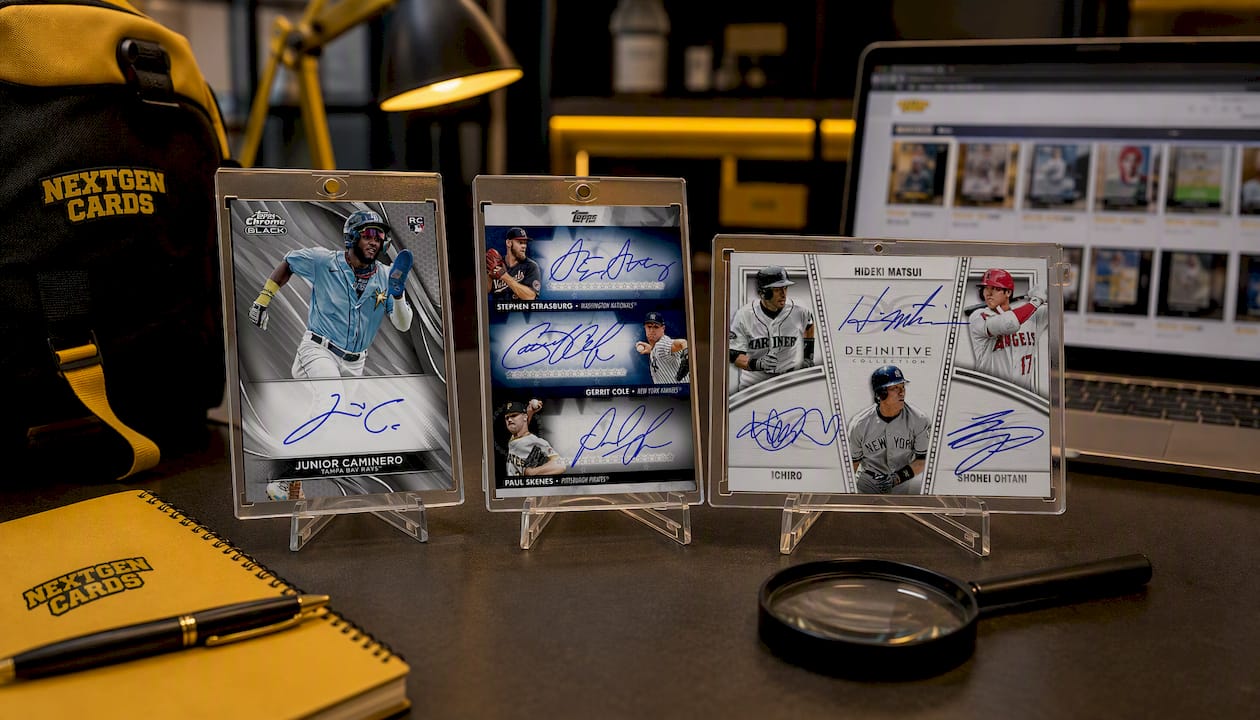
The catalog focuses on exactly the kind of inventory that benefits most from a specialist audience: rookie autographs, patch and relic cards, and rare physical redemptions. Current listings include the 2024 Junior Caminero Topps Chrome Black Signature Rookie RC redemption card, which ships free, the 2024 Skenes, Cole, and Strasburg Topps Baseball Stars triple autograph redemption card, and the 2023 Ohtani, Ichiro, and Matsui Topps Definitive triple autograph redemption card. Every listing centers on authentic memorabilia and limited editions, which is exactly the pool of buyers a rare card needs to sell at its real value. Browse the current catalog at Nextgencards and see whether a direct listing fits your next high-value card.
Sources
- Where | How to Sell Baseball Cards Online — COMC
- Sell sports cards | SportsCardsPro
- Sell Trading Cards — CardGrade
FAQ
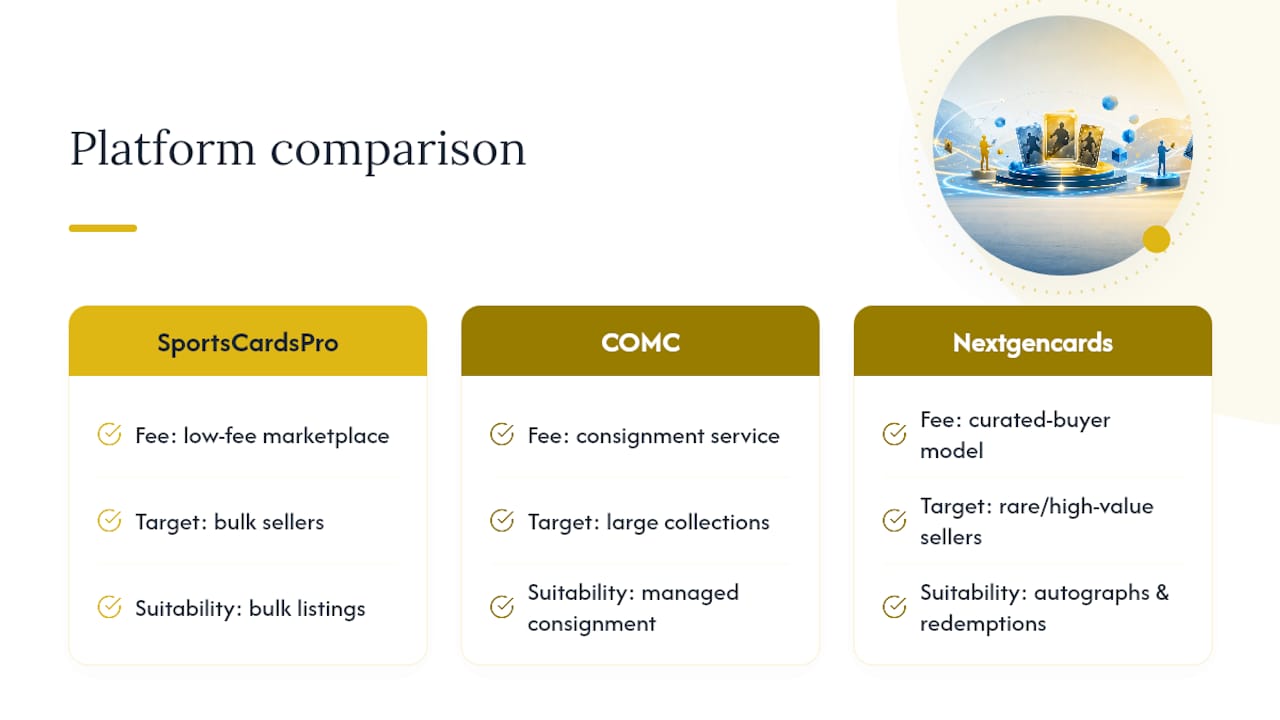
What Is the Best Site to Sell Cards? It depends on your goal: low-fee marketplaces like SportsCardsPro suit bulk sellers, consignment services like COMC suit large collections, and a curated buyer like Nextgencards suits rare autographs and redemption cards.
How Do I Find Out What a Card Is Worth? Pull recent comparable sales filtered by exact variant, serial number, and condition tier within the last 30 to 60 days, then adjust for grading and current player momentum.
What Is the Best App to Sell Trading Cards Fast? Live and app-based sales move common and mid-value cards quickly, though they require real-time engagement rather than a passive listing.
What Baseball Card Is Worth $1,000,000? Ultra-rare vintage cards in top grades, like a T206 Honus Wagner, have sold near or above that mark at auction, but that outcome is exceptional and not typical of modern rookie or redemption cards.
Should I Grade My Card Before Selling It? Grade high-value rookies and autographs where the price lift covers the fee, but skip grading on low-value commons where the fee can exceed the card’s raw worth.
Recommended
- The Best eBay Sports Cards Alternatives for Serious Collectors – Next Gen Cards LLC
- Find Quality Raw Cards Online: A Buyer’s Confidence Guide – Next Gen Cards LLC
- How to Gift Rare Sports Cards Online: 2026 Guide – Next Gen Cards LLC
- Choose Age-Appropriate Trading Cards for Kids: A Parent’s Checklist – Next Gen Cards LLC
0 comments