

The sports trading card industry runs on three distinct company categories, and understanding each one directly affects what you pay, what you hold, and what your collection is worth. Major manufacturers (Panini, Topps/Fanatics, Upper Deck, Leaf, Bowman, Fleer, Donruss, and Futera) control scarcity through print runs, licensing exclusives, and insert design. Grading and authentication firms (PSA, Beckett/BGS, and SGC) validate condition and provenance, turning raw cards into slabbed assets with documented market premiums. Secondary-market platforms (eBay, PWCC, and Goldin Auctions) set realized prices and determine how quickly a card converts to cash. The global sports trading card market is projected to reach $20.48 billion by 2030, driven by licensed limited runs, authenticated autographs and patch cards, and growing marketplace liquidity. Nextgencards curates rare rookie autographs, relics, and redemption cards from the top manufacturers covered below.
- Manufacturers control supply through numbered parallels, hobby-exclusive inserts, and licensing agreements.
- Graders create a verified condition record that the market uses to price premiums above raw card values.
- Marketplaces provide price discovery and liquidity, with venue choice materially affecting realized sale price.
Table of Contents
- Which sports card companies manufacture the cards you collect?
- Why grading and authentication companies matter for card value
- Where the market sets prices: eBay, PWCC, and Goldin Auctions
- How manufacturers, graders, and marketplaces together shape card value
- Industry snapshot: who leads the market right now
- How collectors can use company differences when buying
- Key moments that shaped the modern sports card industry
- Legal and licensing aspects affecting card production
- How company policies shape scarcity and the collector experience
- Regional and international sports card companies worth knowing
- Future trends and challenges for sports card companies
- Key Takeaways
- The market is more structured than most collectors realize
- Rare rookie autographs and relics, curated for serious collectors
- Sources and further reading
Which sports card companies manufacture the cards you collect?
The eight major manufacturers each occupy a distinct position in the market. Knowing their strengths tells you exactly where to look for the card type you want.
Panini America holds 38.2% market share as of early 2026, making it the single largest trading card company in the world. Its licensing agreements with the NFL, NBA, and FIFA give it exclusive access to the most commercially valuable player likenesses in those sports. Prizm, National Treasures, and Mosaic are its flagship lines. Prizm sits at the hobby tier with numbered parallels that drive secondary-market demand; National Treasures sits at the high-end tier with game-worn patches and on-card autographs numbered as low as 1/1. For collectors targeting NBA and NFL rookie autographs, Panini’s product ecosystem is unavoidable.
Topps (now under Fanatics) commands 31.5% market share and is the dominant name in MLB cards. Topps Chrome and Topps Series 1/2 anchor the retail and hobby tiers; Topps Now produces event-driven single cards within 24–48 hours of a notable play. Fanatics’ acquisition of Topps in 2022 and its subsequent exclusive MLB licensing deal reshaped the competitive landscape, consolidating baseball card production under one umbrella. Bowman, a Topps brand, specializes in prospect and rookie cards and is the primary destination for collectors targeting players before they reach the majors.
Upper Deck holds 12.1% market share and maintains exclusive NHL licensing, making it the only major manufacturer for hockey cards. Upper Deck also produces NBA cards under certain agreements and is known for high-end sets like Ultimate Collection and SP Authentic. The company uses digital verification and hybrid card models to strengthen provenance and combat counterfeiting, pairing physical cards with verified digital assets.
Leaf Trading Cards accounts for 4.6% market share and focuses almost entirely on autograph-heavy, limited-run products. Leaf does not hold major league licenses, so its cards feature athletes outside their professional team context, often in college uniforms or generic settings. The company has publicized blockchain-based verification efforts for its autograph products, positioning itself as a technology-forward option for collectors who prioritize signature authenticity over licensed imagery.
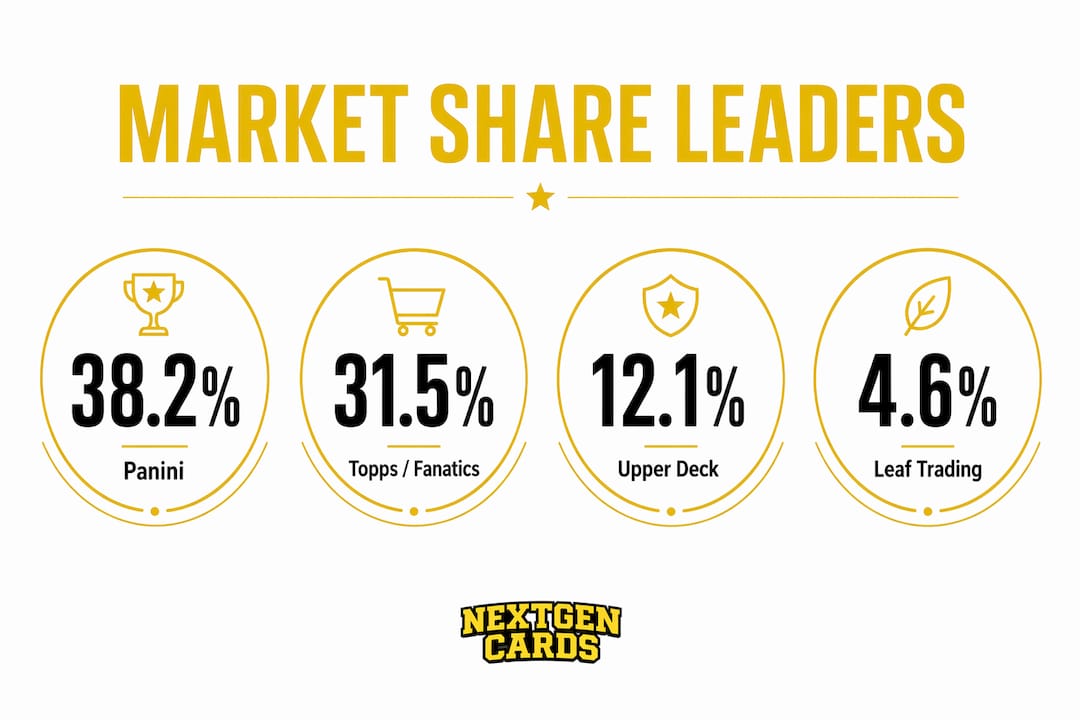
Futera holds 2.3% market share and operates primarily in the soccer and international sports space. Its premium limited-edition sets, particularly in European football, attract a collector base that overlaps only partially with the North American hobby market.
Fleer was one of the original major manufacturers, producing baseball cards from 1923 and NBA cards through the 1980s and 1990s. Fleer’s vintage sets, particularly its 1986–87 basketball set featuring Michael Jordan’s rookie card, remain among the most sought-after cards in the hobby. The brand is now owned by Fanatics, though active production under the Fleer name is limited.
Donruss, also now under Panini/Fanatics, produced iconic baseball sets in the 1980s and 1990s and remains active as a product line within Panini’s portfolio. Donruss Optic is a popular mid-tier hobby product with a strong following for its refractor-style parallels.
Score and O-Pee-Chee round out the commonly identified major firms in industry overviews. Score is a mass-retail football brand under Panini; O-Pee-Chee is a Canadian hockey brand under Topps/Fanatics, known for its vintage-style base sets.
Why grading and authentication companies matter for card value
Third-party grading transforms a raw card into a standardized, market-tradeable asset. PSA, Beckett/BGS, and SGC each bring a distinct reputation and grading philosophy that affects how the market prices their slabs.
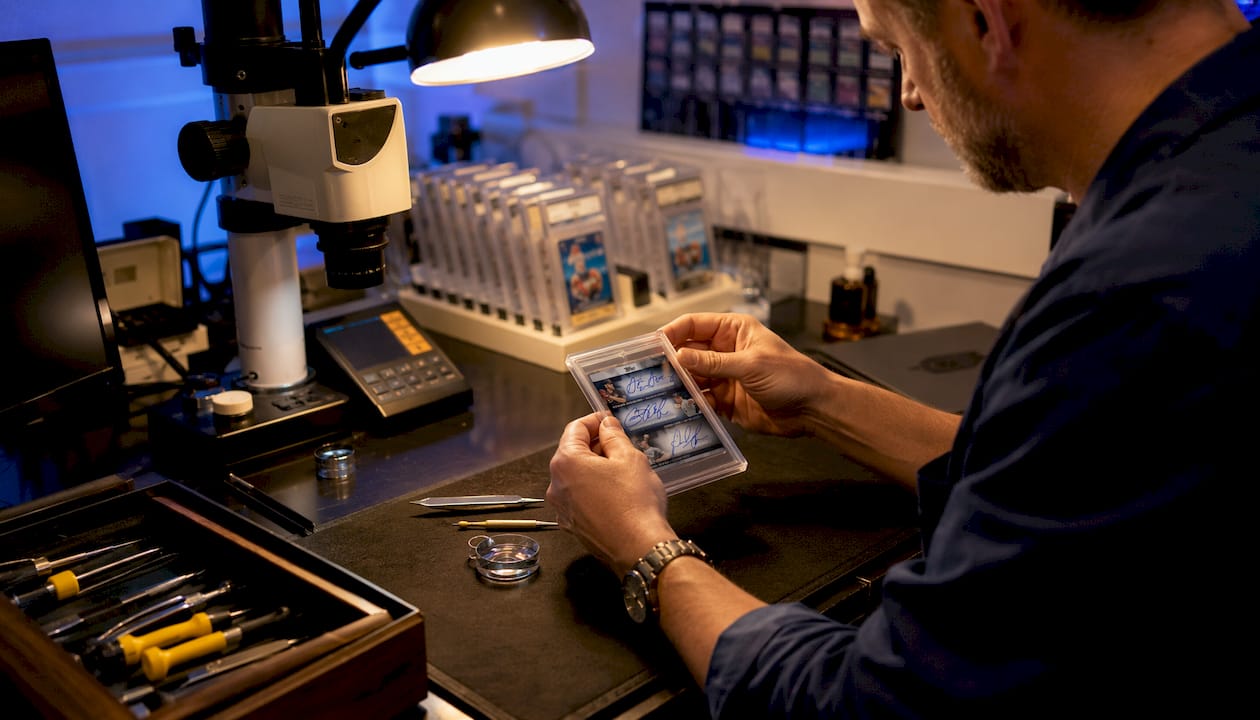
PSA (Professional Sports Authenticator) is the most widely recognized grading service globally. A PSA 10 (Gem Mint) label on a key rookie card can multiply its raw value by a factor of five to ten or more, depending on the card and population. PSA’s online population reports show exactly how many copies of a given card have received each grade, which is the primary tool collectors use to assess true scarcity. A PSA 10 with a low population (under 50 copies graded at that level) commands a meaningful premium over a PSA 10 with thousands of copies at the same grade.
Beckett Grading Services (BGS) uses a subgrade system, scoring centering, corners, edges, and surface separately before issuing a composite grade. A BGS 9.5 (Gem Mint) with four 10 subgrades, known as a “Black Label,” is considered the pinnacle of condition and commands the highest premiums in the Beckett ecosystem. BGS is particularly popular among basketball and football collectors and is the preferred grader for many Panini products.
SGC (Sportscard Guaranty) has built a strong reputation for vintage cards, particularly pre-1980 baseball. Its half-point grading scale and clean slab design have attracted a loyal following. SGC turnaround times have historically been faster than PSA or BGS during high-volume periods, making it a practical choice when timing matters.
- Population reports are the most important free research tool available to collectors. Check them before submitting or buying any slabbed card.
- Grading costs vary by service tier and turnaround speed; economy submissions can take months, while express tiers cost significantly more.
- Crossover risk exists when a card graded by one service is submitted to another; the new grade is not guaranteed to match.
- Authentication vs. grading are separate services. Authentication confirms a signature is genuine; grading assesses physical condition. Some cards need both.
For authenticating rare sports memorabilia, the choice of grader should match both the card type and the target buyer’s preferences.
Pro Tip: Submit cards for grading immediately after a major product release, before the population builds. A PSA 10 with a population of 12 is worth materially more than the same card with a population of 1,200 six months later.
Where the market sets prices: eBay, PWCC, and Goldin Auctions
Secondary-market platforms are where manufacturer supply and grader-certified condition meet buyer demand to produce realized prices. The three dominant venues serve different card types and seller goals.
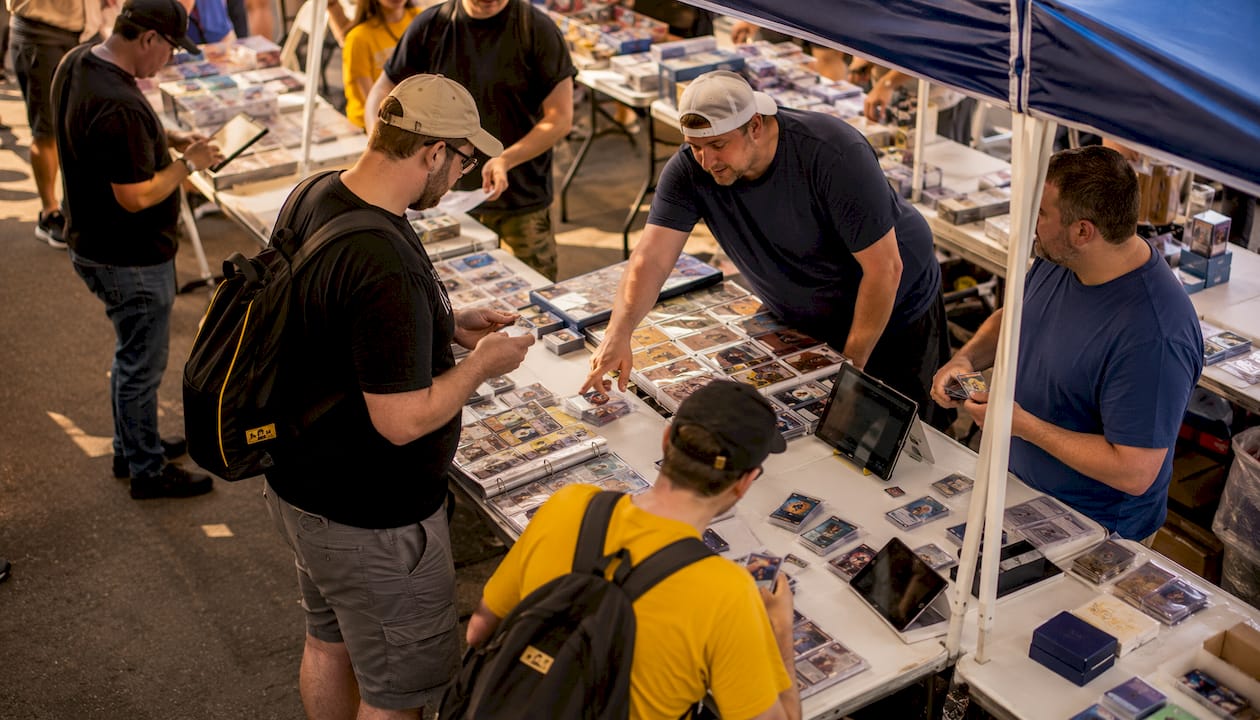
eBay is the largest peer-to-peer marketplace for sports cards, handling everything from $5 retail inserts to six-figure slabs. Its Buy It Now and auction formats give sellers flexibility, and its sold-listing data is the most widely used free pricing reference in the hobby. For cards in the $20–$2,000 range, eBay typically offers the fastest liquidity and the broadest buyer pool. Seller fees run approximately 13.25% for most card sales, which collectors should factor into any pricing calculation.
PWCC Marketplace operates as a specialist consignment and auction platform focused on investment-grade cards. PWCC’s weekly and premier auctions attract institutional buyers and serious collectors, and its consignment model means sellers hand off logistics, photography, and listing management. For high-grade slabs and vintage cards above $1,000, PWCC’s buyer pool often produces higher realized prices than eBay’s general marketplace.
Goldin Auctions handles the top end of the market, regularly selling cards for six and seven figures. Goldin’s auction events are timed, marketed, and attended by the most serious collectors and investors in the hobby. The platform’s consignment fees are higher than eBay’s, but the audience it reaches for a PSA 10 LeBron James rookie or a T206 Honus Wagner is simply not accessible through general marketplaces.
For collectors researching where to buy specific rookie cards, understanding the venue’s buyer profile is as important as understanding the card’s grade.
How manufacturers, graders, and marketplaces together shape card value
Card value is not a single company’s decision. It emerges from the interaction of supply controls, condition certification, and marketplace liquidity.
Manufacturers set the ceiling on potential value through print run decisions. A card numbered to 10 copies has a structural scarcity that a card numbered to 999 does not. Numbered parallels, 1/1 superfractors, and redemption cards are deliberate supply-control mechanisms. Redemption cards, in particular, create a secondary layer of scarcity: the physical card has not yet been produced, and the redemption itself becomes a tradeable asset. Understanding what makes sports card inserts valuable starts with understanding these print-run mechanics.
Graders then certify condition within that supply. A PSA 10 from a print run of 10 is the rarest possible combination of scarcity and condition. The population report makes that scarcity visible and verifiable, which is what allows the market to price it with confidence.
Marketplaces accelerate price discovery through pack-opening content, influencer pulls, and timed auction events. A card pulled live on a YouTube break can see its eBay sold comps spike within hours. That price signal then feeds back into what collectors are willing to pay at the next product release.
Pro Tip: When a new product drops, watch eBay sold listings for the first 48 hours. Early sales often reflect hype premiums. Prices typically normalize within two to four weeks as more packs are opened and population builds.
The key levers companies pull that materially affect card value:
- Print run size (numbered parallels, 1/1 superfractors, hobby-exclusive inserts)
- Licensing exclusivity (which leagues and players a manufacturer can feature)
- Insert design (on-card vs. sticker autographs, patch window size and quality)
- Grading population (how many copies receive top grades)
- Marketplace timing (auction scheduling, consignment marketing, influencer partnerships)
- Redemption card policies (fulfillment timelines and substitution practices)
Industry snapshot: who leads the market right now
The sports collectibles industry is concentrated at the top. Panini and Topps/Fanatics together account for a dominant portion of the market, with Upper Deck considerably behind.
| Manufacturer | Estimated Market Share | Core Strengths | Primary Licenses |
|---|---|---|---|
| Panini | Largest market share | NBA/NFL rookie autos, Prizm parallels, National Treasures | NFL, NBA, FIFA |
| Topps/Fanatics | Major market share | MLB base sets, Chrome refractors, Bowman prospects | MLB, MLS |
| Upper Deck | Notable market share | NHL exclusives, high-end sets, digital verification | NHL |
| Leaf | Smaller market share | Autograph-heavy limited runs, blockchain verification | No major league license |
| Futera | Minor market share | Premium soccer/international sets | European football |
Source: Verified Market Research, early 2026 estimates. Figures are market-share estimates, not audited revenue percentages. Remaining share is distributed across smaller regional and niche manufacturers.
The global sports trading card market is projected to reach $20.48 billion by 2030. That growth projection reflects both the continued strength of established manufacturers and the entry of NIL-driven newcomers targeting collegiate athletes. The concentration of licensing rights in two companies means that any collector focused on NFL, NBA, or MLB cards is, by default, primarily buying Panini or Topps/Fanatics products.
How collectors can use company differences when buying
Knowing who makes what, and who grades and sells it, turns market knowledge into buying decisions.
-
Define your collecting goal first. Casual set collectors should focus on retail products (Topps Series 1, Panini Donruss) where price points are accessible and sets are completable. Long-term investors should focus on hobby-exclusive numbered parallels and high-end limited runs with documented print runs.
-
Match the manufacturer to the sport. For MLB, Topps and Bowman are the primary sources for licensed rookie cards. For NBA and NFL, Panini controls the licensed rookie auto market. For NHL, Upper Deck is the only major licensed option.
-
Check population reports before buying a slab. A PSA 10 with 2,000 copies graded at that level is a different asset than a PSA 10 with 15. Both are graded the same; only one is genuinely scarce.
-
Verify autograph type. On-card autographs (signed directly on the card surface) command a premium over sticker autographs (signed on a sticker applied to the card). Panini’s National Treasures and Upper Deck’s SP Authentic use on-card signatures; many mass-market products use stickers.
-
Understand redemption card risk. Redemption cards are placeholders for autographs not yet signed. They carry fulfillment risk: the athlete may never sign, or the company may substitute a different card. Factor that uncertainty into any purchase price.
-
Choose your venue by card value. Cards under $500 typically move fastest on eBay. Cards above $1,000 deserve consideration for PWCC or Goldin, where the buyer pool is deeper for investment-grade material.
-
Time purchases around product cycles. Prices for new releases typically peak in the first two weeks after a product drops, then soften as more packs are opened. Buying four to six weeks after release often means lower prices on the same cards.
Pro Tip: When negotiating consignment with PWCC or Goldin, ask about their current auction calendar. A card consigned to a premier auction event with heavy marketing will typically outperform the same card dropped into a weekly auction with minimal promotion.
For collectors looking to identify undervalued sports cards, applying these company-specific filters is the fastest way to find cards the broader market has mispriced.
Key moments that shaped the modern sports card industry
The industry’s current structure is the product of roughly a century of printing, licensing, and authentication decisions.
1887–1950s: The tobacco and candy era. Cards were premiums inserted into cigarette packs and candy boxes. The T206 set (1909–1911) produced the Honus Wagner card that remains the most famous card in existence. Topps entered the market in 1951 and secured an exclusive MLB player contract that defined the industry for decades.
1980s: The mass-manufacture boom. Fleer and Donruss broke Topps’s monopoly in 1981, and the resulting competition drove massive print runs. The 1986–87 Fleer basketball set, featuring Michael Jordan’s rookie card, became the most valuable modern-era set in the hobby. Overproduction in the late 1980s and early 1990s created a glut that suppressed values for most base cards from that era.
1990s: The insert revolution. Upper Deck introduced the first premium insert cards, including game-worn jersey pieces and on-card autographs. This fundamentally changed how collectors valued cards: a base card became a lottery ticket for a 1/1 patch auto.
2000s: Grading becomes a market-maker. PSA and Beckett established population reports as the standard reference for condition-based pricing. The slab replaced the raw card as the preferred format for investment-grade material.
2020–present: The pandemic boom, NIL expansion, and digital-physical hybrids. Card values surged during 2020–2021 as collectors returned to the hobby and new buyers entered. NIL legislation opened collegiate athlete licensing to companies like ONIT Athlete, which produced officially licensed trading cards for over 4,500 college athletes in 2023–24 and 8,055 collegiate athletes in 2024–25. Digital-physical hybrid cards, where a physical card is paired with a verified digital asset, emerged as an anti-counterfeiting standard.
Legal and licensing aspects affecting card production
Licensing is the legal foundation of the sports card industry. A manufacturer cannot legally produce cards featuring a professional athlete’s name, likeness, or team affiliation without a license from both the league and the players’ association. For MLB cards, that means separate agreements with Major League Baseball and the MLB Players Association. For NBA cards, agreements with the NBA and the National Basketball Players Association are required.
Fanatics’ acquisition of Topps’s sports card business and its subsequent exclusive MLB licensing deal, effective in 2026, represents the most significant licensing shift in decades. It effectively ended Panini’s ability to produce MLB-licensed cards and concentrated baseball card production under Fanatics. Similar exclusive arrangements in the NFL and NBA give Panini a structural advantage in those sports that smaller manufacturers cannot replicate without comparable licensing investments.
NIL legislation, effective since 2021, created a new licensing category: college athletes can now license their name, image, and likeness to card companies without losing eligibility. This opened a market that previously did not exist for officially licensed collegiate products, and companies like ONIT Athlete moved quickly to secure athlete partnerships at scale.
Counterfeit cards remain a legal and commercial concern. Manufacturers use holographic foil, serial numbering, and digital verification to protect authenticity. Upper Deck’s digital verification initiatives and Leaf’s blockchain-based authentication are direct responses to the counterfeiting risk that accompanies high card values.
How company policies shape scarcity and the collector experience
Manufacturer decisions about print runs, hobby vs. retail distribution, and redemption card policies have direct consequences for collectors.
Print run transparency varies significantly across manufacturers. Topps and Panini serial-number most of their premium parallels, making scarcity verifiable. Some products, however, include unnumbered short prints whose actual print runs are not disclosed, creating uncertainty that the market prices inconsistently.
Hobby vs. retail distribution determines where collectors can access premium content. Hobby boxes, sold through licensed hobby shops, typically contain guaranteed autographs and relics. Retail boxes, sold through mass-market retailers, contain base cards and lower-tier inserts. Collectors targeting rookie autographs should focus on hobby products; retail boxes are better suited for set completion and casual collecting.
Redemption card fulfillment is one of the most contentious policy areas in the hobby. When a manufacturer cannot secure an autograph before a product ships, it inserts a redemption card as a placeholder. Fulfillment timelines can stretch from months to years, and some redemptions are never fulfilled, resulting in a substitute card that may not match the original’s value. Panini and Topps both have published redemption policies, but collector experience with fulfillment speed varies widely.
Digital product experiments, including NFT-linked cards and app-based pack openings, have produced mixed results. Some collectors embrace the digital layer as an additional provenance record; others prefer the purely physical format. The NFT sports card model remains a developing area where company policies are still evolving.
Regional and international sports card companies worth knowing
The North American market dominates global trading card production, but several international and regional manufacturers influence specific collector segments.
Futera (UK/Ireland) produces premium soccer cards for the European and global football market. Its limited-edition sets for clubs like Manchester United and players like Cristiano Ronaldo attract collectors who prioritize soccer over North American sports. Futera’s print runs are typically very small, which supports secondary-market values.
Panini’s European operations produce sticker albums and card sets for UEFA Champions League and domestic football leagues. These products are structurally different from North American hobby boxes but follow similar insert logic: base stickers are common, while autograph and relic versions are scarce.
ONIT Athlete is the most prominent NIL-driven entrant in the U.S. market. Its ability to sign collegiate athletes at scale, producing cards for 8,055 collegiate athletes in 2024–25, demonstrates how NIL legislation has created a new competitive tier between the major licensed manufacturers and the traditional unlicensed autograph-only companies.
O-Pee-Chee (Canada) produces hockey cards under the Topps/Fanatics umbrella with a distinctly Canadian collector base. Its vintage-style designs and bilingual text make it a niche product within the broader NHL card market.
The international market’s influence on North American card values is most visible in soccer. A Panini Prizm World Cup Lionel Messi autograph numbered to 10 trades in a global market where European, South American, and Asian collectors compete with North American buyers, producing realized prices that reflect worldwide demand rather than just domestic interest.
Future trends and challenges for sports card companies
The sports collectibles industry faces both structural opportunities and real operational challenges heading into the second half of the decade.
Digital-physical authentication is becoming a baseline expectation for investment-grade cards. Upper Deck’s hybrid verification model and Leaf’s blockchain efforts point toward a future where every high-value card carries a verifiable digital provenance record. Collectors who understand digital sports card technology will be better positioned to evaluate these products as they become standard.
NIL expansion will continue to bring new manufacturers into the collegiate space. As more athletes gain NIL deals before reaching professional leagues, the window for prospecting rookies before their first professional card expands. Companies that can sign athletes early and produce cards during their college careers will compete directly with Bowman’s traditional prospect market.
Market consolidation around Fanatics is the most significant structural trend. Fanatics now controls Topps, holds exclusive MLB licensing, and has invested in grading and authentication infrastructure. If Fanatics secures additional exclusive licenses, the competitive landscape for licensed cards could narrow further.
Overproduction risk remains a concern. The hobby’s most damaging historical episode, the junk wax era of the late 1980s and early 1990s, was caused by manufacturers printing too many cards in response to demand. Modern numbered parallels and hobby-exclusive distribution reduce this risk, but mass-retail products still carry the potential for oversupply.
Collector demographics are shifting. The pandemic brought a younger, more diverse collector base into the hobby, many of whom entered through social media and pack-break content. Retaining those collectors as the market normalizes from its 2020–2021 peak requires manufacturers to maintain product quality and price accessibility at the retail tier.
The investment case for sports cards depends on manufacturers, graders, and marketplaces continuing to function as a coherent ecosystem. Any disruption to licensing, authentication standards, or marketplace liquidity affects the entire value chain.
Key Takeaways
Panini and Topps/Fanatics control nearly 70% of the licensed sports card market, making manufacturer identity the single most important factor in determining a card’s licensing legitimacy, scarcity structure, and long-term collector demand.
| Point | Details |
|---|---|
| Market concentration | Panini (38.2%) and Topps/Fanatics (31.5%) together dominate licensed card production for NFL, NBA, and MLB. |
| Grading drives premiums | PSA, BGS, and SGC population reports are the primary tool for verifying true scarcity within a numbered print run. |
| Venue selection matters | eBay suits cards under $500; PWCC and Goldin reach deeper buyer pools for investment-grade material above $1,000. |
| NIL is reshaping entry points | ONIT Athlete produced cards for 8,055 collegiate athletes in 2024–25, creating a new prospecting tier before the professional leagues. |
| Nextgencards for rare cards | Nextgencards curates rookie autographs, relics, and redemption cards from top manufacturers for serious collectors. |
The market is more structured than most collectors realize
The conventional wisdom in the hobby is that card values are driven by player performance. That is true at the macro level, but it misses the more important point: the structure of the market, who holds the licenses, who grades the slabs, and which platform hosts the auction, shapes value as much as any on-field result.
Panini’s exclusive NFL and NBA licenses mean that a collector who wants a licensed LeBron James or Patrick Mahomes rookie autograph has exactly one manufacturer to buy from. That is not a free market in the traditional sense. It is a licensed monopoly at the product level, and it means Panini’s insert strategies, print run decisions, and redemption policies are not just business choices. They are the rules of the game for anyone collecting in those sports.
The grading ecosystem adds another layer of structure. PSA’s population reports are the closest thing the hobby has to a public ledger of scarcity. A card that grades PSA 10 with a population of 8 is, by definition, one of the eight best-conditioned copies in the known universe of that card. That is a verifiable, documented fact, and the market prices it accordingly.
What this means practically: collectors who understand the manufacturer-grader-marketplace chain are not just better informed. They are operating with a structural advantage over buyers who focus only on the player. The card that looks undervalued on eBay often looks that way because the population report tells a different story than the listing price suggests.
Rare rookie autographs and relics, curated for serious collectors
Nextgencards specializes in exactly the card types this article covers: rookie autographs, patch relics, numbered parallels, and physical redemption cards from the top manufacturers, including Topps and Panini, featuring current and iconic MLB, NBA, and NFL players. The inventory is curated for collectors who already know what they want and need a trusted source to find it.
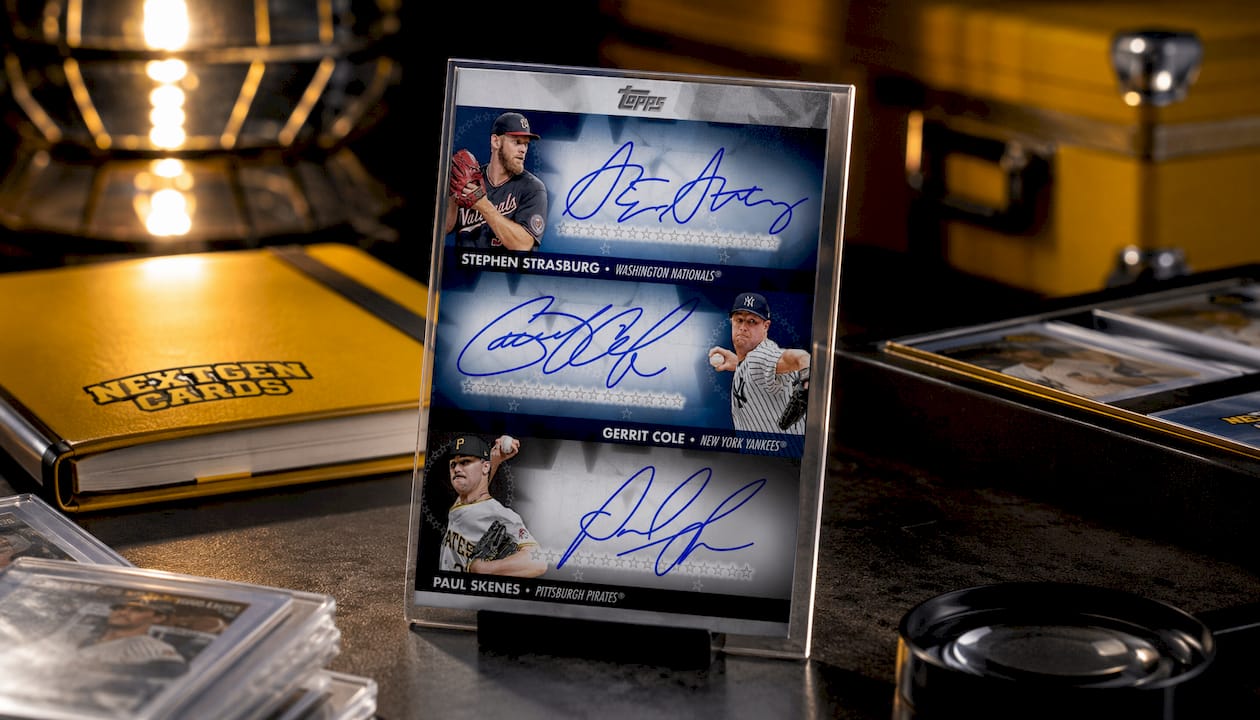
Every card in the Nextgencards catalog is sourced for authenticity, with free shipping available on select items. If you’re building a collection around licensed limited runs or chasing a specific rookie auto, browse the rookie autographs and relics collection to see current inventory. Cards are authentic, descriptions are accurate, and the focus is on the rare and exclusive pieces that serious collectors actually want. This article is general information about the sports card industry; always verify current card values and grading populations through primary sources before making purchasing decisions.
Sources and further reading
The figures and company profiles in this article draw from the following primary sources. Market-share estimates are industry projections and estimates, not audited financial figures. Company founding dates and licensing facts are drawn from official company sites and Wikipedia.
- Kings Research: Top 10 Sports Trading Cards Companies — market size projection ($20.48 billion by 2030) and manufacturer overview; best for market-size context and NIL trend data.
- Verified Market Research: Top Sports Trading Card Manufacturers — 2026 market-share estimates by manufacturer; best for competitive landscape data. Note: figures are estimates, not audited revenue.
- Upper Deck official site — digital verification and hybrid card product information; authoritative for Upper Deck product lines and authentication initiatives.
- Leaf Trading Cards official site — autograph product strategy and blockchain verification details; authoritative for Leaf’s current product positioning.
- ONIT Athlete — NIL collegiate card production figures (8,055 athletes in 2024–25); company claim, not independently audited.
- Sports Collectors Daily: ONIT coverage — independent reporting on ONIT’s 2023–24 collegiate scale (over 4,500 athletes); useful for NIL market context.
- Wikipedia: Category:Trading card companies — founding dates, ownership histories, and licensing timelines for major manufacturers; best for historical and corporate background.
- Nextgencards — curated inventory of rare rookie autographs, relics, and redemption cards; browse for current availability in the card types discussed above.
0 comments