

Sports cards investment benefits are defined by their ability to deliver competitive returns, portfolio diversification, and tax efficiency as tangible alternative assets. The sports card market reached $606.04 million in sales in march 2026, doubling year-over-year from $303.22 million. That growth signals a maturing asset class, not a passing trend. Disciplined collectors and investors who focus on scarcity-driven cards, such as numbered parallels, rookie autographs, and vintage graded specimens, are capturing returns that traditional asset classes rarely match. This guide breaks down every major financial advantage of investing in sports cards and shows you how to position your portfolio for 2026 and beyond.
1. Sports cards investment benefits: competitive financial returns
Sports cards can deliver annualized returns of 8–20% for disciplined investors who build diversified portfolios. That range outpaces the historical average of the S&P 500 in strong years and rivals private equity without the lock-up periods.

The key driver is scarcity. Cards numbered to /99 or fewer command premium prices because supply is fixed at print. Unlike stocks, no company can issue more shares of a 1952 Topps Mickey Mantle.
High-grade vintage cards and rookie autographs from proven stars generate the most consistent appreciation. A PSA 10 card can be worth 4x to 15x the value of the same card in raw, ungraded condition. That multiplier makes professional grading one of the highest-return decisions an investor can make.
Risks exist. Overproduction of base cards, speculative hype around unproven prospects, and illiquidity during market downturns can erode value quickly. Disciplined investing means avoiding mass-produced base cards and focusing on assets with genuine scarcity.
- High-grade vintage cards appreciate steadily across market cycles
- Rookie autographs from breakout players spike sharply in their first season
- Numbered parallels (/99 or less) hold value better than unlimited print runs
- PSA 10 graded cards command the largest premiums at auction
Pro Tip: Set a maximum price you will pay for any card before you research it. Knowing your ceiling prevents emotion from driving overpayment during hot auction periods.
2. What tax advantages make sports card investments attractive?
Long-term capital gains tax rates on collectibles range from 0–20%, compared to ordinary income rates of 30–40% or higher. Holding a card for more than one year before selling is the single most effective tax move an investor can make.
The difference is material. A collector who flips cards within 12 months pays ordinary income rates on every gain. A collector who holds the same cards for 13 months pays capital gains rates instead. On a $10,000 gain, that difference can exceed $2,000 in saved taxes.
Tracking your cost basis is non-negotiable. Cost basis includes the purchase price, grading fees, shipping, and any authentication costs. Accurate records protect you during an audit and help you calculate real net profit on every sale.
- Hold longer than 12 months to qualify for long-term capital gains treatment
- Document every cost including grading fees, shipping, and insurance
- Separate your flipping activity from your long-term collection for cleaner tax reporting
- Consult a tax professional familiar with collectibles before your first major sale
Pro Tip: Track your card flip frequency in a simple spreadsheet. If you are selling more than a few cards per month, the IRS may classify your activity as a business, which changes your tax treatment entirely.
3. How sports cards improve portfolio diversification
Sports cards function as an alternative asset slice within a broader portfolio, reducing correlation to stock and bond market swings. When equity markets drop, demand for iconic collectibles often holds steady because collectors buy with passion, not just profit motive.
A tiered portfolio allocation of 50% blue-chip retired legends, 30% proven veterans, and 20% speculative rookies balances stability with growth potential. The legend tier acts as the anchor. The rookie tier provides upside.
Managing risk across card grades
High-grade PSA 10 cards perform as growth assets in bull markets, while PSA 8 cards provide relative stability during downturns. Owning cards across PSA 8, 9, and 10 grades hedges against market cycles within the same player or set.
Illiquidity is the most underestimated risk in card investing. Unlike stocks, you cannot sell a card in seconds. Setting a target exit price before you buy removes the temptation to hold too long or panic-sell below value.
Pro Tip: Treat your card portfolio like a stock portfolio. Assign each card a target sell price at purchase. When it hits that price, sell without second-guessing.
| Card tier | Risk level | Return profile |
|---|---|---|
| Blue-chip retired legends | Low | Steady, long-term appreciation |
| Proven veteran stars | Medium | Moderate growth with event-driven spikes |
| Speculative rookies | High | High upside, high volatility |
4. What makes sports cards unique tangible assets?
Sports cards are physical, durable objects that collectors can hold, display, and enjoy. That tangibility separates them from stocks, ETFs, and cryptocurrency, which exist only as digital entries. Owning a rookie autograph from Shohei Ohtani or Aaron Judge carries cultural weight that a share of stock simply does not.
The cultural and emotional durability of iconic players sustains long-term demand. Fans who grew up watching a player become lifelong buyers of that player’s cards. That emotional demand creates a floor under prices that pure financial logic alone cannot explain.
Scarcity amplifies the tangible appeal. Limited edition cards, autographs, and relic cards containing game-used memorabilia carry authenticity that mass-produced items cannot replicate. Collectors pay a premium for that authenticity, and that premium tends to grow over time.
- Physical ownership provides a store of value outside the financial system
- Emotional connection to iconic athletes sustains collector demand across decades
- Autographs and relics carry authenticity premiums that increase with player legacy
- Limited editions create fixed supply that drives price appreciation over time
- Dual purpose of enjoyment and financial growth makes holding cards psychologically easier
Learning how autograph cards vary in value helps you identify which signatures carry the strongest premiums before you buy.
5. How to navigate 2026 market trends and avoid common pitfalls
The 2026 market is defined by a “Junk Wax 2.0” problem. Card manufacturers are producing massive volumes of base cards, flooding the market and suppressing prices for common issues. The investors winning in 2026 are those who ignore base cards entirely and focus on scarcity-driven assets.
Cards numbered to /99 or fewer, autographed rookies, and high-grade vintage specimens are the assets that hold and grow value. Scarcity-driven assets numbered to /99 or less carry premium value precisely because overproduction does not affect them. Their supply is locked at the moment of printing.
Pre-grading evaluation saves capital
Submitting a card for grading without evaluating its condition first is one of the most common and costly mistakes collectors make. Grading fees range from moderate to significant depending on the service tier. A card with visible print lines, centering issues, or surface scratches will not achieve a PSA 10 regardless of how much you pay to submit it.
Pre-grading evaluation before submission preserves capital by filtering out cards unlikely to achieve high grades. Use a loupe or magnification tool to inspect corners, edges, and surface before committing to grading fees.
Rookie selection in 2026 benefits from advanced performance metrics. Investors who use statistical models, advanced scouting reports, and historical comparables to identify breakout prospects before the mainstream market catches on capture the largest gains. Knowing how to identify undervalued cards before the market prices them in is the single biggest edge a collector can develop.
- Avoid mass-produced base cards regardless of the player’s popularity
- Focus on numbered parallels, autographs, and vintage graded cards
- Evaluate card condition before grading submission to avoid wasted fees
- Use performance metrics and scouting data for rookie selection
- Set exit prices at purchase and execute them without hesitation
Pro Tip: Favor sets with potential iconic cultural impact when prospecting rookies. If a player underperforms on the field, a culturally significant set creates a “second out” that protects your investment from total loss.
Key takeaways
Sports cards deliver competitive returns, tax efficiency, and genuine portfolio diversification when investors focus on scarcity, grading, and disciplined allocation.
| Point | Details |
|---|---|
| Return potential | Disciplined portfolios can target 8–20% annualized returns with the right card selection. |
| Tax efficiency | Holding cards longer than 12 months qualifies gains for 0–20% capital gains rates instead of 30–40% ordinary income rates. |
| Portfolio allocation | A 50/30/20 split across legends, veterans, and rookies balances stability with growth. |
| Scarcity drives value | Cards numbered to /99 or fewer hold premium value and resist overproduction pressure. |
| Grading multiplies returns | PSA 10 cards can be worth 4x to 15x their raw card equivalent, making pre-grading evaluation critical. |
My take on where sports card investing is actually headed
The market data for 2026 is genuinely exciting. Doubling sales volume year-over-year is not a number you see in mature, stagnant markets. That growth reflects real capital flowing in from investors who recognize sports cards as a legitimate alternative asset class.
That said, I have watched too many collectors get burned by hype. The Junk Wax 2.0 problem is real, and it is getting worse. Manufacturers are printing more base cards than the market can absorb, and collectors who chase popular players in unlimited print runs are going to be disappointed when resale values stagnate.
The investors I respect most treat their card portfolios exactly like a stock portfolio. They set buy prices, set sell prices, and execute without emotion. They own valuable card inserts and numbered parallels, not stacks of base cards they hope will appreciate.
The emotional dimension of card collecting is real and worth acknowledging. Owning a PSA 10 rookie autograph from a player you watched break records carries genuine personal value. That enjoyment makes it easier to hold through market volatility. But it should never override your exit discipline.
The long-term outlook for scarcity-driven cards is strong. Cultural demand for iconic athletes does not disappear. The investors who will win over the next decade are those who buy the right cards, grade them correctly, hold them long enough to qualify for favorable tax treatment, and sell when the price is right. That formula is not complicated. Executing it consistently is the hard part.
— Richard
Nextgencards: curated cards for serious investors
Nextgencards specializes in the exact card categories that drive the strongest returns: rookie autographs, limited edition relics, and rare redemption cards from athletes like Shohei Ohtani and Aaron Judge.
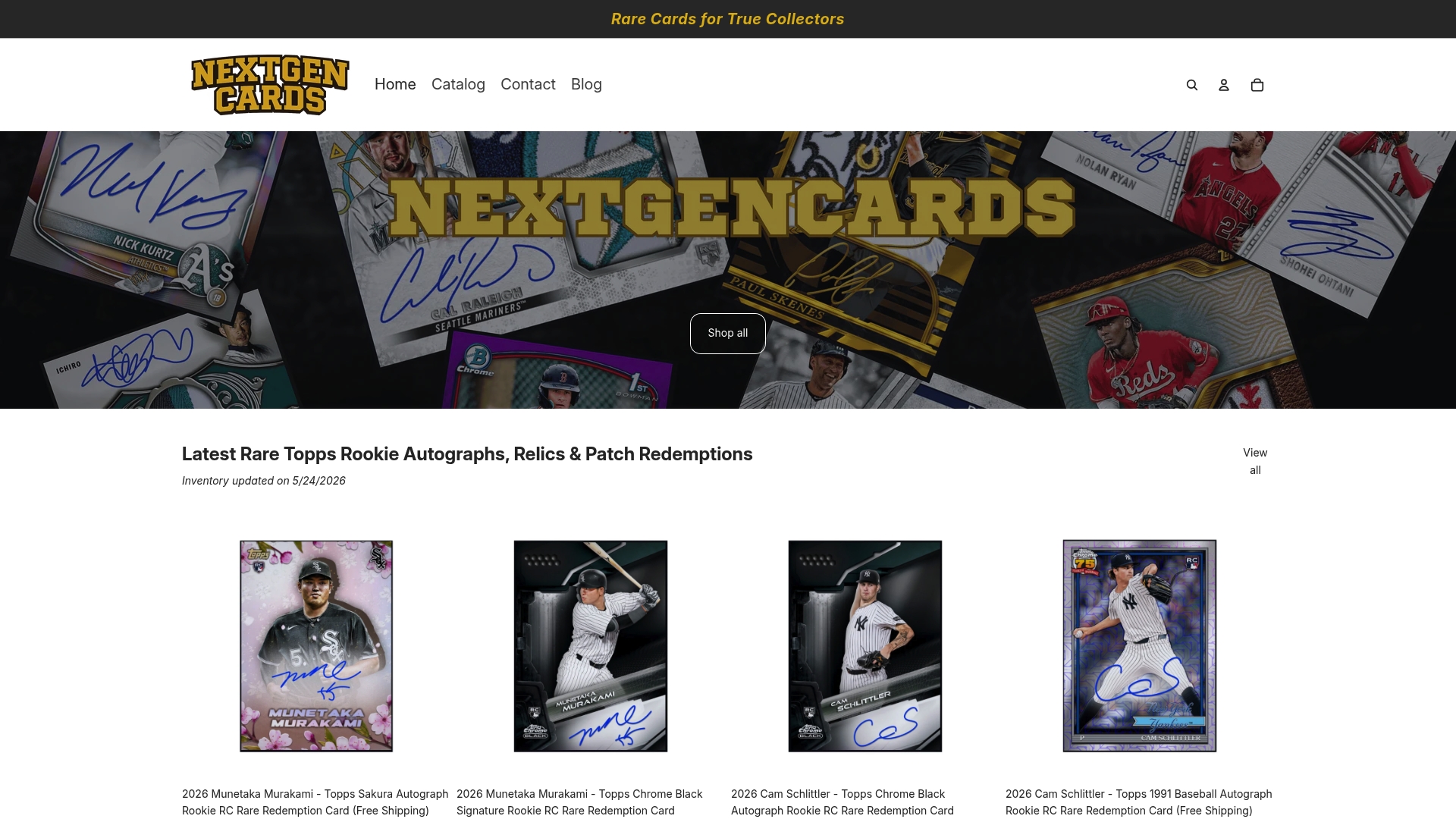
If you are building a scarcity-focused portfolio in 2026, the 2026 Cooper Flagg Topps VIP Autograph Rookie RC is exactly the type of asset that fits a disciplined investment strategy. Nextgencards also carries the 2025 Nick Kurtz Topps Reverence Autograph Rookie RC, a rare autograph card aligned with current market trends. Browse the full rookie autographs and relics collection for authenticated, graded-ready cards with free shipping on select items.
FAQ
What returns can sports card investors realistically expect?
Disciplined investors can target 8–20% annualized returns with diversified portfolios focused on scarcity-driven assets. Returns vary significantly based on card selection, grading, and market timing.
Are sports cards taxed as capital gains?
Long-term capital gains rates of 0–20% apply to cards held longer than 12 months. Cards sold within 12 months are taxed at ordinary income rates, which can reach 30–40% or higher.
What is the safest way to diversify a sports card portfolio?
A tiered allocation of 50% blue-chip retired legends, 30% proven veterans, and 20% speculative rookies reduces volatility while preserving upside. Owning cards across PSA 8, 9, and 10 grades adds another layer of protection.
Why do graded cards command higher prices?
PSA 10 cards can be worth 4x to 15x their raw card equivalent because grading authenticates condition and creates a standardized quality signal that buyers trust. Pre-grading evaluation before submission is critical to avoid paying fees on cards that will not achieve high grades.
What cards should investors avoid in 2026?
Mass-produced base cards with unlimited print runs are the primary category to avoid. The Junk Wax 2.0 trend means overproduction is suppressing base card values. Focus on numbered parallels, autographs, and vintage graded cards with fixed, verifiable scarcity.
0 comments