

A digital sports card is a blockchain-verified virtual collectible that represents an athlete, team, or sports moment as a unique, ownable digital asset. The industry term for the on-chain version is a sports NFT (non-fungible token), though the two phrases are used interchangeably across the hobby. Sports-related NFTs account for more than 40% of the digital trading card market segment as of 2026. That share reflects how fast collectors have moved beyond physical cardboard. Platforms like NBA Top Shot, Panini Blockchain, and Topps Digital have each built distinct ecosystems where fans buy, sell, and trade digital sports collectibles with the same seriousness once reserved for graded slabs.
What is a digital sports card, exactly?
A digital sports card is defined as a virtual asset that proves ownership of a specific image, video clip, or moment tied to a licensed sports property. The proof lives on a blockchain, a public ledger that records every transaction and cannot be altered. Two collectors can own cards from the same print run, but each token carries a unique identifier that separates it from every other copy.

The card itself can take several forms. NBA Top Shot cards are short video highlights called “Moments.” Panini Blockchain issues static player images with serial numbers. Topps Digital releases both static and animated cards through its mobile app. What unites them is the underlying record of ownership, which is transparent and verifiable by anyone without contacting a third party.
This matters because physical card authentication requires sending a card to PSA or Beckett, waiting weeks, and paying grading fees. A digital card’s authenticity is confirmed in seconds through blockchain metadata. That speed and transparency are the two features that most distinguish digital sports collectibles from their physical counterparts.
How do digital cards differ from physical sports cards?
Digital cards eliminate physical condition and grading issues, offering instant ownership verification via cryptographic proof and blockchain metadata. A physical card can crease, yellow, or lose value from a single fingerprint. A digital card looks identical on day one and day one thousand.
The ownership model is also structurally different. Physical cards are owned outright the moment you hold them. Digital cards are owned through a wallet address or a platform account, and the type of ownership depends on the platform. True on-chain NFTs live in your personal wallet and can be transferred to any compatible marketplace. Centralized app cards, like those in Topps Digital, stay inside the platform’s system.
Liquidity is another key distinction. Selling a physical card requires listing on eBay or attending a card show, shipping, and waiting for payment to clear. Digital cards trade on global marketplaces 24 hours a day, 7 days a week, with settlement in minutes.
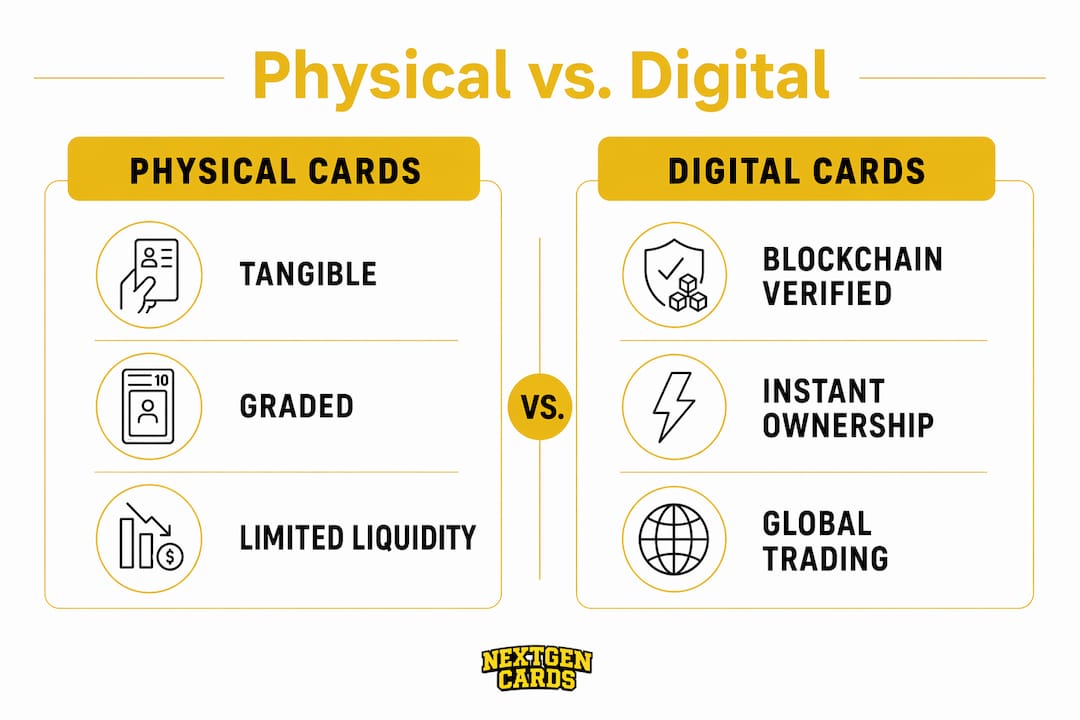
Physical vs. digital card comparison
| Feature | Physical Card | Digital Card |
|---|---|---|
| Ownership proof | Possession of the card | Blockchain record or platform account |
| Authentication | PSA, Beckett, SGC grading | Cryptographic metadata, instant |
| Condition risk | High (creases, fading, damage) | None |
| Liquidity | Regional, slow, shipping required | Global, 24/7, instant transfer |
| Storage | Sleeves, top loaders, vaults | Digital wallet or platform account |
| Utility | Display, trade, investment | Gaming, fantasy sports, display, trade |
Pro Tip: If you are new to digital collecting, check whether a platform offers true wallet ownership or a closed account system before you buy. The difference determines whether you can sell your card on a secondary marketplace.
How to buy and manage digital sports cards
The five-step process for digital card collecting covers account or wallet setup, funding, browsing collections, purchasing or bidding, and managing or trading within platform ecosystems. Each step has practical details worth knowing before you spend a dollar.
-
Set up an account or wallet. Platforms like NBA Top Shot and Topps Digital use standard email registration. Panini Blockchain and other on-chain platforms require a crypto wallet such as MetaMask or Phantom. Choose based on whether you want a simple login or full self-custody of your cards.
-
Fund your account. NBA Top Shot accepts credit cards and PayPal. On-chain platforms typically require cryptocurrency, most often Ethereum or Solana. Buy crypto through Coinbase or Kraken, then transfer it to your wallet before connecting to the marketplace.
-
Browse collections and set a budget. Each platform organizes cards into sets, series, and rarity tiers. Panini Blockchain uses serial-numbered editions. NBA Top Shot labels cards as Common, Rare, or Legendary. Knowing the rarity structure helps you identify undervalued sports cards before committing funds.
-
Purchase or bid. Most platforms offer fixed-price packs and an open marketplace for individual cards. Pack drops sell out fast, often within minutes. Secondary market purchases are available anytime and let you target specific players, serial numbers, or moments.
-
Manage and trade your collection. After buying, your cards appear in your platform account or wallet. You can hold, list for sale, or transfer to another collector. Socios.com also lets holders participate in fan votes and club experiences, adding a layer of engagement beyond pure collecting.
Pro Tip: Write your wallet recovery phrase on paper and store it somewhere physically secure. Storing recovery phrases as screenshots is risky and can lead to permanent asset loss if your device is compromised.
What are the real benefits of digital sports collectibles?
Utility is the primary value proposition for digital sports cards versus physical cards. That utility takes several forms that physical cardboard simply cannot replicate.
- Fantasy sports and gaming integration. Some platforms allow card holders to use their digital assets in fantasy leagues or blockchain-based sports games. Sorare, for example, lets collectors field teams of licensed player cards in weekly fantasy competitions, with prizes paid in cryptocurrency.
- Instant, verifiable scarcity. Every card’s print run is recorded on-chain. A serial number 1 of 10 is provably scarce in a way that a physical card’s stated print run never fully is, since counterfeits exist.
- Global market access around the clock. You can list a card for sale at 2 a.m. and have it purchased by a collector in Tokyo before sunrise. Physical card markets do not work that way.
- No shipping risk or physical damage. A digital card cannot be lost in the mail, damaged by humidity, or stolen from a storage unit.
- Provenance tracking. Every previous owner of a digital card is recorded on the blockchain. For high-value cards, that ownership history adds context and can support price discovery.
- Hybrid card options. Some releases link a physical card to a digital twin, appealing to collectors who want both formats. Hybrid cards attract buyers skeptical of pure digital ownership, though the market remains split on their long-term value.
The expert framework for deciding what to collect is straightforward. Ask yourself whether you want functional play value or static ownership. If gaming and fantasy sports appeal to you, prioritize utility-focused platforms. If you want a digital equivalent of a graded slab, focus on licensed, serial-numbered editions from Panini Blockchain or NBA Top Shot.
Common misconceptions about digital sports cards
The biggest misconception new collectors carry is that all digital sports cards work the same way. They do not. Topps Digital cards are stored in centralized accounts without external marketplace transfer options. You own the card within the app, but you cannot move it to OpenSea or another marketplace. True on-chain NFTs, by contrast, live in your personal wallet and can be transferred anywhere.
A second common mistake is buying from unauthorized collections. The digital card space has copycat releases that use player images without licensing agreements. Licensed platforms like Panini Blockchain and Socios.com offer better value and authenticity than unauthorized collections. Always verify that a platform holds an official league or player association license before purchasing.
Gas fees catch many newcomers off guard. Transaction fees on blockchain networks add hidden costs to trading digital cards. On the Ethereum network, a single transaction can cost several dollars during periods of high network activity. Batching transactions and using Layer 2 solutions like Polygon or Arbitrum can reduce those expenses significantly.
Private key security is non-negotiable for on-chain collectors. Protecting private keys and recovery phrases offline is the only way to guarantee you retain access to your assets. The “not your keys, not your cards” principle is not a cliché. It is the operating reality of self-custodial ownership.
Pro Tip: Before buying on any platform, confirm whether your cards can be transferred to an external wallet or sold on a third-party marketplace. Platforms that lock cards inside their ecosystem limit your exit options.
Key takeaways
Digital sports cards offer verified ownership, global liquidity, and utility advantages that physical cards cannot match, but the value depends entirely on choosing licensed platforms and understanding the ownership model before you buy.
| Point | Details |
|---|---|
| Definition is specific | A digital sports card is a blockchain-verified virtual collectible, not just a digital image. |
| Ownership type varies | Centralized app cards and on-chain NFTs offer different levels of control and transferability. |
| Licensed platforms matter | Panini Blockchain, NBA Top Shot, and Socios.com provide authenticity that copycat collections cannot. |
| Utility drives value | Gaming, fantasy sports, and provenance tracking give digital cards advantages physical cards lack. |
| Security is your responsibility | Store recovery phrases offline and verify platform transfer policies before committing funds. |
My take on where digital sports cards are headed
I have watched the sports card hobby shift dramatically over the past several years, and the digital side of it is the most misunderstood corner of the market. Most newcomers either dismiss digital cards entirely or rush in without understanding what they are actually buying. Both approaches cost money.
The collectors I respect most treat digital cards the way they treat any serious purchase. They authenticate before they buy, verify licensing, and understand the platform’s ownership structure. Panini Blockchain stands out to me as a model for how licensed digital collecting should work. The serial-numbered editions, official league partnerships, and transparent scarcity give collectors something real to hold onto, even if it is virtual.
My honest advice for anyone starting out: stick to officially licensed collections for your first six months. The unlicensed market is full of projects that will not exist in two years. The rise of utility-focused digital cards in gaming and fantasy sports is the most interesting development in the hobby right now, and it is where I would focus attention if I were building a new collection today. The collectors who understand both the technology and the sport will have the clearest advantage as this market matures.
— Richard
Explore rare, officially licensed sports cards at Nextgencards
If physical cards are still your foundation, Nextgencards carries some of the most sought-after rookie autographs and relic cards available from Topps. The inventory includes serial-numbered rookie autographs, patch cards, and redemption cards from athletes like Shohei Ohtani and Aaron Judge, all fully authenticated and ready to ship.
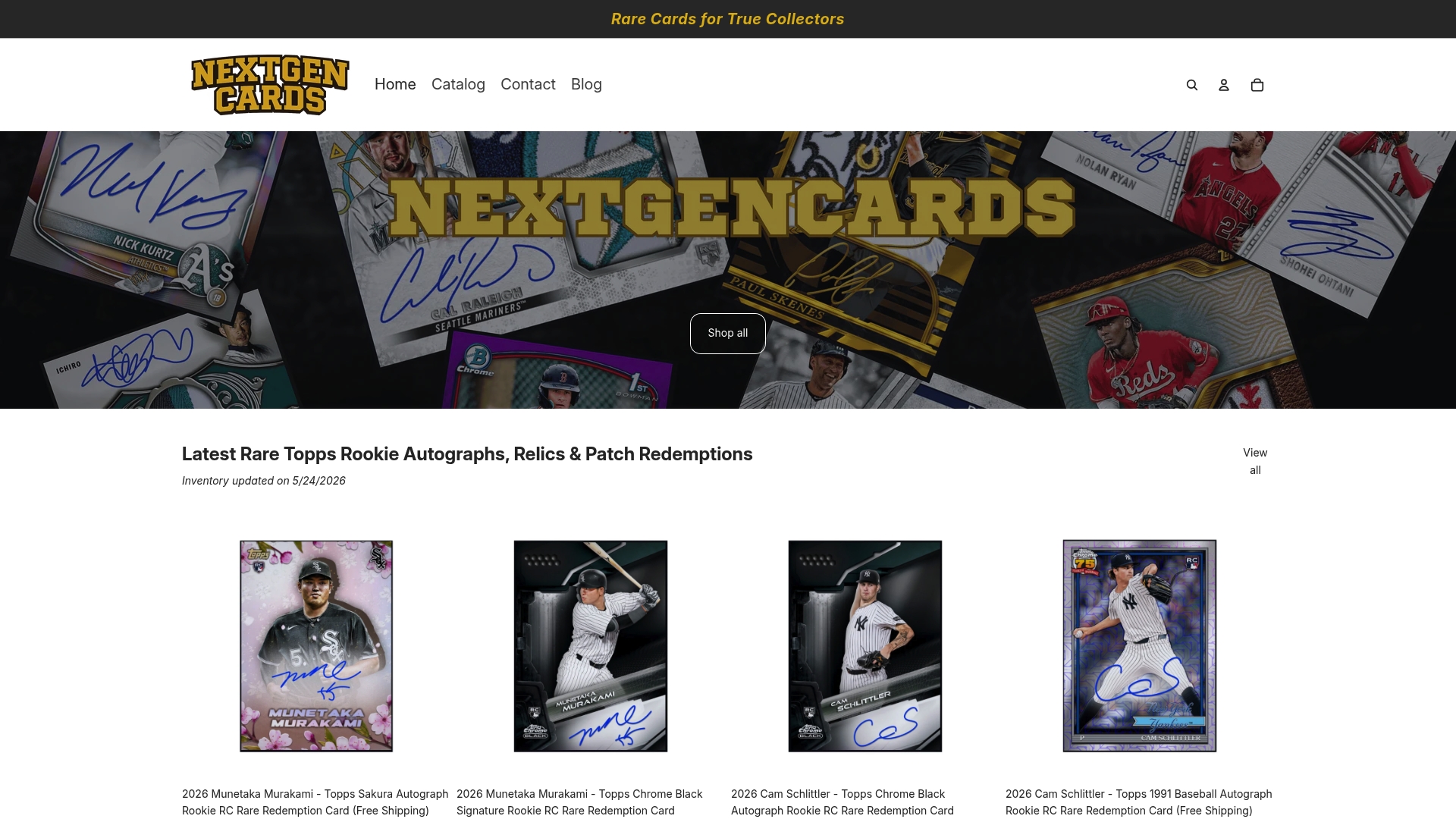
Whether you are adding to an existing collection or looking for a specific prospect card, Nextgencards makes it straightforward. Browse the full selection of rookie autographs and relics to find officially licensed Topps cards with verified authenticity. Free shipping is available on select items, and every card in the catalog is backed by full authentication assurance. New arrivals are added regularly, so serious collectors check back often.
FAQ
What is a digital sports card in simple terms?
A digital sports card is a virtual collectible that represents an athlete or sports moment, with ownership verified on a blockchain or through a licensed platform account.
Are digital sports cards worth collecting?
Officially licensed platforms hold value better than unauthorized collections, and cards with gaming or fantasy sports utility add functional value beyond display. Whether they are worth it depends on your collecting goals.
How do i buy digital sports cards?
The process follows five steps: set up an account or wallet, fund it with a bank card or cryptocurrency, browse available collections, purchase or bid on cards, and then manage or trade your holdings within the platform.
What is the difference between a digital card and an NFT sports card?
A digital sports card is the broad category. An NFT sports card is a specific type stored on a public blockchain in your personal wallet, giving you full transfer rights. Centralized app cards like those on Topps Digital are digital but not transferable NFTs.
What are the best platforms for digital sports cards?
NBA Top Shot, Panini Blockchain, Socios.com, and Topps Digital are the leading licensed platforms. Each targets a different collector preference, from video moments to serial-numbered static cards and fan engagement tokens.
Recommended
- MLB Player Specific Card Types Every Collector Should Know – Next Gen Cards LLC
- Most Valuable Sports Card Inserts: Collector’s 2026 Guide – Next Gen Cards LLC
- How to Identify Undervalued Sports Cards in 2026 – Next Gen Cards LLC
- NBA Rookie Class Card Explained: 2026 Collector’s Guide – Next Gen Cards LLC
0 comments