

An NFT sports card is a blockchain-secured digital collectible that proves ownership of a unique virtual trading card with verified scarcity and provenance. Unlike a physical rookie autograph sitting in a sleeve, an NFT card lives on a public ledger where every ownership transfer is permanent and visible. NBA Top Shot generated over $700 million in sales in 2021, proving that collectors treat these digital assets with the same seriousness as physical memorabilia. This guide covers what NFT sports cards are, how they work, and exactly what you need to know before buying your first one.
What is an NFT sports card and how does it work?
NFT stands for non-fungible token. Each token is a one-of-a-kind digital record stored on a blockchain, meaning no two NFT cards are identical and no one can duplicate or forge ownership. The industry standard term is “NFT collectible,” though collectors commonly call them NFT sports cards or digital sports cards when they represent athletes and game moments.

The blockchain acts as a public registry. When a card is minted, a smart contract records who owns it, what edition it is, and what number it holds in the print run. Smart contracts automate royalty payments to athletes and teams every time a card resells on a secondary market. That means a player earns a cut each time their card changes hands, which is something physical card markets have never offered.
Scarcity tiers and what they mean for collectors
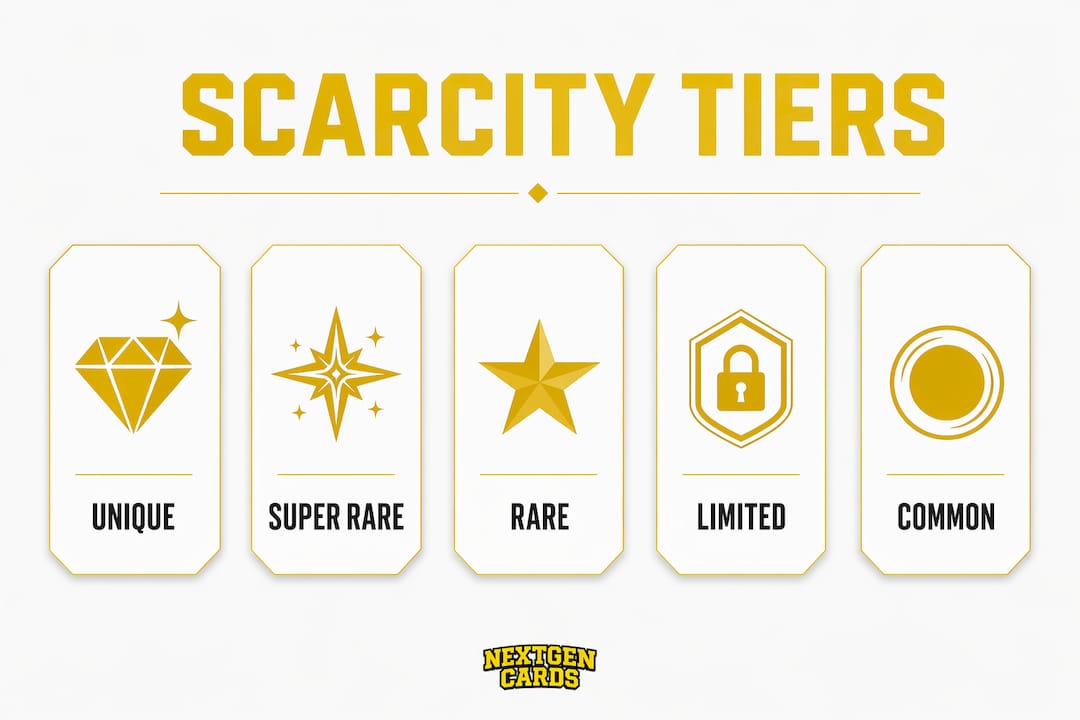
Rarity is the engine of value in NFT collecting. Platforms use a tiered scarcity model enforced by smart contracts, so the supply of each tier is fixed at mint and can never be increased. The standard tiers are Unique (1 card), Super Rare (10 cards), Rare (100 cards), and Limited (1,000 cards). A Unique card is the digital equivalent of a 1/1 printing plate in physical cards.
This structure matters because scarcity directly drives price. A Limited card from a star athlete may trade for hundreds of dollars, while a Unique of the same player can command tens of thousands. Collectors who understand these tiers make better buying decisions from day one.
Wallets and storing your NFT cards
Every NFT card lives in a digital wallet. Platforms often hold cards in a custodial account by default, meaning the platform controls the private keys. Transferring cards to a self-custody wallet like MetaMask gives you full control and allows you to list cards on public marketplaces. Keeping cards in a platform account is simpler but limits your trading options.
Pro Tip: Write your wallet seed phrase on paper and store it somewhere safe offline. Losing it means losing your cards permanently, with no recovery option.
What are the benefits of NFT sports cards over physical cards?
NFT sports cards solve three problems that have plagued physical collecting for decades: counterfeiting, illiquid markets, and static value. The blockchain record makes forgery nearly impossible. Blockchain’s immutable records reduce counterfeiting risk, though collectors must still verify seller reputation on secondary markets.
Trading physical cards requires shipping, grading services, and trust between strangers. Trading an NFT card takes minutes on a digital marketplace with no postage or third-party grader involved. That speed and accessibility opens collecting to a global audience that physical markets cannot reach.
NFT sports cards also carry utility that physical cards cannot replicate:
- Dynamic value: NFT card values shift with athlete performance, meaning a breakout season can increase a card’s market price in real time.
- Exclusive access: Some cards include rights to VIP experiences, early product drops, or exclusive digital content tied to the athlete.
- Fantasy sports integration: Tokenized player cards can qualify their owners for exclusive contests and scoring rewards on fantasy platforms.
- Community participation: Owning specific cards grants entry to private collector communities and platform governance votes.
- Automated royalties: Athletes and teams receive royalty payments through smart contracts on every secondary sale.
One distinction collectors must understand early: fan tokens focus on participatory decisions like polls and voting, while NFT collectibles focus on ownership and tradable rarity. Buying a fan token does not give you a collectible asset. Mixing up the two leads to mismatched expectations about value and utility.
How to buy, sell, and manage NFT sports cards safely
Buying your first NFT sports card follows a clear sequence. The process is more involved than purchasing a physical card online, but each step is manageable once you understand it.
- Set up a crypto wallet. Choose a wallet that supports the blockchain your target platform uses. Ethereum and Polygon are the most common networks for sports NFTs.
- Fund your account. Convert US dollars to cryptocurrency through an exchange, then transfer funds to your wallet or platform account.
- Choose a platform. Primary drops happen directly on licensed platforms. Secondary market trading happens on broader NFT marketplaces. Check the NFT sports card platforms available in 2026 to compare your options.
- Verify the card and seller. Confirm the card’s contract address matches the official platform. On secondary markets, check the seller’s transaction history and ratings before buying.
- Understand the fee structure. Every transaction carries network fees (called gas fees on Ethereum) plus marketplace commissions. Event-linked NFTs carry additional costs including identity verification and conversion fees during specific time windows.
- Transfer to self-custody if needed. If you plan to trade on public marketplaces, move your card from the platform account to your personal wallet using the platform’s bridging tool.
Understanding Rights-to-Ticket NFTs
Some sports NFTs function as Rights-to-Ticket (RTT) or Rights-to-Buy (RTB) tokens. RTT and RTB NFTs require identity checks and payment steps during a narrow conversion window to claim a physical ticket. Missing that window means losing the right to attend the event. These are not direct tickets. They are conditional rights that require additional action.
Pro Tip: Set calendar reminders for any conversion windows tied to event NFTs. The deadlines are strict, and platforms do not offer extensions.
How do NFT sports cards connect to fantasy sports?
NFT sports cards are moving beyond pure collecting into active gameplay. Tokenized player assets link directly to athlete stats and game outcomes, which changes how collectors engage with their cards. Owning a high-scoring player’s NFT card on certain platforms earns tournament points and rewards based on real-world performance.
This shift changes collecting from passive curation to active asset management. A collector who understands a player’s trajectory can time purchases and sales around performance peaks, much like a fantasy sports manager drafts players based on matchups. NFT collecting increases active engagement driven by rarity and performance metrics, which is a significant behavioral shift from storing physical cards in a binder.
The key benefits of fantasy-integrated NFT cards include:
- Earning platform rewards based on real athlete statistics each game week
- Qualifying for exclusive tournaments reserved for card holders above a certain rarity tier
- Building lineups from owned cards to compete against other collectors for prizes
- Gaining access to athlete-specific content drops tied to performance milestones
The distinction between fan tokens and NFT collectibles matters here too. Fan tokens grant voting rights on club decisions. NFT cards grant ownership of a scarce asset with gameplay utility. Both exist in the sports digital space, but they serve different purposes and attract different collector profiles.
What are the key challenges when collecting NFT sports cards?
NFT sports cards carry real risks that every collector should understand before spending money. Market volatility is the most significant. Card values rise and fall with athlete performance, team news, and broader crypto market conditions. A card worth $500 today can drop to $150 after an injury announcement.
The technical barrier is also real. Managing wallets, understanding gas fees, and navigating bridging tools requires a learning curve that physical card collecting does not. Collectors who skip this education often make costly mistakes, such as sending cards to the wrong wallet address with no way to recover them.
Secondary market risks include:
- Scam listings: Fraudulent sellers copy official card images and list them as NFTs. Always verify the contract address against the official platform.
- Wash trading: Some sellers artificially inflate sale prices by trading cards between their own wallets to create false price history.
- Platform risk: If a platform shuts down, cards held in custodial accounts may become inaccessible. Self-custody wallets protect against this.
- Rights misunderstanding: Owning an NFT card grants ownership of the token, not copyright to the underlying image or athlete likeness.
Pro Tip: Before buying on a secondary market, cross-reference the card’s contract address on a blockchain explorer like Etherscan. If the address does not match the official platform’s published contract, do not buy.
Authenticating your purchases is as important in digital collecting as it is in physical collecting. The guide on authenticating rare sports memorabilia covers verification principles that apply across both formats.
Key Takeaways
NFT sports cards are blockchain-secured digital collectibles with fixed scarcity tiers, automated royalties, and real-time value tied to athlete performance, making them a fundamentally different asset class from physical trading cards.
| Point | Details |
|---|---|
| Scarcity drives value | Fixed tiers (Unique, Super Rare, Rare, Limited) are enforced by smart contracts and cannot be changed after minting. |
| Self-custody protects access | Moving cards to a personal wallet like MetaMask allows trading on public marketplaces and protects against platform shutdowns. |
| Fan tokens are not NFT cards | Fan tokens grant voting rights; NFT collectibles grant tradable ownership of a scarce digital asset. |
| Event NFTs require extra steps | Rights-to-Ticket NFTs need identity verification and payment within a strict conversion window to claim physical tickets. |
| Secondary market due diligence is non-negotiable | Always verify a card’s contract address against the official platform before purchasing on any secondary marketplace. |
Why I think most new collectors underestimate the learning curve
Most articles about NFT sports cards focus on the upside: big sales, athlete connections, and fantasy sports rewards. What they skip is how much the technical side trips up new collectors. I have watched people lose cards to wrong wallet addresses, miss event conversion windows, and buy counterfeit listings that looked identical to the real thing.
The collectors who do well treat NFT cards the way serious physical collectors treat graded cards. They research the platform’s contract addresses before buying. They understand the scarcity tier before they pay a premium. They know the difference between a Rights-to-Ticket NFT and an actual collectible card. That level of preparation is not optional in this market.
The future of NFT sports cards is genuinely interesting. Hybrid cards that pair a physical rookie autograph with a linked NFT are already appearing in the market. Platforms are building better tools for non-technical collectors. The market is maturing, and the collectors who built their knowledge base early will be positioned well when mainstream adoption catches up.
My honest advice: start with a platform-native card in a lower rarity tier. Learn the wallet mechanics with a small amount of money before you chase a Unique. The technology rewards patience and preparation more than enthusiasm alone.
— Richard
Rare physical cards worth adding alongside your NFT collection
Physical and digital collecting complement each other well. If you are building a serious collection in 2026, rare rookie autographs and relic cards from athletes like Shohei Ohtani and Aaron Judge hold their own alongside any NFT asset.
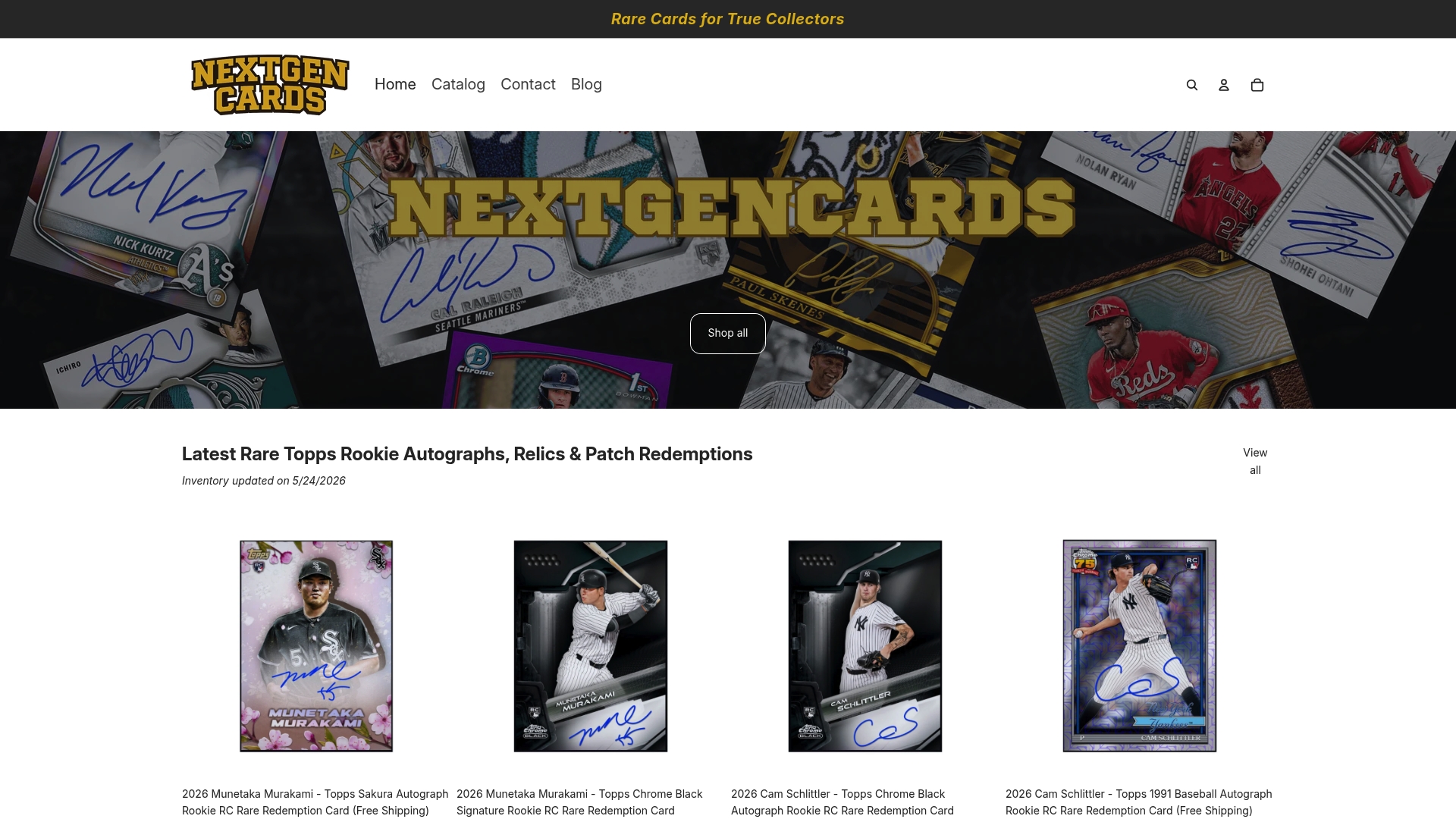
Nextgencards curates a selection of authenticated rookie autographs, relics, and limited-edition redemption cards that serious collectors actively seek. The inventory includes scarce prospects and established stars, all sourced for authenticity. Browse the rookie autographs and relics collection to find cards that belong in your collection. Free shipping is available on select items, making it straightforward to add high-value physical cards to your portfolio without extra cost.
FAQ
What is an NFT sports card?
An NFT sports card is a unique digital collectible secured by blockchain technology that proves ownership of a virtual trading card with verified scarcity. Each card is minted as a non-fungible token, meaning no two are identical and ownership cannot be forged.
How do NFT sports card values change over time?
NFT card values fluctuate based on athlete performance, card rarity tier, and broader crypto market conditions. A breakout season or championship run can significantly increase a card’s market price in real time.
What is the difference between a fan token and an NFT sports card?
Fan tokens grant holders voting rights on club decisions and participatory engagement. NFT sports cards grant ownership of a scarce digital asset that can be traded, held, or used in fantasy sports gameplay.
How do I store NFT sports cards safely?
Cards held in platform accounts are controlled by the platform. Transferring to a self-custody wallet like MetaMask gives you full control and allows trading on public marketplaces. Always store your wallet seed phrase offline in a secure location.
Are NFT sports cards a good investment?
NFT sports cards carry significant market volatility tied to athlete performance and crypto market conditions. Collectors who research scarcity tiers, verify authenticity, and understand platform risks are better positioned than those who buy on hype alone.
0 comments