

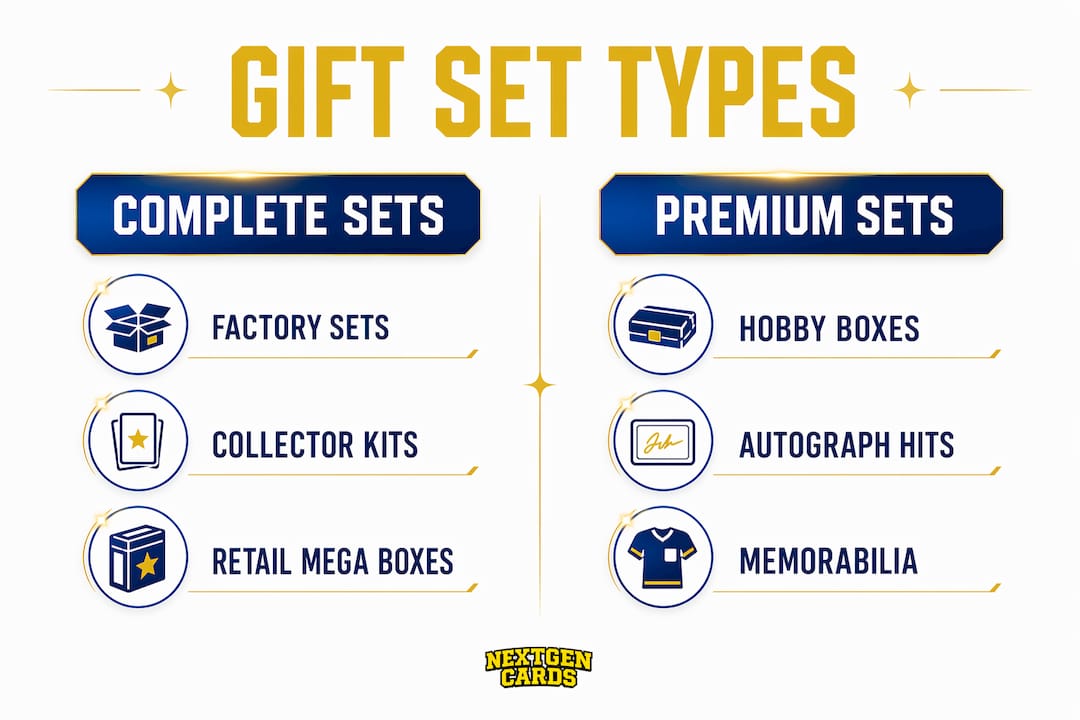
Sports card gift sets are pre-packaged products that bundle collectible trading cards and accessories into a single purchase, tailored to different collector interests and experience levels. The industry organizes these products into four main formats: complete factory sets, hobby boxes, retail blasters, and specialty collector kits. Each format delivers a different experience, price point, and potential value. Whether you are buying for a first-time collector or a seasoned hobbyist, understanding these distinctions is the single most important step in choosing the right gift.
What are the main types of sports card gift sets?
Complete factory sets give collectors every card from a flagship release in one package. The 2026 Topps Baseball complete factory set contains approximately 700 cards and comes in both Hobby and Retail formats, each with distinct bonuses and exclusive inserts. The 2026 edition also marks Topps’ 75th anniversary, featuring a diamond-encrusted logo and unique buyback programs that add genuine collecting intrigue beyond simple convenience. Factory sets are reliable, predictable gifts. The collector knows exactly what they are getting, which removes the risk of a disappointing pull.
Hobby boxes sit at the premium end of the spectrum. Hobby boxes guarantee at least one autograph or memorabilia hit per box, which retail products do not. Mid-tier hobby boxes typically cost $100–$300, with premium releases going considerably higher. That guaranteed content makes hobby boxes the right choice when you are gifting a serious collector who values both the experience and the investment potential.
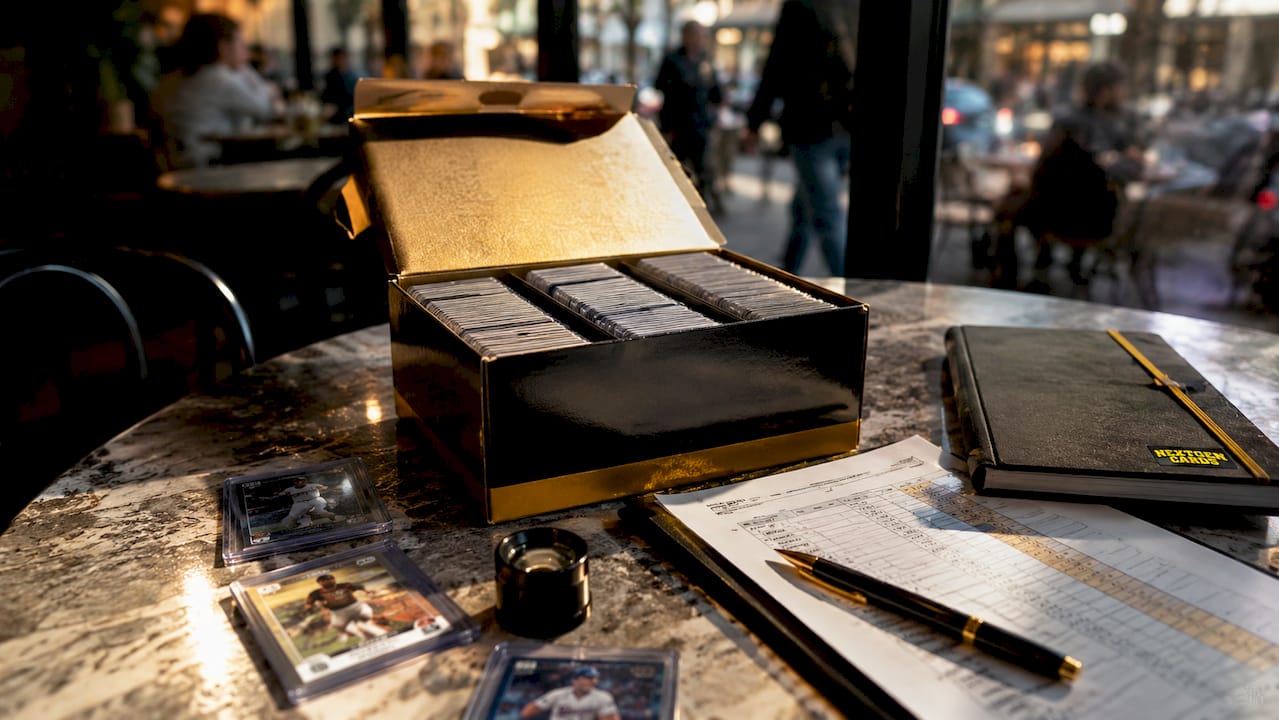
Retail blaster and mega boxes occupy the accessible middle ground. A standard blaster box contains 7–8 packs and costs roughly $40–$65, making it one of the most popular sports trading card gift ideas for casual buyers. Mega boxes often include exclusive parallel cards not found in standard retail packs. Neither format guarantees a high-value hit, but both deliver a satisfying pack-opening experience at a manageable price.
Specialty collector kits round out the format options. The 2026 Topps Collector Kit Wave 1 is a strong example: it bundles multiple pack types with storage supplies and guaranteed parallel hits, priced between $60 and $85. These kits work well as gifts because they combine the excitement of new cards with practical supplies the collector will actually use.
| Format | Price range | Guaranteed hits | Best for |
|---|---|---|---|
| Complete factory set | $60–$120 | No random hits; complete base set | Completionists and set builders |
| Hobby box | $100–$300+ | Autograph or memorabilia hit | Serious and investment-minded collectors |
| Retail blaster/mega box | $20–$65 | Possible parallels; no auto guarantee | Beginners and casual collectors |
| Specialty collector kit | $60–$85 | Exclusive parallels; storage included | New collectors and gift occasions |
Pro Tip: Always check whether a product lists published pull odds before buying. Products with clear pull frequencies signal a reputable manufacturer and give you realistic expectations for what the box contains.
How to choose the right set for beginners versus veteran collectors
Matching the gift to the collector’s experience level is the most common mistake gift buyers make. A beginner and a veteran collector want completely different things from the same $80 budget.
New collectors gain the most from the pack-opening experience. Tearing open packs and sorting through cards delivers immediate excitement that a complete set simply cannot replicate. Blaster and booster boxes are the right format here, offering accessible price points and the thrill of not knowing what comes next. For a child or first-time collector, a starter baseball card series paired with a retail blaster creates a complete introductory experience.
Veteran collectors have different priorities. They have already opened hundreds of packs and are less impressed by the randomness of a blaster box. What they value is organization, completeness, and lasting utility. A premium binder, a complete factory set, or a specialty kit with storage supplies provides more sustained value than a booster box that delivers ephemeral excitement. Research confirms that a $100 binder provides more lasting use than a $100 booster box for an experienced collector.
When you are genuinely unsure of the recipient’s preferences, combine formats. Pairing a mid-range collector binder with a store gift card gives the collector flexibility to choose their own packs while still receiving a tangible, thoughtful gift. This strategy works particularly well for veteran collectors whose specific wants are hard to predict.
Key questions to ask before buying:
- Does the collector already have a complete set of the series you are considering?
- Do they prefer the excitement of opening packs or the satisfaction of completing a set?
- Is storage and organization a current need for their collection?
- What is their primary sport and preferred era or player generation?
- Are they collecting for enjoyment, investment, or both?
Pro Tip: If the collector follows a specific team or player closely, a hobby box from a set known for featuring that team’s roster increases the chance of a personally meaningful pull.
What factors influence the value and collectibility of a gift set?
Set legacy is the strongest predictor of long-term collectibility. Focusing on established series like Topps Chrome or the Topps flagship line lowers risk compared to buying sets built around a single player’s performance. A set-focused approach gives the collector a “second out” if any individual player underperforms. This is a practical insight that most casual gift buyers overlook entirely.
Autograph and memorabilia hits drive the perceived value of hobby boxes. A rookie autograph from a high-profile prospect like Shohei Ohtani or Aaron Judge can be worth multiples of the box price. Relic cards, which contain a piece of game-used equipment, add a tangible connection to the player that base cards cannot replicate. Nextgencards specializes in exactly these card types, with a curated inventory of rookie autographs and relics from top-tier athletes.
Exclusive parallels and insert cards add layers of collectibility to retail and specialty sets. Parallel cards are versions of base cards printed in limited quantities with distinct color or foil treatments. The scarcity of a parallel directly affects its value. A card numbered to 25 copies is worth far more than the same card from an unlimited print run.
Condition matters at every level of collecting. Cards that show corner wear, surface scratches, or print defects grade lower and sell for less. Professional grading services like PSA and BGS assign numeric grades that the market uses as a universal condition standard. For gift buyers, purchasing sealed, factory-direct products is the simplest way to protect card condition before the gift is even opened.
Key value factors to evaluate before buying any set:
- Set legacy: Established flagship series hold value better than one-off releases.
- Hit guarantees: Hobby boxes with published autograph odds outperform retail in long-term value.
- Parallel scarcity: Lower print run numbers mean higher collectibility.
- Player relevance: Cards featuring active, high-performing athletes carry stronger demand.
- Condition: Factory-sealed products protect card condition until opening.
Where and how to buy sports card gift sets with confidence
Buying from a reputable source is as important as choosing the right format. Retail stores like Target and Walmart carry blaster and mega boxes at consistent prices, but their inventory is limited to mass-market products. Hobby shops offer a wider range of formats, including hobby boxes and specialty kits, with staff who can answer specific questions about set contents and pull odds.
Online buying expands your options significantly but requires more due diligence. Published pull odds are the clearest indicator of a quality product and a trustworthy seller. Any set that does not disclose its hit rates should be treated with skepticism. Reputable manufacturers like Topps publish odds directly on their packaging and websites.
Practical steps for buying with confidence:
- Verify that the product is factory sealed with no signs of tampering or resealing.
- Check that the seller lists the product’s official pull odds or links to the manufacturer’s published odds.
- For hobby boxes, confirm the guaranteed hit type (autograph, relic, or parallel) before purchasing.
- Read recent buyer reviews focused on pack weight and seal integrity, not just pull results.
- For high-value gifts, buy directly from certified hobby shops or established online specialty retailers.
Gift packaging also matters. A factory-sealed box presented in its original packaging looks and feels like a premium gift. Some specialty retailers offer additional gift wrapping or collector display cases that elevate the presentation without adding significant cost.
Key Takeaways
Sports card gift sets deliver the most value when the format matches the collector’s experience level, budget, and collecting goals.
| Point | Details |
|---|---|
| Match format to experience | Beginners benefit from blaster boxes; veteran collectors prefer factory sets or storage kits. |
| Hobby boxes guarantee hits | Only hobby boxes guarantee autograph or memorabilia cards, making them best for serious collectors. |
| Set legacy reduces risk | Established series like Topps Chrome hold value better than player-specific or one-off releases. |
| Published pull odds matter | Always verify that a product lists official pull odds before purchasing to confirm quality. |
| Combine gifts for flexibility | Pairing a binder with a gift card gives uncertain recipients both a tangible gift and personal choice. |
What I’ve learned from gifting sports card sets over the years
The most common gifting mistake is buying the most expensive box available and assuming that equals the best gift. A $200 hobby box handed to someone who has never collected before is genuinely wasted. They do not know what they pulled, they cannot evaluate its significance, and the experience lands flat. The gift that works is the one that matches where the collector actually is, not where you imagine they should be.
The other mistake I see constantly is ignoring set legacy in favor of chasing a single player. A set built around one prospect is a high-risk bet. If that player gets injured, trades teams, or simply underperforms, the cards lose relevance fast. Sets with deep rosters and strong brand histories, like Topps Chrome or the flagship Topps Baseball series, give the collector multiple reasons to stay engaged with the product long after opening day.
The 2026 hobby market is leaning toward specialty kits and curated collector experiences. That trend reflects something real: collectors want more than randomness. They want products that feel intentional. If you are buying a gift this year, a specialty collector kit or a complete factory set from an anniversary release will land better than a generic blaster box. The most valuable inserts right now come from sets with strong legacy and transparent production, not from mass-market retail products chasing hype.
— Richard
Nextgencards has the cards serious collectors actually want
Gift buyers who want to skip the guesswork of retail shelves have a better option. Nextgencards curates a selection of rare rookie autographs, relic cards, and limited-edition redemption cards from athletes like Shohei Ohtani, Aaron Judge, and Paul Skenes. Every card is authentic and verified, with free shipping available on select items.
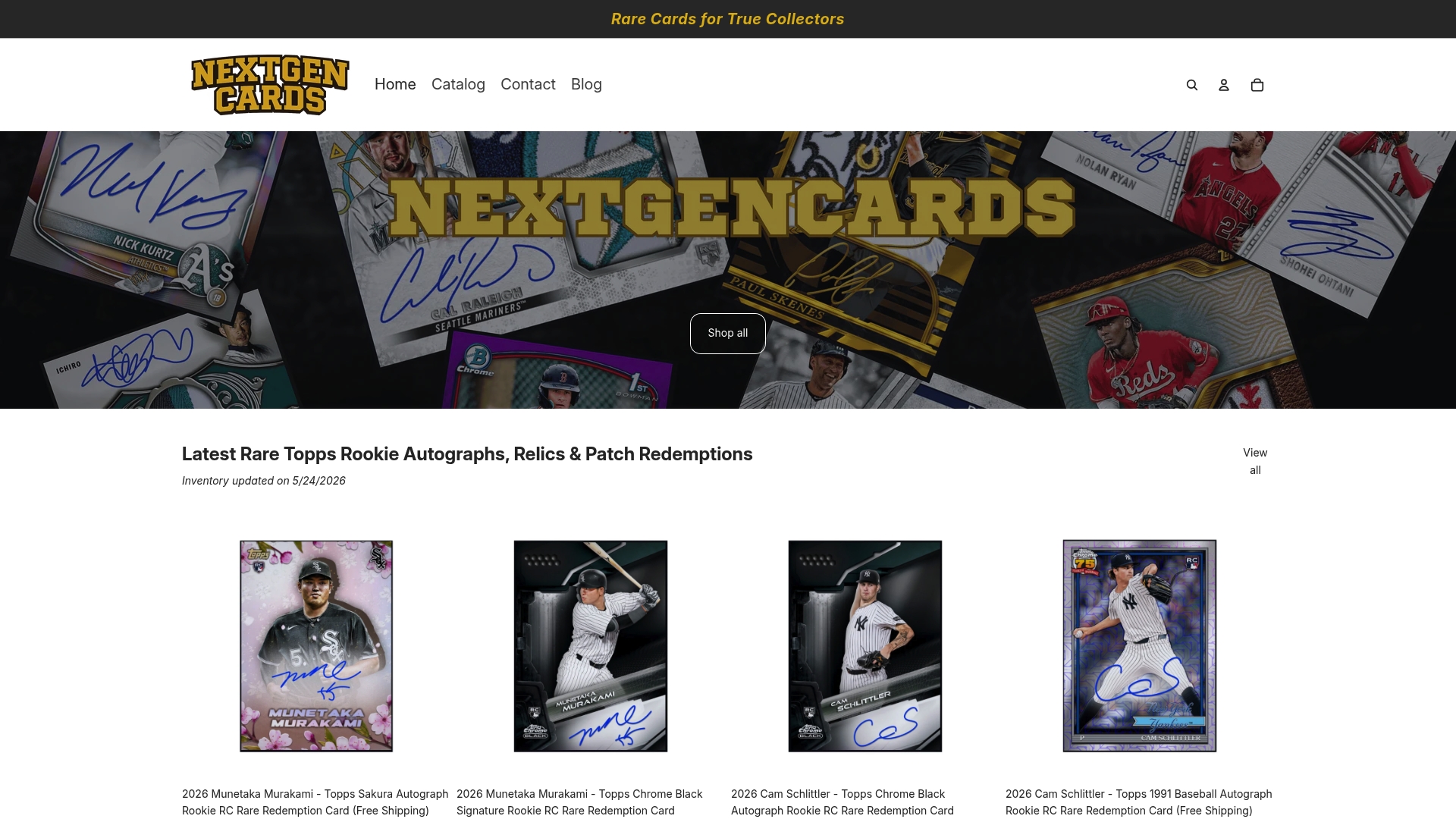
The rookie autographs and relics collection at Nextgencards is built specifically for collectors who value scarcity, authenticity, and long-term significance. These are not mass-market products. They are the kind of cards that anchor a serious collection. If you are looking for a gift that a veteran collector will remember, this is the right place to start.
FAQ
What are sports card gift sets?
Sports card gift sets are pre-packaged products that bundle collectible trading cards, and sometimes storage accessories, into a single purchase. They come in formats including complete factory sets, hobby boxes, retail blasters, and specialty collector kits.
What is the difference between a hobby box and a retail blaster box?
Hobby boxes guarantee at least one autograph or memorabilia hit per box, while retail blaster boxes do not. Hobby boxes cost more ($100–$300+) but deliver better hit rates and stronger investment potential.
How do I choose the best sports card gift set for a beginner?
Retail blaster boxes priced at $40–$65 are the best starting point for new collectors. They offer an accessible pack-opening experience without requiring knowledge of advanced set formats or player values.
What makes a sports card gift set valuable to a veteran collector?
Veteran collectors value guaranteed hits, set legacy, and exclusive parallels. A hobby box from an established series like Topps Chrome, or a complete factory set from an anniversary release, holds more appeal than a standard retail product.
How can I tell if a sports card gift set is from a reputable source?
Look for products with published pull odds listed on the packaging or the manufacturer’s website. Transparent odds indicate a reputable manufacturer and give you realistic expectations for the box contents.
0 comments