

Neither card type always wins. Choose a 1st Bowman autograph when you want the earliest prospect auto and a speculative ceiling. Choose an RC-stamped rookie autograph when you want debut-era recognition and broader market demand. The deciding technical check is MLB rookie eligibility, because a player must clear it before an official rookie card exists.
TL;DR:
- Before treating an RC stamp as official, verify MLB eligibility: 130 at bats, 50 innings pitched, or 45 active roster days.
- Check the set and year, then inspect the 1st Bowman and RC marks separately; inserts or parallels bearing RC may not carry flagship catalog weight.
- Compare cards with the same parallel, autograph format, and condition using recent completed sales, not asking prices; numbering alone does not establish value.
- For a redemption, confirm whether the listing is for an unredeemed placeholder or the finished autograph, and review fulfillment terms and deadlines before buying.
Table of Contents
- Which card type fits your goal in a first Bowman vs rookie auto choice?
- What is a 1st Bowman prospect autograph, and why do collectors chase it?
- What is a rookie (RC) autograph, and what makes a player rookie eligible?
- How do autograph format, timing and parallels change value between the two?
- Which value drivers should you check before pricing either card?
- How do you decide and buy, step by step?
- Why can you rely on this guide, and where do the examples come from?
- How do print runs and serial numbering differ between 1st Bowman and rookie autos?
- How do redemption timing and fulfillment affect value and availability?
- Which notable 1st Bowman and rookie autos show how the market treats each?
- What should you know about authentication and grading for each card type?
- Why I would pick a lane first and a card second
- Where can you find curated 1st Bowman and rookie autograph cards?
- FAQ
- Sources
Which card type fits your goal in a first Bowman vs rookie auto choice?
Your decision starts with a collecting philosophy, not a price tag. Prospect-first collectors want the earliest autograph of a player before the big league lights come on. Rookie-first collectors want the card the hobby labels as the debut-era anchor. Both approaches are valid, and many serious collections hold both.
Here is how common goals map to a card type:
- Speculative upside on a young prospect: a 1st Bowman Chrome autograph, since it captures the player before a debut.
- A debut-era anchor card: an RC-stamped rookie autograph, which carries the logo most buyers search for first.
- A broad, easily understood resale market: the RC-stamped card, because the designation is familiar even to casual buyers.
- The earliest possible signature of a future star: the 1st Bowman auto, often released years before the RC.
Three quick checks tell you which type you are looking at in any listing. First, confirm the exact set name and year. Second, look separately for the 1st Bowman logo and for the RC stamp, because they are different designations. Third, if you see an RC mark, confirm the player actually meets the rookie eligibility thresholds. Practical listing checks like these cut most of the confusion buyers run into.
You can inspect real examples in our inventory to see how these identifiers look on live pages:
- 2024 Junior Caminero Topps Bowman Chrome Green Signature Rookie RC Rare Redemption Card, a Bowman Chrome rookie signature example.
- 2024 Junior Caminero Topps Chrome Black Signature Rookie RC Rare Redemption Card, a second chrome rookie-signature option for the same player.
- 2023 Mason Miller Topps Chrome Platinum Anniversary Autograph Rookie RC Rare Redemption Card, a high-profile rookie autograph redemption.
- 2026 Denzel Boston Topps 1991 Football Rookie Autograph RC Rare Redemption Card, a football rookie autograph showing the RC lane outside baseball.
- 2026 Jalen Brunson Topps Champions Autograph Rare Redemption Card, a basketball autograph that shows how redemption listings are presented.
- 2026 Jalen Brunson Topps Champions Jersey Patch Rare Redemption Card, a patch card from the same product family.
- 2026 Jalen Brunson Topps Reverence Jersey Patch Autograph Rare Redemption Card, where the patch and autograph combine on one card.
- 2025 Yoshinobu Yamamoto Topps Now World Series Hero Closes Game 7 Zero Rest Rare Redemption Card, a Topps Now card tied to a single-game moment.
What is a 1st Bowman prospect autograph, and why do collectors chase it?
A 1st Bowman card is a player’s first appearance in a Bowman product. Topps defines it as the first Bowman appearance, usually marked with a “1st” or “1st Bowman” logo, and the designation has been a consistent Bowman staple since the early 2000s. The card usually arrives before the player’s official rookie card, often while the athlete is still in the minor leagues or even just drafted.
That timing explains the appeal. You are buying the earliest autograph the hobby recognizes for a player, at a moment when the outcome is unknown. If the prospect reaches the majors and thrives, the 1st Bowman auto becomes the origin card. If the player stalls, the card stays a prospect piece.
Where these autographs live matters too. Bowman Chrome products carry the Chrome Prospect checklist, and many 1st Bowman autographs and refractor parallels are issued there and chased by collectors. That lane gives prospect collectors a defined hunting ground each year.
What prospect-first collectors tend to value:
- Chromium finish and refractor parallels: the shiny stock and color variations give each prospect auto several versions to chase.
- Prospect checklist lanes: the Chrome Prospect checklist is where most 1st Bowman autos sit, so you know where to look.
- Earliest-card status: the 1st Bowman logo marks the player’s first Bowman appearance, which many hobbyists treat as a milestone.
- Lower entry points before a debut: buying before a player breaks out means you pay for potential, not performance.
- A long hobby tradition: the “1st” designation has been standard for over two decades, so buyers understand what it signals.
The trade-off is the speculation itself. A prospect-first card prices in hope, and hope can move quickly in either direction. That is why many collectors pair a 1st Bowman auto with a rookie-lane card for the same player once a debut happens. Our collectors’ guide on MLB player-specific card types walks through those categories if you want a broader map.
What is a rookie (RC) autograph, and what makes a player rookie eligible?
A rookie autograph carries the RC designation, which signals the player’s official rookie card. An official MLB rookie card can only be issued after a player debuts in the majors, and the player must meet the league’s rookie standards. The official MLB thresholds are 130 at-bats, 50 innings pitched, or 45 days on an active Major League roster.
Rookie eligibility: 130 at-bats, 50 innings pitched, or 45 days on an active Major League roster, the checklist collectors use to confirm a player’s RC status.
Treat those numbers as a verification tool. If a listing shows an RC logo, you can check the player’s big league usage against these thresholds and understand whether the designation lines up with the player’s career timeline.
Where RC-stamped autographs typically appear:
- Flagship and chrome rookie issues: these products tend to time their releases around the player’s MLB debut window.
- Premium rookie products: higher-end sets add autographs, patches and numbering on top of the RC mark.
- Redemption formats: many rookie autographs reach buyers as redemption cards first, which we cover in a later section.
- Multi-sport rookie lines: football and basketball releases use the same RC logic, as our football and basketball rookie examples show.
One warning deserves attention. Some inserts or parallels carry an RC mark but do not carry the same catalog weight as a flagship rookie card. A logo is a starting point, not a verdict. Always confirm the set, the checklist lane, and whether the card is a base rookie, an insert, or a parallel. When a card combines the RC stamp with a signature, the autograph format and numbering usually drive the price more than the logo alone.
For collectors who want a ready-made shortlist, our guide to the top MLB rookie autographs to chase lists key variants and why they draw demand.
How do autograph format, timing and parallels change value between the two?
Value gaps between a 1st Bowman auto and an RC auto come from a handful of repeatable factors. Understanding them keeps you from paying a premium for the wrong feature.
On-card versus sticker. On-card autographs, signed directly on the card surface, are often preferred for looks. Sticker autographs are signed on a label that is applied to the card. On-card signatures can be harder to grade cleanly, since the pen can sit near the edge or smudge, while stickers tend to present uniformly. Neither format is automatically better, so judge the specific card in front of you.
Timing. A 1st Bowman auto usually appears earlier in the prospect cycle, which often means it was produced and sold before the market knew the player’s trajectory. An RC auto arrives in the debut window and carries mainstream branding. The earlier card often serves the speculative buyer, and the later card serves the buyer who wants proof of arrival.
Parallels and numbering. Serial numbered parallels and short prints amplify scarcity on both card types. A base 1st Bowman Chrome auto often serves as the market anchor for a player’s prospect lane, and the numbered refractors sit above it. The same logic applies to RC autos, where numbered versions command attention over base versions.
Grading and liquidity. Graded population counts and recent sold comps shape how easily you can resell either card. A card with a deep pool of sales is easier to price than one with a handful of public results.
What tends to move prices most, in rough order:
- Player trajectory: performance and outlook override almost everything else.
- Numbering and parallel tier: lower print runs mean fewer copies chasing the same demand.
- Autograph format and condition: a clean on-card signature or a crisp sticker auto carries a premium over a flawed example.
- Grade and population: a high grade on a low-population card earns a stronger reception.
- Recent sold comps: actual completed sales beat asking prices as a guide.
Two-way players add a wrinkle. When a player is marketed as both a pitcher and a hitter, separate autograph identities can split demand, so check which identity a card represents before you compare prices.
Which value drivers should you check before pricing either card?
Collectors who price well rely on the same short list of signals, whether the card is a 1st Bowman or an RC. Think of them as four buckets: scarcity, player, market and listing details.
Scarcity signals tell you how many copies could exist:
- Serial numbering: a lower-numbered card is scarcer than one with a higher print run, and an unnumbered base card is the broadest supply.
- Refractor and color parallels: each parallel tier narrows the pool.
- Insert tiers: chase inserts and autograph subsets usually have deeper rarity than base cards.
- Product chase depth: a product with many autograph chases dilutes any single card compared to a tight checklist.
Player signals tell you why anyone wants the card:
- Prospect ceiling: scouting reports and rankings shape the early market.
- Draft pedigree: a high pick brings attention before a single game is played.
- Performance: production in the majors reprices both card types quickly.
- Two-way roles and split demand: as noted above, separate identities can divide buyers.
Market signals tell you what people actually pay:
- Recent sold comps: the most reliable pricing evidence you have. For a method, our partner at Road & Scale explains how to use five to ten sold comps and grade the worst flaw. It was written for model vehicles, but the sold-comps discipline carries over to cards.
- Grading population reports: low population on a high grade supports a premium.
- Hobby sentiment: chatter and demand cycles move prices, so treat them as context, not proof.
Listing details tell you what the card really is:
- Set name and year: these decide the checklist lane.
- 1st or RC designation: read for both, separately.
- Autograph type: on-card or sticker.
- Parallel and number: confirm what the listing says against the card images.
The lane matters: the Chrome Prospect checklist is where most 1st Bowman autograph chases live, which is why the same player can have a prospect auto and a later rookie auto at very different price points.
A simple habit helps here. Before you buy, write down the four listing details and the last few sold prices on one line. If you cannot fill in the line, you are not ready to pay.
How do you decide and buy, step by step?
Use this process each time you shop. It takes a few minutes and prevents most expensive mistakes.
- Decide your goal. Say it plainly: prospect-first or rookie-first. If you want speculative upside, start in the 1st Bowman lane. If you want a debut-era anchor, start with RC-stamped autos.
- Verify the listing. Confirm the set name and year, look for the 1st Bowman logo or the RC stamp, check the autograph format, and read the numbering. Check the player against the rookie eligibility thresholds when the RC mark is the reason you are buying.
- Check the market. Look at recent sold comps for the same parallel and format. Consider grading if resale liquidity matters, and confirm what the seller says about condition and authenticity.
Why can you rely on this guide, and where do the examples come from?
This guide comes from Richard at NextGenCards.shop, where our focus is rare rookie cards, autographs, relics and redemption cards for serious collectors. That specialization means we focus on the card types discussed here.
Our inventory lists curated examples of both lanes: Bowman Chrome rookie signature cards and RC-stamped rookie autograph redemption cards. You can open any product page we linked and see how the identifiers from this article appear in a real listing: the set name, the RC mark, the autograph format and the redemption details. Reading the page against the checks above is the fastest way to build the habit.
How do print runs and serial numbering differ between 1st Bowman and rookie autos?
Print runs differ because the two card types sit in different products with different structures. Bowman Chrome’s prospect lane builds a large checklist of young players, and autographs there often come as base versions plus a ladder of numbered refractor parallels. The base auto is the widest supply, and each numbered tier cuts the pool further.
RC autos tend to appear in flagship and premium rookie products where the autograph is a featured chase. Numbering in those products depends on the set: some rookie autos are unnumbered base signatures, while premium releases attach low serial numbers to patch and autograph combinations.
The practical takeaway is that you cannot assume one type is scarcer. Read the number on the card and the parallel name, then compare like with like. A /25 rookie auto and a /25 prospect auto share a scarcity ceiling, while a base auto of either type reflects the broadest supply. Judge each card by its own stamp, not by its category.
How do redemption timing and fulfillment affect value and availability?
A redemption card is a placeholder. Instead of the finished autograph, you hold a card that can be exchanged for the signed card once the manufacturer receives it from the player. That gap between pull and fulfillment affects both availability and how buyers think about price.
While a card sits as an unredeemed redemption, supply of the final version is not yet fully visible to the market. Some collectors accept that wait for a lower entry price or access to a card they could not otherwise find. Others prefer the finished autograph and will pay more for it.
Fulfillment timing is the key variable. A card that is redeemable and in demand can keep its appeal if buyers trust that the signed version will arrive. Read the redemption terms, check any stated deadlines, and know whether you are buying the placeholder or the finished card. Many listings in our rookie autograph and redemption collection are redemption formats, so the listing language tells you exactly what you are getting.
Which notable 1st Bowman and rookie autos show how the market treats each?
Real cards illustrate the lanes better than theory. We will stick to what our inventory shows rather than quote prices we cannot source.
On the rookie side, Mason Miller’s Topps Chrome Platinum Anniversary autograph rookie and the Chrome Update Series chase autograph show how one player’s debut-era autos can sit in different product tiers. Junior Caminero’s Bowman Chrome Green signature shows the chrome parallel approach inside the Bowman family.
Single-moment cards form their own category. Our Yoshinobu Yamamoto World Series MVP card and the Shohei Ohtani NLCS Topps Now card tie value to a specific playoff performance.
For how the market is treating current rookies, our top MLB rookie autographs guide tracks the variants collectors chase. Check completed sales for any specific card before you pay.
What should you know about authentication and grading for each card type?
Authentication starts with the autograph. Manufacturer-certified autographs, signed under the brand’s supervision, come with built-in provenance, which is one reason pack-issued autos are widely accepted. Confirm the card is a genuine product from the stated set and that the signature matches the format the listing describes.
Grading adds a second layer. Graders assess centering, corners, edges and surface, and many also grade the autograph itself. Chrome cards show surface scratches and print lines readily, so examine images closely. On-card autos can be harder to grade cleanly because pen placement and smudging affect the result, while sticker autos present a more uniform signature area. Our guide to rookie autograph grading covers what new collectors should expect.
Two practical rules apply to both lanes. Buy graded when resale liquidity is a priority, and buy raw only when you are comfortable judging condition from photos. In either case, confirm what the seller states about authenticity before you pay.
Why I would pick a lane first and a card second
My view is that most collectors lose money by chasing the card before choosing the philosophy. Someone who loves the idea of owning a future star’s earliest autograph should buy 1st Bowman autos and accept that some prospects will fade. Someone who wants a card that the broad hobby already recognizes should buy RC-stamped autos and pay for that certainty.

What I think is overrated is the logo itself. A “1st” or an “RC” tells you the category, not the quality. Numbering, autograph format, condition and the player’s path do the real work. I would also be wary of treating either card as a guaranteed winner. Prospects flame out, and rookies can plateau.
If you are unsure, start with one card in each lane for a player you follow, and learn from how each behaves. Prioritize verification first, price second, and excitement last.
— Richard
Where can you find curated 1st Bowman and rookie autograph cards?
We curate rare redemption and rookie autograph cards, and our inventory includes examples that match both the Bowman Chrome rookie signature lane and RC-stamped autograph types. If you want to browse with the checks from this guide in hand, these are good places to start:
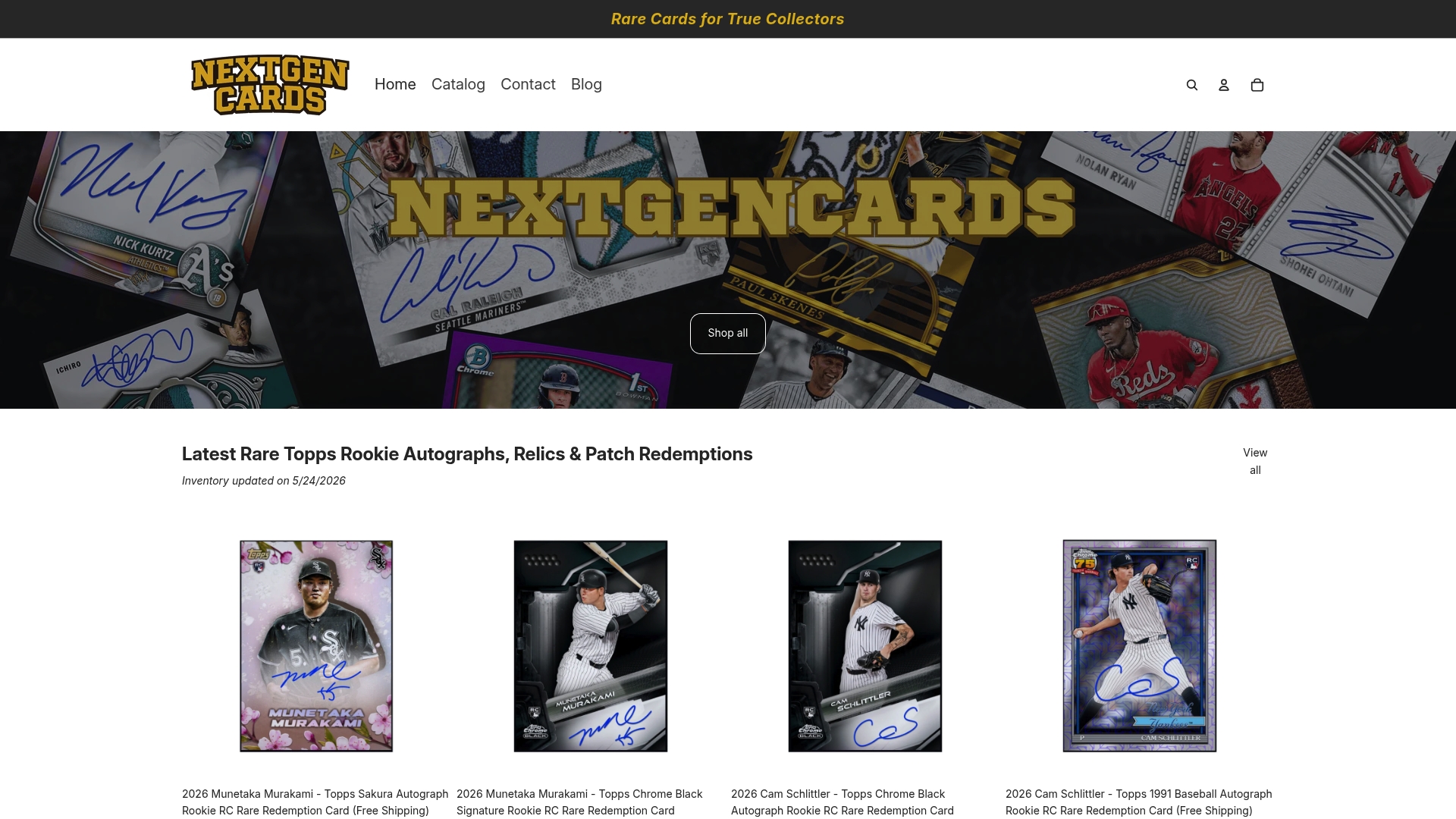
- Curated picks: our selection focuses on rookie autographs, relics and redemption cards rather than general trading card stock.
- Product listings: product pages show details you can use to run your checks.
- Free shipping on select cards: many listings, including the Junior Caminero Bowman Chrome Green signature, carry free shipping.
- Multi-sport range: baseball, basketball and football rookie cards sit side by side.
Start with our rookie autographs and relics collection and open the listing that fits your lane today.
FAQ
Are 1st Bowman or rookie cards worth more?
Neither is always worth more. A 1st Bowman autograph can carry strong value for a rising prospect, while an RC autograph often draws broader demand once a player has debuted. Compare recent sold comps for the same parallel and format before deciding.
Does first Bowman mean rookie card?
No. A 1st Bowman card is a player’s first Bowman appearance, usually marked “1st” or “1st Bowman.” An official rookie card can only be issued after a player debuts in the majors, so the two are separate designations.
How do I confirm a card qualifies as a rookie card?
Check the player against the MLB rookie eligibility thresholds: 130 at-bats, 50 innings pitched, or 45 days on an active Major League roster. Then confirm the set and checklist lane, since inserts and parallels can carry an RC mark without equal catalog weight.
Where do most 1st Bowman autographs come from?
Most come from Bowman Chrome products, which include the Chrome Prospect checklist. That lane also holds refractor parallels and autograph chases that prospect collectors pursue.
Sources
- Mlb
- 1st Bowman Card Explained | Collector’s Glossary
- 2026 Bowman Chrome Baseball Checklist, Team Sets, Box Info
0 comments