

The five best MLB rookie autographs to target in 2026 belong to Sal Stewart, Kevin McGonigle, Munetaka Murakami, JJ Wetherholt, and Kazuma Okamoto, each backed by strong rookie-season output and rising hobby demand. Stewart brings raw power appeal, McGonigle has emerged as the top-ranked rookie of the class, Murakami carries international crossover interest, Wetherholt pairs defense with bat speed, and Okamoto offers proven power from Japan. Chase their Topps and Bowman Chrome autographs, numbered parallels, and redemption cards first.
TL;DR:
- Autographs of Kevin McGonigle and Sal Stewart are the most promising for long-term value, especially numbered parallels and on-card signatures.
- International players like Munetaka Murakami and Kazuma Okamoto attract added demand due to cross-market appeal and proven power.
- Priority should be given to Topps and Bowman Chrome rookie autographs, with extra focus on parallel, numbered, and redemption cards for scarcity.
- Condition, authentication, and proper storage significantly influence autograph card value and should be carefully managed.
- Buyers are advised to verify seller provenance, confirm autograph authenticity, and prefer reputable retailers or marketplaces for safer transactions.
Table of Contents
- Sal Stewart: the autograph variants collectors should prioritize
- Kevin McGonigle: the autograph variants collectors should prioritize
- Munetaka Murakami: the autograph variants collectors should prioritize
- JJ Wetherholt: the autograph variants collectors should prioritize
- Kazuma Okamoto: the autograph variants collectors should prioritize
- How to evaluate and buy 2026 rookie autograph cards
- Price range expectations for different autograph types and rookies
- Storage and preservation tips to maintain autograph card value
- Author’s perspective: why we favor this top-five and how NextGenCards.shop supports collectors
- Find these rookie autographs in our curated inventory
- Sources
- FAQ
Sal Stewart: the autograph variants collectors should prioritize
Sal Stewart has drawn steady attention in 2026 hobby coverage as one of the rookies worth chasing across Topps flagship and insert products, with his power and run production giving his autograph cards staying power beyond a single hot month. That kind of sustained mention across break guides and release previews is exactly what keeps demand consistent instead of spiking and fading.
The cards worth hunting first:
- Topps Heritage blue-ink autographs, prized for their retro design and hand-signed appeal.
- Topps Chrome autograph parallels, especially lower-numbered refractors.
- Short-print rookie autos, which carry scarcity value even without a print run listed on the pack.
- Redemption cards, when available, since they often represent the earliest autograph issues tied to a player’s rookie season.
Condition matters as much as the card itself. A clean on-card signature in blue ink, a legible serial number, and a tamper-free surface all separate a solid pull from a premium one. Before buying, confirm the seller’s return policy and ask for close-up photos of the autograph and any holographic authentication sticker.
Pro Tip: Compare a Stewart autograph listing against the Sal Stewart Topps Heritage blue ink autograph card to gauge fair market presentation before you commit.
Kevin McGonigle: the autograph variants collectors should prioritize
Kevin McGonigle closed out 2026 as the class’s clear top rookie, finishing with a strong batting line and premium defensive value that lifted him above the rest of the rookie pool, according to CBS Sports’ rookie rankings. That combination of production and position scarcity is precisely what drives sustained autograph demand rather than a short-lived spike.
Priority targets for collectors include:
- Bowman Chrome prospect signatures, which mark his first licensed autograph appearances.
- Topps flagship rookie autographs, once his official RC designation applies.
- Green and chrome refractor parallels, valued for visual pop and lower print visibility.
- Numbered autograph issues, which carry more weight than unnumbered base autos.
A “1st Bowman” autograph predates his official rookie card and often draws separate collector interest from his true RC-era autographs, so know which designation you are buying before comparing prices. On-card signatures also tend to hold collector confidence better than sticker autos over time, based on Topps product guidance.
Pro Tip: Check listings like the Kevin McGonigle Topps Bowman Chrome Prospect Signature card to see how sellers document autograph placement and grading status.
Munetaka Murakami: the autograph variants collectors should prioritize
Munetaka Murakami’s move to MLB has brought a wave of collector interest that spans both domestic and international markets, a pattern that has repeated with other Japanese sluggers entering the league. His power profile and name recognition give his autograph cards a built-in audience that extends well past typical rookie-chase buyers.
Cards to prioritize:
- Topps Bowman Chrome autographs, his primary licensed rookie signature issue.
- Numbered chrome refractor parallels, which combine scarcity with strong visual appeal.
- Short prints and signed inserts, often overlooked but harder to find once initial print runs sell out.
International autograph cards deserve extra scrutiny. Verify redemption fulfillment history directly with the issuing source when a card ships as a redemption rather than a physical pull, and confirm any grading company’s authentication before paying a premium for a slabbed copy. A signature that looks slightly different from other verified examples is a reason to pause, not proceed.
Pro Tip: Review the Munetaka Murakami Topps Bowman Chrome Autograph rookie card as a benchmark for how these autographs are typically presented and described.
JJ Wetherholt: the autograph variants collectors should prioritize
JJ Wetherholt’s rookie season combined strong defensive metrics with solid on-base production, and CBS Sports rookie coverage noted that blend as a key reason his profile has climbed among 2026 rookies. That two-way value, defense plus bat control, tends to hold hobby interest longer than power numbers alone.
The autograph cards worth watching:
- Bowman Chrome prospect signatures, his earliest widely available autograph issue.
- Topps flagship rookie autographs, once his official RC status is confirmed.
- Numbered parallels and rare inserts, which separate serious investment pieces from common base autos.
Playing-time and injury notes are worth tracking closely here, since any missed stretch can shift short-term demand even when the long-term outlook stays intact. That volatility is a real risk for buyers chasing his autographs purely for near-term resale rather than long-term collecting.
Pro Tip: Compare active listings to the JJ Wetherholt Topps Bowman Series 1 Chrome Prospect Signature card to understand typical presentation and seller documentation for this issue.
Kazuma Okamoto: the autograph variants collectors should prioritize
Kazuma Okamoto brings a proven power track record and a lineup role that keeps his name in rookie-class conversations throughout the 2026 season. His international profile mirrors the crossover appeal seen with other established Japanese hitters making the jump to MLB, which tends to widen the buyer pool beyond typical domestic collectors.
Autograph issues to target:
- Topps and Bowman Chrome autographs, his primary rookie-era signature cards.
- Chrome refractor parallels, valued for scarcity and shine.
- Numbered autograph issues or short prints, when they appear in release checklists.
As with any international autograph, confirm the authentication chain before buying. Ask sellers for the grading company’s certification number when a card is slabbed, and request clear photos of the signature and any hologram or authentication sticker when it is raw. A mismatched or inconsistent signature style compared to verified examples is the clearest early warning sign of a problem listing.
How to evaluate and buy 2026 rookie autograph cards
Buying a rookie autograph with confidence comes down to a short, repeatable process rather than guesswork.
- Confirm the player’s current performance and role to gauge whether hobby demand is likely to hold or grow.
- Check whether the autograph is on-card or sticker, since on-card signatures generally carry stronger long-term collector confidence, per Topps product guidance.
- Verify the serial number and parallel type against the seller’s description and any visible checklist information.
- Decide on grading preference before buying, since a raw card and a graded copy of the same issue attract different types of buyers.
- Request seller provenance, including where the card was pulled or purchased and any documentation for redemption cards.
- Confirm redemption fulfillment history directly with the seller if the card has not yet been physically issued.
Chrome-format rookie autographs and parallels are among the products most frequently highlighted in 2026 hobby coverage as top chase cards, according to Ripped, which reflects how quickly demand builds around these releases each season.
Reputable specialty retailers, including Nextgencards, and established graded-card marketplaces are the safer starting points compared to unverified private listings. For entry-level buying, base autograph parallels and unnumbered Chrome issues offer a lower-cost way into a player’s rookie class, while numbered parallels, on-card autos, and graded short prints suit collectors buying with long-term value in mind.
Price range expectations for different autograph types and rookies
Autograph card values move with performance, scarcity, and format, and treating every autograph as equally investment-grade is a common mistake. A base Chrome autograph without a serial number typically commands a modest price simply because supply is higher, while a numbered parallel, blue-ink Heritage auto, or graded short print carries a premium tied directly to how few exist relative to demand.
Rookies with the strongest current performance, like Kevin McGonigle’s top-ranked 2026 season, tend to command stronger pricing across every variant of their autograph, from base Chrome to premium numbered parallels. A rookie with a quieter season can still see individual card types spike if a specific parallel is especially scarce or visually distinct.
Redemption cards introduce their own pricing dynamic, since buyers are often paying for a card that has not yet been physically issued. That gap between purchase and fulfillment adds a layer of uncertainty that typically keeps redemption prices somewhat below an already-graded, in-hand equivalent. Short prints and low-numbered parallels sit at the top of most price ranges within a given player’s rookie class, while unnumbered base autographs anchor the entry-level end.
Grading also shifts price expectations. A raw autograph card and a professionally graded, high-condition version of the identical issue rarely sell for the same amount, and that gap tends to widen as a player’s performance and hobby profile grow.

Storage and preservation tips to maintain autograph card value
An autograph card’s condition is part of its value from the day it is pulled, so protection should start immediately rather than after a player breaks out. A basic penny sleeve paired with a rigid top-loader protects against surface scuffs and edge wear during handling, and it is the minimum standard before a card goes into longer-term storage.
For higher-value autographs, a one-touch magnetic holder offers stronger protection than a standard top-loader and reduces the risk of the card shifting or scratching inside its case. Graded cards already ship in a sealed slab, but even those benefit from a padded storage box that keeps direct sunlight and humidity away from the holder.
Humidity and temperature swings are the most common causes of long-term card damage, since they can warp cardboard stock or affect ink over time. Store autograph cards in a stable, climate-controlled space rather than a garage, attic, or anywhere temperatures fluctuate widely across seasons.

Handling matters just as much as storage. Always hold a card by its edges, keep it away from direct sunlight for extended display periods, and avoid touching the autograph surface itself, since oils from skin can affect ink over time. These habits cost nothing and do more to preserve resale value than any single storage product.
Author’s perspective: why we favor this top-five and how NextGenCards.shop supports collectors
This ranking weighs 2026 performance against realistic hobby demand rather than hype alone. McGonigle’s rookie-of-the-class finish justifies the top spot, while Stewart, Murakami, Wetherholt, and Okamoto each bring a distinct collector appeal, from power to international crossover interest. NextGenCards.shop offers a curated selection of rookie autograph and redemption cards, aiming to provide authenticity and convenience for buyers.
— Richard
Find these rookie autographs in our curated inventory
The site focuses specifically on rare rookie autographs and redemption cards, presenting a curated selection for collectors. Listings highlight authenticity and clear card details, important factors when a signature and serial number are key to the purchase.
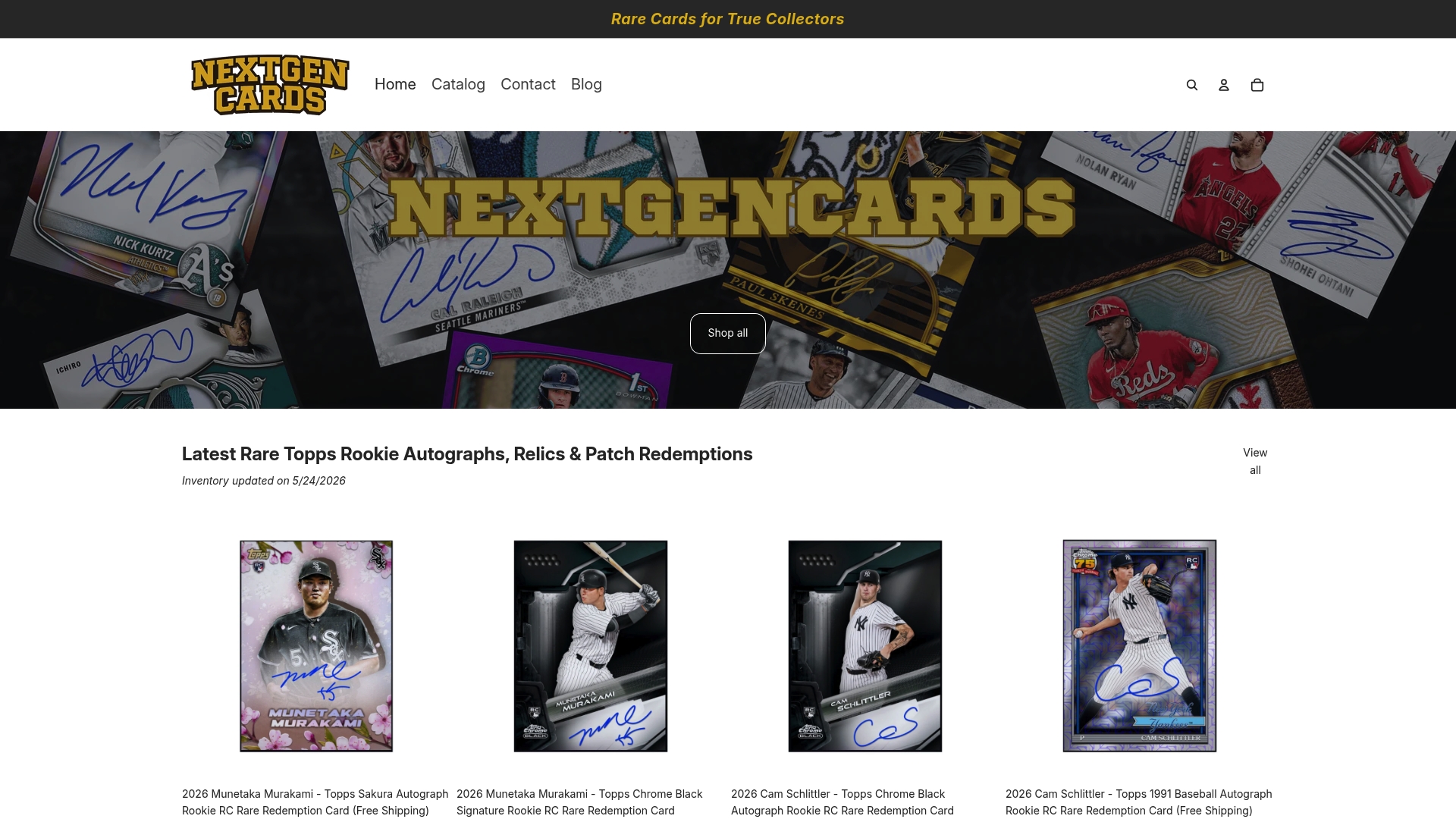
- Browse the Rookie Autographs & Relics collection for current MLB, NBA, and NFL redemption inventory.
- Check the Mason Miller Topps Chrome Platinum Anniversary autograph card as an example of the rare redemption pieces we carry.
- Visit Nextgencards directly to request provenance details on any listing before you buy.
Sources
- MLB Rookie Rankings: Kevin McGonigle finishes 2026 as clear No. 1; Mets’ Nolan McLean surges back onto list - CBS Sports
- Topps Baseball Cards Explained: A Beginner’s Guide To Every Major Product & Format - Baseball America
- Ripped
FAQ
What MLB rookie cards to invest in in 2026?
Cards tied to Kevin McGonigle, Sal Stewart, and JJ Wetherholt currently draw the strongest collector attention based on 2026 performance, with numbered Chrome parallels and on-card autographs generally holding value better than unnumbered base issues. Prioritize serial-numbered autographs and confirm grading before buying for long-term value.
Who are the best MLB rookies for 2026?
Kevin McGonigle finished as the top-ranked rookie in CBS Sports’ 2026 coverage, with Sal Stewart, Munetaka Murakami, JJ Wetherholt, and Kazuma Okamoto also drawing strong hobby and performance attention this season. Each brings a distinct collecting angle, from power production to international crossover appeal.
Which MLB rookies are the best to collect?
The same five names, McGonigle, Stewart, Murakami, Wetherholt, and Okamoto, lead most 2026 collector discussions because their on-field performance lines up with strong autograph and Chrome-card demand. Focus on their Bowman Chrome and Topps flagship autograph issues first.
What rookies to look for in Topps 2026?
Topps Chrome and Bowman Chrome releases in 2026 highlight rookie autographs from McGonigle, Wetherholt, and other top rookies as key chase cards, according to ripped.topps.com. Watch for Series 2 and Topps Update drops, since they add rookies who debuted after the initial Series 1 release.
Where can I buy verified 2026 rookie autograph cards?
Reputable specialty retailers like Nextgencards and established graded-card marketplaces offer stronger authentication safeguards than unverified private listings. Always request seller provenance and, for redemption cards, ask about fulfillment history before purchasing.
0 comments