

Autographed trading cards are the superior sports memorabilia gift because the signature itself drives scarcity and value, not the physical item it’s attached to. This is the core principle behind why autographed cards beat jerseys as gifts: collectors and investors treat the autograph as the primary value engine, with the card serving as the ideal vehicle. Services like PSA (Professional Sports Authenticator) have formalized this dynamic, making on-card autographs from players like Shohei Ohtani and Aaron Judge verifiable, gradable, and far more liquid than a signed jersey hanging in a closet. Cards also win on storage, display, and personalization accuracy. Every factor that matters to a serious collector points in the same direction.
Why autographed cards beat jerseys as gifts
The autograph economy operates on a simple principle: signature rarity outweighs the value of the base item. A plain rookie card from a limited print run, signed by a player during a rare signing window, can command prices that a mass-produced replica jersey never will. This is not sentiment. It is market structure.
Scarcity stacks in ways that jerseys cannot replicate. A rookie autograph card with a serial number of 10 or fewer copies carries three distinct scarcity signals: rookie status, low print run, and a verified signature. Scarcity stacking creates narrative-driven pricing that is transparent and traceable. Jersey provenance, by contrast, is murky. Was it game-worn? Who authenticated it? When was it signed? These questions are harder to answer definitively for a jersey than for a graded card with a PSA label.
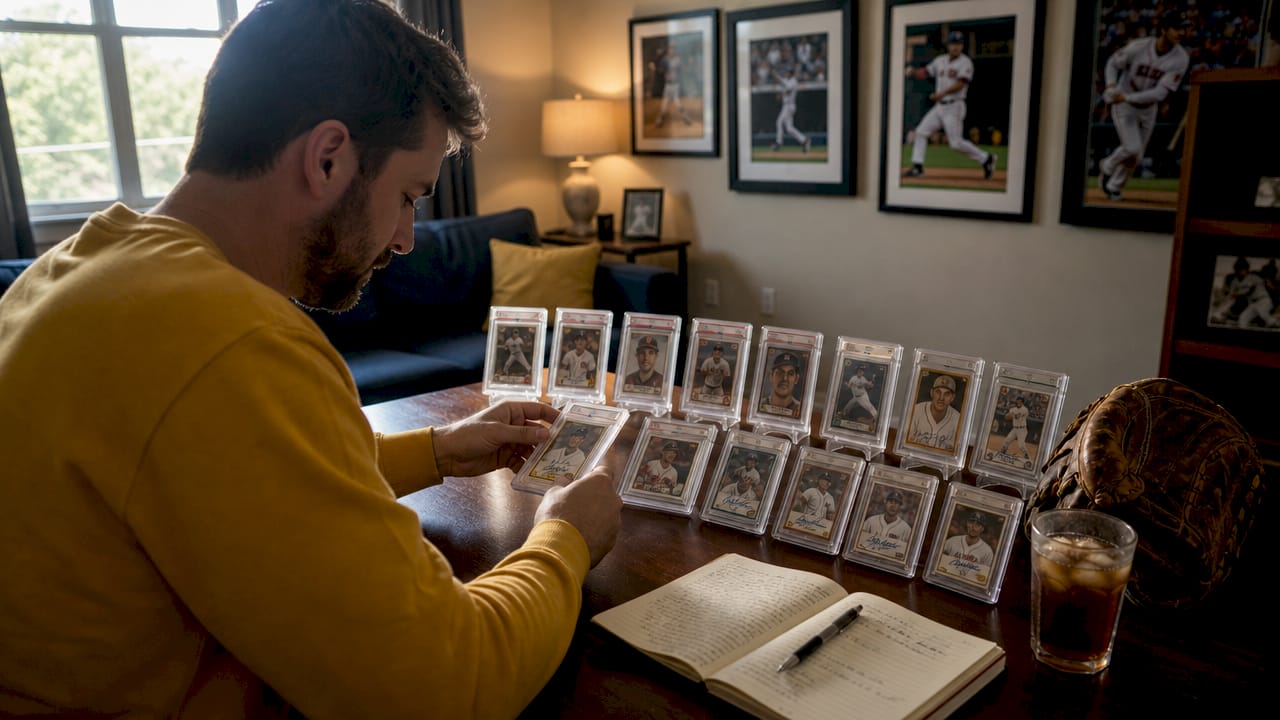
Authentication is where cards hold a structural advantage. Authentication and provenance lower fraud risk and improve price premiums for autographed cards more reliably than for jerseys. PSA grading assigns a numeric grade to both the card condition and the autograph quality, creating a standardized trust signal that resale markets recognize instantly. A jersey with a COA (Certificate of Authenticity) from an unknown third party carries far less weight.
Here is what separates high-value autographed cards from average ones:
- Signing window scarcity: Players sign fewer cards during rookie seasons, making early autographs rarer and more sought after.
- Serial numbering: Cards numbered to 25 or fewer copies are considered scarce; those numbered to 10 or fewer are premium collectibles.
- PSA or BGS grading: A PSA 10 autograph grade signals pristine signature quality, directly boosting resale value.
- Provenance clarity: Cards carry manufacturer-verified autograph programs, removing the chain-of-custody ambiguity common with jerseys.
- Liquidity: Graded autograph cards trade on platforms like eBay and PWCC with price history, making value transparent.
Pro Tip: When evaluating an autographed card as a gift, check the PSA population report for that specific card. A low population count confirms genuine scarcity and protects the recipient’s investment.
On-card vs. sticker autographs: which format actually matters?
Not all autographed cards are equal, and the format of the signature matters significantly to collectors. The industry distinguishes between on-card autographs, where the athlete signs directly on the card surface, and sticker autographs, where a pre-signed sticker is applied to the card during production. This distinction shapes both emotional value and market price.
Collectors prefer on-card autographs for their natural ink presence and stronger athlete connection. When a player signs directly on the card, the signature interacts with the card’s design, creating a more intentional and personal feel. Sticker autographs, by contrast, sit on top of the design and can feel manufactured, which reduces the emotional connection that makes a gift meaningful.
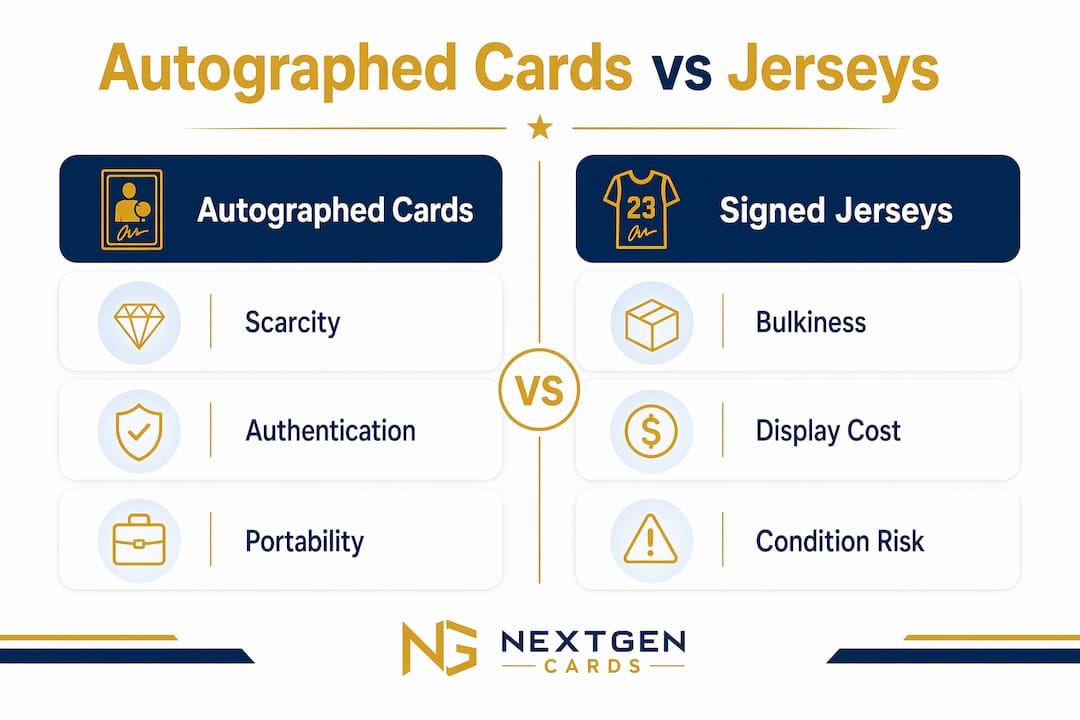
The table below shows how these formats compare across the factors that matter most to collectors and gift-givers:
| Factor | On-card autograph | Sticker autograph | Signed jersey |
|---|---|---|---|
| Collector preference | Highest | Moderate | Varies |
| Authentication clarity | Strong (PSA gradable) | Moderate | Weaker |
| Emotional connection | High | Lower | Moderate |
| Resale liquidity | High | Moderate | Low to moderate |
| Display suitability | Excellent | Good | Requires framing |
| Storage ease | Compact, protected | Compact, protected | Bulky, costly |
Sticker autographs are more affordable but consistently rank below on-card autos in collector desirability. For gifting purposes, this means an on-card autograph from a mid-tier player often outperforms a sticker auto from a bigger name. The format signals care and quality in a way that resonates with recipients who understand the hobby.
Signed jerseys occupy a different category entirely. A jersey autograph is typically a one-time signing event signature, often done quickly, with less control over placement and ink quality. The result is a signature that is harder to authenticate, harder to grade, and harder to display without significant additional cost.
Storage, display, and personalization advantages of autographed cards
Practical gifting considerations favor autographed cards on every front. Jerseys are bulky and costly to frame, whereas cards stack compactly and are easier to display and protect from damage. A PSA-graded card in a hard case can sit on a shelf, fit in a display stand, or be stored in a binder without any additional investment. A signed jersey requires a UV-protective frame that can cost $150 or more before the gift even reaches the recipient.
Condition risk is another factor. Jerseys fade, attract dust, and are vulnerable to humidity and light exposure. A graded card in a PSA slab is sealed and standardized, with its condition locked in at the time of grading. This matters both for long-term preservation and for resale value.
Personalization accuracy is where jersey gifts most often fail. Incorrect jersey number, color, or era causes real disappointment, and these errors are common when buyers rely on memory or incomplete research. Cards eliminate most of this risk because the player, year, set, and card number are printed on the card itself. You can verify every detail before purchase.
Key personalization advantages of autographed cards:
- Player specificity: Cards identify the exact player, year, and team, removing ambiguity.
- Era accuracy: Rookie cards capture a specific season, which matters to fans who follow a player’s career arc.
- Set identification: Topps Chrome, Bowman, and Prizm sets each carry distinct collector prestige, allowing precise gift targeting.
- Condition verification: PSA or BGS grades confirm the card’s physical state before it changes hands.
Pro Tip: Match the card’s year to a meaningful moment in the recipient’s fandom. A Shohei Ohtani rookie autograph from his first MLB season carries more personal weight than a recent parallel, even if the recent card has a lower serial number.
How to choose autographed cards as meaningful gifts in 2026
Selecting the right autographed card as a gift requires matching three variables: the recipient’s favorite player, the card’s authentication status, and the format’s collector appeal. PSA-authenticated cards are considered the best gifts by serious collectors because the authentication provides both gifting confidence and resale potential. This is the standard to meet.
Follow this process when selecting an autographed card gift:
- Identify the recipient’s player and era. A fan of Aaron Judge wants a Yankees-era card, not a minor league prospect card. Specificity signals genuine effort.
- Prioritize on-card autographs. Search for “on-card auto” or “auto RC” (rookie card) in listings. These carry the highest collector value and emotional resonance.
- Verify authentication. Look for PSA, BGS (Beckett Grading Services), or SGC certification. Avoid raw (ungraded) autographs unless you can verify provenance independently.
- Check serial numbering. Cards numbered to 99 or fewer are considered limited edition. Cards numbered to 25 or fewer are scarce. This detail directly affects perceived value.
- Review the rookie card significance. Rookie autographs carry the strongest long-term value narrative, making them the safest choice for a gift that appreciates over time.
The table below shows how different card types compare as gifts across key criteria:
| Card type | Authentication ease | Resale value | Gift impact | Recommended for |
|---|---|---|---|---|
| Rookie on-card auto | High (PSA gradable) | High | Very strong | Serious collectors |
| Veteran on-card auto | High | Moderate to high | Strong | Fans of established players |
| Sticker auto RC | Moderate | Moderate | Good | Budget-conscious gifting |
| Signed jersey | Low to moderate | Variable | Moderate | Casual fans only |
Gift disappointment is driven more by inaccurate personalization than by lack of personalization. A verified rookie autograph card matched precisely to the recipient’s favorite player eliminates the most common gifting failure in sports memorabilia. Understanding personalized gift value confirms that specificity and verification together create the strongest gift experience.
Key takeaways
Autographed cards outperform signed jerseys as gifts because the signature’s scarcity, authentication clarity, and format suitability create greater value and emotional connection than any jersey can deliver.
| Point | Details |
|---|---|
| Autograph as value driver | The signature’s rarity and provenance matter more than the item it’s attached to. |
| On-card autos win | On-card autographs carry stronger collector demand and emotional connection than sticker autos or jersey signatures. |
| Authentication is non-negotiable | PSA or BGS certification reduces fraud risk and boosts both gifting confidence and resale value. |
| Cards beat jerseys practically | Cards require less storage space, cost less to display, and are easier to protect from condition damage. |
| Personalization accuracy matters | Matching player, era, and set to the recipient prevents the most common gifting disappointment in sports memorabilia. |
Why I always recommend cards over jerseys for serious collectors
I’ve spent years watching collectors open gifts and seeing their reactions. The pattern is consistent: a PSA-graded on-card rookie autograph lands differently than a signed jersey, every time. The jersey gets admired and then stored in a closet. The card gets displayed, researched, and talked about.
The gifting pitfall I see most often is inaccurate personalization on jerseys. Someone buys a signed jersey in the wrong team color, the wrong number, or from the wrong era. The recipient notices immediately, and the sentiment deflates. Cards make this error almost impossible because every relevant detail is printed on the card itself. You can verify player, year, team, and set before you spend a dollar.
What I find most compelling about autographed cards in 2026 is the combination of emotional and financial value. A well-chosen rookie autograph from a player like Aaron Judge or Shohei Ohtani carries genuine investment potential alongside the personal connection. Jerseys rarely offer both. If you want to give a gift that the recipient will value for decades, the signed memorabilia card format is the clear choice. Authenticity, scarcity, and display quality all point in the same direction.
— Richard
Find authenticated rookie autographs at Nextgencards
Nextgencards curates a selection of rare rookie autographs and relic cards that meet the standards serious collectors and gift-givers demand. Every card in the inventory is sourced for authenticity, with options including PSA-eligible rookie autographs from players like Shohei Ohtani and Aaron Judge across Topps Chrome, Bowman, and Prizm sets.
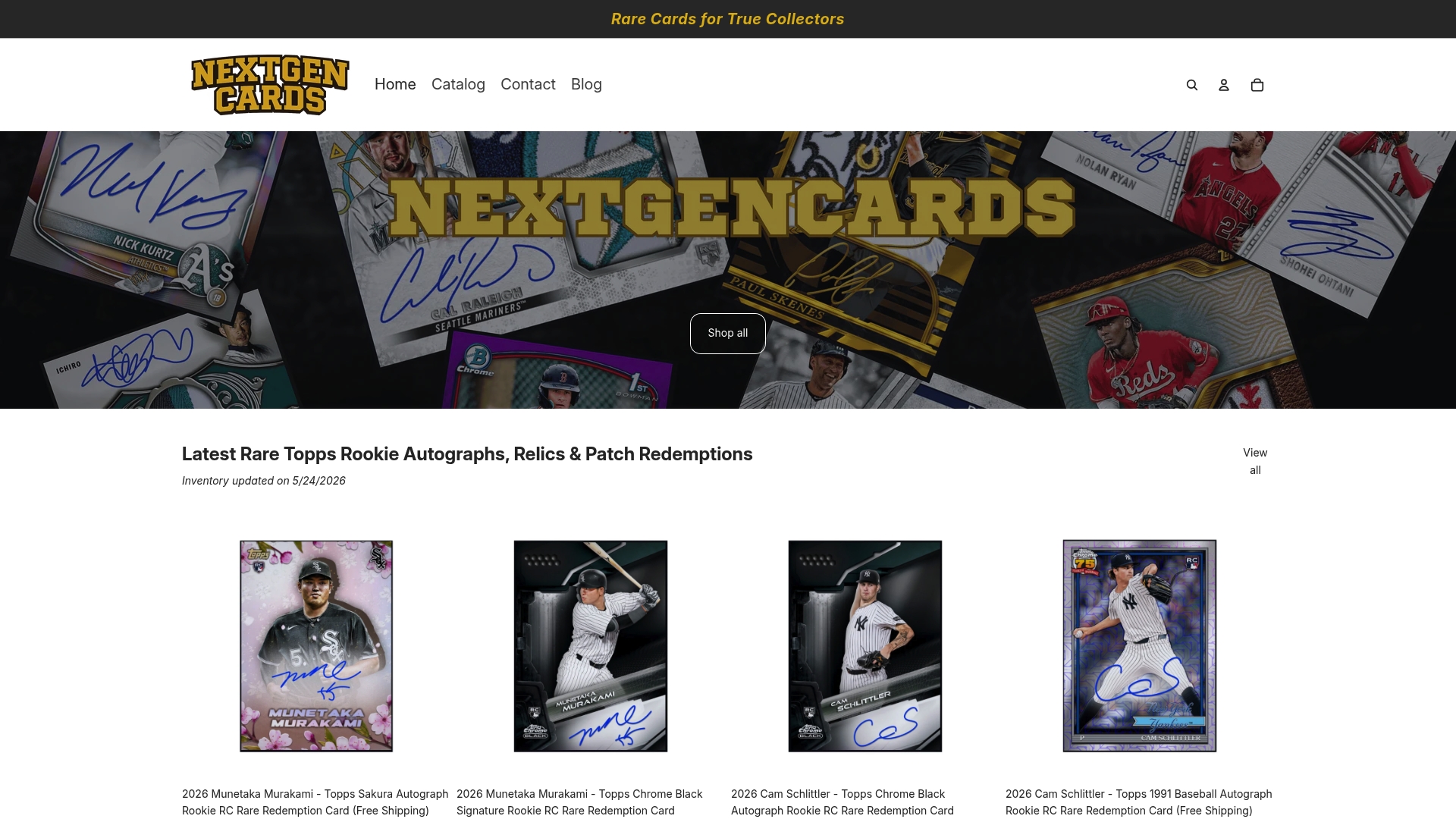
If you’re ready to give a gift that combines scarcity, authentication, and genuine collector appeal, explore the rookie autographs and relics collection at Nextgencards. Free shipping is available on select items, and the catalog is built specifically for collectors who know the difference between a sticker auto and a true on-card signature. This is where serious gifting starts.
FAQ
Are autographed cards better gifts than signed jerseys?
Autographed cards are better gifts for collectors because they offer clearer authentication, easier storage, and stronger resale value than signed jerseys. On-card autographs authenticated by PSA or BGS provide a verifiable trust signal that jerseys with third-party COAs rarely match.
What makes an autographed card valuable as a gift?
A rookie autograph with a low serial number, on-card signature, and PSA authentication stacks multiple scarcity signals that drive both emotional and monetary value. These factors make the card more meaningful and more liquid than a signed jersey.
How do I authenticate an autographed card before gifting it?
Submit the card to PSA, BGS, or SGC for grading and authentication before gifting. Alternatively, purchase cards that are already graded from trusted retailers like Nextgencards, which removes the authentication burden from the buyer. You can also review how to authenticate memorabilia for a full 2026 process guide.
What is the difference between on-card and sticker autographs?
An on-card autograph is signed directly on the card surface during a manufacturer-organized signing session, creating a more natural and intentional signature. A sticker autograph is a pre-signed adhesive label applied to the card during production, which collectors consistently rank lower in desirability and value.
Which autographed cards make the best gifts for sports fans?
Rookie on-card autographs from current stars, authenticated by PSA or BGS and serial-numbered to 99 or fewer copies, are the strongest gift choice. Matching the card to the recipient’s favorite player and era, as outlined in the certified autograph guide, maximizes both impact and long-term value.
0 comments