

Discreet card packaging means shipping a trading card in plain, unbranded exterior packaging that reveals nothing about the contents or the sender. As a buyer, specify “discreet packaging” in the order notes or checkout toggle. As a seller, use a plain box or mailer with a neutral return address. Major carriers including USPS, UPS, and FedEx allow plain packaging at no extra charge, so there’s no cost barrier to getting started.
- Buyers: At checkout, select the discreet packaging option or add a note requesting plain exterior packaging with no product description on the label.
- Sellers: Ship in an unbranded box or mailer, use a generic sender name such as “Fulfillment Center,” and skip branded tape.
Table of Contents
- Which materials and formats fit which card scenarios
- How to handle labels, return addresses, and tape without revealing contents
- What U.S. carriers allow, and where the legal lines are
- What the research says about discreet packaging and sales
- Key Takeaways
- Why discreet shipping deserves more attention from card collectors
- Nextgencards ships rare cards with privacy built in
- Useful sources
Which materials and formats fit which card scenarios
The right material depends on the card’s value, size, and whether it’s graded or raw. This table maps common options to their best use:
| Material | Best Use |
|---|---|
| Plain corrugated box + bubble wrap | Graded slabs, high-value single cards |
| Rigid top-loader mailer (plain exterior) | Raw single cards, rookie autographs |
| Flat stiff mailer + cardboard backer | Small multi-card sets, 2–5 cards |
| Poly mailer + cardboard stiffener | Low-cost bulk lots, base cards |
| Plain padded envelope | Protective sleeves, card savers |
Practical discreet materials include plain boxes, unbranded sealable mailbags, padded envelopes, and plain tape. Tamper-evident options add a layer of security: tamper-evident mailers seal with a strip that shows visible damage if opened, and tamper tape over box seams signals interference. For high-value cards, both are worth the small added cost.
Interior protective inserts matter too. Bubble wrap, foam padding, card savers, and rigid top-loaders protect the card itself, while a cardboard stiffener prevents flex damage in transit. These are separate from the exterior discreet layer.
Pro Tip: Keep the exterior completely plain, but use the interior as a brand moment. A branded tissue paper wrap, a small thank-you card, or a collector’s insert inside the box delivers a premium unboxing experience without compromising exterior discretion. This approach, recommended by Shopify’s packaging guidance*, lets you protect privacy and reinforce brand recognition at the same time.*
How to handle labels, return addresses, and tape without revealing contents
The shipping label is often the weakest point in an otherwise discreet package. A plain brown box with a return address that reads “RookieCardShop.com” defeats the entire purpose.
Label and addressing checklist:
- Use a generic sender name: “Fulfillment Center,” a PO Box, or a 3PL address rather than your store name.
- Omit product descriptions from the label. The description field should read “Collectible” or “Merchandise,” not “Rookie Autograph Card.”
- Mask internal SKUs or order numbers that could hint at product type.
- For packing slips inside the package, omit the product name if the recipient requested discreet packaging, or include a generic description only.
- Never include promotional inserts that name the product on the exterior or in a visible window.
Tape choices: Use plain kraft tape, clear packing tape, or plain brown tape. Branded tape with your store logo or a sports-card design undoes the neutral exterior immediately. Practitioners consistently recommend plain kraft or clear tape as the standard for discreet shipments.
Tracking visibility: Even with a completely plain exterior, the carrier’s tracking page will still show the carrier name, tracking number, and delivery status. It will not show the sender’s store name or product description unless you’ve entered that information in the shipment record. Set buyer expectations clearly: tracking exists, but it won’t reveal what’s inside.
For more on what buyers see during transit, the sports card order tracking guide at Nextgencards covers exactly what information appears at each stage.
What U.S. carriers allow, and where the legal lines are
USPS, UPS, and FedEx all permit plain, unbranded packaging. None of them charge extra for it. A seller can ship in a plain brown box with no store branding and pay standard rates. This makes discreet delivery packaging a genuinely cost-neutral option for most domestic card shipments.
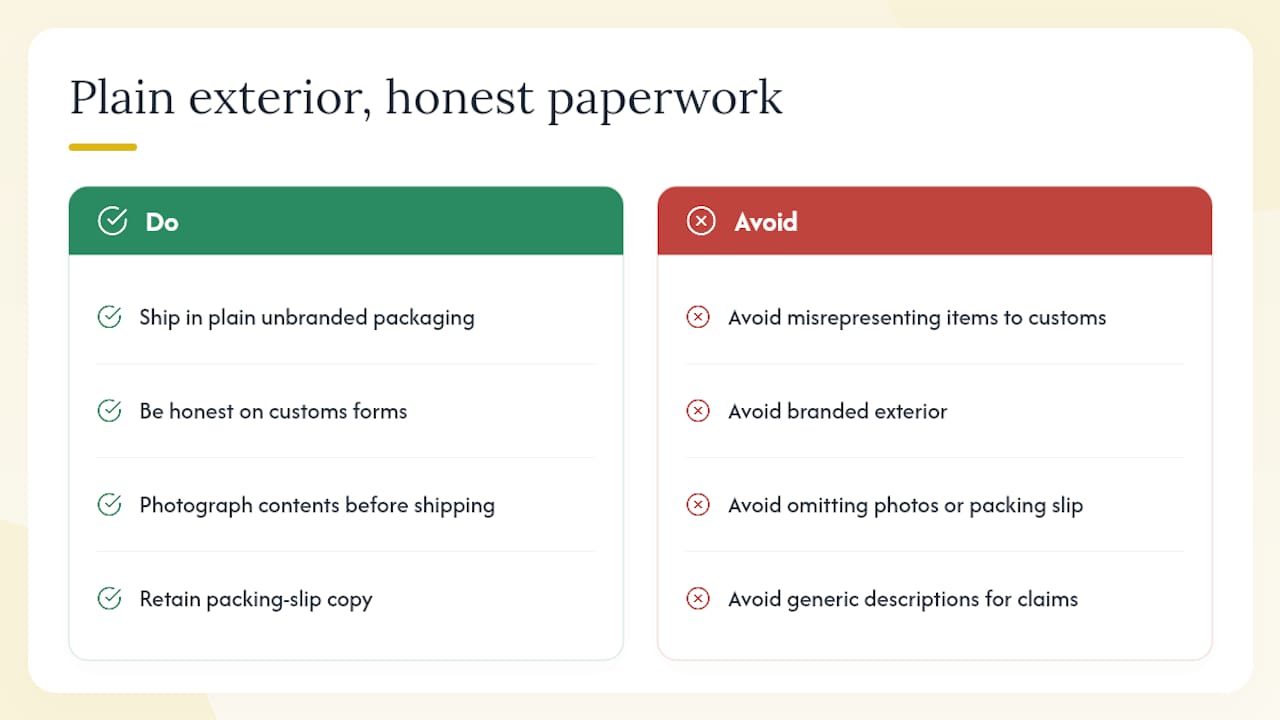
For international shipments, the rules shift. Accurate HS codes and customs declarations remain mandatory regardless of how plain the exterior is. Discreet packaging means concealing contents from casual observers, not misrepresenting them to customs officials. The declared value, item description, and HS code on a customs form must be accurate. Misrepresenting contents to avoid duties or import restrictions is a federal offense.
The one-sentence rule: plain exterior, honest paperwork.
Returns and insurance: A discreet exterior can complicate insurance claims if the package is lost or damaged, because the carrier’s record may show only a generic item description. Document the actual contents, value, and condition with photos before shipping. Keep a copy of the packing slip with the full product description on file, even if that slip isn’t included in the package itself. For rare cards worth significant amounts, declared value coverage through the carrier or a third-party shipper’s insurance is worth the added cost. The rare cards shipping guide at Nextgencards covers insurance and handling specifics in more detail.
What the research says about discreet packaging and sales
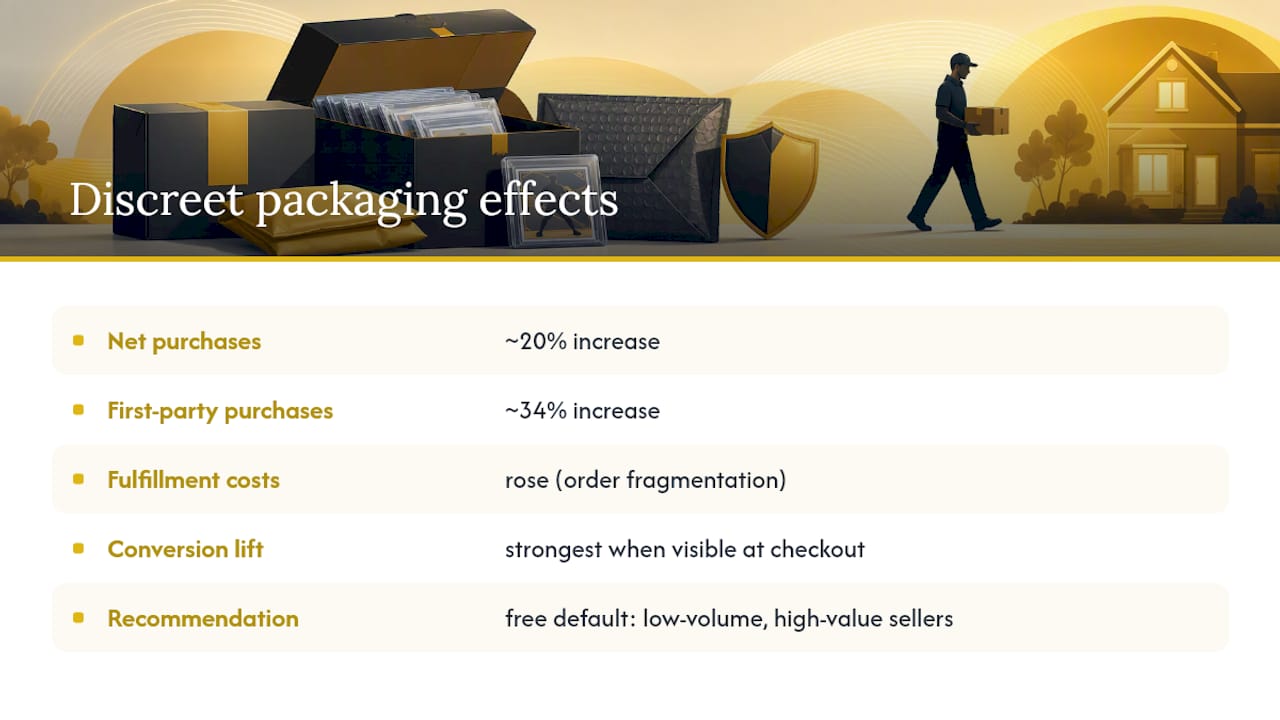
The evidence for discreet packaging’s commercial impact is specific. A Wharton academic study found that introducing a discreet packaging option increased net consumer purchases by roughly 20% overall, with first-party item purchases rising by approximately 34%. The tradeoff: fulfillment costs rose due to order fragmentation, as buyers split purchases to qualify for discreet shipping on specific items.
Key finding: Offering discreet packaging increased net purchases by ~20% and first-party purchases by ~34%, per Wharton research, but sellers should account for higher per-order fulfillment costs.
For trading-card sellers, the implication is clear. Buyers purchasing high-value rookie autographs, patch cards, or graded relics are exactly the privacy-sensitive segment that responds to this feature. The conversion lift is strongest when the option is visible at checkout, not hidden in a FAQ.
Sellers with thin margins should weigh the fulfillment cost increase against the conversion gain. For low-volume, high-value card sales, the math typically favors offering discreet packaging as a free default. For high-volume bulk lots, a tiered approach (free plain mailer, small fee for rigid discreet box) keeps costs manageable.
Key Takeaways
Discreet card packaging protects buyer privacy and reduces theft by using plain, unbranded exteriors while keeping all customs declarations fully accurate and compliant.
| Point | Details |
|---|---|
| Definition | Plain exterior packaging that conceals contents and sender identity, with no extra carrier fees. |
| Buyer action | Request plain packaging at checkout or in order notes; confirm the return address is also generic. |
| Seller implementation | Use plain boxes or mailers, generic sender name, plain tape, and a neutral packing slip template. |
| Legal compliance | Exterior can be plain, but customs declarations and HS codes must remain accurate for all international shipments. |
| Nextgencards approach | Nextgencards ships rare rookie autographs and high-value cards with discreet packaging to protect collector privacy and card condition in transit. |
Why discreet shipping deserves more attention from card collectors
Most packaging guides treat discreet shipping as a niche concern for sensitive consumer goods. For trading-card collectors, it’s actually a practical standard. A graded PSA 10 rookie autograph sitting on a porch in a box that says “Sports Card Retailer” is a theft risk that a plain brown box simply isn’t. The value density of high-end cards, where a single card can be worth more than a laptop, makes the exterior packaging decision genuinely consequential.
What gets overlooked is the label, not the box. Sellers invest in plain corrugated boxes and then print a return address with their store name in full. That single detail undoes everything. The fix costs nothing: a generic sender name or a 3PL address on the label template, set once, applied to every discreet order automatically.
The research finding of approximately a 20% increase in purchases when discreet packaging is offered should also reframe how small card sellers think about this feature. It’s not a customer-service nicety. For buyers purchasing high-value cards as gifts, or collectors who simply prefer low-profile deliveries, the option to ship discreetly can be the deciding factor between completing a purchase and abandoning a cart.
Nextgencards ships rare cards with privacy built in
Serious collectors buying rookie autographs, patch cards, and graded relics deserve shipping that protects both the card and their privacy. Nextgencards handles every high-value order with plain exterior packaging, a generic sender name on the label, and protective inserts matched to the card’s grade and value. No branded tape, no product names on the exterior, no surprises for gift recipients.
Browse the rookie autographs and relics collection at Nextgencards to find scarce cards from current MLB, NBA, and NFL stars, all shipped with the discretion and protection that high-value cards require. Every order includes shipping protection, and select cards ship free. If you want to confirm packaging specifics before purchasing, the Nextgencards shop includes shipping policy details on each product page.
Useful sources
- Discreet Shipping & Packaging Explained | Pitney Bowes
- Discreet-Packaging_Nov19_2025.pdf (Wharton/academic study)
- Shopify — Discreet packaging: benefits and best practices
- Shopify — Discreet shipping (practical guidance)
- Understanding Discreet Packaging: Ensuring privacy in eCommerce shipments | FreightAmigo
- Discreet packaging for customers | International Logistics Group
- Discreet shipping explained | ShipBob
0 comments