

Tracking a sports card order online is the process of monitoring shipment status from the moment a seller generates a label through final delivery to your door. Standard order processing takes 2–5 business days, with delivery estimated at 10–15 business days depending on the shipping method. That window matters to collectors managing preorders, budget timelines, and collection inventory. Knowing how the system works, which tools to use, and what each status update actually means keeps frustration low and your collection plans on track.
How to track sports card orders online: tools and methods
The most reliable starting point for online sports card tracking is the confirmation email from your seller. That email contains your order number and, once the seller ships, a carrier tracking number linked to USPS, UPS, or FedEx. Entering that number directly on the carrier’s website gives you the most current scan data available.
Beyond the carrier website, collectors have three practical tool categories to choose from:
- Email-based tracking: Your confirmation and shipping emails contain direct tracking links. This works for one-off purchases but becomes hard to manage across multiple orders.
- Carrier apps: USPS Mobile, UPS Mobile, and FedEx Mobile each send push notifications when your package status changes. Setting up alerts is the single fastest way to get delivery updates without checking manually.
- Collection management apps: Platforms designed for collectors let you log purchases, attach tracking numbers, and tie shipment status directly to your inventory. This is the best approach when you are managing five or more active orders at once.
| Tool type | Tracking available | Best for |
|---|---|---|
| Seller email link | Yes, basic | Single orders |
| Carrier app | Yes, with alerts | Multiple carriers |
| Collection management app | Yes, integrated | Active collectors |
| Spreadsheet tracker | Manual entry only | Budget and preorder logging |
Pro Tip: Set up push notifications on your carrier app the moment you receive a tracking number. You will get real-time status changes without logging in repeatedly.
How do I interpret tracking updates and avoid WISMO inquiries?
“Where is my order” (WISMO) is the most common frustration in the collector community. The good news is that most WISMO anxiety is preventable with one key fact: an order marked “shipped” does not mean the carrier has the package. Tracking info can lag 1–3 business days after a shipment notification is sent.
Sellers generate shipping labels in advance. The label creation triggers the “shipped” email, but the carrier does not scan the package until it physically arrives at a facility. That gap is normal and does not indicate a problem.
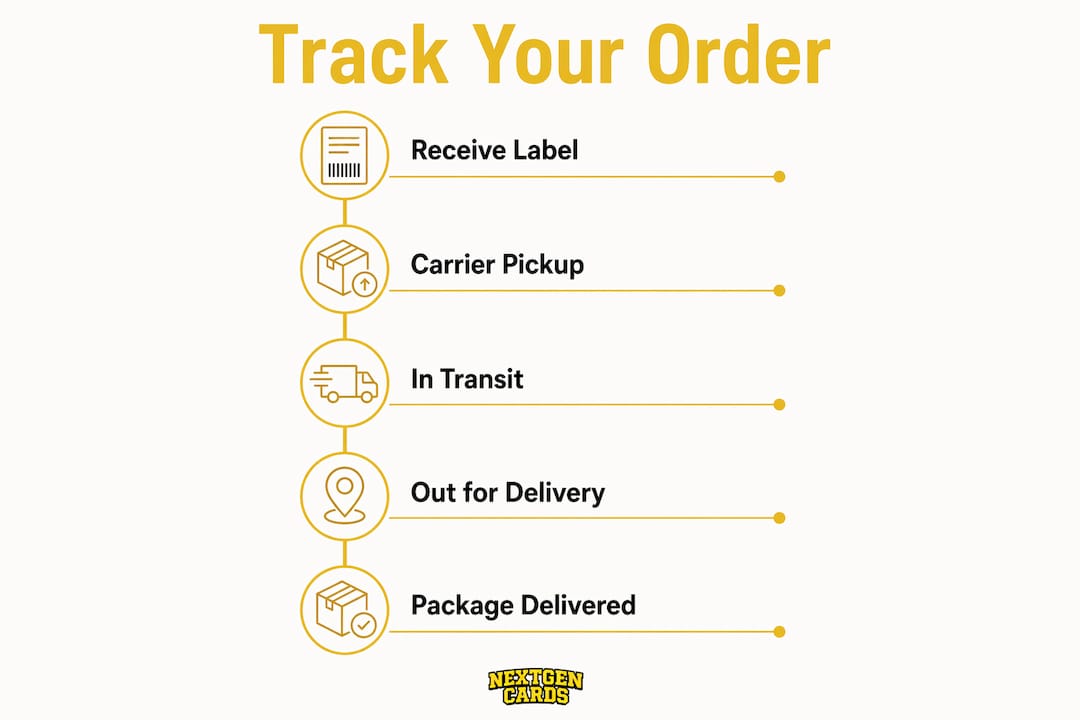
Here is what each common status actually means:
- Label created: The seller has printed a label. The package has not left yet.
- In transit: The carrier has scanned the package and it is moving through the network.
- Out for delivery: The package is on a local delivery vehicle today.
- Delivered: The carrier logged a successful drop-off at your address.
Wait for the first carrier scan before opening a support ticket. Opening inquiries early creates unnecessary back-and-forth and does not speed up delivery. If tracking shows no carrier scan after 3 business days from your shipping notification, then contacting the seller is appropriate.
Split shipments add another layer of complexity. If you ordered multiple cards and they ship from different locations or at different times, each item gets its own tracking number. Check your confirmation email carefully for multiple tracking links before assuming a card is missing.
Pro Tip: Screenshot your tracking page when a package shows “out for delivery.” If a carrier marks a package delivered but you did not receive it, that screenshot is your first piece of evidence for a claim.
Best practices for managing preorders and landed cost tracking
Serious collectors treat preorder tracking as inventory management. The moment money leaves your account, that preorder becomes a line item in your collection budget. Logging it immediately prevents forgotten purchases and missed inspection windows.
The fields worth tracking for every preorder are:
- Product name and card details (player, year, set, parallel)
- Retailer or seller name
- Order date and order number
- Quantity ordered
- Price paid per card
- Shipping cost
- Expected delivery date
- Cancellation or return window
- Tracking number (add when available)
- Post-delivery inspection status
Landed cost is the true cost of acquiring a card. It includes the card price, shipping, applicable tax, and any platform fees, minus discounts. Tracking landed cost prevents the common mistake of underestimating what a card actually cost you, which skews resale decisions and collection valuations.
| Field | Why it matters |
|---|---|
| Order date | Anchors your cancellation and dispute windows |
| Landed cost | Reflects true acquisition cost for resale or insurance |
| Expected delivery | Triggers follow-up if tracking stalls |
| Inspection status | Confirms card condition matches listing description |
| Post-release price | Informs whether to hold, sell, or trade |
Set a calendar reminder for two days before your expected delivery date. If tracking has not updated by then, you have time to contact the seller before any dispute window closes. Collectors who skip this step often find themselves outside the claim period when a package goes missing.
What shipping methods affect how you check sports card order status?
The shipping method a seller chooses directly determines whether you can monitor your sports card shipment at all. Not every method includes tracking, and that gap matters when a card is worth real money.
Plain white envelopes (PWE) are used for low-value cards under $20. A PWE with a first-class stamp costs roughly $1 to send. The tradeoff is zero tracking and no insurance. If the card goes missing, you have no recourse.
For cards valued above $20, bubble mailers or USPS Ground Advantage are the standard. These options cost $3–$15 depending on weight and distance, but they include a tracking number and basic carrier accountability. That tracking number is what makes it possible to check your sports card order status at every step.
High-value cards, including rookie autographs, relics, and limited edition parallels, should always ship in rigid boxes with tracking and declared insurance. The added cost is small relative to the card’s value, and it gives you a documented claim path if something goes wrong.
A few practical points for collectors buying from individual sellers:
- Ask about the shipping method before completing a purchase on any peer-to-peer platform.
- For cards above $50, request a bubble mailer or box with tracking as a condition of the sale.
- Discounted shipping labels bought through online postage platforms cost less than counter prices at the post office, so sellers have little excuse to skip tracking on higher-value cards.
Pro Tip: If a seller insists on PWE for a card worth more than $20, factor in the full replacement cost before agreeing. The $2–$3 saved on shipping is not worth the risk of an untracked, uninsured loss.
Key Takeaways
Tracking your sports card order online requires understanding shipping timelines, reading status updates correctly, and logging every purchase as a landed cost line item from day one.
| Point | Details |
|---|---|
| Know the timeline | Processing takes 2–5 business days; delivery runs 10–15 business days via standard methods. |
| Wait for carrier scan | “Shipped” means a label exists, not that the carrier has the package. Allow 1–3 days for the first scan. |
| Log landed cost immediately | Record price, shipping, tax, and fees at purchase to track true acquisition cost. |
| Match shipping to card value | Cards above $20 need tracked shipping; high-value cards need insurance and a rigid box. |
| Use alerts, not manual checks | Carrier app push notifications give faster updates than logging in to check status. |
My take on tracking: patience is a system, not a personality trait
Collectors who struggle most with order tracking are usually the ones treating it as a passive activity. They buy a card, wait for an email, and then panic when nothing updates for two days. That reaction is understandable, but it is also avoidable.
The collectors I respect most treat their tracking setup the way a serious investor treats a portfolio dashboard. Every purchase gets logged the same day. Every tracking number goes into one place. Every expected delivery date gets a calendar reminder. That system removes the anxiety because you always know exactly where every order stands.
The WISMO problem is really an information gap problem. When you do not know what “label created” means, a two-day silence feels alarming. When you do know, it is just Tuesday. Building that knowledge into your routine changes the entire experience.
One thing I would push back on is the idea that collection management apps are only for high-volume collectors. Even if you buy three or four cards a month, having a single place to tie your tracking numbers to your inventory is worth the setup time. It also forces you to calculate landed cost, which most casual collectors skip. Skipping landed cost is how collectors end up surprised when a card they thought cost $40 actually cost $58 after shipping and fees.
The fast shipping benefits of buying from reputable specialty shops are real, but they only matter if you are set up to receive and verify the shipment properly. The tracking system is your half of that equation.
— Richard
Nextgencards: rare cards with tracked, secure shipping
Nextgencards specializes in the cards serious collectors actually want, including rookie autographs, relics, and limited edition parallels from athletes like Shohei Ohtani and Aaron Judge. Every order comes with reliable shipping and clear tracking so you can monitor your sports card shipment from purchase to delivery.
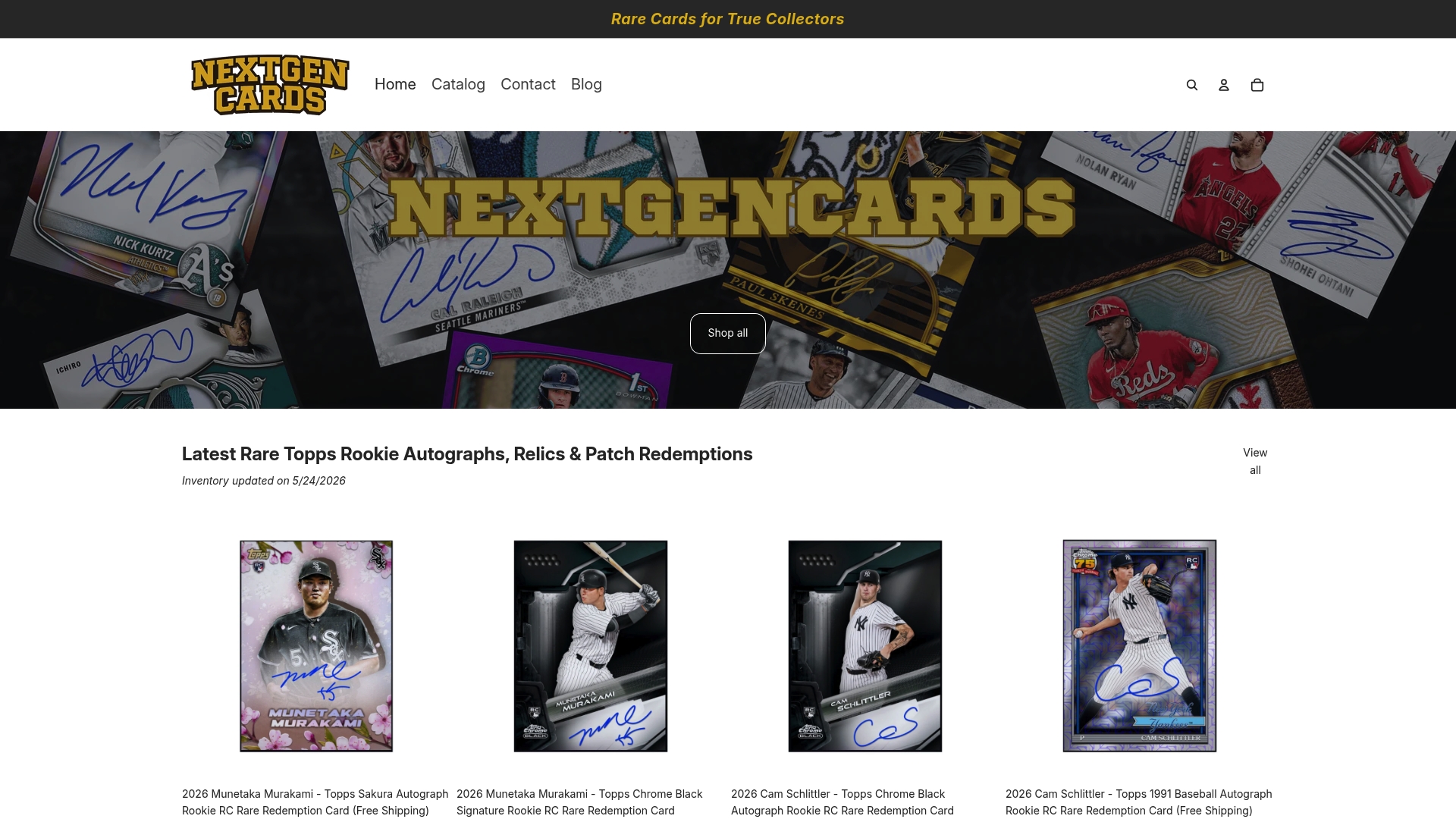
For collectors who want both rarity and peace of mind, Nextgencards offers rookie autographs and relics with secure, tracked shipping on select items. Free shipping is available on qualifying orders, which lowers your landed cost without sacrificing accountability. If you are building a serious collection, buying from a source that handles shipping correctly is as important as the card itself.
FAQ
How long does it take to track my sports card order?
Tracking info updates within 1–3 business days after your shipping notification. The full delivery window is typically 10–15 business days from order processing.
Why does my tracking number show no movement?
A tracking number with no activity usually means the seller printed the label but has not handed the package to the carrier yet. Wait 2–3 business days from your shipping email before contacting the seller.
What is the best shipping method for tracked sports card delivery?
USPS Ground Advantage or a bubble mailer with tracking is the standard for cards above $20. Bubble mailer shipping with tracking costs $3–$4 and provides full carrier accountability.
What is landed cost and why does it matter for collectors?
Landed cost is the total amount you paid for a card, including price, shipping, tax, and fees. Tracking landed cost gives you an accurate acquisition number for resale decisions and collection valuation.
Should I contact the seller if my order shows “label created” for two days?
No. “Label created” means the shipping label exists but the carrier has not scanned the package. Allow 1–3 business days before reaching out, as this delay is standard across most online card retailers.
0 comments