


Rare card shipping is defined as a specialized set of handling, packaging, and carrier protocols designed to protect high-value collectibles from physical damage, theft, and environmental exposure during transit. Standard mail methods fail rare cards because a single corner ding or moisture stain can reduce a card’s grade and wipe out hundreds of dollars in value. Understanding why rare cards ship differently is the first step toward protecting your investment at every stage of the delivery process. Nextgencards ships rare rookie autographs and relics with tracked, insured methods precisely because the stakes demand it.
Why rare cards ship differently than standard mail
The core reason rare cards require unique shipping methods comes down to risk versus value. A common card worth $2 can survive a plain white envelope. A Shohei Ohtani rookie autograph worth $500 cannot. Standard PWEs carry around a 20% risk of being crushed by automated sorting machinery. That single statistic explains why serious collectors treat shipping as part of the card’s total cost of ownership.
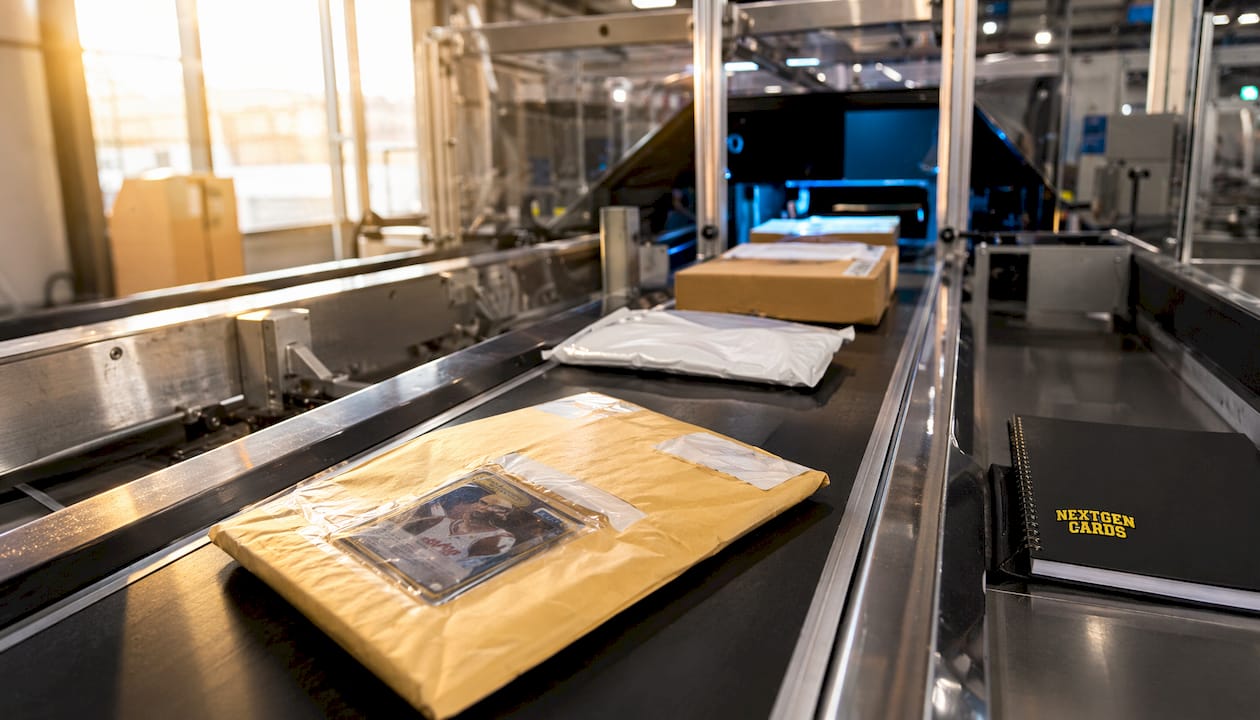
Automated sorting machines process millions of pieces of mail daily. They apply pressure, bend flexible envelopes, and route packages through mechanical channels that were never designed with a 1/1 patch card in mind. The physical forces involved are real and measurable. Rare card shipping methods exist specifically to counteract those forces with rigid packaging, protective layers, and carrier choices that minimize machine contact.
Marketplace rules reinforce these protocols. eBay requires tracking on all shipments over $20 and signature confirmation on shipments over $750 to qualify for seller protection. Without compliance, any lost or stolen package defaults to a buyer-wins dispute. These thresholds are not suggestions. They are the floor for responsible rare card delivery.
What protective packaging layers does a rare card actually need?
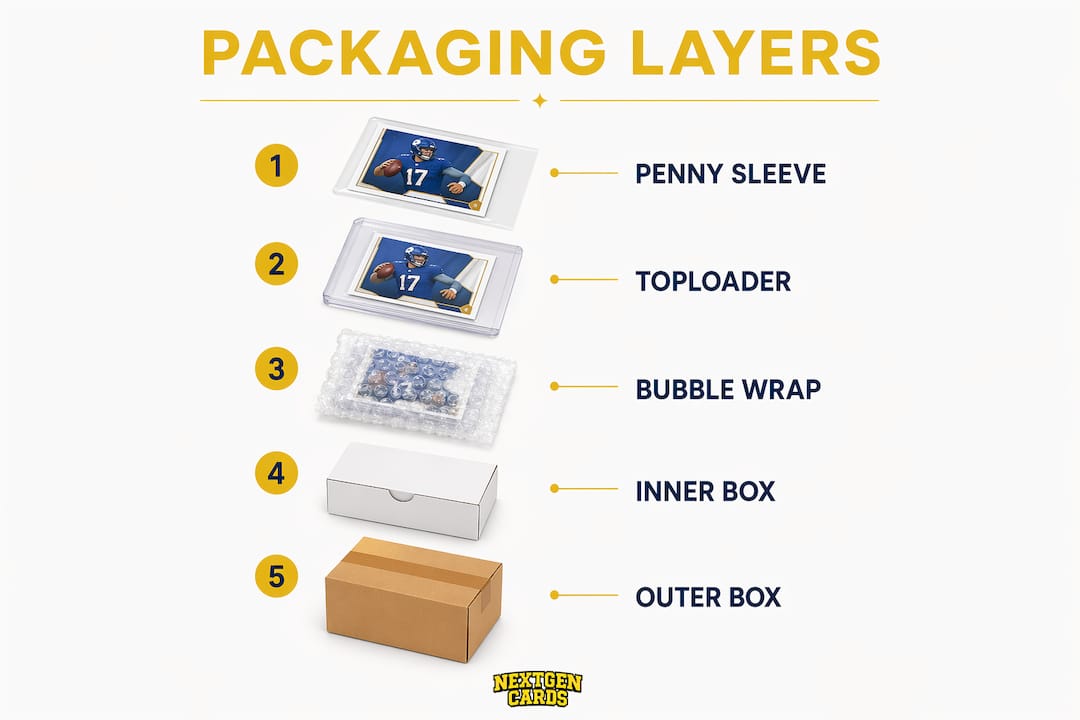
Multi-layer packaging is the industry standard for shipping rare cards safely. Each layer serves a distinct protective function, and skipping any one of them increases risk significantly. Here is the correct order of protection:
- Penny sleeve: Slide the card into a clear penny sleeve first. This protects the surface from scratches during handling and insertion into the next layer. Clear penny sleeves are mandatory since colored or opaque sleeves cause grading facility delays.
- Toploader or Card Saver: Place the sleeved card into a rigid toploader for raw cards, or a semi-rigid Card Saver for grading submissions. PSA and major graders prefer Card Savers sized 3 5/16" x 4 7/8" to avoid processing delays and damage.
- Team bag: Seal the toploader or Card Saver inside a resealable team bag. This layer provides water resistance and keeps the card from sliding out during transit.
- Cardboard sandwich: Place the bagged card between two pieces of rigid cardboard cut slightly larger than the toploader. Write “Do Not Bend” clearly on the outside. Flagging the mailer prompts manual handling at sorting facilities.
- Bubble mailer or box: For cards under $100, a padded bubble mailer works. For cards over $500, use a rigid box.
Pro Tip: Never tape directly onto a toploader. Adhesive residue transfers to the card surface and can cause grading deductions. Seal the team bag instead, using painter’s tape on the bag’s exterior.
For ultra-high-value cards, double-boxing with 2–3 inches of padding is mandatory. The outer box conceals the package’s contents from potential theft and absorbs impact that would otherwise reach the inner box. This method is the accepted standard for cards valued above $500.
Why do rare cards require premium shipping services and insurance?
Premium shipping services reduce the number of handling points a package encounters. Fewer handling points mean less vibration, less mechanical contact, and a lower probability of damage. Faster transit directly lowers cumulative vibration damage and the chance of surface defects. This is why collectors choose expedited services for rare card delivery options rather than standard ground shipping.
The carrier choice matters for insurance too. Standard carrier insurance frequently excludes collectibles and second-hand goods. Third-party insurance covers up to $10,000 and fills the gaps that standard carrier policies leave open. Relying on USPS declared value alone for a $2,000 graded slab is a significant financial risk.
Here is how shipping service requirements scale with card value:
- Under $20: A tracked bubble mailer is sufficient. Tracking is optional but recommended.
- $20 to $299: Tracking is required. A padded bubble mailer with a toploader and cardboard sandwich provides adequate protection.
- $300 to $749: Tracking plus declared value insurance. Use a rigid box with double-layer packaging.
- $750 and above: Signature confirmation is required for eBay seller protection. High-value cards above $500 benefit from FedEx 2Day or UPS Next Day Air, which cost $20–$50 more but significantly reduce catastrophic loss risk.
Photo documentation is not optional for collectors who want insurance claims to succeed. Photographing every packaging layer before sealing is the only way to prove that damage occurred in transit rather than before shipment. Without those photos, carriers and third-party insurers have grounds to deny the claim entirely.
How do shipping methods vary by card condition and value?
Raw cards and graded slabs have fundamentally different shipping needs. A raw card is flexible and vulnerable to bending. A graded slab is rigid but heavier, and graded slabs trigger USPS non-machinable surcharges due to their weight and dimensions. That extra cost is worth paying because box packaging prevents the crushing that a bubble mailer cannot.
| Card type | Recommended packaging | Carrier service |
|---|---|---|
| Raw card under $100 | Penny sleeve, toploader, team bag, bubble mailer | USPS First Class with tracking |
| Raw card $100–$499 | Penny sleeve, Card Saver, team bag, rigid box | USPS Priority Mail with insurance |
| Graded slab under $500 | Slab protector, bubble wrap, rigid box | USPS Priority Mail with insurance |
| Graded slab $500 and above | Slab protector, inner box, double-box with padding | FedEx 2Day or UPS Next Day Air |
Micro-movement inside toploaders during transit is the primary cause of invisible but critical damage, including corner dings and surface stress marks. Properly sized protectors create uniform dimensions that minimize movement inside shipping boxes and prevent slab-to-slab contact. This is why fit matters as much as the protector type itself.
For multi-card shipments, packing tight with rubber bands and cardboard dividers prevents shifting and warping. Each card should be individually sleeved and protected before being grouped together. Never stack raw cards directly against each other without individual protection.
Pro Tip: When shipping graded slabs, wrap each slab individually in bubble wrap before placing them in the inner box. This prevents slab-to-slab contact that causes corner chips on the plastic case.
What common mistakes lead to damage or denied insurance claims?
Most shipping failures come from predictable, avoidable errors. Collectors who understand these mistakes protect both their cards and their ability to recover losses when things go wrong.
- Taping directly on toploaders. Adhesive residue damages card surfaces and causes grading deductions. Always tape the team bag, not the toploader.
- Using plain white envelopes for valuable cards. A PWE offers zero rigidity. Automated sorting machines crush them regularly, and there is no recourse without tracking or insurance.
- Skipping photo documentation. Without photos of each packaging layer, insurance claims are nearly impossible to win. Carriers require proof that damage occurred during transit.
- Omitting tracking or signature confirmation. Selling on eBay without tracking on shipments over $20 removes all seller protection. A buyer can file an Item Not Received claim and win automatically.
- Underdeclaring value. Listing a $1,000 card at $50 declared value saves a few dollars on insurance but caps your payout at $50 if the package is lost. The math never works in your favor.
- Allowing micro-movement inside packaging. Loose cards shift during transit and accumulate corner damage. Fill empty space with bubble wrap or foam inserts to eliminate movement entirely.
Pro Tip: Before sealing any package, gently shake it. If you hear or feel movement inside, add more padding. A properly packed card shipment makes no sound when shaken.
Key Takeaways
Rare cards require specialized shipping because their value, fragility, and marketplace rules demand layered protection, premium carriers, and verified insurance at every step.
| Point | Details |
|---|---|
| Layered packaging is non-negotiable | Use penny sleeve, toploader or Card Saver, team bag, and cardboard sandwich for every rare card. |
| Value determines carrier choice | Cards above $500 require FedEx 2Day or UPS Next Day Air to reduce handling and catastrophic loss risk. |
| Signature confirmation protects sellers | eBay requires signature confirmation on shipments over $750 for full seller protection coverage. |
| Third-party insurance fills coverage gaps | Standard carrier insurance excludes collectibles; third-party policies cover up to $10,000. |
| Photo documentation wins claims | Photograph every packaging layer before sealing to prove transit damage for insurance purposes. |
Shipping standards in 2026 have raised the bar for collectors
The collector community has shifted significantly in recent years. When I started paying close attention to how rare cards travel, the standard advice was a toploader and a bubble mailer. That was enough when a “valuable” card meant $50. It is not enough anymore.
The cards moving through the market today, rookie autographs, numbered relics, and graded PSA 10 slabs, carry real financial weight. A single mishandled package can erase months of collecting progress. What I have seen consistently is that collectors who treat shipping as an afterthought are the same ones posting about damaged arrivals in collector forums.
The biggest misconception I encounter is that premium shipping is wasteful spending. Paying $35 for FedEx 2Day on a $1,500 card is not extravagant. It is basic risk management. The collectors who understand fast shipping benefits for rare cards are the ones who rarely deal with claims or disputes.
Photo documentation is the habit that separates experienced shippers from beginners. I photograph the card, the sleeve, the toploader, the team bag, the cardboard sandwich, and the sealed outer package every single time. That process takes three minutes and has saved collectors from losing thousands of dollars in denied claims.
The future of rare card shipping points toward more third-party insurance options and better carrier tracking granularity. Until those improvements are universal, the responsibility falls on the collector to pack correctly, declare honestly, and document thoroughly.
— Richard
Rare cards from Nextgencards, shipped with the protection they deserve
Nextgencards specializes in rookie autographs, relics, and limited-edition cards from athletes like Shohei Ohtani and Aaron Judge. Every card in the inventory carries the kind of value that demands the shipping protocols covered in this guide.
When you purchase from Nextgencards, tracked and insured shipping is built into the process for high-value items. The rare Topps rookie autographs and relics collection features authenticated cards with secure delivery options that match the card’s worth. Select items also qualify for free shipping, giving collectors a cost-effective way to add scarce, authenticated pieces to their collections. Browse the full catalog and buy with confidence knowing your card arrives protected.
FAQ
Why do rare cards need more packaging than common cards?
Rare cards carry high monetary value, and any physical damage reduces their grade and resale price. Layered packaging with penny sleeves, toploaders, and rigid cardboard prevents the bending and surface damage that standard envelopes cannot stop.
What shipping service is best for cards over $500?
FedEx 2Day or UPS Next Day Air are the recommended services for cards above $500. These carriers reduce handling steps and transit time, which directly lowers the risk of vibration damage and loss.
Does standard carrier insurance cover rare sports cards?
Standard carrier insurance typically excludes collectibles and second-hand goods. Third-party insurance policies cover up to $10,000 and provide the full protection that rare card shipments require.
When is signature confirmation required for card shipments?
Signature confirmation is required on shipments over $750 to qualify for eBay seller protection. Without it, a lost or stolen package results in an automatic buyer-wins dispute.
How do I prove a card was damaged during shipping?
Photograph every packaging layer before sealing the package. Those images establish that the card was undamaged at the time of shipment and support a successful insurance claim if damage occurs in transit.
0 comments