

Not every MLB card is created equal, and that gap in knowledge costs collectors real money. Understanding MLB player specific card types, the industry’s broader term being “player card categories,” separates casual buyers from serious collectors who know exactly what they’re chasing. From rookie card designations to numbered parallels and autographed relics, each card type carries its own rarity logic, market value, and collecting strategy. This article breaks down the top card categories every MLB collector needs to understand before spending a dollar on their next purchase.
Table of Contents
- Key takeaways
- 1. How to evaluate MLB player specific card types
- 2. Rookie cards and prospect firsts: RC, 1st Bowman, and Call-Up
- 3. Autographed and memorabilia cards: what collectors should expect
- 4. Parallel and limited-edition player card types
- 5. Inserts, chase cards, and themed MLB player cards
- My take on chasing MLB player card types in 2026
- Explore premium MLB player cards at Nextgencards
- FAQ
Key takeaways
| Point | Details |
|---|---|
| RC vs. 1st Bowman distinction | Rookie Cards require an MLB debut; 1st Bowman cards are prospect-focused and appear earlier in Bowman products. |
| Call-Up cards affect rookie timing | The 2026 “Call-Up” label delays official rookie card status, shifting collector expectations to the following year. |
| Box format determines hit quality | Hobby and jumbo boxes guarantee autographs and relics; blaster and mega boxes typically do not. |
| Parallels follow numbered tiers | Print runs range from /2026 down to 1/1, with lower numbers commanding significantly higher market prices. |
| Insert cards can reach five figures | Themed chase cards like Crystallized parallels for star players have sold for over $21,000 at auction. |
1. How to evaluate MLB player specific card types
Before chasing any specific card, collectors need a shared framework for assessing value and desirability. These are the core criteria that define how MLB trading card types are judged in the market.
- Rarity and print run: Serial numbering tells you exactly how many copies exist. A card numbered /50 is scarce; a card numbered /5 is rare by any standard. The lower the number, the higher the demand.
- Player status: A prospect, a rookie, and a ten-year veteran carry very different collector appeal. Player status at time of printing directly shapes a card’s long-term value trajectory.
- Autograph and memorabilia presence: On-card autographs outperform sticker autos in collector preference. Patch cards with multi-color swatches from game-worn jerseys add another layer of desirability.
- Box format: Box type significantly impacts what hits you can expect. Hobby, jumbo, blaster, mega, and hanger boxes each carry different odds and exclusives.
- Rookie card designation: The RC logo, the 1st Bowman label, and the new Call-Up designation all signal different things about a player’s career stage and a card’s official status.
Pro Tip: When evaluating any specific player baseball card, always check the print run first. A base autograph numbered /99 from a premium set often outperforms a non-numbered auto from a budget product.
2. Rookie cards and prospect firsts: RC, 1st Bowman, and Call-Up
This is where most collector confusion begins, and where the most money changes hands. The distinction between these three rookie card types is not just technical. It directly affects how much a card is worth today and how much it could be worth in five years.
Topps flagship releases use the RC logo for rookie cards, and that logo only appears after a player has made their MLB debut. These are the official rookie cards the hobby recognizes. If you are building a player collection around someone’s first year in the majors, the RC-designated card is the anchor piece.
1st Bowman cards work differently. They appear in Bowman products before a player ever reaches the majors, targeting prospects still in the minor league system. Think of these as futures contracts on a player’s potential. If the prospect becomes a star, the 1st Bowman card often becomes the most valuable card in their catalog because it predates everything else. Juan Soto’s 1st Bowman Chrome autograph is the clearest modern example of this dynamic playing out at auction.
The newest wrinkle is the Call-Up designation. Starting May 8, 2026, some cards carry a “Call-Up” label rather than the RC logo, delaying formal rookie card status to the following year. Arizona’s Ryan Waldschmidt is one example: his 2026 cards are labeled Call-Up, with his official rookie cards expected in 2027.
Collectors should treat 1st Bowman cards as futures bets on a prospect’s potential, while RC cards confirm MLB debut status and carry official rookie card marketing weight. Knowing which you hold changes how you price and trade it.
Key distinctions at a glance:
- RC logo: Requires MLB debut; official rookie card status; appears in flagship Topps sets
- 1st Bowman: Prospect-focused; pre-debut; appears exclusively in Bowman products
- Call-Up: New 2026 designation; delays RC eligibility; signals debut occurred late in the season
3. Autographed and memorabilia cards: what collectors should expect
Autograph cards are the most sought-after collectible MLB card variations in the hobby. An on-card signature from a player at the peak of their career, serial numbered to 25 copies, is the kind of card collectors build entire collections around.
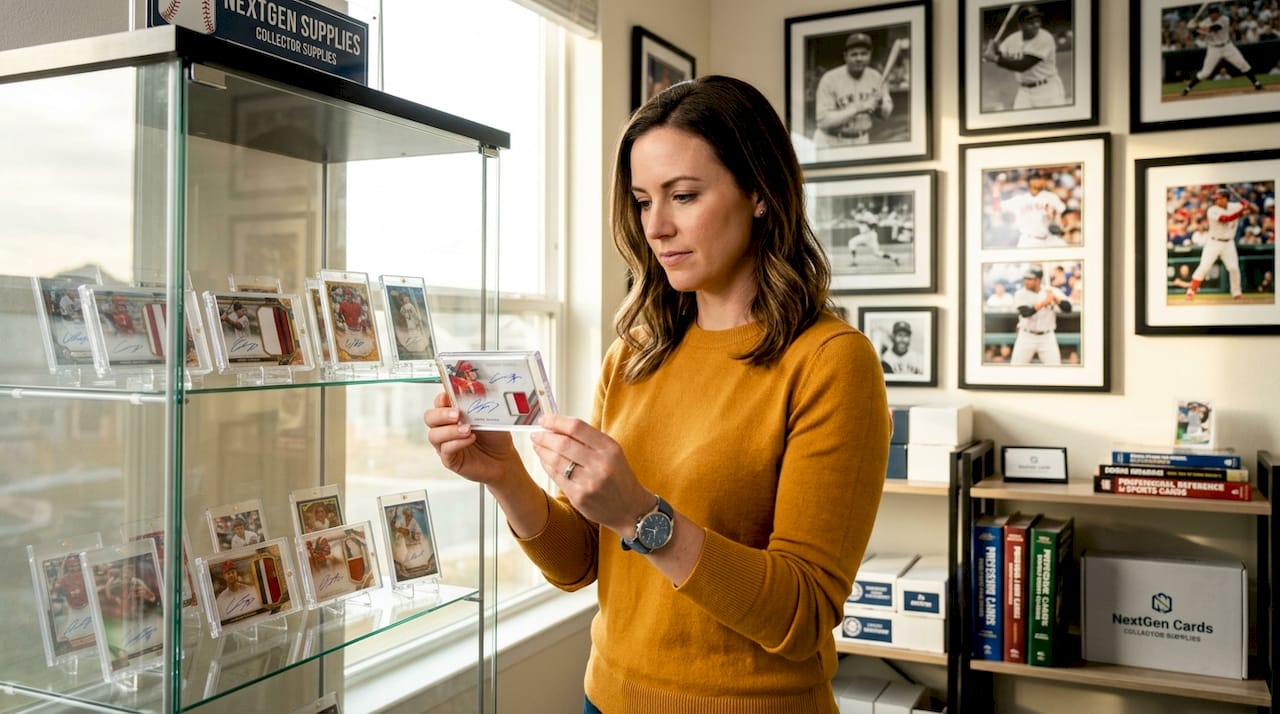
The spectrum runs wide. At the entry level, you have base autograph cards from flagship sets, often numbered in the hundreds. At the top end, you have auto-relic cards that combine a player’s signature with a piece of game-worn jersey or bat embedded directly in the card. These are called Rookie Patch Autographs (RPAs) at the rookie level, and they consistently command the highest prices in the hobby.
Topps hobby boxes for flagship include one guaranteed autograph or relic per box, while Topps Chrome hobby boxes guarantee one autograph. Jumbo boxes step up further, delivering one auto plus one relic, or up to three autos depending on the product. Premium releases push this even further. 2025 Topps Definitive Collection boxes contain six autograph hits plus two relics per box, priced at approximately $2,499.99.
- On-card autos: Signed directly on the card surface; preferred by collectors over sticker autos
- Sticker autos: Signature applied on a sticker and affixed to the card; more common in lower-tier products
- Auto relics: Combine autograph with embedded memorabilia swatch
- Patch cards: Feature multi-color or logoman jersey swatches; higher value than single-color relics
- RPAs (Rookie Patch Autographs): The premium tier of rookie card types; often the most valuable card in a player’s entire catalog
Pro Tip: Reading the box composition details closely before purchasing is the only way to manage expectations about hit quality. The term “autograph or relic” on a hobby box means you might pull a relic instead of an auto. Jumbo boxes reduce that uncertainty considerably.
4. Parallel and limited-edition player card types
Parallels are alternate versions of base cards, distinguished by color, foil treatment, or special printing. Every major Topps release includes a parallel structure that runs from relatively common to genuinely rare. Understanding this structure is how collectors identify the best player card designs worth chasing.
| Parallel Tier | Print Run | Rarity Level |
|---|---|---|
| Base parallel (e.g., Silver) | /2026 or unnumbered | Common |
| Gold | /50 | Scarce |
| Red | /5 | Rare |
| Foilfractor | 1/1 | One of one |
| Printing Plate | 1/1 (4 total per design) | Extremely rare |
2026 Topps Series 1 includes Red parallels numbered /5 and Foilfractor cards at 1/1, making them among the most limited cards in the entire product. Parallels numbered from /2026 down to 1/1 span multiple tiers, with exclusives tied to specific box formats.
Box format matters here too. Certain parallels are only available in hobby boxes, others only in jumbo or retail configurations. A collector buying blaster boxes will never pull a hobby-exclusive parallel, regardless of how many boxes they open.
- Super-short prints (SSPs): Rare base card variations with alternate photos or designs; not always serial numbered but significantly harder to pull
- Printing plates: One of four 1/1 cards representing each color used in the printing process (cyan, magenta, yellow, black)
- Box-exclusive parallels: Tied to specific retail or hobby configurations; unavailable outside that format
5. Inserts, chase cards, and themed MLB player cards
Insert cards sit outside the base set and parallel structure entirely. They are separate, themed sets printed in limited quantities and distributed at specific odds within packs. For many collectors, inserts are where the most visually striking and culturally interesting specific player baseball cards live.
Recent years have seen inserts evolve well beyond traditional designs. Crystallized parallels feature a distinctive prismatic texture that makes cards look like gemstones. Anime-themed parallels have attracted a younger collector demographic and generated significant secondary market activity. A Shohei Ohtani Crystallized Gold parallel sold for $21,249, and an Anime Black parallel for Munetaka Murakami reached $7,500 at auction.
The Final Draft insert set targets top prospects and is popular among collectors who want early representation of players before their 1st Bowman cards hit the market. These inserts do not carry RC status, but they do carry strong collector interest when the featured player develops into a star.
Strategies for identifying valuable chase cards within a product:
- Check the print run. Numbered inserts hold value better than unnumbered ones.
- Research the player’s current status. An insert of a prospect who just got called up will spike immediately.
- Track recent sales on secondary markets before buying. Insert values fluctuate faster than base cards.
- Focus on flagship players. An Ohtani or Aaron Judge insert from a premium set will always have a buyer.
The key difference between inserts and parallels is that inserts are entirely separate card designs, not alternate versions of base cards. Collectors who confuse the two often overpay for common inserts or underprice rare parallels.
My take on chasing MLB player card types in 2026
I’ve watched the MLB card market shift considerably over the past few years, and the one thing I keep coming back to is this: the collectors who do best are the ones who understand the why behind each card type, not just the what.
The Call-Up designation is a perfect example. The “Call-Up” label is an emerging factor for 2026 MLB rookie cards that many collectors are still sleeping on. If you understand that a Call-Up card delays official rookie status to 2027, you can buy those cards at a discount now and hold them through the official RC release cycle.
I’ve also seen too many new collectors overspend on autograph cards without reading the box composition. A sticker auto from a mid-tier product is not the same as an on-card auto from Topps Chrome or Definitive Collection. The price difference is real, and it persists on the secondary market.
My honest advice: spend more time learning the MLB card collecting tips that apply to your specific player focus before buying. If you collect Aaron Judge, know which of his card types have historically appreciated. If you are chasing prospects, understand the 1st Bowman vs. RC distinction before you commit. The collectors who treat this hobby with that level of specificity consistently build better collections and make smarter purchases.
— Richard
Explore premium MLB player cards at Nextgencards
Nextgencards specializes in exactly the card types covered in this article: rookie autographs, patch cards, limited-edition parallels, and rare redemption cards from the most sought-after MLB players. If you are ready to add something serious to your collection, the inventory is curated for collectors who know the difference between a sticker auto and an on-card signature.
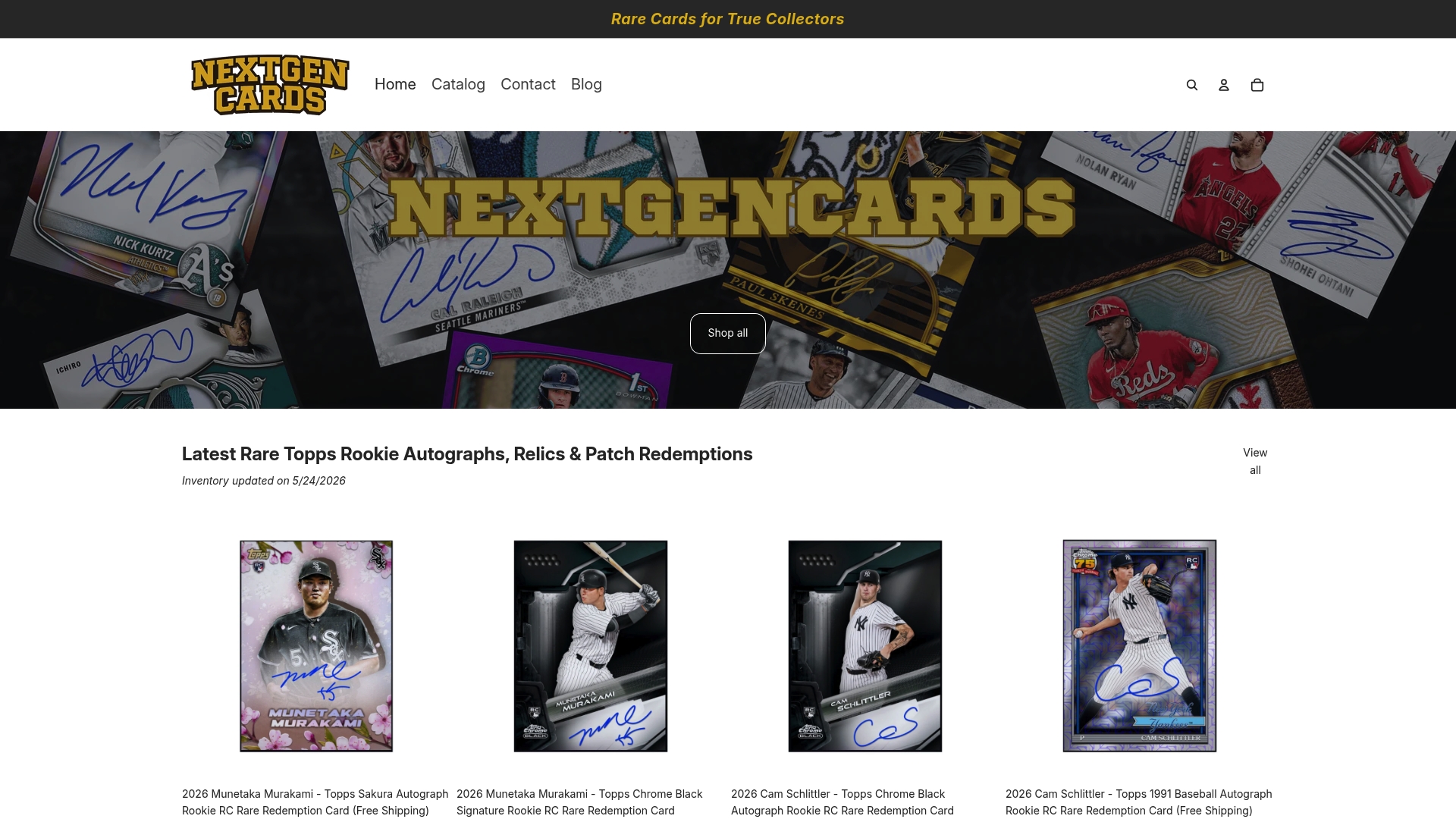
Browse rare Topps rookie cards across multiple player categories, including exclusive offerings tied to Shohei Ohtani and Aaron Judge. For a specific example of a premium rookie autograph patch card, the Paul Skenes Topps Standouts RPA is a standout piece featuring a serial-numbered autograph and patch from one of baseball’s top young arms. Free shipping is available on select items, and every card is authenticated for collector confidence.
FAQ
What is the difference between an RC and a 1st Bowman card?
An RC (Rookie Card) requires a player’s MLB debut and carries the official RC logo in Topps flagship sets. A 1st Bowman card is a prospect-focused card that appears in Bowman products before the player reaches the majors, making it an earlier but non-RC designation.
What does the Call-Up designation mean for collectors?
The Call-Up label, introduced in May 2026, replaces the RC logo for players who debuted late in the season, delaying their official rookie card status to the following year. Collectors holding Call-Up cards should expect the player’s formal RC cards to arrive in 2027 products.
Which box format gives the best odds for autographs?
Hobby and jumbo boxes offer the best odds. Topps Chrome hobby boxes guarantee one autograph per box, while jumbo boxes typically deliver one auto plus one relic or multiple autos depending on the product tier.
Are numbered parallels worth more than unnumbered ones?
Yes, in almost every case. Serial-numbered parallels carry a defined scarcity that the market prices accordingly. A Red parallel numbered /5 will consistently outperform an unnumbered Silver parallel of the same player because collectors can verify exactly how few copies exist.
What makes insert cards valuable compared to base cards?
Insert cards feature unique designs, limited print runs, and themed content that separates them from standard base cards. High-demand inserts like Crystallized parallels for elite players such as Shohei Ohtani have sold for five-figure sums, driven by both scarcity and the player’s market appeal.
Recommended
- 2025 Shohei Ohtani - Topps Now 10/17 NLCS 10ks & 3 HR’s Rare Card – Next Gen Cards LLC
- NextGenCards - Rare Topps Rookie Cards – Next Gen Cards LLC
- 2025 Yoshinobu Yamamoto Topps Now Earns 2025 World Series MVP Honors – Next Gen Cards LLC
- 2025 Shohei Ohtani Topps Now NLCS 10ks & 3 HR’s Autograph Rare – Next Gen Cards LLC
0 comments