

A sports card’s thickness is measured in points, where 1 pt equals 0.001 inches. Base cards run 20 to 35pt, memorabilia and booklet cards can hit 55 to 360pt or more, and the fix is simple: penny sleeve plus 35pt toploader for base cards; thicker toploaders or magnetic one touches for anything 55 to 180pt; and large magnetic or display cases beyond that. Measure before you buy supplies. Guessing is how corners get bent.
TL;DR:
- Most sports cards fall between 20 and 35 points in thickness, which allows them to fit comfortably in standard penny sleeves and toploaders.
- Precision measurement with a digital caliper is recommended for accurate thickness, especially for high-value or graded cards, with coin stacks as rough estimates only useful at show.
- Using the wrong holder size can cause damage such as bent corners, surface scratches, or edge whitening; sizing up slightly is safer than forcing the fit.
- Thick relic, patch autographs, or booklet cards often exceed 100 points and require specialized toploader or display cases for safe storage.
- Sorting and measuring each card beforehand can prevent common mistakes, save time, and protect your collection’s condition in the long run.
Table of Contents
- What “Point” Means and Why Card Thickness Varies So Much
- How Do You Measure Sports Card Thickness Accurately?
- Can You Estimate Thickness Without a Gauge?
- Which Holder Size Fits Each Thickness Range?
- What Goes Wrong When You Skip Measuring
- A Cataloging Routine Worth Copying
- Why Most Thickness Advice Undersells the Risk
- Protecting the Rookies and Relics Worth Protecting
- Sources
- FAQ
What “Point” Means and Why Card Thickness Varies So Much
A point is a unit printers and card manufacturers use to describe caliper thickness, and it has nothing to do with card value or grading points. One pt equals 0.001 inches, or about 0.0254 millimeters. A card listed at 20pt is roughly 0.5mm thick; a 130pt relic card is over 3mm, thicker than a stack of five pennies.
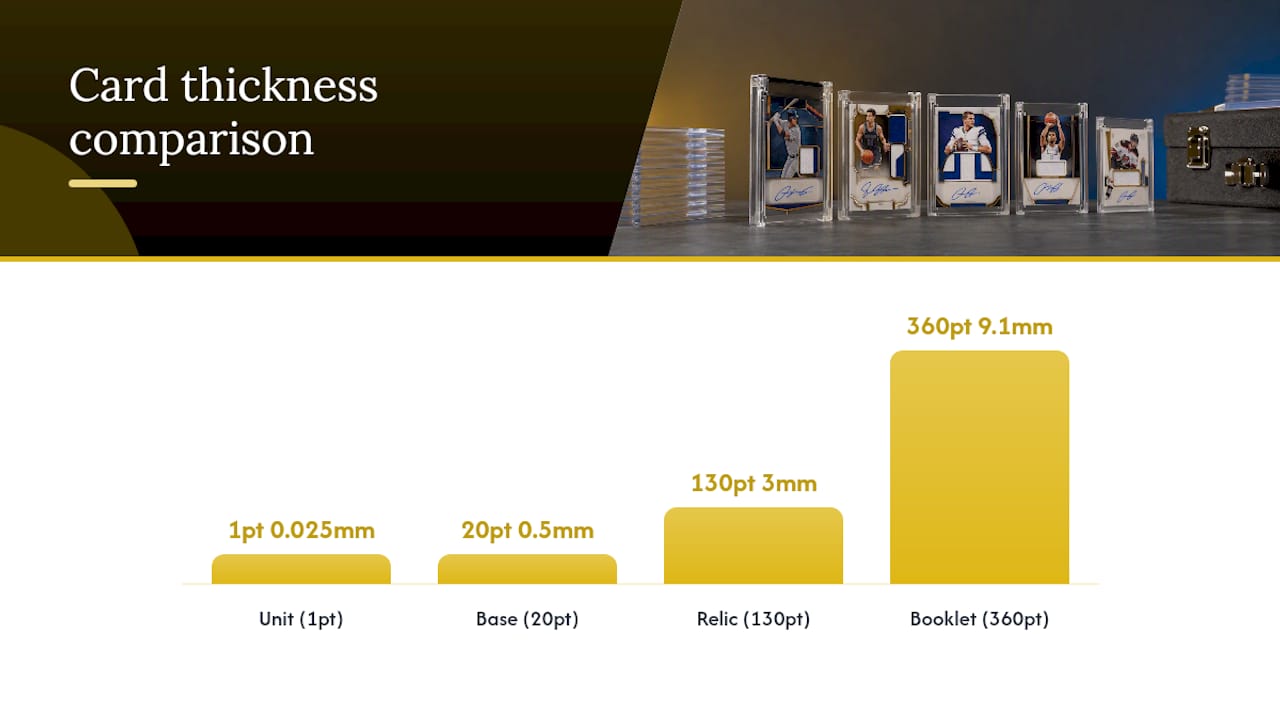
Every trading card measures 2.5 by 3.5 inches regardless of thickness, which is why standard dimensions stay fixed even as stock weight changes dramatically. Points are the spec that actually determines fit, not the flat length and width.
Here’s how thickness typically breaks down by card type:
- Base and chrome cards: usually 20 to 35pt, the thinnest tier and the easiest to sleeve.
- Standard relic or jersey-swatch cards: commonly 55 to 100pt, thick enough to need a heavier toploader.
- Patch autographs and multi-relic cards: often 100 to 180pt.
- Booklet-style and triple-relic cards: can exceed 180pt, with some reaching 360pt or higher.
Print guides for other paper products confirm the same principle: points measure caliper thickness directly, which is exactly why the hobby leans on pt instead of paper weight when fit is the goal.
How Do You Measure Sports Card Thickness Accurately?
Precision matters most when you’re prepping a card for grading, insurance, or a high-dollar sale. A digital caliper is the gold standard here, and Beckett recommends both calipers and printable gauges as the two most reliable methods available to collectors.
- Zero the caliper before touching the card, so the readout starts at 0.000.
- Open the jaws and place the card flat between them, away from any raised foil or embossing that would skew the reading.
- Close the jaws gently until they just touch both surfaces. Don’t squeeze. Excess pressure compresses the card slightly and gives you a false low reading.
- Read the display in inches, then convert: 0.035 inches on the screen means a 35pt card.
- Measure at least two spots on thicker relic cards, since embedded memorabilia can create uneven thickness across the surface.
If you don’t own a caliper, print a point gauge at 100% scale (never “fit to page”) and verify it against a card of known thickness before trusting it on your whole collection.
Pro Tip: Keep a known 35pt base card in your measuring kit as a reference. Slide any mystery card next to it before reaching for tools. It won’t give you an exact number, but it tells you instantly whether you’re dealing with a standard card or something that needs a bigger holder.
Can You Estimate Thickness Without a Gauge?
At a card show, you rarely have a caliper handy, and coin stacks fill that gap. BCW Supplies documents coin stacking as a quick estimation method for collectors who need a fast read without carrying tools. A stack of two dimes runs close to 35pt, while a stack of pennies builds thickness faster and gets you into the 55 to 75pt range with four or five coins.
On-screen digital gauges work too, but only if your monitor is calibrated. A gauge that displays correctly on one screen can be off by several points on another, so cross-check with a printed version whenever precision counts.
- Use clean, dry coins only. Oil and grime transfer to card surfaces on contact.
- Never force a card against a coin stack. If there’s resistance, stop and switch tools.
- Verify any coin-based estimate with a caliper before committing to a holder size for anything valuable.
Coins are a last-resort field method, not a substitute for real measurement on cards you plan to grade or sell.
Which Holder Size Fits Each Thickness Range?
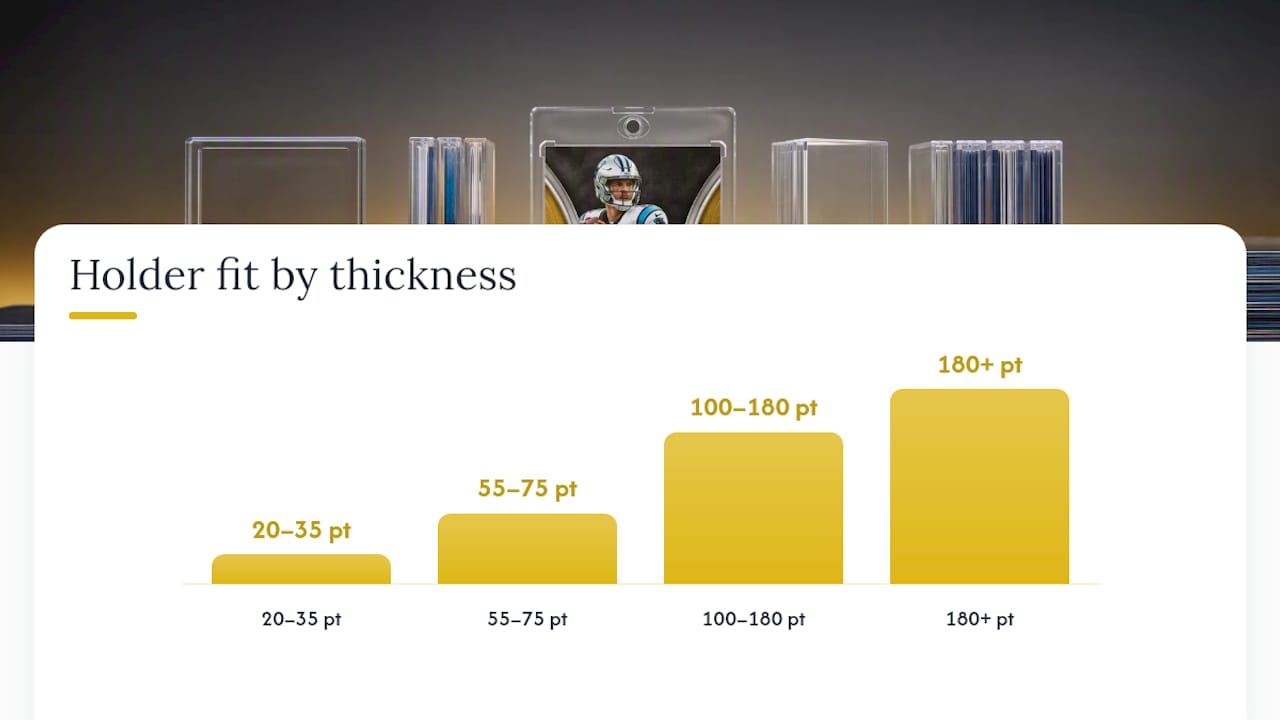
Matching holder to card is where most preventable damage happens. Here’s the practical breakdown collectors should work from:
| Thickness range | Recommended protection | Common card types |
|---|---|---|
| 20 to 35pt | Penny sleeve + standard 35pt toploader | Base, chrome, inserts |
| 55 to 75pt | Thick toploader or small magnetic one touch | Light relics, jersey swatches |
| 100 to 180pt | Magnetic one touch, thick toploader | Patch autographs, multi-relics |
| 180pt and up | Large magnetic case or display holder | Booklets, triple-relic autos |
Undersizing forces a thick relic into a holder built for base cards, which bends corners and cracks the card surface at the edges. Oversizing causes a different problem: the card rattles around inside, and that small internal movement grinds edges and dulls surfaces over time. Neither mistake shows up immediately. Both show up eventually, usually right when you go to sell.
Storage boxes matter too. A row height built for 35pt cards won’t close over a stack of 130pt relics, and graded slabs need their own box depth entirely since PSA and other slabs run far thicker than raw cards in toploaders.
Pro Tip: When you’re not sure between two sizes, size up slightly rather than down. A card with a hair of extra room survives far better than one being squeezed. Reviewing options for matching toploaders to card value or checking a sleeve size chart before you buy in bulk saves you from restocking twice.
What Goes Wrong When You Skip Measuring
Skipping the measuring step doesn’t just risk a loose fit. It causes specific, predictable damage:
- Bent corners: happens when a thick card gets forced into a holder that’s too shallow.
- Surface scratches: occur when a card shifts inside an oversized holder and rubs against the plastic edge.
- Compression marks: show up on foil and chrome surfaces squeezed by an undersized toploader.
- Edge whitening: develops slowly from repeated micro-movement inside a holder with too much slack.
The most common mistake in the hobby is grabbing a standard 35pt toploader out of habit for every card, a leftover practice from when memorabilia cards were thinner than they typically run today. The second most common mistake is the opposite error: leaving a thin base card loose inside a magnetic case sized for relics.
Practical fix: sort your unsleeved cards by rough thickness before you touch any supplies, label your holders by pt range, and test-fit every card before final sealing. Thirty seconds of sorting prevents a return trip for the wrong size.
A Cataloging Routine Worth Copying
I measure every card that comes through before it gets sleeved, no exceptions. My routine runs in four steps: measure with a caliper, tag the pt value in my inventory log, sleeve and toploader to match, then log the entry with condition notes.
Chrome-surfaced rookie autographs get handled by the edges only, with a microfiber cloth nearby, since chrome surfaces pick up micro-scratches from friction faster than matte stock. For relic cards, I always test the magnetic one touch fit before final sealing, since patch thickness varies even within the same product line. If a card is headed for grading or a five-figure sale, I stop guessing entirely and get a second opinion from someone who handles submissions regularly.
Why Most Thickness Advice Undersells the Risk
Most guides treat thickness like a footnote you check once and forget. That’s backwards. Thickness is the single spec that determines whether a card survives its next five years in your collection, and the conventional advice, grab a 35pt toploader and move on, was fine a decade ago when relic cards stayed thin. It isn’t fine now that booklet autographs and triple patches routinely blow past 100pt.
The real gap in most collector habits isn’t knowledge. It’s routine. Collectors know a caliper exists; they just don’t reach for it until after something’s already scratched. My take: measure first, every time, even on cards you’re confident about. A caliper reading takes ten seconds. A bent corner is permanent.
What the reader should prioritize first isn’t buying more supplies. It’s buying the right size the first time. Sort your unsleeved stack by rough thickness before your next supply run, and you’ll stop overpaying for one-size holders that fit nothing well.
— Richard
Protecting the Rookies and Relics Worth Protecting
Once you know a card’s thickness, the next decision is what belongs in your collection in the first place. The focus is on rare rookie autographs, patch relics, and redemption cards, exactly the kind of high-pt items where the wrong holder does real damage fast.
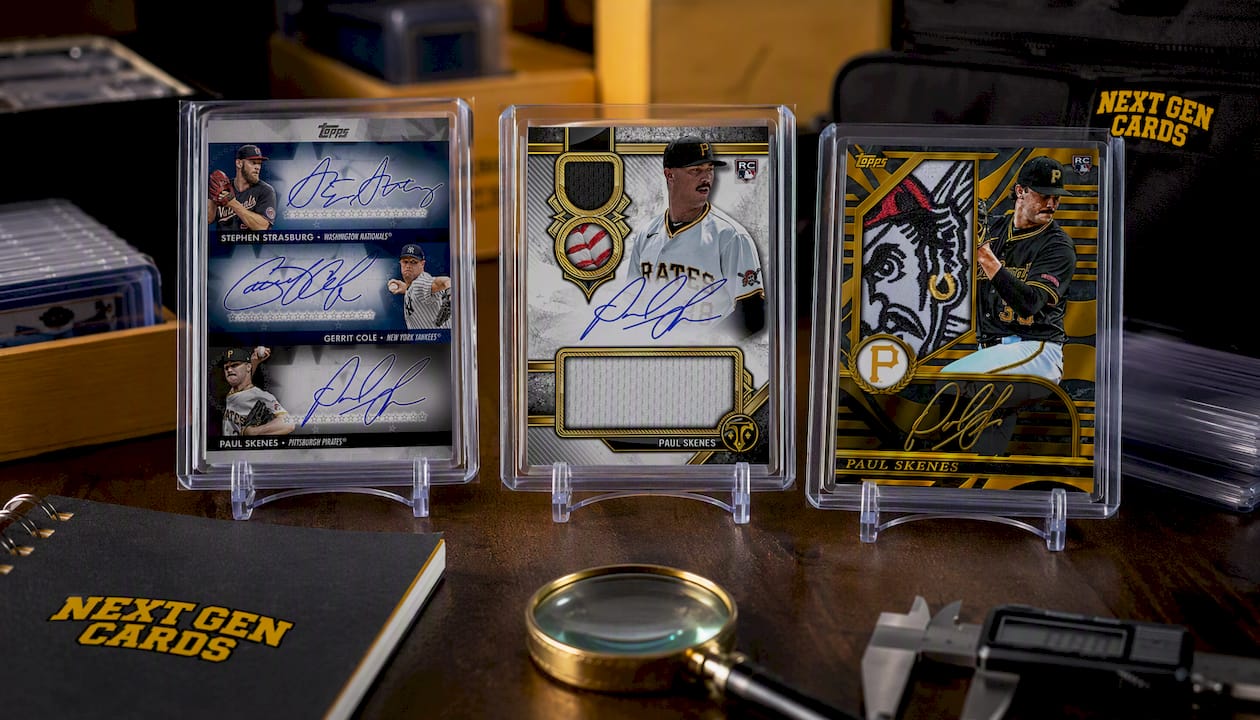
If you’re building toward cards like the Skenes Cole Strasburg triple autograph redemption card, the Skenes Tribute rookie patch autograph, or the Skenes Standouts Gold rookie patch autograph, you’re already looking at pieces that run well past standard 35pt thickness. Check the one touch size guide before you buy protection, or browse the full rookie autograph and relic collection to see what’s currently available and pick supplies that match before the card arrives.
Sources
- Sports Card Thickness Guide: Mystery Solved & Free Point Gauge
- What Thickness of Toploader Do I Need? - BCW Supplies - Blog
- How to Tell How Thick a Card Is and Pick the Right Top Loader - Beckett
- Sports Card Thickness: A Collector’s Guide - RR Custom Sleepers
FAQ
What thickness are most sports cards?
Most base, chrome, and insert cards fall between 20pt and 35pt, which is why the standard penny sleeve and 35pt toploader combination covers the majority of a typical collection.
How can I tell how thick my card is?
Use a digital caliper for exact readings, or a printable point gauge printed at 100% scale for a fast, reliable estimate without extra tools.
What is 130pt thickness?
A card measuring around 130pt thickness is generally a patch autograph or multi-relic card, which usually requires a magnetic one touch holder instead of a standard toploader.
How thick is a 35pt card?
A 35pt card corresponds to approximately 0.035 inches in thickness, representing the upper end of the standard base card thickness range and aligning with the most common toploader size used by collectors.
Should I clean cards before sending them for grading?
Light, careful handling with clean hands or gloves prevents surface contamination, but avoid any cleaning products or aggressive wiping since improper cleaning can cause more damage than dust ever would.
0 comments