

The default sleeve for most trading and board game cards is a standard/poker sleeve measuring 67 mm × 92 mm (2-5/8" × 3-5/8"). If you collect Yu-Gi-Oh! or Cardfight!! Vanguard cards, you need Japanese/small sleeves instead, sized around 62 mm × 89 mm to match the smaller card stock those games use.
For most collectors managing a mixed pile of Pokemon, MTG, and sports cards, a mid-weight, standard-fit sleeve is the safest starting point. It handles the 2.5" × 3.5" card size that dominates the hobby, without the tight tolerances that cause tearing on thicker stock.
Before you buy in bulk, do two things:
- Measure one card with a caliper or metric ruler to confirm its actual width and height.
- Buy one test pack of your chosen sleeve size and try it on five or ten cards before committing to a case.
That five-minute check saves you from the most common sleeve mistake: assuming “standard” means the same thing across every brand.
Key Takeaways
Most trading cards fit a standard/poker sleeve at 67 × 92 mm, but confirming your card’s exact measurement before buying prevents the torn corners and loose fits that come from trusting a label alone.
| Point | Details |
|---|---|
| Standard sleeve size | Use 67 × 92 mm (2-5/8" × 3-5/8") sleeves for Pokemon, MTG, and most sports cards. |
| Japanese/small sleeve size | Use roughly 62 × 89 mm sleeves for Yu-Gi-Oh! and Cardfight!! Vanguard cards. |
| Measure before buying | A 1 mm difference can change how a sleeve fits, so measure with a caliper first. |
| Match thickness to use | Choose mid-weight (60 to 90 microns) for general use, premium (90+) for heavy shuffling. |
| Test one pack first | Sleeve five to ten cards and check the fit before buying a full case. |
| Protect high-value cards | Nextgencards recommends top loaders or double-sleeving for thick autograph and relic cards. |
Table of Contents
- Card Sleeve Size Chart: Every Family and Its Exact Measurements
- How to Measure Your Cards and Choose the Right Fit
- Sleeve Thickness in Microns: What Thin, Mid, and Premium Really Mean
- Tarot, Jumbo, and Square Cards: Solutions for Nonstandard Sizes
- The Right Sleeve for Pokemon, MTG, Yu-Gi-Oh!, and Sports Cards
- Getting Sleeved Decks and Cards to Actually Fit Your Boxes
- How Nextgencards Tests Sleeve Fit Before Recommending It
- Why Measurement Beats Marketing When You’re Choosing a Sleeve
- Protect What You’re Actually Collecting
- Sources
- FAQ
Card Sleeve Size Chart: Every Family and Its Exact Measurements
Sleeve manufacturers group their products into named families, but those names are marketing categories, not engineering specs. Two sleeves labeled “standard” from different brands can differ by a millimeter or more. Here’s what each family actually measures.
Standard / poker sleeves are the workhorse of the hobby at 67 mm × 92 mm (2-5/8" × 3-5/8"), built to fit the 2.5" × 3.5" card stock used by Pokemon, Magic: The Gathering, most sports card lines, and the majority of modern board games. Ultra PRO’s PENNY SLEEVES®, one of the most widely sold products in this category, confirm this exact card fit and list a maximum recommended card thickness of 35 pt for safe use.
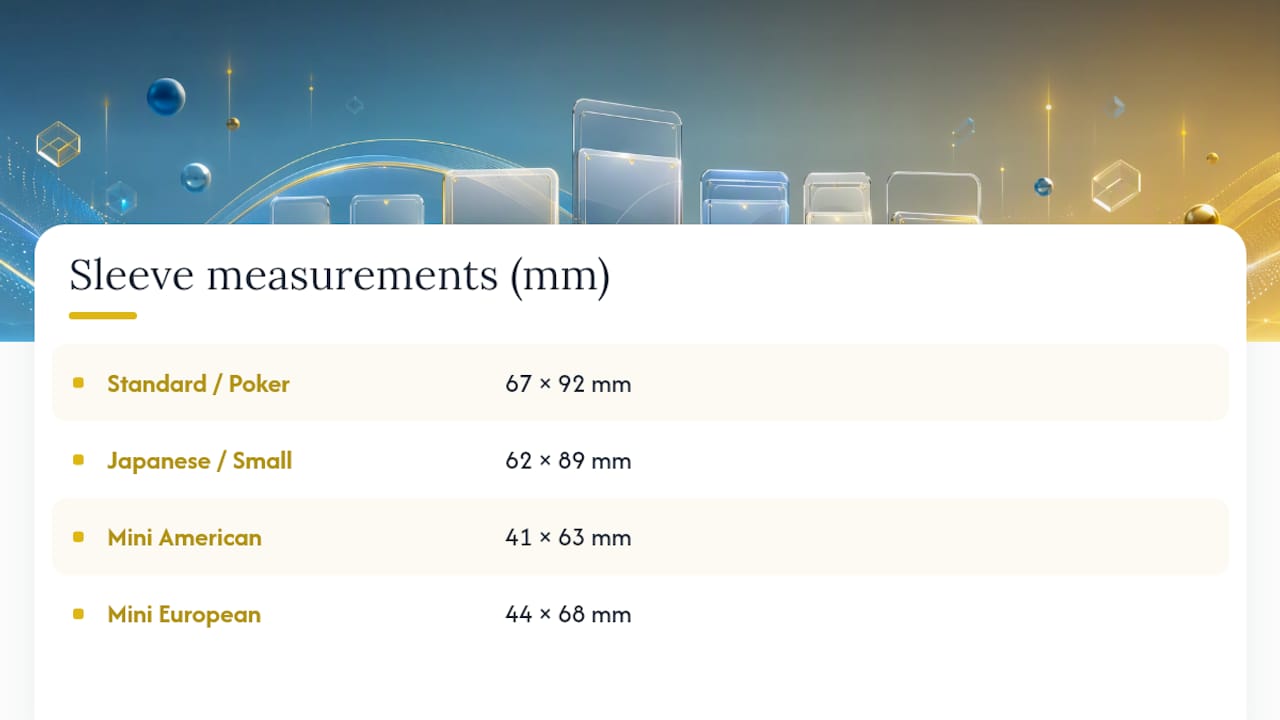
Japanese / small sleeves run smaller, at roughly 62 mm × 89 mm, built for cards that measure closer to 59 mm × 86 mm (2.35" × 3.38"). Yu-Gi-Oh! and Cardfight!! Vanguard both print at this smaller size, and slipping those cards into a standard sleeve leaves them swimming in extra room that invites bending and shuffling damage.
Mini American sleeves sit around 41 mm × 63 mm and show up in older card-driven board games and some collectible card game promos. Mini European sleeves are close but not identical, typically 44 mm × 68 mm, a gap wide enough that swapping the two families produces a visibly loose or visibly tight fit.
Tarot sleeves cover the oversized cards found in tarot decks and some narrative board games, generally landing near 70 mm × 120 mm. Square sleeves protect square-cut tiles and cards used in Euro-style board games, and dimensions vary more here than in any other family because square components aren’t standardized the way trading cards are. Oversized sleeves exist for jumbo promo cards and oversized game cards that can run well past 90 mm on the long edge.
BoardGameGeek’s community-maintained sleeve reference lists dozens of additional in-between sizes, including 63.5×88 mm and 66×93 mm, both close enough to “standard” that shoppers frequently buy the wrong one.
Statistic Callout: A single 1 mm difference in either dimension can be the difference between a sleeve that slides on smoothly and one that jams or leaves the card loose enough to slip out during a shuffle. That’s why gameboard.online’s sizing guide treats millimeter precision, not category names, as the real spec collectors should check first.
The practical takeaway: treat every family name as a starting point, then verify. A “standard” sleeve from one manufacturer and a “poker” sleeve from another may both fit your Pokemon deck, or one might feel noticeably looser. Community guidance consistently notes that labels aren’t perfectly consistent across brands, so the millimeter figure printed on the packaging matters more than the family name above it.
How to Measure Your Cards and Choose the Right Fit
Getting the right sleeve starts with a five-minute measurement, not a guess based on what game you’re playing.
- Measure width first. Lay the card flat and place a digital caliper or metric ruler across the shorter edge. Record the figure to the nearest 0.5 to 1 mm.
- Measure height second. Repeat along the long edge, using the same tool and the same precision.
- Round conservatively. If your card measures 63.2 mm, don’t round down to 63 mm when shopping. Round up slightly to leave clearance, especially for cards with foil layers or embossing that add thickness.
- Compare against the size chart. Match your two measurements against the standard, Japanese/small, tarot, or oversized families above rather than trusting the game’s genre to tell you which sleeve to buy.
- Pick a fit style based on how you’ll use the card. A snug fit minimizes card movement inside the sleeve but risks tearing on cards with slightly inconsistent print runs. A standard fit gives a small margin of clearance and is the safer default for anything you’ll shuffle repeatedly. A loose fit works for display or storage-only cards you rarely handle, but it’s the wrong choice for anything going into active gameplay.
- Test one pack before buying in bulk. Sleeve five to ten cards, shuffle them, and check whether the card catches, slides freely, or pops out. Gameboard.online’s sizing guide recommends exactly this small-batch test before committing to a full case.
Mixed-size collections need a slightly different approach. If your game box includes both standard-size cards and a handful of oversized promos, don’t force everything into one sleeve family. Sort by measured size first, then buy two sleeve types rather than compromising with a “close enough” universal fit.
Pro Tip: If your card stock varies across print runs (common with older sports cards and some vintage board games), size up rather than down. A slightly roomier standard-fit sleeve with a small top margin protects the card far better than a snug fit that splits at the corner during a shuffle.
Sleeve Thickness in Microns: What Thin, Mid, and Premium Really Mean
Sleeve packaging often lists a micron figure, and that number tells you more about durability than the family name does. A micron is one millionth of a meter, and it measures the thickness of the plastic film itself, not the size of the sleeve.
Industry guides generally split sleeve thickness into three bands:
- Thin (40 to 60 microns): Lightweight and nearly invisible in a shuffle, but more prone to creasing and tearing under repeated handling. Sleeveyourgames places most economy penny sleeves in this range.
- Mid-weight (60 to 90 microns): The balance point most collectors land on. Enough durability to survive regular shuffling without adding noticeable bulk to a deck box.
- Premium (90+ microns): Built for tournament play and heavy handling. These sleeves resist scuffing and tearing better but add real thickness across a full deck, which can push a sleeved deck past the tolerance of a snug deck box.
Finish matters as much as thickness. Matte finishes resist fingerprints and glare but can feel slightly grippier during a fast shuffle. Clear finishes show off foil and holo card art better but pick up smudges faster. Linen-textured finishes, popular in tournament card games, add shuffle feel and reduce visible wear over hundreds of games.
For most collectors building a general-purpose collection, a mid-weight, standard-fit sleeve remains the sensible default: enough durability for regular handling without the bulk that makes deck boxes hard to close. If you shuffle heavily or play in sanctioned tournaments, step up to premium thickness or consider double-sleeving with a snug inner sleeve, a combination Ultra PRO’s own product guidance supports for high-handling situations. Independent testing of multiple sleeve brands has found that cut quality and ease of insertion vary noticeably even among sleeves with identical labeled dimensions, which is one more reason to test before buying a case.
Tarot, Jumbo, and Square Cards: Solutions for Nonstandard Sizes
Not every card in your collection fits a standard or Japanese sleeve, and forcing an oversized card into an undersized sleeve almost always ends in a crease.
- Tarot and oversized cards (roughly 70 mm × 120 mm and up) need dedicated tarot sleeves. For genuinely rare oversized cards, double-sleeve with a snug inner and a looser outer, or skip sleeving entirely and use a rigid top loader sized for the card.
- Square sleeves and tile sleeves protect the square components common in Euro-style board games. Measure the tile directly rather than assuming a “square sleeve” label matches your game’s specific component size.
- Jumbo promo and foil cards often run thicker than standard stock. A rigid top loader protects these far better than a soft sleeve alone, and double-sleeving (a perfect-fit inner plus a standard outer) adds shuffle-safe protection for cards you still want to handle occasionally.
- Mixed-size expansions in the same box are common in long-running board games. Sort components by measured size before buying sleeves, rather than assuming every expansion matches the base game’s card dimensions.
The Right Sleeve for Pokemon, MTG, Yu-Gi-Oh!, and Sports Cards
Most of the questions collectors ask about sleeve sizing come down to a handful of specific games, and the answers are more consistent than the marketing copy suggests.
Pokemon and MTG cards both use the same physical card stock, roughly 2.5" × 3.5", which means the standard/poker sleeve at 67 mm × 92 mm works interchangeably across both games. This is why tournament players often own one large box of standard sleeves rather than separate stock for each game.
Yu-Gi-Oh! and Cardfight!! Vanguard print at a smaller card size, and squeezing those cards into a standard sleeve leaves visible slack that causes bending during shuffles. Stick with Japanese/small sleeves at roughly 62 mm × 89 mm for a proper fit.
Sports cards, including Topps-style baseball, basketball, and football cards, generally match the standard 2.5" × 3.5" footprint, so a standard sleeve is the correct starting point. The complication comes with thick memorabilia and relic cards, which often carry embedded fabric swatches or multi-layer autograph panels that push well past the 35 pt thickness Ultra PRO lists as the safe maximum for its standard penny sleeves. For anything in that category, a rigid top loader or a magnetic case protects better than a soft sleeve alone.
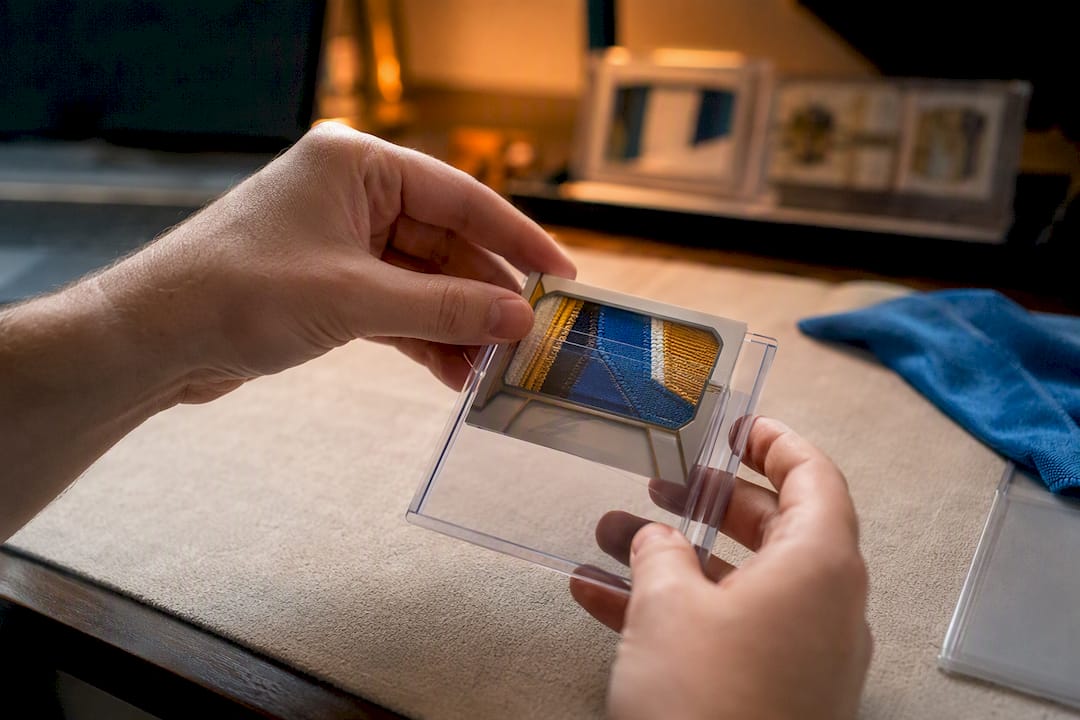
Foil, holo, and embossed cards across any game deserve extra caution. The raised texture on embossed autographs and the slight card warp common in older foil stock both increase the odds of a snug sleeve catching and tearing. A perfect-fit inner sleeve paired with a slightly looser outer deck sleeve gives these cards a buffer layer without sacrificing shuffle feel, and it’s the approach worth using for anything you’d call a genuine investment piece rather than a player.
Getting Sleeved Decks and Cards to Actually Fit Your Boxes
Sleeving a deck changes its physical dimensions, and skipping this math is how collectors end up with a deck box that won’t close or a binder page that won’t lie flat.
- Estimate sleeved height before buying storage. Add your sleeve’s approximate thickness (converted from microns to millimeters) to your card stock’s thickness, multiply by your deck count, and compare that total against your box insert’s available space.
- Test with a small sample first. Sleeve ten cards, measure the stack height, and multiply up to your full deck count rather than guessing at scale, a method Gameboard specifically to avoid buying the wrong box.
- Check binder pocket capacity before bulk sleeving. Standard nine-pocket binder pages generally hold one sleeved card per pocket comfortably; double-sleeved cards or thick memorabilia cards often need rigid toploaders instead.
- Consider partial sleeving for tight-box games. Sleeving only your rarest or highest-handling cards, and leaving common cards unsleeved, is a reasonable tradeoff when box space is limited. Just document which cards are sleeved so future expansions match.
- Label as you go. Note sleeve size and thickness per game or per binder section so you’re not re-measuring from scratch when a new expansion arrives.
How Nextgencards Tests Sleeve Fit Before Recommending It
Nextgencards.shop specializes in rare rookie autographs, patch and relic cards, and physical redemption cards, the kind of high-value pieces where the wrong sleeve isn’t a minor inconvenience. A single tear on a triple-autograph card is a real loss, not just a cosmetic scratch.
The workflow that actually prevents that outcome is simple:
- Buy a single sleeve pack before committing to a case.
- Sleeve a handful of sample cards, including at least one that matches your thickest or most textured piece.
- Shuffle them and test the fit against your deck box or storage binder.
- Adjust up in thickness or size if you notice any resistance or slack.
Pro Tip: Test your sleeve on a common card before you ever touch your most valuable piece. A five-cent mistake on a spare card beats finding out the hard way on a card worth hundreds.
For more on protecting specific card types, Nextgencards’ collector’s guide hub covers storage basics, autograph protection, and shipping practices in more depth.
Why Measurement Beats Marketing When You’re Choosing a Sleeve
The conventional advice you’ll find on most sleeve pages leads with brand names and game categories: “buy this sleeve for MTG,” “buy that one for Pokemon.” That advice isn’t wrong, exactly, but it skips the step that actually prevents damage: confirming the millimeter measurement against your specific card stock.
What the research on this topic supports isn’t a brand recommendation. It’s a habit. Collectors who measure one card and test one pack before buying in bulk consistently avoid the two most expensive sleeve mistakes: sleeves too snug for print-run variation, and sleeves too loose for foil or embossed stock. Neither mistake shows up until you’ve already sleeved fifty cards.
If you take one thing from this guide, prioritize the caliper over the category label. A “standard” sleeve that’s 66 mm wide behaves differently than one that’s 68 mm wide, even though both get sold under the same name. That two millimeter gap is exactly where torn corners and loose cards come from.
— Richard
Protect What You’re Actually Collecting
Getting the sleeve size right matters even more when the card inside is a genuine rarity rather than a common you’ll replace next pack. Nextgencards focuses on exactly that category: rare rookie autographs, patch and relic cards, and physical redemption cards where a wrong-size sleeve isn’t a minor annoyance, it’s a real risk to a piece you can’t easily replace.
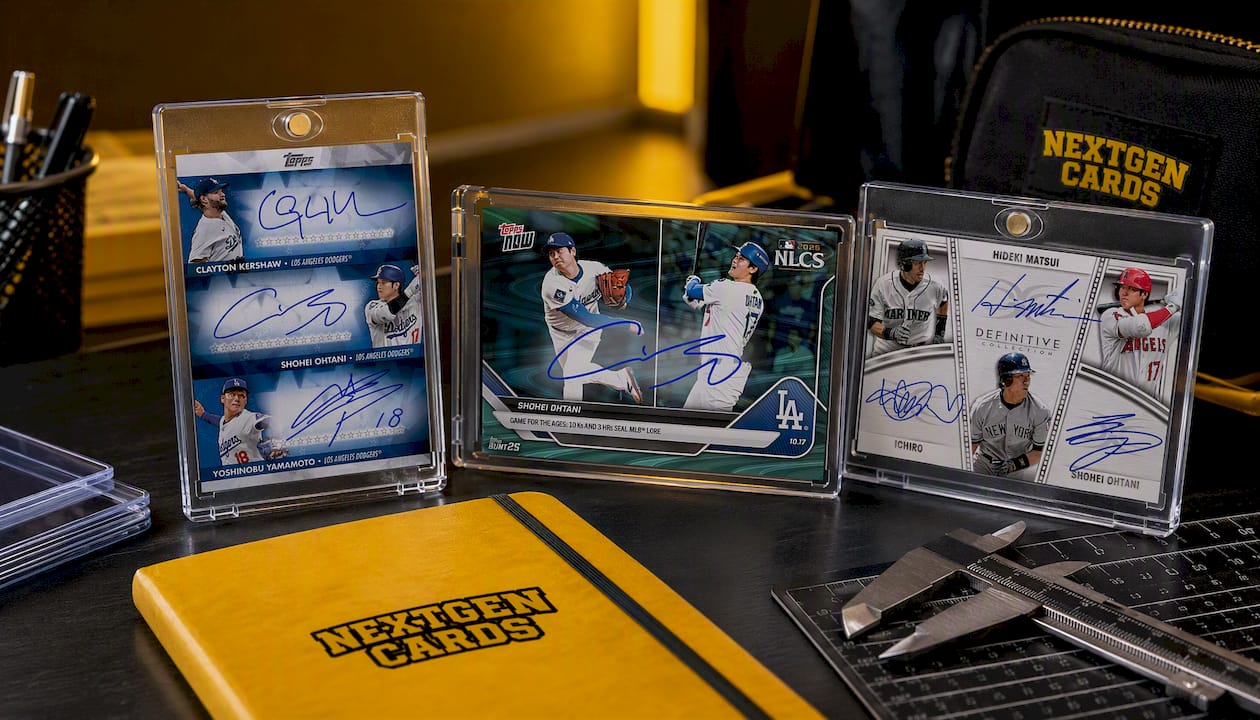
If you’re building toward a card that deserves premium protection from day one, Nextgencards’ current inventory includes pieces like the 2024 Ohtani Yamamoto Kershaw triple autograph redemption card, the 2025 Ohtani Topps Now NLCS autograph redemption card, and the 2023 Ohtani, Ichiro, and Matsui triple autograph card. Each of these is exactly the kind of thick, multi-layer autograph card that needs a top loader or double-sleeve setup rather than a standard penny sleeve. Browse the current catalog and use the sizing steps above to prep the right protection before your next piece arrives.
Sources
- Trading Card Sleeve Size Guide: Every Card Game Covered
- Card Sleeve Reference | Wiki
- Board Game Sleeves Size Guide
- Sleeveyourgames
- 1000ct PENNY SLEEVES® 2.5" x 3.5" Soft Trading Card Protectors | Ultra PRO International
FAQ
What Is the Standard Size of a Card Sleeve?
The standard sleeve size is 67 mm × 92 mm (2-5/8" × 3-5/8"), built to fit 2.5" × 3.5" cards used in Pokemon, MTG, and most sports card lines.
What Sleeve Does PSA Prefer?
PSA does not publish an official sleeve endorsement, but most collectors submitting cards for grading use a standard penny sleeve inside a semi-rigid holder to protect the card before it reaches the grading company.
What Is a Japanese-Size Card Sleeve?
A Japanese/small sleeve measures roughly 62 mm × 89 mm, sized for the smaller card stock used in Yu-Gi-Oh! and Cardfight!! Vanguard.
What Are the Different Types of Card Sleeves?
Common sleeve families include standard/poker, Japanese/small, mini American, mini European, tarot, square, and oversized, each built around a different card footprint. For high-value pieces like autograph or relic cards, Nextgencards recommends pairing a sleeve with a rigid top loader for added protection.
0 comments