

Serious collectors searching for nexgenpackaging.com alternatives are almost never looking for packaging suppliers. They want a source for authenticated rookie autographs, relics, and redemption cards. The strongest alternatives fall into four channels: curated specialty shops, graded-card marketplaces, auction houses, and live-break platforms. For high-value rookie autographs and rare redemptions, start with an authenticated, curated shop like Nextgencards or a graded-market slab before touching an unvetted listing.
TL;DR:
- Curated specialty shops provide detailed inventory and verified listings for high-value rookie autographs and redemptions, reducing fraud risk.
- Comparing cert numbers on PSA and Beckett slabs through official lookup tools confirms authenticity within seconds and is crucial for expensive cards.
- Buyers should always verify full landed costs, including fees, shipping, and insurance, which can increase the total price by up to 50 percent.
- Experienced collectors blend multiple channels like marketplaces, shops, and auction houses to diversify risk and access specific rare cards efficiently.
- Shop quality varies; a quick pre-purchase support test reveals how well a seller handles questions about provenance, grading, and shipping issues.
Table of Contents
- Best Alternatives for Rare Card Buyers: Where to Shop
- How Do You Evaluate a Specialty Rare-Card Shop?
- How Do You Verify a PSA or BGS Slab Is Real?
- Checklist Before You Buy a Rare Rookie Autograph or Redemption
- How Good Is Customer Support at Alternative Card Platforms
- Is the Website or App Easy to Use When Buying Rare Cards
- Which Platforms Carry Rare Editions or Specific Card Brands
- Why a Curated Specialty Shop Cuts Search Time for Serious Collectors
- Shop Rookie Autographs and Redemption Cards at Nextgencards
- Where to Verify Cards and Compare Marketplaces
- Sources
- FAQ
Best Alternatives for Rare Card Buyers: Where to Shop
Every channel in the hobby solves a different problem, and knowing which one matches your goal saves both money and heartache.
- Curated specialty shops focus on rookie autographs, relics, and redemption cards, pre-vetting inventory instead of hosting an open marketplace. This trims fraud exposure compared with raw, unmoderated listings, since curated online shops trade breadth for transparency.
- Graded-card marketplaces thrive on volume and price discovery, with eBay alone carrying more than 10 million sports card listings at any given time. Great for checking recent comps, weaker for guaranteed authenticity on a single grail purchase.
- Auction houses and consignment handle the true trophy pieces, the kind of card that only trades hands a few times a decade. Expect buyer premiums and slower turnaround, but stronger provenance paperwork.
- Live-break platforms deliver entertainment and rapid liquidity, letting you land a hit without buying a full box. Buyer protections here tend to run weaker than on established marketplaces, so treat these as a supplement, not your only source.
Most experienced collectors blend channels rather than picking one. A common workflow: check eBay for comps, hunt set-builder sites like COMC for affordable singles, and reserve auction houses for the trophy-tier acquisitions that justify the premium. If you’re weighing options beyond the biggest names, our breakdown of eBay alternatives for serious collectors covers where specific rookie classes tend to surface. Mixing channels also diversifies risk. No single platform corners the market on every card you want.
How Do You Evaluate a Specialty Rare-Card Shop?
A rare-card shop earns your trust through specifics, not marketing copy. Run through these checkpoints before you check out.
- Inventory depth. Look for detailed SKUs that name the exact set, parallel, autograph type, and redemption status. Vague listings (“assorted rookie card”) signal a shop that doesn’t specialize.
- Listing quality. Multi-angle photos, front and back, edge shots, and slab close-ups showing the serial number are the baseline. A single blurry photo is one of the clearest warning signs in online card buying.
- Return and shipping policy. A shop confident in its inventory offers a clear return window and ships with tracking and insurance, not just “sold as is.”
- Documentation and transparency. Cert lookup availability, population data references, and provenance notes on higher-end items show the seller has nothing to hide.
- Total cost, not sticker price. Marketplace fee structures vary enough to swing your landed cost by 20 to 50 percent once you factor shipping, insurance, and buyer fees. Compare the full number, not just the listed price.
Shops that clear all five checkpoints tend to be the ones worth repeat business, especially when you’re chasing a specific rookie autograph or redemption slot you can’t easily replace.
How Do You Verify a PSA or BGS Slab Is Real?
Cert verification takes under a minute and it’s the single most effective fraud check available to a buyer. Run the number printed on the slab through the grading company’s own lookup tool, not a third-party app, and confirm the card details match exactly.
- PSA cert lookup returns the card’s year, set, player, and grade tied to that specific number. PSA’s certification service also underpins its 10-point grading scale, so a mismatch between the listing photo and the lookup result is an immediate deal breaker.
- BGS/Beckett verification works similarly, and Beckett has built label security features into its slabs over more than 40 years grading collectibles, making counterfeit labels easier to spot for anyone who checks closely.
- Request serial-numbered close-ups whenever a listing photo doesn’t clearly show the cert number, especially on anything priced above a few hundred dollars.
- Treat raw-card and social-media listings with extra caution. No slab means no third-party grade, and provenance claims are harder to check.
- Cross-reference population reports. A card claiming extreme scarcity should have population data to back it up, and low-population rookie autographs typically carry documented census numbers you can request from the grading company directly.
Pro Tip: Save a screenshot of the cert lookup result alongside your purchase receipt. If you ever resell or need to file an insurance claim, that pairing is your fastest proof of authenticity.
For platform-authenticated listings, the verification step happens before the card ever gets listed, which is one reason curated shops appeal to collectors chasing a specific grail rather than browsing for deals.
Checklist Before You Buy a Rare Rookie Autograph or Redemption
A rare redemption card or six-figure rookie autograph deserves the same due diligence as when buying a used car. Work through this sequence every time.
- Run the cert number through PSA or Beckett’s lookup and confirm every detail matches the listing.
- Ask for two or three extra photos if the listing shows only one angle. Sellers who welcome the request are usually the safer ones to buy from.
- Read the return policy in full, including who pays return shipping if the card doesn’t match its description.
- Confirm shipping includes tracking and insurance matched to the card’s value, not a flat low-cost rate.
- Calculate landed cost: item price, plus platform or seller fees, plus shipping and insurance, before comparing offers across shops.
Negotiation still has room in this hobby. Bundling a request (asking for a small shipping discount on a two-card order) or politely asking for provenance documentation on an expensive redemption rarely offends a legitimate seller. Walk away the moment a seller dodges cert questions, sends one blurry photo, or can’t produce a verifiable grading number. After the sale, insure the shipment, keep every document, and only consider regrading if the potential grade jump genuinely changes the card’s market value.
How Good Is Customer Support at Alternative Card Platforms
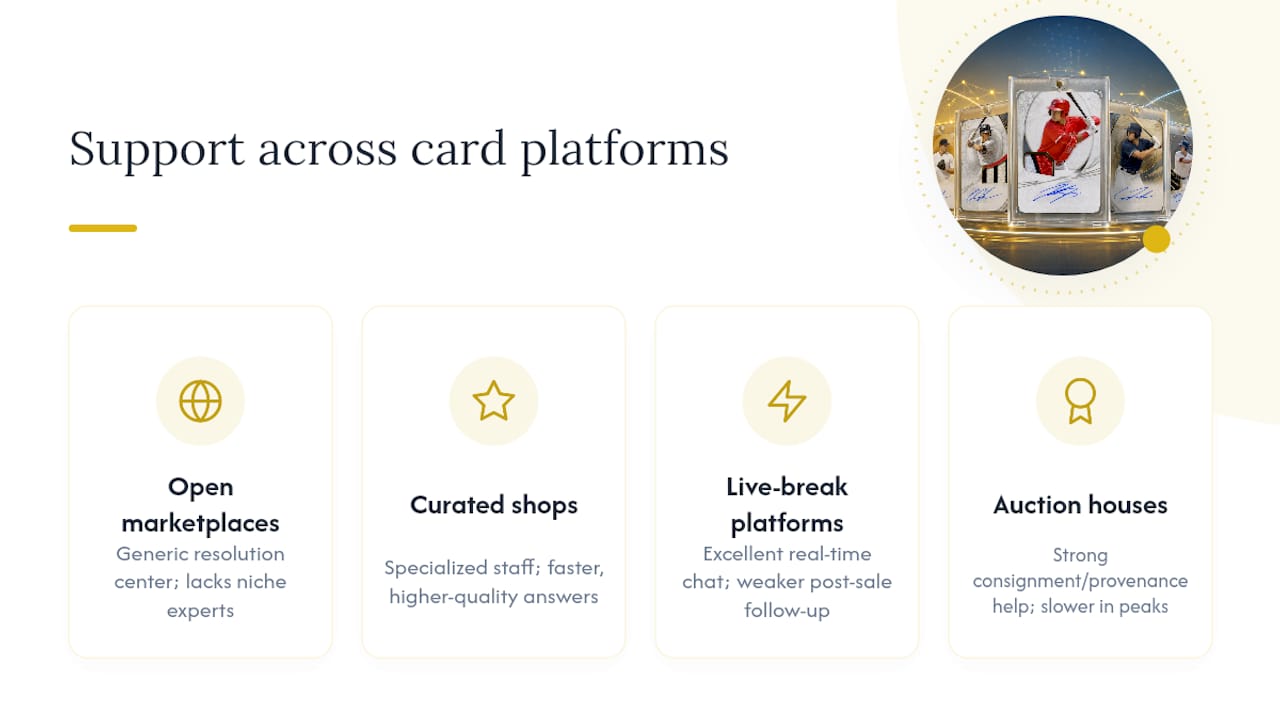
Support quality varies more than most first-time buyers expect, and it often only becomes obvious after something goes wrong. Open marketplaces route most disputes through a generic resolution center, which handles common problems well but rarely offers a direct line to someone who understands rookie autograph grading nuances.
Curated specialty shops tend to differ here because the inventory itself is narrower. A shop built around rookie autographs and redemption cards can answer a specific question about a Bowman Chrome parallel or a redemption timeline far faster than a general support queue juggling every category from jerseys to comics. That specialization shows up in response time and in the quality of the answer.
Live-break platforms sit somewhere in between. Real-time chat during a break is often excellent, but post-sale support for a disputed hit or shipping issue can lag once the live audience moves on. Auction houses generally offer strong support, backed by staff who handle consignment and provenance questions daily, though response windows can stretch during peak auction season.
Before buying anywhere, send one test question before you commit real money. A shop’s response speed and clarity on a simple pre-sale question is a reliable preview of how it will handle you if a redemption card arrives late or a slab needs a closer look.
Is the Website or App Easy to Use When Buying Rare Cards
Usability matters more with rare cards than with common singles, because a confusing filter system can bury the one redemption card you’re actually hunting for. Large open marketplaces offer powerful search but often overwhelm new users with filters built for bulk sellers rather than collectors chasing one specific autograph.
Curated shops usually win on simplicity. Fewer categories mean filtering by sport, player, or card type surfaces relevant results faster, and product pages tend to carry more detail per listing since the catalog is smaller by design. That trade-off, breadth versus focus, is worth weighing against your actual buying habit. If you check the market weekly for one specific rookie class, a focused shop with clean navigation beats scrolling through thousands of unrelated listings.
Mobile experience is the other differentiator. Live-break apps are generally built mobile-first since breaks happen in real time, while some legacy marketplaces still feel like a desktop product squeezed onto a phone screen. Test the mobile checkout flow before a live drop goes on sale. A clunky mobile cart during a fast-selling redemption release can cost you the card entirely.
Which Platforms Carry Rare Editions or Specific Card Brands
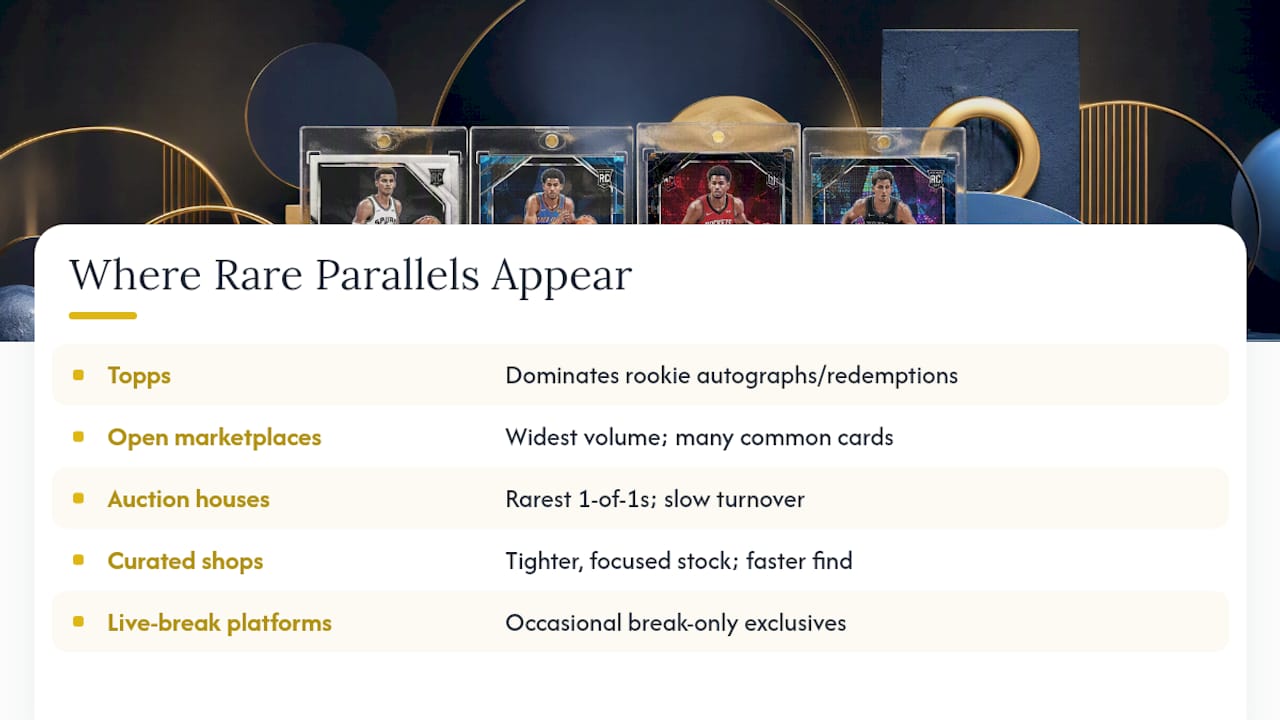
Not every alternative stocks the same inventory, and brand availability is often the deciding factor in where a collector actually shops. Topps dominates the rookie autograph and redemption space across MLB, NBA, and NFL, but access to specific parallels, like Chrome Black Signature or Bowman Chrome Green Signature, depends heavily on which channel you’re using.
Open marketplaces carry the widest raw volume, but that volume includes plenty of common base cards mixed in with the rarities, making a specific parallel harder to isolate. Auction houses handle the rarest one-of-one and low-population pieces, but their catalogs turn over slowly since consignment takes time.
Curated shops built specifically around rookie autographs and redemption cards tend to carry a tighter, more consistent selection of exactly those categories. That focus is why a collector hunting a specific redemption, a Junior Caminero Bowman Chrome Green Signature or a Munetaka Murakami Chrome Black Signature rookie, often finds a dedicated shop faster than scrolling a general marketplace. Live-break platforms occasionally surface exclusive break-only parallels you won’t find listed individually anywhere else, which is worth knowing if a specific insert only drops through breaks.
Why a Curated Specialty Shop Cuts Search Time for Serious Collectors
Chasing a specific rookie autograph across five different marketplaces wastes hours most collectors don’t have. Nextgencards built its catalog specifically around rookie autographs, relics, and rare redemption cards, which means the search cost drops the moment you land on the site instead of after twenty minutes of filtering.
Shipping promotions on select items can simplify the total-cost calculation covered earlier in this guide. Curation also means every listing was chosen for a reason, not scraped in bulk, so the redemption card or rookie parallel you’re after is easier to find and easier to verify.
Run every shop, including this one, through the same checklist: cert lookup, photo quality, return policy, and total landed cost. That habit protects you no matter where you ultimately buy.
— Richard
Shop Rookie Autographs and Redemption Cards at Nextgencards
This shop offers a direct alternative for collectors who want fewer clicks between “I want this rookie autograph” and “it’s on the way.” Instead of filtering through thousands of unrelated listings on a general marketplace, the catalog stays focused on rookie autographs, relics, multi-player redemptions, and select supplies.
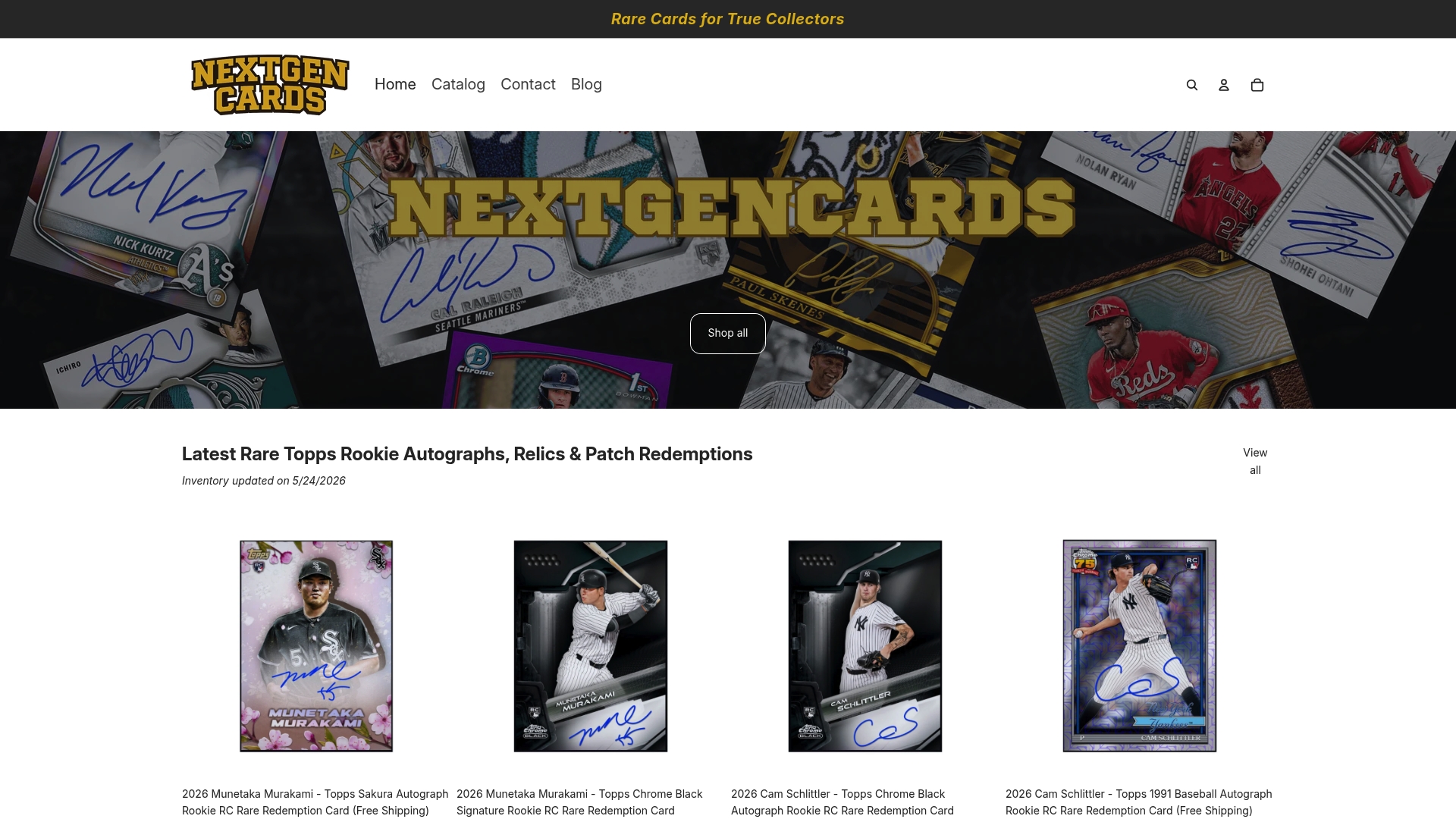
Use the search bar with a player’s last name or set name (try “Bowman Chrome” or “Topps Flagship”) to jump straight to relevant listings. Right now the shop lists standout redemptions including the 2024 Junior Caminero Bowman Chrome Green Signature rookie card with free shipping, the 2026 Jacob Misiorowski Topps All Star Game autograph rookie redemption, and a flagship triple-autograph Skenes, Cole, and Strasburg redemption card for collectors chasing a rare multi-signature piece. Basketball fans will also find the Jalen Brunson All Star Game jersey patch autograph redemption. Browse the full rookie autographs and relics collection to start comparing your next addition.
Where to Verify Cards and Compare Marketplaces
- PSA certification and grading services: run any slab’s cert number here before buying.
- Beckett grading and authentication: a secondary lookup for BGS-graded slabs and label security details.
- Hall of Cards marketplace comparison: breaks down fee structures and specialties across major platforms.
- Sports Illustrated Collectibles buying guide: practical red flags for online card purchases.
- Ripbin’s guide to investing in sports cards: useful context on market behavior for anyone treating a purchase as a long-term hold.
- Card Capsule marketplace overview: compares platform strengths for different collecting goals.
Sources
- Best Sports Cards Marketplaces 2026 - Hall of Cards
- How to buy cards online and what to avoid — Sports Illustrated Collectibles
- PSA | Official Trading Card Grading Service
- Beckett Collectibles — grading and authentication
FAQ
What Are the Best Alternatives to a General Card Marketplace?
Curated specialty shops, graded-card marketplaces, auction houses, and live-break platforms each serve a different goal. For authenticated rookie autographs and rare redemptions, a curated shop like Nextgencards is typically the faster, lower-risk starting point.
How Do I Check if a PSA or BGS Slab Is Authentic?
Run the cert number printed on the slab through PSA’s lookup tool or Beckett’s equivalent and confirm the returned details match the card and grade shown in the listing photos.
What’s a Red Flag When Buying Rare Cards Online?
A single blurry photo, a seller who won’t answer questions, or an unverifiable cert number are the clearest warning signs that a listing deserves extra scrutiny or a pass entirely.
Do Fees Really Change the Price of a Rare Card That Much?
Yes. Marketplace and platform fees can shift your total landed cost by 20 to 50 percent once shipping and insurance are included, so always compare full cost, not the sticker price.
Should I Buy From Multiple Platforms or Stick to One?
Most experienced collectors mix channels, using marketplaces for price comps, curated shops for authenticated rookies and redemptions, and auction houses for trophy pieces, rather than relying on a single source for everything.
0 comments