

An NBA rookie class card is defined as a player’s first officially licensed trading card released in a major base set during their debut NBA season, identified by the industry-standard RC shield logo. These cards represent the foundation of serious NBA card collecting, and understanding what separates a true rookie card from a prospect card or insert is the difference between a smart investment and a costly mistake. Brands like Panini and Topps produce the sets that define this market, and the 2026 rookie class, led by prospects like Cooper Flagg, has already generated significant collector interest. This guide covers the NBA rookie class card explained from every angle: definitions, card types, market dynamics, and practical collecting strategies.
What qualifies as a true NBA rookie card?
A true NBA rookie card is the player’s first officially licensed card released in a major base set during their debut NBA season, identified by an RC shield logo. The industry standard requires the card to be part of a licensed base set, sanctioned by both the NBA and the National Basketball Players Association. Cards that appear in inserts, promotional sets, or unlicensed minor issues do not qualify, regardless of when they were printed.
Collectors frequently confuse several card types, and that confusion costs money. Here is how the main categories break down:
- Base rookie cards: Standard cards in a licensed set carrying the RC logo. These are the entry point for most collectors.
- Rookie inserts: Cards included within a set but not part of the base set. These do not carry the RC designation and hold less long-term significance.
- Prospect cards: Issued before a player is officially drafted or rostered in the NBA. These are not rookie cards by industry definition.
- Parallels: Alternate versions of base cards with different colors, finishes, or print runs. Parallels of RC cards carry the RC logo and can be highly valuable when numbered low.
The RC logo is not just a marketing label. It is the hobby’s official certification that the card meets the criteria for a true rookie card. Collectors who confuse rookie designations often overpay for inserts or prospect cards that lack the same long-term market support.
Pro Tip: Always verify the RC shield logo on the front or back of the card before purchasing. If the logo is absent, the card is not a certified rookie card by hobby standards, regardless of what the seller claims.
How card types and product tiers affect rookie card value
Not all rookie cards are created equal. The product line a card comes from determines its value ceiling as much as the player on the front. Since 2009, Panini has led NBA licensing with flagship rookie card products including Prizm, Select, and National Treasures, each targeting a different collector budget and investment profile.
| Product | Card Type | Typical Value Range | Key Feature |
|---|---|---|---|
| Panini Prizm (base) | Base RC | $5 to $500+ | High print run, widely accessible |
| Panini Select | Base RC + Parallels | $20 to $2,000+ | Mid-tier with premium parallels |
| Panini National Treasures | Rookie Patch Autograph | $5,000 to $1,000,000+ | On-card auto, game-worn patch |
| Topps Chrome (re-entry) | Base RC + Refractors | $10 to $5,000+ | Refractor parallels, strong brand recognition |
Rookie Patch Autographs, commonly called RPAs, sit at the top of the value hierarchy. RPAs combine rookie status, an on-card autograph, and a piece of game-worn memorabilia in a single card. National Treasures RPAs for top prospects regularly sell for five figures, and PSA 10 graded examples of star players have crossed seven figures at auction.
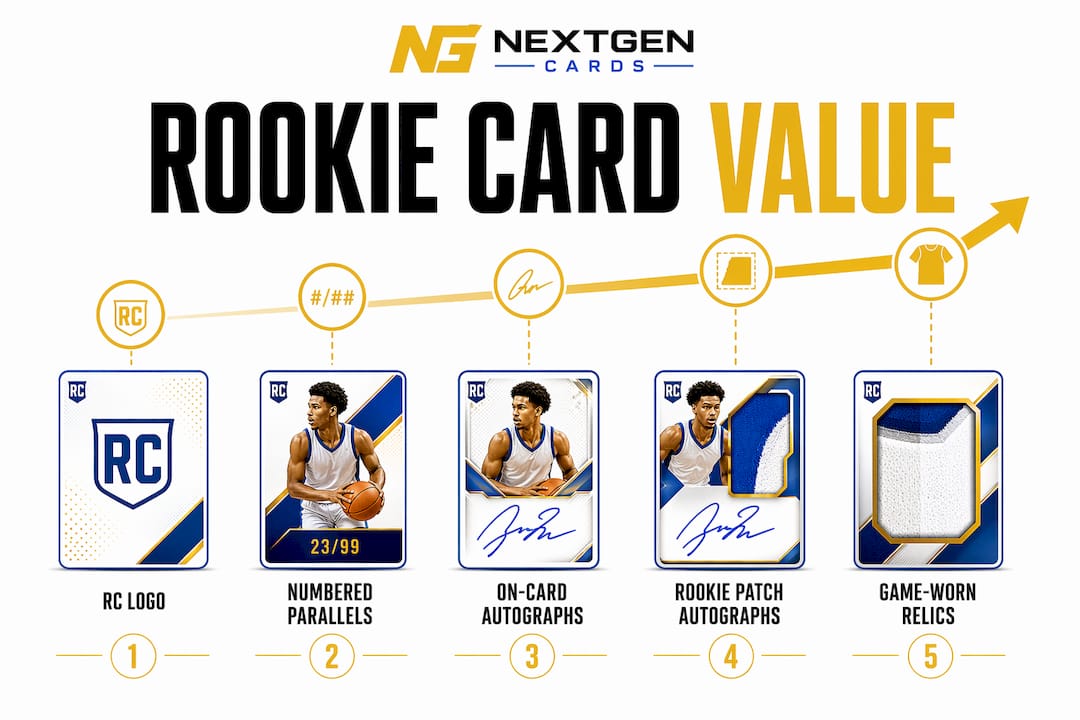
Numbered parallels such as cards printed to /99 or lower provide structural scarcity that base cards cannot match. A Prizm Silver base card of a top rookie might sell for $50, while the same player’s Gold Prizm numbered to /10 could command $2,000 or more. The lower the print run, the more protected the card is against market saturation.
Pro Tip: For budget-conscious collectors, Prizm Silver base RCs offer the best combination of liquidity and upside. For serious investors, National Treasures RPAs numbered to /25 or lower are the standard benchmark.
How market dynamics impact NBA rookie card values in 2026
The 2026 rookie card market is defined by two major forces: the arrival of a generational prospect class and a significant licensing shift. Fanatics and Topps re-entering the basketball card market has introduced new competition for Panini, and collectors should monitor how this licensing change affects the prestige and secondary market demand for cards from each brand.
Cooper Flagg has emerged as the headline name of the 2026 class. His cards have drawn comparisons to early Luka Doncic and Zion Williamson releases in terms of pre-market demand. High-grade Topps Chrome on-card autographs saw a 15% value increase in April 2026 alone, reflecting how quickly the market responds to performance and hype.
Smart portfolio allocation matters in this environment. The recommended approach for serious collectors is to direct 60% of their rookie card budget toward blue-chip prospects with clear All-Star potential, with the remaining budget spread across higher-risk, higher-upside players. This structure limits exposure to hype-driven busts while maintaining access to breakout upside.
Key market factors to watch in 2026:
- Grading premiums: PSA 10 slabs command significantly higher prices than raw cards of the same player and set. The gap between a raw Prizm RC and a PSA 10 copy can be 3x to 10x depending on the player.
- Hype cycles: Rookie card prices peak during the NBA Draft and early season, then often correct by 20% to 40% before stabilizing.
- Licensing shifts: Topps’ return to basketball means new sets with new prestige hierarchies. Early Topps Chrome RCs from the 2026 class may carry long-term significance similar to Topps Chrome baseball.
- Print run transparency: Sets with clearly disclosed print runs allow collectors to assess scarcity accurately. Undisclosed print runs are a red flag for speculative buying.
Collector strategies: how to identify valuable rookie class cards
The most common mistake collectors make is overvaluing hype instead of proven career potential. Most mass-produced base rookie cards have limited long-term value, and the market is littered with examples of first-round picks whose cards crashed within 18 months of their debut.
Follow these steps to evaluate a rookie card before buying:
- Confirm RC status. Verify the RC logo and confirm the card is from a licensed base set, not an insert or prospect issue.
- Assess the product tier. National Treasures and Select carry more long-term prestige than high-print-run base products. The set matters as much as the player.
- Check the serial number. Cards numbered to /99 or lower offer meaningful scarcity. Cards with no serial number are base cards with potentially unlimited print runs.
- Research the player’s trajectory. Focus on players with clear roles, strong draft pedigree, and teams that will give them minutes. Bench players rarely sustain card value.
- Factor in grading potential. Cards with sharp corners, clean surfaces, and centered printing grade well. A PSA 10 candidate is worth far more than a PSA 8 of the same card.
- Time your purchase. Waiting 12 to 24 months after a player’s debut allows hype-driven prices to stabilize. Buying at peak hype is the single most common cause of collector losses.
Rookie patch autographs and high-grade numbered parallels remain the safest long-term investments in the hobby. They combine scarcity, authentication, and collector demand in a way that base cards simply cannot replicate.
Pro Tip: Cross-reference recent PSA population reports before buying a graded card. A PSA 10 is worth less when 500 copies exist than when only 12 have been graded. Population data is free on the PSA website.
How to buy, store, and sell NBA rookie class cards
Purchasing authentic rookie cards requires using verified platforms and understanding what to look for in a listing. The most reliable sources for NBA rookie cards include eBay (with seller feedback above 99%), PWCC Marketplace, Goldin Auctions, and direct purchases from established hobby shops. For certified autograph rookie cards, the 2026 collector’s guide from Nextgencards provides a focused breakdown of top products and emerging stars worth targeting.
Storage directly affects grading potential and resale value. Follow these practices:
- Sleeve immediately. Place raw cards in penny sleeves and then into semi-rigid card savers or top loaders within minutes of handling.
- Avoid rubber bands and stacking. Pressure and friction cause surface scratches that drop PSA grades from 10 to 8, cutting value by 50% or more.
- Control humidity and temperature. Store cards in a cool, dry environment. Humidity above 60% causes warping and surface damage.
- Use graded card cases for slabs. PSA and BGS slabs are durable but still susceptible to scratching. Store them vertically in padded cases.
- Document your collection. Photograph cards front and back before submission for grading. This protects you in case of shipping damage or grading disputes.
Timing a sale matters as much as timing a purchase. The optimal window for selling a rookie card is during the player’s first All-Star appearance or after a playoff breakout performance. These moments generate peak secondary market demand. Selling into hype, rather than chasing it, is the discipline that separates profitable collectors from those who break even.
Key takeaways
The most valuable NBA rookie class cards combine RC-logo certification, low serial numbers, on-card autographs, and PSA 10 grades. Collectors who prioritize these four factors consistently outperform those who chase hype-driven base cards.
| Point | Details |
|---|---|
| RC logo is mandatory | Only cards in licensed base sets with the RC shield qualify as true rookie cards. |
| Product tier drives value | National Treasures RPAs and numbered parallels outperform mass-produced base cards long term. |
| Timing reduces risk | Waiting 12 to 24 months post-debut lets hype prices correct before you buy. |
| Grading multiplies returns | PSA 10 slabs regularly sell for 3x to 10x the price of equivalent raw cards. |
| Licensing shifts create opportunity | Topps’ return to basketball in 2026 introduces new prestige sets worth tracking early. |
Why the 2026 rookie card market demands patience over impulse
I have watched the rookie card market go through several full cycles, and the pattern is always the same. A generational prospect arrives, prices spike to irrational levels in the first six months, and then the correction hits anyone who bought at the peak. Cooper Flagg is genuinely exciting, and the Topps re-entry into basketball is a real structural shift worth paying attention to. But neither of those facts changes the math on hype-driven purchases.
The collectors I have seen build real value over time share one habit: they treat rookie cards like a focused catalog, not a lottery. They target undervalued sports cards with clear scarcity and proven player trajectories, not just whoever is trending on social media the week after the draft. The Fanatics and Topps licensing changes will reshape which sets carry long-term prestige, and that uncertainty is actually an opportunity for patient collectors who do their research now.
My honest advice: build your 2026 rookie card position slowly. Prioritize RPAs and numbered parallels over base cards. Submit your best raw cards for grading before the population reports get crowded. And resist the urge to sell into the first price dip. The collectors who understand why rookie year cards matter for long-term portfolio value are the ones who come out ahead when the hype cycle ends.
— Richard
Find rare 2026 NBA rookie cards at Nextgencards
Nextgencards specializes in exactly the type of cards this guide covers: certified rookie autographs, game-worn relics, and scarce numbered parallels from the most significant NBA sets. If you are looking to add a premium 2026 rookie card to your collection, the inventory is curated for serious collectors, not casual browsers.
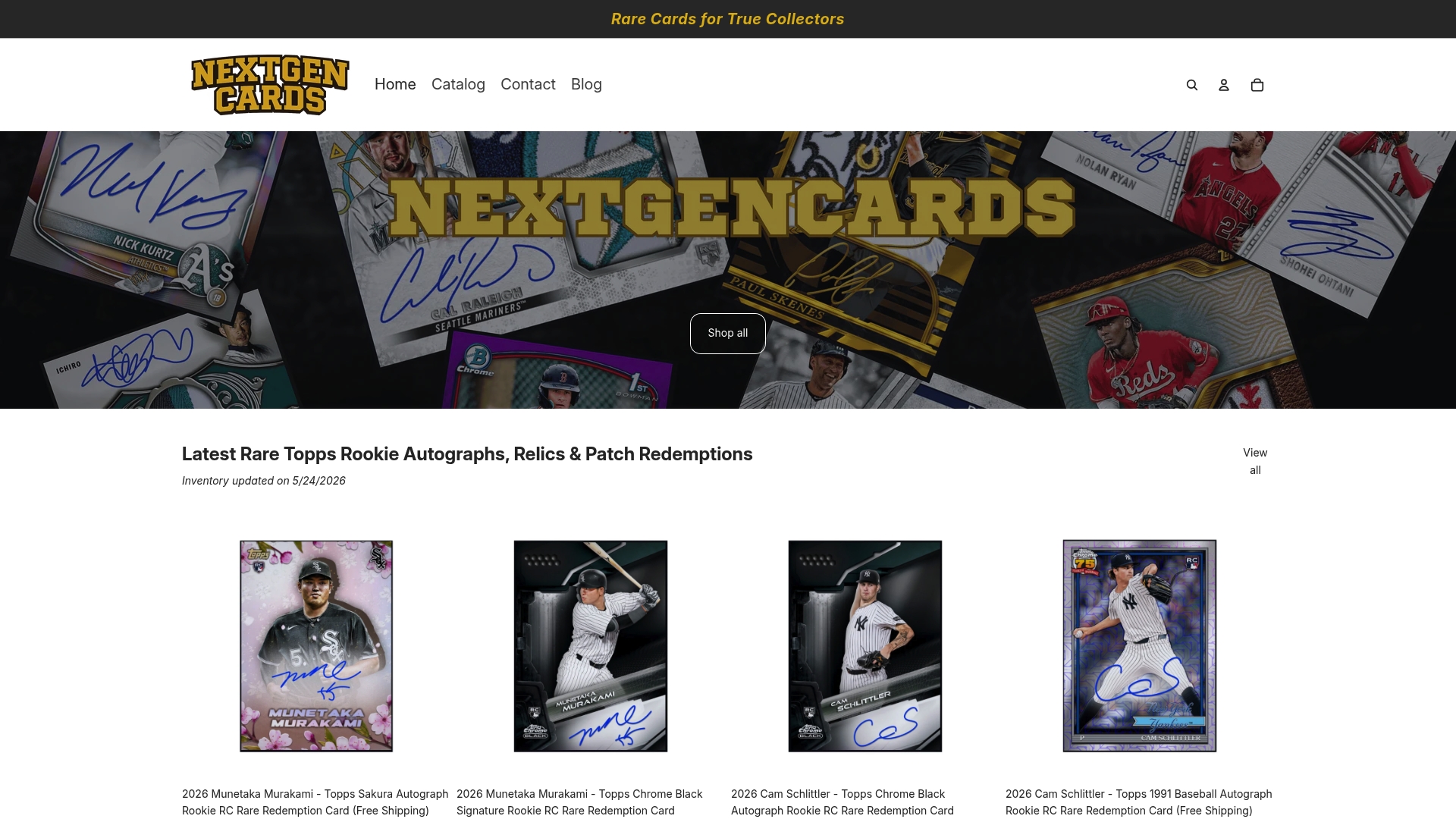
The 2026 Derik Queen Topps autograph rookie card is one of the standout offerings, combining official Topps certification, an on-card autograph, and free shipping. For collectors building a position in the 2026 class, Nextgencards’ full rookie autographs and relics collection offers authenticated options across multiple price points. Every card is verified authentic, making it a trusted source for both new and experienced collectors.
FAQ
What is an NBA rookie class card?
An NBA rookie class card is a player’s first officially licensed trading card from their debut NBA season, issued in a major base set and marked with the RC shield logo. Cards without this logo, or from unlicensed sets, do not qualify as true rookie cards.
How do I know if a rookie card is valuable?
Value depends on the product tier, serial number, autograph status, and player performance. Numbered parallels and on-card autographs from premium sets like National Treasures consistently hold the most long-term value.
What is a Rookie Patch Autograph (RPA)?
An RPA is a card that combines a player’s rookie status, an on-card autograph, and a piece of game-worn memorabilia. National Treasures RPAs are considered the gold standard in NBA rookie card collecting and regularly sell for thousands of dollars.
Should I grade my rookie cards with PSA or BGS?
PSA 10 graded cards hold significantly higher resale value than raw cards of the same issue. PSA is the most widely recognized grading service for NBA cards, and a PSA 10 label can multiply a card’s value by 3x to 10x compared to an ungraded copy.
When is the best time to buy 2026 rookie cards?
Waiting 12 to 24 months after a player’s debut allows hype-driven prices to correct and stabilize. Buying during the draft window or early season typically means paying a significant premium that takes years to recover.
Recommended
- Buy Certified Autograph Rookie Cards: 2026 Collector’s Guide – Next Gen Cards LLC
- Why Rookie Year Cards Matter for Serious Collectors – Next Gen Cards LLC
- MLB Player Specific Card Types Every Collector Should Know – Next Gen Cards LLC
- 2026 Derik Queen Topps 1980-81 Basketball Rookie Autograph Rare Card – Next Gen Cards LLC
0 comments