

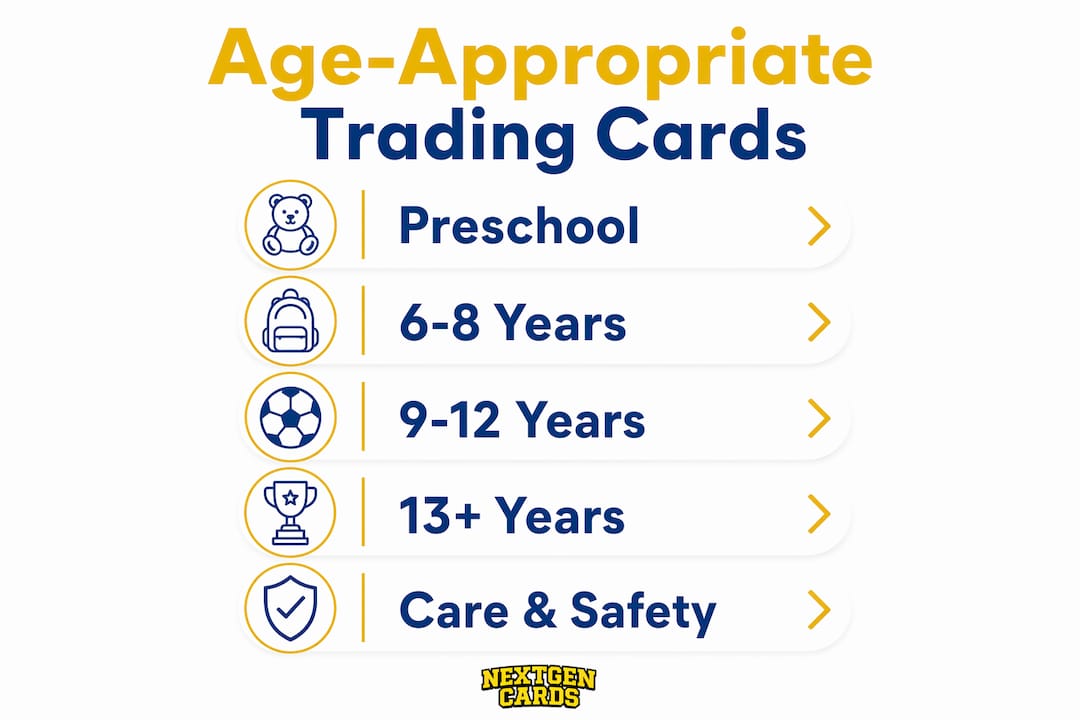
The right trading card for your child depends on age, attention span, and whether they want to play or collect. For most kids under 8, a Pokémon TCG starter kit or matching-style card game is the safest, most engaging entry point. Ages 9–12 do well with Pokémon Elite Trainer Boxes (ETBs). Teens 13 and up can handle Magic: The Gathering or sports card singles, and serious collectors in that group may eventually benefit from authenticated items graded by PSA or Beckett Grading Services.
Quick age map:
- Under 6: Play-card replicas or simple matching games only. No small loose cards unsupervised.
- 6–8: Pokémon TCG starter kit or Battle Academy ($15–$30). Play-focused, rules included.
- 9–12: Pokémon ETB or a beginner Topps or Panini sports pack bundle. Introduce accessories.
- 13+: Magic: The Gathering prebuilt decks, sports card singles, or curated rookie cards. Budget rules apply.
Research from Screenwise confirms that Pokémon Battle Academy teaches reading comprehension, basic math, and strategic planning — making the play-first approach both educationally sound and age-appropriate.
Table of Contents
- What age is right for each type of trading card?
- How to teach trading, social rules, and why play comes first
- What starter products should you buy first?
- How do you protect trading cards at home?
- How do you set a hobby budget and avoid scams?
- When is a child ready for collector-grade or single cards?
- A one-page checklist and sample starter buys by age
- Key Takeaways
- Why the “play-first” rule matters more than most parents realize
- Nextgencards: authenticated rookie cards for collectors who are ready
- Useful sources
What age is right for each type of trading card?
Manufacturer age labels are a reasonable starting point. Pokémon TCG is commonly marketed 6+, while Magic: The Gathering carries a higher recommended age due to its rules complexity and online account requirements. But age labels are a floor, not a guarantee. Match the product to your child’s attention span, emotional maturity, and social environment.
| Age Band | Best For | Complexity | Typical Starter Cost | Safety Notes | Accessory Needs |
|---|---|---|---|---|---|
| Under 6 | Simple matching card games | Very low | $10–$20 | Choking hazard risk; adult supervision required | None |
| 6–8 | Pokémon TCG starter kit / Battle Academy | Low | $15–$30 | Keep loose cards away from toddlers | Basic sleeves |
| 9–12 | Pokémon ETB, beginner Topps/Panini packs | Medium | $30–$50 | Avoid booster boxes; sealed products preferred | Sleeves, binder, deck box |
| 13+ | Magic: The Gathering, sports singles, rookie cards | Medium–High | $20–$100+ | Scam awareness; budget rules essential | Top-loaders, premium sleeves |
For preschool-age children, avoid any product with small loose cards. Simple card games designed for young children are the right call. The randomized-value concept behind booster packs is genuinely confusing at this stage and can create frustration rather than fun.
Ages 6–8 are ready for a structured play experience. The Pokémon TCG Battle Academy, designed for younger children, includes multiple pre-built decks and a step-by-step rulebook. It delivers real strategic depth without requiring a child to build their own deck. Avoid booster packs at this stage.
Ages 9–12 can handle ETBs and small numbers of booster packs. ETBs retail at a moderate price and include sleeves, dice, a player guide, and several boosters. They’re a balanced mid-tier buy. Topps and Panini beginner sports packs also work well here, especially for kids who follow a sport.
Ages 13+ are ready for Magic: The Gathering prebuilt Commander decks, sports card singles, or rookie cards from authenticated sources. This is also the age to introduce grading concepts and budget discipline.
Pro Tip: Keep high-value cards out of backpacks and school bags entirely. A lost or damaged rare card can derail a child’s interest in the hobby fast.
How to teach trading, social rules, and why play comes first
Start with supervised, simple trades using a one-for-one rule. Experts recommend keeping very valuable cards out of casual play and requiring adult sign-off on any trade involving a card the child considers a prize.
Trading card play builds real cognitive skills: reading comprehension from card text, basic math from damage tracking, and negotiation from trading itself. Screenwise frames the Pokémon TCG as a learning tool that teaches persistence and sportsmanship alongside gameplay. Starting with play, not the hunt for rare pulls, reduces the gambling mindset and builds lasting interest.
First five trades: a parent checklist
- Identify both cards by name and set.
- Agree on the condition of each card (played, near-mint, etc.).
- Discuss perceived value in simple terms: “Is this card one you’d miss?”
- For any card above $5 in perceived value, require adult sign-off before the trade completes.
- After the trade, review together: was it fair? Would you do it again?
Pro Tip: Limit cards brought to school or events to 10–15 commons. Leave anything rare or sentimental at home. This one rule prevents most card-related conflicts.
What starter products should you buy first?
The single best first buy for most kids is an official starter kit or theme deck paired with a pack of basic sleeves. Theme and starter decks typically cost $10–$20 and include a playable 60-card deck and a guide. They’re ready out of the box, no deck-building required.
Booster packs feel exciting, but they don’t produce a playable deck. A child who opens five random packs and can’t build a working game will lose interest quickly. Starter kits solve that problem immediately.
For a family-friendly mid-tier buy, a Pokémon ETBs bundle everything a new player needs: boosters, sleeves, dice, and a rulebook. Booster boxes contain many booster packs and are aimed at experienced collectors and draft groups. They’re a poor fit for beginners and can be a significant financial and emotional disappointment.
A realistic beginner bundle budget:
- Starter kit or theme deck: $15–$20
- 200 penny sleeves: $5–$8
- Deck box: $5–$10
- Small 9-pocket binder: $8–$12
- Total: roughly $33–$50
Pro Tip: Buy the sleeves before the first play session, not after. Cards get damaged in the first hour of play. Sleeving up immediately is the single habit that protects the collection long-term.
How do you protect trading cards at home?
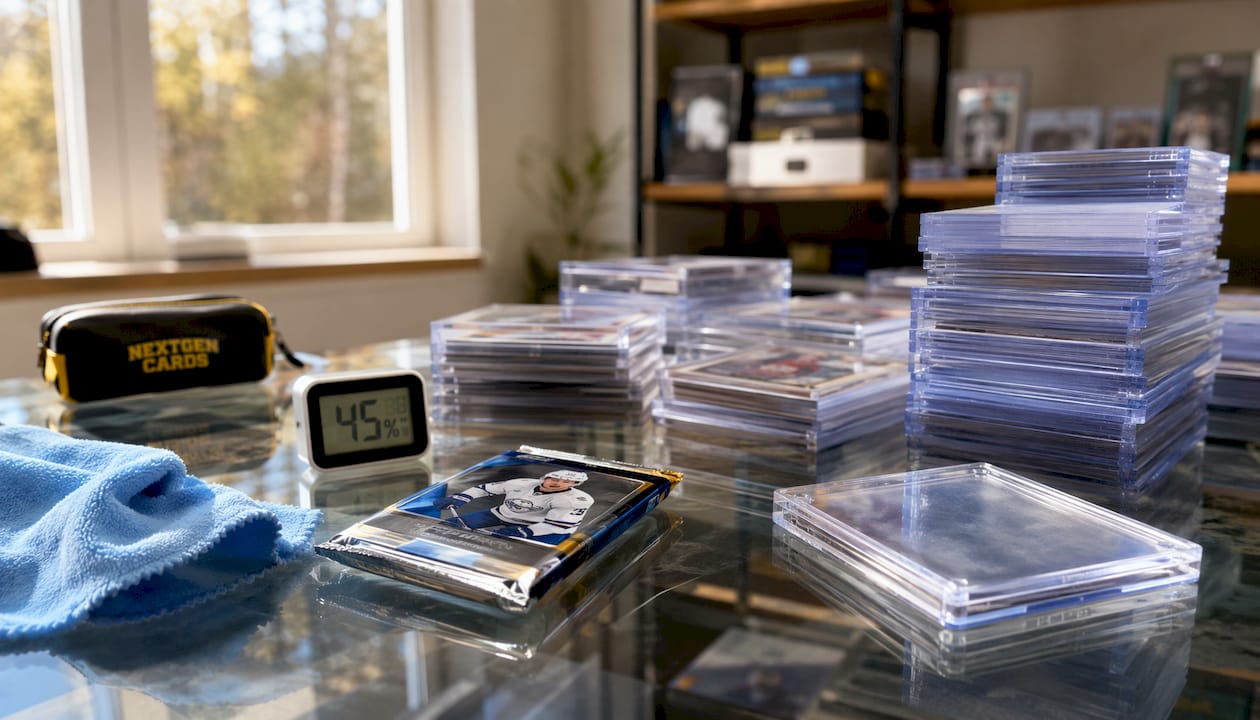
Sleeves, a deck box, and a binder with 9-pocket pages are the baseline protective kit for any child’s collection. A basic protective setup is a low-cost investment that preserves card condition and reduces conflict over damaged cards. For collectors who want to go deeper, the same discipline applies to serious collectibles care across categories.
Protective accessory list:
- Penny sleeves: Protect every card that sees play. Cost: pennies per card.
- Top-loaders: Reserve for prized cards, promos, and anything the child considers a favorite.
- 9-pocket binder pages: PVC-free, archival-safe pages keep the collection organized and tradeable.
- Labeled storage boxes: Teach organization and prevent misplaced cards.
- Silica packs: Add one to any storage box in a humid environment.
Everyday care is simple: clean hands before handling, no food near cards, and storage in a cool dry place away from direct sunlight. Teach children to store cards properly from day one.
Pro Tip: Treat any card the child considers a prize as “display or top-load only” until they demonstrate consistent care habits. This sets a standard and prevents heartbreak.
How do you set a hobby budget and avoid scams?
Set a monthly cap before the first purchase. A sample framework that works for most families: a monthly hobby cap of $20–$50, a sealed-product rule for children under 12, and a one-week cool-down for any purchase above $30. These three rules together prevent impulse spending and keep the hobby sustainable.
| Budget Rule | How It Works |
|---|---|
| Monthly cap | Set a fixed dollar amount at the start of each month; no exceptions |
| Sealed-product rule | Under-12s buy only sealed, official products — no singles from private sellers |
| One-week cool-down | Any purchase above $30 waits seven days before completing |
Red flags to avoid when buying online:
- Sellers who ask to move conversations off-platform (eBay, TCGPlayer, etc.)
- Accounts with no return policy or feedback history
- Prices that seem too low for a “graded” card
- Listings with stock photos instead of actual card images
For high-value singles, PSA (Professional Sports Authenticator) and Beckett Grading Services are the two trusted grading authorities in the U.S. A card with a PSA or Beckett grade carries a verified condition score and is far harder to counterfeit. Parents should wait until a child is ready for this level of the hobby before pursuing graded cards. Digital card apps add another layer of risk: many include in-app purchases and gacha mechanics, so lock purchases and discuss the difference between digital and physical pack opening before allowing app use.
When is a child ready for collector-grade or single cards?
Readiness for singles, graded cards, or booster boxes is about maturity, not just age. Before moving to higher-value purchases, a child should demonstrate:
- Consistent care of their current collection (no bent corners, cards stored properly)
- Basic understanding of card grading and why condition affects value
- Ability to handle a disappointing pull without a significant emotional reaction
- A track record of staying within their hobby budget for at least two months
Safe steps for buying authenticated cards:
- Use verified marketplaces with buyer protection (eBay, COMC, or specialty retailers).
- Insist on PSA- or Beckett-certified items for any card above $50.
- Use tracked shipping and insurance for high-value purchases.
- Never buy a “graded” card without seeing the actual slab and certification number.
Booster boxes bought too early are one of the most common mistakes. A child who expects a rare pull and doesn’t get one can lose interest in the hobby entirely. The value behind first-year cards and rookie autographs is real, but it belongs in the hands of a collector who understands it. Nextgencards stocks authenticated rookie autographs and relic cards for collectors who have reached that stage.
A one-page checklist and sample starter buys by age
Use this checklist before any purchase:
- Confirm the child’s experience level: beginner, intermediate, or collector.
- Set a monthly budget cap before buying anything.
- Choose a starter kit for beginners, an ETB for intermediate players, and authenticated singles only for mature collectors.
- Add sleeves and a deck box to every order.
- For under-12s, buy only sealed, official products from verified sellers.
- Schedule a supervised play session within 48 hours of the purchase.
- Label and inventory new cards before they enter the collection.
Sample starter bundles:
- Play-focused (ages 6–8): Pokémon TCG Battle Academy + 200 penny sleeves + deck box. Budget: $35–$45. See beginner sports card options for sports-focused alternatives.
- Skill-building (ages 9–12): Pokémon ETB + 9-pocket binder + extra sleeves. Budget: $70–$100. Follow the starter sports card checklist for sports card additions.
- Collector path (ages 13+): Magic: The Gathering Commander prebuilt deck or 2–3 authenticated sports singles + premium sleeves + top-loaders. Budget: $50–$120. Use the first sports card bundle guide for next steps.
Key Takeaways
The most effective way to choose age-appropriate trading cards is to match product type to maturity, start with a play-ready starter kit, and add protective accessories before the first session.
| Point | Details |
|---|---|
| Play first, always | Start with a starter kit or Battle Academy; avoid booster boxes until the child is 12+ and emotionally ready. |
| Safety baseline | Keep loose cards away from children under 6; limit school cards to 10–15 commons. |
| Starter kit + sleeves | A $33–$50 beginner bundle (starter kit, sleeves, deck box, binder) covers most kids ages 6–12. |
| Monthly budget cap | Set a $20–$50 monthly cap and a one-week cool-down for purchases above $30 before the hobby begins. |
| Nextgencards for authenticated buys | When a collector is ready for graded or rookie autograph cards, Nextgencards offers verified, authenticated items with clear descriptions. |
Why the “play-first” rule matters more than most parents realize
The conventional advice is to match the card game to the child’s age. That’s correct, but it misses the more important variable: what the child believes the hobby is for. A child who opens their first booster pack expecting a rare pull has already framed the hobby as a lottery. A child who sits down to play a structured game with a parent has framed it as a skill. Those two starting points lead to very different outcomes.
The research from Screenwise on Pokémon Battle Academy is specific: the game teaches reading comprehension, math, and strategic planning through structured play. That outcome only happens when the first experience is a game, not a pack-opening session. Parents who skip the starter kit and go straight to boosters are not saving money. They’re trading a $15 educational experience for a $20 gamble that often ends in disappointment.
The same logic applies to trading. Supervised one-for-one trades with commons teach negotiation and value assessment. Unsupervised trades with rare cards teach resentment. The sequence matters: play first, trade commons, earn the right to handle rare cards. That progression is what builds a collector who actually enjoys the hobby at 16 rather than burning out at 10.
Nextgencards: authenticated rookie cards for collectors who are ready
When a young collector has worked through the starter kit stage, demonstrated consistent card care, and shown real budget discipline, authenticated rookie autographs and relic cards become a meaningful next step.
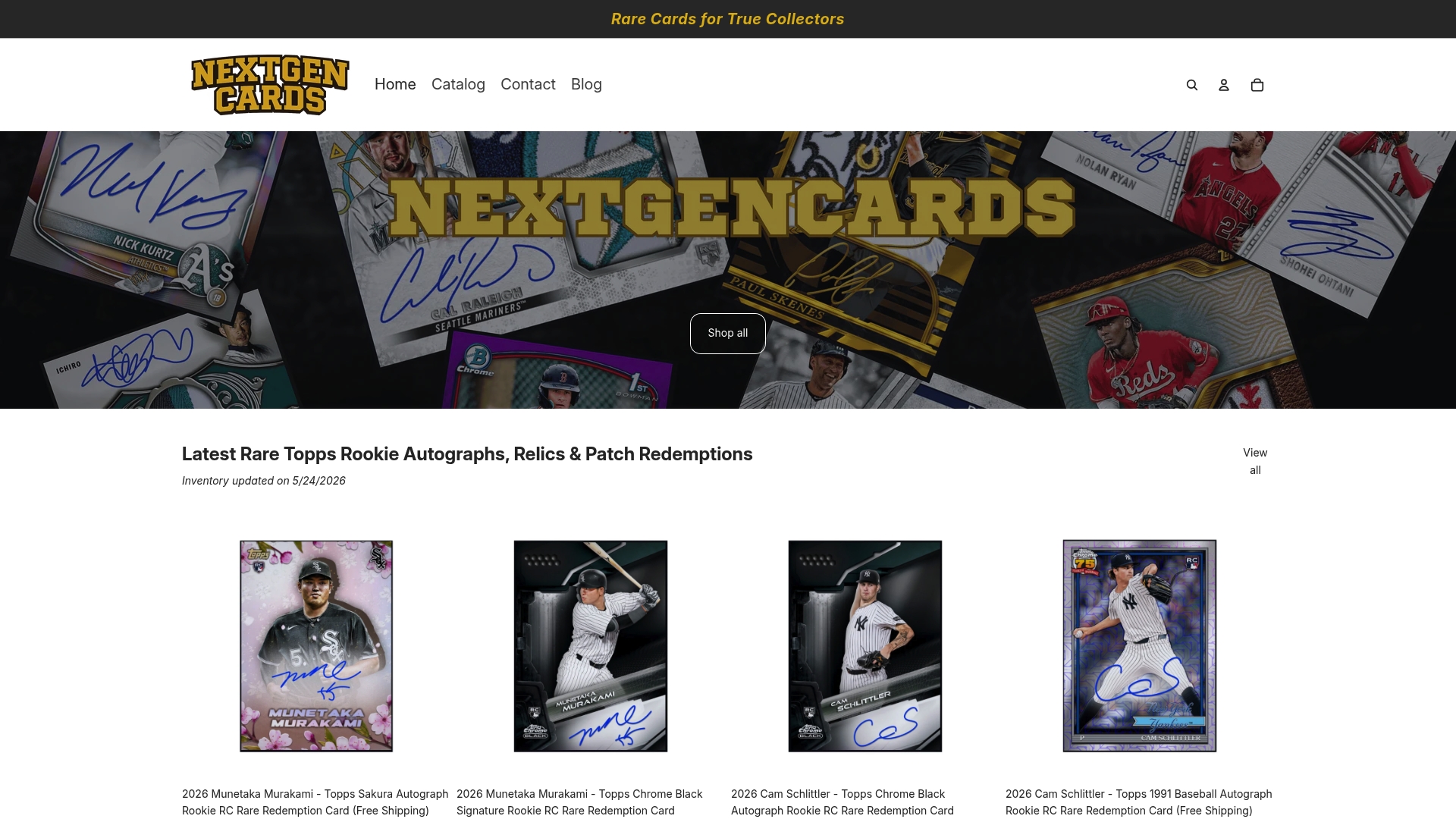
Nextgencards specializes in verified, authenticated sports trading cards: rookie autographs, relics, and rare redemption cards from athletes like Shohei Ohtani and Aaron Judge. Every listing includes clear descriptions and condition details, so parents can buy with confidence rather than guesswork. Free shipping is available on select items. This is not a beginner’s first purchase. It’s the right destination for a collector who has earned it. Browse the authenticated rookie autographs and relics collection to see what verified listings look like, and use the readiness checklist above before completing any high-value purchase.
Useful sources
The guidance in this article draws on family-focused TCG buying guides, official manufacturer resources, digital safety research, and grading authority standards.
- When to Introduce TCGs: Age, Budget & Storage — supervised trading rules, age labels, and budget frameworks
- Introduce Kids to TCGs on a Budget — starter kit costs, ETB value, and protective accessories
- TCG Gifts: Starter Kits vs ETBs vs Booster Boxes — age-appropriate gift guide and storage advice
- Pokémon TCG: Screenwise Parent Review — cognitive benefits, age fit, and safety assessment
- Pokémon Parents Official Site — official starter product recommendations and age guidance
- National College: Digital Safety Guidance — in-app purchase risks and gacha mechanics in card apps
- Nextgencards: Why Trading Cards Teach Kids Real-Life Skills — cognitive and life-skill benefits of trading card play
0 comments