

Trading cards are defined as structured learning tools that develop math, strategy, memory, and social skills in children through direct, repeated gameplay. The question of why trading cards teach kids so effectively comes down to one fact: the game mechanics themselves require the same cognitive processes as formal academic instruction, but children engage with them voluntarily and enthusiastically. Pokémon, for example, asks players to calculate damage, manage resources, and predict opponent moves. These are not incidental benefits. They are built into the rules. Recent 2026 research confirms measurable learning gains from card-based games, and real-world programs in schools from Santa Fe to PBS-affiliated classrooms show the educational value of trading cards is both practical and scalable.
Why trading cards teach kids cognitive and academic skills
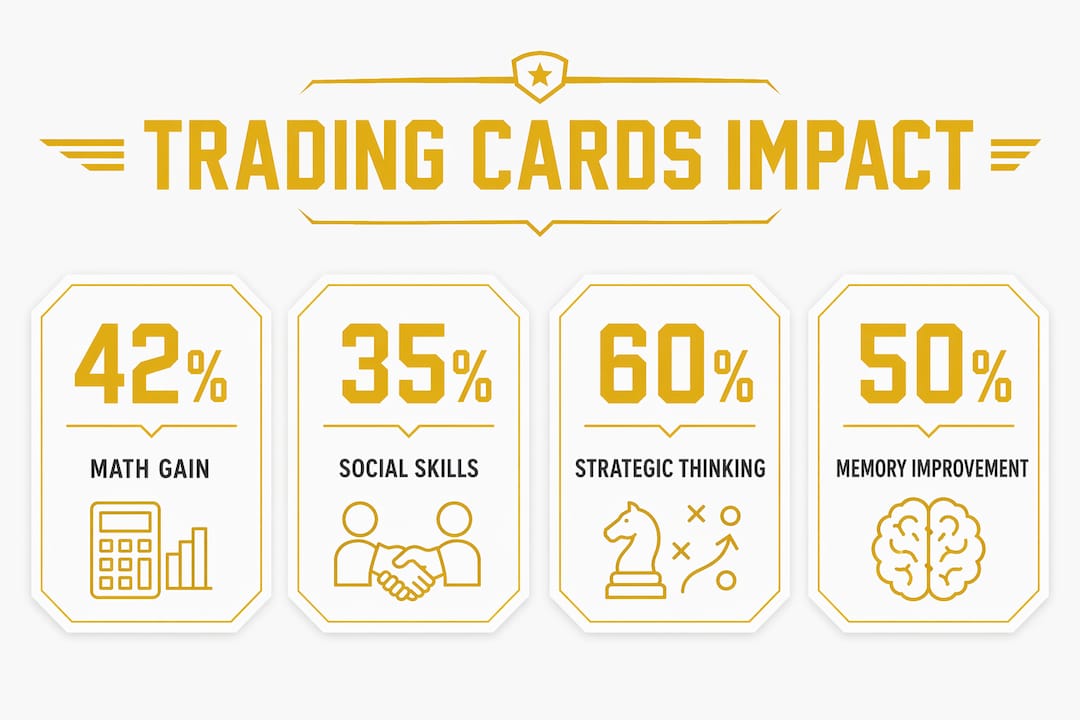
Trading cards build academic skills through gameplay mechanics that require active thinking, not passive reception. Every turn in a card game involves probability assessment, resource allocation, and sequential decision-making. These are the same skills tested in standardized math and reasoning assessments.
The cognitive benefits of learning through trading cards include:
- Math and probability: Players calculate attack values, compare statistics, and weigh the odds of drawing a needed card from a deck. This is applied probability in real time.
- Memory and recall: Cards use icons, colors, and character names as mnemonic anchors. Remembering which cards an opponent has played requires sustained working memory.
- Strategic reasoning: Deciding which card to play, when to hold back, and how to counter an opponent’s strategy develops both inductive and deductive reasoning simultaneously.
- Reading comprehension: Card text contains rules, conditions, and exceptions. Children who want to win read carefully and ask questions about meaning.
A 2026 JMIR study found that students who played a dual-role card game alternating between opposing sides improved their subject knowledge and strategic thinking measurably. This role-switching mechanism forces players to understand both sides of a problem, which is a higher-order thinking skill. The same study confirmed that alternating player roles supports diverse cognitive engagement and accommodates different learning preferences.
Separately, a 2026 MDPI study on a serious trading card game in undergraduate medical education showed significantly greater delayed learning gains compared to traditional instruction. Students also rated the card game experience as more engaging than standard curricula. Greater engagement directly correlates with better retention, which is the core mechanism behind trading cards’ educational value.
Pro Tip: Ask your child to explain their strategy out loud after each game. Verbalization forces them to organize their reasoning, which transfers the skill from intuitive play to conscious understanding.
How do trading cards promote social skills in children?
Trading cards for kids are not just solo learning tools. The social dimension of card games is where some of the most significant developmental benefits occur. Structured card play requires communication, turn-taking, rule negotiation, and the ability to handle both winning and losing with composure.
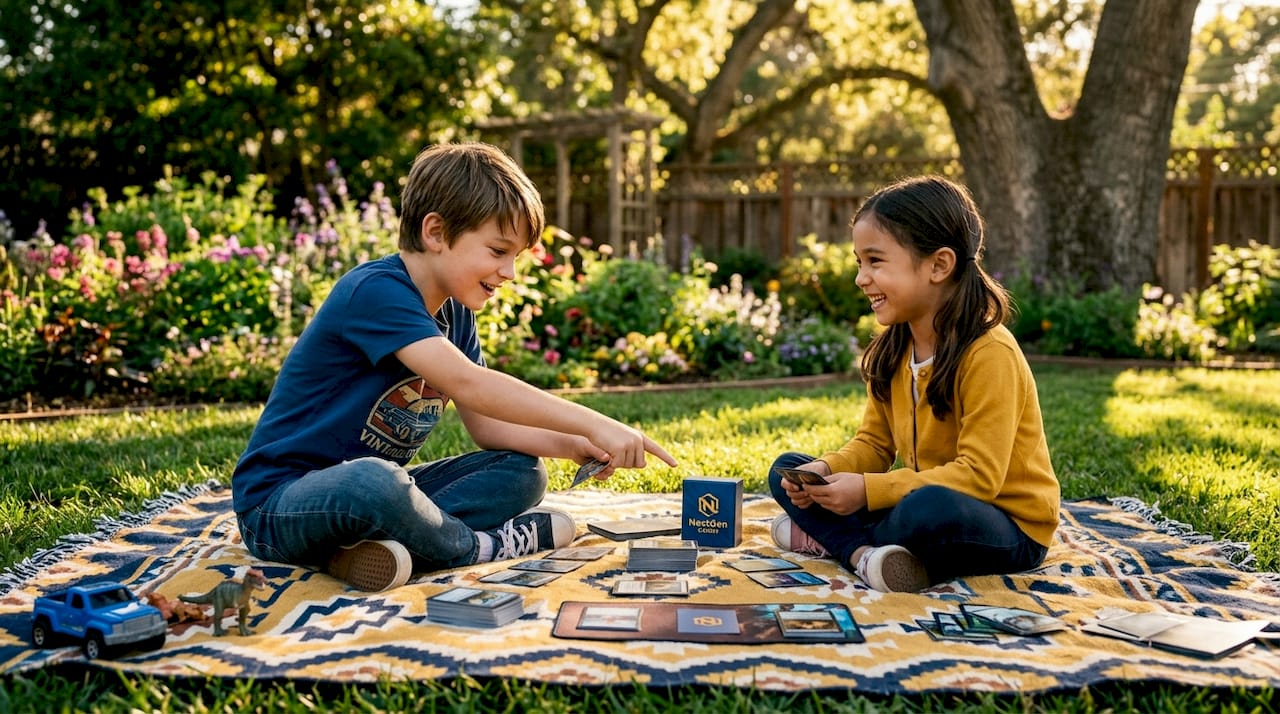
A 2026 Springer Nature study produced a striking finding: cooperative board and card games decreased teasing behavior by 106% compared to competitive games among children with ADHD. That figure represents a dramatic behavioral shift achieved simply by changing the game structure. Cooperative game contexts consistently yield better social outcomes than purely competitive formats, which has direct implications for how parents and educators should structure card play.
The social skills reinforced through trading card gameplay include:
- Turn-taking and patience: Card games have strict turn structures. Children learn to wait, observe, and plan rather than act impulsively.
- Rule-following: Disputes over rules require negotiation and reference to written instructions, building respect for shared agreements.
- Sportsmanship: Losing a card game in front of peers is a low-stakes rehearsal for managing disappointment in higher-stakes situations.
- Trading and communication: Negotiating card trades requires a child to articulate what they want, assess what the other person values, and reach a mutually acceptable agreement. These are foundational negotiation skills.
Classrooms and social-emotional learning programs have recognized these benefits. When card games are used in structured settings with teacher facilitation, the social outcomes are more consistent and measurable. The importance of trading cards in these contexts goes beyond entertainment. They serve as a repeatable social practice environment.
Pro Tip: Introduce cooperative card game formats before competitive ones when working with younger children or those who struggle with losing. The behavioral benefits are faster and the social modeling is cleaner.
Are trading cards a better alternative to screen time?
Trading cards offer a hands-on, social, screen-free activity at a price point that removes most barriers for families. Packs cost under $5, which makes them accessible across income levels and positions them as a practical alternative to digital entertainment subscriptions that cost far more per month.
The comparison between trading cards and screen-based entertainment is worth examining directly:
| Feature | Trading cards | Screen-based games |
|---|---|---|
| Cost to start | Under $5 per pack | $0 to $70+ (device required) |
| Social interaction | Face-to-face, real-time | Often remote or asynchronous |
| Cognitive demand | Active strategy and math | Varies widely |
| Physical format | Tangible, collectible | Digital, non-transferable |
| Screen exposure | None | High |
| Parental involvement | Easy to participate | Often requires tech literacy |
The collectibility and social elements of trading cards are cited by industry veterans as the primary reasons children sustain engagement over time. Unlike a video game that loses novelty after completion, a card collection grows, changes, and generates ongoing social interaction. Children trade, compare, and discuss their cards with peers, which keeps the activity alive without requiring new purchases.
Industry efforts to make card games more accessible have also increased. Publishers have released starter decks, simplified rule sets, and school-friendly formats specifically designed to lower the learning curve for new players. This makes the trading cards educational value accessible to children as young as six.
What real-world programs show trading cards working in schools?
The evidence for trading cards as educational tools is not limited to laboratory studies. Several documented programs demonstrate how cards function in real classroom and community settings.
| Program | Location | Focus | Outcome |
|---|---|---|---|
| Digital Wellness Trading Card Initiative | Santa Fe Public Schools | Screen time and digital hygiene | Over 42,000 cards distributed; teachers reported positive family discussions |
| PBS Reading Program | Multiple U.S. schools | Literacy and reading motivation | Pokémon card formats used to stimulate reading interest in reluctant readers |
| Dual-Role Microbiology Card Game | University setting | Subject knowledge and reasoning | Measurable knowledge gains with improved strategic thinking |
| Endocrine Card Game Study | Undergraduate medical education | Delayed learning retention | Greater gains than traditional instruction with high situational interest |
The Santa Fe Public Schools program is particularly instructive for parents and educators. Distributing over 42,000 cards with gamified incentives, the program generated conversations between children and families about digital wellness topics that teachers had struggled to address through conventional instruction. The card format made the subject approachable and gave children a reason to bring the topic home.
The PBS literacy program demonstrates a different mechanism. Familiar card formats like Pokémon lower the resistance children feel toward reading by attaching text to something they already want to understand. A child who refuses to read a worksheet will read every word on a rare card. That motivation is transferable.
Structured reflection and teacher guidance are the factors that convert gameplay into measurable learning. Programs that include pre and post assessments, discussion prompts, and debriefing sessions show stronger outcomes than those that rely on gameplay alone. The card game creates the engagement. The guided reflection creates the learning transfer.
Key takeaways
Trading cards teach kids measurable cognitive and social skills when gameplay includes strategy, reflection, and structured social interaction.
| Point | Details |
|---|---|
| Math and reasoning gains | Card gameplay builds probability, resource management, and sequential decision-making in real time. |
| Social behavior improvement | Cooperative card games reduce negative peer behaviors and build sportsmanship more effectively than competitive formats. |
| Affordable screen-free option | Packs under $5 make trading cards accessible and socially engaging without screen exposure. |
| Real classroom results | Programs like Santa Fe’s Digital Wellness initiative show cards can drive family conversations and literacy gains at scale. |
| Reflection amplifies learning | Guided debriefs and structured reflection after gameplay are required to transfer skills from play to measurable academic outcomes. |
Why I think most parents are missing the real opportunity here
Parents and educators often focus on the wrong question when it comes to trading cards. The question is not whether a child’s collection will hold monetary value. The question is whether the child is actually playing the game.
I’ve seen the collecting mindset take over quickly, especially with sports cards. A child receives a rookie autograph, looks up its value online, and suddenly the cards become an investment portfolio rather than a play set. That shift kills the learning benefit entirely. The cognitive and social gains come from gameplay, not from ownership. Framing card play around strategic skill practice and respectful trading produces healthier outcomes than framing it around resale value.
The most effective use of trading cards I’ve observed in educational settings involves structured play sessions followed by brief discussions. A teacher or parent asks: “Why did you play that card when you did?” or “What would you do differently next time?” Those two questions turn a ten-minute card game into a reasoning exercise. Without that reflection, the learning stays implicit and inconsistent.
Trading cards also offer something genuinely rare in modern parenting: a reason for adults and children to sit across from each other and compete on roughly equal terms. A parent who learns Pokémon rules alongside their child creates a shared context that reduces screen time for both of them. That generational connection is not a side benefit. It is one of the strongest arguments for keeping physical card games in the home.
If you want to start, prioritize games with clear rule structures and cooperative formats before introducing competitive play. Check out the collector’s buying guide at Nextgencards for guidance on selecting cards that balance collectibility with genuine playability.
— Richard
Find quality trading cards for learning and play
Parents and educators looking for authentic, playable trading cards have a reliable source in Nextgencards. The curated inventory at Nextgencards.shop includes rookie autographs, relics, and limited edition cards from athletes like Shohei Ohtani and Aaron Judge, cards that carry both collectible appeal and the kind of scarcity that motivates sustained engagement in young collectors.

Whether you are building a starter set for a child just learning the game or adding scarce prospects to an existing collection, Nextgencards offers free shipping on select items and easy navigation across categories. Browse the full selection of authentic rookie autographs to find cards that reward both play and long-term collecting. Every card in the inventory is authenticated, making Nextgencards a trusted source for parents who want quality without uncertainty.
FAQ
Why do trading cards teach kids better than worksheets?
Trading cards create voluntary engagement with the same cognitive tasks found in worksheets, including reading, math, and reasoning. Children who want to win read card text carefully and calculate outcomes without being asked.
What age is right to start trading cards for kids?
Most structured card games, including simplified Pokémon formats, are designed for children aged six and up. Starter decks with reduced rule sets make the learning curve manageable for younger players.
Do trading cards actually improve math skills?
Card gameplay requires probability calculation, resource tracking, and numerical comparison on every turn. A 2026 MDPI study confirmed that card-based games produce measurable learning gains beyond what traditional instruction achieves.
Are cooperative or competitive card games better for social development?
Cooperative formats produce stronger social outcomes. Research shows cooperative gameplay reduces teasing and improves prosocial behavior significantly more than competitive play, particularly for children who struggle with impulse control.
How can educators use trading cards in the classroom?
Educators can introduce card games as structured activities paired with reflection prompts. Programs like Santa Fe Public Schools’ Digital Wellness initiative show that distributing cards with clear learning objectives and follow-up discussion generates measurable engagement and positive behavioral outcomes.
Recommended
- Why Rookie Year Cards Matter for Serious Collectors – Next Gen Cards LLC
- Top Places to Buy Rare Rookie Cards (Collectors Guide) | NextGenCards – Next Gen Cards LLC
- How to Identify Undervalued Sports Cards in 2026 – Next Gen Cards LLC
- MLB Player Specific Card Types Every Collector Should Know – Next Gen Cards LLC
0 comments