

You can introduce your child to card collecting safely and keep it fun by choosing an age-appropriate focus, setting a small budget, and protecting cards from day one. Here is the three-step plan to start immediately:
- Pick a focus. Choose one sport, team, player, or trading card game your child already loves. Topps Series 1 baseball is a recognizable entry point; so is a single NBA or NFL player rookie set.
- Set a realistic budget. A $20–$50 monthly starting budget covers blaster boxes and singles without pressure. Families ready to invest more can scale to $50–$200/month as interest grows, according to beginner guidance from Yahoo Sports, but you can also start with just $30–$50 to test the hobby, per Vaulted Collection.
- Protect immediately. Every card worth keeping goes into a penny sleeve, then a top loader. This costs under $15 for a starter supply kit and preserves condition from the first pull.
For a keepsake-grade first card, Nextgencards carries curated rookie autographs. PSA grading is optional and best saved for later, once your child has a card they genuinely treasure.
Key Takeaways
Card collecting for kids works best when it starts small, stays focused, and uses the hobby as a vehicle for real skills: math, reading, budgeting, and social negotiation.
| Point | Details |
|---|---|
| Start with a clear focus | Pick one sport, team, or player and stick with it for the first 90 days. |
| Budget $30–$50 to start | A blaster box or a few singles is enough to test the hobby without overspending. |
| Protect cards immediately | Penny sleeves and top loaders cost under $15 and preserve condition from day one. |
| Make it a family project | Birth-year or team sets build long-term engagement and reduce impulse buying. |
| Nextgencards for keepsakes | Curated rookie autographs and rare redemption cards make authentic milestone gifts. |
Table of Contents
- How card collecting for kids builds real skills
- How to pick a focus and age-appropriate starter card types
- Setting a budget and using collecting to teach money management
- Where to buy safely and what to avoid
- How to protect and organize cards from day one
- Making collecting social and meaningful for your child
- Your 30/60/90-day starter plan for new collectors
- Common mistakes parents should avoid
- Age-appropriate safety guidelines for in-person trading
- Balancing screen time with physical card collecting
- An editorial perspective on teaching kids to collect responsibly
- A curated keepsake option for parents ready to give something special
- Trusted resources for parents
- Sources
How card collecting for kids builds real skills
Card collecting builds measurable skills: basic math, reading comprehension, patience, and social negotiation. These are not incidental benefits; they show up in daily collecting tasks.
Tracking a collection in a spreadsheet or binder teaches numeracy. Kids add up card values, compare prices on recent eBay sold listings, and learn percentages when a card’s market price shifts. Reading card backs is a genuine literacy exercise: stats, player bios, and set descriptions push vocabulary and comprehension in a context kids actually care about. Sports cards inspire reading habits in young collectors in ways that worksheets rarely do.
Trading teaches negotiation and rule-following. A child who learns to propose a fair trade, accept a counteroffer, and honor an agreement is practicing social skills that transfer directly to school and friendships. Long-term set-building projects teach delayed gratification: a child working toward a complete 2026 Topps Series 1 set learns that patience and consistency pay off.
Pro Tip: Turn a recent pack opening into a quick price-comparison exercise. Have your child look up three pulled cards on eBay’s “sold” filter, record the prices, and calculate the average. It takes ten minutes and covers real-world math.
How to pick a focus and age-appropriate starter card types
Pick what your child already loves, then stick with it for at least a few months. One sport, one team, one player, or one trading card game gives collecting direction and prevents scattered, regret-heavy purchases.
Age guidance matters for format selection:
- Ages 6–9: Single cards, starter sets, and binder pages. Low cost, low complexity, high fun. A $5–$10 pack of base cards from a recognizable set works well here.
- Ages 10–13: Blaster boxes ($20–$30 each) and tracked singles. Kids this age can handle a small spreadsheet and enjoy the “hit” excitement of a blaster.
- Ages 14+: Higher-priced hobby boxes and graded cards, suitable if interest has grown. At this stage, a child can meaningfully engage with condition grading and set strategy.
Format tradeoffs are worth understanding before you buy. Singles are targeted and lower cost — you get exactly what you want. Packs and blasters add surprise and excitement but carry variance. Hobby boxes go deeper and may guarantee autographs or relics, but the price reflects that. Retail blasters are a strong low-cost entry point; hobby boxes cost more but can include guaranteed hits. For 2026, soccer cards are seeing strong momentum ahead of the World Cup, making them a timely and accessible focus for younger collectors.
Check the age-appropriate trading cards checklist from Nextgencards for a format-by-format breakdown.
Setting a budget and using collecting to teach money management
Set a clear, small budget before the first purchase, then tie every buy to a goal. Starting with $30–$50 to test the hobby is sound beginner practice; it limits regret and keeps the focus on fun rather than spending. Some families may prefer a $20–$50 starting range for lower-cost singles or blaster boxes; both approaches work.
| Budget Tier | Monthly Range | Best Product Match |
|---|---|---|
| Starter | $30–$50 | Blaster boxes, base singles |
| Intermediate | $50–$100 | Hobby boxes, tracked rookies |
| Invested | $100–$200 | Hobby boxes, graded singles, autographs |
Three parental-control tools make supervised collecting practical:
- Greenlight offers real-time spending alerts, parental controls, and allowance features — useful for setting a monthly card budget your child manages independently.
- Chase First Banking is a bank-run kids account with spend limits and alerts, available for ages 6–17 when a parent holds a qualifying Chase checking account.
- Cash App Families provides a free kids account option with card-locking, savings goals, and parental oversight — a low-cost way to let kids participate with guardrails.
Pro Tip: Save the receipt from every card purchase and review it with your child at month’s end. Compare what was spent against the budget and what was pulled. It is a five-minute money lesson that builds financial awareness without a lecture.
Where to buy safely and what to avoid
Stick to known, reputable sources: local card shops, established online marketplaces with buyer protection, and vetted sellers with strong feedback histories. Anonymous listings and “too good to be true” prices are the clearest red flags in this hobby.
Practical buying checklist:
- Check photos carefully — condition is everything, and blurry or missing photos are a warning sign.
- Verify recent “sold” prices on eBay before agreeing to any price, in-person or online.
- Prefer sellers with a return policy and tracked shipping on higher-value cards.
- Avoid unverified grading claims; a card described as “PSA 10 quality” by a private seller means nothing without the actual PSA label.
- For in-person trades or show purchases, bring a phone for quick price checks.
Pro Tip: Set a simple rule for any in-person trade: kids under 14 trade only with a parent present, always in a public setting like a card shop or organized show. This one rule eliminates most safety risk.
How to protect and organize cards from day one
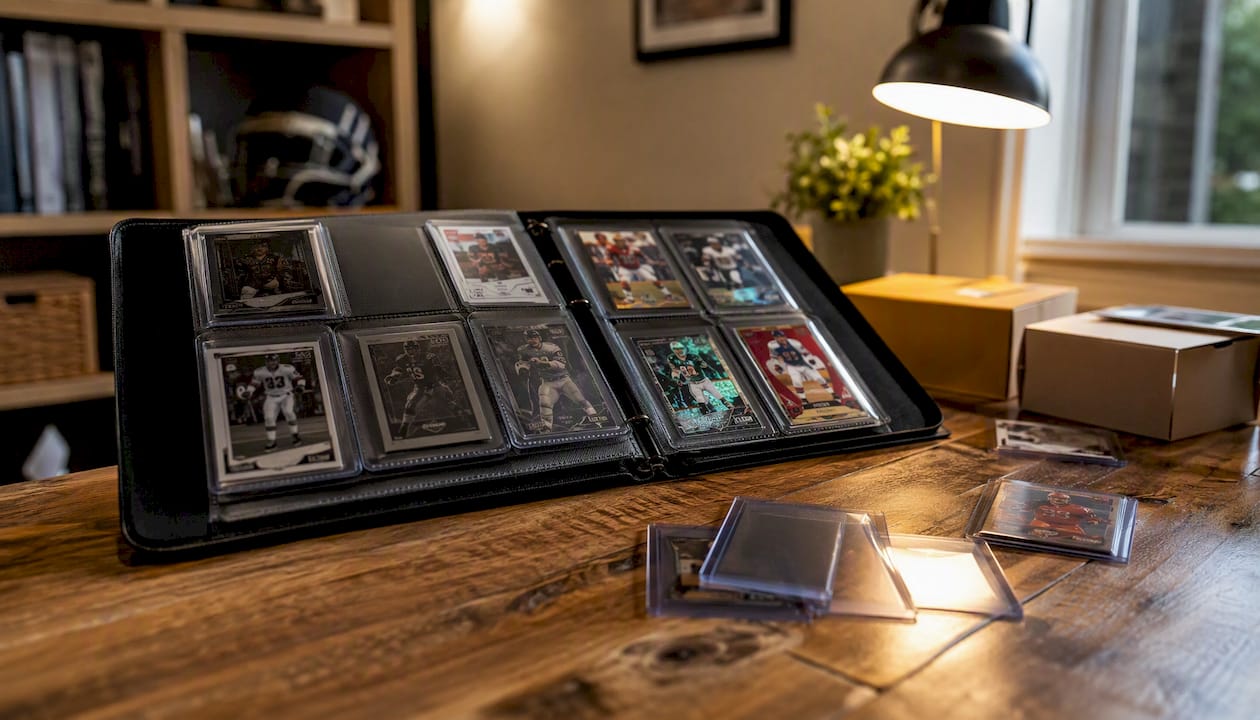
Protect every card the moment you touch it. Penny sleeves cost roughly $5 for 100 and go on immediately after a pull; top loaders (rigid plastic holders) cost about $8–$12 for 25 and add firm protection for anything worth keeping. Together, they are the foundation of any collection.
A simple organization system keeps things manageable:
- Binders with pages: Best for browsing and showing off a collection. Use 9-pocket pages for base cards.
- Card storage boxes: Inexpensive and practical for raw singles not yet sleeved in a binder.
- Hard cases or magnetic holders: Reserve these for a child’s favorite or most valuable cards.
- Storage conditions: Cool, low humidity, out of direct sunlight. A bedroom closet shelf beats a garage shelf every time.
Grading through PSA or BGS is worth considering once a child has a card they genuinely care about, typically after 6–12 months of collecting. It is not a day-one priority.
Making collecting social and meaningful for your child
Make collecting social through family challenges, clear trading rules, and local events. The hobby is far more engaging when it connects kids to other people, not just to a box of cards.
- Host a monthly trade night at home with a few friends. Set simple rules: no pressure trades, all deals are final once both parties agree, and parents review any trade over $20 in value.
- Start a family set-building project. A birth-year set (cards from the year your child was born) or a favorite-team set gives the hobby a narrative and a finish line. Focused projects like these make collecting more meaningful and reduce impulse buying.
- Attend local card shows together. Most shows are free to enter and give kids exposure to the broader collector community in a safe, supervised setting.
- Join moderated online communities with parental oversight. Several hobby forums and subreddits have active, welcoming communities — but always review the platform’s age policy and monitor early interactions.
Your 30/60/90-day starter plan for new collectors
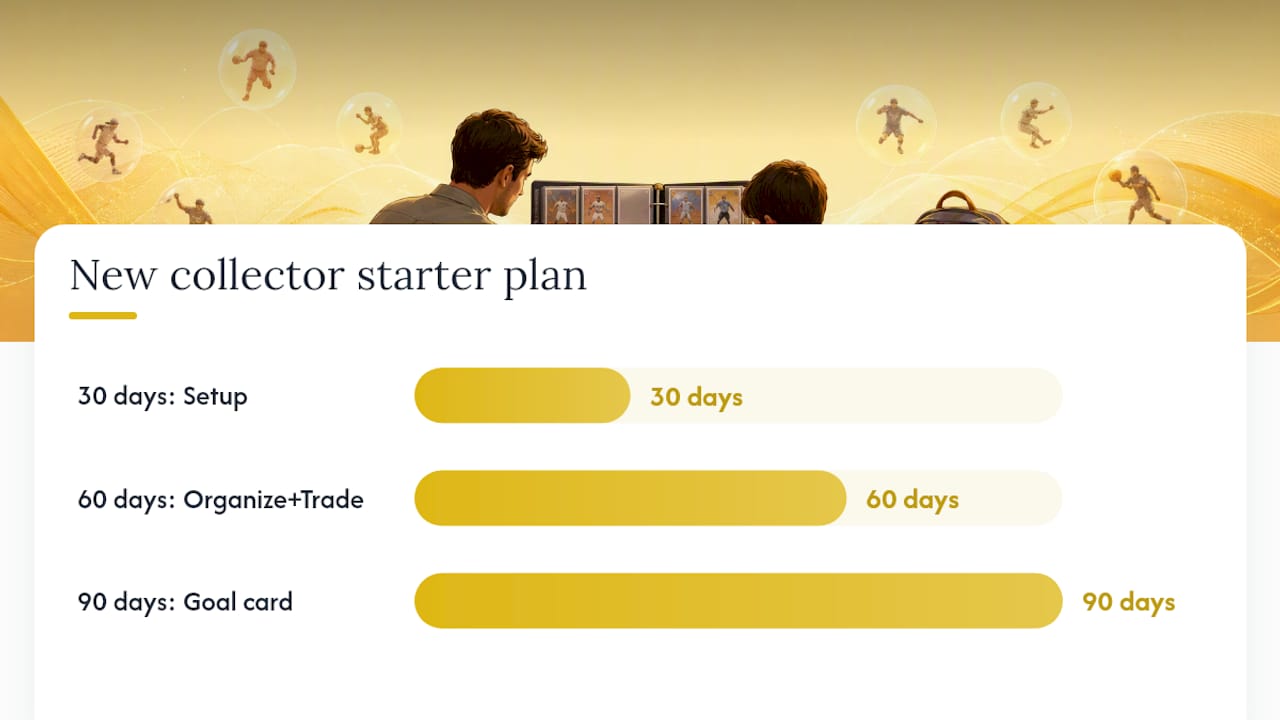
A short checklist first: buy basic supplies (penny sleeves, top loaders, one binder), pick a focus, purchase one starter product, protect every pull, and start a simple inventory list. That is the complete Day 1 setup.
| Timeline | Actions |
|---|---|
| Week 1 | Buy supplies; choose sport/player focus; purchase one blaster or starter pack |
| Weeks 2 and beyond | Sleeve and organize pulls; start binder; look up card values together |
| Second month | Attempt first small trade; attend a local shop or show; set a “want list” |
| Third month | Choose one goal card (a specific rookie or autograph); plan how to acquire it within budget |
Use the starter sports card set checklist from Nextgencards to track progress through the first 90 days.
Measure success by three things: your child’s enjoyment, whether reading and math activities are happening naturally through the hobby, and whether the family is staying within the agreed budget.
Common mistakes parents should avoid
The biggest mistakes are overspending, chasing hype, and letting online interactions go unsupervised. All three are avoidable with a few clear rules set before the first purchase.
- Overspending on hype: A card trending on social media today may be worth half as much in 60 days. Teach kids to research before buying, not after.
- Treating every card as an investment: Most cards do not appreciate. Frame the hobby around enjoyment and keepsakes, not financial returns.
- Skipping protection: A bent corner or surface scratch can significantly reduce a card’s condition grade. Sleeves cost pennies; skipping them is never worth it.
- Unsupervised online trading: Kids should not trade or buy independently on open marketplaces until they are old enough to recognize scams and pressure tactics.
- “Buy now or never” pressure: Legitimate sellers do not pressure buyers. Teach kids to ask for time before any purchase over $10.
- Balancing screen time: Digital card apps and YouTube pack-opening videos can consume hours. Set a screen-time limit for hobby-related content and balance it with physical collecting activities.
Age-appropriate safety guidelines for in-person trading
In-person trading is one of the best parts of the hobby, and it is safe when parents set clear expectations by age. Children ages 6–9 should trade only with family members or at supervised school or community events, with a parent reviewing every deal. Ages 10–13 can participate in organized shop trade nights with a parent present in the venue. Ages 14 and up can engage more independently at public shows, but should still check in before completing any trade over $25 in value.
Three rules apply at every age: always meet in a public place, never share personal contact information with strangers met through trading, and walk away from any situation that feels pressured or uncomfortable. Card shops with established staff are the safest trading environments for younger kids.
Balancing screen time with physical card collecting
Physical card collecting is one of the few hobbies that naturally pulls kids away from screens. Opening a pack, sleeving cards, organizing a binder, and comparing physical cards with a friend are all hands-on activities. Protect that quality by setting intentional limits on digital hobby content.
A practical approach: allow screen time for hobby research (price checks, player stats, set checklists) but keep it task-focused and time-limited. Thirty minutes of research before a purchase is useful; two hours of pack-opening videos is passive consumption. Swap some of that screen time for a physical activity: sorting a binder, completing a trade checklist, or writing a simple want list by hand. The physical side of collecting is where the real skill-building happens.
An editorial perspective on teaching kids to collect responsibly
Most parents worry about two things when they hear “card collecting”: the cost and the online risk. Both are legitimate concerns, and both are manageable. What gets overlooked is how much the hobby teaches when it is structured well.
The families who get the most out of card collecting are not the ones spending the most. They are the ones who treat it as a project: a birth-year set, a favorite-player collection, a budget tracked on a shared spreadsheet. The cards become secondary to the habits being built. A child who learns to research a purchase, protect what they own, and negotiate a fair trade has picked up skills that go well beyond the hobby.
Rare keepsake cards, like a rookie autograph from a player your child admires, have a different kind of value. Not every card needs to be a financial asset. Some cards are worth keeping because they mark a moment: the year a player broke out, the season a team won, the birthday a parent gave a child something genuinely special. That framing keeps the hobby grounded and keeps kids engaged for years rather than months.
A curated keepsake option for parents ready to give something special
If you want a milestone gift that goes beyond a blaster box, Nextgencards carries curated rookie autographs and rare redemption cards that make genuinely memorable keepsakes.
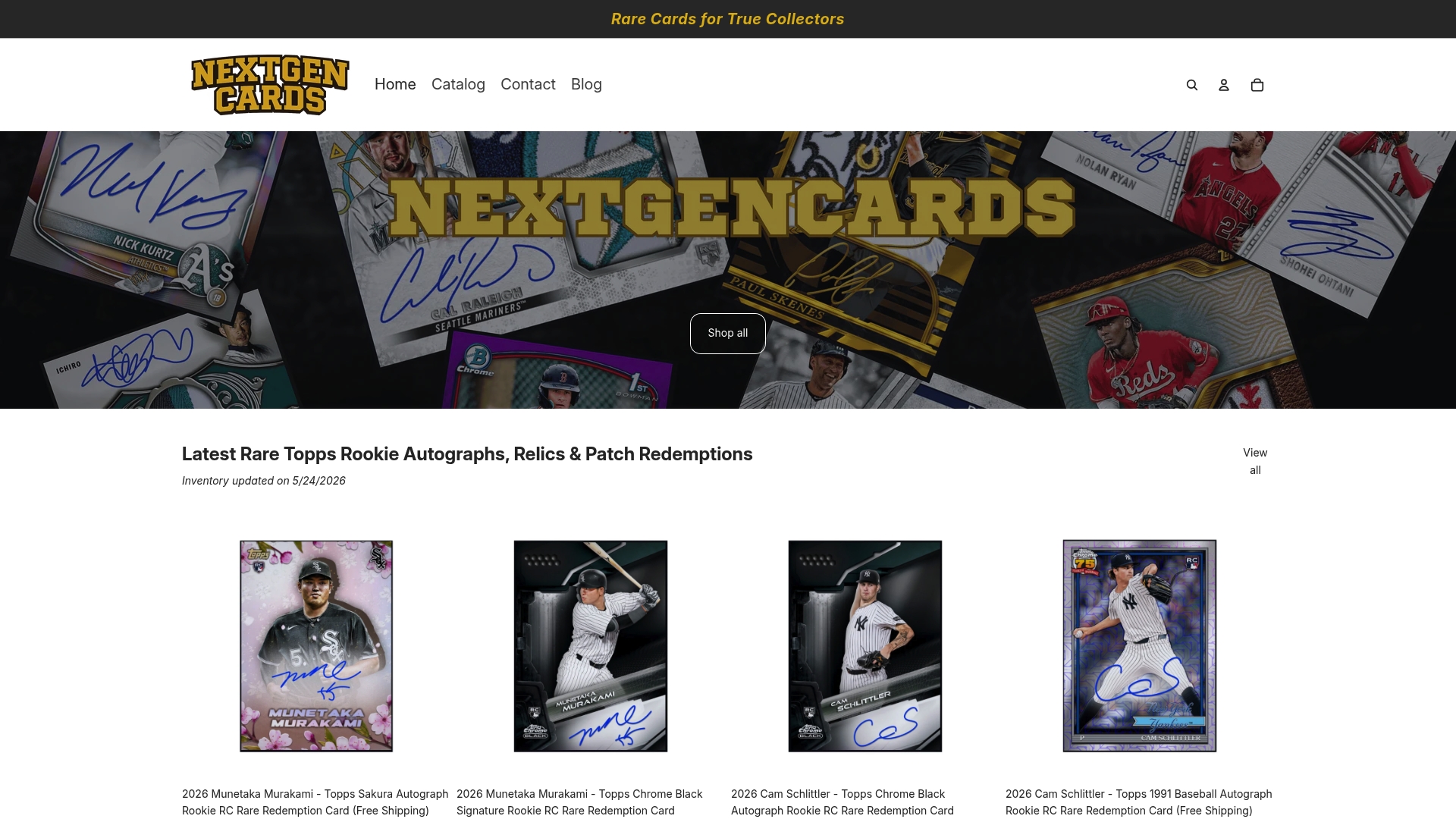
Three options worth considering for a baseball-focused young collector:
- The 2024 Junior Caminero Topps Bowman Chrome Green Signature Rookie RC Rare Redemption Card is a scarce autograph from one of MLB’s most exciting young prospects, with free shipping included.
- The 2024 Junior Caminero Topps Chrome Black Signature Rookie RC Rare Redemption Card offers a premium Chrome Black presentation for collectors who want a distinctive piece.
- The 2024 Junior Caminero Topps Black Super Futures Signature Rookie RC is a limited-edition autograph from the Super Futures insert line, one of the more scarce redemption formats in the Topps ecosystem.
All three ship free and are authenticated rookie autographs, not reprints. Browse the full rookie autographs and relics collection to find a card that fits your child’s favorite player or team.
Trusted resources for parents
These sources informed this guide and are worth bookmarking for ongoing reference:
- How to Start Collecting Sports Cards in 2026 — Yahoo Sports: budget ranges, format breakdowns, and 2026 hobby trends.
- Card Collecting Tips for Fun — The Athletic: focused project ideas and community engagement strategies.
- Beginner’s Guide to Card Collecting — Card Atlas: grading basics and condition scale explained clearly.
- How to Start Collecting Trading Cards — Vaulted Collection: starter budget guidance and protection fundamentals.
- Age-Appropriate Trading Cards for Kids — Nextgencards: a parent-focused checklist for picking the right cards by age and format.
- Buy Your First Sports Card Bundle — Nextgencards: spending limits, recommended box ranges, and where to find deals.
Local card shops and moderated hobby communities (many local Facebook groups and hobby forums have active, welcoming members) are also strong ongoing resources. The hobby is healthiest when it happens in community, not in isolation.
Sources
- How to Start Collecting Sports Cards in 2026: Beginner’s Guide - Yahoo Sports
- 8 card collecting tips to make the hobby more fun - The Athletic
- How to Start Collecting Trading Cards: A Beginner’s Guide - Vaulted Collection
- Beginner’s Guide to Card Collecting in 2026 | Card Atlas
- Trading Card Collecting: An In-Depth Beginners Guide – Cardshellz
- Greenlight debit-card-refresh
- Chase First Banking
- Cash App Families — For kids
0 comments