

Sports cards inspire reading by giving children a concrete, personally meaningful reason to seek out words on a page. When a kid pulls a rookie autograph from a pack, the first instinct is to research that player. That research requires reading. Programs like the “9 Innings of Reading” challenge and library partnerships with teams like the Columbus Crew have formalized this connection, turning the hobby into a structured literacy tool. Alphabet booklets, trading card reward systems, and collector communities all reinforce what educators have observed for years: the right incentive changes everything.
Why sports cards inspire reading: the reward connection
Sports cards work as reading incentives because they convert abstract effort into a tangible prize a child actually wants. That is a fundamentally different motivation than a gold star or a certificate.
The 9 Innings of Reading challenge, run by Indiana Sports Corp, asks participants aged 18 and under to read 900 minutes over the summer. That breaks down to 100 minutes per week, a manageable target that keeps children engaged across the full season rather than burning out in the first two weeks.
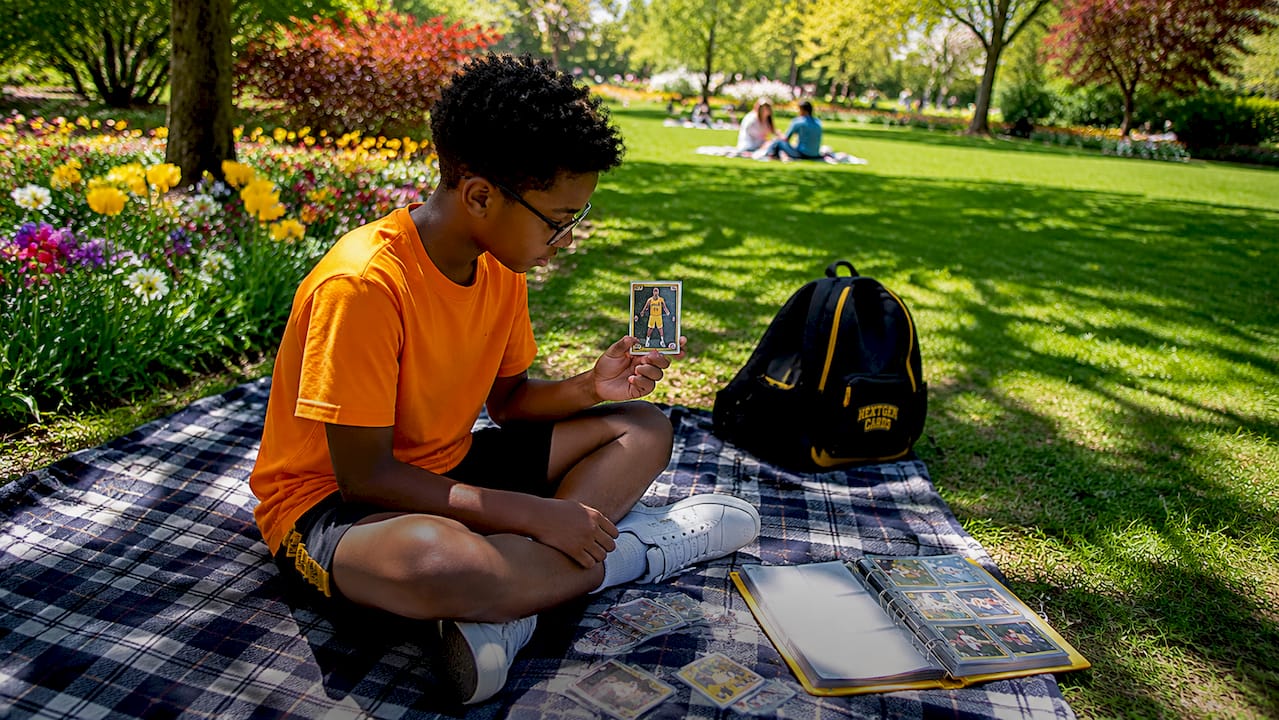
Some library programs take the reward structure even further. One summer reading program issues multi-stage card sets with four developmental stages: egg, baby, teen, and adult. Children earn all 16 cards in the set by logging reading and listening time over two months. The staged format is smart design. Each new card signals progress, and the incomplete set creates a natural pull to keep going.
Here is what makes these programs work beyond the obvious:
- Scarcity and completion drive behavior. A child who has 12 of 16 cards will read to get the remaining four. The same psychology that makes collectors chase a short print applies directly to literacy programs.
- The reward is thematic. Sports cards connect to the same world the child already cares about. A generic prize does not carry that weight.
- Logging time builds metacognition. Tracking reading minutes teaches children to think about their own habits, a skill that transfers to academic settings.
- Parental involvement increases. Card rewards give parents a concrete conversation starter: “How many cards have you earned this week?”
The importance of sports cards in education is not theoretical. These programs produce measurable participation. When the reward is something children genuinely collect, completion rates climb.
How collecting builds a reader’s identity
The strongest motivation for long-term reading engagement is not a single reward. It is the social and communal hobby experience that forms around sports cards. Children who see themselves as collectors begin to see reading as part of that identity.
Trading cards serve as physical trophies that anchor intellectual effort. When a child earns a personalized card tied to a literacy milestone, that card becomes a marker of who they are: a reader and an athlete. The card sits in a binder. It is visible. It is real. That kind of reinforcement is more durable than praise alone.
“Cards act as physical anchors for identity as reader and athlete, reinforcing a child’s identification as both a learner and a collector.” — Research insight from Best Books for Young Athletes
Educators who work with reluctant readers consistently point to identity as the core problem. A child who does not see themselves as a reader will not read voluntarily. Sports cards offer a side door into that identity. The child starts as a collector and discovers, gradually, that collectors read.
The social dimension matters just as much. Collector communities, whether in person at card shows or online in trading groups, require participants to communicate, compare knowledge, and discuss player statistics. All of that is literacy practice in a context that feels like play.
Pro Tip: If your child is part of a collector community, encourage them to write a short review of each new card they add to their collection. Even three sentences builds writing fluency over time.
Parents can also use the rookie card appeal as a gateway. A child obsessed with a specific prospect will read anything written about that player, from box scores to long-form profiles.
Do sports cards encourage financial literacy and critical thinking?
Sports card collecting extends reading skills into financial and analytical territory that most classroom programs never reach. The Youth Collector Clubs Initiative, launched in 2025, uses trading cards to teach children financial literacy, entrepreneurship, negotiation, and community building. These are not soft skills. They are the same competencies business schools charge tuition to teach.
Here is how the learning sequence typically unfolds for a young collector:
- Research the player. The child reads stats, scouting reports, and news articles to assess a card’s potential value.
- Analyze the market. Supply and demand become real concepts when a limited edition rookie autograph spikes in price after a strong season.
- Negotiate a trade. The child must communicate value, make an argument, and reach an agreement.
- Track the collection. Cataloging cards by set, year, and condition introduces spreadsheet thinking and organizational skills.
- Make a buy or sell decision. The child weighs risk against reward using real information they gathered through reading.
| Skill Developed | How Cards Teach It |
|---|---|
| Reading comprehension | Researching player bios, stats, and hobby news |
| Financial literacy | Tracking card values and understanding market trends |
| Critical thinking | Evaluating which cards to acquire, trade, or sell |
| Math skills | Calculating percentages, comparing prices, managing a budget |
| Organizational habits | Sorting and cataloging collections by set and condition |
The physical act of organizing a collection and researching players drives habitual reading of sports journalism and detailed hobby content. The Panini sticker album phenomenon during World Cup cycles demonstrates this at scale. Children who fill albums become readers of sports media because the hobby demands it.
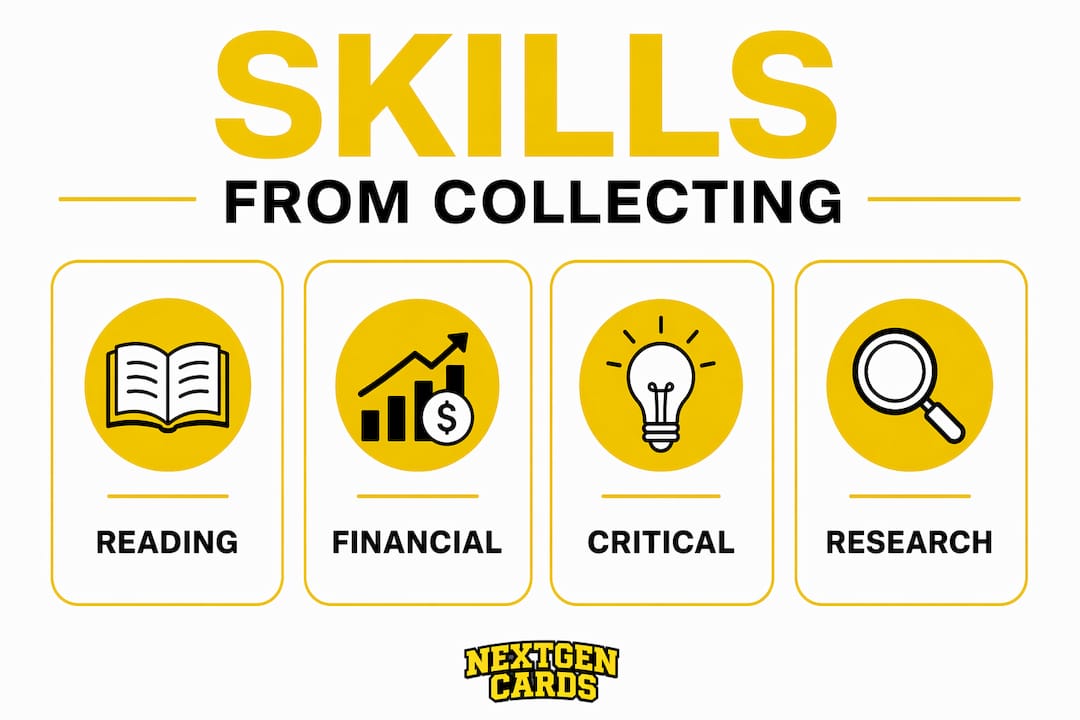
Pro Tip: Encourage your child to keep a simple notebook tracking each card’s purchase price and current estimated value. This one habit builds math skills, reading habits, and financial awareness simultaneously.
Learning how to identify undervalued cards requires the same research skills as any academic assignment. The motivation is just far more personal.
How schools and sports organizations partner for literacy
Institutional partnerships between sports franchises and libraries represent the most scalable application of sports cards and literacy programs. These collaborations reach children who would never walk into a library on their own.
The Columbus Crew and Columbus Metropolitan Library launched a collaboration in 2026 combining access to sports experiences with structured reading challenges. The program uses community pride in the Crew as the entry point. A child who loves the team will engage with a library program that carries the team’s brand.
Sports organizations and libraries leverage community identity to make education feel accessible and exciting to youth who are otherwise disengaged from traditional learning environments. That is the key insight. The library does not change. The framing changes.
Key features of effective sports and library partnerships include:
- Branded reading challenges that use team colors, logos, and player imagery to make participation feel like fan activity.
- Event access as rewards, such as game tickets or meet-and-greet opportunities for top readers.
- Card giveaways at library events, turning a library visit into a collector experience.
- Multilingual resources that reach non-English-speaking families. Sports alphabet booklets launched in 21 languages demonstrate how sports literacy tools can serve diverse communities at the kindergarten level, covering 16 core sporting values alongside early reading skills.
The multilingual angle is underreported. A child who speaks Spanish or Somali at home can engage with a sports alphabet booklet in their first language. That builds foundational literacy while connecting to the broader sports card community. The trading card real-life skills that collectors develop are accessible across language backgrounds when programs are designed with inclusion in mind.
Key takeaways
Sports cards inspire reading because they convert a child’s existing passion into a structured, rewarding literacy habit supported by programs, identity formation, and community.
| Point | Details |
|---|---|
| Reward systems drive reading | Programs like 9 Innings of Reading use card incentives to sustain 900 minutes of summer reading. |
| Identity shapes long-term habits | Cards earned through literacy milestones anchor a child’s self-image as both a reader and a collector. |
| Financial skills extend the benefit | Collecting teaches market analysis, math, and research skills that reinforce reading across subjects. |
| Institutional partnerships scale impact | Columbus Crew and library collaborations show how sports franchises reach disengaged youth through community pride. |
| Multilingual tools expand access | Sports alphabet booklets in 21 languages bring early literacy benefits to diverse communities worldwide. |
Why i think this connection deserves more attention from parents
Richard here. I have watched the sports card hobby grow from a niche pastime into a genuine educational tool, and the part that surprises most parents is how organic the reading motivation is. Nobody forces a kid to read about Shohei Ohtani or Aaron Judge. They do it because they want to know more about the card in their hand.
The programs I find most compelling are the ones that do not try to disguise learning as fun. The Youth Collector Clubs Initiative is direct about teaching financial literacy. The Columbus Crew library partnership is direct about reading challenges. Children respond to that honesty. They know when they are being tricked into learning, and they resist it. When the learning is a genuine byproduct of something they already love, the resistance disappears.
My advice to parents is straightforward. Do not separate the hobby from the education. Ask your child to explain why a specific rookie autograph is valuable. Make them articulate the argument. That conversation is a reading comprehension exercise, a financial literacy lesson, and a critical thinking drill all at once.
The future of these programs looks strong. More sports franchises are recognizing that literacy partnerships build community goodwill and fan loyalty simultaneously. For collectors and parents, that means more structured opportunities to connect the hobby to learning. The cards are already in your child’s hands. The reading follows naturally from there.
— Richard
Start your child’s collection with cards that inspire
Nextgencards carries the kind of cards that make young collectors want to learn everything about the player on the front. From rookie autographs featuring prospects like Derik Queen to authenticated relic cards from established stars, every card in the Nextgencards inventory is the real thing. Rare, limited edition, and authenticated cards give a child’s collection genuine weight. That authenticity is what turns a casual interest into a committed hobby and a committed hobby into a reading habit. Browse the full selection of rookie autographs and relics at Nextgencards and find the card that starts your child’s next chapter.
FAQ
Why do sports cards motivate kids to read?
Sports cards give children a personal reason to seek out information about players, teams, and the hobby itself. That research requires reading, making the motivation intrinsic rather than imposed.
What is the 9 innings of reading program?
The 9 Innings of Reading challenge asks participants aged 18 and under to read 900 minutes over the summer, with sports-related rewards for completing weekly reading goals.
How do library programs use sports cards as reading rewards?
Some libraries issue collectible card sets with multiple developmental stages, awarding cards as children log reading time. A full set of 16 cards can be earned over two months of consistent reading.
Can sports card collecting teach skills beyond reading?
The Youth Collector Clubs Initiative, launched in 2025, uses card collecting to teach financial literacy, entrepreneurship, negotiation, and math skills alongside reading and research habits.
Are there multilingual sports literacy programs for young children?
Sports alphabet booklets have been launched in 21 languages targeting kindergarten-level readers, combining early literacy development with core sporting values for diverse communities.
0 comments