

For most collectors, a zippered side-loading binder with acid-free, PVC-free pages offers the best balance of protection and everyday access. It guards sleeved cards against dust, spills, and accidental slips better than open albums, while still holding hundreds of cards at a reasonable weight. Collectors chasing slabs, bulk commons, or pure display have better-suited options, which the sections below cover in detail.
TL;DR:
- Zippered side-loading binders with acid-free, PVC-free pages are the safest option for protecting sleeved cards during regular handling and transport.
- For graded slabs, mold-tray binders that hold 20 to 28 slabs offer a balance between protection and cost, but larger collections may require multiple binders or slab boxes.
- When choosing a binder, estimate current and future card counts, prioritize material safety over aesthetics, and consider travel needs to prevent damage or loss.
- Avoid cheaper binders lacking clear archival material specifications, and test fit with your actual sleeves to ensure capacity and protection.
- Reputable brands include Ultra PRO for zip folios and specialized brands like Goat Armor for toploader binders, with online shopping enabling better comparison of specs.
Table of Contents
- What Are the Best Card Binders for Different Collecting Goals?
- How Do You Choose the Right Binder for Your Collection?
- Are Acid-Free and PVC-Free Pages Actually Necessary?
- How Do You Handle and Pack Cards Without Damaging Them?
- Who’s Behind This Guide, and What Are Collectors Actually Saying?
- Which Binder Brands and Models Are Worth Buying?
- What Should You Expect to Pay for a Good Binder?
- Where Can You Buy Reliable Card Binders?
- Why Protection Should Beat Presentation Every Time
- Ready to Protect What You’re Collecting?
- Sources
- FAQ
What Are the Best Card Binders for Different Collecting Goals?
Not every binder serves the same job. A set-builder chasing a full run of base cards has different needs than someone protecting a single grail rookie autograph, and buying the wrong format usually means buying twice.
Zip folios. These are the closest thing to an all-purpose recommendation in the hobby. Padded covers, a full zipper closure, and side-loading pockets keep cards from sliding out during transport, and reviewers consistently point to zip folios as the safest everyday option for sleeved cards. They typically run several pages, holding a few hundred cards depending on pocket count per page. The trade-off is bulk. A fully loaded zip folio is heavier and less pocket-friendly than a slim album, but for a collector who wants to browse a set on the couch without worrying about a spill, that weight is a fair exchange.
9-pocket albums. The classic three-ring binder with nine-pocket pages remains the standard for set builders and anyone organizing large runs by team, year, or set. Manufacturer specs for products like Ultra PRO’s 9-Pocket Zippered Premium PRO-BINDER list capacities of 180 to 216 cards depending on sleeve thickness, a useful benchmark when estimating how many pages you actually need.
Toploader binders. Once a card graduates to a rigid toploader, most standard album pages won’t hold it. Dedicated toploader binders use molded, oversized pockets that cradle the rigid sleeve and let you flip pages without friction damage. These are the right call for rookie autographs, patches, and any card valuable enough to warrant top-loading before it goes into long-term storage or heads off for grading.
Graded-slab folders. PSA and BGS slabs need their own format entirely. Slab binders use molded trays sized to the slab’s thickness, and most hold 20 to 28 slabs per binder, a real capacity ceiling collectors should plan around before buying multiple binders for a growing graded collection. They’re heavier and pricier per-slot than any other format on this list, but loose slabs in a box shift, scratch, and stress their cases over time.
Mega-capacity albums. For bulk commons and low-value duplicates, a 3-inch D-ring binder stuffed with pages can hold well over a thousand cards. Reviewers warn that fully loaded mega albums become unwieldy and put real stress on the spine and rings, so this format works best as a bulk-sorting tool, not a home for anything you’d mind losing to a bent corner.
How Do You Choose the Right Binder for Your Collection?
Buying the wrong binder is one of the most common (and expensive) mistakes new collectors make. Running the numbers first prevents most of it.
- Count your cards, then add a buffer. Tally what you currently own, then add a reasonable percentage of headroom for near-term pickups. A set-builder should shop for capacity that allows some growth beyond the current count, not exactly their present total.
- Check pocket type against your protection style. Side-loading pockets are generally safer for sleeved cards because they resist accidental slip-outs better than top-loading pockets, according to product testing from IGN’s storage roundup. If your cards live in rigid toploaders or slabs, you need a binder built for that thickness, not a standard sleeve page.
- Think about how the binder travels. A zipper closure protects contents in a bag or car trunk. An elastic strap is a lighter option for shelf storage. An open 3-ring binder is fine for a desk but risky for a backpack.
- Decide where your budget actually goes. Spend on the pages and the shell (the parts touching your cards and holding the closure); economize on cosmetic extras like embossed covers or novelty prints.
- Test-fit before buying in bulk. Sleeve thickness and double-sleeving reduce effective capacity more than most buyers expect, so Ultra PRO’s own product specs are a good baseline, but a physical test-fit with your actual sleeves is the only way to know for sure.
Before you check out, answer these questions: How many cards do I need to store today, and in a year? Are my cards bare, sleeved, or slabbed? Will this binder travel with me or stay on a shelf? What’s my price ceiling for a binder I won’t need to replace in six months?
Pro Tip: Buy one page or a small binder sample before committing to a full case of supplies. A single page filled with your actual sleeves tells you more about real capacity than any spec sheet.
Are Acid-Free and PVC-Free Pages Actually Necessary?
Yes, and this is the one spec worth refusing to compromise on. PVC-based plastics can leach plasticizers over time, and non-archival paper stock can yellow or transfer acid onto card stock across years of storage. Reviewers and collector communities consistently rank material safety above price when a card is worth protecting long-term, prioritizing acid-free, PVC-free pages over cheaper alternatives with unclear specs.
Here’s what to check on any binder or sleeve before buying:
- Look for “acid-free” and “PVC-free” (or “non-PVC”) stated explicitly on the packaging or product page, not implied.
- Match page type to card condition: side-loading pages suit sleeved cards better than top-loading pages, which carry a higher risk of a card slipping out during a flip.
- If you’re double-sleeving (penny sleeve plus a page pocket), confirm the page has room. Overstuffed pockets stretch and stress the seams.
- Avoid pages with a strong plastic odor straight out of the packaging. That smell often signals cheaper, less stable plastic.
- Keep binders out of direct sunlight. UV exposure fades ink and can degrade certain plastics faster than indoor ambient light. Nextgencards’ guide to UV protection for cards goes deeper on shelf placement and display-case choices.
Manufacturer listings for products like Ultra PRO’s zippered 9-pocket binder explicitly state acid-free, non-PVC construction, which is the level of specificity generally expected from brands meant for collectors.
How Do You Handle and Pack Cards Without Damaging Them?
Good habits matter more than good gear. Even an archival-grade binder won’t save a card from repeated rough handling.
- Layer protection before it goes in the page. Penny sleeve first, then an inner sleeve if the card warrants it, then a toploader for anything valuable, then slide it into the binder pocket.
- Insert at a shallow angle, corner first. Keep the card flat against the pocket backing rather than forcing it straight in. This single habit prevents most of the corner stress and micro-scratches that come from friction against pocket seams.
- Remove cards by the edges, never by pinching the face. Fingernails pressed into a card’s surface leave indentations that don’t come out.
- Pack binders flat, not on their spine, when traveling. Add padding around the binder in a bag, and never stack heavy items on top of a zip folio in transit.
- Check zippers and page edges periodically. A zipper that’s starting to catch or pages showing edge wear are early warnings worth acting on before they damage a card.
- Watch humidity. Cards and pages both react poorly to damp storage; a dry closet shelf beats a basement or garage every time.
Who’s Behind This Guide, and What Are Collectors Actually Saying?
This guide is written by Richard for Nextgencards, drawing on years of buying, protecting, and reselling rare rookie autographs, patches, and redemption cards where a single bent corner can cost real money. That’s a perspective built on handling high-value cardboard daily, not just reading spec sheets.
Community forum threads and review comment sections tend to repeat the same patterns: zip folios earn praise for peace of mind during transport, toploader binders get singled out for how well they protect rigid sleeves without stacking friction, and slab folders draw consistent warnings about weight once a binder holds more than 15 or 20 graded slabs.
Collectors who move high-value rookies from display binders into toploaders or slabs for long-term storage aren’t being precious. They’re making the same trade-off every serious collection eventually needs: viewing convenience versus permanent protection.
Nextgencards.shop built its curated inventory of rare rookie autographs, relics, and redemption cards around that same logic, and free shipping on select items reflects the same collector-first thinking this guide recommends.
Which Binder Brands and Models Are Worth Buying?
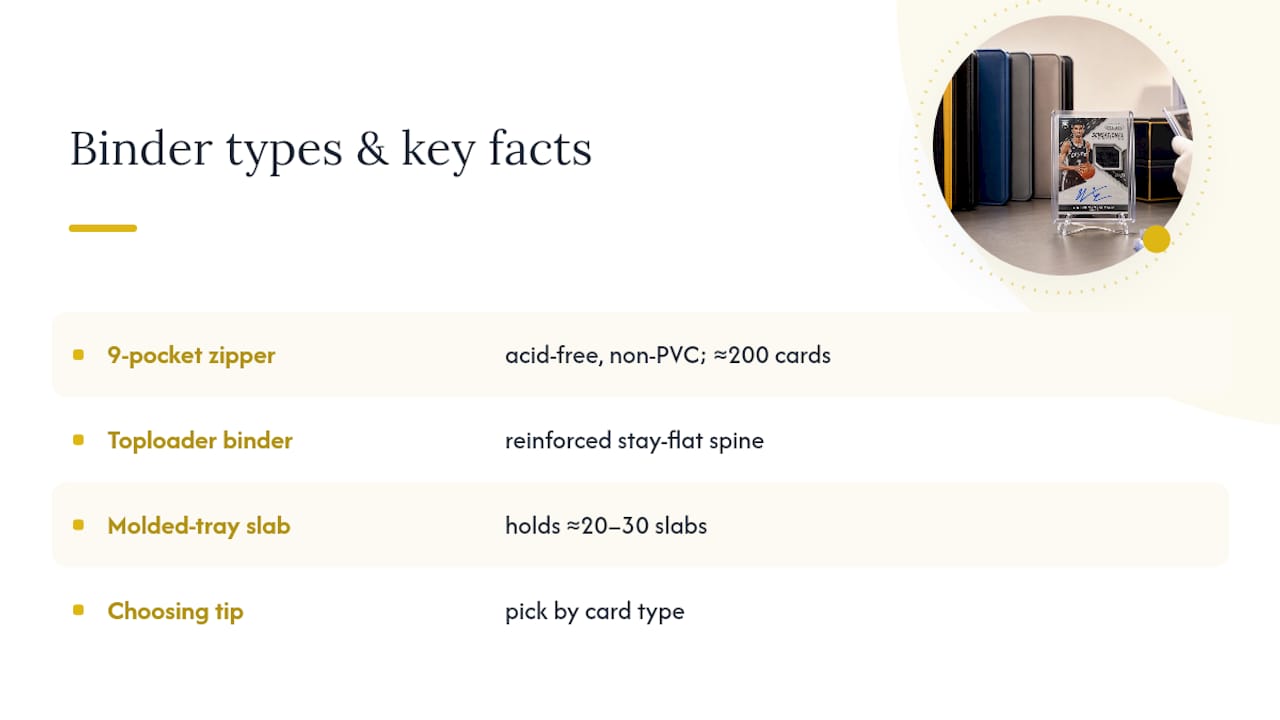
Ultra PRO’s 9-pocket zippered PRO-BINDER line is a reasonable benchmark for the zip-folio category. It lists acid-free, non-PVC pages and a stated capacity of around two hundred cards, giving buyers a specific number to shop against rather than a vague marketing claim. The trade-off is weight once fully loaded, and the zipper is a wear point worth inspecting every few months.
Toploader-specific binders, like the styles sold under names such as Goat Armor’s 9-pocket toploader binder, add reinforced or “stay-flat” spines designed to resist page curvature that can dent card corners. That construction detail is worth checking on any toploader binder, not just one brand, since a binder that bows under its own weight defeats the purpose of rigid protection.
For slabs, molded-tray binders that hold around twenty to thirty slabs strike a balance between organization and cost. Beyond that range, per-slab price tends to climb faster than the added convenience justifies, and a slab box becomes the more practical choice for anything larger.
No single brand wins every category. The right model depends entirely on whether you’re protecting bare cards, sleeved singles, toploaders, or graded slabs.
What Should You Expect to Pay for a Good Binder?
Entry-level 9-pocket albums without archival claims can be quite low priced, but skipping the acid-free, PVC-free spec on a card worth protecting is a false savings. Mid-range zip folios with stated archival pages generally fall in a moderate price range and represent the sweet spot for most collectors: real protection without slab-binder pricing.
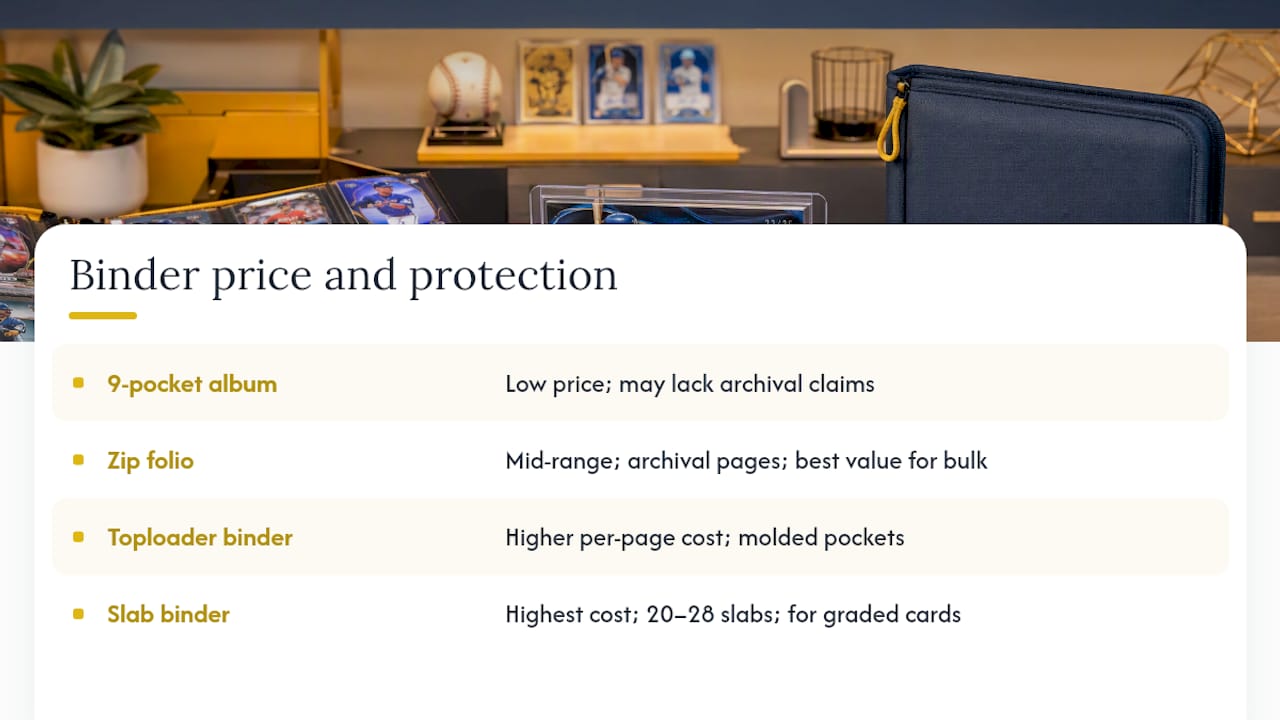
Toploader-specific binders cost more per page than standard sleeve albums because the molded pockets require more material and tighter tolerances. Expect a premium of several dollars per page count over a comparable 9-pocket album.
Slab binders sit at the top of the price range, and the cost per slot climbs fastest here. A binder holding 20 to 28 slabs will cost noticeably more than a 9-pocket album of similar page count, reflecting the rigid tray construction slabs require. For most collectors, the smarter spend is a mid-range zip folio for the bulk of a collection and a smaller, higher-cost slab binder reserved only for graded pieces worth the extra protection.
Value here isn’t about the lowest sticker price. It’s about paying once for archival-safe construction instead of replacing a cheap binder (and possibly a damaged card) within a year.
Where Can You Buy Reliable Card Binders?
Specialty card retailers and hobby shops remain a solid option when you want to physically check zipper quality and page thickness before buying, and many local card shops stock at least one or two binder lines alongside their singles inventory. Big-box retailers carry entry-level albums but rarely stock archival-grade or slab-specific binders.
Online, the advantage is selection and the ability to compare stated specs, like acid-free claims and pocket counts, side by side before ordering. Nextgencards.shop focuses primarily on rare rookie autographs, relics, and redemption cards, but pairs that inventory with the kind of collector supplies serious buyers need to protect what they’re purchasing, alongside guidance like the trading card storage basics primer for readers building out a full storage setup.
Whichever route you choose, read the actual product listing rather than the marketing headline. A binder described as “premium” without a stated capacity, pocket type, or material spec is a red flag regardless of where you buy it.
Why Protection Should Beat Presentation Every Time
The hobby has a habit of chasing flash: embossed covers, novelty prints, binders designed to look good in an unboxing video. None of that matters if the pages inside are shedding acid onto a rookie autograph five years from now.
The research here points to one clear priority order: material safety first, pocket type second, capacity third, and looks last. Collectors who flip that order, buying for aesthetics before archival specs, are the ones posting forum threads later about yellowed pages and stuck zippers. That’s not bad luck. It’s a predictable outcome of a predictable mistake.
What the data doesn’t fully support is the assumption that one binder style fits every card in a collection. A grail rookie autograph and a stack of bulk commons have different needs, and trying to force both into the same format usually means underprotecting the grail or overpaying for the commons. Organizing a growing collection well means owning more than one format, not finding a single perfect binder.
If you take one thing from this guide, take this: buy the archival spec first, and worry about the cover art last.
— Richard
Ready to Protect What You’re Collecting?
Nextgencards ships archival-safe collector supplies alongside its curated inventory of rare rookie autographs, patches, and redemption cards, so you can pick up the protection your new pickup needs in the same order.
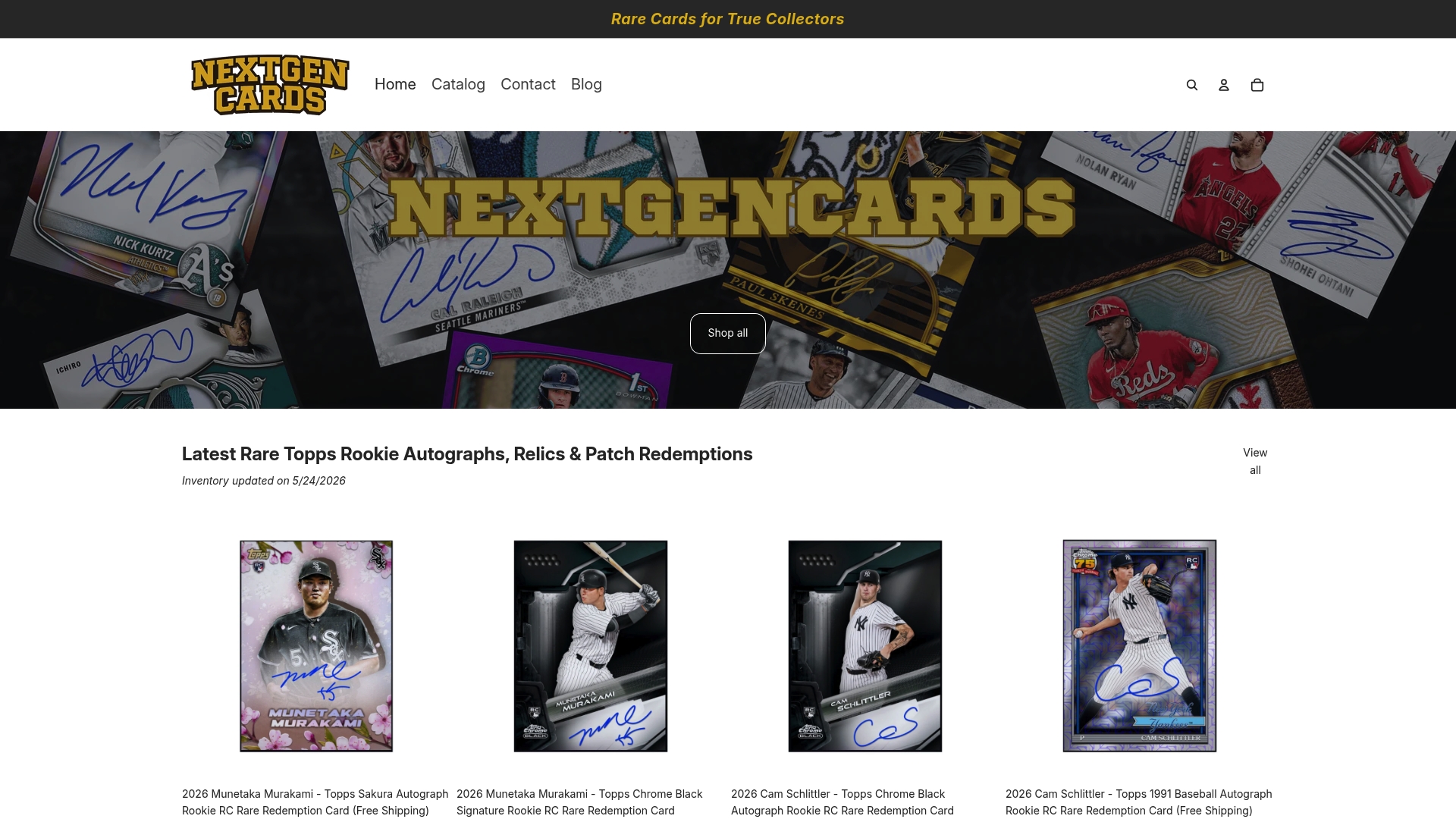
If you’re just getting your storage setup in order, start with a starter bundle approach: pair a zip folio or 9-pocket album from your preferred supplies source with a rookie card worth protecting properly from day one, like the Junior Caminero Bowman Chrome Green Signature rookie card, which ships free. Cards like the Elly De La Cruz Sterling Rookie Patch Autograph or the JJ Wetherholt Bowman Green Chrome prospect signature are exactly the kind of rare pickups that deserve archival-grade housing, not an afterthought album from a drugstore rack. Browse the full rookie autographs and relics collection to find your next card, then match it with storage built to protect it for years, not months.
FAQ
What is the best brand of card binder?
No single brand wins every category, but Ultra PRO’s zippered 9-pocket binders are a reliable benchmark for archival-safe zip folios, while toploader-specific brands like Goat Armor focus on reinforced, stay-flat construction for rigid sleeves.
What card binder holds the most cards?
Mega-capacity 3-inch D-ring albums hold the most, often well over a thousand cards, but they become heavy and stress their spines when fully loaded, making them better for bulk commons than valuable singles.
What’s the best binder brand for graded slabs?
Look for molded-tray slab binders that hold 20 to 28 slabs; beyond that range, per-slab cost climbs faster than the added convenience, and a slab storage box becomes more practical.
What is a good card binder that doesn’t damage cards?
A zippered side-loading binder with acid-free, PVC-free pages minimizes damage risk because side-loading pockets reduce accidental slip-outs and archival materials prevent long-term page degradation that can affect card surfaces.
0 comments