

Rarest rookie card variations are defined as cards distinguished by extremely limited print quantities, documented production errors, or special parallel designations that set them apart from standard base issues. The 2006 Topps Alex Gordon error card, PSA-graded 1/1 superfractors from sets like 2026 Topps Chrome Black, and vintage issues like the Barry Bonds 1987 O-Pee-Chee rookie all represent the upper tier of scarcity in this hobby. Grading services such as PSA and Beckett provide population reports that help collectors confirm true rarity before committing serious capital. Whether you collect for passion or portfolio, understanding what separates a scarce card from a merely uncommon one is the foundation of smart acquisition.
1. The rarest rookie card variations collectors prize most
The most coveted rookie card variations combine low print runs with verifiable production documentation. Here are the top examples every serious collector and investor should know.
The 2006 Topps Alex Gordon error card stands as one of the most discussed rare sports card variations in modern hobby history. The card was printed with Gordon’s image before he officially debuted, triggering a recall. Three distinct variants exist: the Blank Foil (name area left blank), the Cut-Out (name physically removed), and the Full Card (name intact but uncorrected). PSA 10 copies of the non-cut versions have sold for as high as $4,250 as recently as July 2025. That price reflects not just scarcity but the documented production story behind the card, which adds a layer of collector interest that pure print-run numbers cannot replicate.

Barry Bonds 1987 O-Pee-Chee rookie card is a vintage example that consistently outperforms its Topps counterpart in scarcity. O-Pee-Chee cards were distributed primarily in Canada with smaller print runs and inconsistent quality control, which means high-grade copies are genuinely hard to find. The lower PSA population for this card compared to the standard Topps issue makes it a compelling target for vintage collectors.
1/1 superfractor parallels from modern high-end sets represent the absolute ceiling of limited edition rookie cards. Sets like 2026 Topps Chrome Black Baseball include serial-numbered superfractor 1/1 parallels as the ultimate rarity tier, with autographed versions commanding the highest premiums. Only one copy exists per player per set, making these cards the clearest example of verifiable scarcity in the modern hobby.
Printing plate cards are another unique rookie card design that collectors prize. Each card is an actual metal plate used during the printing process, and only four exist per design (one per color: cyan, magenta, yellow, black). They are always numbered 1/1 and carry strong collector demand because of their manufacturing origin.
- Blank Foil Alex Gordon: Name area left blank due to recall; among the rarest of the three error variants
- Cut-Out Alex Gordon: Name physically removed from the card face; extremely limited survival rate in high grade
- Barry Bonds 1987 O-Pee-Chee: Canadian distribution, small print run, low PSA population in grades 8 and above
- 1/1 Superfractors: One copy per player per set; serial number on card back is the definitive proof of rarity
- Printing Plates: Four per design, each numbered 1/1; actual production materials with unique collector appeal
Pro Tip: When hunting error cards, always request the specific variant description in writing from the seller. “Alex Gordon error card” covers three distinct variations with very different values, and sellers do not always distinguish between them.
2. How modern serial numbering defines rookie card rarity
Serial numbering is the most reliable rarity indicator in the modern sports card market. A card stamped “23/50” on its back means exactly 50 copies were produced, and that number is encoded during printing. There is no ambiguity, no folklore, and no room for inflated claims.
Beckett’s 2026 Topps Series 1 parallel guide maps the full rarity ladder from unnumbered base parallels through to 1/1 printing plates and superfractors. This system gives collectors a practical framework for comparing cards across tiers without relying on secondary market rumors. Collectors and investors increasingly use these guides to quantify rarity rather than depend on word-of-mouth valuations, which has improved market transparency significantly.
The distinction between unnumbered and numbered parallels matters enormously for investment decisions. An unnumbered parallel could represent tens of thousands of copies, while a numbered parallel at /10 or /5 represents genuine scarcity. For reliable monetization, serial-numbered parallels are the standard that experienced collectors prioritize because the print run is explicitly verifiable on the card itself.
| Parallel tier | Print run | Rarity level | Market behavior |
|---|---|---|---|
| Base parallel (unnumbered) | Unknown, often 10,000+ | Low | Modest premium over base |
| Numbered parallel (/99 to /25) | 25 to 99 copies | Moderate | Consistent secondary demand |
| Short print parallel (/10 or less) | 10 copies or fewer | High | Strong auction competition |
| Superfractor / Printing plate | 1 copy | Absolute | Highest single-card premiums |
Pro Tip: Always check the card back for the serial stamp before purchasing any numbered parallel. Counterfeit stamps exist, and a legitimate numbered card will have a clean, machine-stamped number that is flush with the card surface.
3. Why PSA population reports matter for rarity assessment
PSA population reports are the most widely referenced tool for confirming how many copies of a specific card exist in a given grade. The “total pop” figure shows how many copies PSA has graded, while “pop higher” shows how many copies grade above a specific tier. Both numbers inform how scarce a high-grade example truly is.
The critical limitation is that PSA population reports count only cards submitted to PSA. Cards graded by Beckett Grading Services (BGS), SGC, or left raw are excluded entirely. This means a low PSA pop does not automatically confirm scarcity. A card with a PSA pop of 12 in PSA 10 might have 30 more copies graded by BGS and another 50 sitting raw in private collections.
Resubmissions compound this problem. A collector who cracks a PSA 9 and resubmits the same card hoping for a PSA 10 adds to the population count without adding a new card to the market. Resubmissions inflate population counts, and experienced investors adjust for this by monitoring pop higher counts and cross-referencing data from multiple grading services.
“PSA population data is a starting point, not a conclusion. The collectors who overpay are almost always the ones who stopped their research at the PSA pop report.” — Expert Collector’s Guide, Collectibles Multiverse
Practical steps for using PSA population data effectively:
- Pull the PSA pop report for the specific card, set, and grade you are targeting
- Check BGS and SGC population data for the same card to get a fuller picture
- Review recent auction results on platforms like PWCC and Heritage Auctions to see how many copies have actually traded
- Factor in the player’s career trajectory, as population growth accelerates when a player wins an award or signs a major contract
- Treat any pop under 10 in PSA 10 as genuinely scarce, but verify with cross-service data before acting on that assumption
4. Vintage errors vs. modern parallels vs. printing variations
Understanding the three primary categories of rare rookie card variations helps collectors allocate budgets and set realistic expectations for each type.
| Category | Example | Estimated print run | PSA 10 population | Price range (PSA 10) |
|---|---|---|---|---|
| Vintage error card | 2006 Topps Alex Gordon (Full Card) | Unknown, recalled | Very low | $2,000 to $4,250+ |
| Vintage low-print | 1987 O-Pee-Chee Barry Bonds | Smaller than Topps | Low | $500 to $1,500+ |
| Modern numbered parallel | 2026 Topps Chrome /10 rookie | 10 copies | 1 to 5 | $300 to $2,000+ |
| 1/1 superfractor | 2026 Topps Chrome Black 1/1 | 1 copy | 1 (if graded) | $5,000+ |
| Printing plate | Any modern set, 1/1 | 4 copies total | Varies | $500 to $3,000+ |
Vintage error cards carry value that goes beyond print numbers. Production errors with documented correction stories carry built-in collector interest because the narrative behind the variation adds a dimension that a numbered parallel simply cannot replicate. The Alex Gordon error card is a textbook case: collectors value the story of the recall, the three distinct variants, and the scarcity created by a production halt.
Modern numbered parallels offer a different advantage: verifiable, transparent scarcity. You know exactly how many copies exist because the number is printed on the card. This makes them more straightforward for investment purposes, where provenance and documentation reduce risk. For collectors focused on ultra-rare parallels like superfractors and printing plates, the appeal is the absolute certainty that no other identical copy exists.
Situation-based guidance: if your goal is long-term appreciation tied to a player’s career arc, modern numbered parallels from sets like 2026 Topps Chrome Black offer the clearest path because rarity is encoded and verifiable. If you collect for historical significance and narrative value, vintage error cards from documented production runs reward deep research and patience.
Key takeaways
The rarest rookie card variations are confirmed by serial-numbered print runs, documented production errors, and cross-verified grading population data, not by market folklore alone.
| Point | Details |
|---|---|
| Error cards carry narrative value | Production stories like the Alex Gordon recall add collector demand beyond raw scarcity. |
| Serial numbers are the gold standard | A card stamped 1/1 or /10 on the back provides verifiable, unambiguous rarity. |
| PSA pop reports have limits | Resubmissions and omitted grading services require cross-checking with BGS and SGC data. |
| Vintage low-prints reward research | Cards like the 1987 O-Pee-Chee Barry Bonds rookie are scarce due to distribution, not just print runs. |
| Category choice drives strategy | Vintage errors suit narrative collectors; modern numbered parallels suit investment-focused buyers. |
My take on investing in rare rookie card variations
I have spent years watching collectors overpay for cards based on incomplete rarity data, and the pattern is almost always the same. Someone sees a low PSA pop, assumes scarcity, and bids aggressively without checking BGS or raw card estimates. The result is a card that sits in a portfolio at a price the market will not support.
The collectors who build genuinely valuable holdings do two things consistently. First, they verify rarity through serial numbers and production provenance before any other consideration. A card with a number stamped on its back is a fact. A card described as “rare” in a listing is an opinion. Second, they treat the Beckett parallel guide and similar resources as reference tools, not just marketing material. Knowing where a card sits on the rarity ladder relative to every other parallel in the same set is the kind of context that prevents costly mistakes.
The one area where I think conventional wisdom falls short is the dismissal of error cards as “gimmicks.” The Alex Gordon error card has held and grown its value for nearly two decades because the production story is documented, the variants are distinct, and the collector community has consensus on what each version is worth. That is not a gimmick. That is a legitimate rarity class with its own market dynamics.
Balance passion and investment thinking. The collectors who enjoy this hobby most are the ones who buy cards they genuinely want to own, then apply rigorous rarity analysis to make sure they are not overpaying. Those two goals are not in conflict. They reinforce each other.
— Richard
Where to find authenticated rare rookie cards
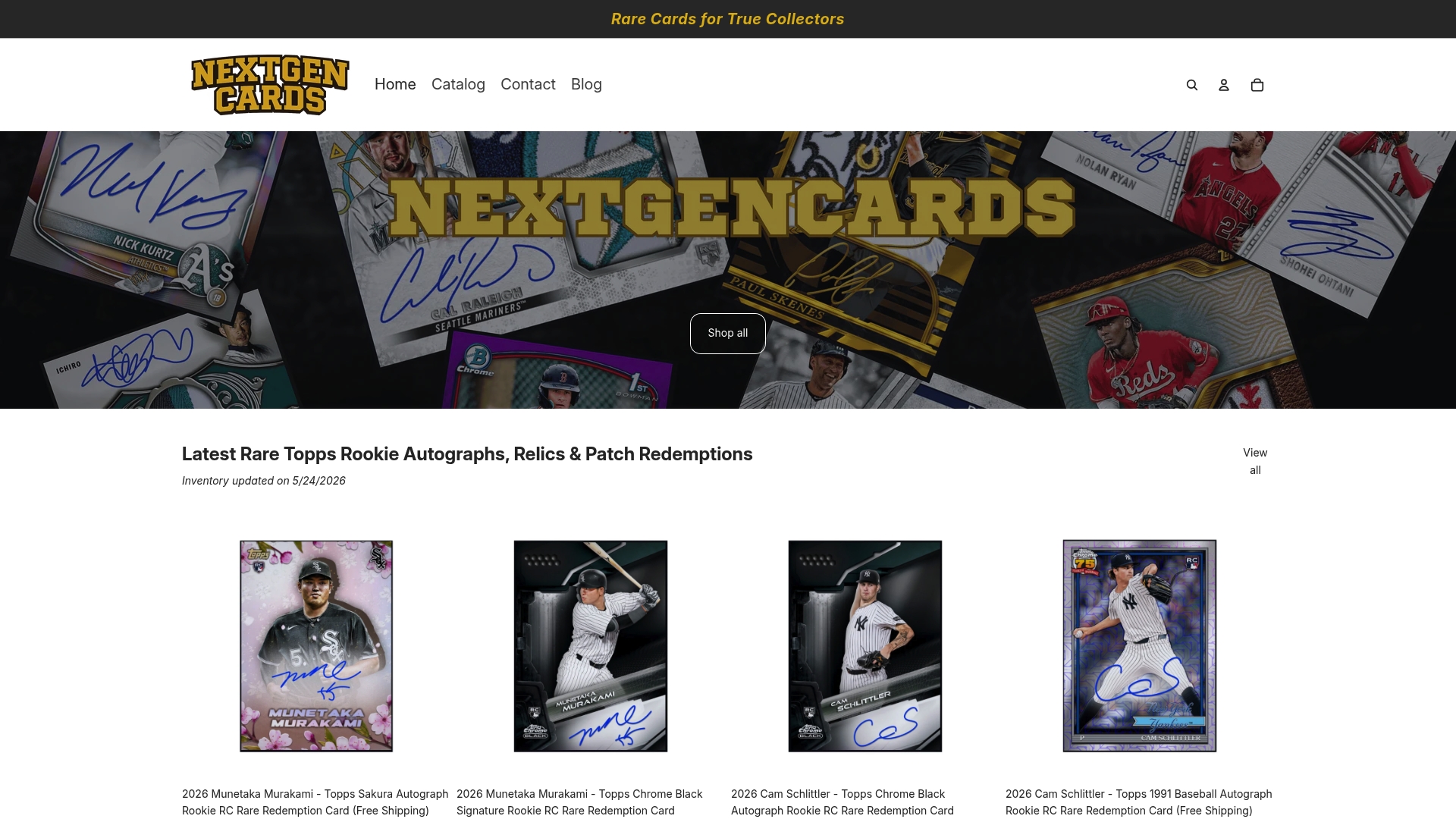
Nextgencards maintains a curated inventory of authenticated rare rookie cards built specifically for serious collectors and investors. The selection includes rare rookie autographs and relics from athletes like Shohei Ohtani and Aaron Judge, with both vintage and modern limited edition rookie cards available. Every card in the inventory is authenticated, and free shipping is available on select items. If you are ready to add a verified scarce card to your collection, browse the full inventory at Nextgencards to find options that match your collecting goals and budget.
FAQ
What makes a rookie card variation truly rare?
A rookie card variation is genuinely rare when its print run is verifiably limited, either through serial numbering on the card back or documented production circumstances like a manufacturing error. Cards with PSA populations under 10 in top grades, cross-verified with other grading services, confirm authentic scarcity.
How do I verify the print run of a numbered parallel?
The serial number is stamped directly on the card back during production, typically in a format like “23/50.” This number is the definitive proof of print run size, and Beckett’s parallel guides provide set-specific breakdowns of every numbered tier.
Are error cards more valuable than numbered parallels?
Not always. Value depends on the specific error, the player, and the grade. The Alex Gordon error card in PSA 10 commands four-figure prices, but a 1/1 superfractor of a current star player will typically exceed that. Both categories represent top rookie card collectibles, but through different rarity mechanisms.
Can PSA population reports be trusted for rarity assessment?
PSA pop reports are a useful starting point, but resubmissions inflate counts and the data excludes cards graded by BGS, SGC, and other services. Always cross-reference multiple grading services and recent auction results before drawing conclusions about scarcity.
What are the most valuable rookie cards in the current market?
The most valuable rookie cards consistently combine elite player status with verified scarcity. Modern 1/1 superfractors and printing plates from sets like 2026 Topps Chrome Black, along with high-grade vintage error cards and low-print O-Pee-Chee issues, represent the top tier of the most valuable rookie cards available today.
Recommended
- NextGenCards - Rare Topps Rookie Cards – Next Gen Cards LLC
- Buy Certified Autograph Rookie Cards: 2026 Collector’s Guide – Next Gen Cards LLC
- Top Places to Buy Rare Rookie Cards (Collectors Guide) | NextGenCards – Next Gen Cards LLC
- Most Valuable Sports Card Inserts: Collector’s 2026 Guide – Next Gen Cards LLC
0 comments