

An MLB debut card is a one-of-one autographed rookie card containing a physical jersey patch from a player’s first Major League Baseball game. The industry term is “MLB Debut Patch Card,” and Topps produces them exclusively under its partnership with MLB and the MLB Players Association. Introduced in 2023 with 91 cards, the program expanded to 251 cards in 2024. Each card is framed with gold embossed foil and authenticated with a hologram sticker on the back. For collectors, these cards represent the most direct physical connection possible to a player’s debut moment, and the secondary market has responded accordingly.
What is an MLB debut card and how is it made?
The production process behind an MLB debut patch card is more rigorous than almost any other trading card in existence. It begins before the player even takes the field.
A small fabric patch is sewn directly onto the player’s jersey specifically for their first MLB game. This is not a jersey worn in practice or batting practice. It is the actual game jersey, worn during the official debut. After the game, MLB authenticators remove the patch and seal it with a tamper-proof hologram to establish an unbroken chain of custody.
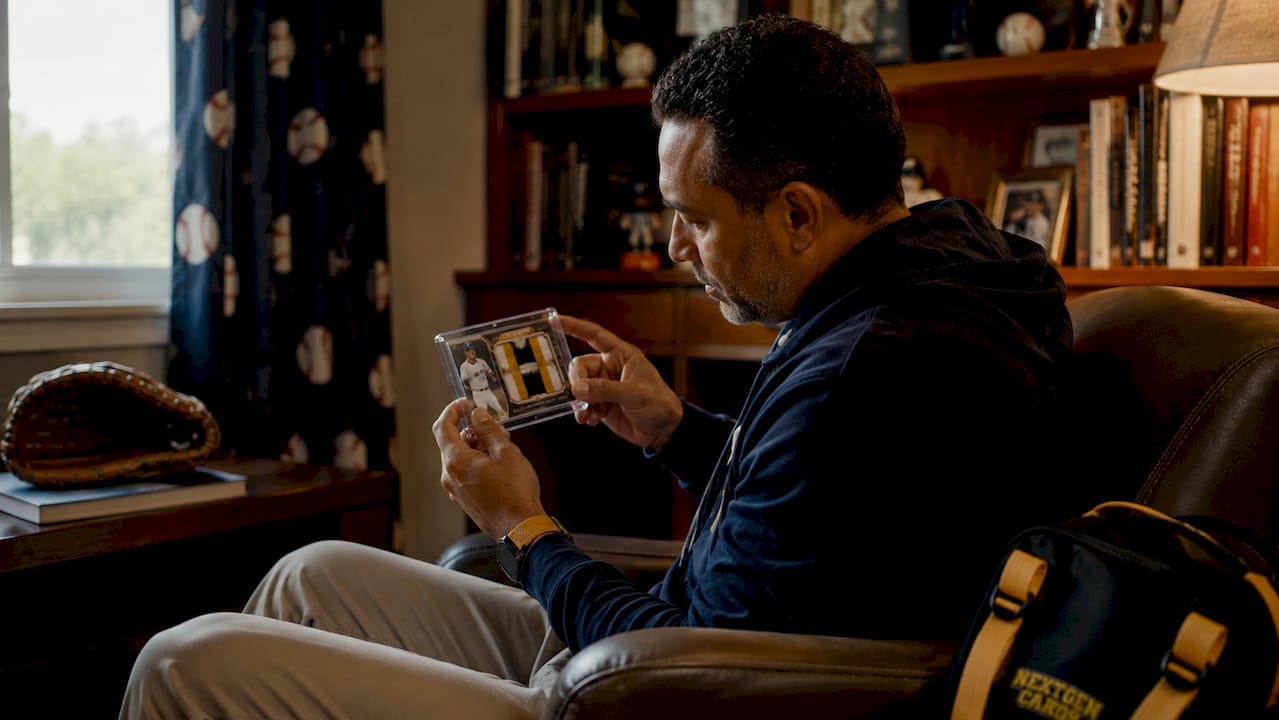
The authenticators assigned to these games are often law enforcement professionals. Their presence is visible during live broadcasts, which adds a layer of public accountability and collector confidence. The patch is then shipped directly to the Topps facility for card production.
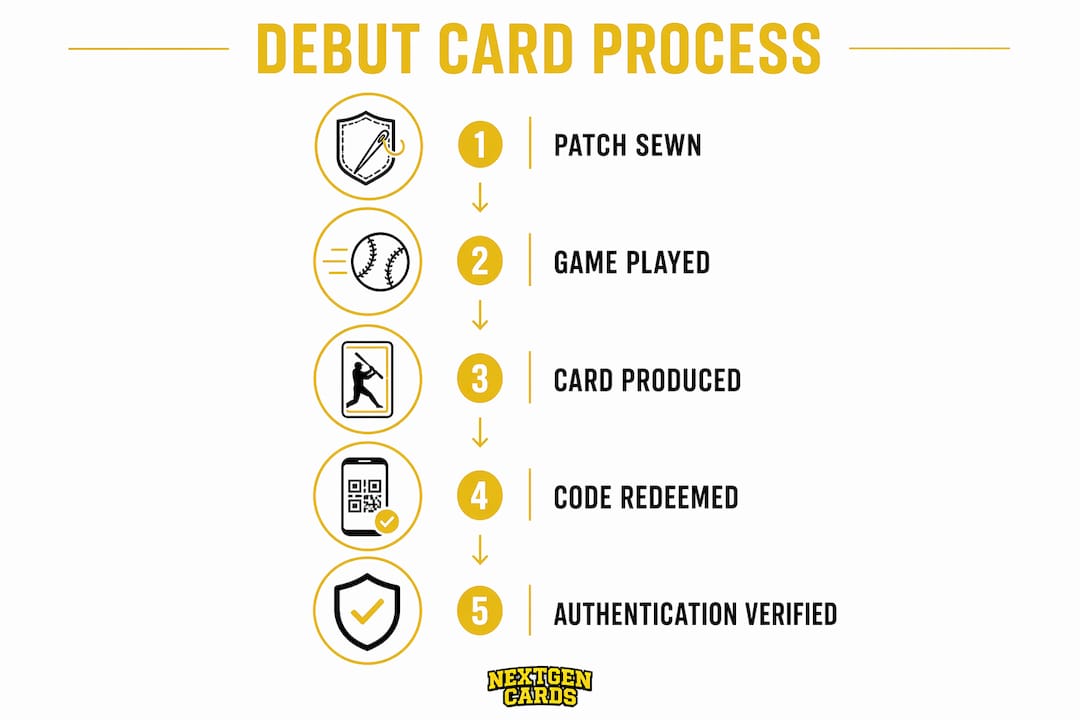
Here is the step-by-step process from debut to collector:
- Patch application. A fabric patch is sewn onto the player’s jersey before their first MLB game.
- Game play. The player wears the jersey during their official debut.
- Patch removal. An MLB authenticator removes the patch immediately after the game.
- Hologram sealing. The patch is sealed with a tamper-proof hologram sticker to document custody.
- Shipment to Topps. The secured patch is shipped to Topps for card construction.
- Card production. Topps embeds the patch into a card with gold foil framing and the player’s autograph.
- Redemption distribution. The finished card is distributed via redemption codes rather than direct pack pulls to protect the fragile patch during shipping.
Pro Tip: When you redeem a debut patch card code, register it immediately through the Topps redemption portal. Delays can complicate fulfillment, especially for high-demand players.
The redemption model is a deliberate choice. Embedding a physical jersey patch inside a card creates a fragile product. Shipping it loose inside a pack risks damage. The redemption system allows Topps to ship the card in protective packaging directly to the collector.
Why are MLB debut cards so valuable?
The secondary market prices for debut patch cards start around $3,000 to $4,000. That floor reflects the 1-of-1 rarity. No two collectors can own the same card. The record sale reached $1.11 million in March 2025, purchased by Dick’s Sporting Goods. That number signals that these cards have crossed from hobby collectibles into institutional investment territory.
Several factors drive that value:
- Absolute scarcity. Each debut patch card is a true 1-of-1. There is no parallel version, no refractor variant, and no second print run.
- Autograph uniqueness. Every card carries the player’s signature, making each piece individually distinct even within the same player’s output.
- Moment specificity. The patch comes from the exact game a player first appeared in the majors. That moment cannot be recreated.
- Authentication integrity. The law enforcement-grade chain of custody removes doubt about provenance.
- Emotional connection. The MLB Players Association frames these cards as a way for fans to own a piece of a player’s historic debut, which deepens collector attachment beyond pure investment logic.
“The true value of an MLB debut card is the timeless moment it captures. The exact moment a player first steps onto an MLB field is irreplaceable.” — Front Office Sports
The emotional dimension matters more than many collectors initially expect. Leo Rivas’ debut patch card sold for $3,300 despite a modest batting average. The debut moment itself drove that price, not career statistics. This is a meaningful departure from traditional rookie card logic, where on-field performance is the primary value driver.
Compared to standard relic cards, which may contain jersey swatches from unspecified games, debut patch cards carry a verified, documented moment. That specificity is what separates them from the broader rookie card market and justifies the premium.
How to collect and identify authentic MLB debut cards
Collecting debut patch cards requires a different approach than chasing standard rookie autographs. The process starts with understanding what you are looking for on the card itself.
Authentication markers to verify:
- Gold embossed foil framing on the front of the card. This is a Topps production standard for debut patch cards.
- Visible jersey patch embedded in the card face. The patch should show fabric texture and stitching consistent with game-worn material.
- Autograph placement. The player’s signature appears directly on the card, not on a sticker affixed to the surface. Sticker autographs are a red flag for authenticity.
- MLB authentication hologram on the card back. This hologram links to the chain of custody documentation from the debut game.
- Topps Chrome Update branding. Debut patch cards are integrated into the Topps Chrome Update product line. Cards appearing outside this context warrant extra scrutiny.
Pro Tip: Cross-reference the hologram number on the card back with the MLB Authentication database at mlb.com/authentication. Every legitimate debut patch card has a registered entry.
The timing of card availability is also worth understanding. The delay between a player’s debut and card release can span weeks or months. This lag is necessary to complete authentication and production, but it creates a window where speculation drives secondary market prices before the physical card exists. Buying during this window carries risk. Waiting for the card to be fulfilled and graded by a service like PSA or BGS gives you a clearer picture of condition and authenticity before committing capital.
For new collectors, the Topps Chrome Update product line is the primary entry point. Debut patch cards are not available as direct pack pulls in most cases. You are more likely to encounter them as redemption codes pulled from hobby boxes. Monitoring Topps’ official redemption announcements and tracking which players have debuted in a given season helps you anticipate which cards are in production.
How debut cards are reshaping the sports card market
The introduction of debut patch cards in 2023 changed the structure of the rookie card market. Before their arrival, the most desirable rookie cards were autographed parallels from Topps Chrome or Bowman, valued primarily by print run and player prospect status. Debut patch cards introduced a new category: moment-specific memorabilia with a verified, irreplaceable physical component.
| Feature | Traditional rookie card | MLB debut patch card |
|---|---|---|
| Rarity | Varies by print run (1-of-1 to thousands) | Always 1-of-1 |
| Memorabilia | Sometimes included, unspecified game | Patch from debut game only |
| Authentication | Standard Topps/MLB hologram | Law enforcement chain of custody |
| Autograph type | On-card or sticker | On-card only |
| Secondary market floor | Varies widely | $3,000–$4,000 as of 2025 |
The cultural footprint of these cards extends beyond physical collecting. Topps and Fanatics integrated debut patch cards into MLB The Show, the popular video game franchise. That integration exposes the concept to a younger, digitally native audience that may not have engaged with physical cards before. The program is also expanding beyond baseball, with Major League Soccer exploring a similar model.
Fan engagement has deepened as a result. Collectors now watch debut games with a different level of attention, knowing a physical artifact from that game will eventually become a tradeable card. The authentication process, visible on live broadcasts, turns the debut itself into a collectible event. This is a new dynamic in sports memorabilia, one that connects the live sports experience directly to the secondary market.
The challenges are real too. The delay between debut and card release frustrates some collectors. Production capacity limits how many players can receive debut patch cards in a given season. And the $3,000 floor price puts these cards out of reach for casual collectors, concentrating ownership among serious investors and institutions.
Key takeaways
MLB debut patch cards are the most moment-specific, authentication-verified collectibles in the modern rookie card market, with a secondary market floor that reflects their true 1-of-1 scarcity.
| Point | Details |
|---|---|
| Definition and rarity | Each debut patch card is a 1-of-1 autographed card containing a patch from the player’s actual first MLB game. |
| Authentication standard | Law enforcement-grade chain of custody and a tamper-proof hologram make these the most verified cards in production. |
| Market value | Secondary market prices start at $3,000–$4,000, with the record sale reaching $1.11 million in March 2025. |
| Collecting method | Most debut patch cards reach collectors as redemption codes, not direct pack pulls, to protect the fragile patch. |
| Market impact | These cards reshaped rookie card collecting by prioritizing moment-specific memorabilia over generic relic cards. |
Why debut cards represent the future of collecting
I have tracked the sports card market through multiple cycles, from the junk wax era to the modern autograph boom. What strikes me most about debut patch cards is not the price records. It is the structural shift they represent.
Every previous category of relic card had an authenticity problem lurking underneath the surface. A jersey swatch from “a game-worn jersey” could come from almost any game, any season, sometimes from a jersey that was never worn at all. Collectors knew this. It suppressed confidence in the entire relic card category for years.
Debut patch cards solved that problem by making the moment verifiable and public. The authentication happens on camera, during a live broadcast, with law enforcement-grade oversight. That is not a marketing claim. It is a documented process. For collectors who have been burned by vague provenance before, that specificity is genuinely new.
My advice for new collectors entering this market: do not chase the biggest names first. Study the authentication markers, understand the redemption process, and learn to read the secondary market timing. A debut patch card for a player who becomes a star is worth far more than the debut price. But you need to know what you are buying before you commit. Check out appreciating rookie cards to understand which prospects are drawing serious collector attention right now.
The debut patch card trend will expand. The MLS integration is just the beginning. Any sport with a defined “first game” moment and an existing trading card infrastructure is a candidate. The collectors who understand the authentication model now will be positioned well as that expansion happens.
— Richard
Find authentic debut cards and rare rookie autographs at Nextgencards
Nextgencards specializes in exactly the kind of scarce, authenticated collectibles that serious collectors pursue. Their inventory includes rookie autographs and relic cards from elite prospects, with verified authenticity and free shipping on select items.
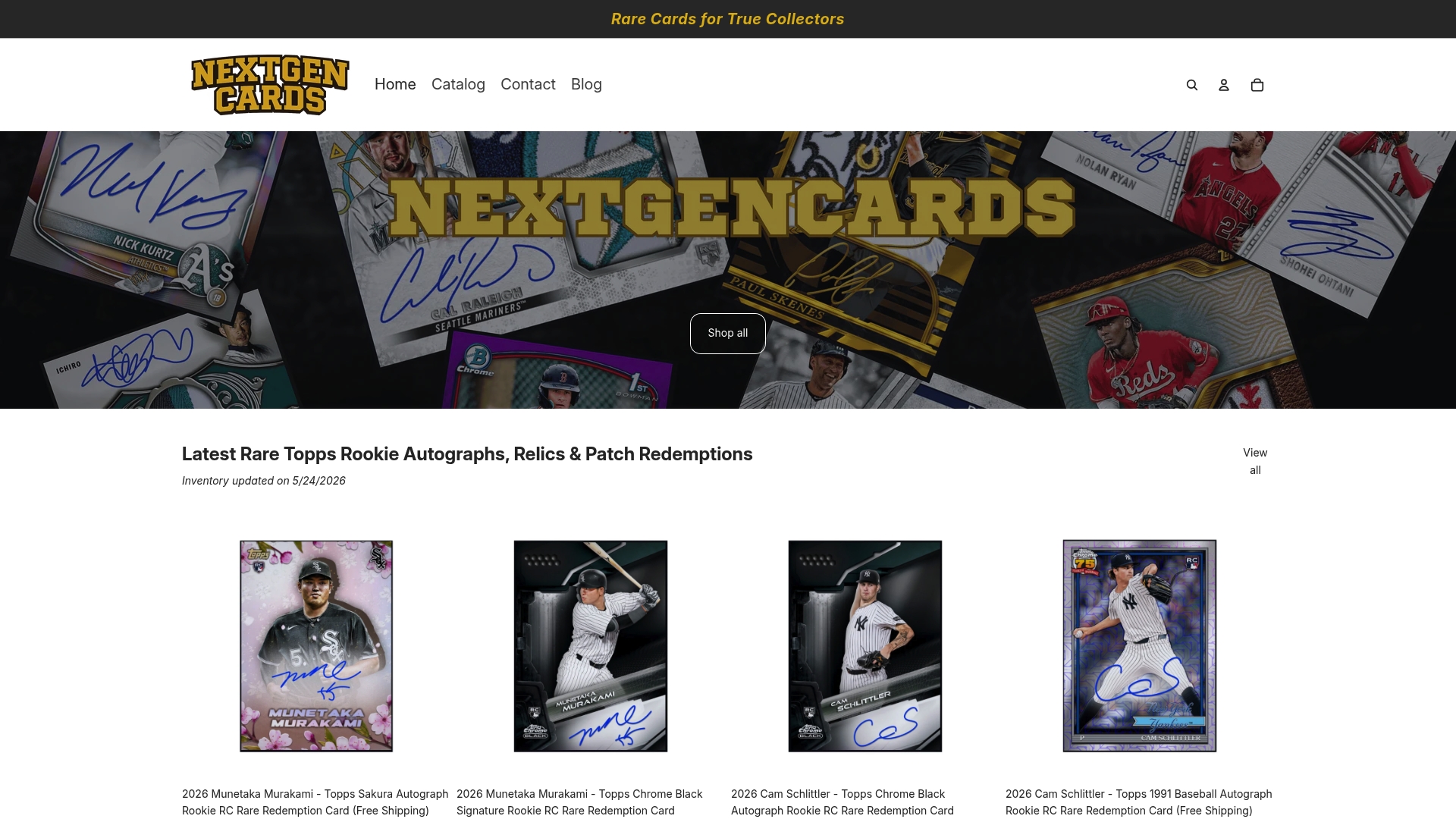
If you are building a collection around moment-specific memorabilia, Nextgencards offers curated access to rare Topps rookie cards, autograph relics, and limited-edition redemption cards. Their catalog includes cards from athletes like Shohei Ohtani and Aaron Judge, alongside emerging prospects worth tracking. For collectors who want to understand which MLB card types belong in a serious portfolio, Nextgencards is a trusted starting point.
FAQ
What is the difference between a debut card and a rookie card?
A rookie card is any card produced during a player’s first eligible season, often in large print runs. An MLB debut patch card is a 1-of-1 autographed card containing a physical patch from the player’s actual first MLB game, making it far scarcer and more moment-specific.
How much does an MLB debut patch card cost?
Secondary market prices for debut patch cards start around $3,000 to $4,000, with the record auction sale reaching $1.11 million in March 2025. Prices vary based on the player’s prospect status and career trajectory.
How do I know if an MLB debut patch card is authentic?
Look for gold embossed foil framing, an on-card autograph (not a sticker), a visible game-worn patch, and an MLB authentication hologram on the card back. You can verify the hologram number at mlb.com/authentication.
Why do debut patch cards come as redemption codes?
Redemption codes protect the fragile patch and card condition during distribution. Shipping a jersey-embedded card loose inside a hobby pack risks damage, so Topps fulfills these cards separately in protective packaging.
Are debut patch cards available for every MLB player?
No. The program started with 91 players in 2023 and expanded to 251 in 2024. Not every player who debuts in a season receives a debut patch card. Topps and MLB select participants based on production capacity and prospect significance.
0 comments