

What is a crossover sport card?
A crossover sport card is a collectible trading card that either features an athlete who competed professionally in more than one sport, or blends a sports figure with an entertainment franchise, gaming universe, or pop culture IP. Both definitions are in active use among collectors, and understanding the distinction shapes how you evaluate, grade, and price these cards.
The multi-sport athlete version is the older category. Cards of Bo Jackson, Deion Sanders, Shohei Ohtani, Tom Brady, and John Elway are the most cited examples, each athlete having earned professional recognition in two major leagues. The cross-IP version is newer and growing fast: Upper Deck’s DC x NHL Fortress of Solitude set, released in January 2026, placed Alex Ovechkin, Sidney Crosby, and Auston Matthews inside Superman’s Fortress of Solitude, selling at $19.99 per pack exclusively on the Upper Deck e-Pack platform.
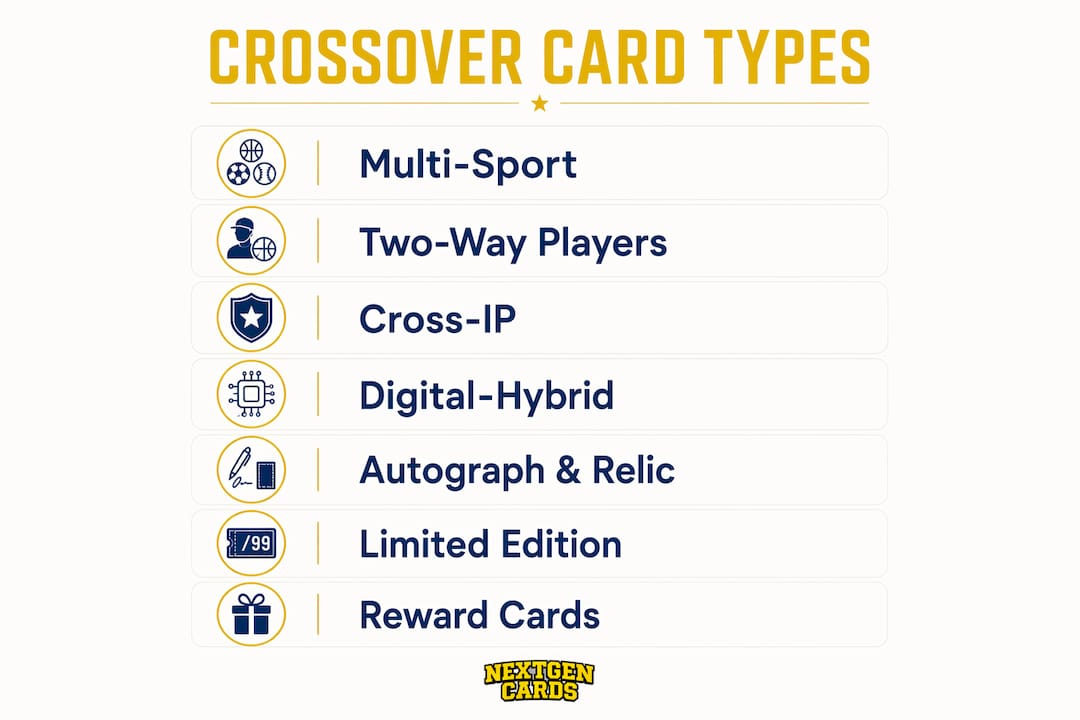
Key characteristics collectors use to identify crossover cards:
- Multi-sport athlete cards: one player, two professional sports, two distinct collector bases
- Cross-IP cards: sports figures integrated into entertainment, gaming, or cinematic universes
- Limited editions and themed inserts: short print runs that amplify scarcity
- Autograph and relic variants: signed or memorabilia-embedded versions of crossover subjects
- Digital-physical hybrids: sets like 2016 Topps Crossover, released simultaneously on apps and as physical cards
Types of crossover sport cards and what makes them desirable
1. Multi-sport athlete rookie cards
Bo Jackson’s 1987 Topps Future Stars and Deion Sanders’ 1989 Topps Traded baseball card are the benchmarks. Both athletes earned All-Star recognition in the MLB and NFL, giving their cards dual fan bases and sustained demand across two collector communities. Scarcity combined with historical significance keeps these cards among the most sought-after in the hobby.
2. Modern two-way player cards
Shohei Ohtani’s cards represent the current peak of this category. As a pitcher and hitter in the MLB, his cards attract both traditional baseball collectors and investors tracking performance-driven value. His rookie autograph cards command premiums that reflect his unique status in the sport.

3. Cross-IP entertainment cards
Cross-IP cards integrate sports figures into entertainment universes, expanding the collector base by appealing to pop culture fans who may never have bought a traditional sports card. A football fan who is also a Marvel viewer or a gamer becomes a potential buyer the moment a card bridges both identities.
4. Digital-physical hybrid sets
The 2016 Topps Crossover set pioneered simultaneous digital and physical releases across apps including Topps Bunt, Kick, UFC Knockout, and Star Wars Card Trader. Print runs were controlled by a one-week sales window rather than a fixed number, resulting in varied production quantities for each set based on demand during the sales period.
5. Autograph and relic crossover variants
Signed and memorabilia-embedded versions of crossover subjects carry the highest premiums within this category. A rookie autograph from a multi-sport athlete or a relic card embedded with game-used material from two different sports adds layers of authenticity that pure base cards cannot match.
6. Limited edition themed inserts
Short-print inserts within mainstream sets often carry crossover themes, whether through artwork, franchise branding, or athlete selection. Their appeal comes from controlled scarcity: once the print run closes, supply is fixed permanently.
7. Achievement and completion reward cards
The DC x NHL Fortress of Solitude set included an exclusive Connor McDavid achievement card awarded only to collectors who completed the full six-card set. This mechanic creates demand for every card in the set, not just the most popular athletes.
Market trends shaping crossover card value
The grading company a card sits in directly affects its resale price. CGC 10 cards of valuable modern cards often trade at 60–80% of equivalent PSA 10 prices, and a successful crossover to PSA can unlock 20–40% upside. PSA dominates crossover submissions because it carries the deepest secondary market of any grading company.
Cross-IP releases are expanding the collector base in a way that pure sports cards cannot. Entertainment-linked cards create new emotional entry points: a buyer recruited through a sci-fi or superhero identity may then pursue the athlete’s entire catalog. For investors, that means demand is no longer tied solely to stat lines.
Key market drivers for crossover cards:
- Grading company premium: PSA slabs command the highest resale prices across most categories
- Athlete performance: active stars with ongoing achievements sustain demand longer than retired players
- IP franchise relevance: entertainment crossovers tied to blockbuster releases see short-term demand spikes
- Print run size: lower numbered cards appreciate faster in strong markets
- Dual fan base effect: cards appealing to two collector communities face less price volatility
Stat callout: A CGC 10 to PSA 10 crossover, the most common crossover submission in 2026, unlocks 20–40% upside when successful, but carries real downgrade risk because PSA’s grading standards differ from CGC’s.
Strategies for acquiring, grading, and valuing crossover cards
The crossover grading process is a math decision, not a reflex. Before submitting any card, collectors should calculate all-in costs including the grading fee, outbound and return shipping with insurance, and a downgrade risk discount. If the price spread between your current slab and a PSA slab does not cover those costs with room to spare, the submission does not make financial sense.
Sub-grades matter more than most collectors realize. A BGS 9.5 with all 9.5-plus sub-grades is a strong PSA 10 crossover candidate. A BGS 9.5 with a single 9 sub-grade is a much riskier submission. Ignoring sub-grades before submission increases the chance of failing to meet your declared minimum grade at PSA.
PSA’s crossover service requires a declared minimum grade on every submission. If the card does not meet that minimum, PSA returns it in the original holder and charges the full grading fee regardless. The original slab is destroyed only if the crossover grade is accepted, making the decision to submit permanent in either direction.
Pro Tip: Set your minimum grade one point below your target grade. This protects you from paying fees on a complete failure while still giving you an exit if the card comes back slightly below expectations.
Actionable steps before any crossover submission:
- Research the current price spread between your existing slab and a PSA equivalent
- Pre-screen sub-grades using available grading data or a pre-grade service
- Add up all fees: grading tier, outbound shipping, return shipping with insurance
- Evaluate downgrade risk honestly, especially for CGC-to-PSA submissions where grading standards differ
- Set a realistic minimum grade on the submission form before sending anything
For sports cards investment purposes, crossover grading works best on high-value cards where the premium spread is large enough to absorb fees and risk. On lower-value cards, the math rarely works in the collector’s favor.
How Nextgencards supports crossover sport card collectors
Nextgencards specializes in the exact card types that drive crossover collector interest: rookie autographs, relics, limited editions, and rare redemption cards from athletes like Shohei Ohtani and Aaron Judge. The curated inventory is built for serious collectors who want authenticated, high-quality pieces rather than bulk filler.
Collector advantages at Nextgencards:
- Curated crossover-relevant inventory: multi-sport stars and limited edition inserts selected for collector appeal
- Authenticated memorabilia: autograph and relic cards backed by verifiable authenticity
- Educational blog content: guides covering multi-sport card sets, investment strategy, and grading considerations
- Free shipping on select items: reduces the all-in cost of adding crossover cards to your collection
- User-friendly navigation: easy browsing across rookie, autograph, and relic categories
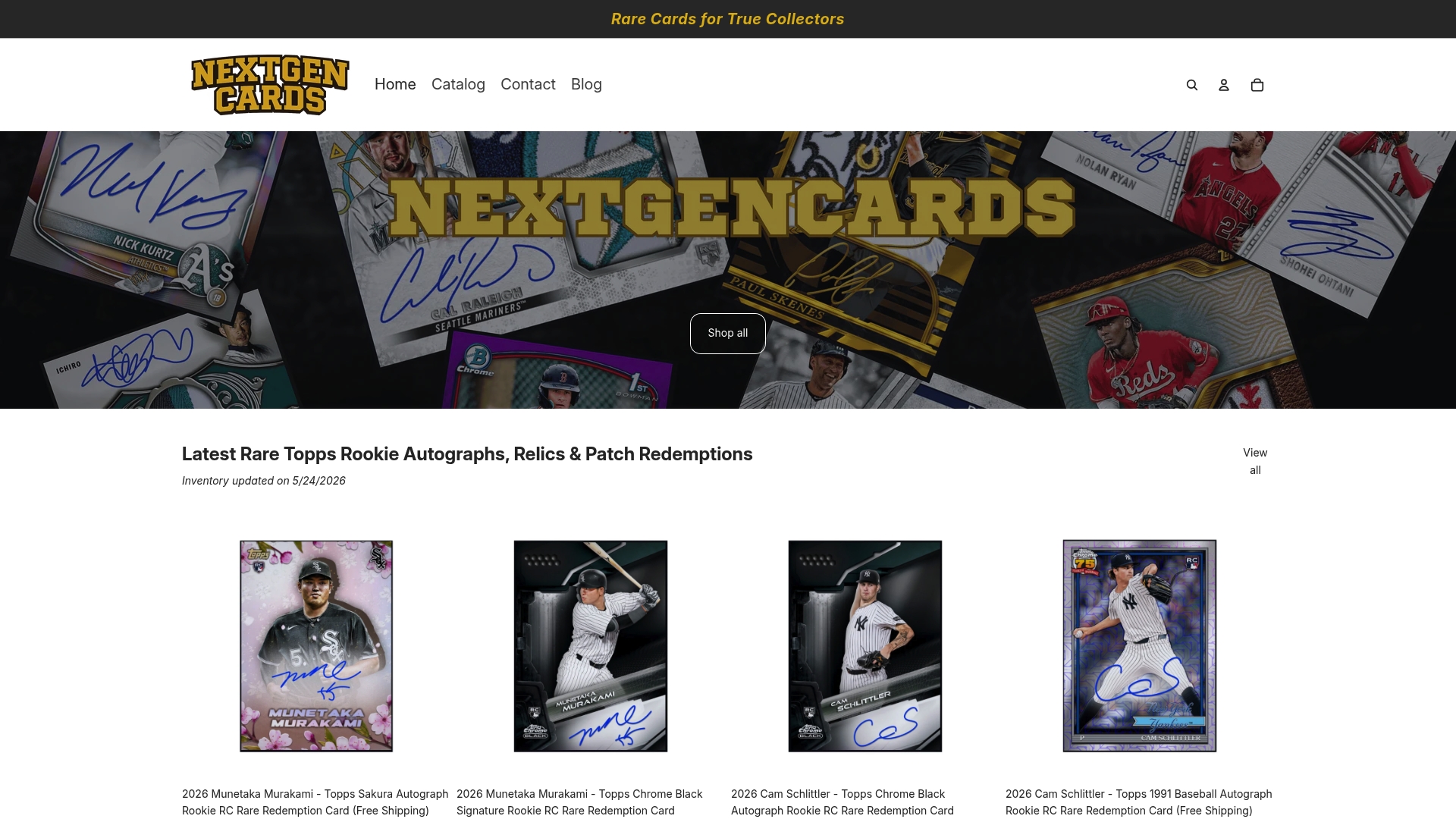
If you’re looking to add authenticated crossover-relevant cards to your collection, Nextgencards’ rookie autographs and relics catalog is the right starting point.
Risks and pitfalls in crossover sport card collecting
The biggest financial risk in crossover grading is paying fees for a result that does not improve your position. Industry experts caution against submitting cards solely for marginal premium gains, particularly when the price spread between slabs is narrow. A $30 grading fee plus shipping on a card where the PSA premium is only $40 leaves almost no margin for error.
Slab destruction is permanent. When PSA accepts a crossover submission, the original holder is cracked and cannot be recovered. Collectors who value the original slab for any reason, whether provenance, aesthetics, or the grading company’s own reputation in a specific niche, should factor that loss into their decision before submitting.
Market liquidity affects the actual value of a crossover. A PSA 10 slab commands a premium on paper, but that premium only materializes if buyers are active in the market for that specific card at the time of sale. Crossover cards tied to entertainment franchises can see demand spike around a film release and fade quickly afterward, leaving collectors holding a premium slab in a thin market.
Condition grading standards vary across companies, and what one company grades as a 10 may return as a 9 at PSA due to centering tolerances or surface standards the original grader accepted. Understanding how grading standards differ across companies is a prerequisite for any crossover submission, not an afterthought.
Key Takeaways
Crossover sport cards command premiums because they attract multiple collector bases simultaneously, but grading decisions require careful cost-benefit analysis before any submission.
| Point | Details |
|---|---|
| Two distinct card types | Crossover cards include multi-sport athlete cards and cross-IP entertainment cards, each with different value drivers. |
| PSA premium is real but variable | CGC 10 cards often trade at 60–80% of PSA 10 prices; a successful crossover unlocks 20–40% upside. |
| Fees apply regardless of outcome | PSA charges the full grading fee even if the card does not meet your declared minimum grade. |
| Sub-grades determine crossover viability | Pre-screening sub-grades before submission is the single most effective way to reduce downgrade risk. |
| Slab destruction is irreversible | Once PSA accepts a crossover, the original holder is destroyed and cannot be recovered. |
0 comments