

If you want a genuine alternative to Steel City Collectibles, prioritize specialty dealers, established hobby retailers, and vetted consignment houses that show third-party grading, clear provenance, and transparent return policies. Skip anything that hides its shipping terms or dodges questions about authentication. The categories below, plus a short checklist, will get you there faster than any single review can.
TL;DR:
- Specialty dealers focusing on rare cards tend to document provenance thoroughly and know their inventories well, making them ideal for high-value rookie autographs.
- Established hobby retailers generally offer broader selection, standardized shipping, and clear return policies, suitable for common releases and set collectors.
- Auction houses and consignment sites are best for vintage or high-value cards, but involve fees, wait times, and should only be used for items exceeding a significant value threshold.
- All sellers must demonstrate clear authentication, transparent dealer info, verified shipping insurance, and community feedback, especially for high-value or vintage purchases.
- Expect longer wait times and tighter rookie autograph inventories in 2026 as manufacturers produce more low-numbered parallels, requiring buyers to start small and verify seller reputation thoroughly.
Table of Contents
- Steelcitycollectibles.com Alternatives: Which Categories Actually Deliver Trust?
- What Should You Check Before Buying From Any Collectibles Site?
- Does Nextgencards Meet Its Own Trust Checklist?
- What Should Collectors Expect From the Market in 2026?
- Ready to Browse a Curated Redemption Card Catalog?
- Where Else Can You Verify a Dealer’s Reputation?
- Sources
- FAQ
Steelcitycollectibles.com Alternatives: Which Categories Actually Deliver Trust?
Not every alternative solves the same problem. A rare rookie autograph and a common base card need different sellers, different verification steps, and different levels of patience. Here’s how the main categories break down.
Specialty rare-card dealers focus on curated inventory rather than volume. They tend to document provenance more carefully because their business depends on repeat buyers who collect high-value rookie autographs, patch cards, and redemption pieces. If you’re chasing a scarce prospect autograph or a limited redemption card, this is where you want to spend your time. Specialists also tend to know their inventory cold, which matters when you’re asking pointed questions about a card’s history.
Established hobby retailers carry broader catalogs and usually have the infrastructure (dedicated customer service lines, standardized shipping insurance, published return windows) that smaller sellers can’t always match. They’re a solid choice for common releases, set builders, and anyone who wants to compare pricing across a wide selection before committing.
Auction and consignment houses make sense for vintage cards or six-figure rookie pieces where provenance and bidding competition drive the price. Expect seller fees, buyer’s premiums, and settlement timelines that stretch into weeks rather than days. If you’re weighing whether an auction route beats a straight retail purchase, a guide to auction-style marketplace alternatives can help you map out the tradeoffs before you bid.
Live break hosts and group breaks offer a different kind of value: the experience of the chase, split across a group of buyers who each pull cards from the same case or box. The payout is genuinely random, so treat it as entertainment with upside, not a guaranteed way to land a specific rookie card. Read the host’s break rules closely; refund and no-hit policies vary widely from one operator to the next.
Community marketplaces give you the largest possible selection, but that breadth cuts both ways. Anyone can list a card, which means buyer vigilance has to increase to match. This is where checking seller history, feedback scores, and return policies stops being optional.
A few practical notes on picking among these categories:
- Specialty dealers reward patience and relationship building over time, especially for repeat high-value purchases.
- Hobby retailers are the safer default when you just want a specific base or common insert without extensive research.
- Consignment and auction routes only make sense once a card’s value clears the threshold where fees and wait times are worth it.
- Break hosts should always publish their break format and refund terms before you buy a spot.
- Marketplace listings need the same scrutiny you’d apply to a stranger selling a used car.
Collector-curated shops have leaned into this trust gap by advertising low overhead and careful handling as their core pitch. CollectorsDungeon, for instance, markets itself around collector-curated inventory and careful shipping practices rather than sheer catalog size, which reflects a broader shift toward sellers who compete on care instead of volume.
What Should You Check Before Buying From Any Collectibles Site?
Every alternative you consider should pass the same basic test, regardless of category. Here’s the order to check things in, and why each step matters more than it looks.
- Authentication and grading visibility. Ask for photos of graded slabs and, where possible, verify certification numbers against PSA, Beckett, or SGC’s own lookup tools. A seller who hesitates to provide this is telling you something.
- Dealer transparency. Look for a real physical address, a working phone number, and documented provenance on anything above a casual price point. VCoins built its reputation in the coin-collecting world around exactly this kind of dealer accountability, and the same logic applies directly to sports cards: membership rules and a visible code of ethics are a simple, checkable trust anchor.
- Payment and buyer protection. Confirm what payment types are accepted and whether you have any chargeback or dispute recourse if a card arrives misrepresented. Sellers who only accept irreversible payment methods for high-value items deserve extra scrutiny.
- Shipping, insurance, and returns. Insured shipping should be standard on anything over a modest dollar amount, and the return window for misrepresented items should be stated plainly, not buried in fine print.
- Community feedback. Search Reddit threads, Trustpilot, hobby forums, and aggregator sites like XRanks to see what patterns emerge. One bad review means little; a repeated complaint about slow shipping or unclear returns across multiple threads means a lot.
Pro Tip: Before you buy anything above triple digits, run the seller’s name plus “reddit” through a search engine. A single thread with a dozen replies will usually tell you more about real-world shipping speed and return experiences than any star rating on the seller’s own site.
Directories that list dozens of alternatives are genuinely useful for discovery, but a long list is not the same as a vetted list. Treat any aggregator as a starting point for names to research, never as a substitute for running each one through the five checks above. For high-value or vintage cards specifically, lean toward platforms that build in dealer accountability from the start, since provenance gaps are far harder to fix after the sale than before it.
If grading terminology is unfamiliar, a breakdown of PSA versus CGC is worth reading before you evaluate any graded card listing, since the grading company itself affects both resale value and how much scrutiny a listing deserves.
Does Nextgencards Meet Its Own Trust Checklist?
Some dealers emphasize curated inventory over mass listings, selective sourcing, and focus on rare redemption cards, rookie autographs, and relics rather than generic catalogs. That specialization matters for the same reason specialty dealers outperform generalists on provenance: a narrower focus means more attention per item.
A few concrete ways this shows up in the catalog:
- Free shipping offers on select items, which can reduce common friction points buyers report when comparing sellers.
- A selection of rookie autograph and redemption cards rather than a sprawling, unvetted marketplace feed.
- Categories built specifically around MLB, NBA, and NFL redemption cards, rookie patch and relic redemptions, and multi-player card redemptions, so buyers know exactly what kind of inventory they’re browsing.
Representative examples of what that inventory looks like in practice include a 2024 Junior Caminero Topps Bowman Chrome Green Signature Rookie RC redemption card, a 2026 Jalen Brunson Topps Champions autograph redemption card, a 2026 Sal Stewart Topps Heritage Blue Ink autograph rookie redemption card, and a 2025 Yoshinobu Yamamoto Topps Now World Series Hero redemption card commemorating his Game 7 performance. Each one sits in the same rare and redemption card niche that specialty dealers are built around, rather than the broad, mixed inventory typical of general marketplaces.
What Should Collectors Expect From the Market in 2026?
Rookie autograph inventory keeps tightening as redemption windows for the biggest names shrink faster than they used to, and I expect that pattern to hold through the rest of 2026. Buyers chasing a specific rookie patch autograph should expect to wait longer for redemption fulfillment than they did even two years ago, simply because manufacturers are producing more low-numbered parallels against the same demand.
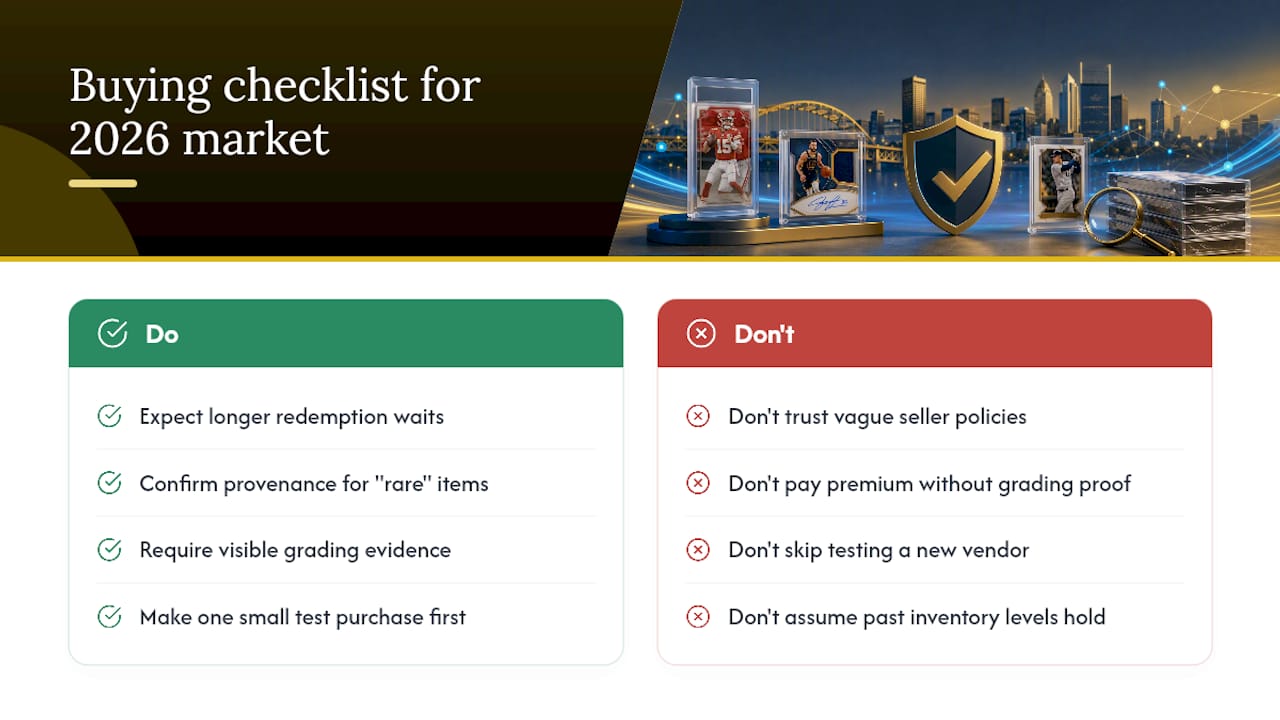
The red flags haven’t changed much, but they matter more now that inventory is scarcer. Watch for missing provenance on anything described as rare, an absence of grading evidence on cards priced as if they were already graded, and seller policies that go vague exactly where they should be specific, like return windows and shipping insurance.
My practical advice when switching to a new vendor: start small. Buy one modest item first, watch how it’s packaged and how fast it ships, then scale up your spending once you’ve seen the operation firsthand. That single test purchase tells you more than any review thread ever will.
— Richard
Ready to Browse a Curated Redemption Card Catalog?
Some sellers are built around a curated focus on rare redemption cards instead of a sprawling generalist catalog, free shipping on select items, and a specialization in rookie autographs, relics, and multi-player redemptions that generic marketplaces don’t replicate.
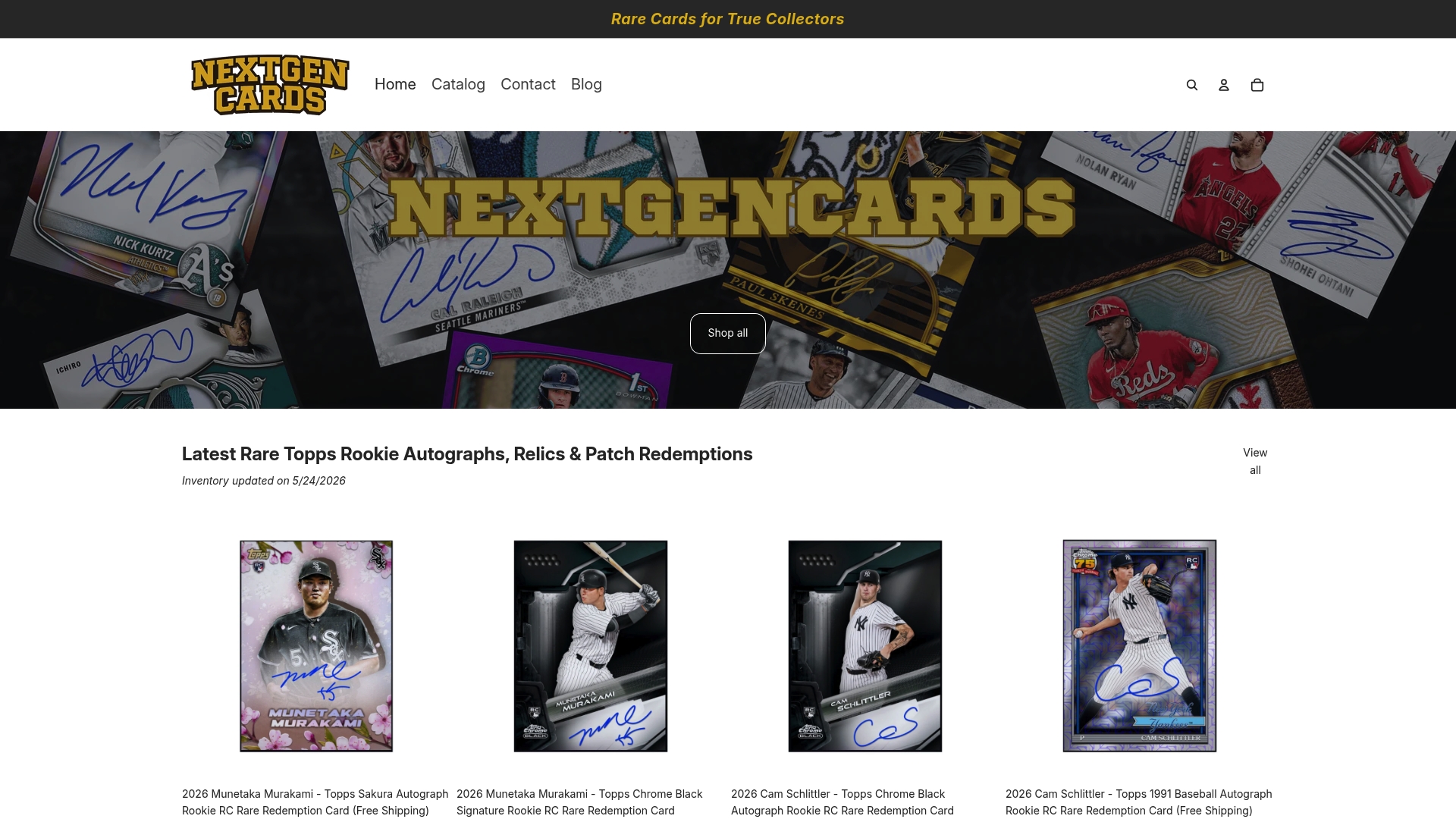
Start by browsing the rookie autographs and relics collection and filtering by sport or player if you already know what you’re chasing. If you’re looking for a specific example of the kind of high-demand redemption card worth watching, the 2023 Mason Miller Topps Chrome Platinum Anniversary autograph rookie redemption card is a good place to see how listings are presented, from card details through shipping terms. Check the product page for current shipping and return specifics before you buy, and reach out directly if a listing doesn’t answer a question you have. That direct line to a real seller is exactly the transparency this whole guide has been pointing you toward.
Where Else Can You Verify a Dealer’s Reputation?
For further reading, VCoins’ dealer code of ethics shows what strong dealer standards look like in practice, XRanks offers a directory of similar sites worth researching individually, and the r/basketballcards thread on Steel City Collectibles shows real buyer experiences worth reading in full.
Sources
- Online coin dealers. Ancient Coins, US Coins and World Coins | VCoins
- Top 47 Steelcitycollectibles.com Alternatives & Competitors
- Steel city collectibles - Are these guys honest? Is it worth it …
FAQ
Is Steel City Collectibles Legit?
Steel City Collectibles operates as an established hobby retailer, and buyer experiences reported in community threads are mixed rather than uniformly negative or positive. The Reddit discussion on r/basketballcards is worth reading directly, since it captures specific complaints and praise you won’t get from a star rating alone.
Who Owns Steel City Collectibles?
Ownership details for Steel City Collectibles are not publicly listed in a way that’s easy to verify independently. If ownership transparency matters to your purchase decision, that’s a reasonable point in favor of sellers who publish clearer dealer information upfront.
What Are the Most Reputable Sports Memorabilia Sites?
The most reputable sites share a few traits regardless of size: visible grading and authentication evidence, transparent dealer information, insured shipping, and a documented return policy for misrepresented items. Specialty dealers focused on rookie autographs and redemption cards, like Nextgencards, along with established hobby retailers that publish clear policies, tend to meet this bar more consistently than open community marketplaces.
How Do I Check if a Collectibles Site Is Trustworthy?
Run through five checks: authentication and grading visibility, dealer contact transparency, payment and buyer protection options, insured shipping with a clear return window, and community feedback from forums or review sites. Searching a seller’s name alongside “reddit” or checking directories like XRanks is a fast way to surface patterns before you commit to a purchase.
Are Redemption Cards a Safe Way to Buy Rookie Autographs?
Redemption cards are safe when purchased from a seller with transparent policies on fulfillment timelines and clear provenance on the redemption itself. Expect fulfillment to take longer in 2026 as manufacturers issue more low-numbered parallels against steady demand, and always confirm the seller’s return terms before buying a redemption card sight unseen.
0 comments