

If you’re hunting for monmouthcards alternatives, your best routes are niche online card shops, local hobby stores, collector marketplaces and forums, and card shows. Each offers a different mix of curation, price, and buying speed.
For serious collectors chasing rookie autographs, patch cards, and redemption cards, Nextgencards stands out as a curated option worth bookmarking. The inventory focuses on scarce, high-signal cards rather than mixed lots, and select items ship free.
Here’s where to start looking:
- Niche online shops — curated inventory, filterable by player, set, or card type
- Local hobby shops — unlisted rare finds, in-person condition checks
- Collector marketplaces and forums — trading threads and community vetting
- Card shows — direct negotiation and on-site inspection
- Nextgencards — a curator-first option for rookie autographs, patches, and redemption cards
Start by searching a specific player or rookie class rather than browsing blind. It narrows results fast and surfaces the cards actually worth your money.
Key Takeaways
Serious collectors get the best results by combining a curated online shop with local hobby-store visits and community forums, rather than relying on just one channel.
| Point | Details |
|---|---|
| Use multiple channels | Combine niche shops, local stores, forums, and shows since each surfaces different inventory. |
| Verify before you pay | Check grading, serials, and actual card photos, not stock images, before committing. |
| Compare against real comps | Price a card against recent sales, factoring in seller fees and shipping costs. |
| Visit local shops in person | Many rare, unlisted cards only surface at physical stores or shows. |
| Nextgencards for curated buys | A focused catalog of rookie autographs, patches, and redemption cards with clear free-shipping flags. |
Table of Contents
- How Do You Evaluate a Card Seller Before Buying?
- Where Can You Find Similar Sites to Monmouthcards?
- What Conventional Advice Gets Wrong About Alternative Sellers
- Why Nextgencards Fits Collectors Looking Beyond Monmouth Cards
- Sources
- FAQ
How Do You Evaluate a Card Seller Before Buying?
Every alternative to Monmouth Cards deserves the same scrutiny, whether it’s a storefront you’ve never heard of or a seller three posts deep in a forum thread. Rare cards attract counterfeiters and inflated pricing, so a quick checklist saves you from an expensive mistake.
- Check authentication signals first. Look for serial numbers, holograms, and clear provenance notes. A seller unwilling to show the actual card surface, not a stock photo, is a warning sign.
- Verify third-party grading when it’s claimed. PSA, Beckett, and SGC labels should match the listing description exactly, including grade and cert number you can look up independently.
- Read the return policy before you read the price. A seller with no stated return window or refund process is telling you something, even if the card looks legitimate.
- Compare pricing against recent comps. Check what the same card sold for recently on established platforms, then factor in seller fees and shipping before deciding a price is fair.
- Confirm shipping method and insurance. Rare cards should ship in hard sleeves or one-touch holders inside a bubble mailer or box, with tracking and insurance for anything over a modest dollar value.
- Look for reputation history. Forum mentions, review counts, and how long a seller has operated all matter more than a slick website.
Pro Tip: Ask any new seller for a timestamped photo of the exact card before you pay. It takes them thirty seconds and tells you more than any star rating.
Nextgencards’s buyer confidence guide walks through more of these checks in detail, including how to spot condition issues in listing photos that sellers sometimes crop out.
Where Can You Find Similar Sites to Monmouthcards?
Collectors rarely land on one perfect replacement. Most build a rotation of two or three sources depending on what they’re chasing that month.
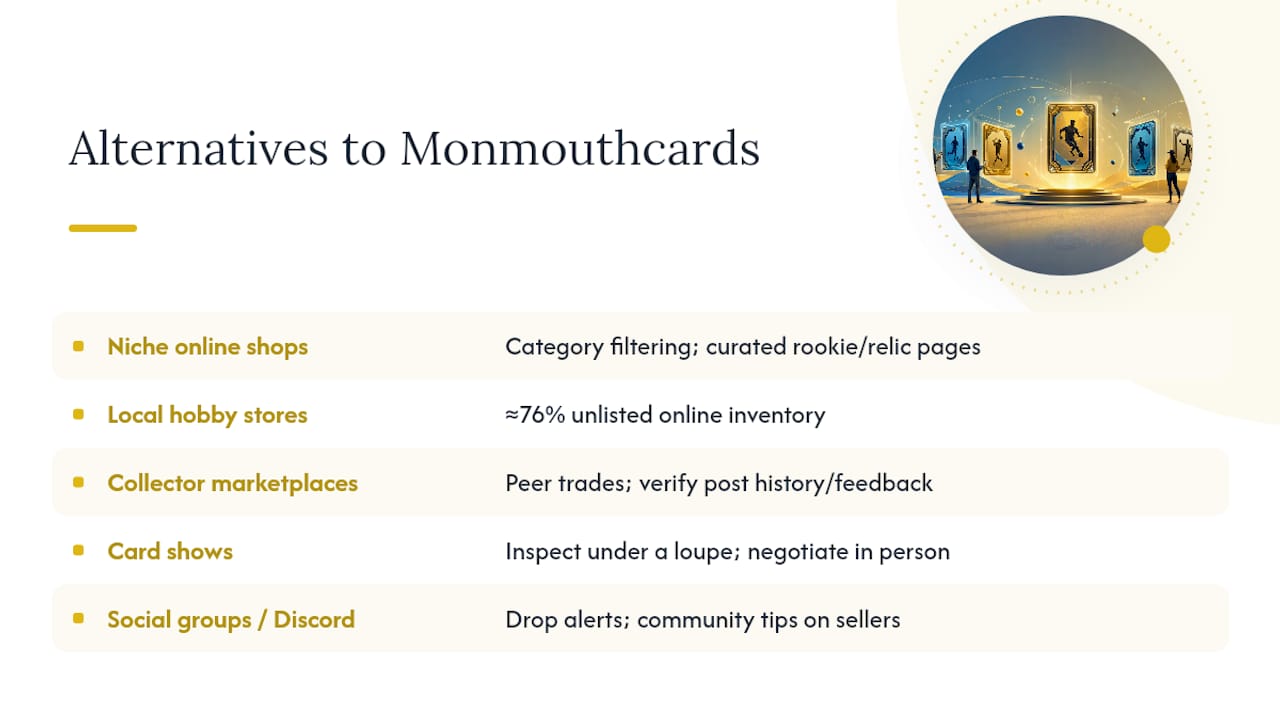
Niche online shops tend to organize inventory by category, so you can filter straight to rookie autographs or relic cards instead of scrolling through commons. Curated collections like rookie autograph and relic pages let you narrow by player or set in a few clicks, which matters when you’re comparing a dozen listings for the same card.
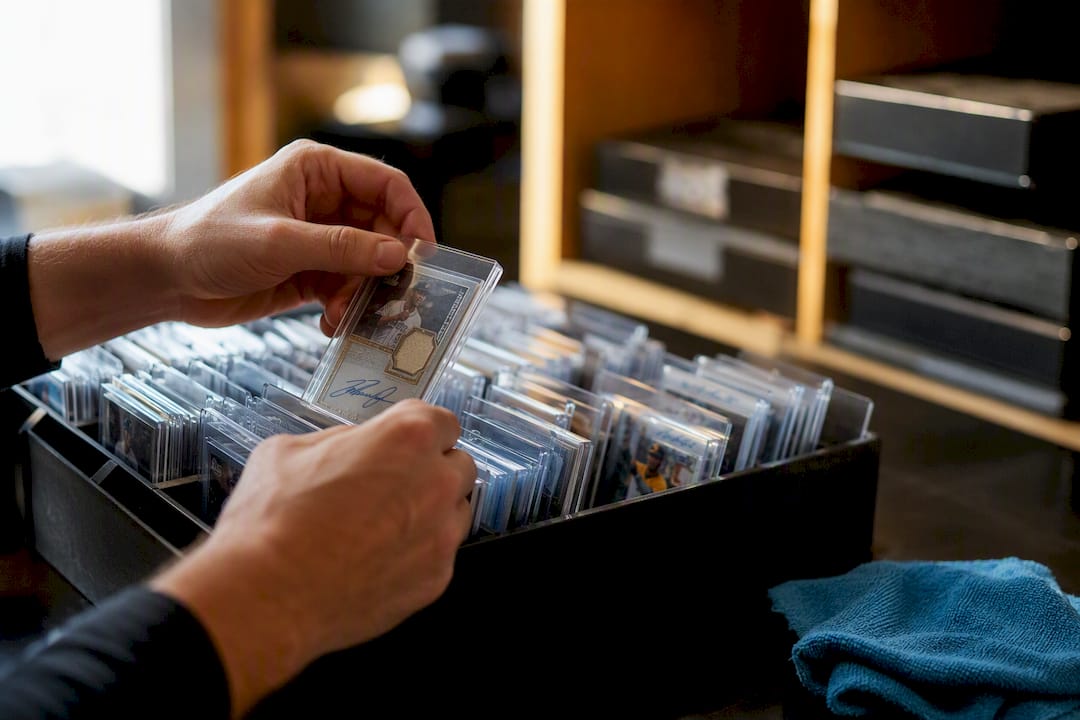
Local hobby shops operate differently. A meaningful share of their best inventory never makes it online, sitting instead in a case or on a community board that only regulars know to check. If you’re in New Jersey, visiting in person still turns up cards you won’t find through a search engine, especially one-off pulls a shop owner picked up at a local show.
Collector marketplaces and forums run on trust built over time. Trading threads and group buys move fast, and reputation is everything, since most transactions happen between individuals rather than through a storefront with a return policy. Verify a trading partner’s post history and prior feedback before sending payment.
Card shows remain one of the few places you can inspect a card under a loupe before committing. Bring a want list, negotiate in person, and don’t be afraid to walk a table and come back later if a price feels off.
Social groups and Discord servers fill the gap between forums and shows. Collectors post drop alerts, ask for read on a card’s authenticity, and swap recommendations for sellers who’ve treated them well. Roughly 76% of hobby-shop inventory is often unlisted online based on how many smaller shops manage stock, which is exactly why community tips inside these groups carry so much weight.
What Conventional Advice Gets Wrong About Alternative Sellers
Most roundups treat every alternative seller as interchangeable, ranking them by traffic or checkout speed. That misses the point. A card show table and a curated online shop solve different problems, and pretending otherwise sends collectors toward the wrong channel for what they actually need.
The overrated advice is “just check reviews.” Reviews tell you a seller shipped on time, not whether their grading claims hold up or their pricing reflects real market comps. What matters more is whether a seller documents provenance and shows the actual card, not a stock image.
Here’s what I’d prioritize differently: stop treating community forums and local shops as backup options. They’re often the source, not the fallback, especially for the rare, low-population cards that never make it onto a big platform’s inventory feed. A curated shop with a tight focus on rookie autographs and redemption cards, backed by clear return terms, beats a sprawling marketplace every time you’re chasing something specific rather than browsing.
Why Nextgencards Fits Collectors Looking Beyond Monmouth Cards
Nextgencards is built around a simple idea: fewer, better cards instead of a flooded catalog. If you’ve been comparing alternative sellers and getting lost in generic inventory, that curation is the practical difference.
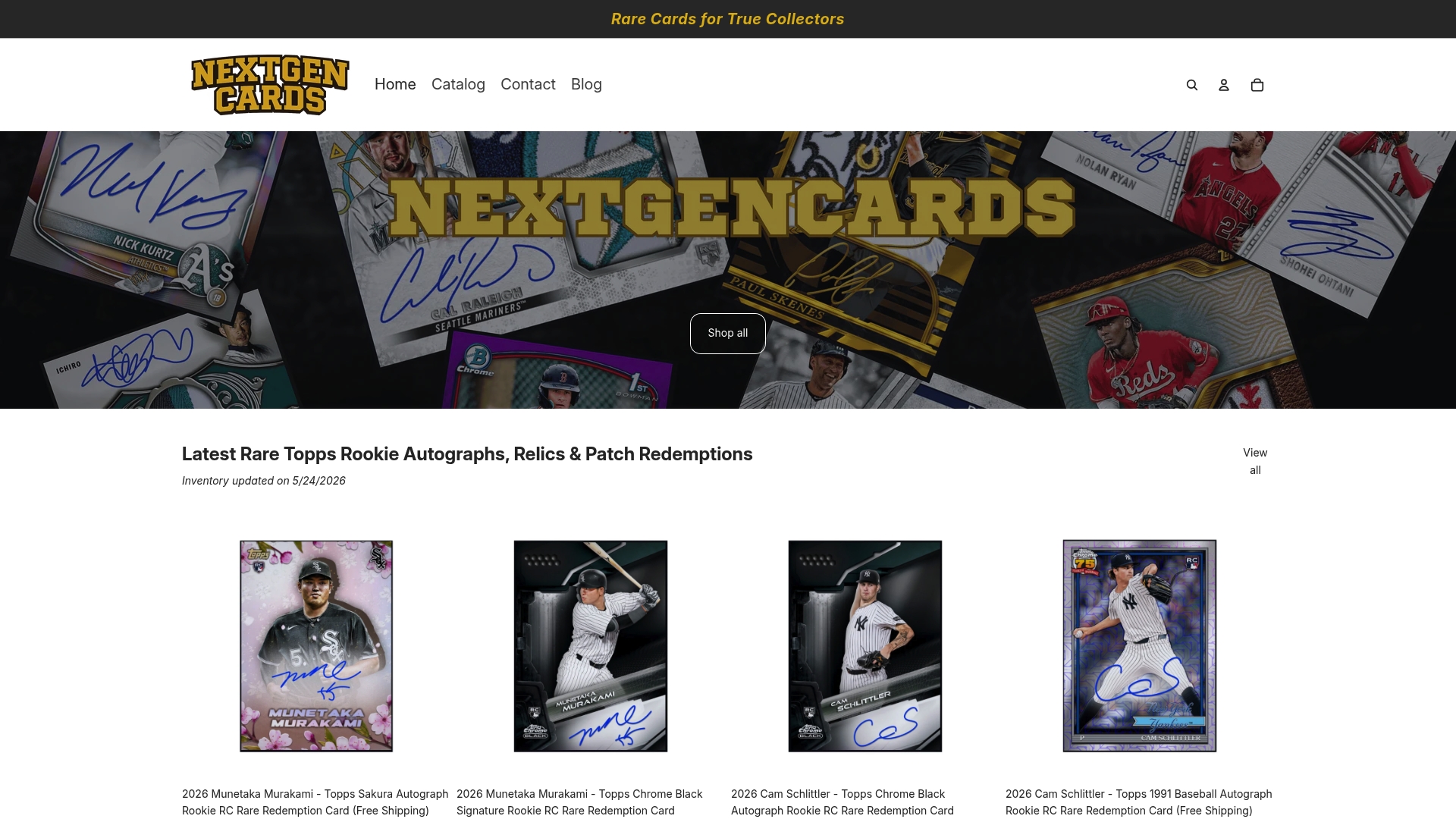
The current lineup includes cards collectors specifically search for by name, like the 2024 Junior Caminero Topps Bowman Chrome Green Signature Rookie RC redemption card, which ships free. Rookie-class chasers will also find the 2026 Jacob Misiorowski Topps All Star Game Autograph Rookie RC card and a 1991 Topps design Misiorowski autograph redemption card, both flagged clearly on their listing pages.
Multi-signature collectors get real options too, including the 2024 Skenes, Cole, and Strasburg Topps Baseball Stars triple autograph redemption card, while basketball fans can browse the Jalen Brunson All Star Game jersey patch autograph card and the free-shipping Full Court jersey patch autograph version. Rookie patch autograph collectors will want to check the Elly De La Cruz Topps Reverence RPA redemption card, and NFL draft followers can look at the Derik Queen Topps Flagship rookie jersey patch redemption card.
Every listing shows free-shipping status upfront, so you know your total cost before checkout, not after. Use the rookie autographs and relics collection to filter by player or set and see comparable cards side by side. If you’ve been vetting sellers one by one, start there and browse the current inventory directly.
Sources
FAQ
Are Monmouth Cards good?
Domain data classifies monmouthcards.com as a sports memorabilia and card-games retailer, which fits a niche sports-card seller profile. Quality varies by seller experience, so apply the same authentication checks you’d use for any alternative before buying.
What is the best company to buy sports cards from?
There’s no single best seller for every collector, since needs vary by card type and budget. For rare rookie autographs, patches, and redemption cards specifically, a curated shop like Nextgencards is a strong starting point because the catalog stays focused rather than mixed with commons.
Is there a discount code for Monmouth Cards this weekend?
Discount codes and promotions change frequently and aren’t something this article can confirm as current. Check the seller’s own site or email list directly for any active offer.
Are mystery packs worth buying?
Mystery packs carry real variance, since you’re paying for the chance at a hit rather than a guaranteed card. Collectors who prefer certainty over gambling on a pack usually do better buying a specific listed card, like a redemption card with a known player and set, instead.
What should I check before buying from a new online card seller?
Confirm authentication details, third-party grading claims, return policy, and shipping insurance before paying. A seller’s willingness to show the exact card and answer questions directly is often the clearest signal of legitimacy.
0 comments