

The fastest reliable way to land a rare baseball card is to buy from a curated specialist that states its handling time upfront and ships with tracking and insurance. Specialist dealers and graded-card retailers come next, followed by marketplace listings that explicitly promise same-day or one-day handling, with local shops as your fastest last-mile option. Expect same-day to three-business-day delivery once the item ships. Before you click buy, confirm the seller’s stated handling time. That single check tells you more about your actual delivery date than any shipping badge on the listing.
TL;DR:
- Specialist shops with curated inventory and clear handling times typically ship within one business day, reducing the risk of delays.
- Handling time often dictates the overall delivery speed more than carrier transit, with same-day processing outperforming slow shipping options.
- Confirm shipping services, packing standards, and insurance coverage before buying to prevent damage or loss of high-value rare cards during transit.
- Tracking should be issued immediately upon label creation, with regular scan updates; signature confirmation helps protect against last-mile theft.
- Vague listings, slow responses, or low prices combined with poor packaging are signals of risk, warranting careful vetting before purchase.
Table of Contents
- Rare Baseball Cards Quick Ship Options: Which Channel Is Fastest?
- What Does “Quick Shipping” Actually Mean for Rare Cards?
- How Do You Vet a Seller Before Buying a Rare Card Fast?
- Packaging and Insurance Standards That Prevent Damage in Transit
- Verified Fast Shippers vs. Risky Sellers: What to Watch For
- How Do You Track an Expedited Rare Card Shipment in Real Time?
- Why Handling Time Matters More Than Buyers Realize
- Buy Rare Cards Now With Fast, Tracked Shipping
- Practical Guides for Packing and Shipping Rare Cards
- Sources
- FAQ
Rare Baseball Cards Quick Ship Options: Which Channel Is Fastest?
Not every seller channel moves at the same speed, and rarity changes the calculation. A one-of-one redemption card demands a different level of trust and packing care than a common insert, so the fastest route depends on both urgency and the card itself.
- Direct specialist shops with curated inventory tend to ship fastest because they handle fewer SKUs and know exactly where each card sits. A shop that lists rookie autographs and redemption cards as its core business, rather than a side category, typically processes orders same day or within one business day.
- Specialist dealers and graded-card retailers are built for high-value cards. Their fulfillment teams are used to slabs, declared-value insurance, and signature confirmation, which matters once a card’s value climbs into four figures.
- Marketplace buy-it-now listings can move quickly, but only when the listing states same-day or one-business-day handling explicitly. Read the shipping section before assuming speed. Marketplace variety is real, but so is seller inconsistency.
- Local card shops and consignment counters win on raw speed. Same-day pickup or a local courier drop beats any carrier, though selection is narrower and rare redemption cards are less likely to sit in a physical case.
For a true grail card, weigh provenance and packing quality as heavily as delivery speed. A rare card that arrives one day faster but crushed at the corner isn’t a win.
What Does “Quick Shipping” Actually Mean for Rare Cards?
Total delivery time is handling time plus carrier transit, and handling time usually decides whether a card arrives fast or not. A seller who processes orders same day but ships economy ground can still beat a seller who takes three days to pack and then pays for overnight air.
Handling promises come in a few common flavors, and each implies a different cutoff:
- Same-day handling usually means orders placed before a stated cutoff, often midday, ship that afternoon.
- One business day means the order ships the next business day regardless of when you order.
- Two to three business days is common for sellers who batch orders or authenticate before packing.
Carrier transit adds on top of that. USPS Ground Advantage typically runs several business days depending on distance, while Priority Mail trims that closer to one to three days. Express services from UPS or FedEx shrink transit to a day or two but cost significantly more, typically justified only for the highest-value pieces.
Quick stat: A seller who states a clear handling time and pairs it with tracking and insurance sees measurably fewer delivery disputes and damage claims than one who ships without either.
A practical example: a listing processed the same day, shipped via USPS Priority, generally lands in two to three business days. Add a peak shopping period, like the run-up to the holidays, and both handling and transit can stretch, which is exactly when paying for express starts to make sense.
How Do You Vet a Seller Before Buying a Rare Card Fast?
Run through this checklist before you commit to a purchase, especially when the clock is running:
- Confirm handling time on the listing itself, not just in a general seller policy. Policies get outdated; listings get updated more often.
- Check which shipping services appear at checkout. Tracking and insurance should be selectable, and you want to know the default option before you pay.
- Verify packing standards match the card’s value. A single card should travel in a penny sleeve, then a rigid toploader, then a sealed team bag. Graded slabs need a rigid mailer or small box, never a bare envelope.
- Confirm authentication and condition photos. Ask for close-up shots of corners and edges if the listing photos are generic stock images.
- Understand the return and damage claim process. Ask specifically whether the seller insures for declared value or only for the shipping cost paid.
Pro Tip: If you’re buying late in the day and need same-day handling, message the seller directly and ask for their cutoff time. Most specialists will confirm it in minutes, and that one message can save you a full day of transit.
A seller who answers these questions clearly, without hedging, is telling you something about how they’ll handle a problem if one comes up.
Packaging and Insurance Standards That Prevent Damage in Transit
Packing quality matters more than shipping speed once a card leaves the building. The three-layer protection protocol — penny sleeve, rigid toploader or semi-rigid Card Saver, then a sealed team bag — is the baseline every rare card deserves, no exceptions for speed.
- Graded slabs need a small box with bubble wrap and enough filler that the slab can’t shift, since a loose slab cracks at the corners under rough handling.
- A plain white envelope offers no tracking and belongs only with cards worth a few dollars, never with anything collectible.
- Declared-value insurance and signature confirmation matter most for slabs and high-dollar autographs, where a lost or stolen package is a real financial loss, not an inconvenience.
- “Do Not Bend” labeling paired with a tightly sized mailer cuts down on bend damage, since an oversized mailer lets the card shift and take corner hits.
- Overnight express through UPS or FedEx earns its cost only on the highest-value cards, where a day or two of saved transit outweighs the premium.
Verified Fast Shippers vs. Risky Sellers: What to Watch For
A seller can advertise “fast shipping” without backing it up, so the badge alone tells you little. What separates a verified quick-ship seller from a risky one is whether the speed claim comes with proof: a stated handling window, tracking numbers issued promptly, and insurance that actually covers declared value rather than just the postage paid.
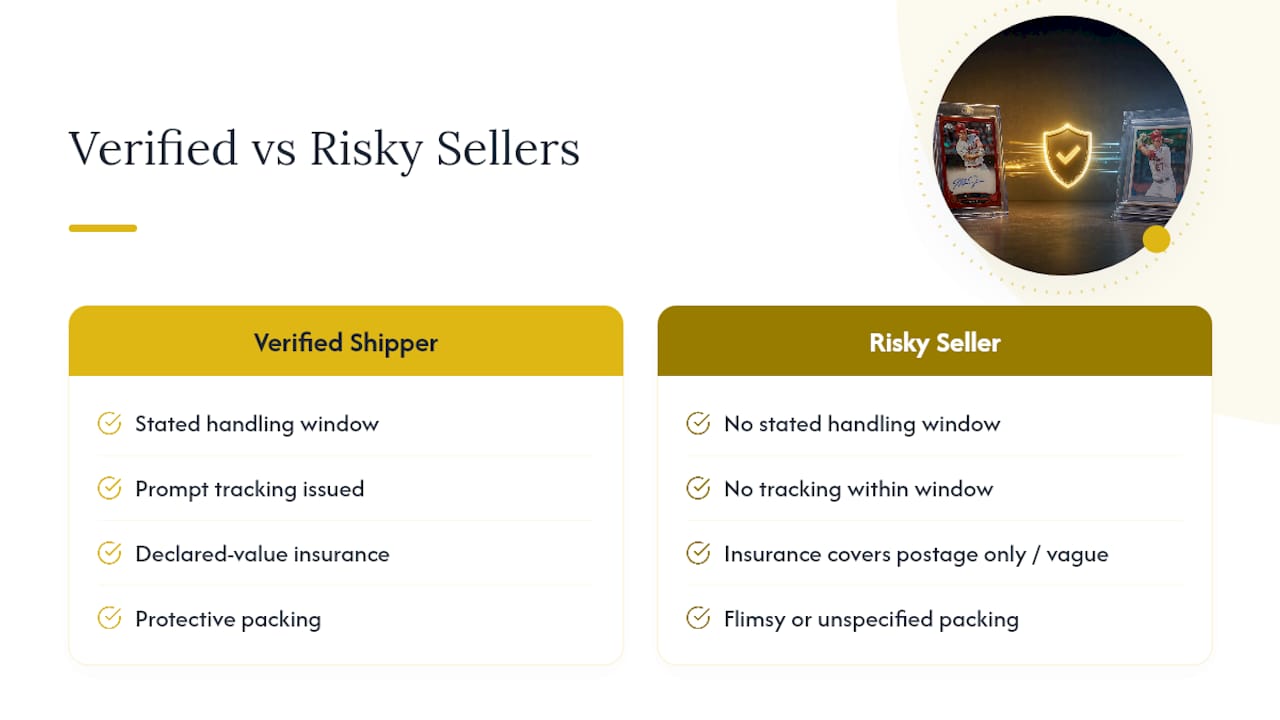
The riskiest pattern is a seller who promises fast shipping but goes quiet after payment. No tracking update within the promised handling window is the clearest early warning sign, and it’s worth messaging immediately rather than waiting several days to see what happens. A seller who has nothing to hide will typically respond within hours with a tracking number or an honest explanation for a delay.
Buyers also underestimate how much packing quality varies even among sellers who ship quickly. Speed and protection aren’t the same thing. A seller who ships same day but uses a flimsy envelope for a graded slab is optimizing for the wrong metric. Ask specifically how a card will be packed if the listing doesn’t say, and treat a vague answer as a signal to look elsewhere.
Price also matters here. A rare card priced noticeably below comparable listings, combined with vague photos and no stated handling time, is a pattern worth pausing on. That combination doesn’t guarantee a problem, but it removes the safety net that a clear policy and real photos would otherwise provide.
How Do You Track an Expedited Rare Card Shipment in Real Time?
Once a rare card ships, tracking becomes your main tool for catching problems before they become disputes. Every legitimate quick-ship seller should issue a tracking number the same day the label prints, not the same day the package physically leaves their hands.
Check the tracking number the moment you receive it, and confirm the carrier’s system actually recognizes it. A tracking number that shows “label created” with no movement for more than a day is worth a follow-up message. Carriers update scan events at each transit hub, so a healthy shipment should show at least one new scan every one to two days.
Set up delivery alerts through the carrier’s app or website if the card’s value justifies signature confirmation. This matters especially for last-mile theft risk. A package sitting unattended on a porch before you’re home is a real theft scenario, and it’s harder to file a successful insurance claim if the carrier shows the package as delivered rather than stolen in transit. Signature-required service closes that gap, since it puts the delivery event under your direct control.
If you bought through a specialist site rather than a marketplace, check whether the seller offers order tracking through their own dashboard. Some sites consolidate carrier tracking into one page so you’re not toggling between a confirmation email and the carrier’s own site. That small convenience adds up when you’re tracking multiple rare cards at once.
Why Handling Time Matters More Than Buyers Realize
The conventional advice on buying rare cards fast focuses almost entirely on shipping speed, which points buyers toward the wrong question. The real bottleneck is nearly always handling time, not carrier transit. A seller who ships economy but processes orders the same day will consistently beat a seller who advertises “express shipping” but takes three days to authenticate, photograph, and pack.
Packing quality gets treated as a secondary concern when it should be a primary filter. A cracked slab corner or a bent rookie autograph is a permanent loss no refund fully fixes, since the card’s condition, not just its identity, drives its value. Buyers should prioritize sellers who name their packing materials specifically, penny sleeve, toploader, team bag, over sellers who simply promise fast delivery.
The biggest mistake I see buyers make is chasing the cheapest shipping option on a card worth protecting. A few extra dollars for tracking and insurance is nothing next to the cost of replacing a redemption card that can’t be replaced at all. Ask about handling time first, packing second, and treat shipping speed as the third question, not the first.
— Richard
Buy Rare Cards Now With Fast, Tracked Shipping
Specialist shops often offer curated selections of rare redemption cards and rookie autographs, sometimes including free shipping on select items. This helps buyers balance speed and cost effectively.
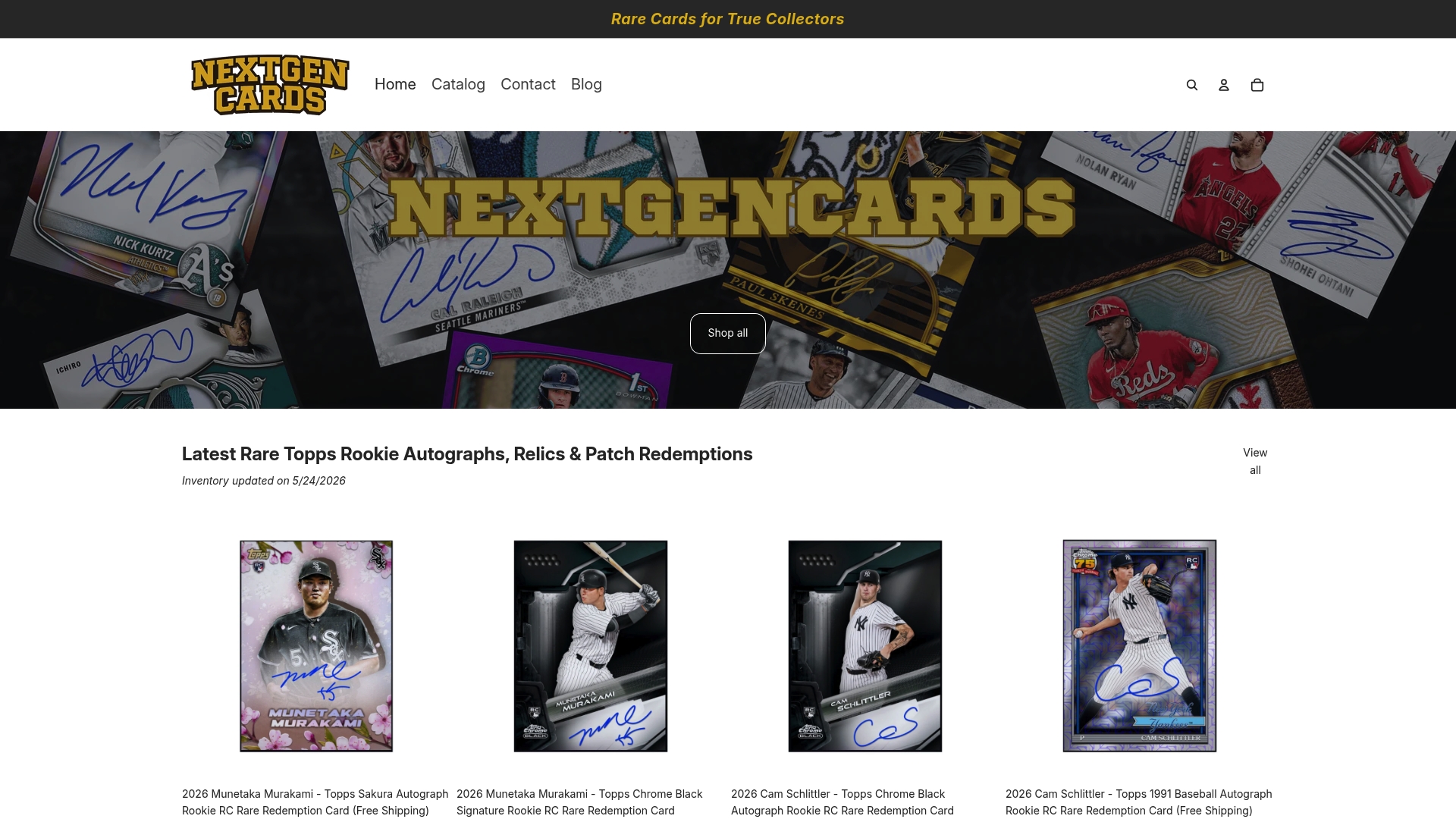
Start by browsing the rookie autograph and relic collection, where cards like the 2023 Mason Miller Topps Chrome Platinum Anniversary Autograph rookie card and the 2025 Yoshinobu Yamamoto Topps Now World Series Hero redemption card show exactly the kind of curated, fast-ship inventory this article describes. Check the listed handling time on any product page, then select tracked and insured shipping at checkout when that option is offered. If you’re buying late in the day and need same-day handling, message the seller directly to confirm the cutoff before you finalize payment. Browse the full free-shipping collection to see what’s currently available for quick delivery.
Practical Guides for Packing and Shipping Rare Cards
The packing and shipping recommendations above come from established how-to resources built specifically for trading cards, not generic shipping advice.
- The ParcelPath step-by-step packing guide covers the full three-layer protocol, slab handling, and when to pay for insurance.
- The HPRT guide to shipping baseball cards breaks down envelope versus mailer choices for cards at different value levels.
- For understanding display and protective storage once a card arrives, a secure card display stand is worth checking for cards you plan to show rather than resleeve repeatedly.
Sources
- How To Ship Trading Cards: Safe, Complete Packing Guide
- How to Ship Baseball Cards Safely and Cheaply (Step-by-Step Guide)
FAQ
What Are the Best Packs to Buy for Finding Rare Cards?
Packs are a gamble by design, and hit rates for true rarities are low across almost any product line. Buying a specific rare or redemption card directly from a specialist seller is a far more reliable way to add a known card to your collection than chasing pulls from sealed packs.
What Are the Hottest Baseball Cards to Collect Right Now?
Rookie autographs and redemption cards tied to breakout players draw the most active demand, since collectors want to lock in a card before a player’s market value rises further. Current rookies like Junior Caminero have driven strong interest in Bowman Chrome and Topps Chrome rookie redemption cards.
What Is the Fastest Way to Value a Baseball Card?
Compare recent completed sales of the same card, same grade or condition, rather than relying on active listing prices, which are often aspirational. Condition drives value heavily, so accurate grading or detailed condition photos matter as much as the player or year.
What Is the Rarest Baseball Card to Get?
Rarity depends on print run, serial numbering, and whether a card is a one-of-one or a redemption tied to a single physical card. Redemption cards for elite rookies and multi-player autograph cards, like triple-signature relic cards, tend to sit at the rarest end of the market because so few copies exist at all.
Does Nextgencards Offer Free Shipping on Rare Cards?
Some sellers offer free shipping on select rare and redemption cards, including various rookie autograph and multi-player products; buyers should check individual product pages for exact shipping terms.
0 comments