

A Logoman card is a trading card built around a single, complete NBA league logo patch, usually cut from a game-worn jersey, and it’s paired with the player’s autograph on premium cardstock. Because manufacturers can only produce one true Logoman per jersey, most exist as true 1/1s, and the rarest examples have sold for $2.4 million or more at auction. This guide covers where these cards come from, notable sales, how to verify one, and where collectors reliably find them for sale.
TL;DR:
- True Logoman cards feature a complete NBA logo patch cut from an authentic jersey, making most as rare as a one-of-a-kind piece.
- Scarcity and player relevance heavily influence valuation, with rookie Logomans from stars like Curry, Doncic, and Giannis commanding the highest prices.
- The highest sale on record is a LeBron James Triple Logoman that fetched $2.4 million, driven by limited production and LeBron’s ongoing relevance.
- Verification requires provenance documentation, grading, and proof of game-worn sourcing, especially for high-value transactions.
- Most Logomans are only obtainable through major auctions or hobby-specific sealed products, with private sales and group breaks providing additional avenues.
Table of Contents
- What Qualifies as a Logoman Card?
- Why Do Logoman Cards Command Elite Prices?
- Which Sets and Programs Produce Logoman Cards?
- What Are the Most Notable Logoman Sales on Record?
- Where Can Collectors Find Logoman Cards for Sale?
- How Do You Verify a Logoman Card Before You Buy?
- How Should Collectors Interpret Logoman Price Trends?
- How Should You Store, Insure, and Bid on a Logoman?
- Why Logoman Cards Deserve More Respect Than the Hype Suggests
- Find Rare Redemption Cards and Autographs at Nextgencards
- Sources
- FAQ
What Qualifies as a Logoman Card?
Not every patch card counts as a Logoman. The strict definition requires the complete NBA logo emblem cut from an authentic jersey, not a fragment of a number, name plate, or team crest. Auction houses and grading services treat that full-logo requirement as the line between a Logoman and a generic relic card, and it’s why the term gets thrown around loosely on marketplaces where sellers want the premium association without the substance, according to Pristine Auction’s analysis of the Logoman market.
Within that definition, several formats exist:
- Single Logoman: one logo patch from one player, the most common configuration and still frequently a 1/1.
- Dual Logoman: two players sharing a card, each contributing their own logo patch.
- Triple Logoman: three logo patches, sometimes three different players, sometimes multiple patches from one player’s different jerseys.
- Gold Logoman: a manufacturer-branded variant tied to a specific product tier, often carrying its own serial numbering and autograph requirement.
The reason most Logomans are 1/1 comes down to simple math: cutting the league emblem out of a jersey destroys that section of memorabilia permanently, so a manufacturer gets exactly one shot per jersey, according to Sotheby’s coverage of the Logoman market. That scarcity also creates a sourcing wrinkle collectors need to understand: a patch cut from a jersey the player actually wore during a live game carries more weight than one cut from an event-worn or promotional jersey that never touched the court, and provenance documentation is how buyers tell the difference.
Why Do Logoman Cards Command Elite Prices?
Four factors drive Logoman valuations, and they compound rather than operate independently. Scarcity sits at the foundation. When a card is confirmed 1/1, there is no competing copy to depress demand, and that alone puts a floor under the price that ordinary numbered relics never reach.
Player relevance matters just as much as the patch itself. A rookie-year Logoman from a player who goes on to superstardom carries a growing premium as his career unfolds, while a Logoman from a player whose career stalls tends to plateau regardless of how rare the card is physically. Set pedigree adds another layer. A Logoman pulled from National Treasures or Flawless carries more market trust than one from a lesser-known release, simply because collectors know those programs consistently secure legitimate game-worn material.
Rarity by the numbers: Panini has produced Triple Logoman cards limited to as few as five copies in an entire print run, and grading services like CGC have publicly certified 1/1 autographed Logomans of multiple NBA stars, a step that materially raises buyer confidence at resale.
Finally, auction dynamics themselves shape the final number. A Logoman sold through a major house with documented provenance and competitive bidding routinely outperforms the same card sold quietly through a private listing, because the auction format surfaces genuine top-dollar demand instead of settling for the first offer.
Which Sets and Programs Produce Logoman Cards?
The Logoman concept traces back to Upper Deck’s Exquisite Collection in the early 2000s, which introduced ultra-limited patch autographs as the centerpiece of a high-end box. When Panini took over the NBA license, it expanded the concept dramatically and turned Logoman chases into an annual hobby event.
Today, three Panini products anchor the Logoman conversation:
- National Treasures: the most consistent home for rookie Logomans, often the first place a new star’s Logoman surfaces.
- Flawless: positioned as an ultra-premium release with lower print runs across the board, making its Logomans especially scarce.
- Immaculate Collection: known for creative patch placement and frequent dual or triple Logoman configurations.
Outside basketball, Topps has run parallel Gold Logoman-style programs in baseball that show how far manufacturers will push the concept. The Shohei Ohtani Topps Back to Back card sold for $11 million, proof that a well-executed Gold Logoman program can rival or exceed what basketball’s biggest hits have achieved.
Reading a product’s pre-release gallery or checklist is the fastest way to confirm whether a given box has real Logoman odds. Manufacturers typically list Logoman inclusions by tier and sometimes by specific print run, so a checklist that mentions “Logoman” without a serial number attached usually signals a true 1/1.
What Are the Most Notable Logoman Sales on Record?
A handful of sales have defined what the market considers possible, and each one illustrates a different value driver.
- LeBron James 2020-21 Triple Logoman. This card sold for $2.4 million at auction, one of the highest prices ever paid for a modern basketball card. Part of what drove the number was the card’s status as one of only five ever produced, combined with LeBron’s sustained relevance across two decades of play.
- Exquisite Collection dual and triple Logomans from the Jordan, Kobe, and LeBron era. These early-2000s issues established the template collectors still chase. Their scarcity was almost accidental. Nobody in 2003 anticipated how high demand for these names would climb twenty years later, and that gap between original print intent and later demand is a large part of why they carry auction premiums today.
- National Treasures rookie Logomans tied to Stephen Curry, Luka Doncic, and Giannis Antetokounmpo. Rookie-year Logomans of players who later became MVPs or champions consistently outperform veteran Logomans of the same design, because the rookie tag adds a second layer of scarcity on top of the patch itself.
- Gold Logoman crossover sales in baseball, including the Ohtani example above, which showed the broader hobby that a well-marketed Gold program can generate seven-figure and eight-figure outcomes even outside basketball’s traditional Logoman stronghold.
Each of these sales shares a common thread: the winning bid rewarded a specific combination of player trajectory, print scarcity, and documented provenance, not just the presence of a logo patch on cardstock.
Where Can Collectors Find Logoman Cards for Sale?
Logoman cards almost never sit in a retail case waiting for a walk-in buyer. They surface through a narrow set of channels, and knowing which one applies to a given card changes how you should approach the purchase.
The secondary market and major auction houses handle the bulk of high-value transactions, particularly for cards already established as significant sales, according to Sotheby’s reporting on the Logoman market. Hobby-only sealed products, the kind sold in specialty shops rather than big-box retail, are the only realistic way to “pull” a fresh Logoman straight from a pack, though the odds are steep enough that most collectors never see one land in their own box. Group breaks, where a case gets split among multiple buyers who each claim a team or player slot, give collectors a lower-cost way to chase a Logoman hit without buying an entire case solo, a format explained well in coverage of high-profile box break events across the collectibles world.
Before you bid or buy:
- Confirm the auction house documents chain of custody, not just a photo of the card.
- Check whether the listing specifies game-worn versus event-worn patch sourcing.
- Verify grading and autograph certification match what the listing claims.
- Use an escrow or buyer-protected payment method for any five-figure-plus transaction.
Pro Tip: When a private seller offers a supposed Logoman well below recent comparable sales, treat the discount as a warning sign rather than a bargain. Legitimate sellers rarely underprice a true 1/1 by a wide margin.
How Do You Verify a Logoman Card Before You Buy?
Grading and provenance documentation separate a confirmed Logoman from an expensive guess. PSA, BGS, and CGC each assign a numeric grade to the card’s physical condition, and CGC additionally certifies autograph authenticity on some of the market’s most significant 1/1s, including paired Logomans of NBA stars. A high grade alone doesn’t confirm the patch is genuine, so provenance records matter just as much.
Look for these documents and details before committing to a purchase:
- Manufacturer redemption card notes or the original pack-pulled certificate, if the card came directly from a box.
- Auction lot descriptions that specify jersey source and game date, when available.
- Back-of-card manufacturer codes that match the set’s published checklist.
- Any prior grading submission history, which can be checked directly with the grading company.
Game-worn versus event-worn distinction deserves particular attention, since Pristine Auction’s market analysis notes that game-worn patches consistently outperform event-worn ones in resale value, even when the visual patch looks identical. Red flags include missing manufacturer paperwork, a seller unwilling to provide close-up photos of the card back, or a price that seems detached from recent comparable sales.
How Should Collectors Interpret Logoman Price Trends?
Logoman prices don’t move on a fixed schedule. They react to player performance, championship runs, and broader shifts in collector sentiment, sometimes within weeks of a major game or trade. A rookie Logoman that sat quietly for two years can double in value after a breakout playoff run, and the reverse happens just as fast when a player’s career trajectory flattens.
Set pedigree and condition act as multipliers on top of that baseline demand. A National Treasures Logoman in a PSA 10 holder with a clean autograph grade will outsell a lower-graded copy of the identical card by a wide margin, and buyers comparing auction results should always match grade, autograph certification, and sale venue before treating two prices as comparable. A private sale and a major-house auction result for the “same” card rarely mean the same thing, since auction competition tends to push prices higher than a quiet direct sale.
When you’re sizing up a listing:
- Match grade to grade. A PSA 9 comp doesn’t validate a PSA 10 asking price.
- Confirm autograph certification status before comparing prices across two listings.
- Factor in sale venue. Major auction house results and marketplace “buy it now” prices aren’t interchangeable data points.
- Track the player’s recent performance and team situation, since sentiment shifts fast around trade rumors and injuries.
Price-tracking sites that log graded and ungraded values for specific products like Panini Flawless give collectors a useful baseline, though any individual Logoman’s true value still comes down to its specific grade, provenance, and the player’s current standing. That combination of factors explains why some Logomans escalate into seven-figure territory while visually similar cards from the same product stay in five or six figures.
How Should You Store, Insure, and Bid on a Logoman?
Once you own a Logoman, protecting that investment takes more than a plastic sleeve. A handful of practical steps keep both the card and your finances safe.
- Store graded cards in a fireproof, humidity-controlled safe rather than a display case exposed to sunlight, which degrades ink and cardstock over time.
- Get a formal appraisal from a recognized grading service or auction specialist once the card’s estimated value clears five figures, and repeat that appraisal every few years as market conditions shift.
- Add a rider to your homeowner’s or renter’s policy, or use a specialty collectibles insurer, since standard policies often cap collectible coverage well below actual value.
- Set a firm bidding ceiling before an auction starts, and use the auction house’s own escrow or payment protection rather than wiring funds directly to an unfamiliar seller.
- Consider fractional ownership platforms for truly elite pieces, since seven-figure Logomans increasingly trade in shared-ownership structures that let multiple collectors hold a stake without one buyer shouldering the full price alone.
Pro Tip: If you’re bidding on a five-figure-plus Logoman for the first time, call the auction house directly and ask about their authentication process before the auction opens. A reputable house will walk you through it without hesitation.
Why Logoman Cards Deserve More Respect Than the Hype Suggests
The conventional hobby narrative treats Logoman cards as pure speculation, chased by buyers looking for the next headline sale rather than collectors who understand what they’re holding. That framing misses something important: the scarcity behind a true Logoman isn’t manufactured hype the way a limited retail parallel is. It’s a physical constraint. You cannot cut the same jersey logo twice, and that mechanical limit is why these cards behave differently from almost anything else in the hobby.
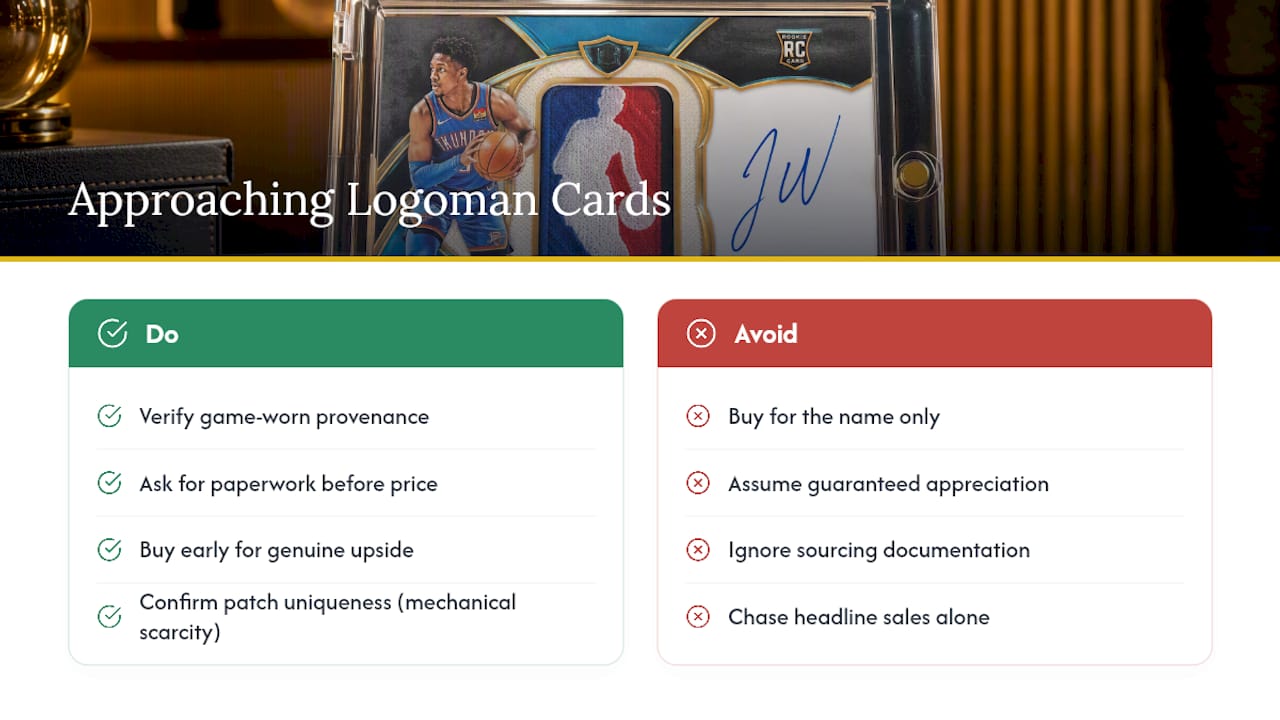
What gets underestimated is how much provenance separates a genuinely valuable Logoman from an overpriced one that merely looks the part. Two cards can carry identical serial numbers and near-identical photos, yet sell for wildly different amounts once one buyer confirms game-worn sourcing and the other can’t. Collectors chasing a Logoman purely for the name on the front, without checking whether the patch’s documentation holds up, are the ones who end up disappointed at resale. The players who move fastest in this market aren’t the ones with the biggest budgets. They’re the ones who ask for the paperwork before they ask about the price.
That’s also where the investment case gets more interesting than most price-tracking headlines suggest. A Logoman tied to a player early in his career carries genuine upside if his trajectory holds, but it also carries real downside risk that seven-figure sale headlines tend to obscure. Treating every Logoman as a guaranteed appreciating asset ignores how many mid-tier examples have sat flat for years waiting for a player’s stock to move. The grail status is real for a handful of cards. For the rest, it’s a patch with potential, not a promise.
— Richard
Find Rare Redemption Cards and Autographs at Nextgencards
Nextgencards is where collectors go when they want the same rigor around provenance and authenticity that this guide just walked through, applied to inventory you can actually buy today. While Logomans themselves surface mainly through major auctions, Nextgencards curates rare redemption cards, rookie autographs, and patch relics that carry the same scarcity and documentation standards serious collectors demand.
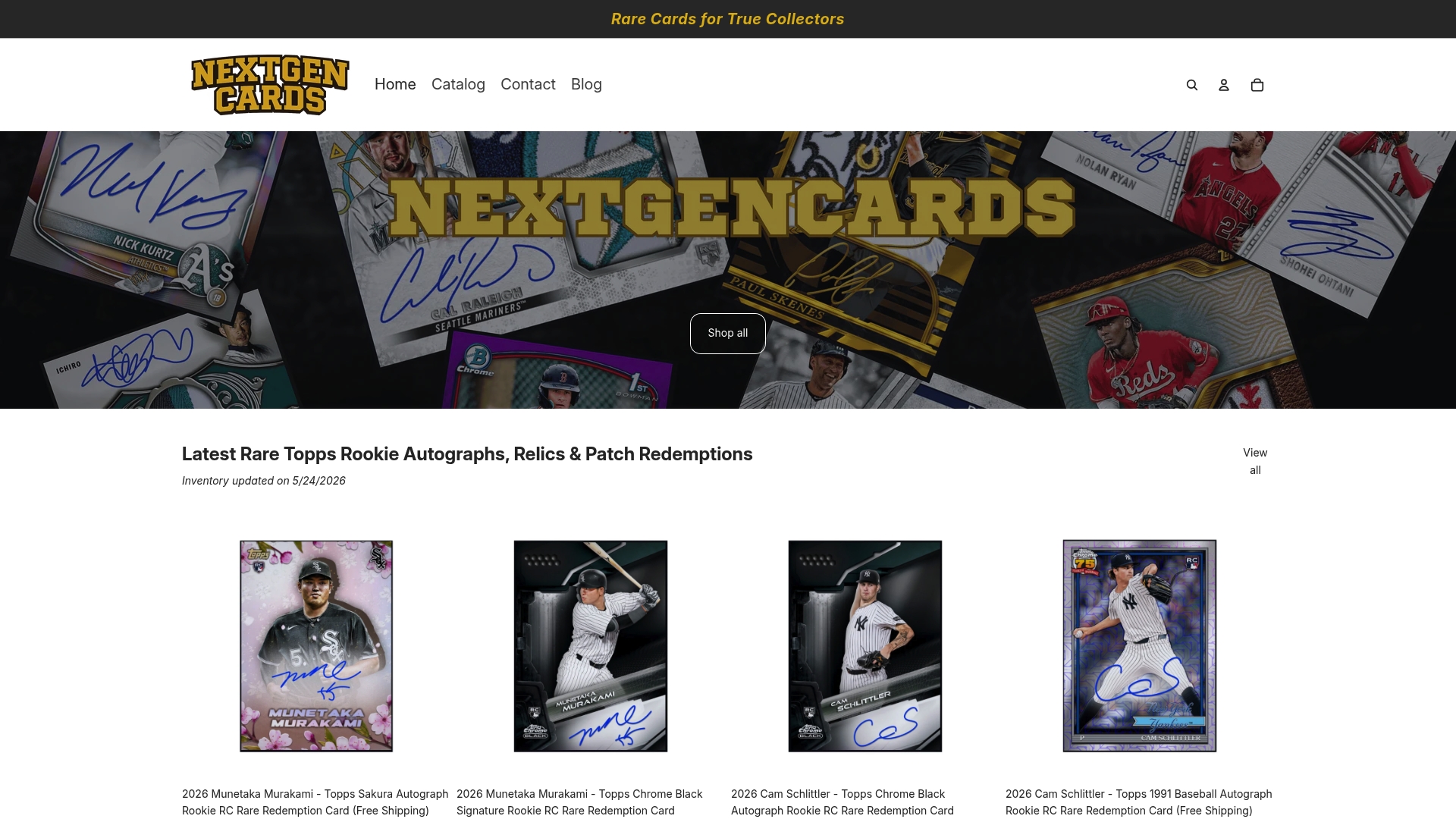
Current listings include the 2024 Skenes Cole Strasburg Topps Baseball Stars triple autograph redemption card, a multi-signature piece built for collectors who value rarity in numbers, and the 2026 Jalen Brunson Topps All Star Game jersey patch autograph card, a patch autograph release with free shipping included. If rookie-focused pieces are more your speed, the 2024 Junior Caminero Bowman Chrome Green Signature rookie card and the 2026 JJ Wetherholt Bowman Green Chrome prospect signature rookie card offer the same redemption-card authenticity at a lower entry point than a Logoman chase. Browse the full rookie autographs and relics collection to see what’s currently available.
Sources
- Why Logoman Trading Cards Reign Supreme
- The Million-Dollar Patch: Inside the Market for Logoman Cards
- CGC Certifies Pair of One-of-One Autographed Logoman Cards of NBA Stars | CGC
- Nba
- Shohei Ohtani Topps Back to Back Logoman card sells for $11 million
FAQ
How Do You Get a Logoman Card?
Most collectors acquire a Logoman through secondary-market auctions or private sales rather than pulling one fresh from a pack, since odds on hobby-only boxes are extremely steep. Group breaks offer a lower-cost way to chase one without buying a full case.
What Packs Are Logoman Cards In?
Logomans appear almost exclusively in ultra-premium, hobby-only NBA products like Panini National Treasures, Flawless, and Immaculate Collection, not standard retail packs. Product checklists typically flag Logoman inclusions by tier without a printed serial number, since most are 1/1.
How Many LeBron James Triple Logoman Cards Are There?
Panini produced only five LeBron James Triple Logoman cards in the relevant print run, making it one of the scarcest modern basketball card issues on record.
How Much Is the LeBron Triple Logoman Card Worth?
One LeBron James 2020-21 Triple Logoman sold for $2.4 million at auction, reflecting both its five-copy print run and LeBron’s sustained career relevance. Other copies from the same five-card print could sell for different amounts depending on grade, autograph certification, and sale venue.
0 comments