

The fastest way to find quality raw cards online is to prioritize sellers who provide transparent condition statements, high-resolution or 360° inspection media, and a verifiable reputation. Specialty shops like Nextgencards curate rookie autographs, relics, and limited-edition cards with clear documentation, making them a reliable starting point. Third-party grading references from PSA and Beckett/BGS give you a condition benchmark even when a card hasn’t been submitted yet.
TL;DR:
- Start here: Browse a curated specialty shop like Nextgencards for rookie autographs and relics with condition notes.
- Request this: High-res scans, corner closeups, and a written condition statement before committing.
- Verify this: Cross-check the seller’s condition label against PSA or BGS Near Mint criteria.
Table of Contents
- What should you check before buying any raw card online?
- Where can you reliably buy raw trading cards online?
- How do you verify authenticity and condition before you buy?
- What should you expect to pay, and how long will it take?
- How do you protect a purchase during shipping and after delivery?
- What red flags should make you walk away from a listing?
- Why do collectors, parents, and investors choose raw cards?
- Key Takeaways
- The part of raw card buying most guides get wrong
- Nextgencards: a curated starting point for serious raw card buyers
- Useful sources and further reading
What should you check before buying any raw card online?
A solid pre-purchase checklist removes most of the risk from buying ungraded cards remotely. Use this list when messaging sellers or scanning listings.
Condition focal points:
- Corners: Sharp, unfrayed corners are the single biggest factor in grading outcomes. Ask for macro closeups of all four.
- Edges: Look for chips, nicks, or roughness along all four edges. Even minor edge wear can drop a card from Near Mint to Excellent.
- Surface: Request photos under direct light to reveal scratches, print defects, or surface scuffs not visible in standard shots.
- Centering: Measure the border ratio visually. PSA’s Near Mint standard generally requires centering within 55/45 front and 75/25 back.
- Creases: Ask the seller to flex the card slightly under light if possible, since creases often hide in flat photos.
Media to request:
- High-resolution scans at 600 dpi or better, front and back.
- Multi-angle closeups of each corner and both edges.
- A short video or 360° capture where the seller can provide it. Some platforms now offer 360° inspection tools that let you examine every corner before purchase.
Listing and provenance details:
- Pack break or acquisition note (where the card came from).
- Exact written condition statement. “Near Mint” means different things to different sellers, so ask for specifics rather than relying on the label alone.
- Confirmed return policy and authenticity guarantee in writing.
Payment and buyer protection:
- Use a payment method with built-in buyer protection (credit card or PayPal Goods & Services).
- Request an itemized invoice or receipt.
- Confirm whether the seller offers a money-back guarantee on fakes.
Pro Tip: Screenshot or save the listing description, all photos, and any seller messages before you pay. If a dispute arises, that documentation is your strongest evidence.
Where can you reliably buy raw trading cards online?
Different channels serve different buyer goals. Knowing what each one offers helps you match the right source to your situation.
- Specialty retail shops (like Nextgencards): Hand-picked inventory, curated condition descriptions, and a focused selection of rookie autographs, patch cards, and relics. Best for collectors and investors who want high-quality collectible cards with clear documentation and minimal guesswork.
- Curated e-commerce storefronts: Direct-to-consumer sellers who control their own listings. Transparency varies widely, so look for sellers who publish detailed condition notes and offer inspection media on request. Parents buying starter card bundles for kids will find these easier to navigate than open marketplaces.
- Consignment and auction houses: Strong for vintage and scarce pieces, but condition descriptions can be brief. Always request additional photos before bidding.
- Hobby marketplaces: Wide selection and competitive pricing, but seller transparency is highly variable. Peer reviews and seller ratings are your primary trust signal here. Sellers with transparent review histories reduce buyer risk considerably.
- Trusted direct sellers: Individual collectors or dealers selling through social platforms or community groups. Provenance is often excellent, but buyer protection is limited. Stick to payment methods that offer recourse.
For unique inserts or investment-grade prospects, specialty shops and curated storefronts offer the best combination of quality and documentation. For entry-level raw finds or gift purchases, hobby marketplaces with strong seller ratings can work well if you apply the buyer checklist above.
How do you verify authenticity and condition before you buy?
You can verify most authenticity and condition cues online if the seller provides the right media. Here’s a practical order of operations.
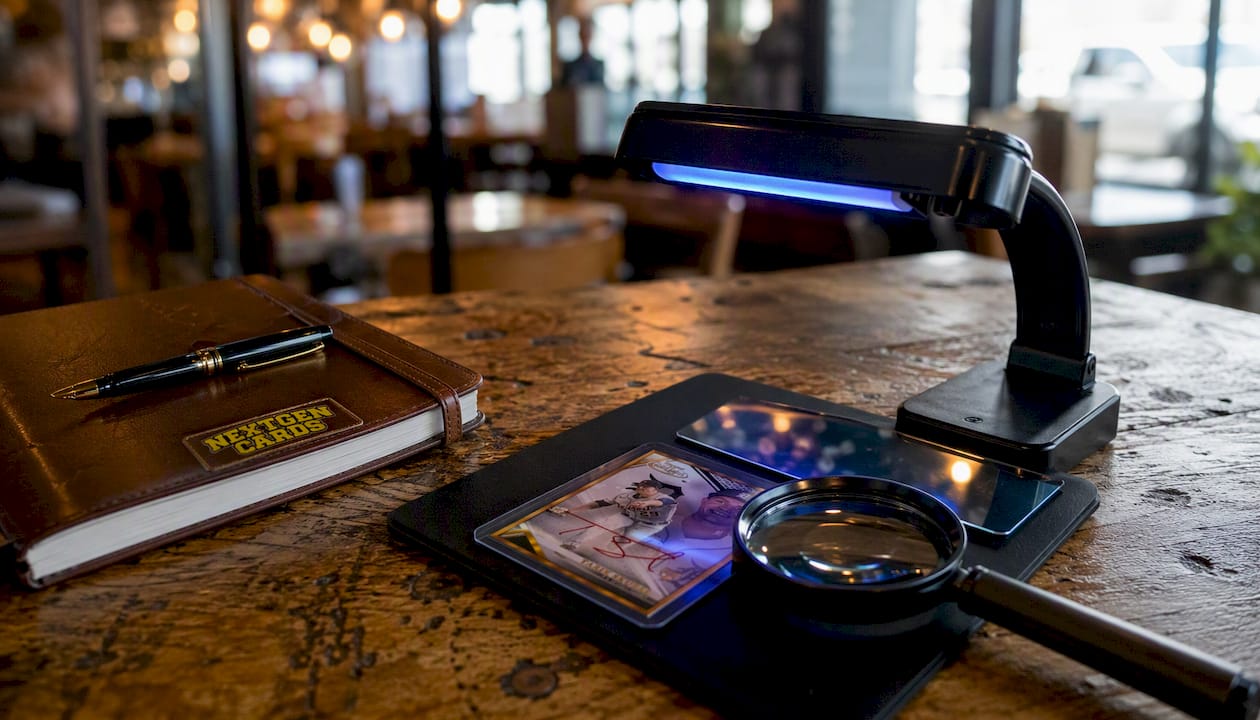
Step 1: Request provenance. Ask where the card came from. A pack break video link or a note from the original owner adds credibility and helps establish the card’s history.
Step 2: Inspect serial numbers and holograms. For autographed or numbered cards, confirm the serial number matches the listing description. Holographic foil on certified autographs should be crisp and properly aligned. Compare to reference images from the manufacturer or grading service.
Step 3: Evaluate condition via high-res media. Centering, corner sharpness, edge integrity, and surface clarity are the four factors that most influence grading outcomes. High-resolution images and 360° video captures reveal subtle imperfections that static photos often hide. “Near Mint” typically implies sharp corners, clean edges, minimal surface wear, and centering within acceptable tolerances, but always ask the seller for their specific definition.
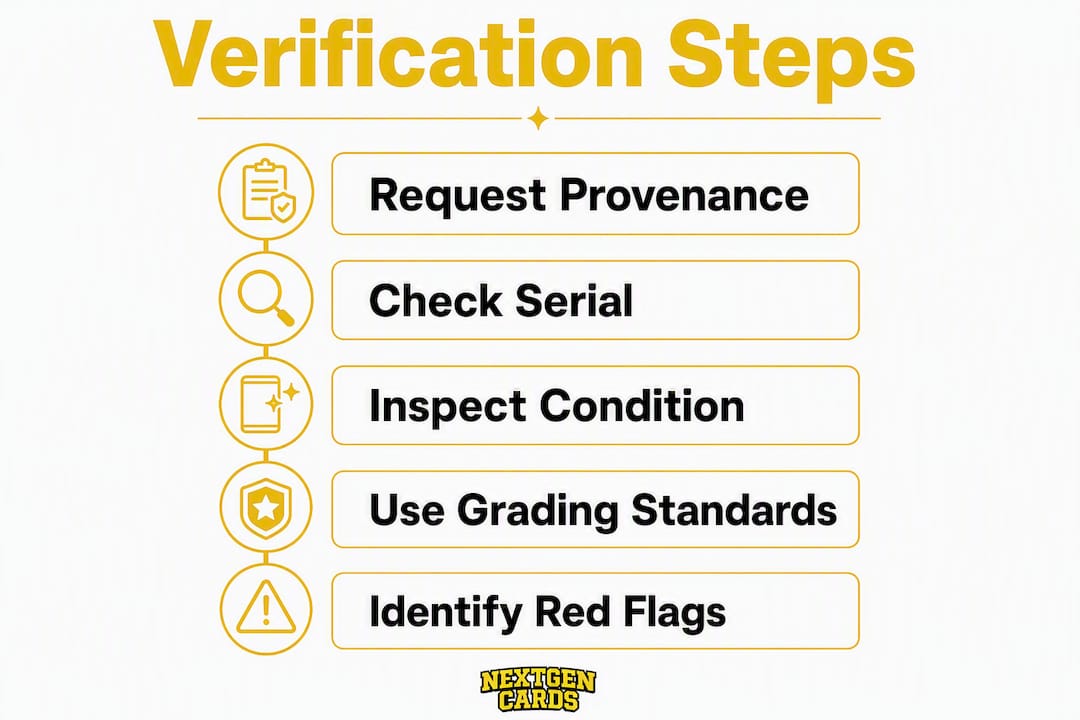
Step 4: Cross-reference with PSA or BGS standards. PSA and Beckett publish detailed grading criteria online. Use those as your benchmark when evaluating a seller’s condition claim.
Step 5: Decide on raw preservation vs. grading submission. Collectors who plan to identify undervalued cards and submit for grading later should buy raw cards with clear margins for grade improvement. Grading fees, shipping to the grader, and wait times add materially to the effective cost and timeline, so factor those in before committing.
Verification cadence:
- Pre-purchase: complete the media and provenance checklist above.
- On delivery: photograph the sealed package, then video your unboxing.
- Post-delivery: document condition with timestamped photos before handling the card further.
Pro Tip: If a seller can’t or won’t provide high-res corner closeups on request, treat that as a red flag, not a minor inconvenience.
What should you expect to pay, and how long will it take?
Raw cards typically cost less upfront than their slabbed equivalents, but pricing spans a wide range depending on player, rarity, and visible condition.
- Entry-level raw finds: Common rookies, base parallels, and lower-demand players. Accessible price points for parents buying starter sets or collectors filling gaps.
- Mid-tier raw cards: Numbered parallels, rookie relics, and mid-demand autographs in Near Mint condition. Pricing reflects both scarcity and condition quality.
- Premium raw cards: High-demand rookie autographs, patch cards, and vintage star-player cards in top condition. These can approach or exceed slabbed prices for the same player when condition is clearly documented.
Timeline expectations:
- Listing to purchase: immediate for fixed-price listings; days to weeks for auctions.
- Shipping: typically several business days domestically with standard tracked shipping; expedited options vary by seller.
- Grading (if chosen): PSA and BGS offer multiple service tiers with turnaround times that vary significantly depending on the service tier selected…
Cost add-ons to plan for: shipping fees, insurance on higher-value shipments, grading fees if you submit later, and protective supplies (sleeves, top-loaders, magnetic holders).
How do you protect a purchase during shipping and after delivery?
Require tracked, insured shipping and clear return or authenticity guarantees for any purchase above entry-level pricing.
- Packaging standards: Cards should arrive double-sleeved, in a rigid top-loader or magnetic holder, inside a padded or rigid mailer. For high-value cards, a small box with additional padding is appropriate.
- Insurance and declared value: For cards above a modest dollar threshold, confirm the seller insures the shipment and declares the full value on carrier forms. Under-declared shipments limit your recovery if the package is lost or damaged.
- Tracking: Always use a service that provides end-to-end tracking. For high-value purchases, signature confirmation adds another layer of protection.
- On arrival: Photograph the sealed outer packaging before opening. Video your unboxing. Place the card immediately into a sleeve and rigid holder. These steps support any return or insurance claim and establish a clean condition record for future grading.
You can track your order status and review shipping documentation using Nextgencards’s order tracking guide.
What red flags should make you walk away from a listing?
Most raw card scams share a short list of warning signs. Recognize them early and you’ll avoid the majority of bad purchases.
- Pricing that seems too low: A high-demand rookie autograph listed well below market value is almost always misrepresented, damaged, or counterfeit.
- No return policy: Legitimate sellers stand behind their cards. No returns means no recourse.
- Vague condition descriptions: “Good condition” or “nice card” with no specifics is a signal the seller either doesn’t know grading standards or is hiding damage.
- No inspection media: A listing with only stock photos or a single low-resolution image should be skipped entirely.
- Pressure to pay off-platform: Any seller pushing you toward wire transfer, gift cards, or unprotected payment methods is a serious warning sign.
- No seller history: Zero feedback, a brand-new account, or a pattern of negative reviews warrants extreme caution.
Quick verification steps for suspicious listings:
- Reverse-image search the listing photos to check for reuse across multiple listings.
- Request a live video call or short video of the actual card.
- Ask for provenance documentation.
If you suspect fraud after purchase, document the listing immediately (screenshots), contact the platform’s support team, and dispute the charge through your payment provider.
Why do collectors, parents, and investors choose raw cards?
Raw cards offer lower upfront cost and flexibility, but they require more buyer diligence than slabbed alternatives.
Pros:
- Lower entry price than PSA- or BGS-graded equivalents for the same card.
- Opportunity to find undervalued rookies or vintage pieces before the market prices them up.
- Flexibility to self-preserve in original condition or submit for grading later.
- Accessible for parents introducing children to the hobby without a large initial investment.
Cons:
- No third-party verification means condition risk falls entirely on the buyer.
- Hidden damage (creases under foil, print defects) can surface after purchase.
- Resale liquidity is generally lower than for slabbed cards, especially for high-value pieces.
By audience:
- Collectors seeking unique inserts or scarce prospects benefit most from raw cards, since the best pieces often haven’t been submitted for grading yet.
- Parents buying starter sets will find raw cards an affordable way to introduce the hobby. A gifting guide can help narrow down age-appropriate options.
- Budget investors looking for speculative exposure to a rising prospect can acquire raw cards at a fraction of the slabbed price, accepting condition risk in exchange for lower cost basis.
Buying raw cards online gives collectors accessible entry points to the hobby, but the value is only as strong as the buyer’s ability to verify condition or the seller’s willingness to be transparent about it.
Key Takeaways
Buying quality raw cards online comes down to one principle: transparency from the seller and diligence from the buyer are both required, and neither alone is enough.
| Point | Details |
|---|---|
| Prioritize inspection media | Always request high-res scans and corner closeups; 360° video captures reveal defects static photos hide. |
| Demand provenance and returns | Ask for a pack break note or acquisition history, and confirm the return policy before paying. |
| Insure high-value shipments | Require tracked, insured shipping with full declared value for any card above entry-level pricing. |
| Verify against PSA/BGS standards | Cross-check the seller’s condition label against published PSA or BGS Near Mint criteria before committing. |
| Start with Nextgencards | Nextgencards offers curated rookie autographs, relics, and limited-edition cards with clear condition documentation and free shipping on select items. |
The part of raw card buying most guides get wrong
Most buying guides focus almost entirely on red flags and scam avoidance, which is useful but incomplete. The bigger risk for most buyers isn’t outright fraud. It’s buying a card in good faith from a seller who genuinely believes their “Near Mint” is your “Near Mint,” and discovering after delivery that it isn’t.
Condition terminology in the raw card market is not standardized the way PSA and BGS grades are. A seller who has been handling cards for twenty years may grade corners more generously than a buyer who plans to submit to PSA. That gap is where most post-purchase disappointment lives, and no amount of scam-awareness advice closes it.
The practical fix is to stop treating condition labels as facts and start treating them as starting points for a conversation. Request specifics. Ask the seller to describe the worst flaw on the card, not the best feature. A seller who answers that question clearly and honestly is worth buying from. One who deflects or repeats the label is telling you something important.
Raw cards are genuinely one of the best ways to build a collection with real upside, especially for collectors willing to do the verification work. The buyers who get burned consistently are the ones who skip the checklist because the price looked right.
Nextgencards: a curated starting point for serious raw card buyers
Collectors who want rare rookie autographs, patch cards, and relics with clear condition documentation don’t need to sort through thousands of variable-quality listings. Nextgencards carries a focused inventory of high-demand sports cards, including MLB, NBA, and NFL rookie autographs and limited-edition relics, with free shipping on select items and an emphasis on authenticity.
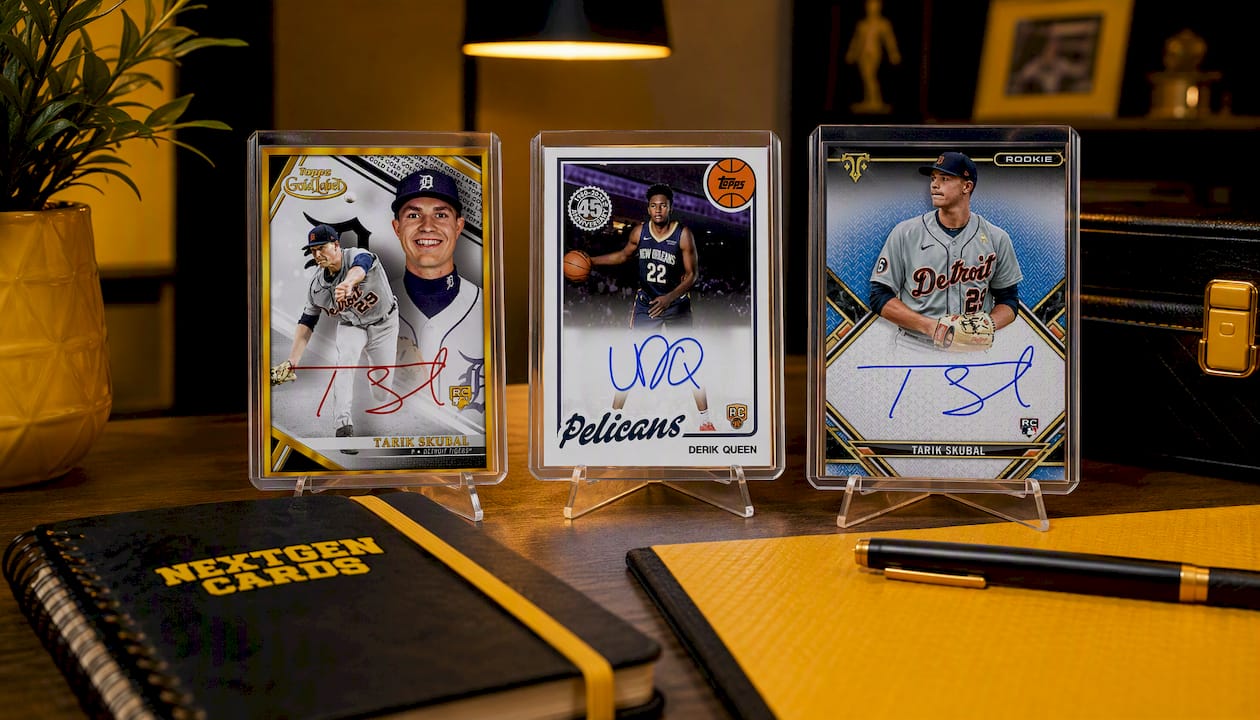
For buyers who want a reliable starting point, the rookie autographs and relics collection is the right place to begin. Each listing reflects the kind of curated, condition-conscious sourcing that makes the buyer checklist above straightforward to apply. Browse the inventory, review the condition notes, and reach out to the Nextgencards team directly if you need additional photos or documentation before purchasing.
Useful sources and further reading
These resources support the verification steps and channel research covered above.
- Card Kingdom: A well-established online card retailer with clear condition grading standards, useful as a reference for how reputable shops document card quality.
- PlaySlab Raw Singles: A curated raw singles library covering multiple trading card formats, with direct purchasing and transparent inventory notes.
- PSA (Professional Sports Authenticator): Publishes detailed grading standards for all major card types. Use the PSA grading scale as your benchmark when evaluating any seller’s condition claim.
- Beckett Grading Services (BGS): Beckett’s subgrade system (centering, corners, edges, surface) maps directly to the four condition factors covered in the buyer checklist above.
- Nextgencards Collectors Guide: Additional guides on identifying undervalued cards, gifting rare sports cards, and tracking orders.
0 comments