

For most households and small businesses, a durable printed or woven laundry tag card handles owner identification and branding without any added cost. If you’re running a hotel, hospital, or industrial laundry that needs to track thousands of items automatically, a washable UHF RFID textile tag or a heat-resistant PPS card is the better investment.
The right pick comes down to volume and how you plan to read the tag:
- Printed or woven care labels (like those from Wunderlabel) cover owner ID, branding, and low-cost customization for home and small-batch use.
- Silicone and button-style tags (like Gialer’s) survive rough commercial wash cycles while staying flexible enough for uniforms and daycare items.
- Washable UHF RFID textile tags (like ZealTag’s and ProudTek’s) let you scan hundreds of garments in seconds through a tunnel reader instead of checking each one by hand.
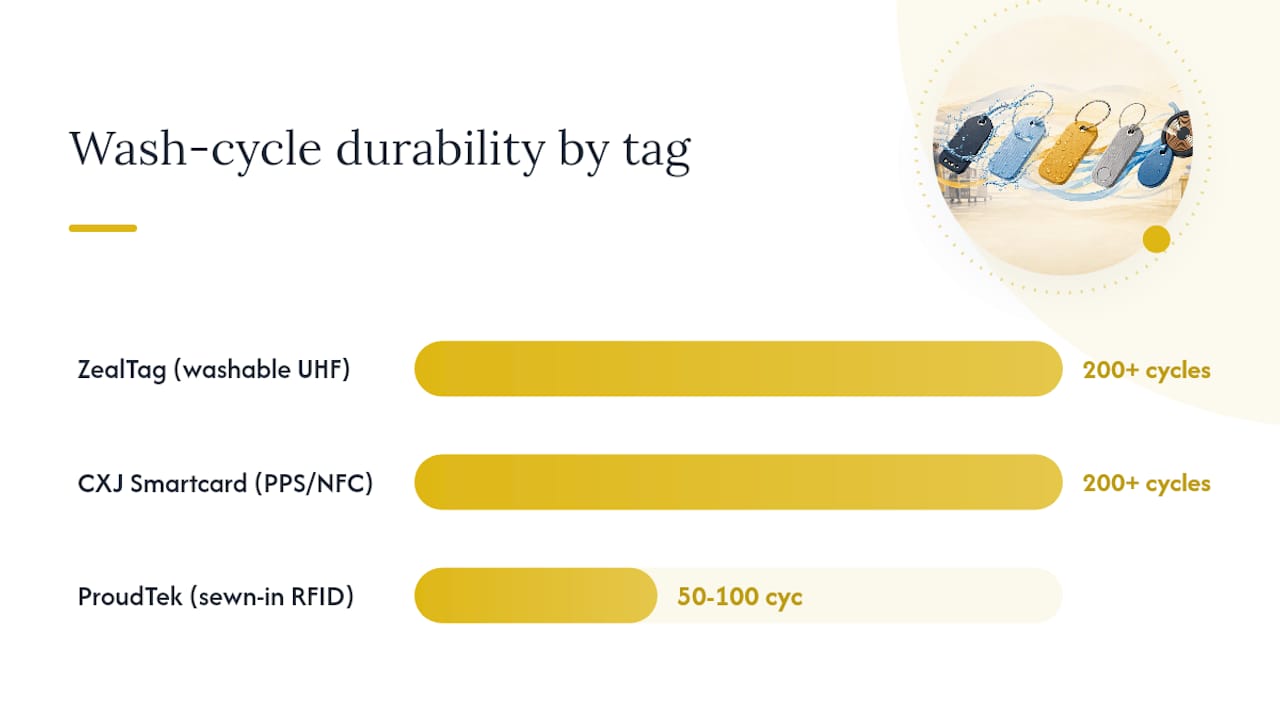
Durability data backs this up. ZealTag’s washable textile RFID tags are tested to withstand over 200 industrial wash cycles, while CXJ Smartcard’s PPS tags carry a similar 200+ cycle rating built for high-heat and chemical exposure. If your laundry runs hot and hard, that number matters more than price per unit.
Key Takeaways
Durable printed or woven labels suit low-volume home and small-business needs, while washable UHF RFID tags and PPS cards handle high-volume industrial tracking with 200+ wash-cycle durability.
| Point | Details |
|---|---|
| Match tag type to volume | Printed/woven labels for home use; UHF RFID or PPS tags for industrial-scale tracking. |
| Check wash-cycle ratings | Look for tags rated 50–200+ cycles depending on your wash temperature and chemical exposure. |
| Ask before ordering | Confirm chip model, encoding, MOQ, warranty, and sample policy with any vendor. |
| Placement affects lifespan | Keep RFID tags away from metal and avoid extreme heat finishing near seams. |
| Nextgencards applies the same rigor | Just as vendors verify tag durability, Nextgencards verifies every rookie autograph and relic card for authenticity. |
Table of Contents
- Comparing Laundry Tag Cards by Type and Vendor
- How to Choose the Right Laundry Tag for Your Needs
- RFID vs. Non-RFID Laundry Tags: What’s the Real Difference?
- Attaching and Caring for Laundry Tags the Right Way
- Customizing Your Laundry Tags and Placing an Order
- Budgeting for Price and Turnaround Time
- Who Actually Uses Each Type of Laundry Tag
- Is RFID Automation Worth the Extra Cost?
- Where Laundry Tag Cards Meet Real Collector Precision
- Where to Read Product Specs and Order Samples
- Frequently Asked Questions
- Sources
Comparing Laundry Tag Cards by Type and Vendor
Every tag family trades off cost, durability, and automation capability differently, and the right choice depends on what you’re actually solving for: keeping a toddler’s socks paired, or tracking 10,000 hotel towels a week.
| Type | Best For | Washability/Temp | Attachment | RFID Spec | Approx. Price/Pack |
|---|---|---|---|---|---|
| Printed/woven labels (Wunderlabel) | Home, small business, boutique branding | Standard home wash, iron-safe | Sew-in | None | Low cost, small packs to bulk runs |
| Silicone/button tags (Gialer) | Industrial laundries, uniform programs | High-heat commercial wash | Button, snap, or sew | Optional UHF | Mid-range per unit |
| Washable UHF textile RFID (ZealTag) | Hotels, hospitals, bulk inventory | 200+ cycles, sterilization-resistant | Sew-in, heat-seal, pouch | UHF, ~3 m read range | Higher per unit, volume pricing |
| Sewn-in textile RFID (ProudTek) | Linen rental, uniform tracking | 50–100 cycles at 60–75°C | Sewn into seam | UHF | Mid to high per unit |
| Snap-on name tags (ItsMine Snappy Tags) | Nursing homes, schools, camps | Domestic and industrial wash | Snap applicator, no sewing | None | Per-tag plus applicator kit |
| PPS/NFC heat-resistant tags (CXJ Smartcard) | Medical laundry, high-heat industrial | 200+ cycles, −25°C to +85°C | Rivet, sewn pouch | UHF or NFC | Higher per unit, spec-dependent |
Wunderlabel fills the gap for anyone who just wants a clean, branded label without touching RFID at all, which covers most home sewers and small apparel makers. Gialer’s silicone and button tags sit in the middle: tougher than a printed label but without the encoding complexity of full RFID. ZealTag and ProudTek both push into serious textile RFID territory, with ProudTek’s 50–100 cycle rating at 60–75°C reflecting typical sewn-in textile tag life, while ZealTag’s heavier-duty line claims longer survival under sterilization conditions. CXJ Smartcard’s PPS body tags exist for the harshest environments, where fabric tags simply won’t hold up.
Pro Tip: If your main worry is garment damage, prioritize the attachment method column first. If your goal is automation and bulk counting, prioritize RFID spec and read range instead. Trying to optimize both at once usually means overpaying for a use case you don’t have.
How to Choose the Right Laundry Tag for Your Needs
Start by naming your actual goal, because “I need to label laundry” covers three very different problems: owner identification, inventory automation, or brand presentation.
- Define your primary goal. Owner ID for a dorm or nursing home is a different problem than counting 5,000 hotel sheets a night.
- Map your wash conditions. Note water temperature, chemical exposure, and cycle frequency, since a home washer at 40°C is nothing like an industrial line running at 75°C.
- Decide your read method. Hand-checking a name tag is fine for a daycare. A hospital laundry moving thousands of garments daily needs a tunnel reader and UHF tags.
- Set your budget and minimum order quantity. Small households need a handful of tags; commercial buyers should ask about pack sizes at 500 or 1,000+ units.
Before ordering, ask any vendor these questions directly:
- What wash-cycle testing backs this tag, and at what temperature?
- Which chip model is used, and can it be pre-encoded to a specific EPC range?
- What’s the minimum order quantity, and is a sample available first?
- Is there a warranty or replacement policy if tags fail early?
Watch for red flags: a vendor with no wash-testing data, vague answers about chip encoding, or no sample policy at all. Placement and installation quality often matters more than the tag itself. Tags that fail early usually failed because of poor seam placement or excess heat exposure, not because the technology was bad.
RFID vs. Non-RFID Laundry Tags: What’s the Real Difference?
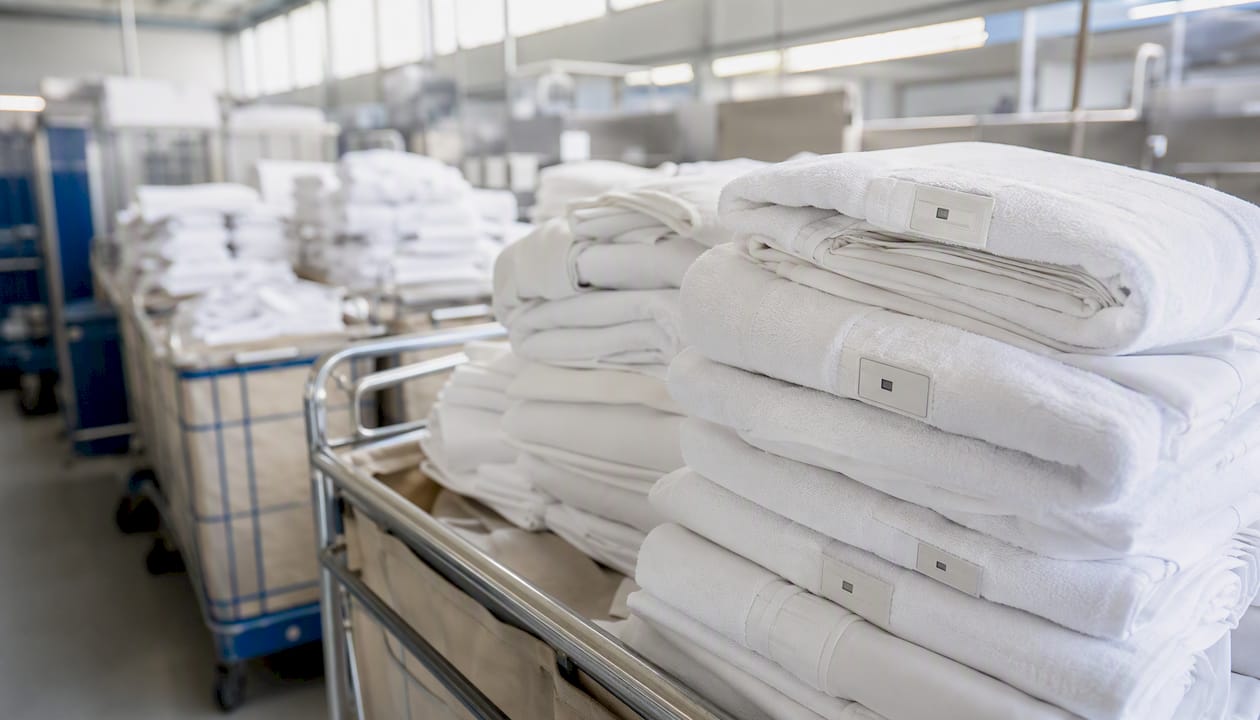
UHF (ultra-high frequency) tags are built for distance: a tunnel reader can scan a full cart of linens from several feet away, which is why hotels and hospitals rely on them. HF and NFC tags work at close range, essentially a smartphone tap, which suits retail engagement more than bulk counting.
| Tag Type | Read Method | Best Use Case |
|---|---|---|
| UHF RFID | Tunnel/handheld reader, several meters | Bulk inventory, loss prevention, industrial laundries |
| HF/NFC | Smartphone tap, a few centimeters | Retail engagement, care instructions, low-volume ID |
| Printed/woven/snap-on | Visual/manual | Owner ID, branding, low-cost small-batch labeling |
If you’re washing under a few hundred items a week, RFID is overkill. If you’re managing linens across dozens of hotel rooms or a hospital floor, group reading capability turns a multi-hour manual count into a few minutes with a tunnel reader.
Attaching and Caring for Laundry Tags the Right Way
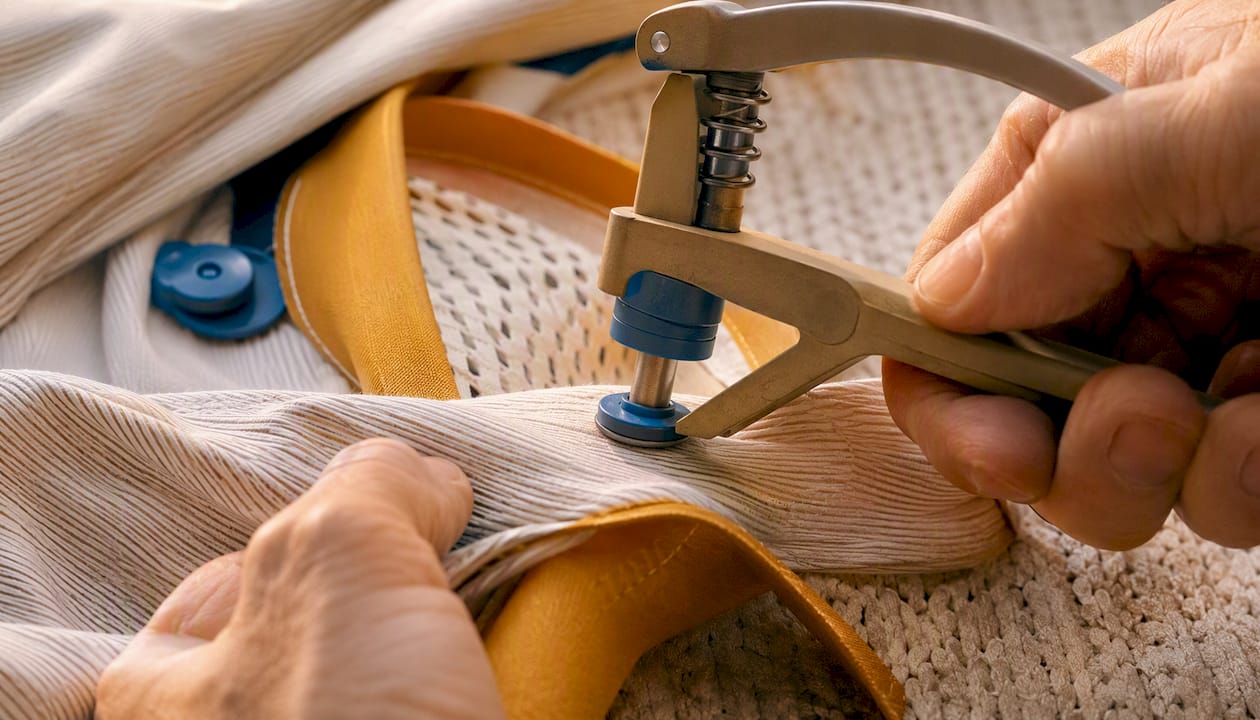
How you attach a tag affects its lifespan as much as the material itself. Sewing gives the most permanent hold, ideal for uniforms and rental linens. Heat-sealing works well for higher-throughput production lines. Snap-on applicators, like those from ItsMine, need no sewing or ironing and are laser-etched so names don’t wash off, which is why nursing homes and camps favor them for reusable, non-permanent ID.
| Tag Family | Wash Limit | Attachment | Care Notes |
|---|---|---|---|
| Printed/woven | Standard home wash | Sew-in | Iron on low heat only |
| Silicone/button | Commercial wash | Snap/button | Avoid sharp abrasion |
| UHF textile | 50–200+ cycles | Sew, heat-seal, pouch | Keep away from metal |
| PPS/NFC | 200+ cycles, −25°C to +85°C | Rivet, sewn pouch | Tolerates sterilization |
Pro Tip: Always place RFID tags away from metal snaps, zippers, and buttons. Metal proximity distorts the antenna and can cut read range dramatically, even on a well-rated tag.
Customizing Your Laundry Tags and Placing an Order
Customization ranges from simple text printing to full RFID pre-encoding. Woven and printed labels support logos, colors, and text in nearly any layout. Silicone and PPS tags typically support laser-etching for permanent names or codes. RFID tags add another layer: pre-encoding to a specific EPC range, OEM printing, and custom sizing for different garment types.
Most vendors will ask for vector artwork files, a color specification, and confirmation of chip protocol if RFID is involved. Before committing to a bulk run, walk through this checklist:
- Request a wash-tested sample first, always.
- Confirm minimum order quantity and pricing tiers.
- Approve a physical or digital proof before production.
- Verify chip encoding and protocol match your reader hardware.
- Confirm delivery timeline and shipping method.
Budgeting for Price and Turnaround Time
Pricing scales with customization, chip choice, and quantity. A small pack of printed labels costs far less per unit than a bulk order of pre-encoded UHF tags, and sample runs almost always cost more per tag than production volumes of 500 or 1,000+.
Turnaround time depends on several moving parts: sample approval, encoding for bulk runs, print queue backlogs, and your chosen shipping method. Budget conservatively, especially if RFID encoding is involved, since that step alone can add days to a straightforward print order.
Statistic Callout: ZealTag and CXJ Smartcard both rate their premium tags for 200+ industrial wash cycles, a durability threshold worth weighing against unit price when you’re comparing quotes for high-volume programs.
Pro Tip: Ask vendors to itemize encoding or setup fees separately from per-unit tag pricing. Bundled quotes can hide a flat setup cost that only makes sense at higher order volumes.
Who Actually Uses Each Type of Laundry Tag
- Parents and home users: Printed or woven labels for camp, school, or daycare items where cost and simplicity matter most.
- Daycares and nursing homes: Snap-on tags like ItsMine’s Snappy Tags, since they’re reusable and need no sewing.
- College dorms and rental linen services: Woven labels or button tags depending on turnover speed.
- Hotels and hospitals: Washable UHF RFID tags for bulk tracking and sterilization resistance.
- Uniform programs and industrial laundries: Silicone/button tags or PPS/NFC tags built for extreme heat and chemical exposure.
Is RFID Automation Worth the Extra Cost?
RFID pays for itself once labor savings on manual counting outweigh the per-tag premium, typically somewhere past a few hundred garments processed weekly. Below that volume, a durable printed or silicone tag does the job just as well for far less money. My advice: pilot a small RFID batch before committing to a full rollout.
Where Laundry Tag Cards Meet Real Collector Precision
Nextgencards isn’t in the laundry tag business, but the same principle that separates a good tag from a bad one, verified durability and honest specs, is exactly what drives how we source rookie autographs, patch cards, and rare redemption cards. If you’ve spent this article learning to demand wash-cycle data and encoding proof before you buy, you already understand why we back every card with authenticity you can verify before it ships.
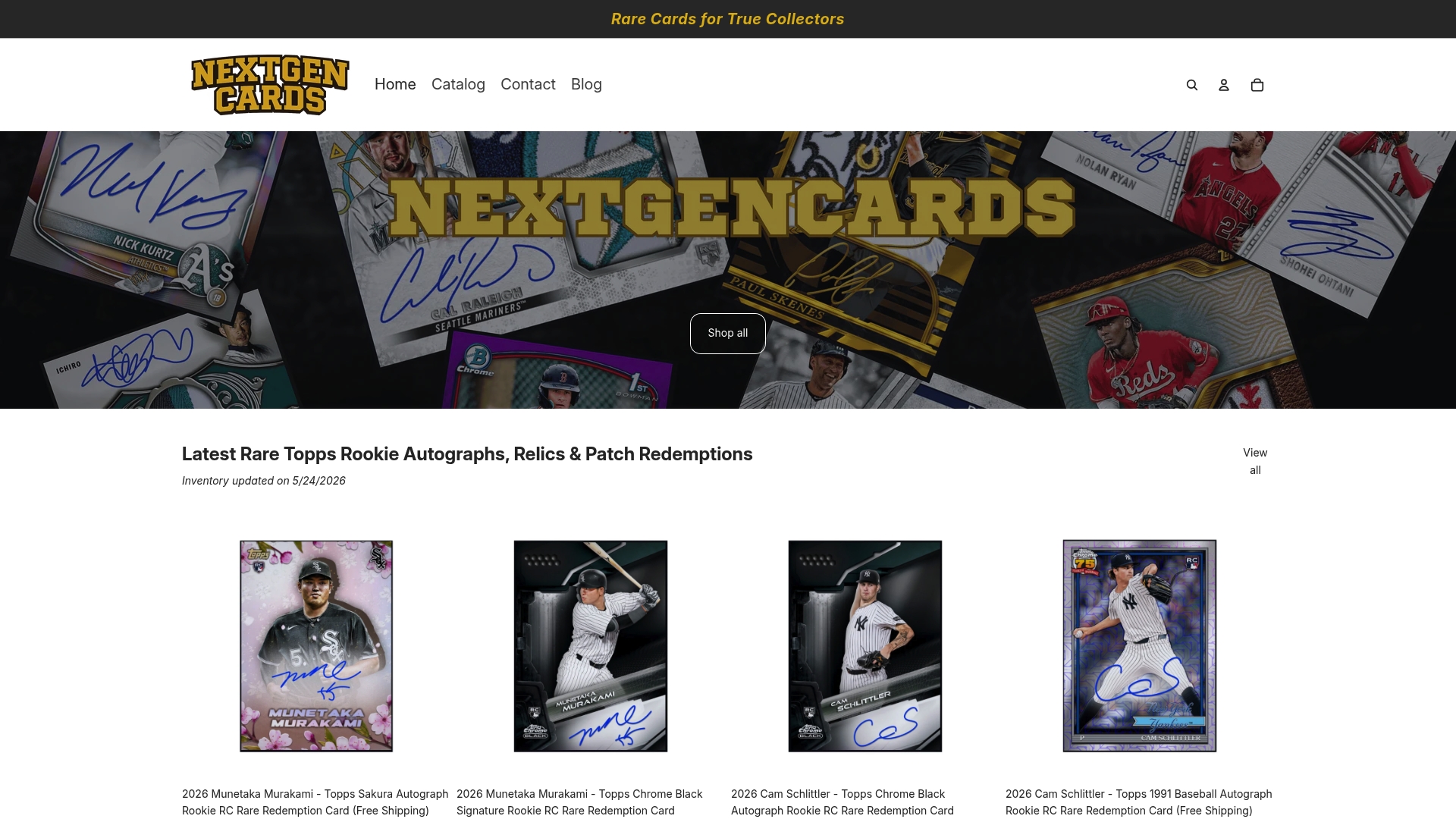
Just as a hospital laundry manager won’t gamble on an unverified RFID tag, serious collectors shouldn’t gamble on unverified autographs or relics. That’s the gap Nextgencards fills: a curated selection of rare rookie autographs and relic cards from athletes like Shohei Ohtani and Aaron Judge, backed by authenticity and easy navigation instead of a crowded generic marketplace. Browse the current lineup and see what’s available for your collection today.
Where to Read Product Specs and Order Samples
- ZealTag’s washable textile RFID page for durability and read-range specs.
- ProudTek’s textile tag page for sewn-in wash-life data.
- CXJ Smartcard’s PPS tag page for heat-resistance specs.
Always request a wash-tested sample before committing to a bulk order, and review detailed instructions on how to wash period underwear and make it last for garment care guidance.
Frequently Asked Questions
What’s the difference between a laundry tag card and a fabric care label?
A laundry tag card typically refers to a durable, often customizable identification tag, sometimes RFID-enabled, used for tracking or owner ID. A fabric care label usually just lists washing instructions and is printed or woven directly into the garment.
Can I use RFID laundry tags at home?
You can, but it’s rarely worth the cost for personal use. RFID tags shine when you’re scanning hundreds or thousands of items at once; for a household, a printed or snap-on tag does the same job for less money.
How many wash cycles do laundry tag cards typically survive?
It depends on the material. Textile UHF tags from vendors like ProudTek are commonly rated for 50 to 100 industrial wash cycles, while heavier-duty silicone and PPS tags from ZealTag and CXJ Smartcard claim over 200 cycles.
Do I need to sew laundry tags, or are there no-sew options?
No-sew options exist. Snap-on applicator systems, like ItsMine’s Snappy Tags, attach without sewing or ironing and can be removed and reused with spare backs.
What should I ask a vendor before placing a bulk order?
Ask about wash-cycle testing data, chip model and encoding options, minimum order quantity, sample availability, and warranty or replacement policy before committing to a large run.
Sources
- Washable Textile RFID Laundry Tags Wholesale Supplier
- RFID Textile Laundry Tags — Sewn-In Linen Tracking | RFID Tag Manufacturer | Proud Tek
- Writable Heat-Resistant Washable NFC PPS Laundry Tag
Recommended
- Discreet Card Packaging: What Collectors Need to Know – Next Gen Cards LLC
- Card Collecting for Kids: Tips Every Parent Needs – Next Gen Cards LLC
- Trading Card Scanning Guide: Digitize, Catalog, and List – Next Gen Cards LLC
- Rare Topps Rookie Autographs & Relics – Authentic Cards – Next Gen Cards LLC
0 comments