

A cut autograph card is a trading card built around an authentic signature clipped from a larger original document, then embedded directly into the card stock. That single fact drives everything else about this niche: the value, the ethics debate, and the authentication demands that come with it. For most established collectors, cut autographs earn a place in a collection only when provenance and third-party grading back up the signature.
Nextgencards works with authenticated inventory, and this guide breaks down what to look for before you buy. Note upfront: any specifics about 2026 Topps Museum Collection Baseball referenced here should be verified against Topps’ own product page, since Topps controls release dates, checklists, and print details for that set.
- A cut signature is an autograph removed from a document (a letter, check, or contract) and mounted into a card, according to Topps’ own glossary.
- Legitimate cut autographs typically carry authentication from PSA (PSA/DNA), Beckett Authentication Services (BAS), or James Spence Authentication (JSA).
- They matter most to collectors chasing signatures from figures who never lived to sign a modern trading card.
Key Takeaways
Cut autograph cards hold lasting value only when provenance documentation and third-party authentication from PSA, BAS, or JSA back up the signature.
| Point | Details |
|---|---|
| Definition matters | A cut autograph is a signature clipped from an original document and embedded into a card. |
| Provenance drives trust | Documented sourcing history separates legitimate cuts from unverifiable claims. |
| Authentication is essential | PSA, BAS, and JSA each provide certification collectors can verify independently. |
| Storage protects value | Archival sleeves, stable humidity, and UV protection preserve fragile cut signatures long term. |
| Nextgencards curates carefully | Nextgencards focuses on authenticated rookie autographs, relics, and rare cards with documented sourcing. |
Table of Contents
- What Is the History Behind Cut Autograph Cards?
- How Are Cut Autograph Cards Actually Made?
- What’s the Correct Way to Cut an Autograph Card?
- How Do Authentication and Grading Work for Cut Signatures?
- Are Cut Autograph Cards Worth Buying?
- Where Should You Buy Cut Autograph Cards Safely?
- How Should You Store and Display Cut Autograph Cards?
- Should You Buy This Cut Autograph Card? A Quick Checklist
- Key Points to Remember Before You Buy
- Why Provenance Matters More Than Hype
- How Nextgencards Helps You Buy With Confidence
- Frequently Asked Questions
- Sources
What Is the History Behind Cut Autograph Cards?
Cut signatures entered the mainstream hobby in the late 1990s, not decades earlier as some collectors assume. Upper Deck gets credit for the first widely recognized pack-inserted cut autographs, debuting them in the 1999 Century Legends Baseball release. That set proved collectors would pay serious money for a physical piece of a historical figure’s handwriting, even without a photo or game-used relic attached.
Upper Deck pushed the concept further with its Hair Cut Signatures inserts, one-of-one cards built around signatures from figures like Babe Ruth, George Washington, and Abraham Lincoln. These inserts helped normalize the category across the hobby, turning what could have been a gimmick into a legitimate collecting lane.
- Some of the hobby’s most sought-after cuts, including signatures from John Lennon, Marilyn Monroe, and Albert Einstein, have realized thousands of dollars at auction.
- Modern flagship sets from Topps and Panini continue building on this format, layering cut autographs into higher-end memorabilia products.
For 2026 Topps Museum Collection Baseball specifics, including whether the set features cut signature inserts, collectors should check Topps’ official product page directly rather than relying on secondhand hobby chatter.
How Are Cut Autograph Cards Actually Made?
The production process behind a cut autograph card is more deliberate than most collectors realize. Manufacturers don’t just snip a signature and glue it down. Panini has documented its internal workflow for constructing cut inserts, and the steps translate across the industry:
- Source the signed document. Letters, checks, contracts, or index cards signed by the subject are acquired, often through estate sales or historical archives.
- Assign a reference ID. Each document gets logged and tracked so provenance stays intact through production.
- Measure and template. Producers photocopy the document and test window placement before touching the original.
- Cut by hand or machine. The actual signature is separated from the rest of the document, either by hand for precision work or by die-cutting for volume production.
- Embed into the card. The cut piece is mounted into a window cut in the card stock, then sealed.
- Encapsulate or ship raw. Some cuts go straight to a grading service for slabbing before reaching the market.
That fourth step is where the hobby’s ethical debate lives. Once you cut a historical document, you can’t undo it. Some collectors see that as the only realistic way to own a piece of a figure who never signed a modern trading card. Others view it as destroying a historical artifact for hobby profit, and that tension shows up regularly in collector forums and auction house discussions.
Pro Tip: Read the manufacturer’s insert description on the pack wrapper or product page before buying blind. Brands that publish “behind the scenes” production notes, the way Panini has, tend to be more transparent about sourcing and cutting practices than those that stay silent.
For any production claims tied to 2026 Topps Museum Collection Baseball, cross-check Topps’ own product page rather than assuming standard industry practice applies to every insert in that release.
What’s the Correct Way to Cut an Autograph Card?
Professional cutters follow a strict process precisely because there’s no second attempt once scissors touch the original document.
- Template on a photocopy first, never directly on the signed original.
- Measure the exact window size the card design requires before making any cut.
- Use archival-grade tools that won’t fray paper fibers or smear ink.
- Store the remainder of the original document in acid-free, airtight packaging.
- Photograph the full uncut document before separating the signature.
Common mistakes that destroy value:
- Cutting too close to the signature, leaving no margin for future trimming or reframing.
- Skipping photographic documentation, which erases provenance proof.
- Using non-archival adhesive or tape that yellows or stains the signature over time.
- Failing to label which document a given cut came from, especially when handling multiple signatures from the same source.
Pro Tip: Before any cut happens, professionals photograph the full document and often add a micro-label or reference number in a corner. That single step is what separates a well-documented cut from one that’s impossible to trace back to its source.
How Do Authentication and Grading Work for Cut Signatures?
Third-party authentication is non-negotiable for cut autographs. Unlike a standard on-card autograph signed in front of a witness, a cut signature has already changed hands multiple times before it reaches a card, which makes independent verification essential.
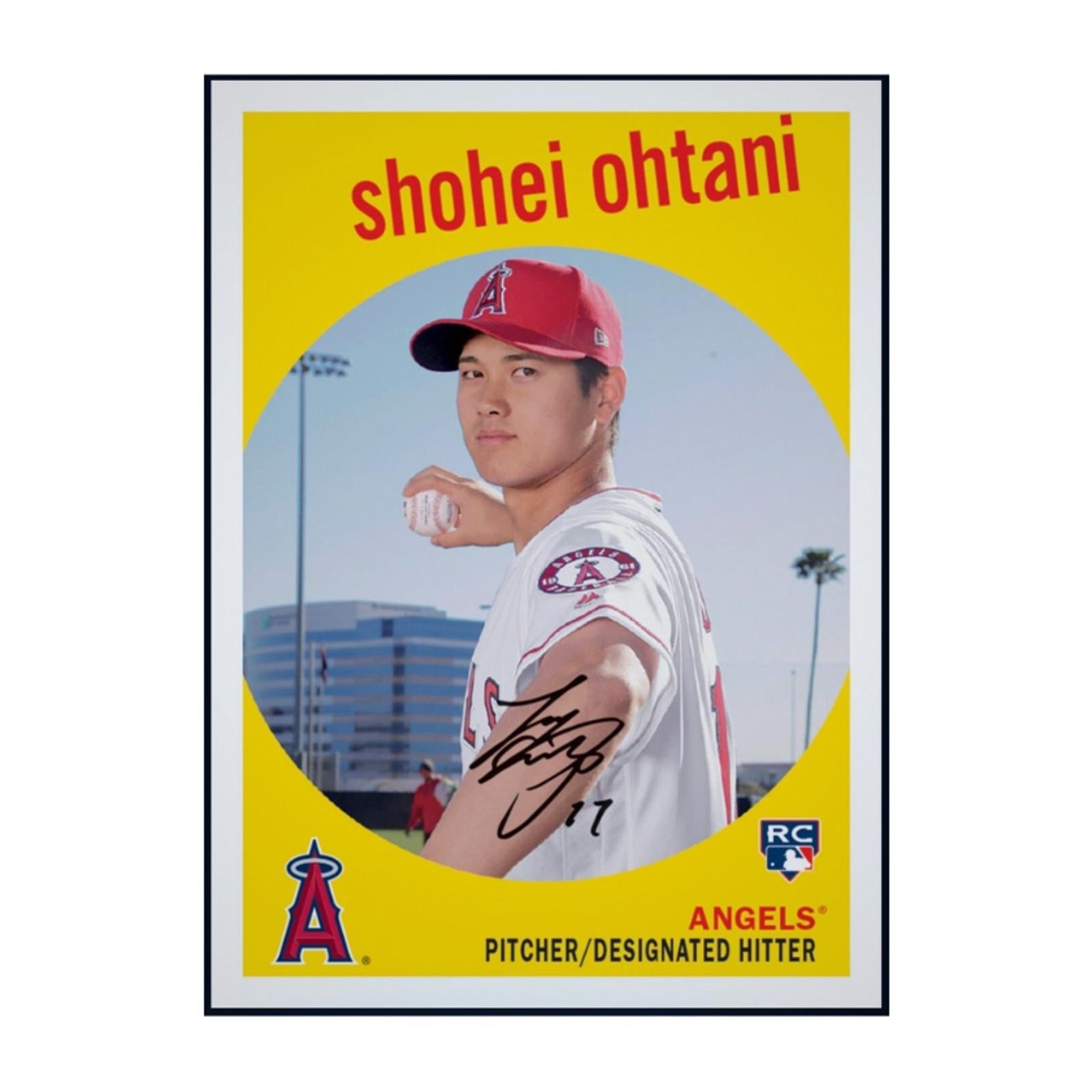
PSA (PSA/DNA) reviews the signature against known exemplars and issues a certification number, often paired with encapsulation. Beckett Authentication Services (BAS) offers a similar process with its own grading tier for autograph quality. James Spence Authentication (JSA) focuses heavily on vintage and historical signatures, which makes it a common choice for older cut autographs from figures outside the sports world.
A trustworthy listing should include:
- Clear photos of both sides of the card and the authentication label.
- A certification number you can look up directly on the authenticator’s website.
- Provenance details: where the original document came from and how it was sourced.
- Grading information, if encapsulated, distinguishing the card’s condition grade from its authenticity designation.
Grading matters differently here than with standard rookie autographs. A slab confirms the signature passed review, but the numerical grade usually reflects the card’s condition, corners, surface, centering, not necessarily how clean the cut itself is. Read labels carefully; a high grade doesn’t always mean a pristine cut. Learn more about autograph authentication methods before bidding on anything unslabbed.
Are Cut Autograph Cards Worth Buying?
Value depends on a handful of concrete factors, not gut feeling. The biggest driver is signer significance: a cut from a Hall of Famer, a president, or a cultural icon will always outperform a cut from a lesser-known figure, regardless of how clean the cut looks.
Other factors that move price:
- Provenance documentation — a clear paper trail adds real premium value.
- Authentication tier — PSA, BAS, and JSA carry different weight depending on the signer’s era and category.
- Condition of the cut itself — fading, smudging, or trimming too close to letters hurts desirability.
- Integration quality — how cleanly the card manufacturer embedded the piece.
- Rarity — one-of-one cuts command more than inserts with multiple copies.
- Demand — modern sports stars versus historical or crossover figures pull very different buyer pools.
| Value Factor | Why It Matters |
|---|---|
| Signer significance | Historical or Hall of Fame names drive most of the price ceiling. |
| Authentication tier | PSA, BAS, or JSA backing separates trusted cuts from unverifiable ones. |
| Provenance trail | Documented sourcing history adds buyer confidence and resale premium. |
| Cut and integration quality | Clean cuts with proper card embedding hold value better over time. |
| Auction track record | Prior realized prices for comparable signatures set market expectations. |
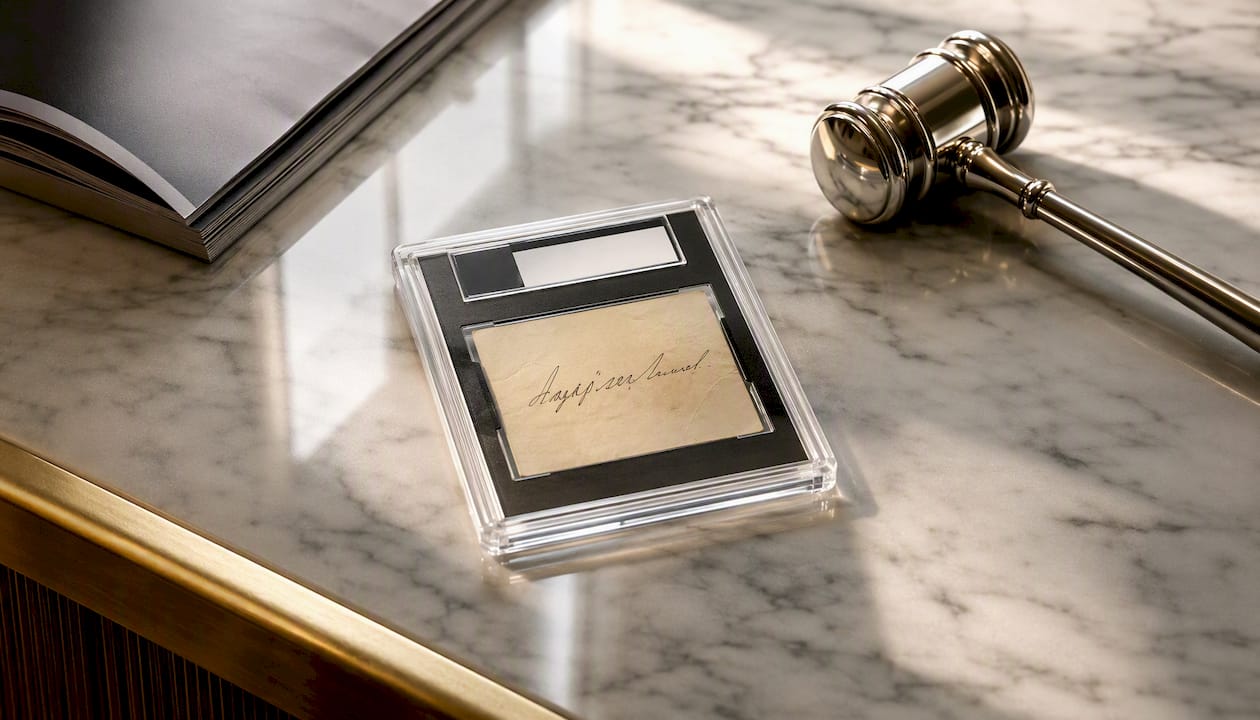
Auction history plays a bigger role in this niche than in most of the hobby. Because cut autographs are inherently one-of-a-kind, past realized prices for iconic examples become the closest thing to a comparable sale. Check recent auction results for the same signer before committing to a purchase. Understanding why autograph cards vary in value helps put cut autograph pricing into broader hobby context.
Where Should You Buy Cut Autograph Cards Safely?
Stick to channels that pair the card with verifiable documentation. Reputable auction houses, specialist dealers, and authenticated retailers give you far more protection than casual marketplace listings.
Before you buy, confirm:
- The card is encapsulated by PSA, BAS, or JSA, or comes with a clear path to submit it.
- Full photos exist of the card front, back, and any visible label.
- The seller provides return policy terms in writing.
- Provenance details are specific, not vague phrases like “from a private collection.”
General retail marketplaces can show you what’s available, but treat listing descriptions there as a starting point, not proof. Amazon’s marketplace listings, for example, indicate stock and demand but carry none of the authentication weight a grading service provides.
Pro Tip: If a listing looks promising but the authentication feels thin, contact PSA, BAS, or JSA directly before bidding. Most authentication services will confirm whether a certification number is legitimate, which takes the guesswork out of a five-figure decision.
Collectors who’ve been burned by fake cuts describe the same warning signs every time: no provenance trail, handwriting that doesn’t match known exemplars, and a cut edge that looks rushed or uneven. Those three red flags together should end the conversation before money changes hands.
Nextgencards curates authenticated rookie autographs, relics, and rare cards, and applies the same provenance standards to any cut-style inventory listed on the site. Browsing rookie autographs and relics gives you a sense of how a properly documented listing should look.
How Should You Store and Display Cut Autograph Cards?
Cut signatures are more fragile than standard on-card autographs because the ink and paper predate the card itself, sometimes by decades. Treat storage as seriously as you’d treat any archival document.
- Keep slabbed cards in their original encapsulation; don’t crack a slab to “look closer.”
- Use archival-quality sleeves and rigid holders for raw cards.
- Avoid direct sunlight and fluorescent light, which fade ink over time.
- Maintain stable humidity and temperature, ideally in a climate-controlled room, not a garage or attic.
- Choose UV-protective display cases if you plan to showcase the card rather than store it flat.
Pro Tip: If you ever gain access to the original document a cut came from, or documentation about it, photograph and store that separately. That paper trail becomes part of the card’s provenance file and can meaningfully boost resale confidence years down the line.
Should You Buy This Cut Autograph Card? A Quick Checklist
Run through this before bidding or clicking “buy”:
- Is the card authenticated by PSA, BAS, or JSA, with a verifiable certification number?
- Does the listing include clear photos of the card and any label or slab?
- Is there a documented provenance trail for the original signed document?
- Does the seller offer a return policy or buyer protection?
- Have you compared the asking price to recent realized prices for similar signatures?
Questions worth asking the seller directly:
- Can you provide photos of the original document before it was cut, if available?
- What’s the chain of custody for this signature?
- Can you share the authentication service’s certification number for independent lookup?
- What have comparable cuts from this signer sold for recently?
Nextgencards backs its authenticated inventory with documented sourcing and clear grading information, the same standards outlined throughout this checklist.
Key Points to Remember Before You Buy
Cut autograph cards reward patience and skepticism far more than impulse buying. A few things worth repeating before you commit to a purchase:
- Authentication from PSA, BAS, or JSA is the baseline, not a bonus.
- Provenance documentation separates a trusted cut from a guess.
- Auction history for the same signer sets realistic price expectations.
- Storage conditions matter more here than with most standard cards.
- For any 2026 Topps Museum Collection Baseball specifics, Topps’ official product page remains the authoritative source.
Nextgencards’ authentication resources are worth reviewing before your next purchase, whether you’re chasing a historical cut or a modern rookie autograph.
Why Provenance Matters More Than Hype
Collectors chase cut autographs for the same reason they chase any scarce collectible: access to something that otherwise doesn’t exist. A modern rookie can sign a hundred cards a year. Babe Ruth can’t. That scarcity is real, but it also creates an opening for sellers to lean on a famous name without backing it up with paperwork.
The gap between what a listing promises and what it actually proves is where most bad purchases happen. A clean scan of a certification label means little if you can’t verify it against the issuing service’s own database. Provenance isn’t a nice detail to have, it’s the entire reason a cut signature is worth more than a printed facsimile. Collectors who skip that verification step are essentially betting on trust alone, and this corner of the hobby has enough documented fakes that trust alone isn’t good enough anymore.
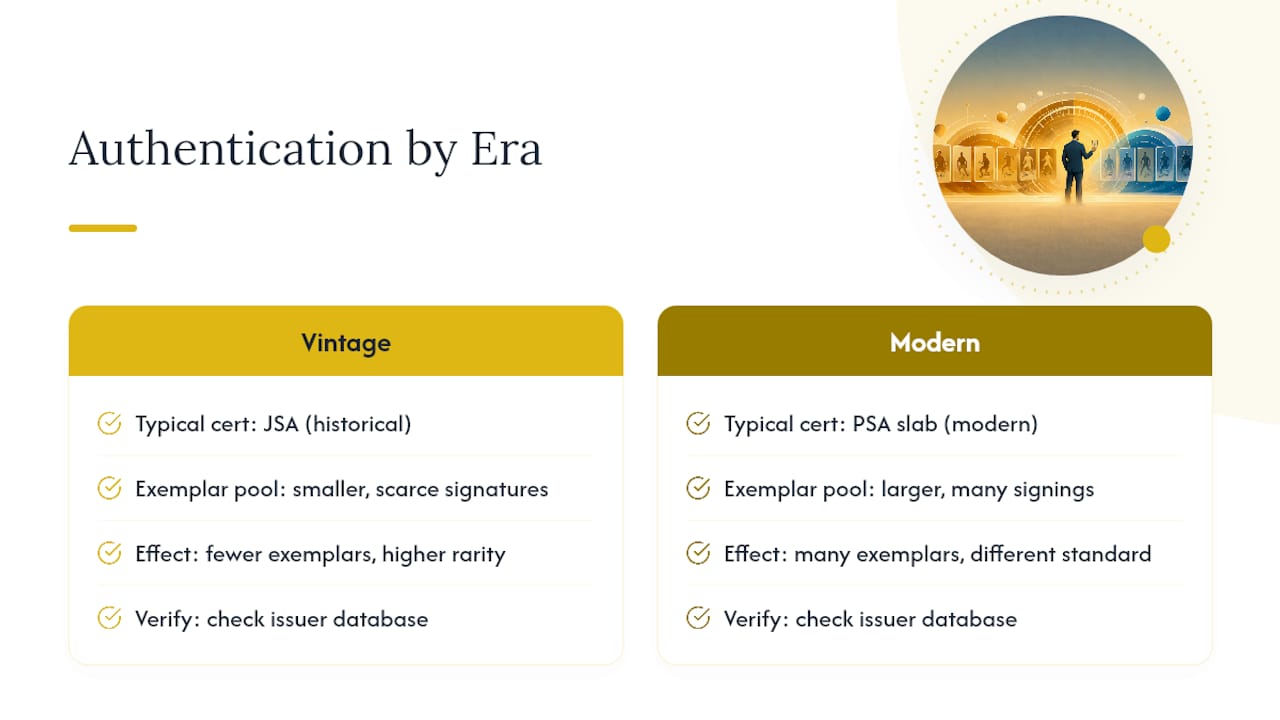
What tends to get overlooked is how much authentication tiers vary by era. A JSA certification on a vintage historical figure carries different weight than a PSA slab on a modern athlete’s cut insert, because the comparison pools and exemplar records differ. Treat every cut autograph as its own case, not a category with one universal standard.
How Nextgencards Helps You Buy With Confidence
Nextgencards is built for collectors who want authenticated inventory without wading through unverified marketplace listings. Every rookie autograph, relic, and rare card in the catalog comes with a focus on documented sourcing, so you’re not left guessing about certification numbers or provenance gaps.
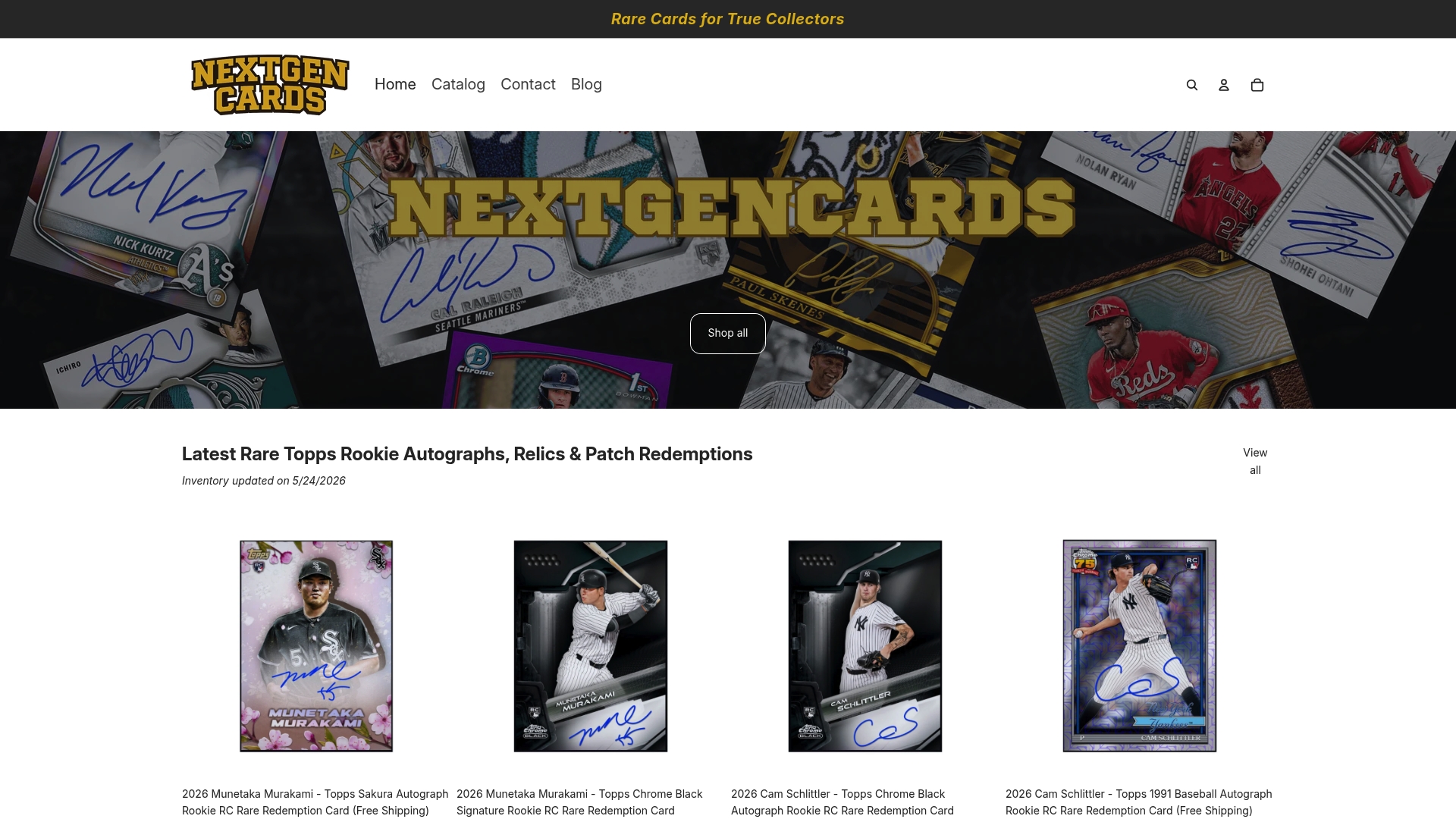
Rather than sifting through auction sites and secondhand listings hoping a seller’s claims hold up, you can browse a curated catalog where authentication is already part of the standard. If you’re building toward a historical cut autograph or a modern rookie piece from a set like 2026 Topps Museum Collection Baseball, start by checking Nextgencards’ rare Topps rookie card selection for currently available authenticated inventory, and reach out through the site if you’re hunting for something specific that isn’t listed yet.
Frequently Asked Questions
What is a cut signature card exactly? A cut signature card contains an authentic autograph removed from a larger original document, such as a letter or check, and mounted into the card itself.
Are cut autograph cards more valuable than standard autograph cards? It depends entirely on the signer. A cut from a historical figure who never signed cards often commands more than a standard modern autograph, but a cut from a lesser-known name can be worth far less.
How can I tell if a cut autograph card is authentic? Look for encapsulation or certification from PSA, BAS, or JSA, and verify the certification number directly through the authenticator’s own lookup tool.
Why do some collectors dislike cut autograph cards? Cutting a historical document is irreversible, and some collectors object to altering original artifacts for hobby use, even when the practice makes rare signatures accessible.
Does 2026 Topps Museum Collection Baseball include cut autographs? Any checklist, release date, or insert details for that specific product should be confirmed directly on Topps’ official product page, since specifics can change before release.
Sources
- Upper Deck Hair Cut Signatures: 1990s Hobby Insert Card History
- Cut Signature - Topps Ripped
- Panini America Behind the Scenes: Constructing the Cut Autograph – The Knight’s Lance
For any 2026 Topps Museum Collection Baseball specifics, always confirm details directly on Topps’ official product page before buying or trading based on secondhand hobby reports.
0 comments