

Autographed trading cards deliver three distinct benefits: sentimental connection to the athletes you admire, aesthetic appeal that elevates any display, and measurable investment potential backed by real market demand. Here’s what each category means in practice:
- Sentimental value: A signed card creates a direct physical link between collector and player. That signature represents a moment, a career, and a personal story that no unsigned parallel can replicate.
- Aesthetic value: On-card autographs, especially those placed cleanly on vintage cardboard, are widely regarded as pure art. Collector Dylan Brennan described a well-placed ballpoint signature on a vintage baseball card as “pure art that you cannot replicate.”
- Investment value: Scarcity, player significance, grading status, and placement all drive premiums. A mid-grade 1980 Topps Bird/Magic/Erving Scoring Leaders card graded PSA 6 sells for roughly $650 unsigned; with authenticated autographs from all three legends, the same card can command upward of $10,000.
Authentication, care, and sourcing strategy determine whether those benefits hold long-term. The sections below cover each in detail.
Pro Tip: Start with PSA/DNA or Beckett Authentication Services (BGS) for any autograph you plan to hold or resell. Certified provenance is the single biggest factor in buyer confidence and liquidity.
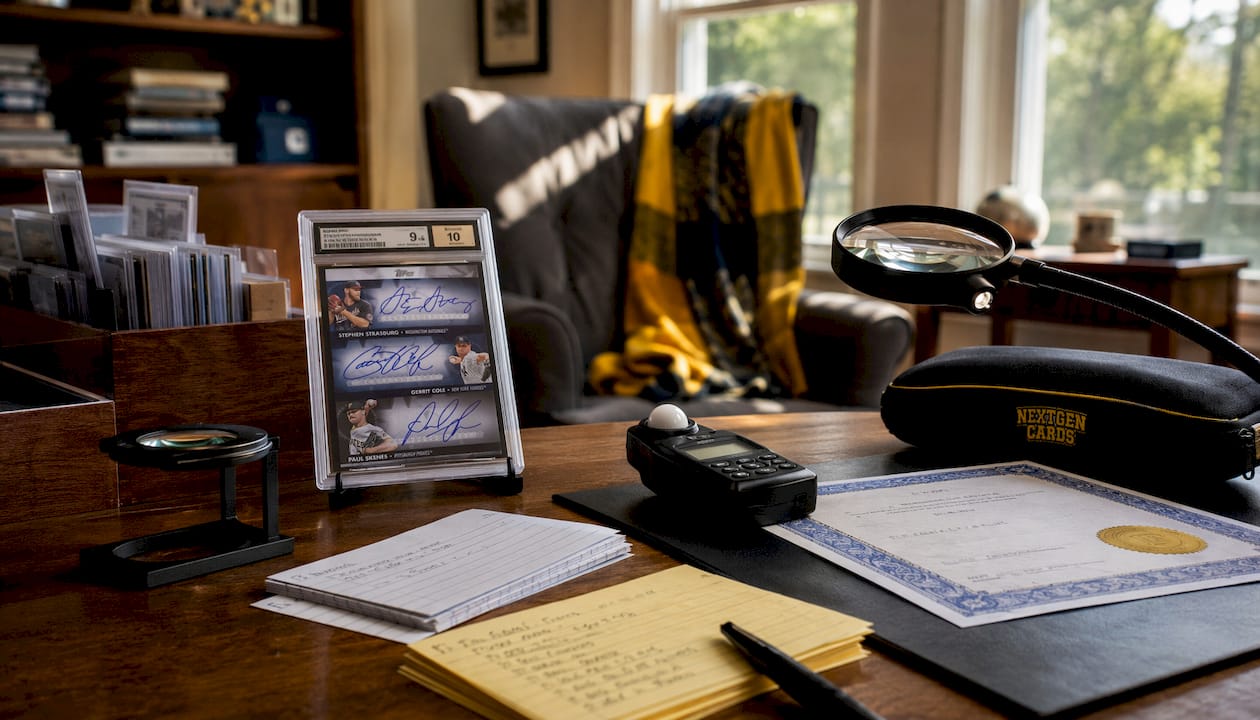
Table of Contents
- How autographed cards went from hobby taboo to premium collectible
- What actually drives the monetary value of signed trading cards
- Why sentimental and aesthetic value often matter more than price
- Why authentication and grading protect your collection’s value
- How to store and protect autographed cards the right way
- Where to find authentic autographs and how to start collecting
- Common myths and pitfalls collectors should avoid
- Community and social benefits of collecting autographed cards
- Key Takeaways
- Why autographed cards reward collectors who pay attention
- Nextgencards has the authenticated autographed cards serious collectors want
- Useful sources for collectors
How autographed cards went from hobby taboo to premium collectible
For decades, writing on a vintage card was considered defacement. Hobby purists viewed any ink on original cardboard as damage, not enhancement. That attitude began shifting as collectors recognized that pre-sticker-era autographs represented something manufacturers could never reproduce: a direct, in-person connection between player and card.
The timeline of that shift matters for understanding why on-card autographs now carry the premiums they do:
- Pre-1990s: Autographs on cards were informal, obtained at signings or in person. No authentication infrastructure existed.
- 1990s: Card manufacturers introduced sticker autographs at scale, making signed cards widely available in packs but reducing the perceived intimacy of the signature.
- 2000s–2010s: Collectors began distinguishing sharply between on-card and sticker autos. Vintage on-card scarcity became a recognized value driver.
- 2020s: The market for authenticated vintage on-card autographs grew rapidly, with PSA/DNA population reports showing dramatically lower counts for signed versions versus unsigned equivalents.
The shift from sticker-dominated modern releases back toward on-card autographs in premium products reflects that same collector demand. Understanding this history helps you evaluate why certain signed cards command prices that seem disconnected from the base card’s grade.
What actually drives the monetary value of signed trading cards
Autographs can materially increase a card’s value, but the premium is not automatic. Four factors determine whether a signed card outperforms its unsigned counterpart.
Primary value drivers:
- Rarity and print run: Limited-edition autographs numbered to 10 or 25 copies carry exponentially more demand than open-edition sticker autos. Lower population equals higher scarcity premium.
- Player significance: Star players, Hall of Famers, and prospects with proven upside generate the strongest demand. Role players rarely see meaningful premiums regardless of signature quality.
- Placement and type: On-card autographs consistently command higher prices than sticker autos. On-card signatures allow larger, more expressive writing and represent a direct physical connection to the athlete. Sticker autos, by contrast, were signed on a separate sheet and applied during production.
- Grading and auto grade: PSA, BGS, and SGC all evaluate both the card condition and the autograph quality separately. A high auto grade on a PSA-slabbed card increases buyer confidence and typically commands a meaningful premium at resale.
| Factor | Higher Value | Lower Value |
|---|---|---|
| Rarity / print run | Numbered /10 or /25 | Open edition or no serial |
| Player significance | Star, HOF, top prospect | Role player, limited fan base |
| Placement | On-card, clean placement | Sticker, off-center or cramped |
| Grading status | PSA/BGS/SGC slabbed, high auto grade | Raw, ungraded |
| Provenance | COA, chain of custody documented | No documentation |
Signed rookie autographs and limited redemption cards tend to drive the strongest returns when all five factors align. High-end auction results, like the dual-autograph Logoman card that generated significant hobby headlines, illustrate the ceiling of the market. Those outcomes are not typical, but they confirm that rare autographs can reach prices no unsigned card in the same set will approach.
Why sentimental and aesthetic value often matter more than price
Many collectors hold autographed cards for reasons that have nothing to do with resale. Psychology Today reports that collecting produces measurable mental-health benefits: the focused tasks of cataloging, sorting, and displaying induce a state of flow that lowers physiological stress markers and improves cognitive function. That is not a soft claim. It is a documented psychological mechanism.
Beyond the psychological evidence, autographed cards carry narrative weight that unsigned cards simply cannot. An on-card signature ties a specific player to a specific era of their career. Vintage handwriting styles, the type of pen used, and the placement on the card all tell a story about when and how the signing happened. That provenance is irreplaceable.
Pro Tip: For display, prioritize on-card autographs in UV-protective one-touch holders or acrylic frames. Direct sunlight fades ink faster than almost any other environmental factor. A UV-filtering sleeve adds years to the visual quality of the signature.
The emotional value autographed cards deliver over other memorabilia formats is a consistent theme among serious collectors. A signed card is compact, displayable, and personal in a way that a jersey or a bat simply is not.
Why authentication and grading protect your collection’s value
Third-party certification materially increases buyer confidence and resale liquidity. A raw autograph, no matter how genuine, faces skepticism in the secondary market. An authenticated slab from PSA, BGS, or SGC removes that friction entirely.
Key authentication and grading considerations:
- PSA/DNA: PSA’s autograph authentication branch evaluates signature authenticity and assigns a grade. Population reports show how many copies have been authenticated, which directly informs scarcity.
- BGS (Beckett Grading Services): Grades both card condition and autograph quality on separate sub-grades, giving buyers a precise picture of each element.
- SGC: A respected alternative with growing acceptance in the vintage market.
- CGC/JSA partnership: CGC has partnered with James Spence Authentication (JSA), widely regarded as one of the most respected autograph authentication firms, for on-card autograph verification.
- Provenance documentation: A certificate of authenticity (COA) from a reputable issuer, combined with a chain-of-custody record, supports both the authentication case and the resale narrative.
Pro Tip: Keep raw cards for personal display if you are confident in their authenticity and do not plan to sell. Submit to PSA, BGS, or SGC before any significant transaction. The grading fee is almost always recovered in the price premium a slabbed card commands.
Red flags to watch when buying raw autographs:
- No third-party certification and seller cannot provide provenance documentation
- Ink color or sheen inconsistent with the player’s known signing style
- Signature placement that looks applied rather than naturally signed
- Seller unwilling to provide high-resolution scans of both front and back
- Price significantly below comparable authenticated examples
Authentication guidance from Nextgencards outlines the full step-by-step process for verifying rare sports memorabilia before purchase.
How to store and protect autographed cards the right way
Autographs are vulnerable to UV light, humidity, and physical contact. Proper storage is not optional if you want to retain both sentimental and monetary value over time.
Preservation checklist:
- Use penny sleeves as a first layer for any raw card before placing it in a top-loader or one-touch holder
- Store slabbed cards upright in a cool, dry environment away from direct light
- Use UV-protective acrylic frames or display cases for any card you plan to show
- Avoid adhesives, rubber bands, or anything that contacts the card surface directly
- Keep humidity below 50% to prevent warping and ink migration
Dos and don’ts:
| Do | Don’t |
|---|---|
| Use acid-free sleeves and top-loaders | Store cards in direct sunlight |
| Display in UV-protective cases | Use rubber bands or tape near cards |
| Keep slabbed cards in a stable environment | Stack raw cards face-to-face without sleeves |
| Document your collection with photos | Ignore humidity levels in storage areas |
For high-value autographed cards, scheduled personal property insurance coverage is worth considering. Standard homeowners policies often have low sublimits for collectibles. A standalone rider or a dedicated collectibles policy through providers like Collectibles Insurance Services covers individual items at appraised value.
Pro Tip: Get a professional appraisal for any autographed card valued above $500 before adding it to an insurance policy. Appraisal documentation also strengthens provenance records if you sell later.
Where to find authentic autographs and how to start collecting
Three reliable channels exist for sourcing authenticated autographed cards, each with distinct trade-offs.
- Local card shows and in-person signings: Direct access to athletes and dealers. You can inspect cards in person and ask questions. The selection is limited to what’s available that day, and prices vary widely.
- Trusted dealers with authenticated inventory: Established dealers who specialize in autographed cards and carry provenance documentation. Higher prices than raw-market alternatives, but significantly lower risk.
- Authenticated online marketplace inventory: Platforms and specialty shops that list graded, slabbed autographs with full provenance. Convenient and often the best source for specific players or eras.
Before any purchase, verify:
- Third-party grading or authentication status (PSA, BGS, SGC, JSA)
- Population report data for the specific card and signature
- Seller’s return policy and provenance documentation
- Comparable recent sales for the same card
Focusing your collection on a specific era, player, or card type yields better long-term results than accumulating broadly. Specialization makes research easier, authentication more consistent, and the collection more coherent as a whole.
Pro Tip: Before committing to a purchase, request high-resolution scans of the front, back, and any COA documentation. A seller who hesitates to provide these images is a seller worth skipping.
Common myths and pitfalls collectors should avoid
Myth: All autographs increase a card’s value. Not true. A sticker auto from a marginal player on an open-edition card may add little or nothing to resale value. The autograph premium depends entirely on player significance, rarity, placement, and authentication status.
Myth: Sticker autographs are equivalent to on-card signatures. They are not, and the market prices them accordingly. On-card autos represent a direct physical connection and allow larger signatures. Sticker autos were signed on separate sheets, meaning the athlete never touched the card itself.
Myth: A high-grade card with a raw autograph is safe to buy. Card grade and autograph authenticity are separate questions. A PSA 9 card with an unverified signature is still an unverified signature.
Red flags checklist:
- Seller cannot name the authentication source
- Autograph ink looks printed or too uniform
- No population data available for the claimed signature
- Price is dramatically below market without a clear explanation
- Card shows signs of trimming or cleaning near the signature area
Understanding why autograph cards vary in value before you buy prevents the most common and costly collector mistakes.
Community and social benefits of collecting autographed cards
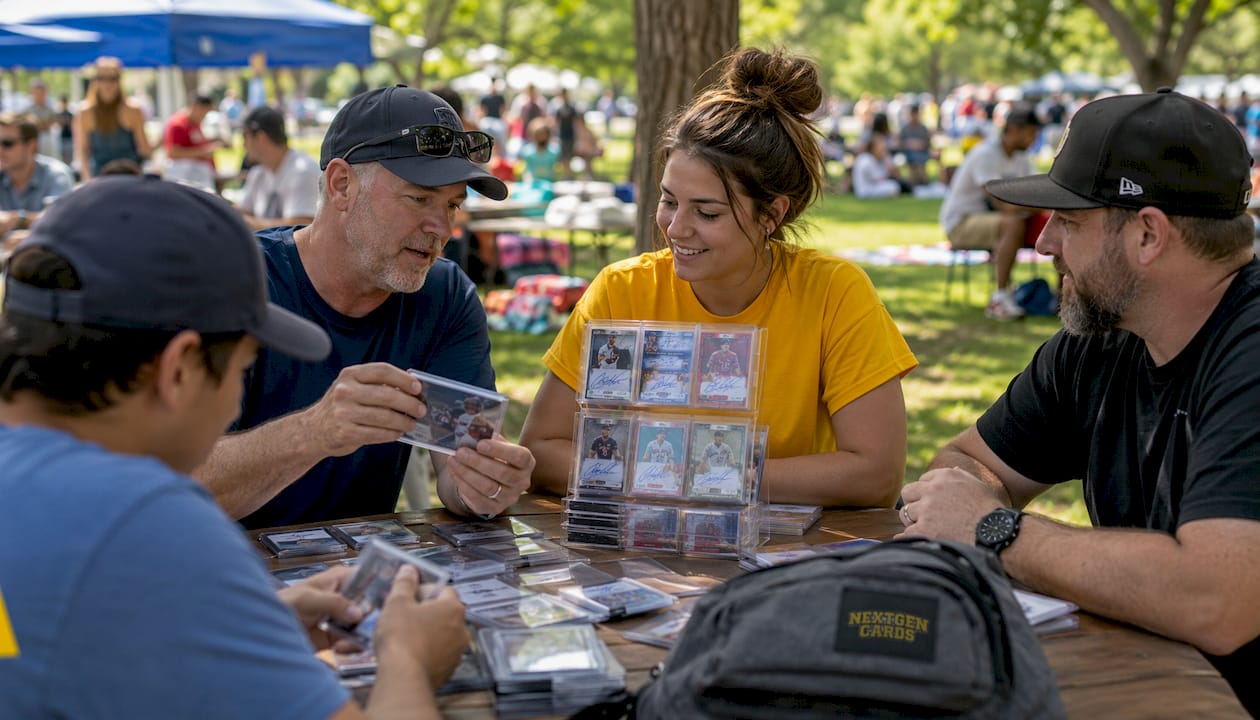
Collecting autographed cards is rarely a solitary pursuit for long. Card shows, local hobby shops, online forums, and social media communities connect collectors across every level of experience and budget. These networks serve a practical function: they are where you learn to spot forgeries, find leads on specific cards, and get honest price feedback before committing to a purchase.
Trading is another dimension that signed cards open up. Autographed cards carry enough individual identity, tied to a specific player, era, and signing event, that trades become genuine negotiations rather than simple swaps. That specificity creates richer conversations and longer-lasting collector relationships.
Hobby events like the National Sports Collectors Convention bring together dealers, graders, and collectors in a format that accelerates learning faster than months of solo research. Attending even one major show gives you direct access to authentication experts, live pricing data, and the kind of institutional knowledge that does not appear in any guide.
Key Takeaways
Autographed trading cards deliver sentimental, aesthetic, and investment benefits that unsigned cards cannot match, but realizing those benefits requires authentication, focused collecting, and proper preservation.
| Point | Details |
|---|---|
| On-card vs. sticker premium | On-card autographs consistently command higher prices and collector preference than sticker alternatives. |
| Authentication is non-optional | PSA, BGS, SGC, and JSA certification increases buyer confidence, liquidity, and resale value. |
| Mental-health benefits are documented | Psychology Today links collecting to measurable flow states, stress reduction, and improved cognitive function. |
| Focus beats accumulation | Specializing by player, era, or type produces better emotional and monetary outcomes than broad collecting. |
| Nextgencards for curated inventory | Nextgencards offers authenticated autographed cards, including rare redemption cards, for collectors who want verified starting points. |
Why autographed cards reward collectors who pay attention
The conventional wisdom in the hobby treats autographed cards as either pure sentiment or pure investment. That framing misses the point. The collectors who build the most satisfying and financially resilient collections are the ones who understand that sentiment and investment reinforce each other. A card you genuinely care about is a card you will authenticate, store correctly, and research thoroughly. That diligence is exactly what protects value over time.
What gets underestimated is how much the authentication gap matters at the entry level. New collectors often skip grading to save on fees, then discover that raw autographs are significantly harder to sell and easier to fake. The fee is not overhead. It is the cost of making the card liquid.
The 2024 Topps Baseball Stars Triple Autograph card featuring Paul Skenes, Gerrit Cole, and Stephen Strasburg is a useful illustration. Three pitchers, one card, a rare redemption format. Each element, player significance, multi-signature scarcity, and limited print run, stacks the value drivers that the hobby consistently rewards. That is not an accident. It is the result of understanding what the market prices.
Nextgencards has the authenticated autographed cards serious collectors want
Collectors who know what they are looking for need a source that matches that standard. Nextgencards curates rare autographed cards with a focus on authenticity, scarcity, and collector-grade presentation, covering rookie autographs, relics, and limited redemption cards from athletes like Shohei Ohtani and Aaron Judge.
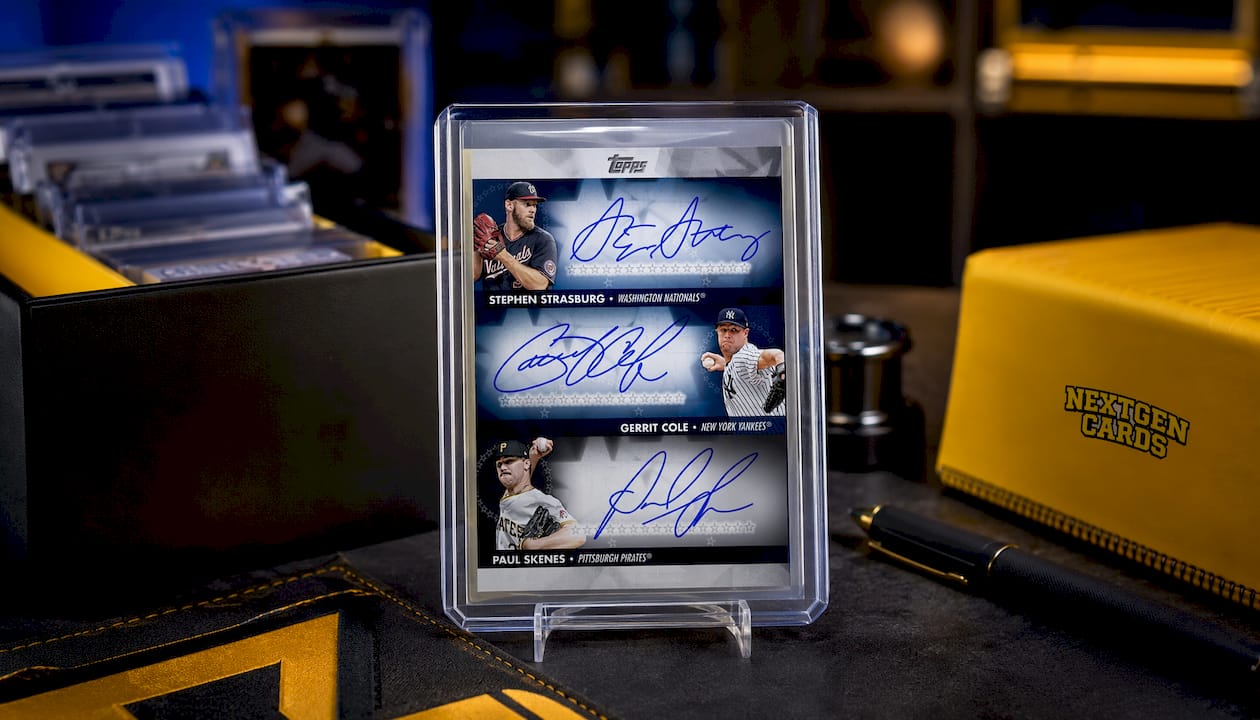
The 2024 Topps Baseball Stars Triple Autograph card featuring Paul Skenes, Gerrit Cole, and Stephen Strasburg is a standout example: a rare physical redemption card combining three significant pitchers in a single, scarce format. It checks every value-driver box discussed in this article. Free shipping is available on select items, and the inventory is updated regularly with authenticated picks across multiple sports and eras. Browse the full authenticated autograph inventory at Nextgencards to find cards that fit your collecting lane.
Useful sources for collectors
- Psychology Today: Mental Health and Collecting — Research-backed coverage of flow states, stress reduction, and cognitive benefits linked to collecting.
- Sports Illustrated: Vintage On-Card Autographs — Covers the investment case for on-card autographs and the hobby’s shift toward premium signed cards.
- Sports Illustrated: Autographed Vintage Card Market Growth — Tracks market trends and collector demand for authenticated vintage autographs.
- AwesomeArtifact: Autographed vs. Non-Autographed Memorabilia — Practical comparison of trade-offs between signed and unsigned items for collectors and investors.
- BoredomBusted: Autograph Collecting for Beginners — Accessible starter guide covering TTM, conventions, and authentication basics.
- Nextgencards: How to Authenticate Rare Sports Memorabilia — Step-by-step authentication guidance for collectors at every level.
- Nextgencards: Sports Cards Investment Benefits Guide — Covers market dynamics, grading impacts, and investment criteria for signed cards.
- Nextgencards: What Is a Signed Memorabilia Card? — Defines on-card, sticker, and relic formats with collector-focused context.
0 comments