

Live-commerce apps, large static marketplaces, and specialty sports-card channels are the three practical Whatnot alternatives worth your time in 2026. Each format fits a different kind of inventory and a different amount of hands-on effort. If you sell mixed lots or lower-value singles, a livestream app rewards the energy you bring to a broadcast. If you have graded cards or vintage pieces that need to be found by search rather than sold in the moment, a static marketplace does the heavier lifting. If your inventory is investment-grade, rookie autographs, patch cards, or rare redemption cards, a specialty channel matches you to buyers who already know what they’re looking at.
That’s also where Nextgencards fits. For collectors holding high-end rookie autographs or scarce redemption cards, Nextgencards is built around curated inventory, verified rarity, and free shipping on select items, rather than the volume-driven churn of a general marketplace.
- Live-commerce apps — best for fast-moving mixed lots, breaks, and impulse buyers.
- Static marketplaces — best for graded singles, vintage, and passive listings.
- Specialty card channels — best for investment-grade autographs, patches, and rare redemptions.
TL;DR:
- Live-commerce platforms are ideal for quick sales of mixed lots and impulse buys, but demand consistent hosting and tight shipping windows of 2 to 5 days.
- Static marketplaces excel at passive listings for graded singles and vintage cards, with fee structures favoring subscriptions for high-volume, low-value sales.
- Specialty channels offer better prices for high-value autographs, patches, and redemptions by leveraging authentication, trusted buyer bases, and consignment options, despite higher fees.
- Nextgencards.shop specializes in curated inventory of investment-grade cards, providing free shipping on select items and serving collectors seeking rarity and authenticity.
- Choosing the right platform depends on matching your inventory’s value and scarcity to the appropriate format, balancing fee structure, operational capacity, and buyer trust.
Table of Contents
- What Are the Best Whatnot Alternatives by Format?
- Live-Commerce Formats: What to Expect and When to Choose Them
- Static Marketplaces and Listing-First Channels
- Specialty Marketplaces for Sports Cards and High-Value Collectibles
- How to Choose the Right Platform for Your Inventory
- Practical Tips to Improve Sell-Through and Avoid Disputes
- Why NextGenCards.shop Is Built for Serious Collectors
- Payment Options and Payout Speed
- Platform Reputation and Trustworthiness
- Growth and Scalability Potential
- Key Takeaways
- An Editorial Take on Format-First Selling
- Find Your Next Rare Card With Nextgencards
- Sources
- FAQ
What Are the Best Whatnot Alternatives by Format?
Live-commerce, static marketplaces, and specialty marketplaces solve different problems, and confusing them is the most common mistake sellers make when they leave Whatnot. Live-commerce platforms sell through real-time hosted shows, mixing auction pacing with chat-driven urgency. Static marketplaces work like a storefront: you list once, buyers find you through search, and the sale happens without you present. Specialty marketplaces sit between the two, offering curated categories, consignment options, and grading integrations built specifically around collectibles.
Market roundups covering sites like Whatnot consistently group alternatives into these three buckets, and the advice is the same across most of them: pick the format that matches your inventory and your available time, not the platform with the biggest audience.
- Live-commerce: eBay Live, TikTok Shop LIVE, and similar hosted-show formats. Best for mixed collectibles, pack breaks, and sellers who enjoy hosting. Fees often run as a percentage cut plus optional promotional costs.
- Static marketplaces: eBay, Mercari, Etsy, and comparable listing-first platforms remain valuable for sellers wanting passive reach. Best for graded singles and vintage inventory that buyers search for by name or set.
- Specialty marketplaces: consignment houses and card-focused storefronts. Best for autographs, patches, and redemption cards where buyer trust and authentication matter more than volume.
A hoodie sells fine on a livestream. A 1952 Topps card sells better where the buyer is already searching for it.
Live-Commerce Formats: What to Expect and When to Choose Them
Live-commerce platforms run on hosted shows: a seller goes live, presents cards or lots in real time, and buyers bid or buy instantly through chat. The pacing resembles a broadcast auction more than a listing site. That immediacy is the format’s biggest asset. Buyers feed off each other’s activity, and a hot show can push prices past what the same card might fetch in a static listing.
It also demands consistency most sellers underestimate. You’re not just listing inventory, you’re producing a show.
- Urgency drives price — real-time bidding creates competitive pressure that static listings rarely replicate.
- Community builds repeat buyers — regular hosts develop followings who show up specifically for their drops.
- Stream fatigue is real — hosting multiple shows a week burns out even experienced sellers.
- Vetting can slow you down — many live platforms require seller verification before you’re allowed to go live.
- Shipping windows are tight — practitioner reports commonly cite 2 to 5 day shipping windows as standard on live-selling apps, and missing them can trigger penalties or hurt your seller rating.
App descriptions for collector-focused live platforms, including ezze on the App Store, emphasize community features, pack breaks, and authentication tools built specifically for trading cards. That signals the format has matured well beyond general merchandise, but it also means competition inside the collectibles niche is tighter than it looks from the outside.
Pro Tip: Batch your shipping prep before you go live. Pre-print labels for your top 10 expected sales so a strong show doesn’t turn into a shipping backlog you can’t clear in time.
Static Marketplaces and Listing-First Channels
Static marketplaces let you list once and let search do the selling. There’s no show to produce, no chat to manage, and no fixed time slot you need to protect on your calendar. Buyers find your card through a search query, a saved-search alert, or a browse category, and the sale closes whenever it closes.
Two listing structures dominate here: fixed-price listings, where the price is set and the first buyer wins, and timed auctions, where bidding runs for a set window before closing. Fixed-price works well for cards with an established market value. Timed auctions work better for scarce items where competitive bidding can push the price above a fixed ask.
Fee structures vary more than sellers expect. Some platforms charge a straight final-value percentage. Others use listing fees, subscription-based storefronts, or a hybrid of both. A subscription model tends to win out for sellers moving high volume at lower individual prices, since the flat monthly cost gets diluted across many sales. A percentage-based fee tends to work better for occasional sellers moving a handful of higher-value items, since there’s no fixed cost to justify.
- Graded cards perform well because buyers can filter by grade and certification number.
- Vintage inventory benefits from search traffic from collectors hunting specific years and sets.
- Single high-value lots do better as standalone listings than bundled into group lots.
Nextgencards’ guide to eBay sports card alternatives breaks down more of these tradeoffs for collectors weighing static platforms against faster-moving formats.
Specialty Marketplaces for Sports Cards and High-Value Collectibles
Specialty marketplaces exist specifically because general platforms don’t do a great job matching rare cards to serious buyers. A general marketplace treats a rookie patch autograph the same as a used jacket: one more listing in a massive catalog. A specialty channel treats it as what it is: a scarce asset that needs to reach someone who already understands its value.
- Consignment options let you hand off a high-value card to a channel with an established buyer base, rather than waiting for the right search to surface it.
- Grading and authentication integrations reduce buyer hesitation, since third-party verification answers the trust question before a bid is placed.
- Investor-oriented tools, including price tracking and population reports, help serious buyers justify premium bids.
The tradeoff is cost. Specialty channels typically charge higher fees than a static marketplace listing, whether through consignment cuts or membership pricing. For investment-grade cards, that premium is usually worth it. Consigning to a specialty channel often produces a higher realized price than a general marketplace listing, because the buyer audience is already primed to pay for rarity and trust signals rather than needing to be convinced.
Keep your bulk, lower-value inventory on broader channels. Reserve specialty placement, or your own curated storefront, for the pieces where authentication and buyer match actually move the price. Nextgencards’ buyer’s confidence guide to raw cards covers how grading and condition affect that decision on the buying side as well.

How to Choose the Right Platform for Your Inventory
Picking a format doesn’t require guesswork. A four-step framework covers most of what matters:
- Assess your inventory profile. Value, grade, and scarcity determine whether a card belongs on a general platform or a specialty one.
- Match your audience. Where do buyers for this specific type of card already search? A rookie autograph buyer and a vintage set-builder don’t shop the same way.
- Run the fee math. Compare percentage-based commissions against subscription or flat-fee models based on your actual sales volume.
- Confirm operational fit. Shipping deadlines, return policies, and dispute processes need to match what you can realistically deliver.
Before committing to any platform, ask its support team or documentation these questions directly: How often are payouts issued? What seller verification is required before I can list or go live? What’s the shipping deadline after a sale closes? How are buyer disputes resolved, and who absorbs the cost of a return?
Fee-math example: Say you sell 20 items a month at $50 average. At that volume, the subscription model wins. Drop to five sales a month, and the percentage model becomes cheaper since there’s no flat cost to cover. Sellers who prioritize audience match first and fee math second tend to land on the format that actually sells their inventory, not just the one with the lowest advertised rate.
Practical Tips to Improve Sell-Through and Avoid Disputes
Good logistics separate sellers with strong ratings from sellers who burn out chasing complaints.
- Pack for the shipping window, not around it. Pre-assign labels and stage boxes before a show or a batch of listings goes live, so the 2 to 5 day windows common on live platforms never catch you unprepared.
- Prep your live setup before you press start. Consistent lighting, a stable camera angle showing card corners and centering clearly, and a pre-planned inventory order all reduce dead air and buyer hesitation.
- Cross-post your drops. Announce upcoming shows or new listings across your existing channels a day or two ahead so buyers show up ready to act.
- Bundle slow inventory into breaks or lots rather than letting it sit unsold for months. A card that isn’t moving alone often moves fine as part of a themed group.
Pro Tip: Use protective sleeves and rigid mailers even on lower-value cards. A single damage claim costs more in refunds and reputation than the packaging ever would.
Why NextGenCards.shop Is Built for Serious Collectors
Nextgencards focuses specifically on the category that general marketplaces handle worst: rare, investment-grade sports cards. That includes rookie autographs, patch and relic cards, multi-player redemptions, and exclusive rare redemption offerings across MLB, NBA, and NFL.
- Curated inventory built around rookie autographs and rare redemption cards, not mixed general merchandise.
- Free shipping offered on select items, reducing one of the biggest friction points in card resale.
- Easy navigation designed for collectors who know exactly what card, player, or set they’re hunting.
- A focus on authenticity and limited-edition backing that supports buyer confidence on high-value purchases.
Serious collectors don’t want to dig through thousands of unrelated listings to find one rare autograph. A curated, specialty-first storefront removes that noise entirely.
That’s the same principle behind the decision framework above: match inventory type to platform type. For rare and scarce cards specifically, a specialty publisher storefront consistently outperforms a general marketplace in buyer trust and realized price.
Payment Options and Payout Speed
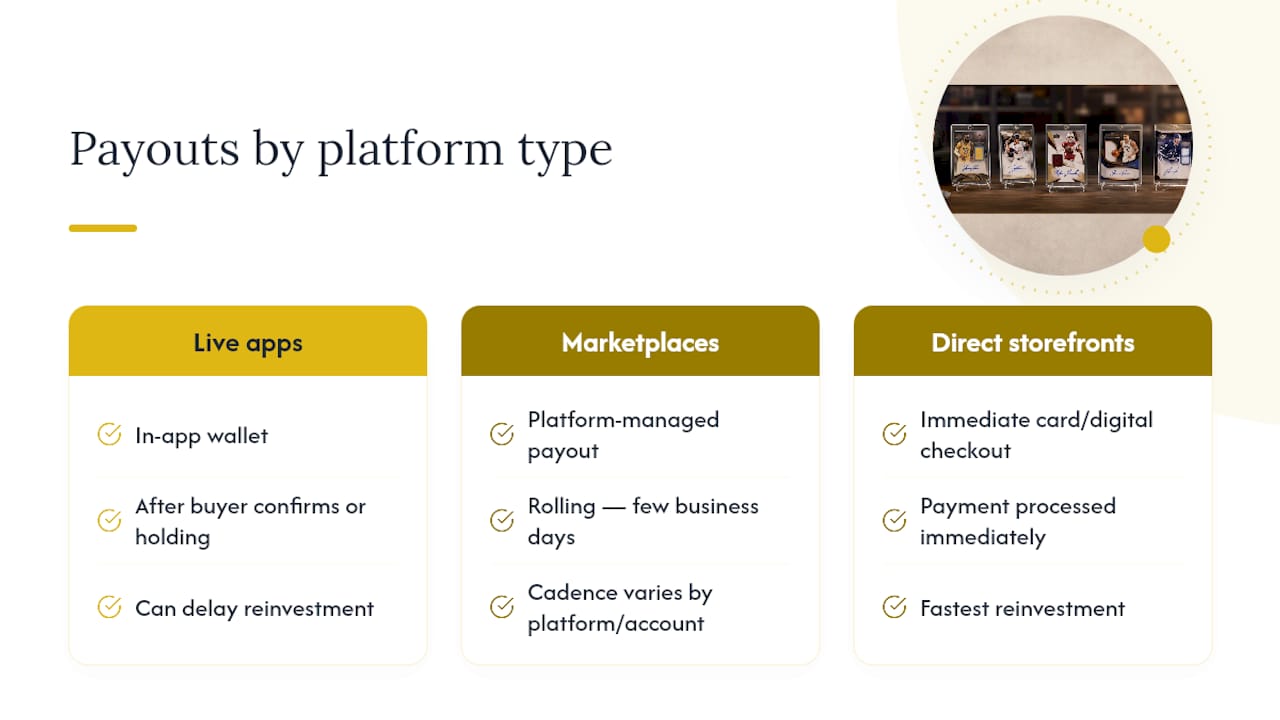
Payout structure varies more across these formats than most sellers expect going in. Live-commerce apps typically route payments through an in-app wallet, with funds released after the buyer confirms delivery or after a fixed holding period passes. Static marketplaces usually pay out on a rolling schedule, often within a few business days of a completed sale, though the exact cadence depends on the platform’s own policy and your account standing.
Specialty channels and direct storefronts tend to offer the most straightforward structure: a direct sale at checkout, with payment processed immediately through standard card or digital wallet options. That immediacy matters more than it sounds. A seller waiting on a delayed live-platform payout can’t reinvest in new inventory as quickly as one selling through a direct storefront transaction.
Before committing significant inventory to any platform, confirm three things: how fast payouts actually clear, whether a first-sale holding period applies to new sellers, and what payment methods buyers can use, since limited options can quietly suppress your buyer pool. A platform with strong traffic but a slow payout cadence can still tie up your cash flow for longer than a lower-traffic option with faster clearing.
Platform Reputation and Trustworthiness
Reputation shows up in specifics, not vibes: how disputes get resolved, how sellers get verified, and how authentication claims get backed up. Live-commerce platforms that require seller vetting before granting broadcast access tend to maintain higher buyer trust, since buyers know hosts have cleared some baseline screening.
Static marketplaces lean on volume and history, buyer reviews, seller ratings, and years of transaction data build trust over time, but that same openness means lower-quality sellers can coexist alongside reputable ones in the same search results. Specialty marketplaces close that gap by pairing every high-value listing with grading or authentication data, which shifts the trust signal from “this seller has good reviews” to “this specific card has been verified.”
For rare cards specifically, authentication matters more than seller tenure. A buyer paying a premium for a rookie autograph wants proof tied to the card itself, not just a seller’s track record. That’s why specialty and publisher-direct channels with transparent sourcing tend to close high-value sales faster than general marketplaces, where buyers have to do their own verification legwork before committing.
Growth and Scalability Potential
Scaling looks different depending on which format you build on. Live-commerce growth is capped by your own bandwidth. You can only host so many shows a week before quality drops or you burn out, and growth usually means bringing on co-hosts or building a team, not just working longer hours.
Static marketplaces scale more linearly with inventory. List more items, reach more search traffic, and volume grows without a matching increase in your personal time, though competition and fee structures can compress margins as you scale.
Specialty channels and curated storefronts scale differently again: growth comes from deepening buyer trust and expanding curated inventory rather than chasing raw volume. A hybrid strategy that blends live engagement with passive listings tends to produce the most durable growth path, since it spreads risk across formats instead of depending on one channel’s algorithm or audience shifts. For collectors with mixed inventory, that diversification protects income even when one channel slows down.
Key Takeaways
Choosing the right Whatnot alternative comes down to matching your inventory’s value and scarcity to the platform format built for that category, not chasing whichever app has the biggest audience.
| Point | Details |
|---|---|
| Match format to inventory | Live-commerce suits mixed lots and impulse buys; static marketplaces suit graded and vintage singles. |
| Watch shipping deadlines | Live platforms commonly require 2 to 5 day shipping windows that demand pre-planned packing. |
| Run the fee math first | Compare subscription versus percentage-based fees against your actual monthly sales volume. |
| Reserve specialty channels for rarity | High-value autographs and redemptions realize better prices through consignment or specialty storefronts. |
| Nextgencards fits investment-grade cards | NextGenCards.shop offers curated rookie autographs and rare redemption cards with free shipping on select items. |
An Editorial Take on Format-First Selling
Most alternative roundups treat this as a single ranking question: which app beats Whatnot? That framing misses the point entirely. The research backs a different judgment: the right platform depends on what’s actually in your inventory box, not which app has the loudest marketing.
Conventional advice tends to push everyone toward livestreaming because it looks exciting and generates urgency. But urgency doesn’t help a graded 1986 Fleer or a scarce redemption card, it helps volume sellers moving lower-value lots quickly. That’s the gap nobody talks about enough.
If you’re holding rookie autographs, patch cards, or rare redemptions, prioritize buyer match and authentication over reach. A smaller, trust-heavy audience that already values rarity will outbid a larger, distracted livestream crowd almost every time. That’s the entire argument for specialty and publisher-direct channels, and it’s why a curated storefront built specifically around rare cards deserves a serious look before you commit your best inventory to a general platform.
— Richard
Find Your Next Rare Card With Nextgencards
If you’ve been weighing livestream shows against static listings, there’s a third option worth putting front and center for your best inventory: buying and selling directly through a specialty storefront that already knows what a rare redemption card is worth. Nextgencards is built specifically around investment-grade rookie autographs, patch cards, and rare redemption releases, the exact category that gets lost in general marketplaces and diluted in high-volume livestreams.
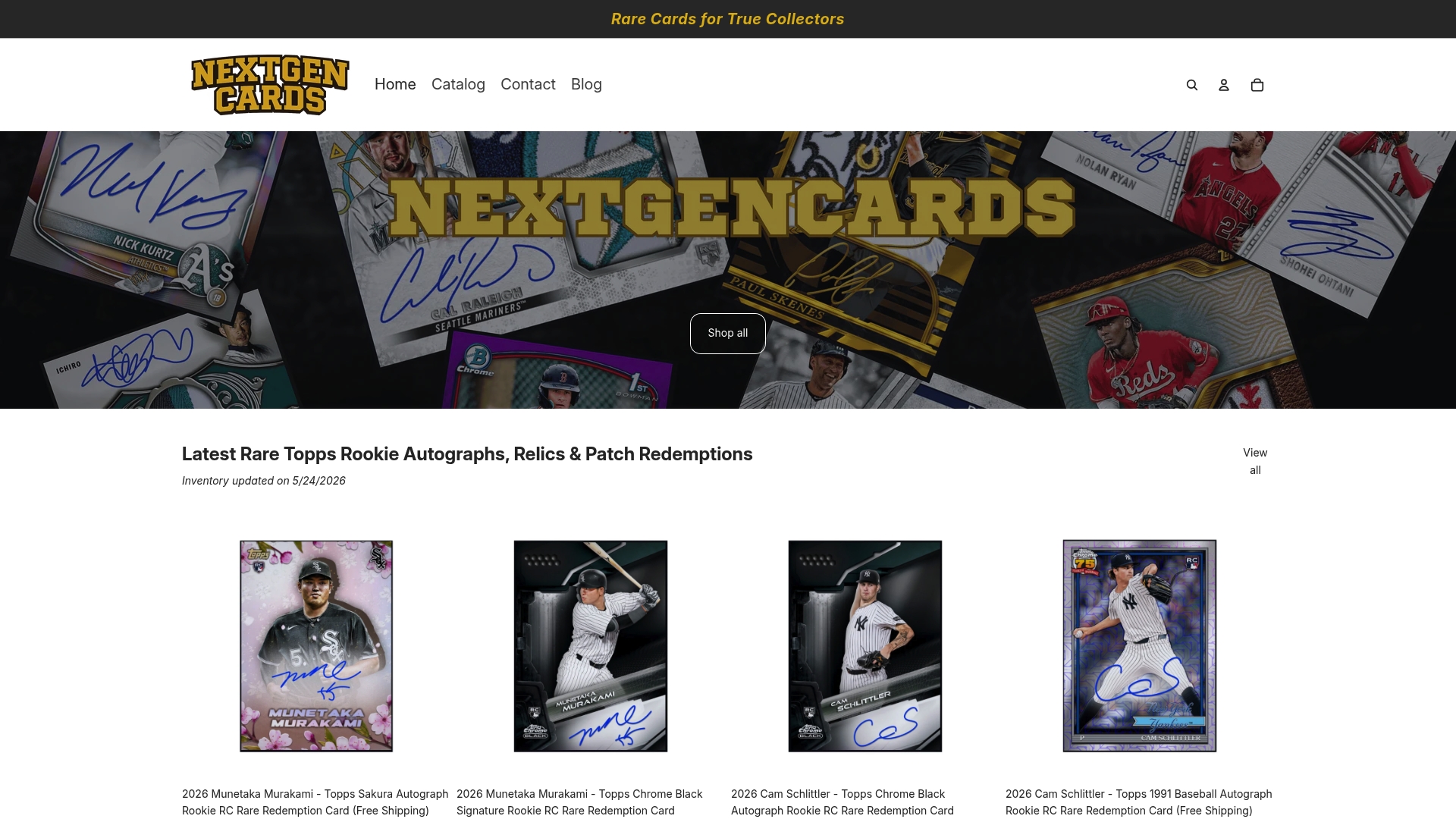
Instead of hosting a show or competing in a crowded search results page, you get curated access to cards like the Skenes, Cole, and Strasburg triple autograph redemption or the Jalen Brunson jersey patch autograph redemption, backed by free shipping on select items and straightforward navigation built for collectors who already know what they want. Browse the current rookie autograph and relic collection and check availability on the pieces that fit your collection today.
Sources
- Sites Like Whatnot: Live Selling Options
- The 7 best Whatnot alternatives of 2026
- 6 Best Whatnot Alternatives in 2026 (Free & Paid)
FAQ
Is Tilt or Whatnot better?
Neither is universally better. Tilt and Whatnot both run live-commerce shows with similar mechanics, so the right choice depends on where your specific buyer audience is more active and which platform’s fee structure fits your sales volume.
What is the most profitable site to sell on?
There’s no single most profitable platform across all sellers. For high-value, investment-grade sports cards, specialty channels and curated storefronts like Nextgencards tend to produce better realized prices because buyers arrive already trusting the authentication and rarity claims.
Is Whatnot a bad app?
Whatnot isn’t inherently bad, but it’s built around live-show urgency and broad categories, which doesn’t always suit sellers holding scarce, high-value cards that benefit more from specialty buyer matching than livestream volume.
What are some apps similar to Whatnot that offer giveaways?
Several live-commerce apps run promotional giveaways and pack breaks as part of their show format, including platforms like eBay Live and TikTok Shop LIVE. Check each app’s current promotional terms directly, since giveaway structures change frequently.
How do I decide between a livestream platform and a specialty storefront?
Use the four-step framework: assess your inventory’s value and scarcity, match it to where that buyer type actually shops, run the fee math for your volume, and confirm the platform’s shipping and dispute policies fit your operation.
0 comments